Consion: Real-Time AI for Safety Complience
Inspiration
Walk past any construction site in Singapore and you'll see them — men in high-visibility vests, bent over steel rebar under the midday heat, drilling through concrete on the 20th floor, sawing metal without face shields.
They built Changi Airport. They raised Marina Bay Sands floor by floor. Their hands poured the foundations of every HDB block that Singaporeans call home.
Yet they remain one of the most overlooked, underserved communities in our society. No one asks them what they need. No one builds technology for them. The tools that exist — safety audits, paper checklists, spot inspections — were designed around liability, not around the person standing on the scaffolding.
When we walked onto a real construction site and spoke directly to workers and managers, one response stopped us cold that although
"Injuries are rare — but when they happen, it is very serious. Some have to resign because they cannot work anymore."
That is not a statistic. That is a person's livelihood, their family's income, their entire future gone. And it was preventable.
The problem statement asks: how might we design AI that amplifies human agency instead of replacing it? Construction workers gave us the answer without knowing it. They don't need a robot to do their job. They need something watching their back when the site manager can't be everywhere at once.
We built Consion not because construction safety is a hot market. We built it because these workers deserve better — and the technology to do better already exists. It just hasn't been pointed at the right people yet.
What it does
Consion continuously monitors construction environments to detect PPE violations such as missing helmets or vests. By combining advanced AI models with semantic search and reasoning, it flags risks before they escalate into costly incidents helping to avoid problems that can amount to $134M in damages.
How we built it
We built Consion starting with the people it was meant to serve.
Before writing a single line of code, we applied a design thinking framework and went directly to construction sites. We interviewed 13 workers and managers, asking hard questions about incident frequency, real PPE violations, and whether they'd trust a system like this.
9 out of 13 said yes.
One manager told us:
"Sometimes my workers wear a harness but no grip rope attached — so there's no point. And some never wear a face shield when sawing metal, which is very dangerous."
That single interview shaped every design decision we made.
On the technical side:
- Frame extraction using systematic sampling for efficient video analysis
- SigLIB for image and text embedding
- FAISS Index for semantic search and retrieval
- YOLOv9-Seg for object detection and boundary box drawing
- MobileSAM for image segmentation
- Rule Engine for logic-based detection
- VLM (Vision-Language Models) for inference and reasoning
- Evaluation pipeline to aggregate and score results
Together, these components form a robust system capable of real-time detection, reasoning, and reporting.
Challenges we ran into
- Balancing accuracy with real-time performance under resource constraints
- Integrating multiple AI models into a seamless pipeline
- Handling edge cases such as partial occlusions or low-light conditions
- Designing a rule engine flexible enough to adapt to diverse site regulations
Accomplishments that we're proud of
- Achieved reliable real-time detection of PPE violations
- Built a scalable semantic search and retrieval system using FAISS
- Successfully integrated cutting-edge models like YOLOv9-Seg and MobileSAM
- Developed a rule-based engine that adapts to site-specific safety requirements
- Sub-$1,000 deployment cost. Safety technology that only large firms can afford is not safety technology, it's a luxury.
- 9 out of 13 people on a real construction site said they would want this.** Not investors. Not judges. Workers.
What we learned
We learned that the most underserved users rarely complain because no one asks them.
Construction workers in Singapore are not a vocal lobby. They don't write blog posts about their pain points. They don't show up at tech conferences. But their needs are enormous, their contributions are irreplaceable, and their lives are at risk every single day in ways that most of us never see from behind our laptops.
We learned that AI's greatest risk in physical-world environments is overconfidence and the right antidote is not a better model, but a smarter architecture.
Most importantly, we learned that the problem statement was the answer. The question of how AI can amplify human agency instead of replacing it is answered not in the algorithm, but in the design intent. Consion never makes a final safety call autonomously. It surfaces information. It raises flags. It puts more capability in the hands of the supervisor and more protection around the worker.
The human stays in the loop — not because we couldn't automate further, but because we chose not to.
What's next for Consion
The architecture we built is recyclable by design. The same pipeline that detects helmets today can detect harness attachment, grip rope connection, and footwear compliance tomorrow — with minimal retraining.
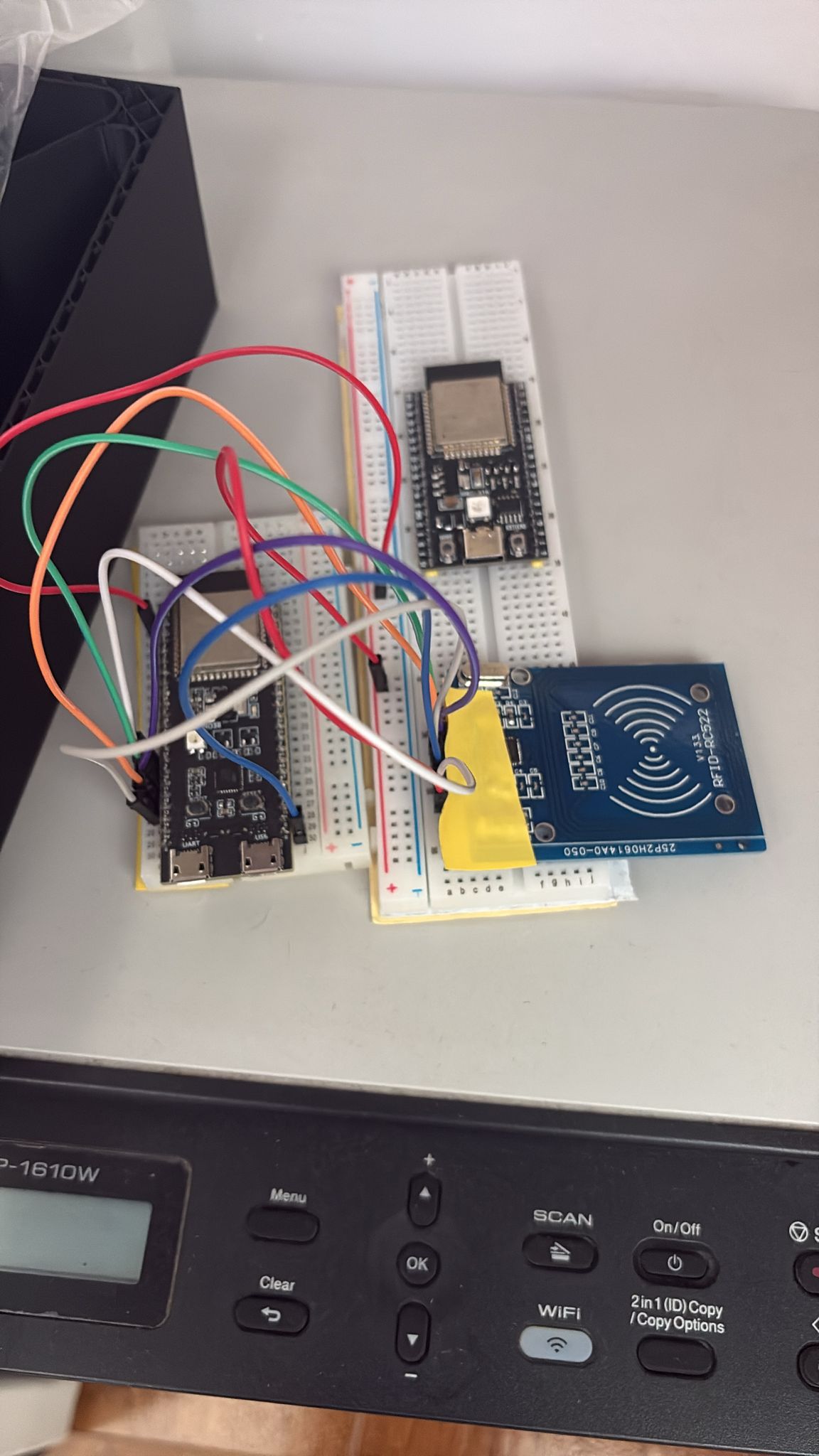
Phase 1 — Location Intelligence 🛰️ Integrate RFID/UWB trackers directly into helmets. When AI detects a worker in frame, the location tracker independently confirms their position. The Evaluator Agent cross-references both — dramatically reducing hallucinations in crowded or occluded scenes.
$$ \text{Confidence}{final} = f(\text{IoU}{vision},\ \text{Confidence}_{location}) $$
Phase 2 — Multi-angle Coverage 🎙️ Deploy additional cameras with microphones across the site. Workers can verbally query the system about the location and safety status of colleagues — turning Consion into a coordination layer, not just a monitoring one.
Phase 3 — Sector Expansion 🏭 The same core architecture applies directly to mining and industrial chemical environments — the next two tiers in our addressable market of ~251 million workers globally.
| Phase | Feature | Impact |
|---|---|---|
| Now | PPE detection via AI vision | Real-time violation flagging |
| Phase 1 | RFID/UWB location fusion | Higher accuracy, fewer false positives |
| Phase 2 | Multi-camera + voice query | Site-wide coordination |
| Phase 3 | Mining + chemical expansion | 251M worker addressable market |
The regulatory tailwind is already here. Singapore's MOM mandated Video Surveillance Systems for all construction projects above $5M from June 2024 and is actively piloting AI analytics at 14 construction sites, with plans to make it compulsory across all public-sector projects.
Consion doesn't need to convince the market that this matters.
Singapore was not built by algorithms. It was built by workers.
Consion exists to make sure they come home safe.

Log in or sign up for Devpost to join the conversation.