-
CovaLink is an application designed to accommodate Forest Farmer Groups (KTH) around conservation areas.
-
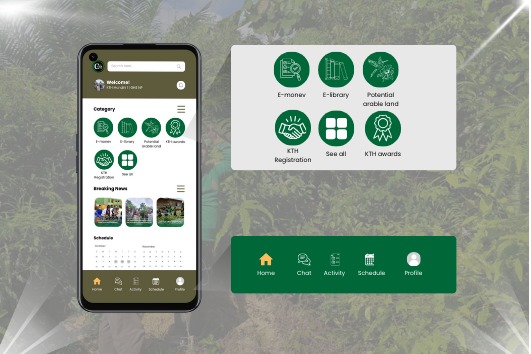
Application features


Inspiration
The inspiration for CovaLink stems from the pressing global issue of climate change, exacerbated by deforestation and forest degradation. Recognizing the pivotal role of local communities, particularly Forest Farmers Groups (KTH), in forest management, we aimed to create a tool that empowers and connects them. Inspired by the application made by IPB, IPB Digitani application that can connect farmers and academicians across Indonesia, CovaLink seeks to foster a similar network among KTH members. By facilitating knowledge sharing, monitoring and evaluation, collaboration, and the adoption of best practices, CovaLink aims to contribute to more sustainable forest management and mitigate climate change.
What it does
CovaLink is a mobile application designed to support KTH in managing forests sustainably. It serves as a platform for:
- Information Sharing CovaLink provides KTH members and the general public to access relevant information on knowledge and experiences about forest management, conservation practices, and market strategies as well as supporting KTH capacity building. This application also provides information about biodiversity that has potential to be developed by KTH based on researches and journals
- Data Collection and Reporting Enabling KTH members to easily report on their activities to government, forest conditions, challenges, facilitating data-driven decision-making.
- Collaboration Fostering collaboration among KTH members, forest managers, government, NGO’s, researchers, and other stakeholders. This feature helps them open bigger market opportunities.
- Monitoring and Evaluation CovaLink is an effective tool for monitoring and evaluating the performance of Forest Farmers Groups (KTH). This application enables the comprehensive collection of data on KTH activities. This data can then be used to measure the success of forest management programs, identify things that need improvement, and make better decisions.
- Community Empowerment Empowering local communities by providing them with a tool to actively participate in forest management and conservation.
How we built it
We began by identifying the main challenges faced by Forest Farmers Groups (KTH) in managing conservation areas, such as limited access to information, constraints in reporting, and the need for an efficient collaboration platform. After understanding the needs of both conservation area managers (UPT) and KTH members, we established the core functions that CovaLink would need to support sustainable forest management.
Next, we focused on design and prototyping, aiming for a simple yet user-friendly interface for KTH members, who might not be very familiar with technology. We created prototypes that allowed for easy reporting, sharing of conservation practices, and access to relevant data, with an intuitive layout to ensure usability. We developed key features based on identified needs, including:
- Information at a Glance (News Platforms) For ease of access to relevant news and updates, we integrated a user-friendly news feed system that pulls information from trusted sources, enabling users to stay informed on the latest developments in sustainable forest management and conservation efforts.
- Partnership Submission We utilized Google Forms and Google Drive to streamline the submission and approval processes for KTH partnerships. Through this setup, communities interested in forming or joining KTH can submit applications and supporting documents online, in compliance with government regulations (Permen LHK No. P.89 tahun 2018).
- Potential Resources Avenza Maps and SMART Patrol are used to map and monitor resources within forest areas. By incorporating these tools, KTH members can identify, analyze, and document valuable bioprospecting species and environmental services, ensuring sustainable resource management.
- Monitoring and Evaluation For regular reporting and progress tracking, we designed a workflow using Google Forms and Google Drive. KTH members can submit real-time updates, making it easy for administrators to monitor activities and outcomes systematically.
- E-Library We included access to resources like Google Scholar, institutional repositories, and database. This feature allows users to explore research, guidelines, and data on sustainable practices, helping to build local knowledge and capacity.
- Schedule and Activity Management Using Google Calendar and Avenza Maps, we set up an organized calendar for KTH activities and events. This feature provides reminders for upcoming activities and events, then support planning for conservation and community engagement activities within the app.
This approach not only leverages readily available, reliable tools but also ensures that CovaLink remains accessible and highly functional for a wide range of users. Through this structure, we empower KTH and local communities to actively participate in forest conservation and sustainable management, thereby supporting both environmental and economic goals.
Challenges we ran into
One of the main challenges we encountered during the development of CovaLink was the lack of IT expertise within our team. Most members did not have a background in information technology, which made it difficult to grasp the technical aspects of application development, including planning, design, and the implementation of effective features for users. This limitation slowed down the development process and necessitated additional support from IT professionals. Furthermore, we faced challenges related to the limited information provided by the Forest Farmer Groups (KTH). The data we required was often incomplete or poorly structured, particularly concerning sustainable forest management practices, field conditions, and specific needs. This lack of comprehensive information hindered our data collection efforts and diminished the effectiveness of the application in addressing user requirements. To overcome these challenges, we recognized the need for more intensive communication and improved data collection mechanisms to ensure that CovaLink can be genuinely beneficial and relevant for KTH users.
Accomplishments that we're proud of
We are immensely proud of our achievement in creating CovaLink, the first application in Indonesia designed specifically to support Forest Farmer Groups (KTH) in accessing information, reporting activities in periodic, and collaborating effectively. This platform provides KTH with a space to share sustainable forest management practices and exchange information on biodiversity, strengthening the partnership between KTH and conservation area managers with greater transparency and efficiency. As a response to the challenges posed by climate change, CovaLink offers a tangible solution by promoting eco-friendly practices that reduce forest degradation and support ecosystem balance.
Moreover, this application also opens up access to valuable information for the general public, enabling them to gain insights into forest management opportunities and the process of establishing KTH online. With its user-friendly design, CovaLink simplifies access to information, reporting, and active involvement in forest conservation across Indonesia. We take pride in CovaLink’s role as a platform that fosters cross-sector collaboration among KTH, conservation area managers, NGOs, researchers, and other stakeholders. This collaboration not only enhances transparency in forest management but also broadens market opportunities, creating positive impacts on the environment while improving local communities livelihoods.
What we learned
Through this project, we gained valuable insights into the complexities of sustainable forest management and the critical role of local communities, particularly the Forest Farmer Groups (KTH), in preserving Indonesia's natural resources. We learned that effective conservation efforts require a deep understanding of both environmental and social factors, including the challenges faced by KTH, such as limited access to information, reporting constraints, and the need for stronger collaboration with conservation managers. Developing CovaLink highlighted the importance of transparent communication and technology in empowering communities to actively participate in forest conservation.
Additionally, we discovered the significant impact of digital solutions on promoting sustainable practices. By creating a tool that provides real-time access to data, facilitates reporting, and supports community-driven management, we realized how technology can bridge the gap between conservation initiatives and the communities involved. This journey also deepened our appreciation for the interconnectedness of forest management, biodiversity preservation, and climate change mitigation, and strengthened our commitment to creating tools that contribute to environmental sustainability and community resilience.
What's next for Conservation Link (CovaLink)
As the CovaLink team, we hope that CovaLink will help and facilitate Forest Farmer Groups (KTH) and the general public in accessing information and ways to manage forests sustainably. As such we will increase the effectiveness of the Conservation Link application, our main focus will be on expanding the reach of information and increasing engagement for KTH. Strategies include developing new, more interactive features, such as thematic discussion forums and collaborative projects. In addition, we will strengthen marketing campaigns through various digital channels and establish partnerships with other conservation organizations.
Built With
- avenza-maps
- database
- google-docs
- google-drive
- google-scholar
- institutional-repositories
- languagetool


Log in or sign up for Devpost to join the conversation.