Inspiration
What if the consequence of an event could be stolen, carried, and transferred somewhere else?
Most games give players control over objects, movement, or time. Consequence Thief gives players control over something more unsettling: the outcome itself.
The central idea is simple. You cannot undo what happened, but you can decide where its price is paid.
What it does
Consequence Thief is a short, seated, hands-first VR narrative experience built around one impossible mechanic.
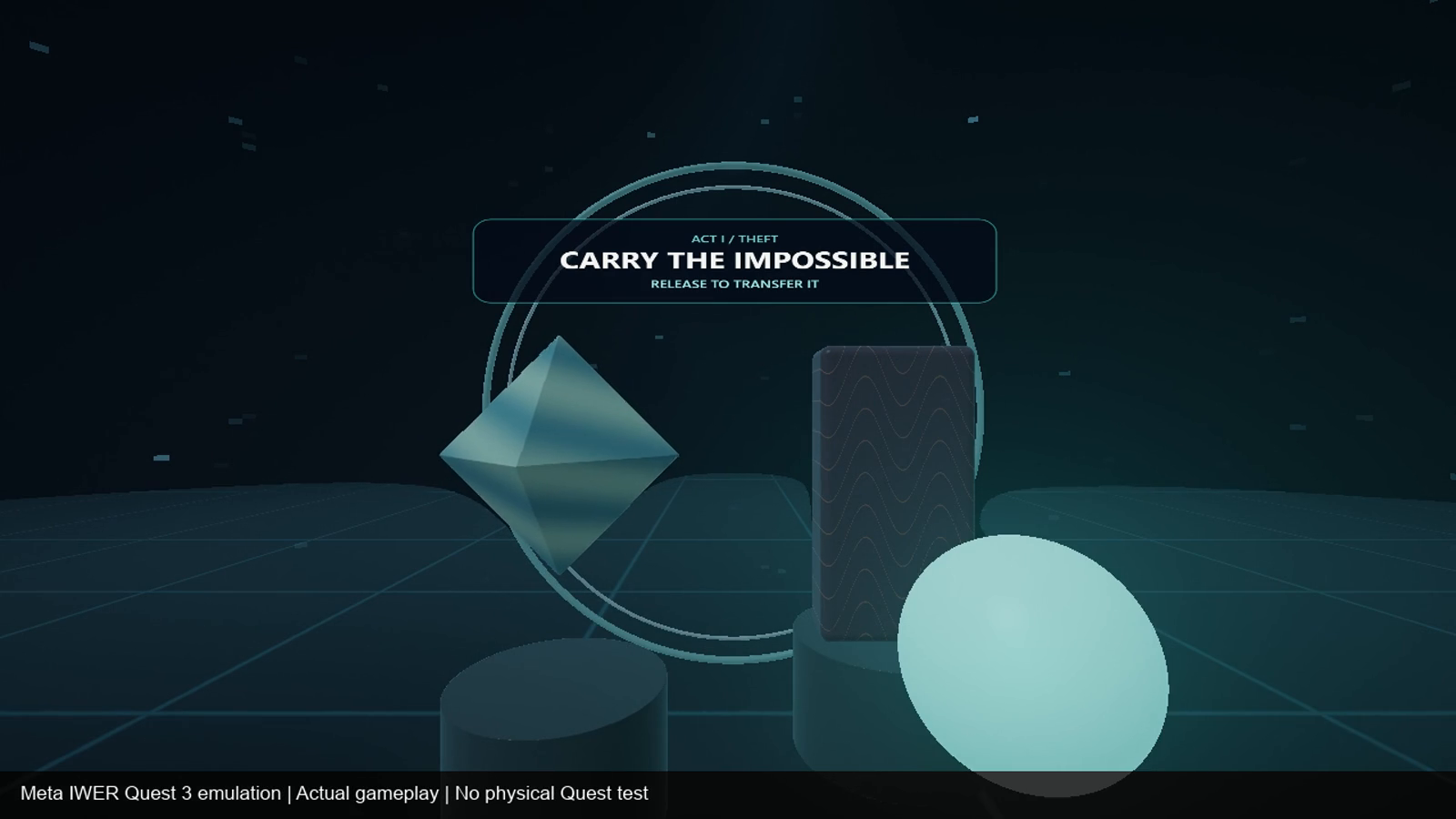
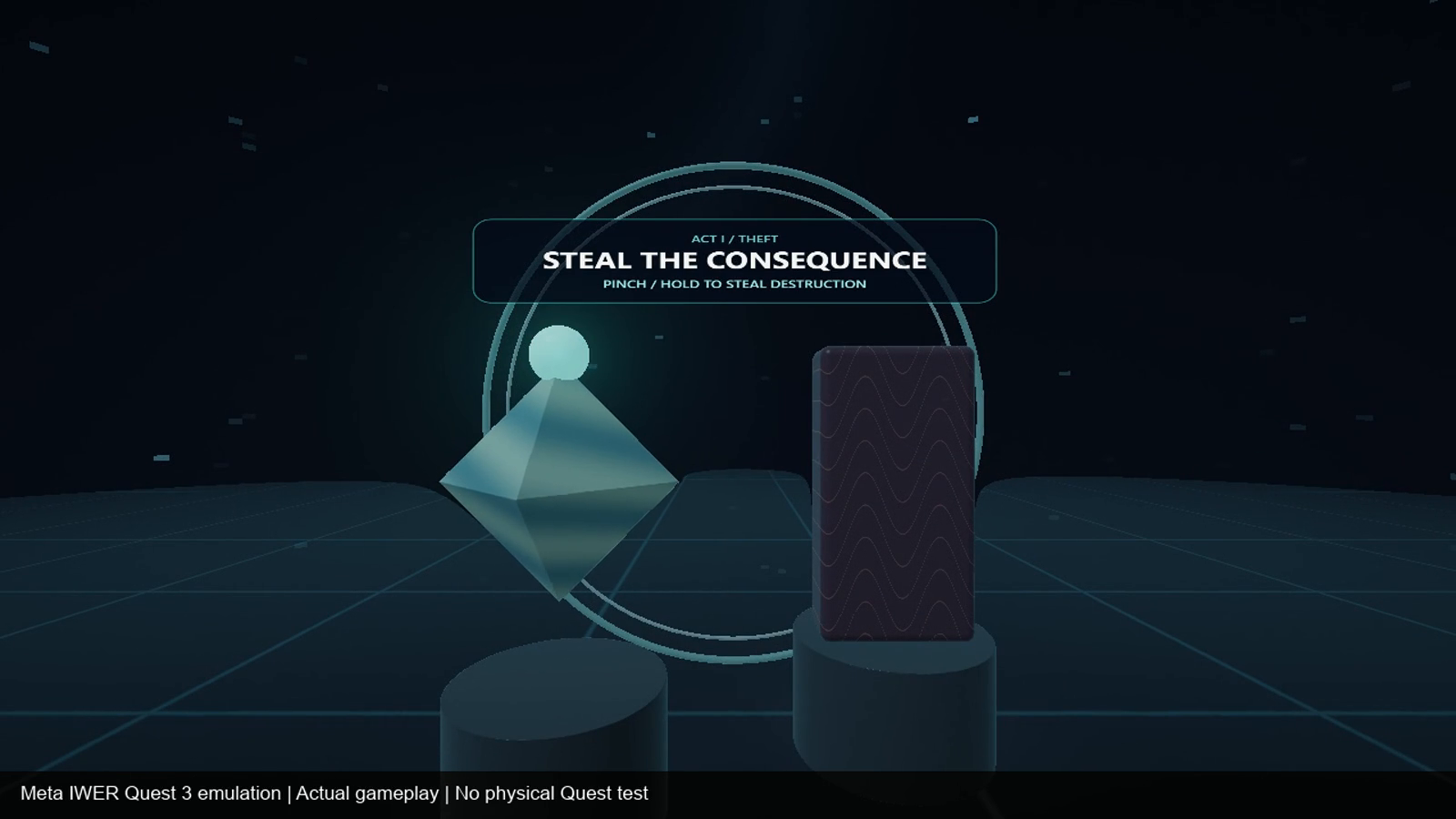
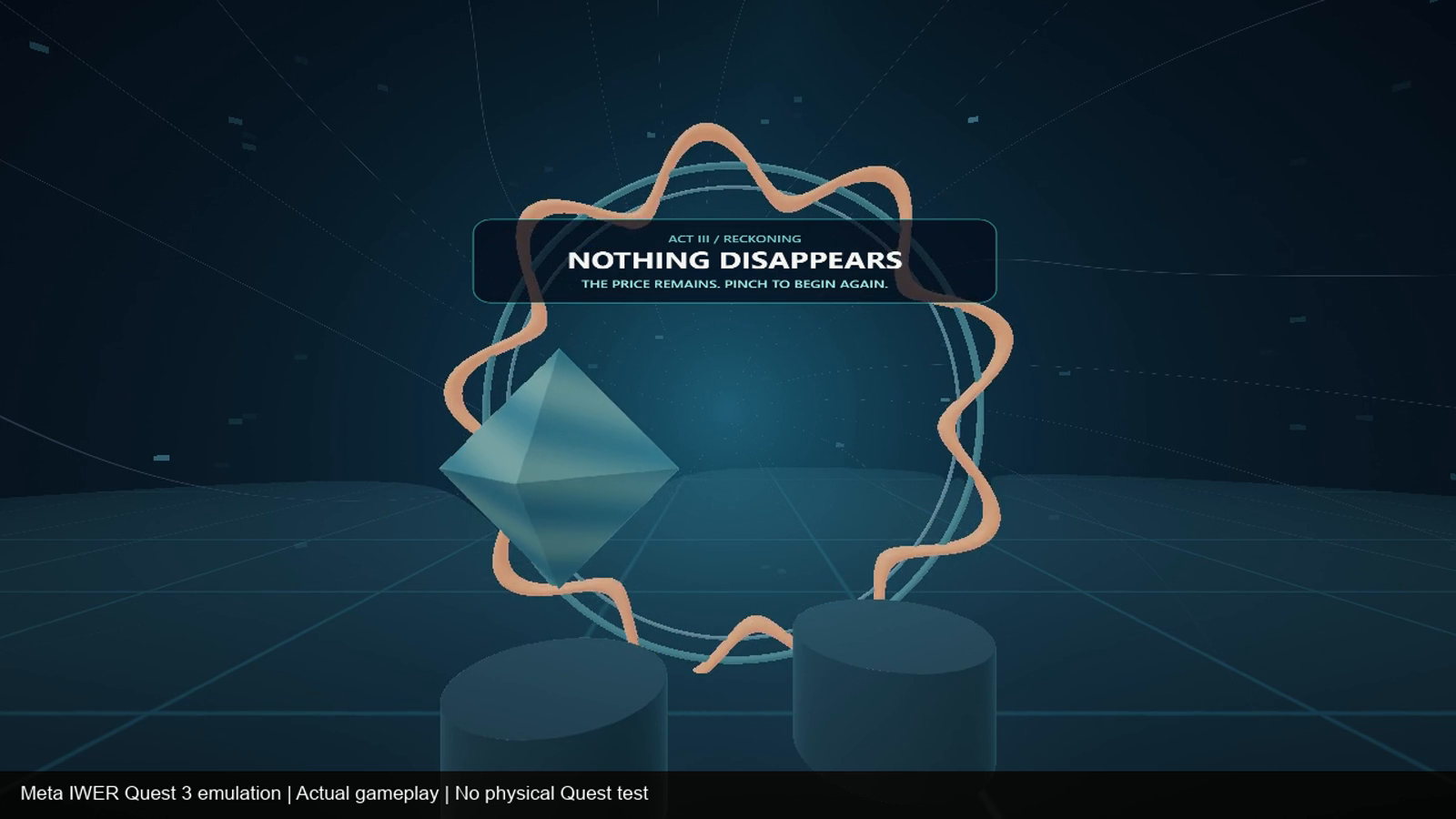
Players use a pinch gesture to extract a luminous consequence from a crystal. The consequence follows their hand until they release it, transferring the damage into a sealed structure.
The structure fractures without ever being struck.
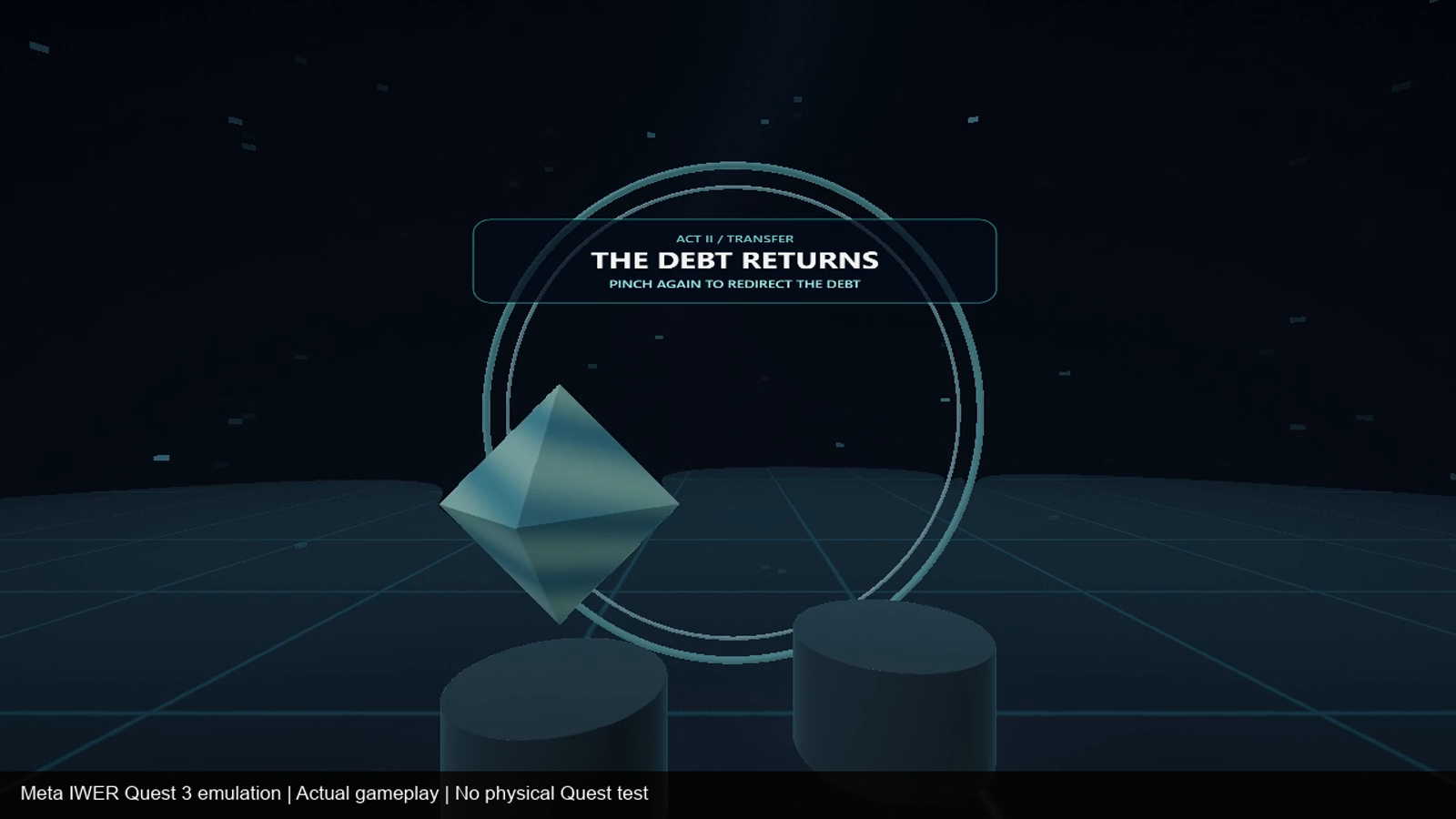
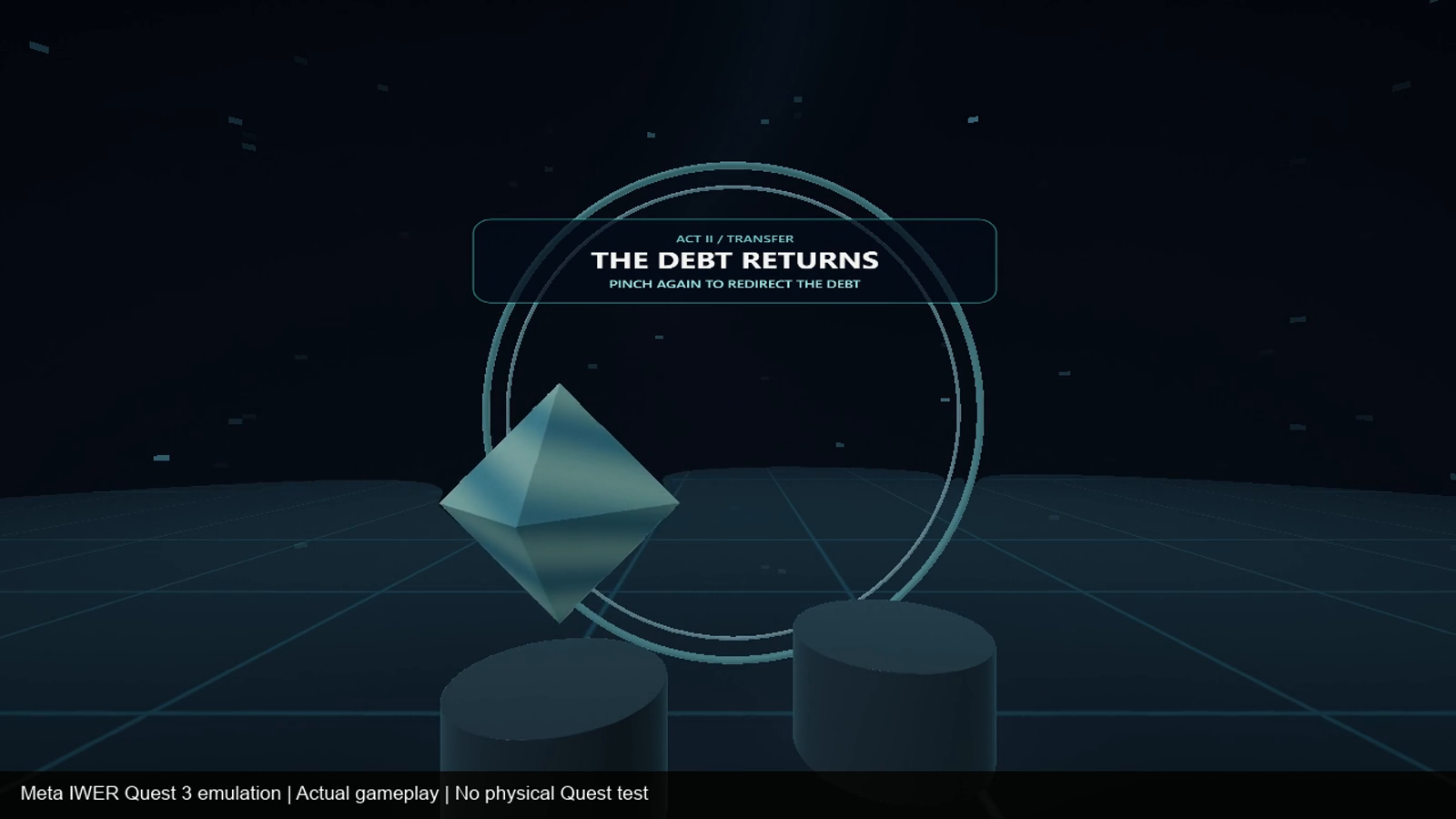
But transferring destruction doesn't erase its debt. In the final act, the player redirects that debt into the sky, permanently changing the scene until replay.
Three acts. One impossible power. A world that remembers.
How we built it
Consequence Thief was developed using native WebXR, WebGL2, JavaScript, and procedural GLSL rendering.
The environment, geometry, lighting, and effects are generated in shaders. Web Audio provides the original soundscape, while spatial instructions guide players through the experience.
The immersive interaction uses tracked hand joints and pinch gestures, without requiring controllers.
Development included AI-assisted coding and research. We used Meta's Immersive Web Emulation Runtime (IWER) to verify Quest 3 emulated WebXR sessions, hand inputs, stereo rendering, and gameplay.
Challenges and accomplishments
One major challenge was making pinch interactions reliable. The system distinguishes intentional releases from temporary tracking loss, assigns ownership to the extracting hand, and prevents the opposite hand from accidentally releasing the consequence.
We also implemented session recovery, visibility handling, and a complete narrative state progression.
The finished emulator walkthrough demonstrates extraction, carrying, transfer, fracture, the final sky transformation, and replay.
What we learned
An immersive mechanic doesn't need a huge world or complicated controls to explore an unusual idea.
A simple hand gesture can become meaningful when the player's action has an unexpected, visible consequence.
What's next
Our next priorities are physical Quest testing, comfort evaluation, performance profiling, and feedback-driven refinement.
Physical Quest hardware was unavailable during development, so the submitted gameplay footage was recorded using Meta IWER Quest 3 emulation.
The playable web release launched on November 17, 2026. No Meta VR Store launch date has been committed.