Inspiration
Modern AI agents are powerful, but they often operate with excessive permissions or unclear consent boundaries. We wanted to build an agent that behaves responsibly — requesting access only when necessary and acting transparently on behalf of users. The idea behind ConsentChain-AI was to demonstrate how identity-aware agents can securely interact with real-world APIs using delegated authorization through Auth0 Token Vault, instead of storing credentials or requesting blanket access upfront. This project explores the future of trustworthy autonomous agents that respect user control. 🔐🤖
What it does
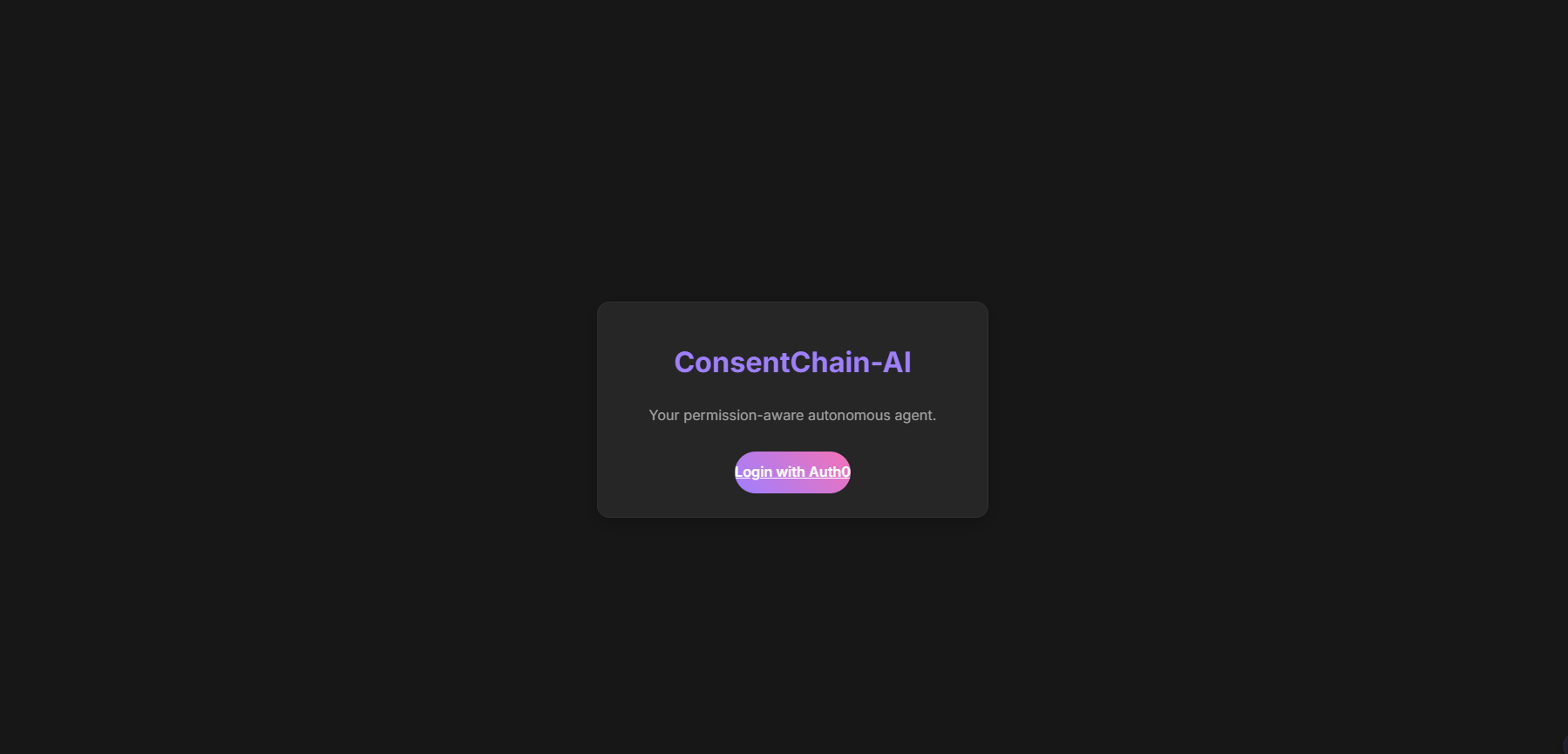
ConsentChain-AI is a permission-aware autonomous agent that executes tasks across external services like GitHub and Google Calendar only after dynamically requesting user approval.
Instead of asking for all permissions at login, the agent:
- interprets user commands
- detects required access scopes
- requests consent step-by-step
- securely retrieves tokens using Auth0 Token Vault
- performs actions on behalf of the user
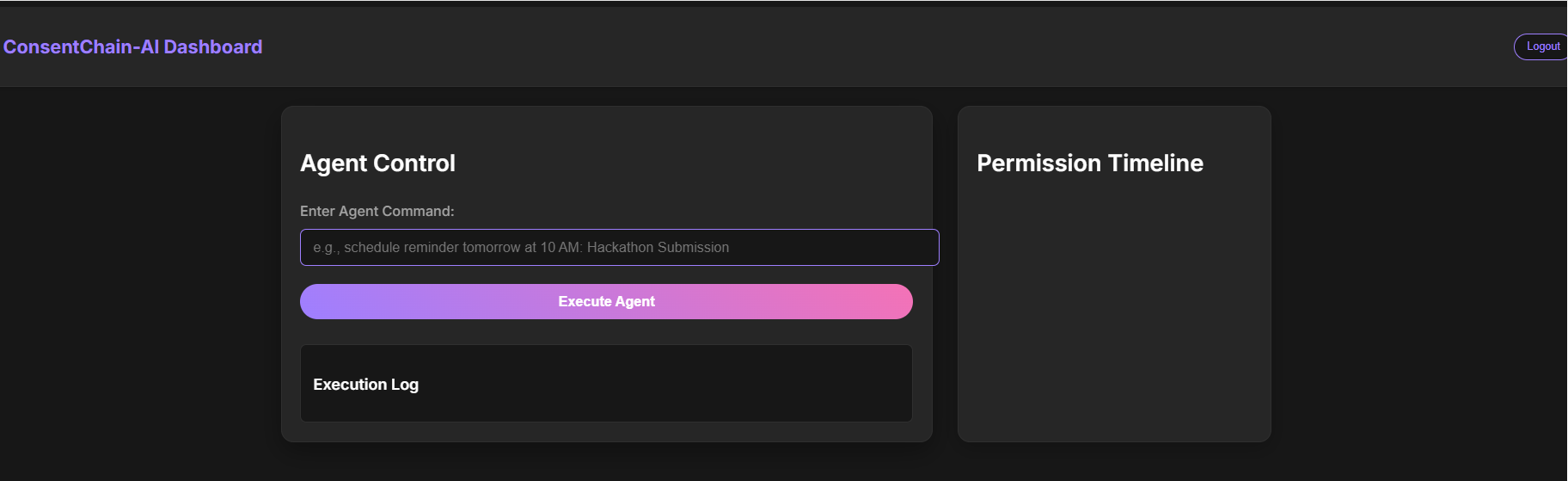
- logs execution activity in a permission timeline dashboard
This creates a transparent workflow where users always remain in control of what the agent can do.
How we built it
We built ConsentChain-AI using a secure full-stack architecture focused on delegated identity flows:
- Node.js + Express backend for agent orchestration
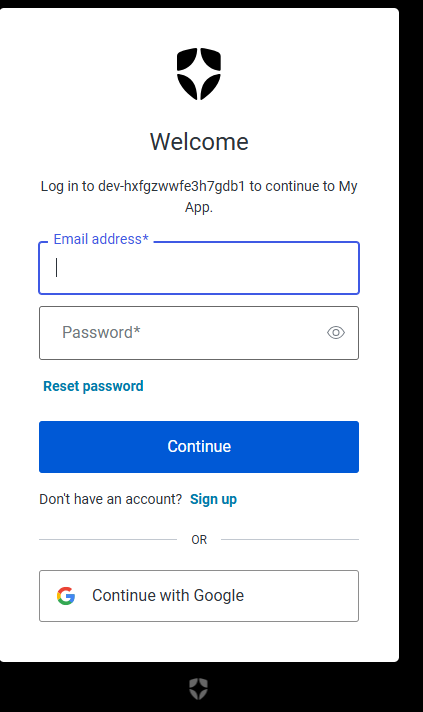
- Auth0 Universal Login for authentication
- Auth0 Token Vault for secure delegated token storage
- Google Calendar API integration for scheduling workflows
- GitHub API integration for repository automation
- Session-based permission tracking middleware
- Rule-based intent planner for deterministic agent execution
- Dashboard interface showing permission timeline and execution logs
Instead of relying on external LLM APIs, we implemented a deterministic intent engine to keep the system lightweight, predictable, and fully free to run locally while still demonstrating agent autonomy.
Challenges we ran into
One of the biggest challenges was ensuring correct initialization order between the Auth0 OpenID client and the application routing layer. Because Token Vault workflows depend on delegated OAuth flows, proper session handling and callback configuration were critical.
We also addressed:
- dynamic permission escalation logic
- handling multi-provider OAuth scopes
- synchronizing session state with execution timeline UI
- avoiding insecure token storage patterns
- ensuring compatibility with localhost development environments
Solving these issues helped make the agent both secure and production-structured.
Accomplishments that we're proud of
We successfully built a working autonomous agent that:
- requests permissions only when required
- securely stores delegated tokens using Auth0 Token Vault
- executes cross-platform workflows
- visualizes permission approvals in real time
- avoids storing credentials locally
- demonstrates step-up authorization flows clearly
Most importantly, the system showcases how identity-aware agents can safely operate in real user environments instead of acting as unrestricted automation scripts.
What we learned
This project deepened our understanding of:
- delegated OAuth authorization patterns
- step-up authentication workflows
- identity-first AI agent design
- secure token lifecycle management
- session-aware API orchestration
- building transparent permission negotiation systems
We also learned how Token Vault enables agents to behave more like trusted assistants rather than background automation tools.
What's next for ConsentChain-AI
Future improvements will focus on expanding ConsentChain-AI into a multi-agent orchestration platform that supports additional integrations such as cloud storage providers, productivity suites, and developer tools.
We also plan to add:
- adaptive risk-based permission requests
- persistent permission graphs
- background autonomous workflows
- user-defined policy enforcement layers
- support for local sovereign AI runtimes
Our long-term goal is to help define a safer standard for how autonomous agents interact with user data and services while keeping identity and consent at the center of every action. 🚀
Built With
- auth0-token-vault
- css
- express.js
- github-api
- google-calendar-api
- html
- javascript
- node.js
- oauth-2.0
- openid-connect

Log in or sign up for Devpost to join the conversation.