-
-
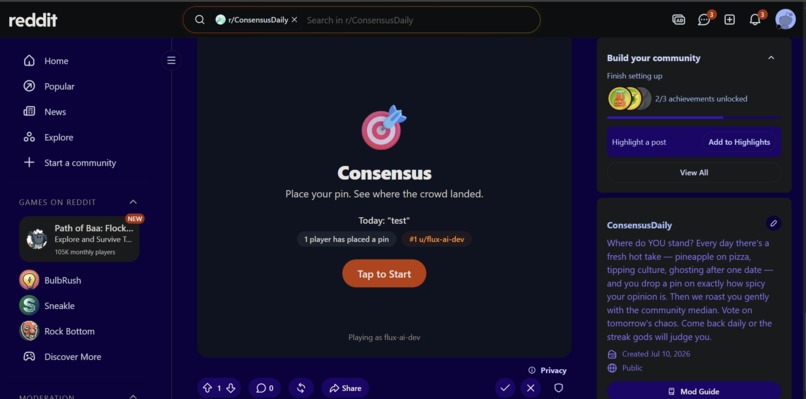
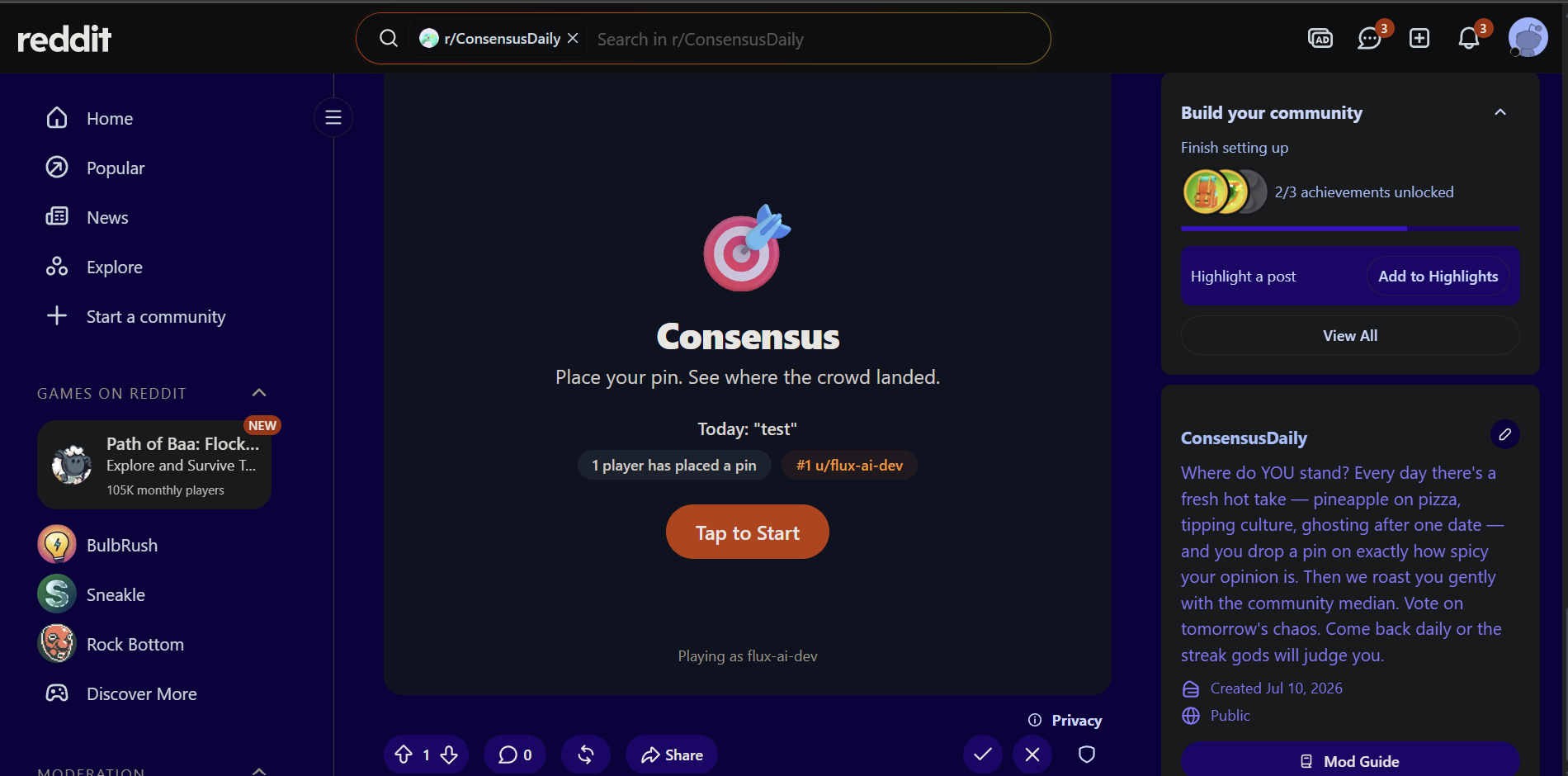
consensus game thumbnail
-
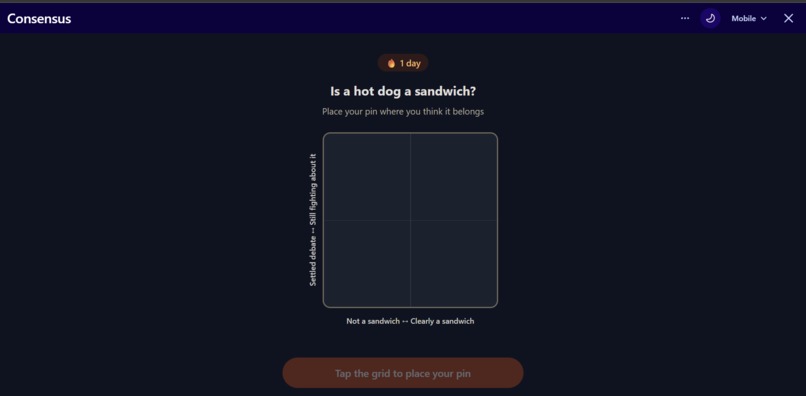
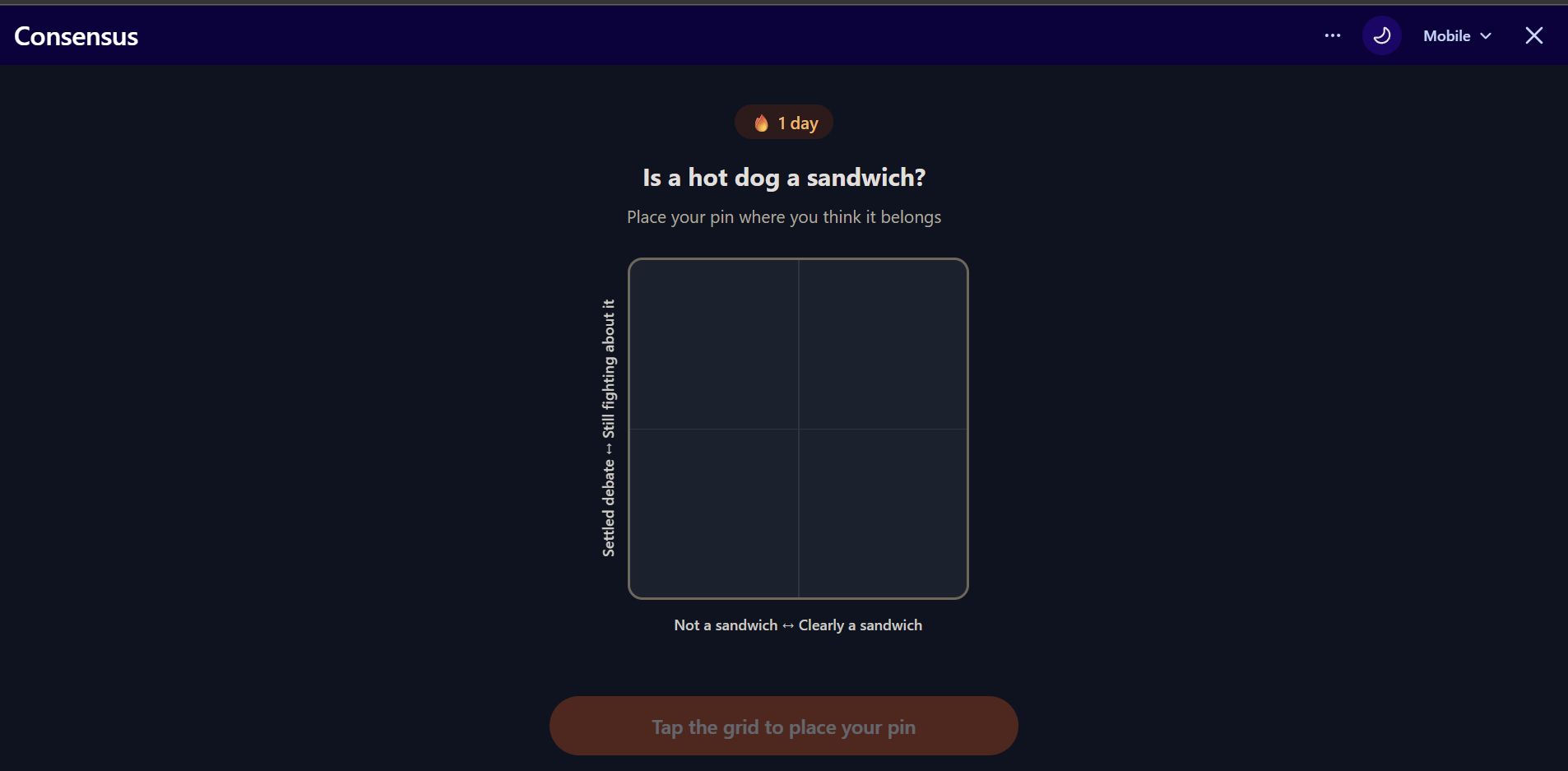
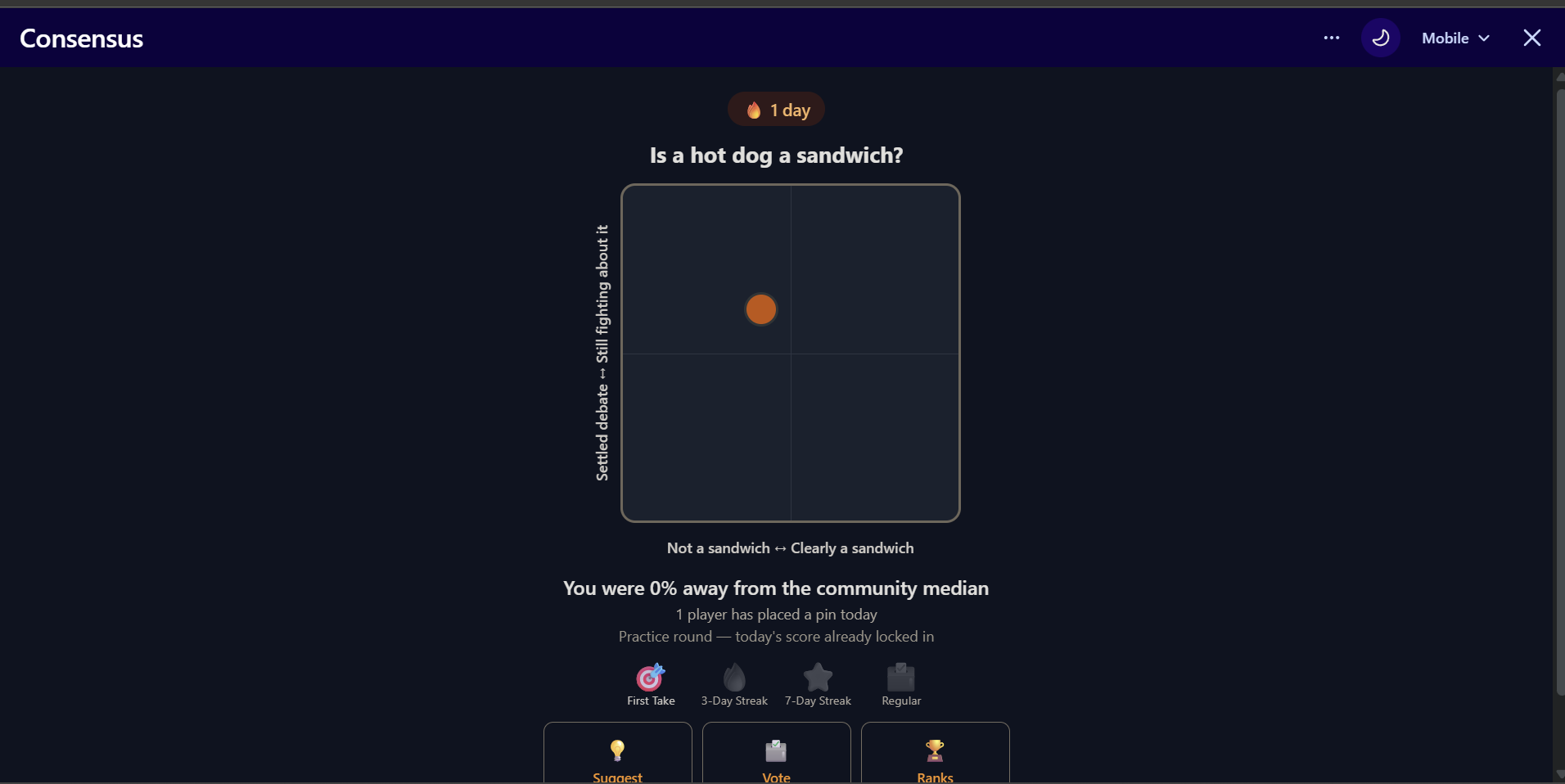
See your pin against the community's spread, how close did you land to the median?
-
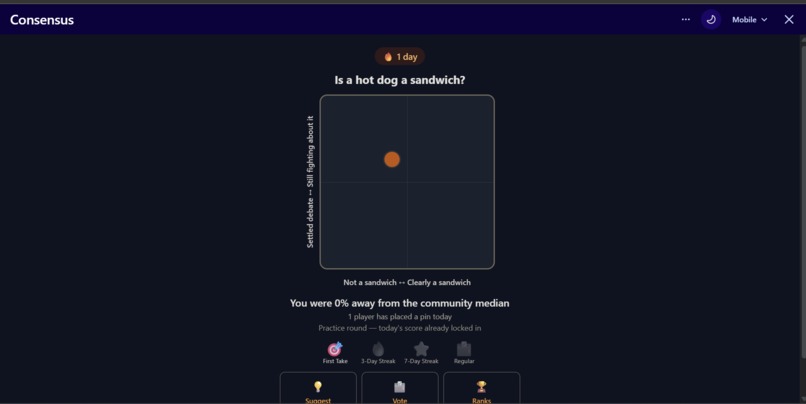
Your pin vs. the median, see how close your take landed to the community's.
-
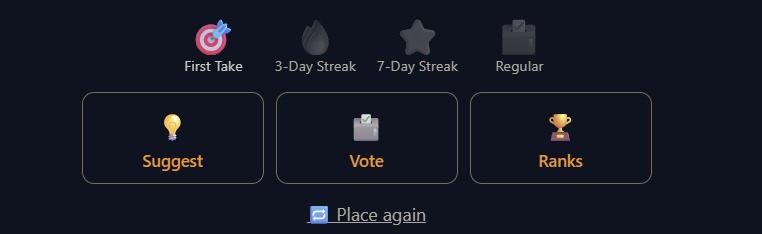
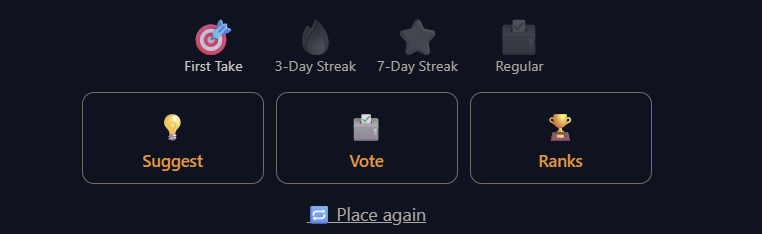
Suggest a take, vote for tomorrow's pick, and see ranks, as well as gamification elements to keep engagement (streak etc.),
-
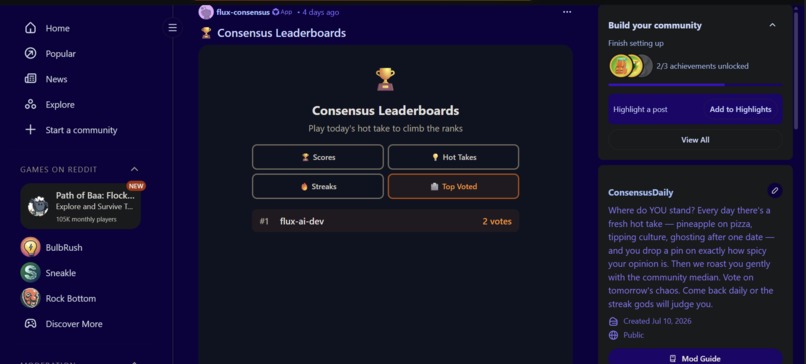
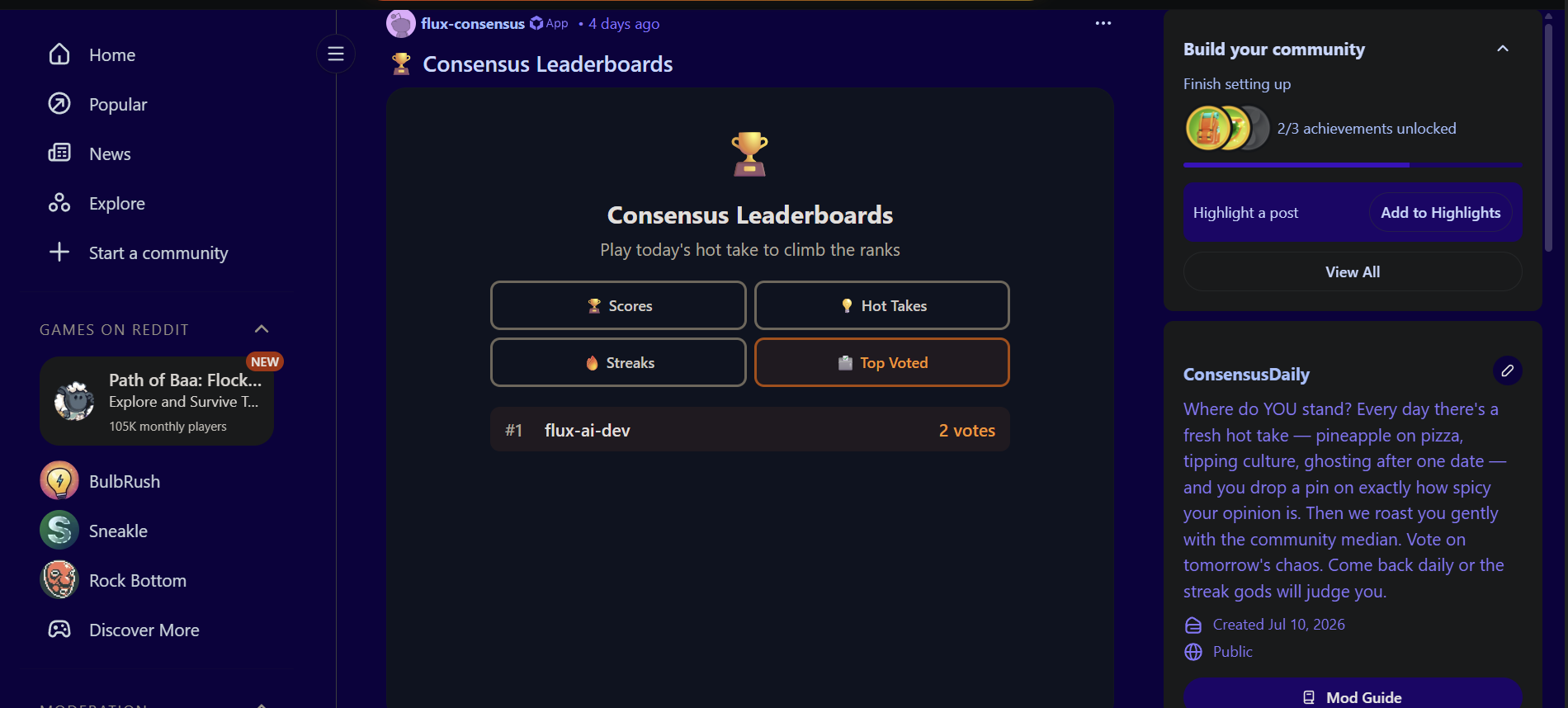
Pinned leaderboard with scores, hot takes, streaks and top voted
-
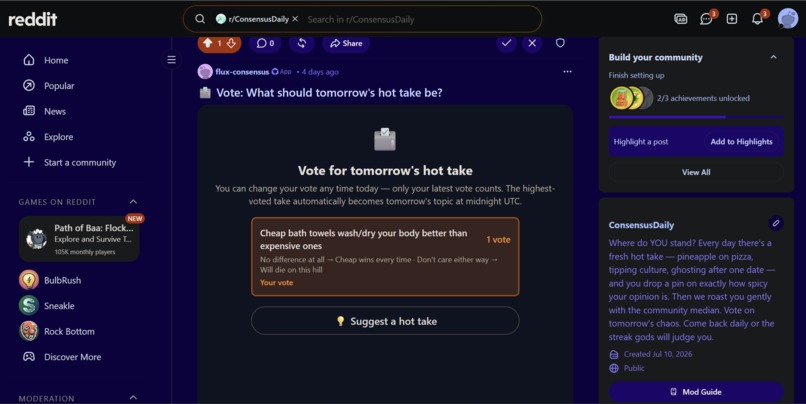
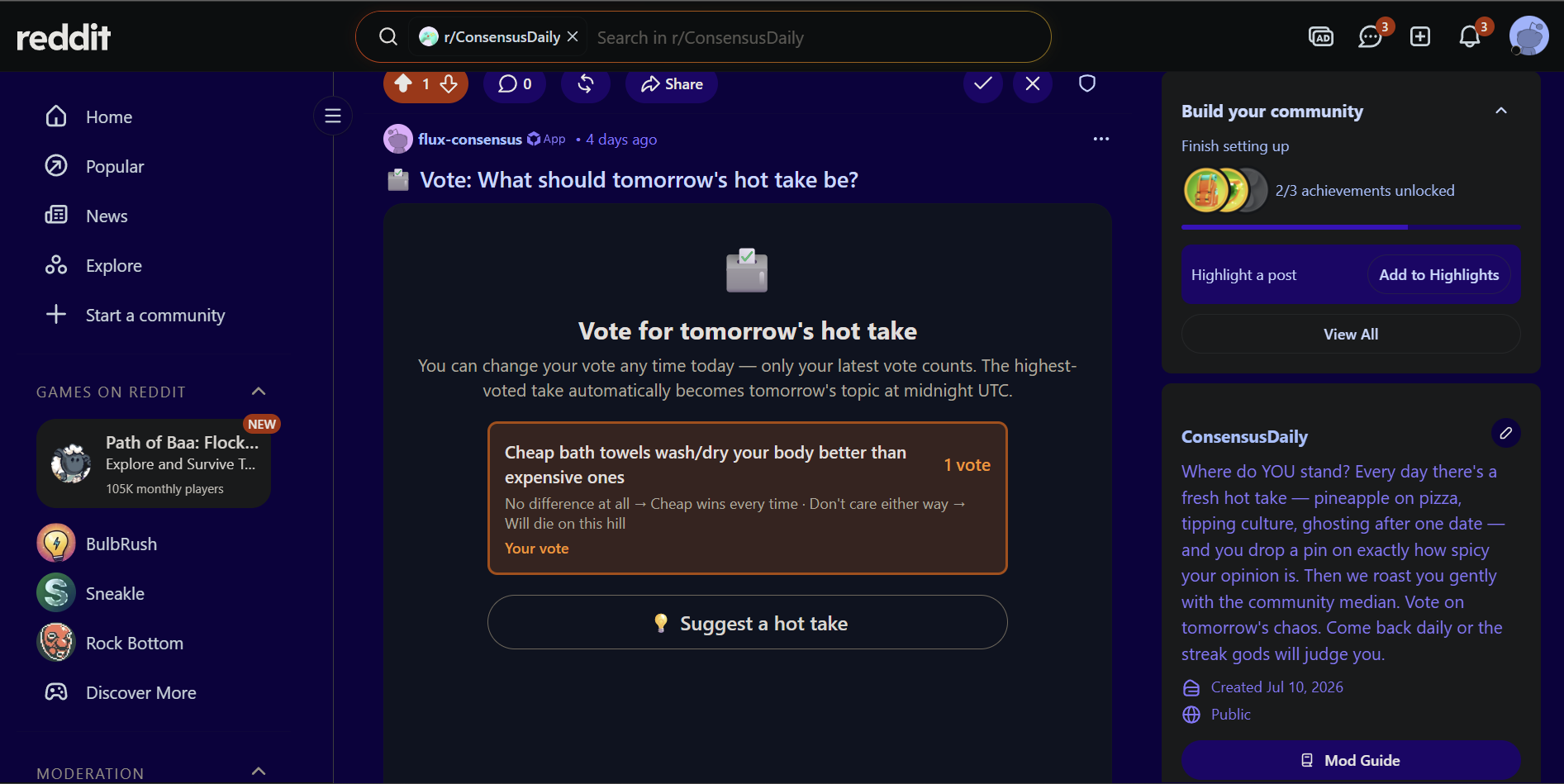
Pinned hot take - so people never miss a voting session for tomorrow's prompt
Inspiration
Reddit is full of threads where a "hot take" gets 4,000 upvotes and the top reply is someone saying "am I crazy or does everyone actually agree with this?" That tension between how strongly you feel about something and how the crowd actually feels is the whole appeal of Reddit threads, but it's buried in scroll-and-guess. I wanted to make that tension the entire game: give people one question a day, make them commit to a position before they see anyone else's, then reveal where the community actually landed.
What it does
Consensus is a daily game built on Devvit. Each day, one new question goes live. Players drop a pin on a 2-axis grid (e.g. Agree ↔ Disagree on one axis, High stakes ↔ Low stakes on the other) to place their take before seeing anyone else's answer. Once you commit, the grid reveals every other player's pin for that day, so you immediately see whether you're sitting in the consensus cluster or standing out as an outlier. Come back tomorrow for a new question, a new grid, a new read on where the community stands.
How I built it
I built it on Devvit Web, using Reddit's Interactive Posts to host the game natively inside a subreddit post rather than as an external app. The core loop is simple by design: one question, one pin placement, one reveal, because the retention mechanic (a fresh question every day, visible collective placement) is what carries the game, not feature complexity. Coming from a software engineering background in financial data systems, I leaned on that experience for the parts that mattered most here: keeping daily state clean and predictable, and making sure aggregating and displaying everyone's pins didn't get janky as response counts grew.
Challenges I ran into
Getting the "reveal" moment to feel satisfying was harder than expected, showing 50+ dots on a small grid without it turning into visual noise took a few iterations on dot sizing, clustering, and how the player's own pin gets highlighted against the crowd. I also had to be deliberate about making the daily loop feel worth returning to on day 2, not just day 1, the questions themselves needed to be the kind of thing where you're genuinely curious how others answered, not just trivia.
What I learned
Devvit's biggest strength for a game like this is that it removes the parts I'd normally have to build myself: auth, hosting, distribution, so I could spend the entire hackathon on the one thing that actually matters: does the core loop make you want to check back tomorrow?
What's next for Consensus
If there's real day-over-day engagement post-launch, the next step is opening question submission to the community itself, so "today's question" becomes something Reddit generates for Reddit, not just something I write.
Built With
- community-voting
- css
- daily-game
- data-visualization
- devvit
- devvit-web
- html
- javascript
- leaderboard
- node.js
- react
- tailwindcss
- typescript
- vite

Log in or sign up for Devpost to join the conversation.