-
-
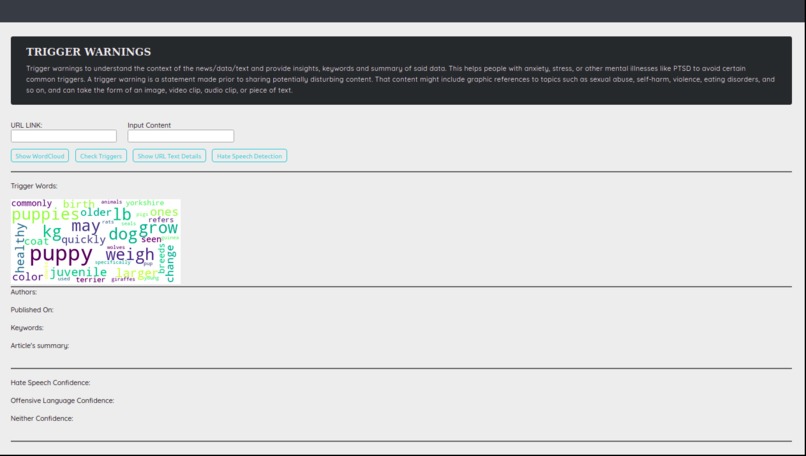
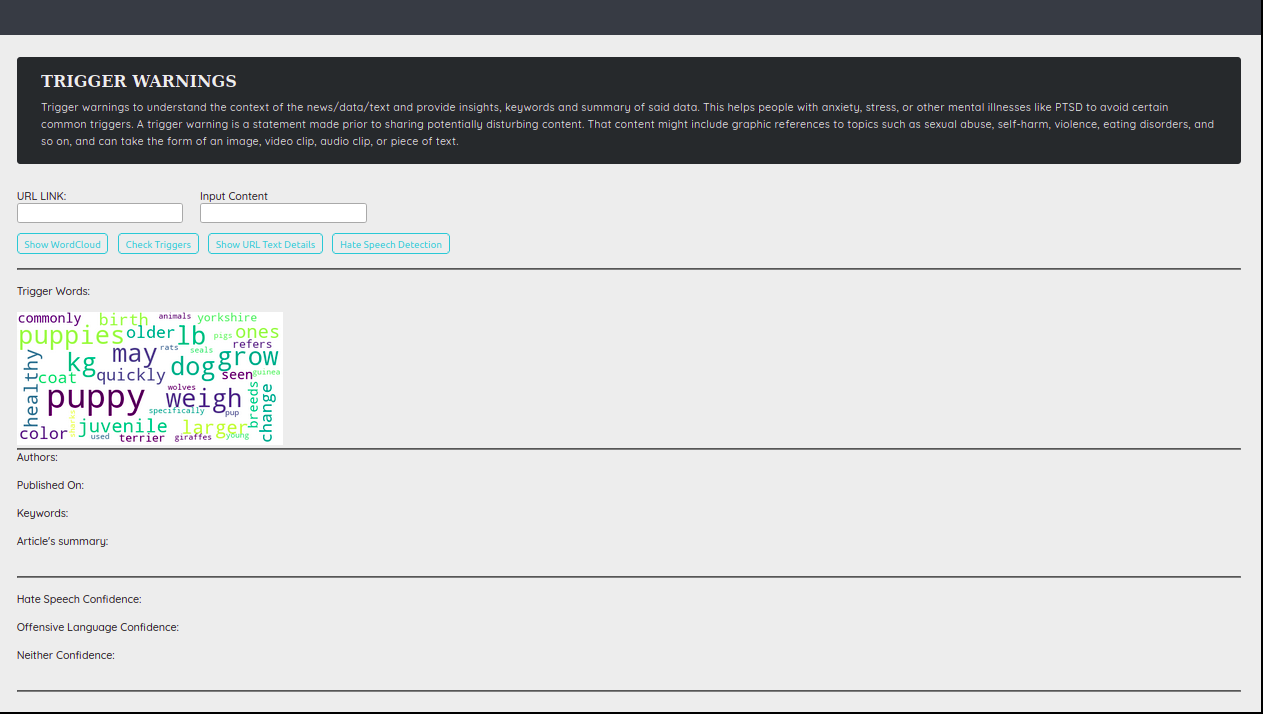
Trigger Warnings and hate speech detection
-
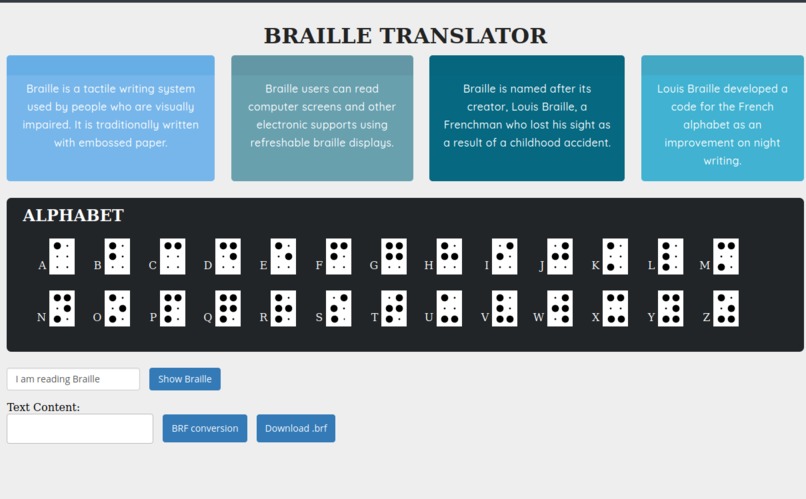
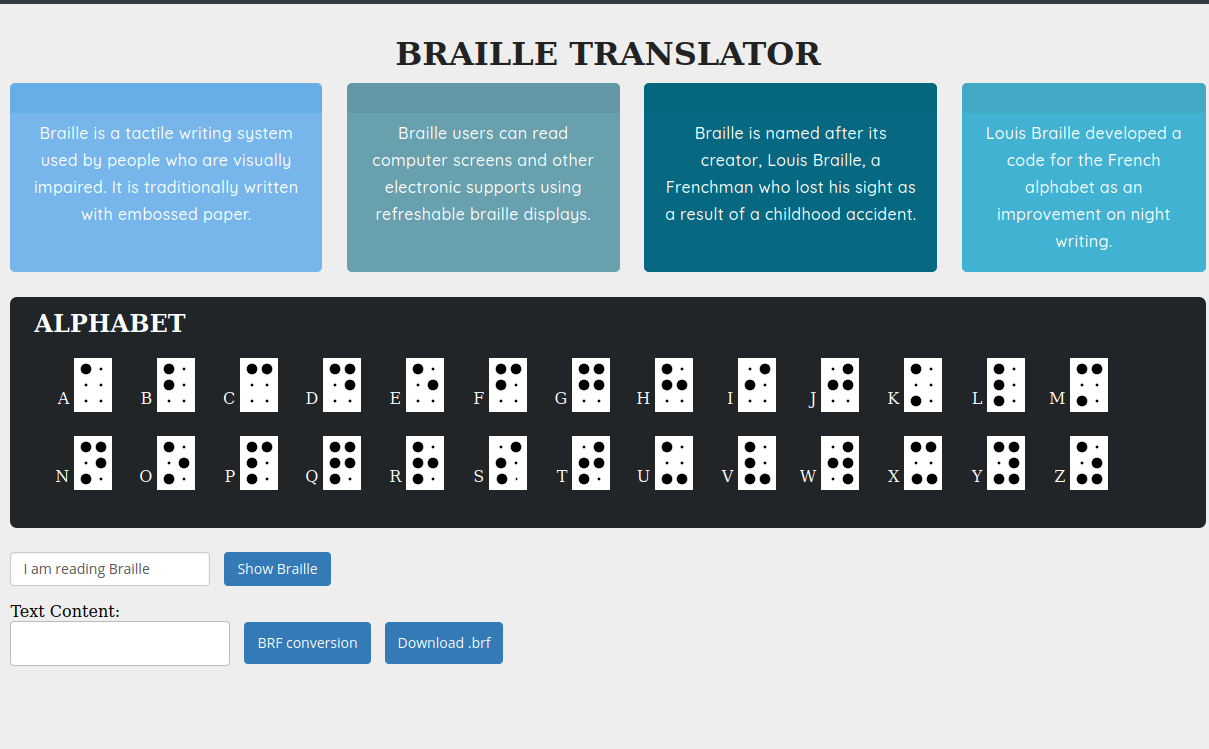
Braille Translator
-
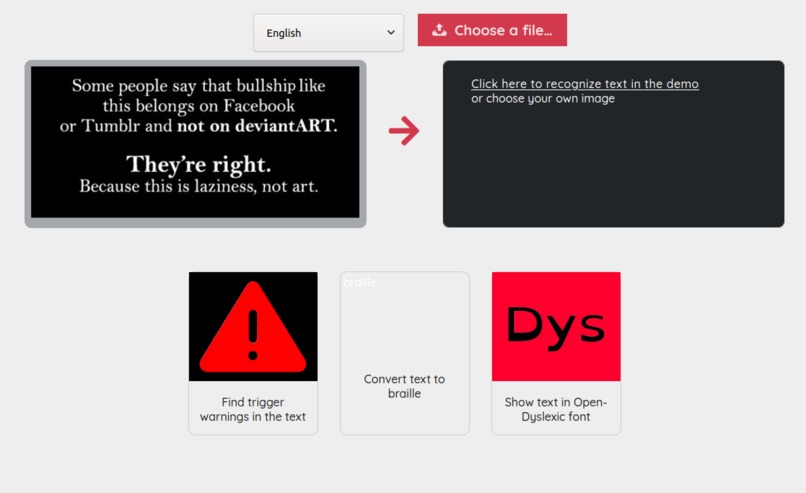
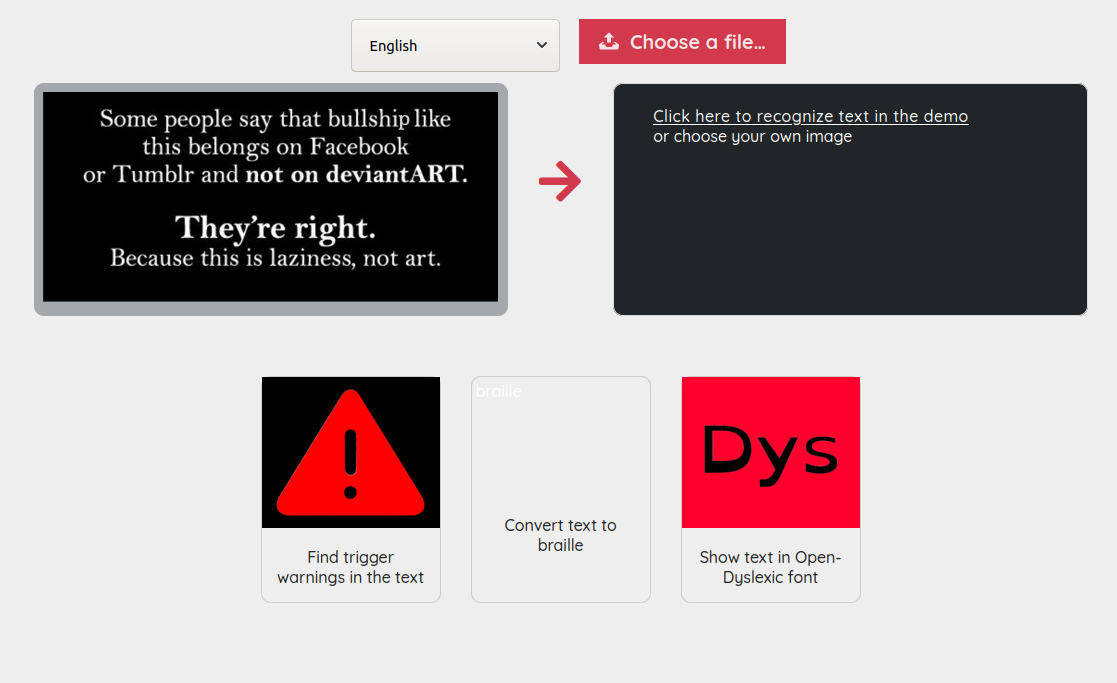
OCR which links to other functionalities
-
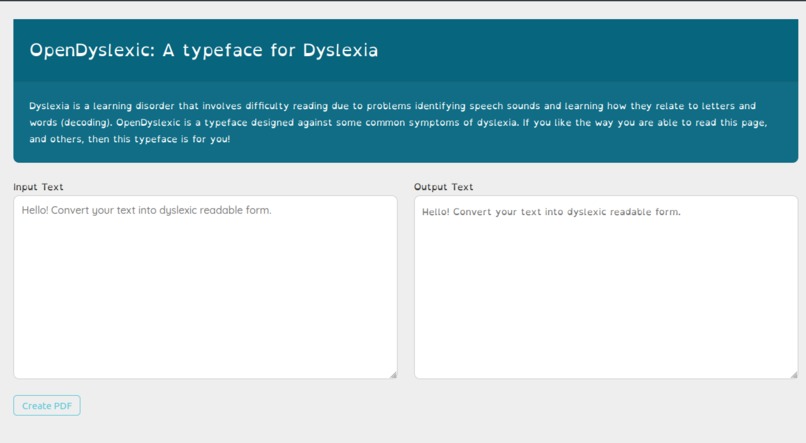
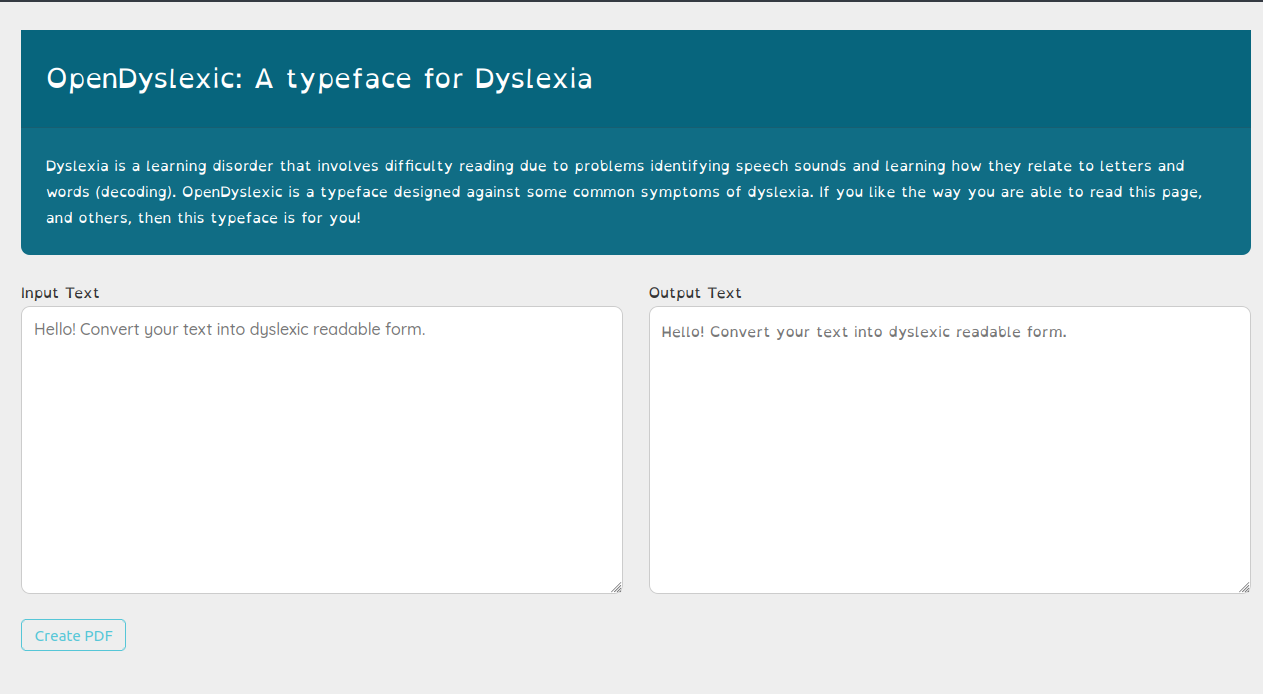
Open Dyslexic Text editor
Problem
In our times when technology is advancing at an astounding speed, the ones who don't have the technical know-how of the latest strides in open-source work are struggling to apply these new technologies, or the said technologies are hidden behind hefty paywalls. Some of the most affected groups are people with various types of handicaps, whether mental or physical, and old people, who might find themselves increasingly isolated.
Ever wondered if a news article is the right choice for you, whether it's what you wish to read or not. There is an ever-present need for people to know what an article is about before they get into it. At least to people who might have anxiety, stress and related issues, the people who might want to avoid certain triggers.
Have you ever considered the how huge impact of something which allows people to convert images to downloadable pdf documents in dyslexia-friendly font might have on those with dyslexia?
And what if you could extract text from images and readily convert it into braille format documents ready to be embossed?
Solution
The conscious web application was developed by us as a one-stop platform to try and meet the needs of the multivarious sets of people who might find themselves increasingly isolated, and yet to help whom the right kind of technology does exist.
To tackle some of the aforementioned issues, Conscious can be used as a platform where all of us and people with special needs can benefit from a set of utilities which we have provided to convert data to need-specific formats. Our top-most goal has been to make something that creates an inclusive environment for all that also helps look after your mental well-being.
About
Our platform provides a simple yet efficient user experience with a straightforward and easy-to-use interface. We have made the web application so as to integrate the different aspects of it into one platform, each part intricately connected to others; each dedicated to solving issues that people with special needs might encounter.
We see our project as a utility set for users, who can convert data to a format friendly to themselves.
Features and How We built it
Our platform allows users to get insights on text data/news articles and functionality to convert data to format friendly to them. We provide the various functionalities listed below:
Trigger warnings to understand the context of the news/data/text and provide insights, keywords and summary of said data. We developed an algorithm to pick up some of the most commonly found triggers from text. Also, we used NLP to gain holistic insights from the input text. This helps people with anxiety, stress, or other mental illnesses like PTSD to avoid certain common triggers.
Ability to convert Text data(in form of link, text) to Embosser Ready File(.brf) and allow downloading it in this format. This can also be done for texts as big as the Bible itself. This will be of help to blind people (or people working with them) to convert input data to braille fast and without any worries of huge pay walls as this functionality is built using liblouis which is open-sourced. As an additional functionality, we have also provided a braille visualizer for sighted people who wish to learn more about braille.
Ability to convert Text data (in form of link, text) to a font friendly to those with dyslexia (Open Dyslexic) and allow downloading the same in a pdf format. People with dyslexia are often left feeling inadequate while simple yet eloquent solutions such as this one could go lengths in helping them achieve their best.
Ability to extract text data from images using OCR and then do any of the above processes on it. We used tesseract.js for this. Once we had thought about all the other components, we then wanted to come up with ways to make our application more readily available for use in real life. Hence, we came up with the idea of using OCR to detect text from images, which can then be used to:
1. Gain insights from the text and find trigger warnings it might contain.
2. Convert to braille and .brf files which can then be sent to the embosser.
3. Output the text in OpenDyslexic, and further download it's pdf.
Challenges We ran into
The biggest challenge that we faced were the UX-driven considerations, i.e., striking the right balance between the multiple utilities that we wanted to provide, and how intricately they are all connected to each other, and communicate with each other.Brainstorming and modifying the utility set continuously required a lot of adaptability and creativity and we learned a lot about teamwork and how to resolve issues.
Another major challenge was collaborating effectively throughout the hackathon. A lot of the bugs we faced were solved through discussions. We realized communication was key for us to succeed in building our project under time constraints.
Also the pandemic had wrecked the sleeping schedule of some of us, rendering them available at only the most inconvenient of times XD. Needless to say, we all worked it out!
Accomplishments that We're proud of
We take great pride in our that we were able to apply our past hackthon experience into the development process and were able to incorporate ideas that could potentially help a huge number of people. The development process was exhilarating and brought the team down the path of nostalgia which significantly increased our motivation. We have participated together in several hackathons now and yet it never gets old!
We are also impressed by our teamwork and team chemistry, which allowed us to divide tasks efficiently and incorporate most of our ideas into the utility set without lot of hiccups.
We accomplished so much more within the time constraint than we thought initially, such as training our machine learning model (although with limited data), getting a server running up and quickly, and also figuring out how to use libraries and modules that we had no previous experience working with.
What We learned
As a team, we learned the benefit of incorporating software development processes such as the Agile Software Development Cycle. We solely focused on specific software development stages chronologically while returning and adapting to changes as they come along. The Agile Process allowed us to maximize our efficiency and organization while minimizing* forgotten tasks or leftover bugs.
Also, we learned to use entirely new software, languages, and skills such as liblouis, tesseract.js and tensorflow.js, to name a few.
What's next for the Conscious App
We hope to continue developing Conscious to become an even more diverse platform that supports multiple options for similar problems and is much faster.
The primary goal when we thought up the concept of Conscious was to build a platform that first and foremost addresses the needs of people who feel left out due by being unable to participate in things that others often take for granted. And none of these things are exceptionally difficult to provide with recent technical strides, and yet remain inaccessible to those who need them the most.
With this project we've set out to teach people about technologies available to us today and how we can use them to help others. We hope to inspire people to contribute to our project so that, we make information accessible to people with special needs faster and more accurately.
We aim to find support from mentors along the way, who can help us understand these great open-source technologies available due to contribution of amazing developers around the world and work toward improving them.
Try it live here: https://bit.ly/3oSNiU8
Thanks for checking us out!


Log in or sign up for Devpost to join the conversation.