-
-
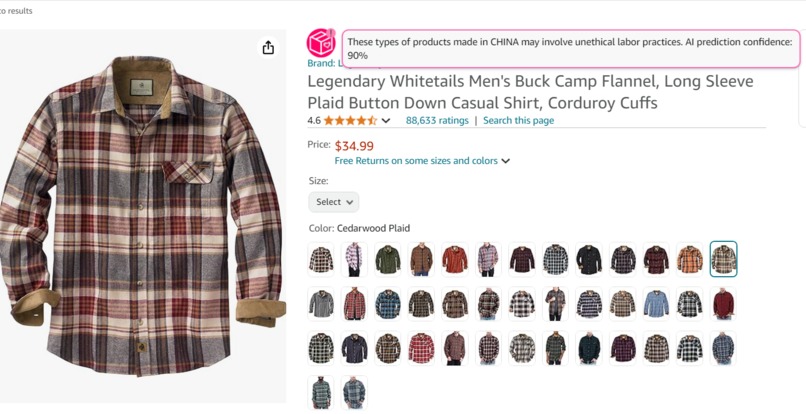
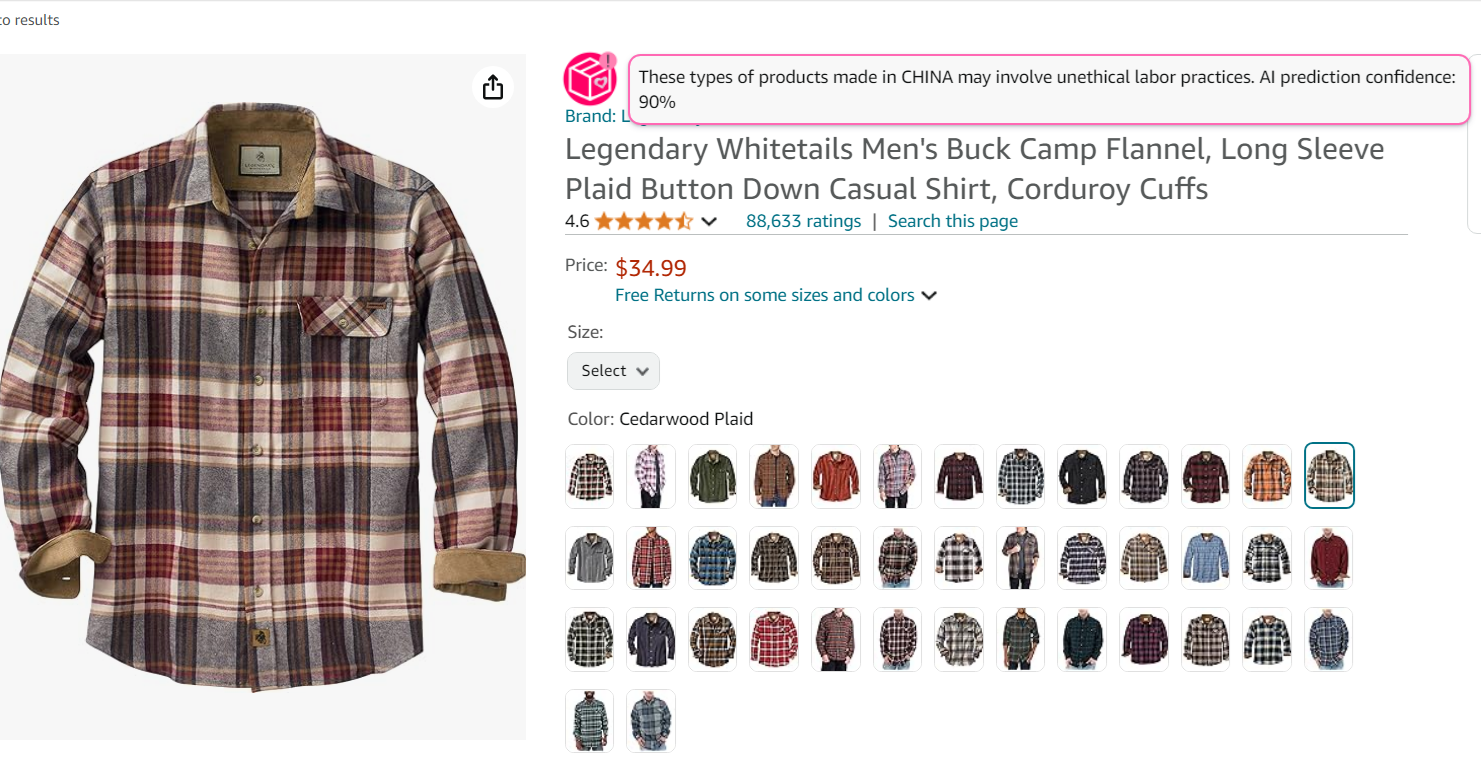
Our extension in action!
-
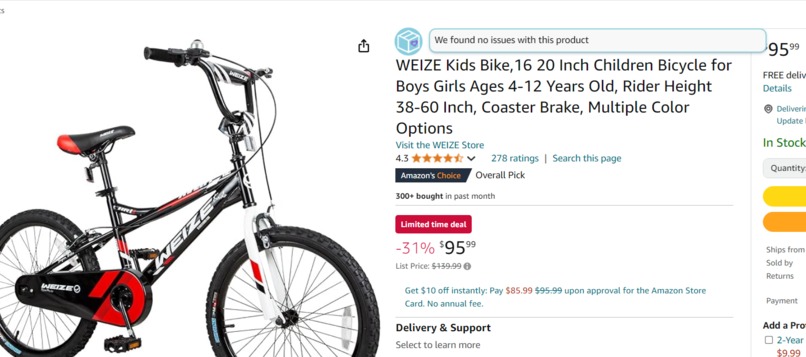
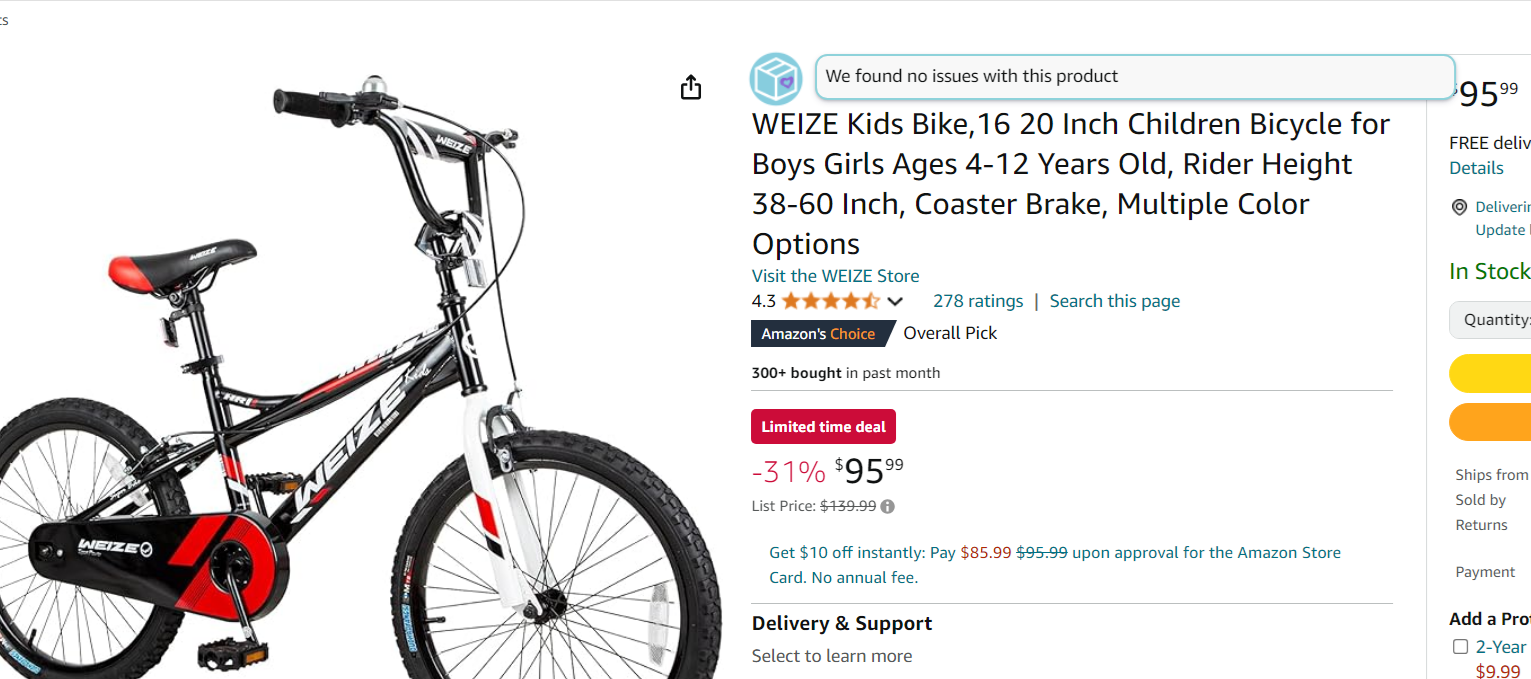
A product with a low likelihood of utilizing unethical labor
Inspiration
Shopping online is so common, but yet there is so little accountability. When you purchase something on Amazon, where is that product really coming from? And who/what are you supporting with your dollar?
What it does
Our extension adds a clear indicator on every Amazon product listing that conveys how likely the product was creating using unethical labor (child labor, forced labor). This is calculated using a combination of machine learning, Amazon vendor and item lookups, and U.S. Department of Labor datasets.
How we built it
We wanted to utilize machine learning to help classify the many millions of Amazon products that our extension could encounter. We did not want to use ChatGPT, however. The OpenAI API does not have a beginner-friendly free tier, and we did not want to ship all our user data over to another company. We ended up creating and hosting our own AI server to power all our classifications.
Challenges we ran into
Running our own AI added substantial complexity to the project. Setting up the server and domain name, picking the right model, and keeping response times fast were all hurdles that we had to overcome to deliver our final product.
Accomplishments that we're proud of
- Building a clean and simple user experience
- Creating a performant custom AI server running LLAMA 3.2
- Integrating real government data to provide accurate warnings/predictions
What we learned
We strengthened our skills in many areas. Neither of us had ever created a Chrome extension before, run a local AI model, and networking/hosting was a whole new world to me. Despite having so many things to learn, we were able to create an extension that is really useful in informing consumers.
What's next for Conscious Cart
We are interesting in trying different machine learning techniques to enhance the model, such as RAG or fine-tuning to increase accuracy. Next steps include getting our extension approved and published on the Google Chrome Store.


Log in or sign up for Devpost to join the conversation.