-
-
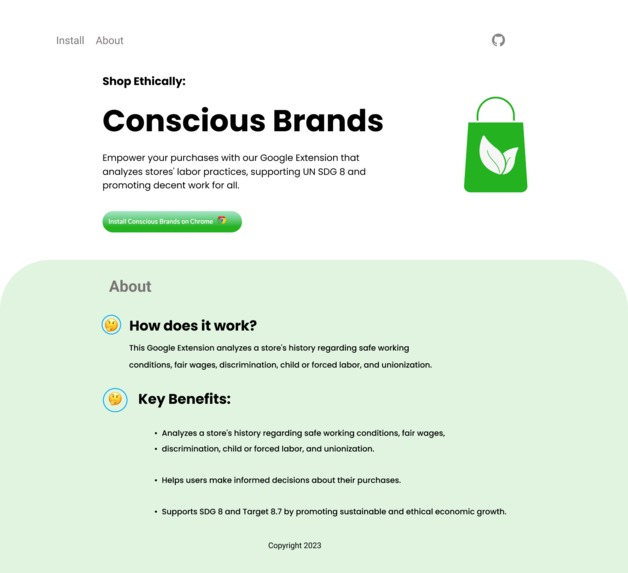
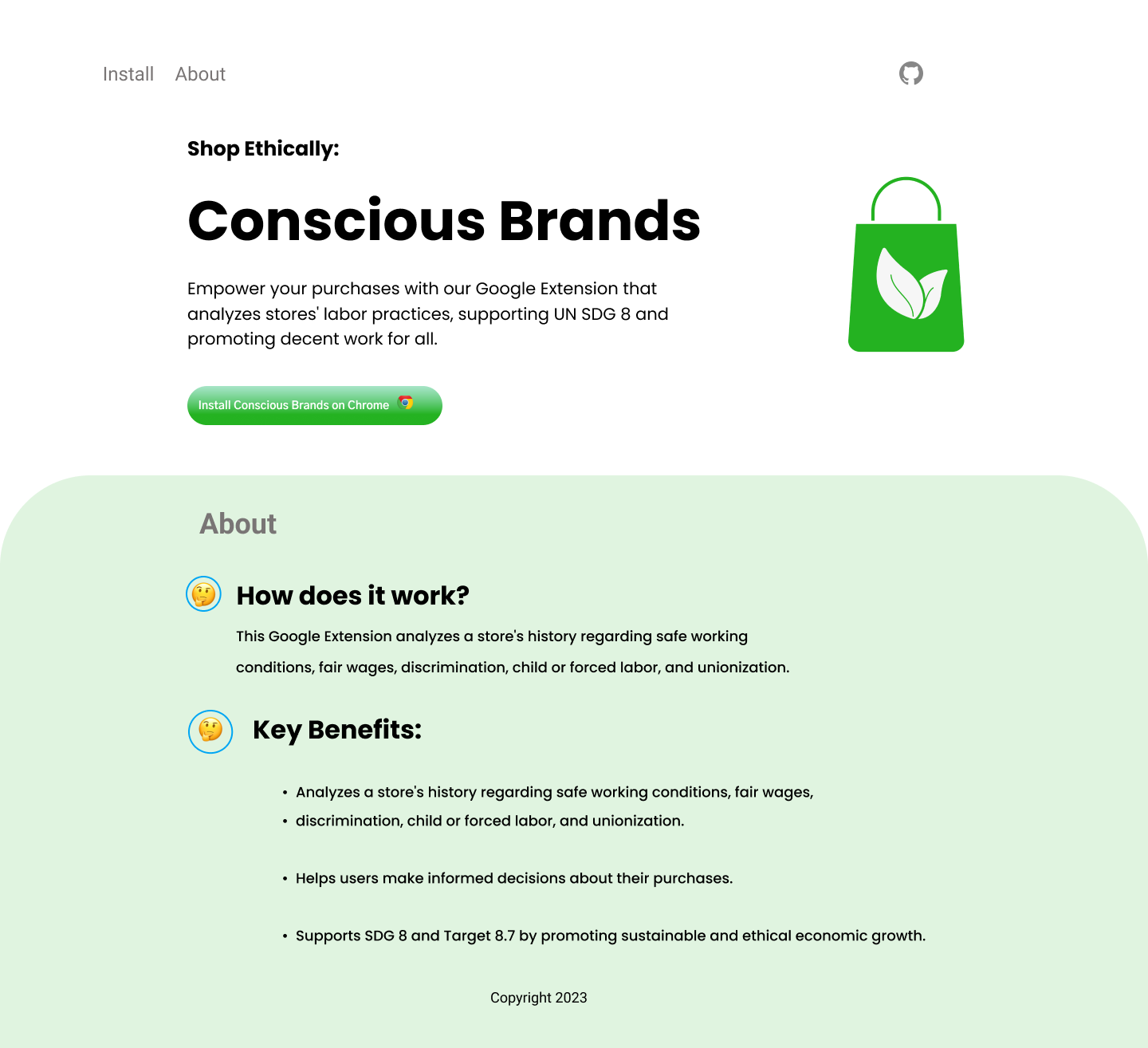
Landing Page of Conscious Brands, in which would be included in the Google Chrome Extension Store
-
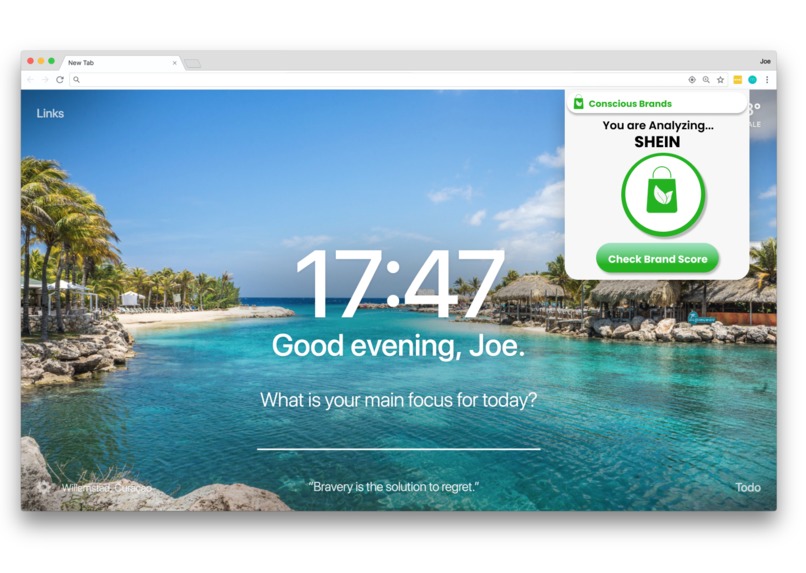
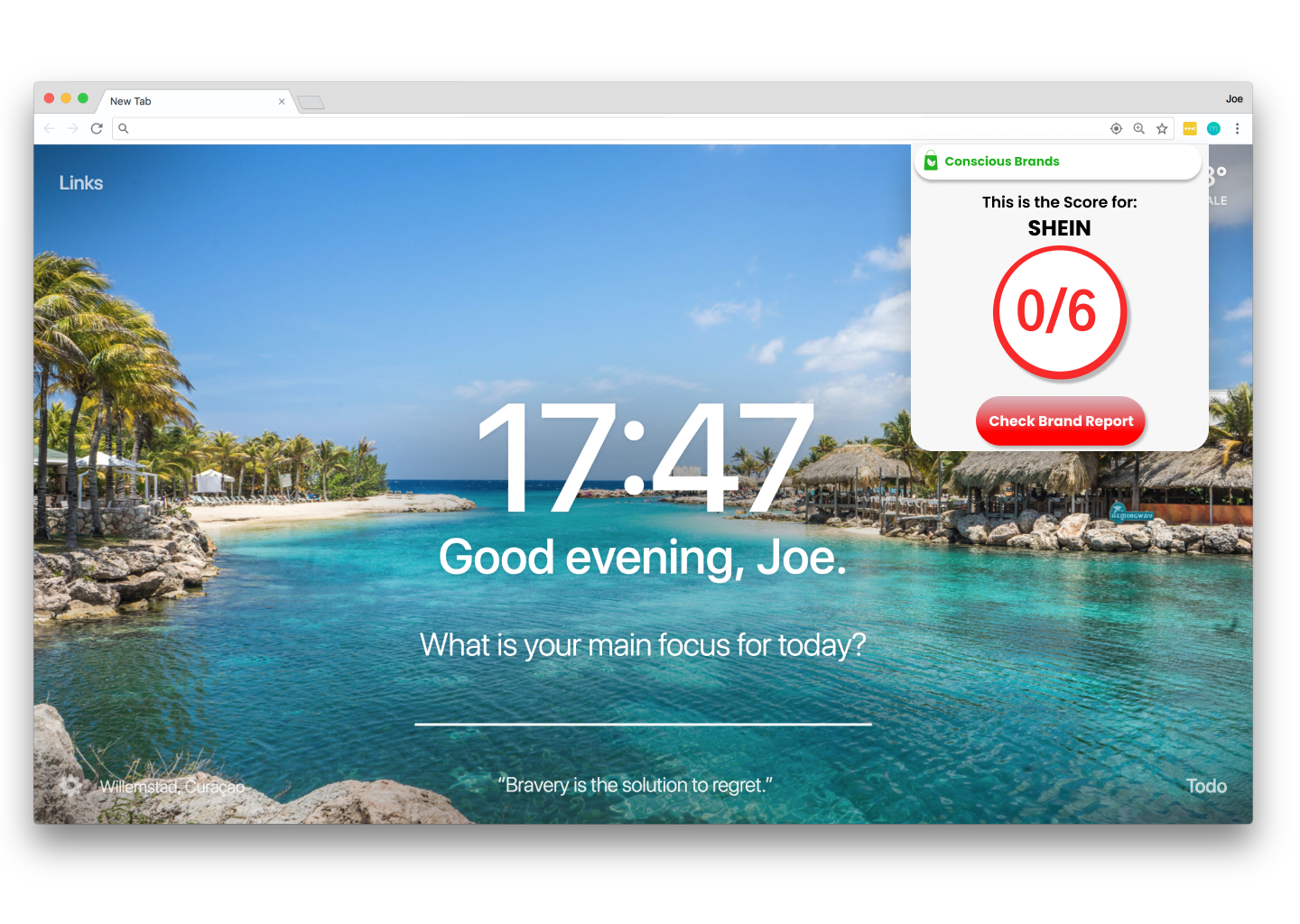
First part: the user can click to check the Brand Score of the website that they are currently browsing.
-
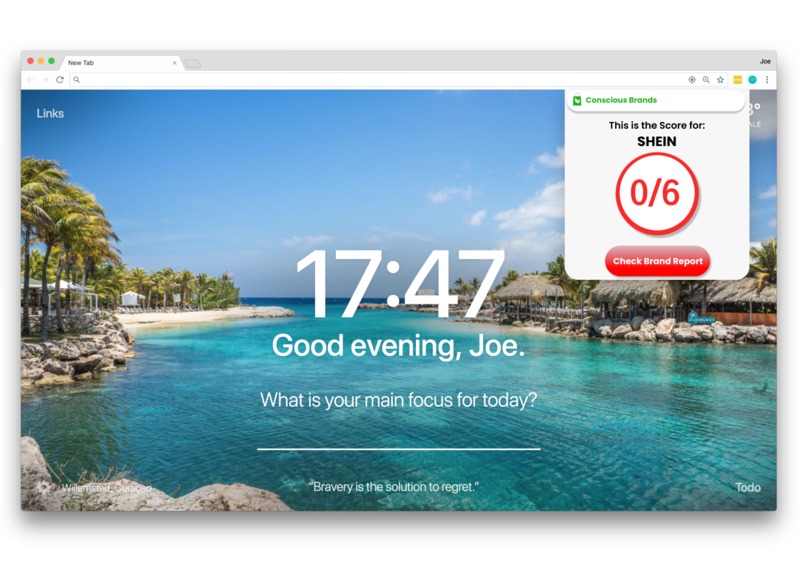
Second part: It shows the Brand Score, if the user wants, they can click on the bottom to check a detailed report!
-
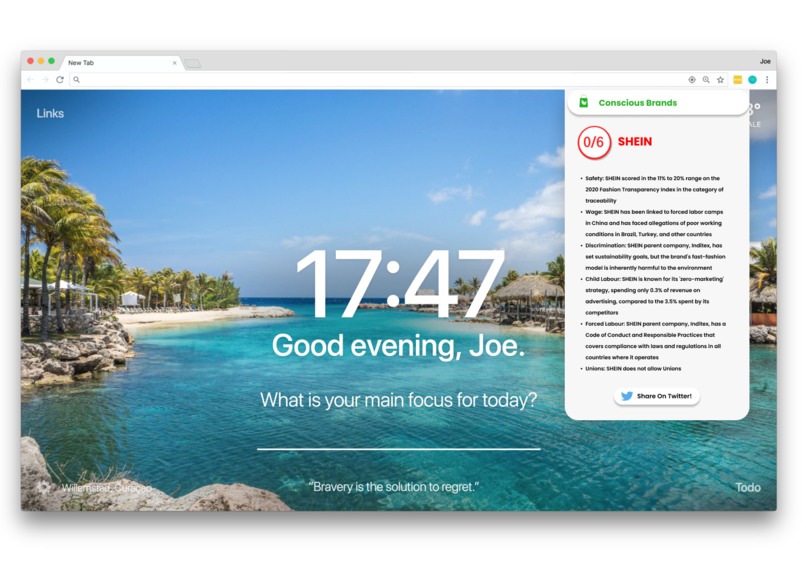
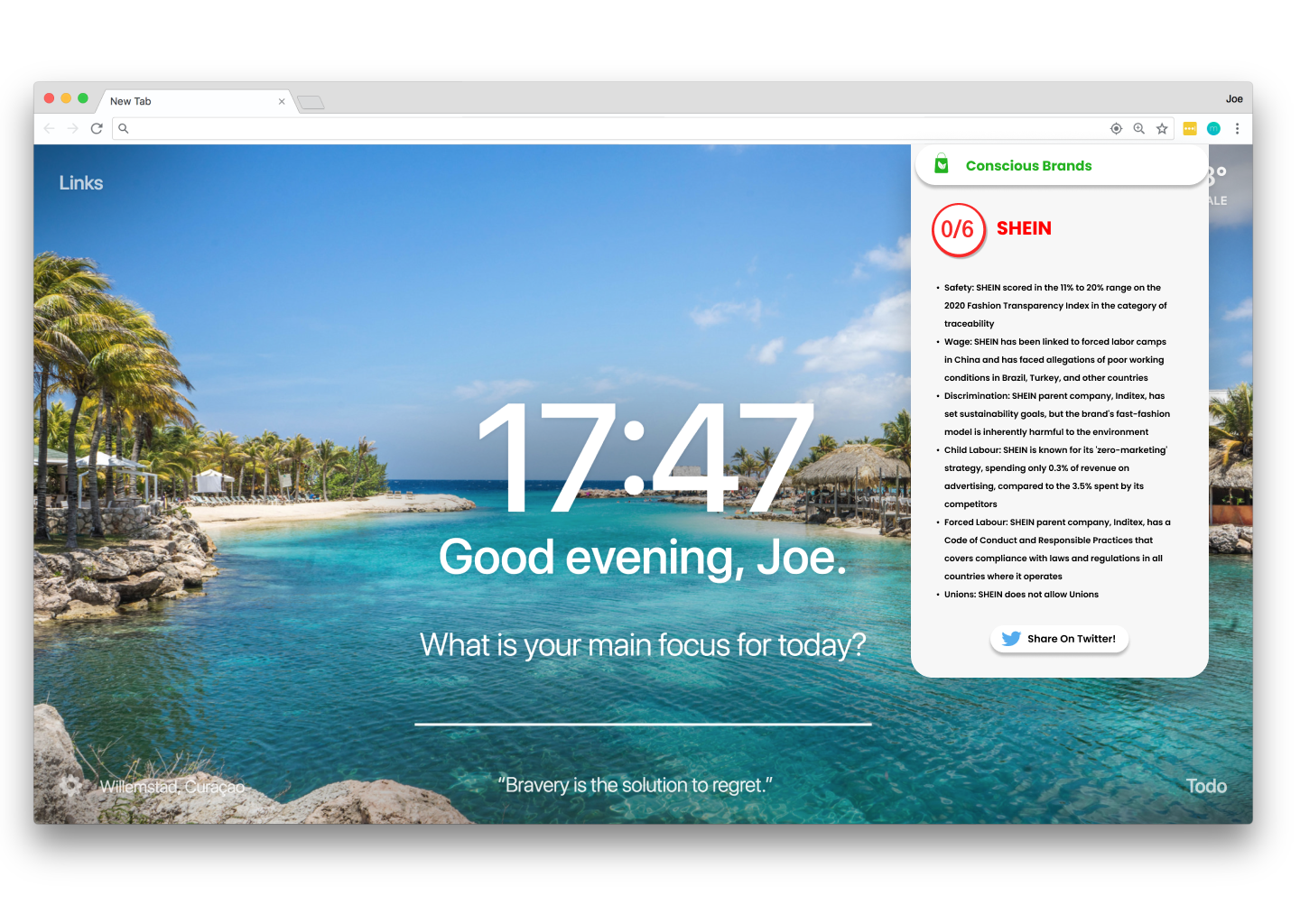
Third part: showing the report of how we measured the Sustainability Score, because we want to be transparent about how we calculated it.

Inspiration 🚀
This Google Extension analyses if a store has ever had issues with safe working conditions, fair wages, discrimination, child or forced labor, and if let its employees to unionize. This will support the Sustainable Development Goal (SDG) 8, aiming to "promote sustained, inclusive and sustainable economic growth, full and productive employment and decent work for all". 🇺🇳
We focus on taking "immediate and effective measures to eradicate forced labour, end modern slavery and human trafficking and secure the prohibition and elimination of the worst forms of child labour, including recruitment and use of child soldiers, and by 2025 end child labour in all its forms", as we believe that by raising awareness, we can promote the idea that is wrong to buy from brands that use this kind of labor.
Thus, this extension raises awareness about sweatshop labor and helps users make informed decisions about their purchases.
What it does 🚀
This Google Extension:
Analyzes a store's history regarding safe working conditions, fair wages, discrimination, child or forced labor, and unionization. Thus, it supports SDG 8 by raising awareness about child and labor and promoting ethical shopping choices. As a result, it helps users make informed decisions about their purchases, contributing to a more sustainable and ethical economy. 🏙️
How we built it 🚀
We built this Google Extension using the following tools:
🎨 Figma for designing the user interface and user experience. 💻 Visual Studio Code for coding the extension using HTML and CSS. 📚 Research on existing browser extensions for ethical and sustainable shopping, such as Ethical Shopper and DoneGood, to understand their features and functionalities.
The code that we used to calculate the Brand's Sustainability Score was:
{
  "amazon":
  [
    {
      "s": 0,
      "w": 0,
      "d": 0,
      "c": 0,
      "f": 0,
      "u": 0,
      "safe": "Amazon warehouse workers were found to be hurt at twice the rate of other warehouses.",
      "wage": "Amazon warehouse workers earn 15% less than comparable workers.",
      "discrimination": "Amazon was accused of discrimination against pregnant and disabled workers.",
      "child": "Amazon was linked to suppliers using child labor.",
      "forced": "Amazon was linked to suppliers using forced labor.",
      "union": "Amazon has refused to recognize labor unions"
    }
  ],
Challenges we ran into 🚀
Integrating multiple technologies and frameworks was challenging for us in terms of compatibility and ensuring smooth communication between different components.
With multiple technologies involved, identifying and resolving bugs was more complex. Debugging issues that arise from the interaction between different components can require thorough analysis and troubleshooting. As technologies evolve rapidly, keeping up with the latest updates, versions, and best practices can be challenging, especially with Figma Dev Mode. For example, figma developer mode does not release code with any html tag other than div or img, so it was difficult to determine which sections we had to change for the extension to function altogether.
Accomplishments that we're proud of 🚀
▫️ Developing a feature-rich application with a robust architecture that ensures high performance and scalability;
▫️ Identifying and fixing bugs in the code that caused multiple performance problems;
▫️ Creating a user-friendly interface that was easy to use, navigate, and get both the score and report. The extension also allowed for users to be able to easily share their reports online which further increased awareness;
▫️ Understanding the user's needs and defining the scope of the project in a way that was achievable.
What we learned 🚀
Different challenges that can be encountered during development include technical complexities with Dev Mode Beta with Figma, time constraints, and integration issues. Overcoming these challenges requires having a solid plan, good teamwork and communication, being flexible, and testing thoroughly. 🤝
Furthermore, we learned that UX/UI design is a good option for creating an user-friendly interface, though thorough testing ensures the reliability and stability before release.
What's next for Conscious Brands 🚀
To make this Google Extension even more impactful, we can consider the following enhancements:
🗺️ Expanding the database of stores and brands analyzed by the extension, ensuring a comprehensive coverage of various industries and regions. In this first version, we included stores in 5 continents: North and South America, Europe, Oceania, and Asia.
📱Incorporating user feedback and ratings to continuously improve the accuracy and relevance of the extension's analysis.
🏬 Integrating with popular e-commerce platforms like Amazon, Etsy (we already have these and the other big players in our database), and others to provide ethical shopping suggestions directly within the user's shopping experience.
🌐 Collaborating with organizations working on SDG 8 to share data, insights, and resources, further strengthening the extension's impact.
By implementing these enhancements, the Google Extension will become an even more powerful tool for promoting ethical and sustainable shopping choices, ultimately contributing to the achievement of UN SDG 8 ❤️🚀

Log in or sign up for Devpost to join the conversation.