-
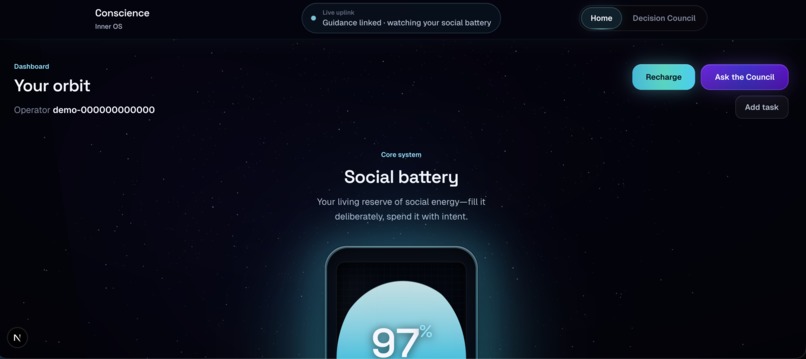
Dashboard homepage part 1
-
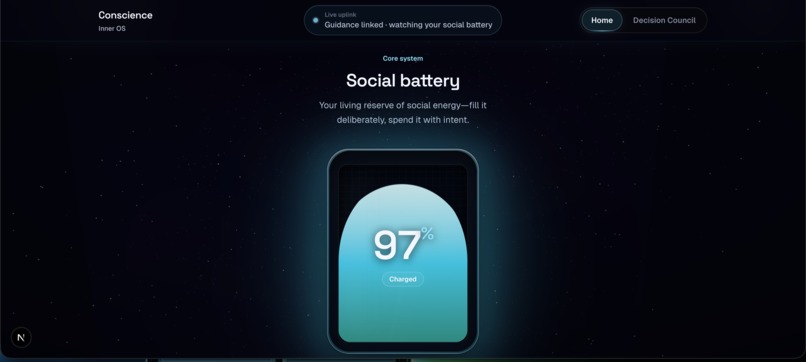
Dashboard homepage part 2
-
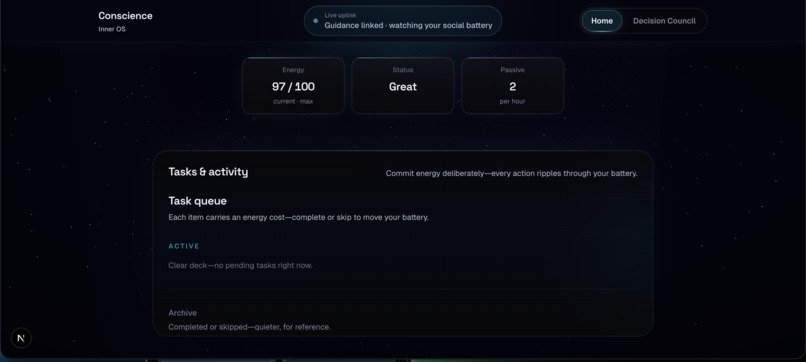
Dashboard homepage part 3
-
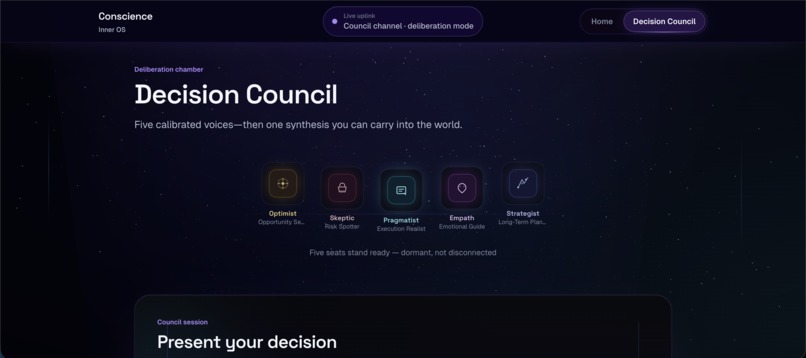
Possible future implementation part 1
-
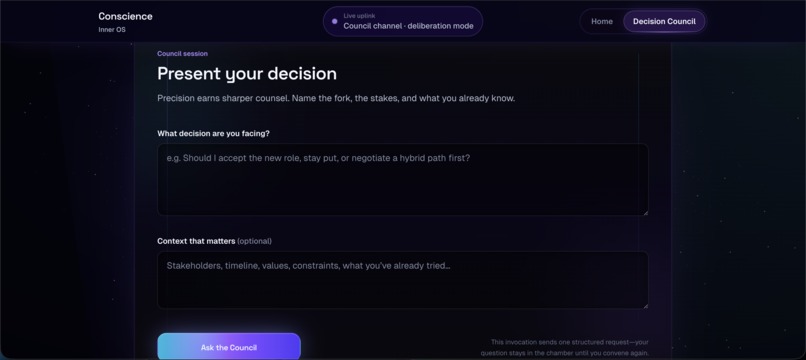
Possible future implementation part 2
-
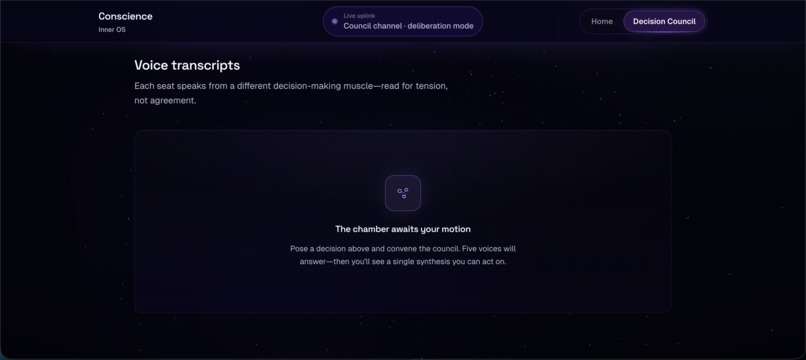
Possible future implementation part 3
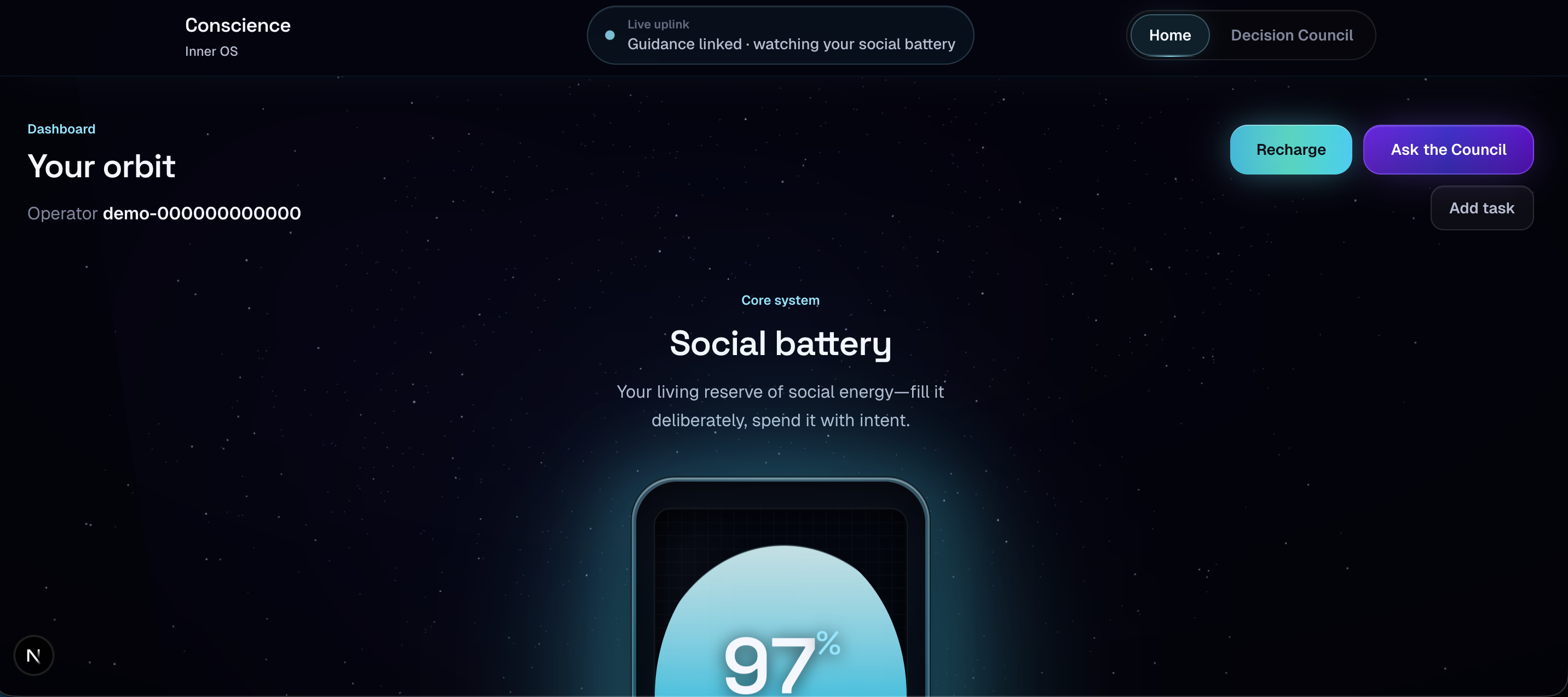
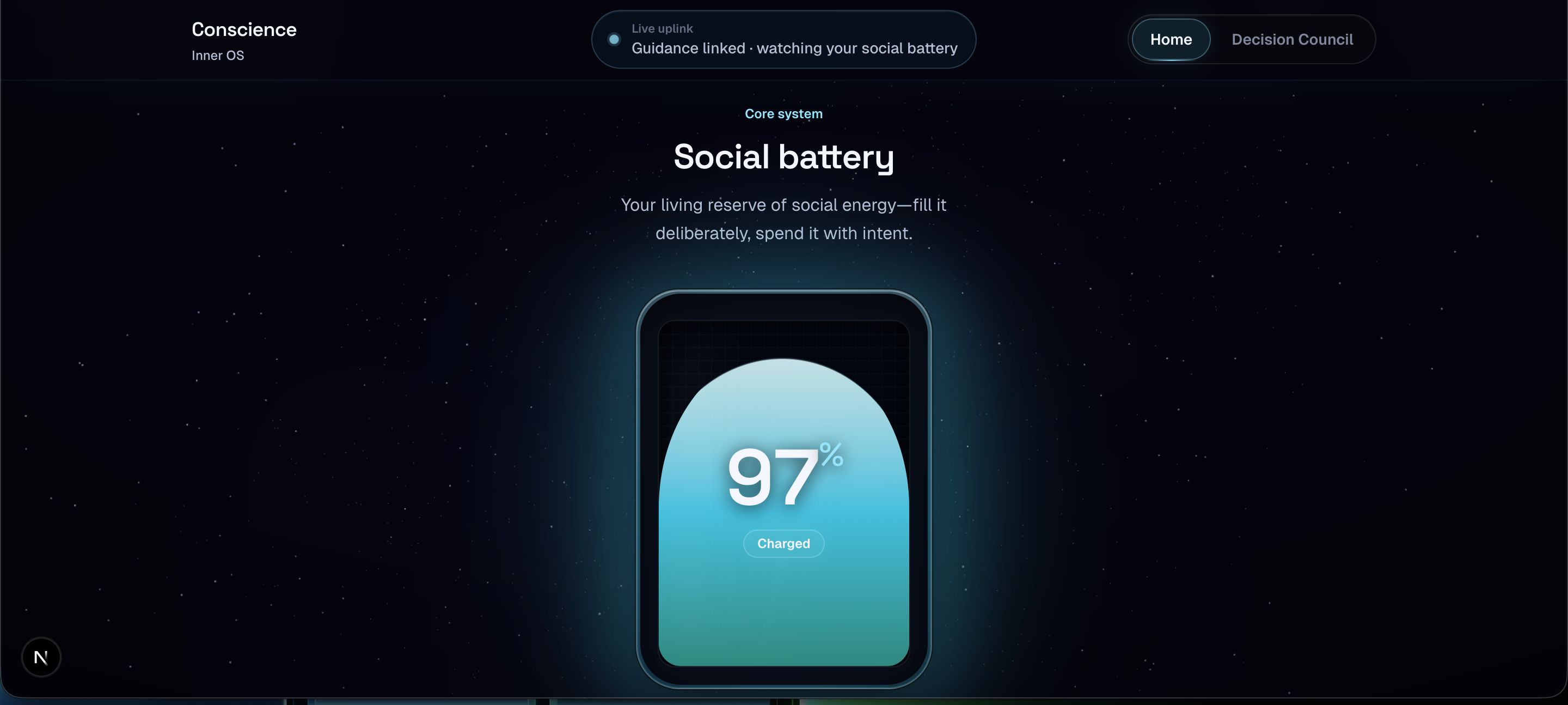
Inspiration
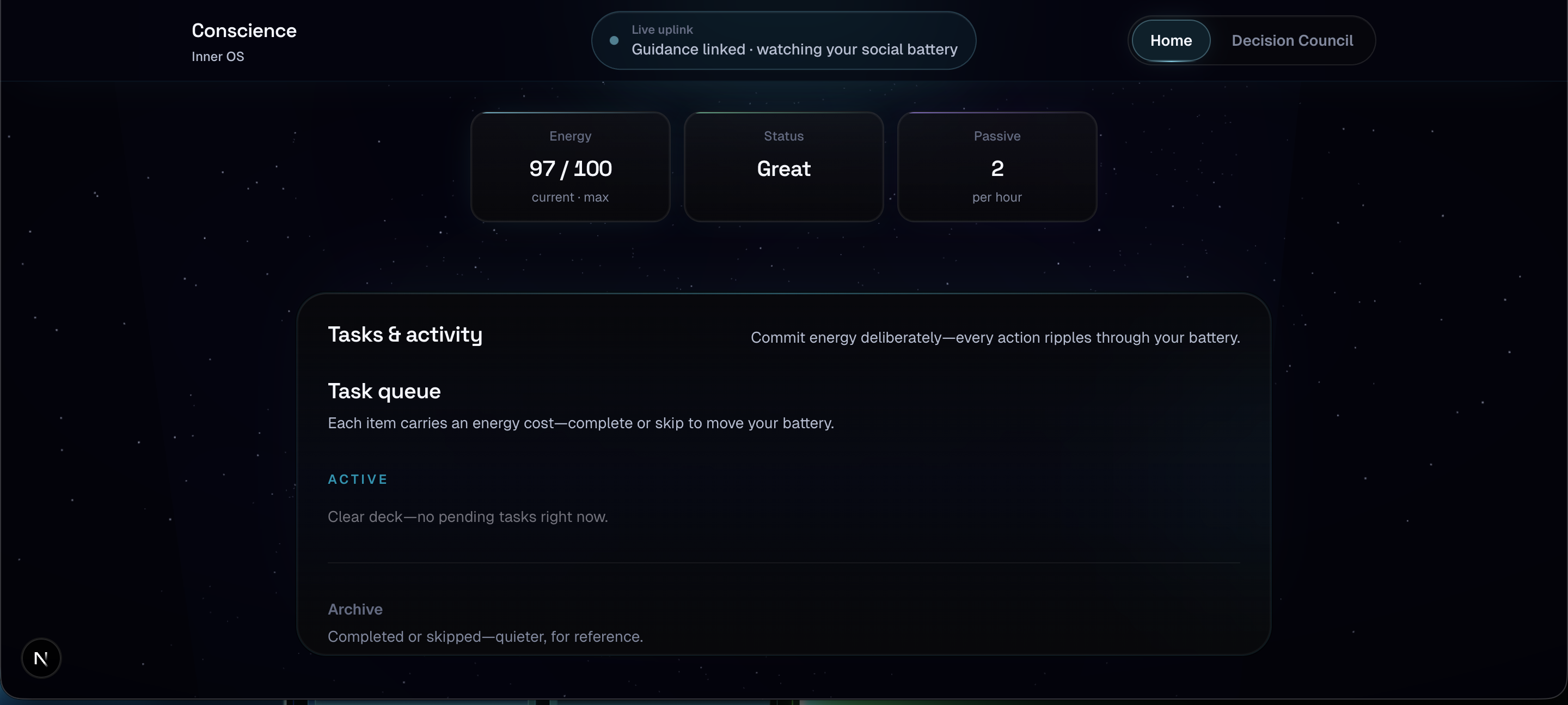
With over 23.1% of people and roughly 60% of college students struggling with mental health issues, we wanted to tackle a massive contributing factor: burnout and work fatigue. For introverts and neurodivergent individuals, managing daily social and professional tasks can be completely draining. We built Conscience to help users seamlessly organize their schedules while calculating exactly how mentally demanding each task will be.
What it does
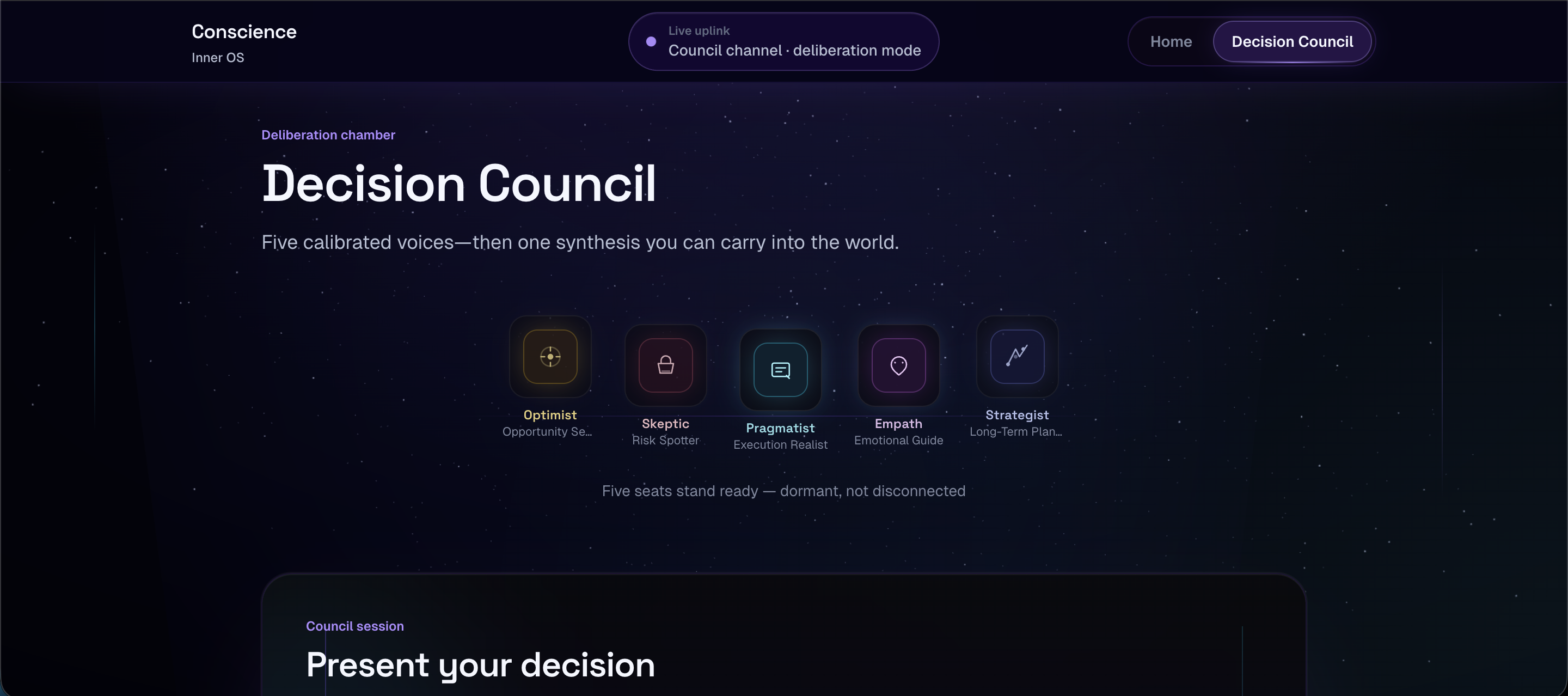
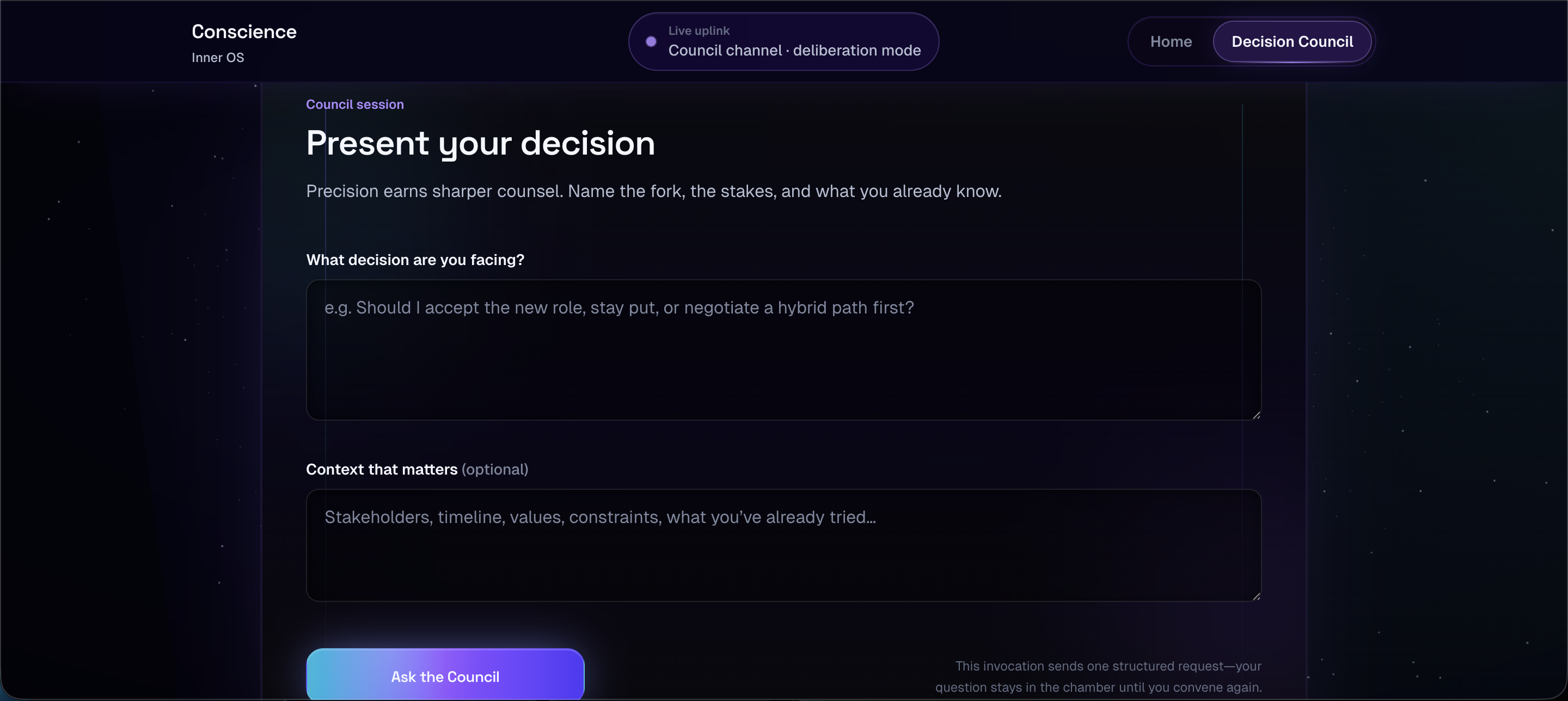
Conscience is an AI-powered Mental Wellbeing Tracker. Users input their upcoming tasks and their personal difficulty rating. The application uses the Perplexity API to analyze the task's strain based on the user's personality profile and triggers, outputting a specific stress percentage. This dynamically drains or recharges a fully interactive 3D "social battery" visualized in the browser, giving users a tangible way to measure their mental energy before they burn out.
How we built it
We utilized a completely decoupled architecture to ensure scalability:
- Frontend: Built with Next.js, Tailwind CSS, and
react-three-fiberfor the 3D battery visualization. - Backend: A lightning-fast Python FastAPI server.
- Database: Supabase (PostgreSQL) handles our user profiles, state management, and calculation logs.
- AI: The Perplexity API is integrated into the backend to score and reason through the mental strain of text inputs.
Challenges we ran into
The ultimate hackathon final boss: Deployment. We successfully built and tested our decoupled stack locally, but ran into a wall at 3:00 AM while trying to containerize and daemonize the application on an AWS EC2 t3.large instance. We battled through Linux dependency chains, Nginx reverse proxies, and PM2 incorrectly interpreting our Python virtual environments. While we successfully opened our AWS security groups and got the API routing online, a persistent Next.js environment caching issue forced us to make a strategic engineering pivot just hours before the deadline: we deployed a flawless local MVP for our final demonstration to ensure the best possible user experience.
Accomplishments that we're proud of
- Successfully integrating a complex 3D rendering library (
three.js) into a Next.js environment. - Decoupling the frontend and backend entirely, treating our own backend like a true third-party API.
- Surviving the 24-hour grind and having a fully functional, AI-integrated product to show for it.
What's next for Conscience
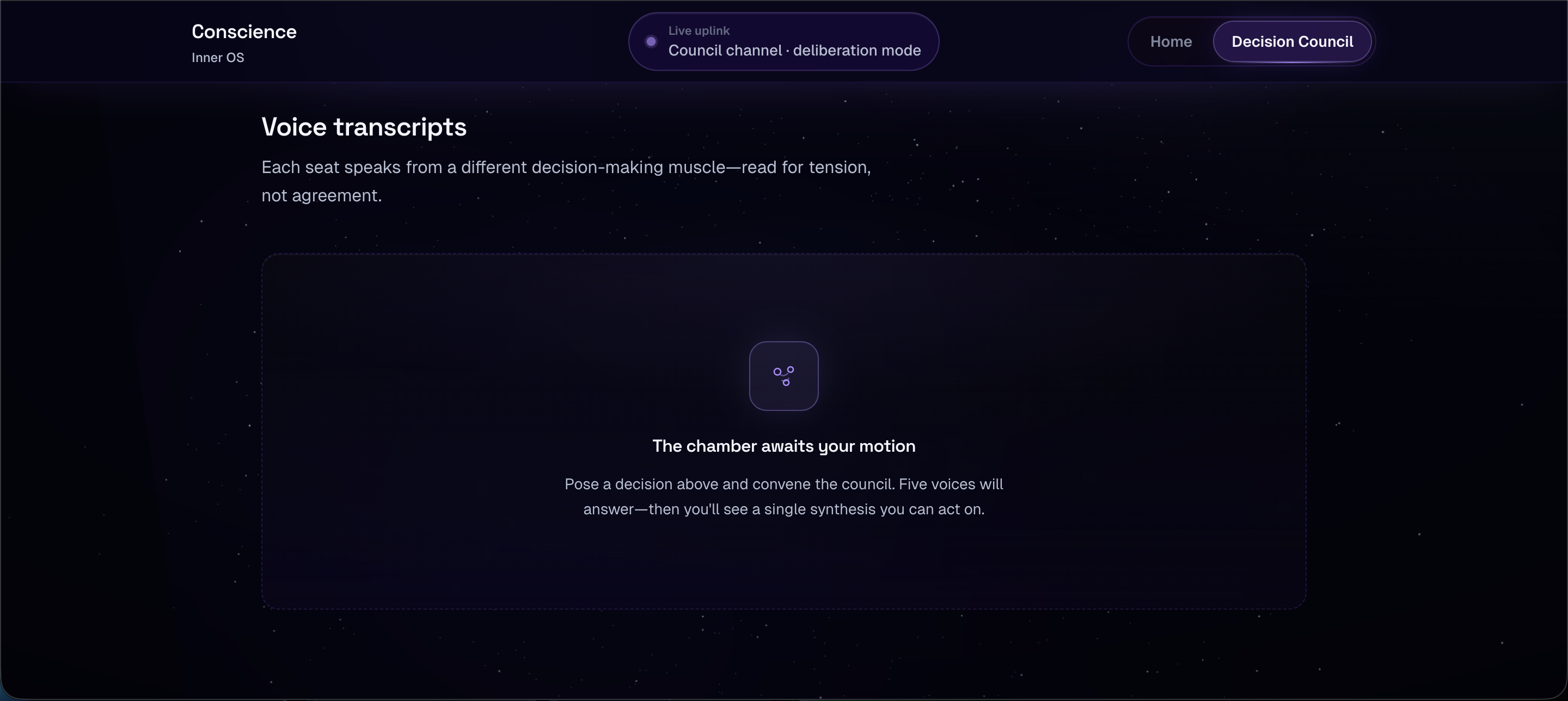
We plan to expand the personalization features, allowing the AI to learn from the user's past tasks to automatically predict the mental strain of future events without needing a manual difficulty rating.
Built With
- fastapi
- next.js
- perplexity-api
- postgresql
- python
- supabase
- tailwind-css
- three.js
- typescript


Log in or sign up for Devpost to join the conversation.