-
-
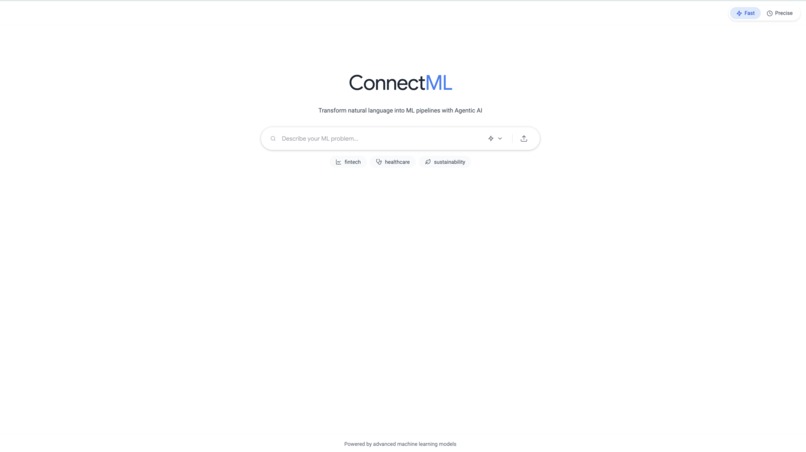
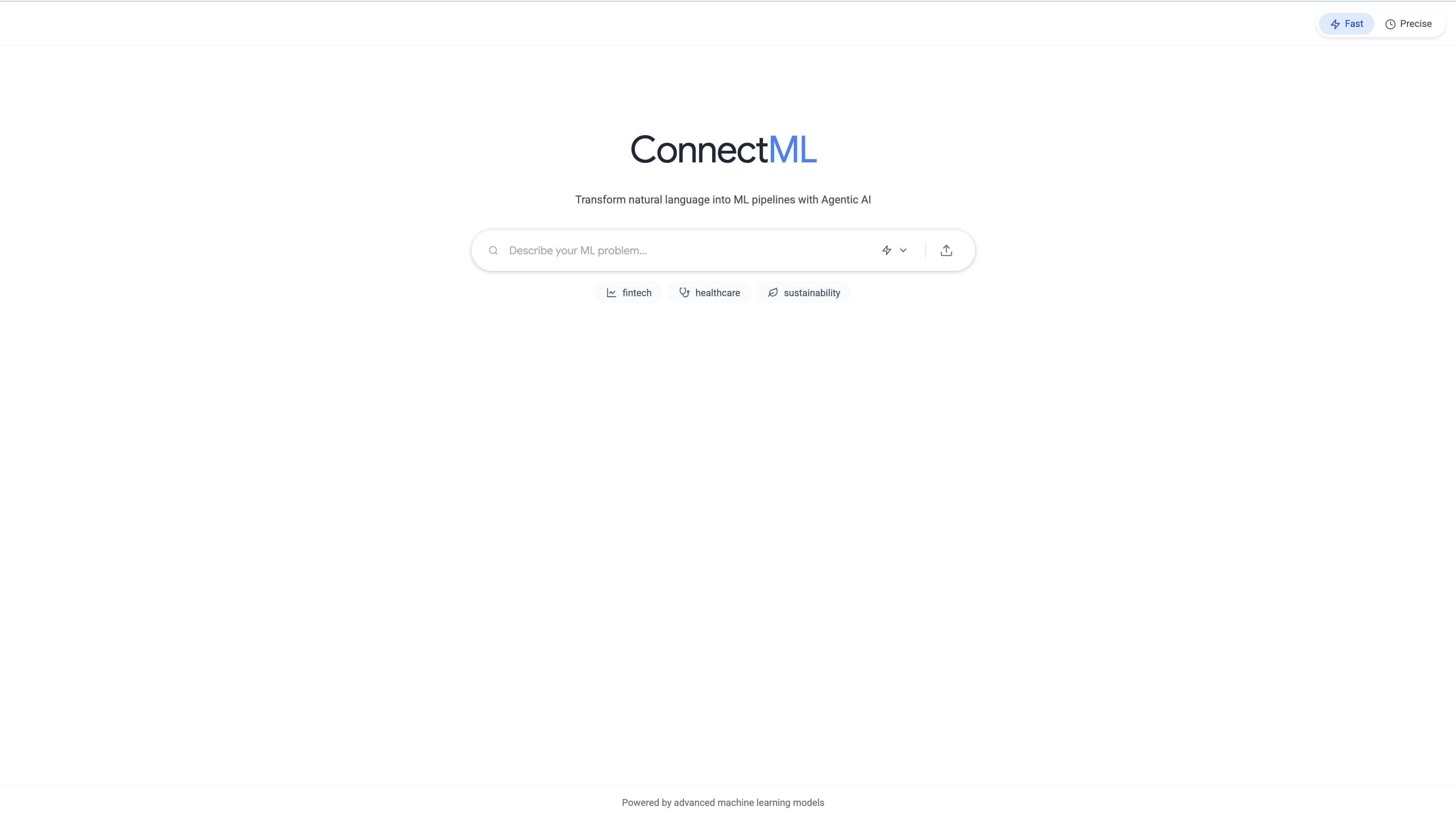
Landing Page
-
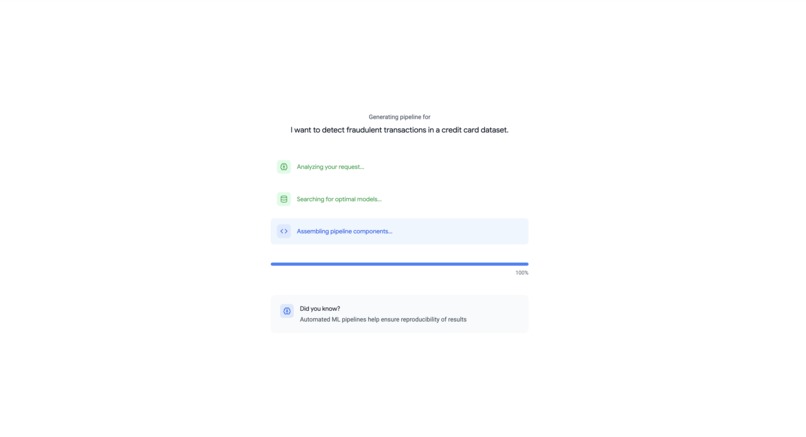
Quick Mode Loading Page
-

Agentic Mode Loading Page
-
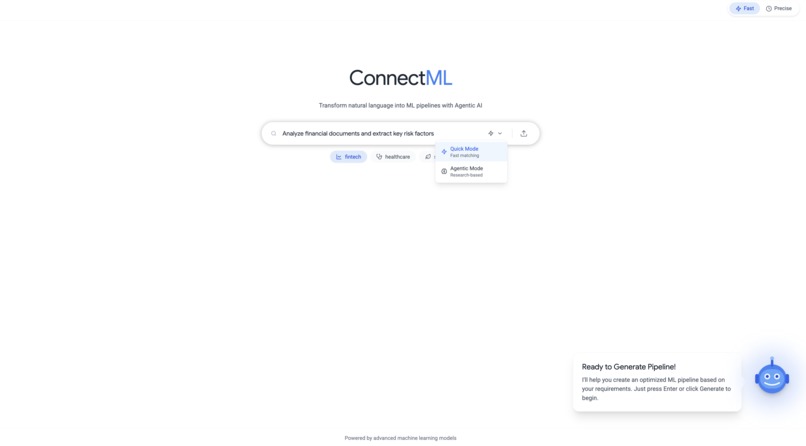
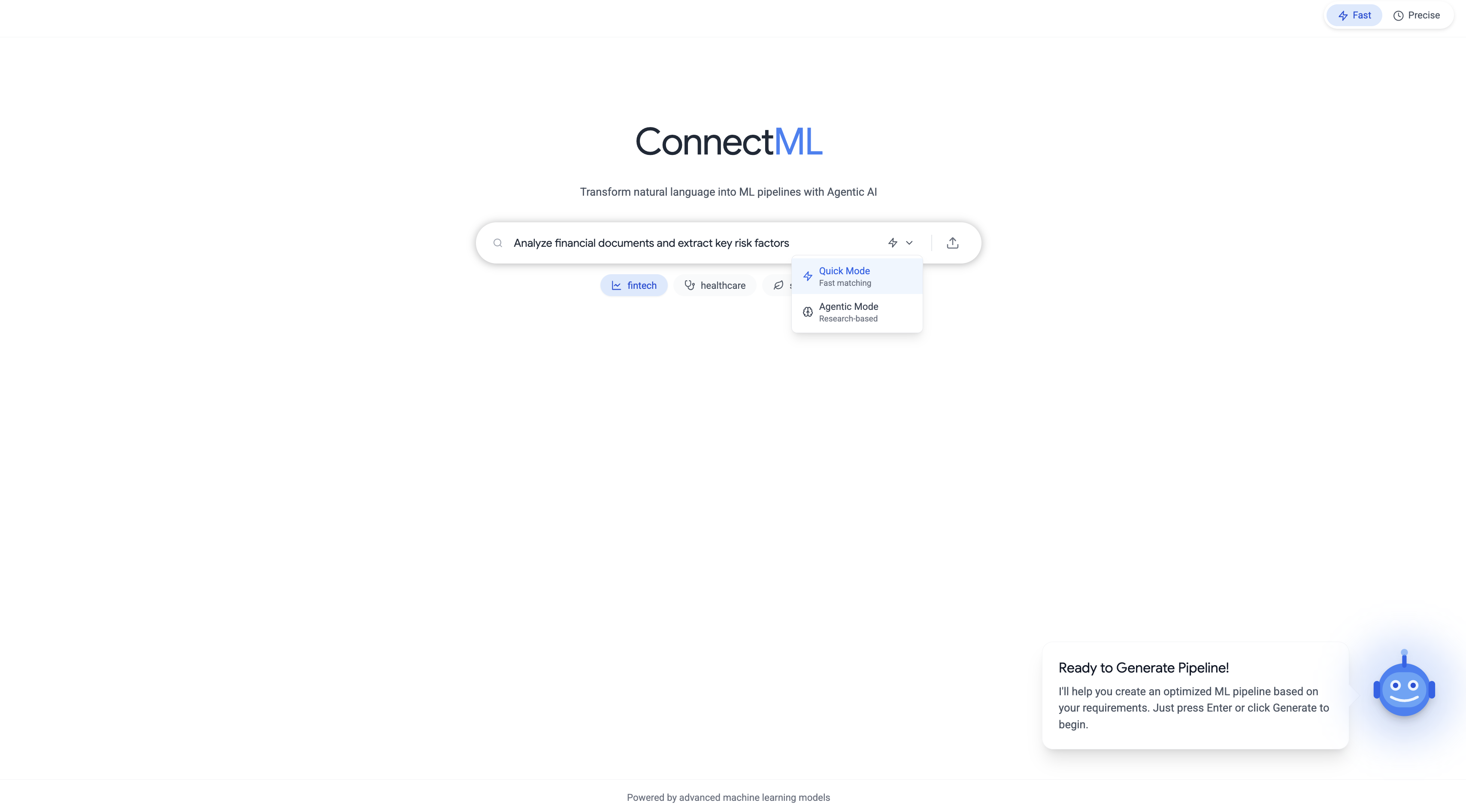
AI Mode Selection (Landing Page)
-
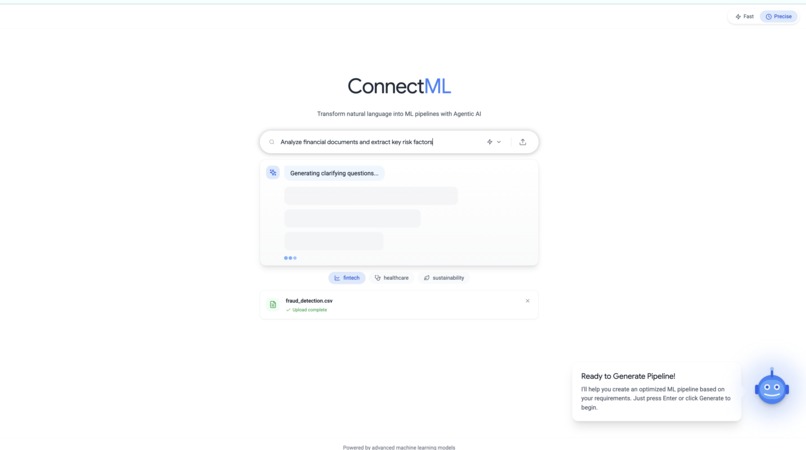
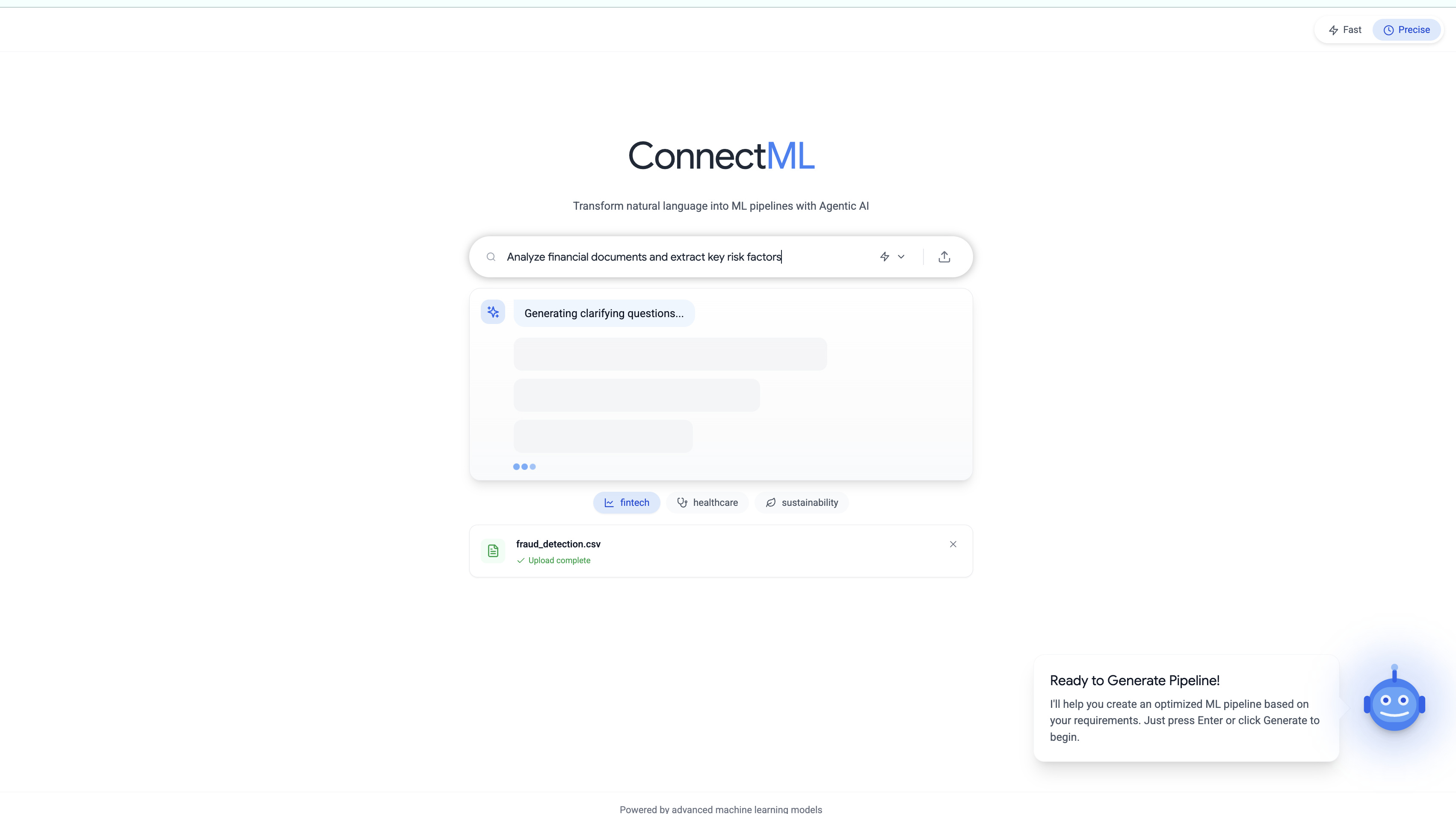
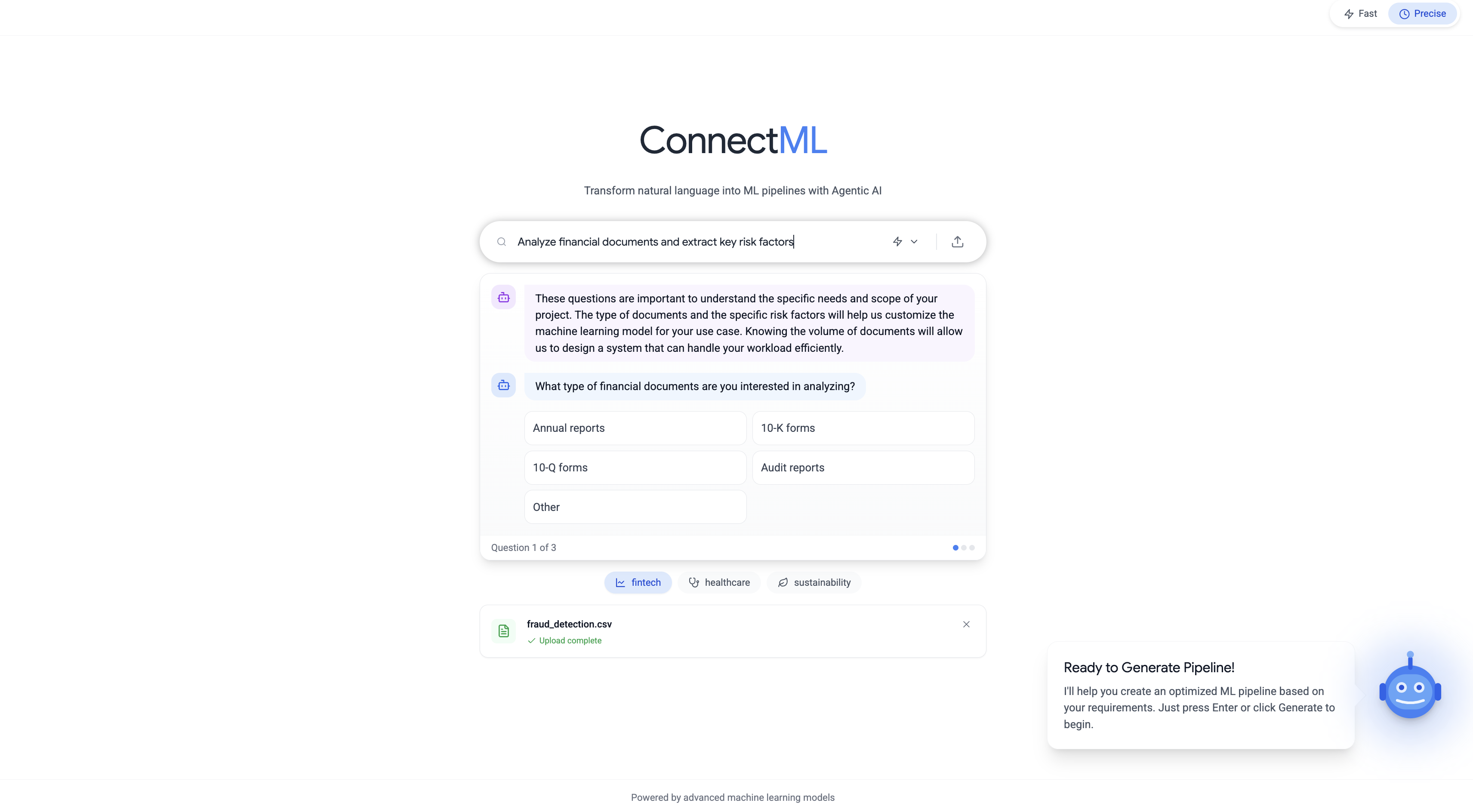
Precise Mode - Clarification Question Generation (Landing Page)
-
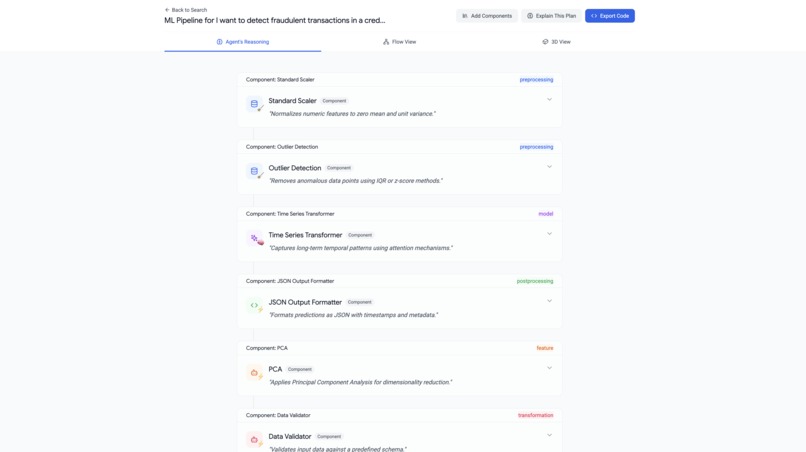
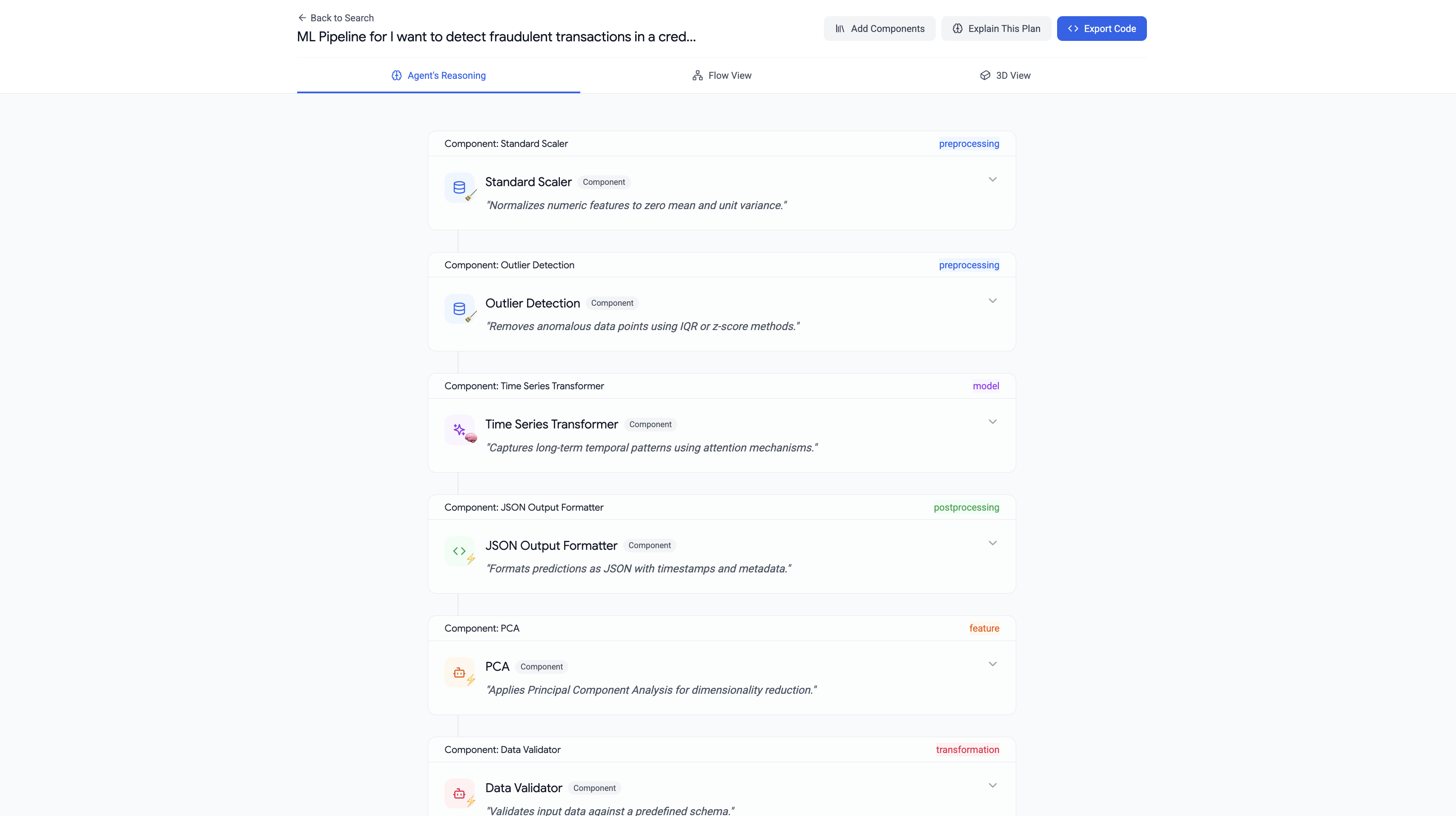
Agent's Reasoning View
-
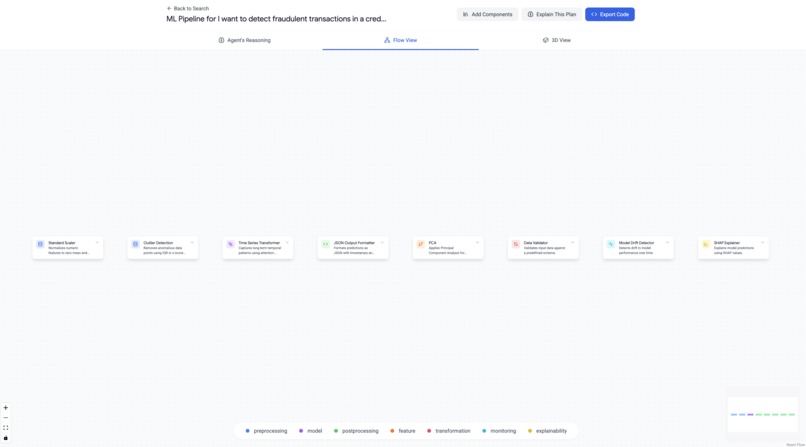
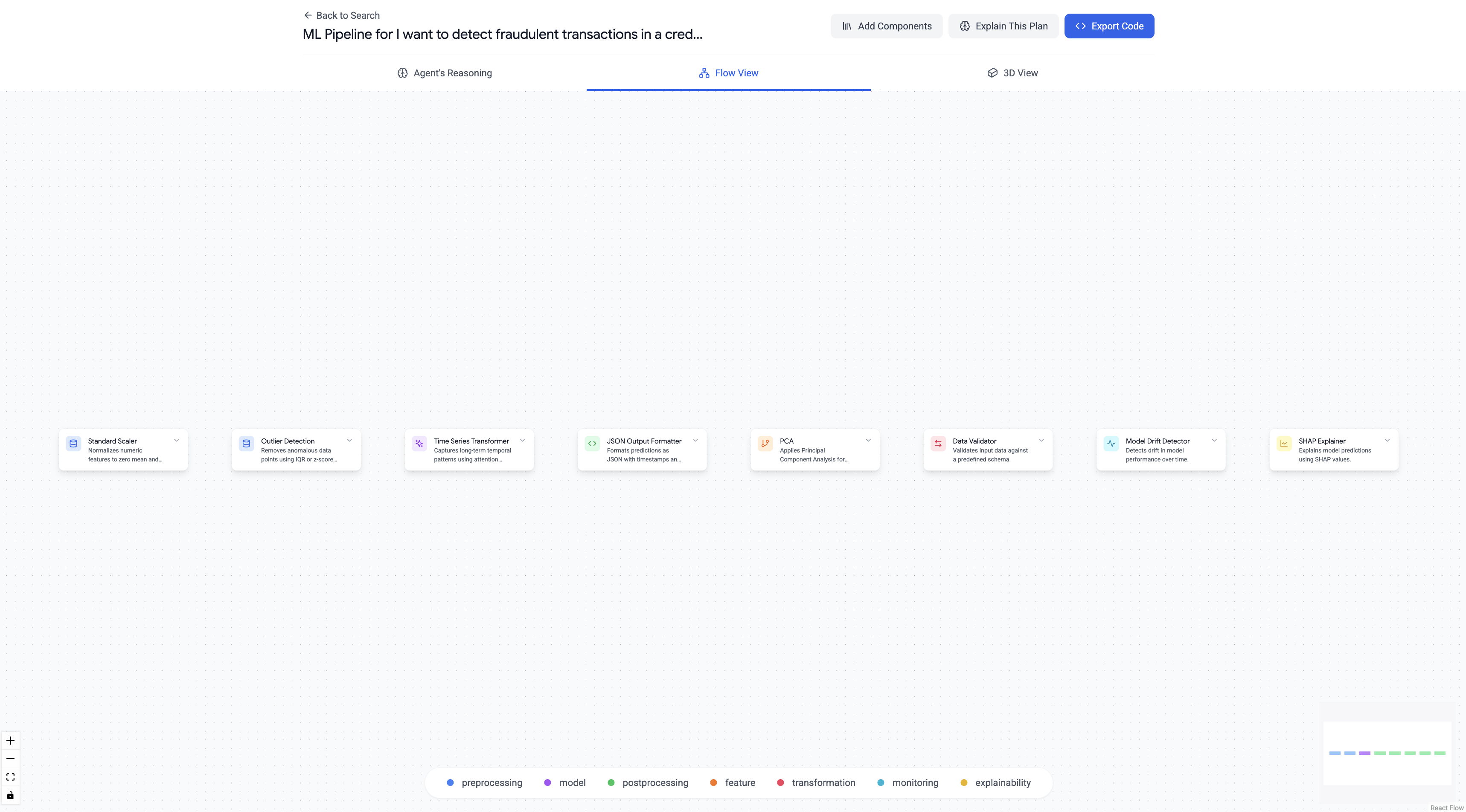
2D Flow View
-
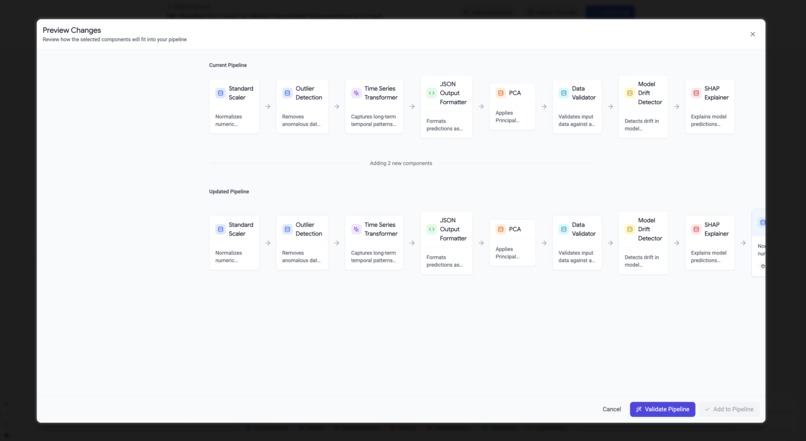
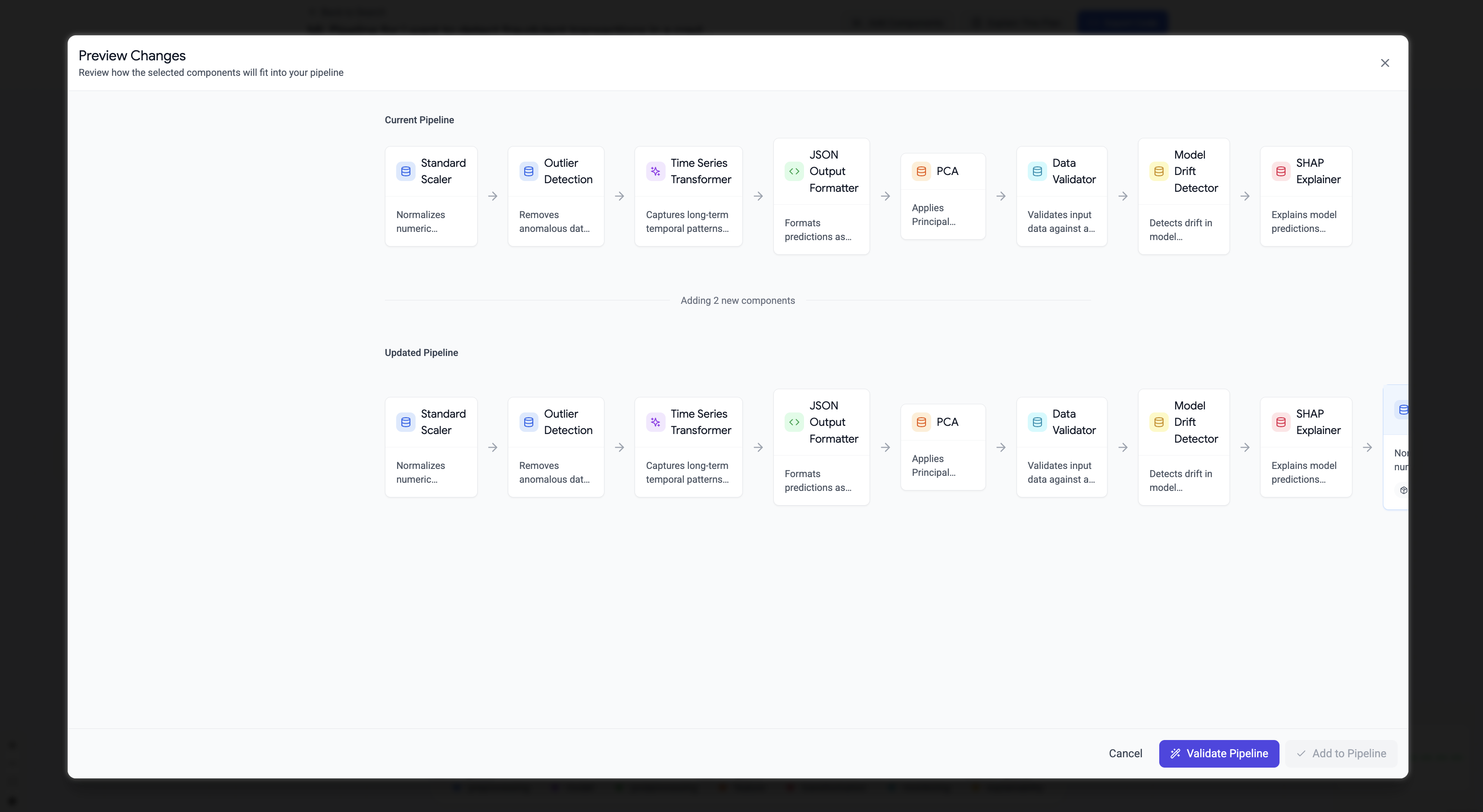
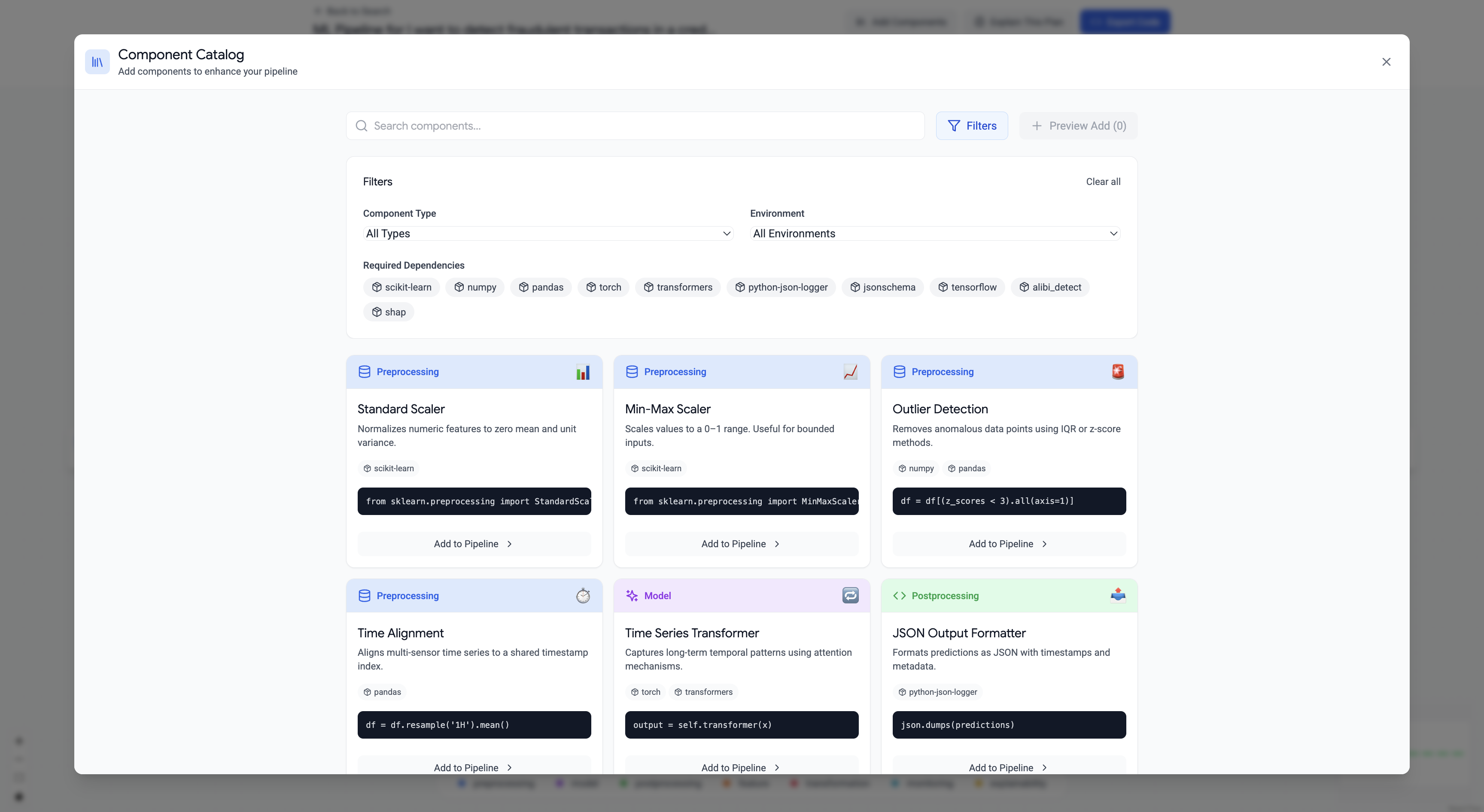
Preview Pipeline Editor (from Component Catalog)
-
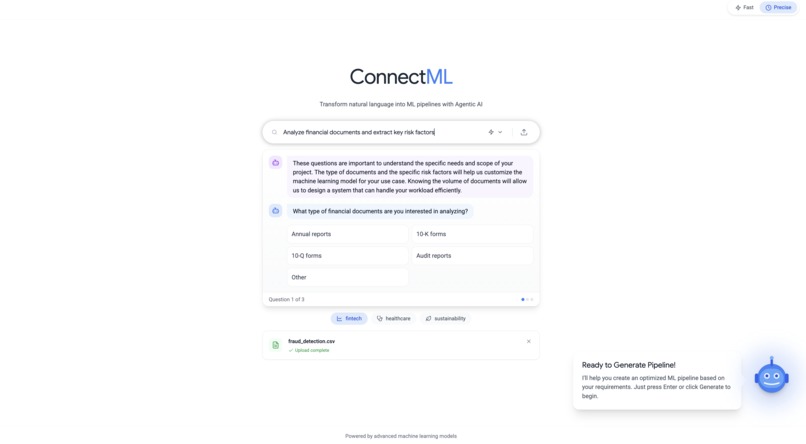
Precise Mode - Clarification Question Example (Landing Page)
-
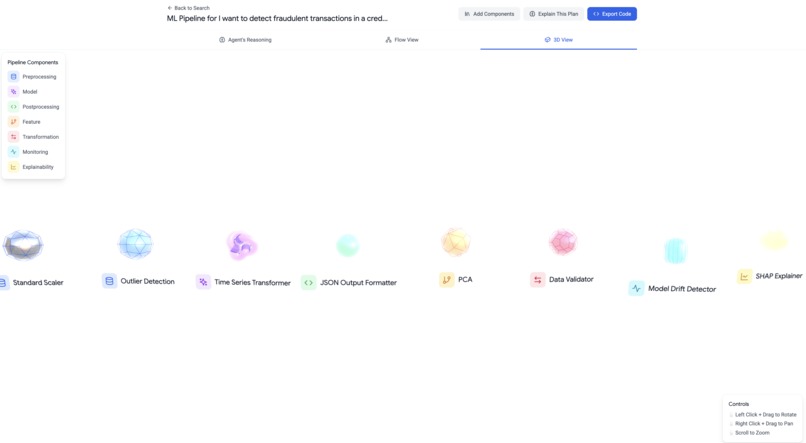
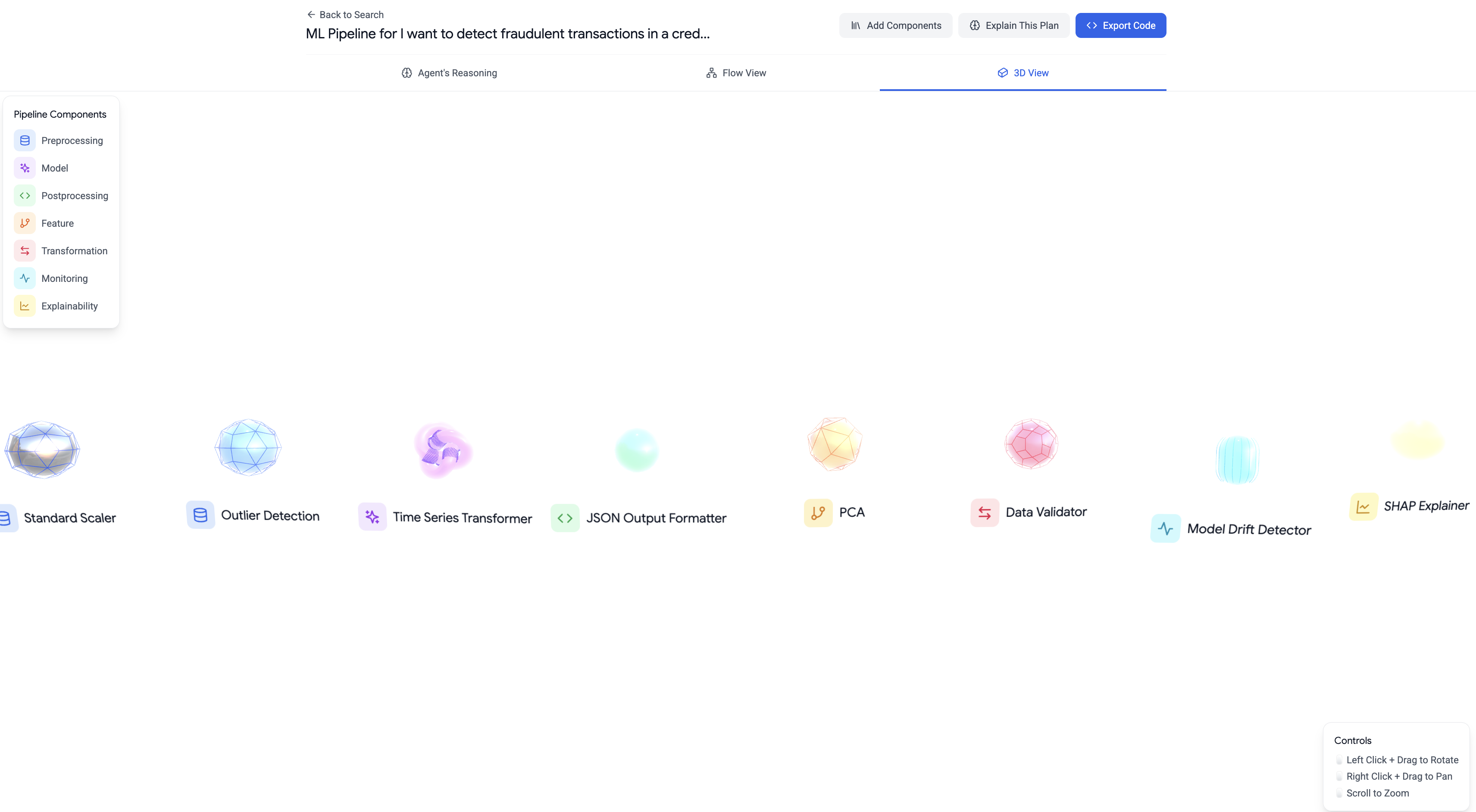
3D View
-
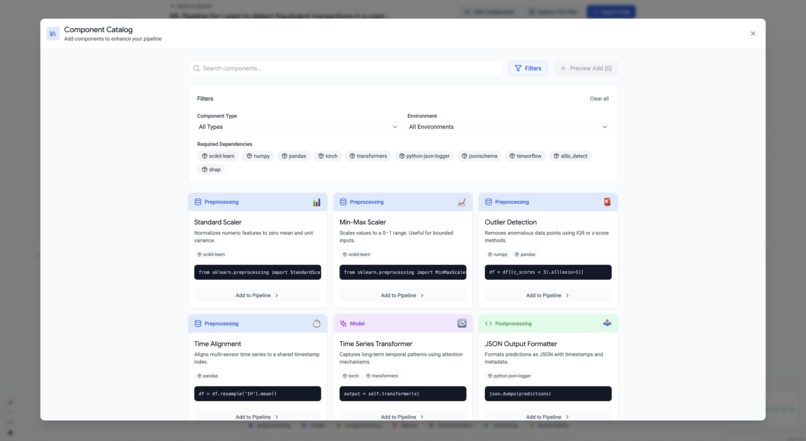
Component Catalog w/ Filter Enabled
-
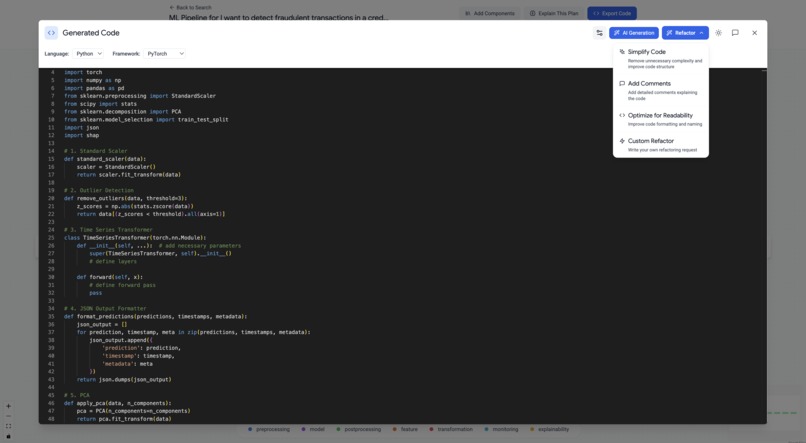
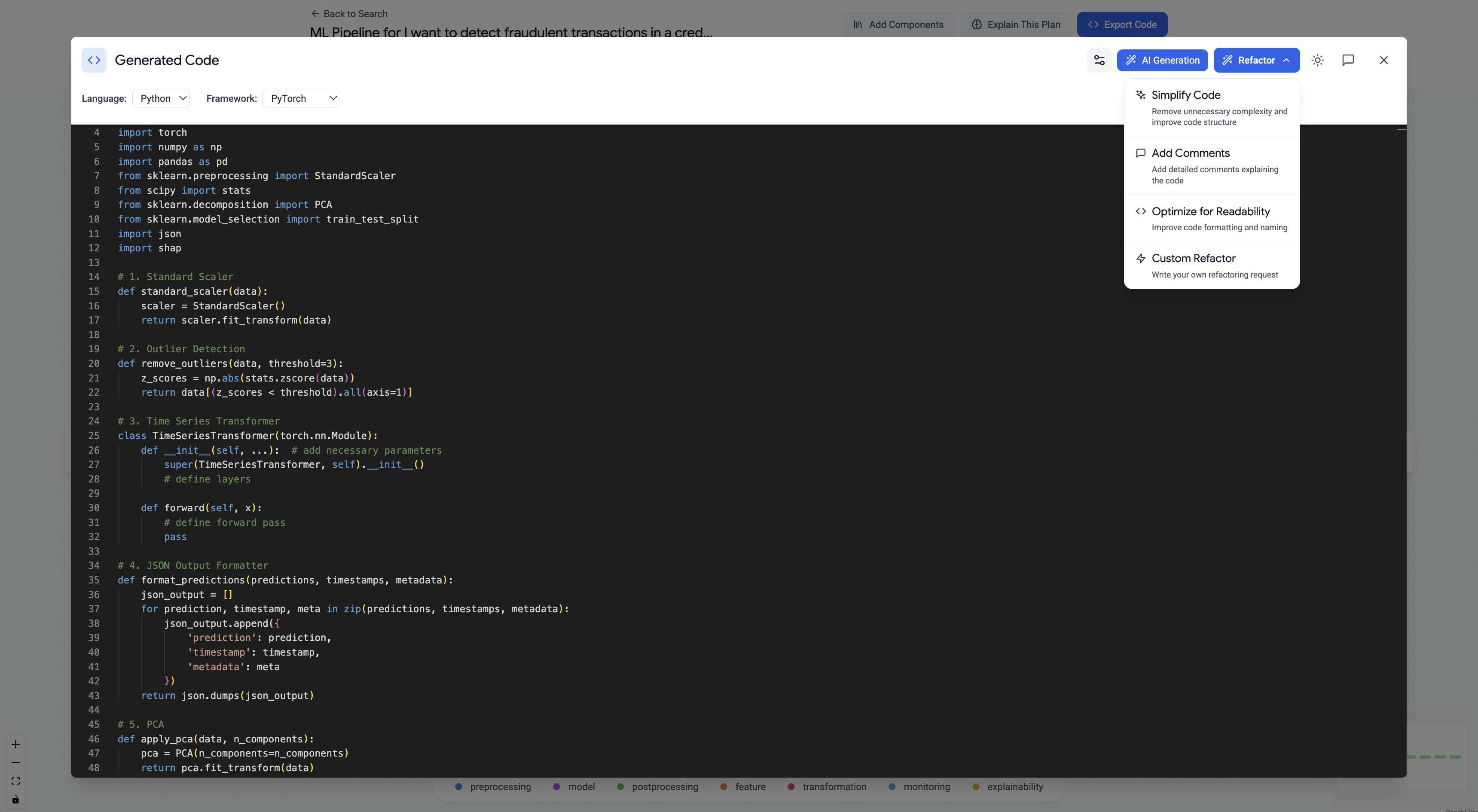
Export Code Modal
-
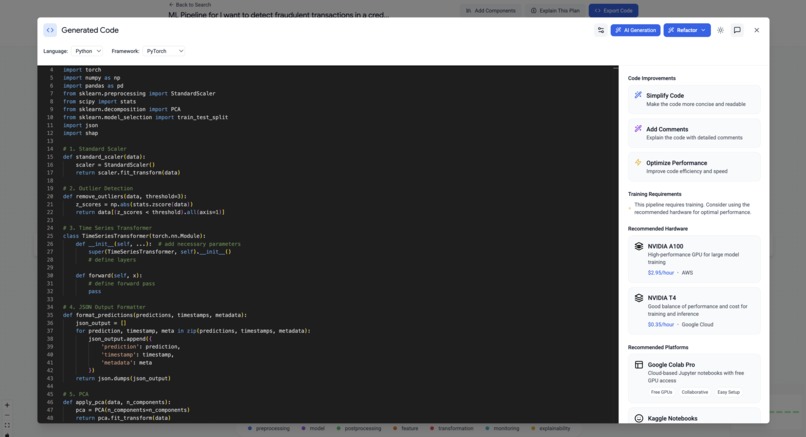
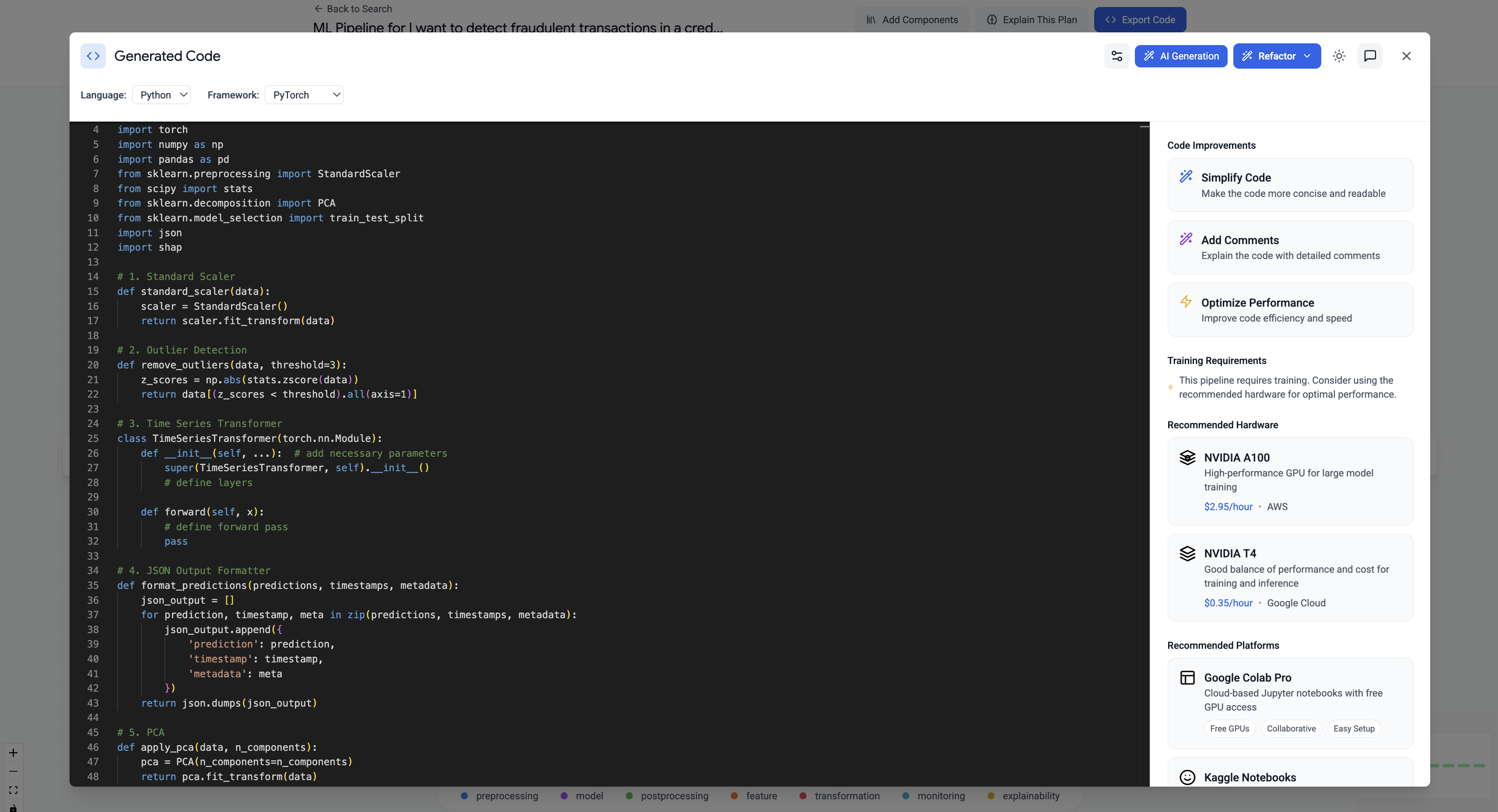
Export Code Modal w/ Side Panel Opened
-
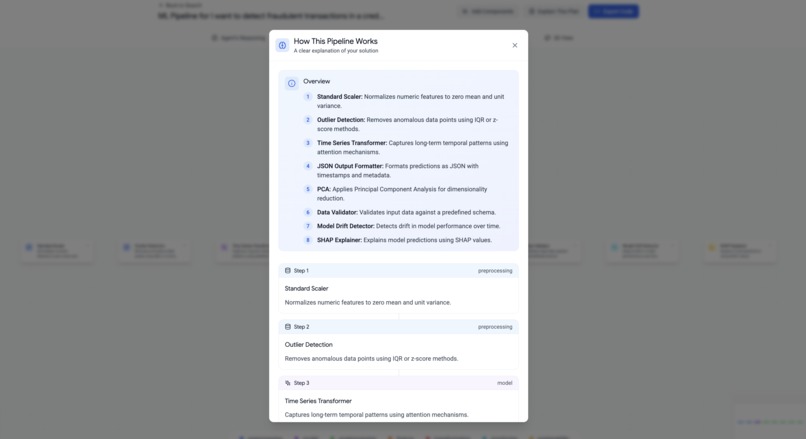
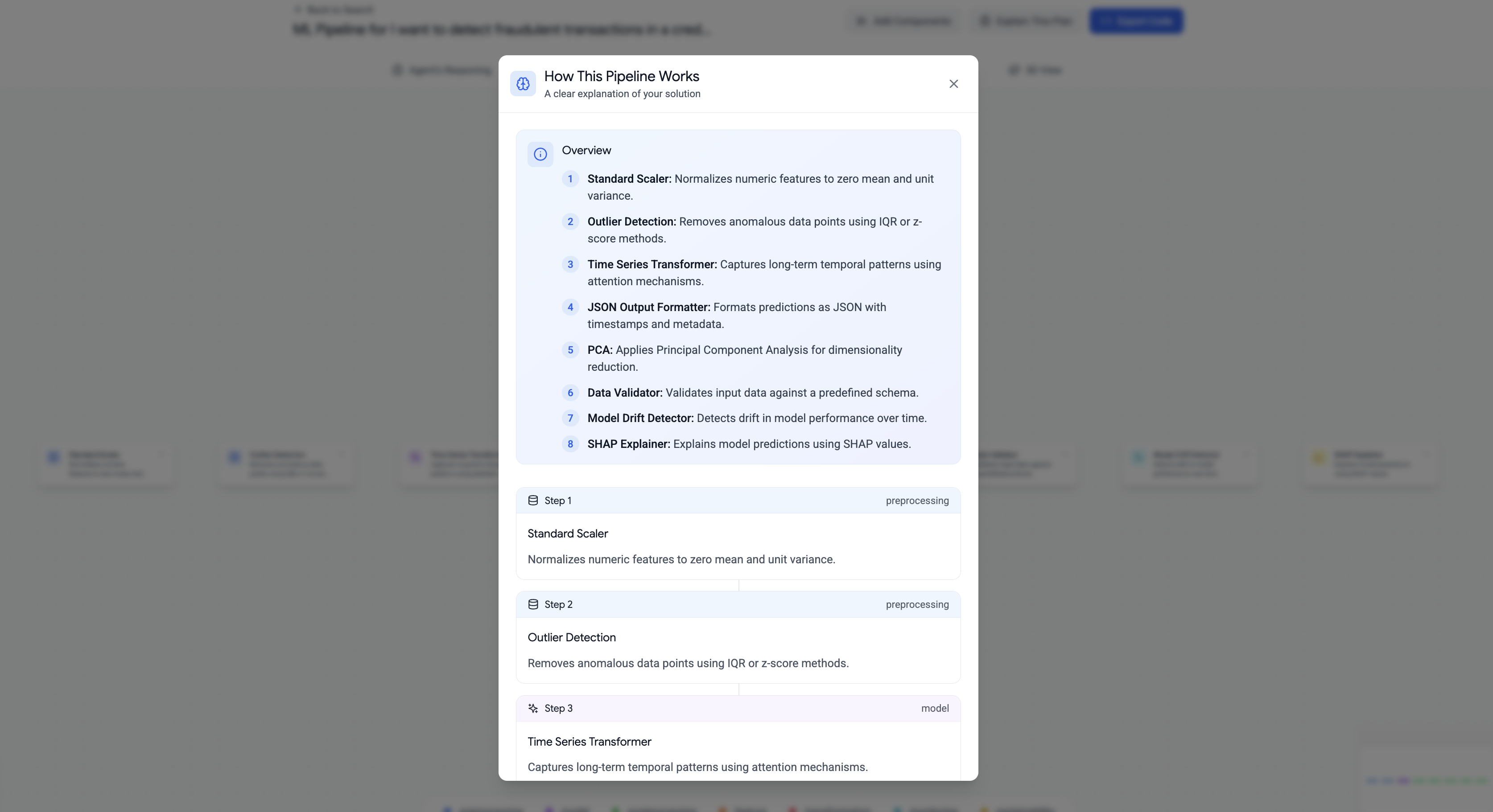
Explain This Plan Modal


Inspiration
Machine learning projects often get stuck at the very first step: translating ideas into working pipelines. I wanted to create a tool where anyone - technical or not - could simply describe their ML idea in natural language and immediately get a runnable, visual, and explainable pipeline.
Rather than replacing engineers, ConnectML accelerates the brainstorming and experimentation process - bridging the gap between ideation and technical execution.
What it does
ConnectML turns plain English into full ML pipelines, visualized across multiple views (2D flow, 3D architecture, and explainable agent reasoning).
Users can export runnable (Python) code for real-world datasets. The system supports both fast generation (Quick Mode) and multi-agent, research-driven generation (Agentic Mode), powered by orchestrated AI agents.
How ConnectML Can Fit Multiple Tracks
ConnectML is domain-agnostic by design, but aligns with multiple tracks through its flexible ML pipeline generation capabilities.
For Finance/Data Analytics, we showcased a fraud detection pipeline using real transaction data, which is a critical application for the financial sector.
For Healthcare, ConnectML could generate pipelines for predicting patient readmission, disease progression, or triage risk.
For Sustainability, it could rapidly generate models to track carbon footprint trends, optimize energy usage, or predict supply chain risks.
By focusing on flexible, modular pipeline generation, ConnectML becomes a foundational tool for rapid, low-barrier ML innovation across any domain.
How I built it
Frontend: Built using React 18, TypeScript, Vite, React Flow, Framer Motion, and Three.js for interactive visualizations
Backend: Built with FastAPI and LangGraph to control modular AI agent workflows
AI Engines: Used OpenAI (GPT) for fast pipelines and Anthropic’s Claude via LangGraph + Tavily for agentic research pipelines.
Deployment: At the end of the demo video, (as stated earlier) we showcase the live pipeline code execution on GPU-backed Brev.dev instances running NVIDIA hardware.
Challenges I ran into
Designing for true agentic orchestration rather than scripted workflows was one of the hardest parts. Instead of simply prompting an LLM once, ConnectML’s Agentic Mode needed to structure multi-step AI conversations - planning, researching, validating, and refining an ML pipeline across multiple agents.
Balancing domain-agnostic pipeline generation with realistic, domain-specific outputs was another challenge. I had to build modular scaffolds (i.e transformers, outlier detectors, explainers) that could dynamically fit fraud detection for finance, patient triage for healthcare, or energy trend modeling for sustainability - without hardcoding any one use case.
Ensuring the code was executable, explainable, and exportable within limited time required careful architecture. Generated code had to survive three levels of stress: human readability, model explainability (SHAP integration), and runtime validation (executing on GPU-backed notebooks).
And finally, building a complete, polished, visualized platform solo - while integrating multi-agent backends, dynamic frontends, and a full demo production pipeline - pushed every creative, technical, and time management skill to the limit. One of my main goals coming into this hackathon was to think more like a product architect rather than just a technical developer since the ability to identify the problem space, find a suitable solution (as opposed to maybe forcing one), and then craft a compelling story around it is something that I truly want to become better at. It's like looking more through a human lense and causes me to put more of my "heart" into the project rather than just my brain.
What's next for ConnectML
Expand domain-specific presets (e.g., healthcare data pipelines, financial fraud models, sustainability metrics)
Add collaborative modes where product managers and engineers can co-edit pipelines live
Integrate live model training and evaluation pipelines beyond code scaffolding
Built With
- fastapi
- framermotion
- langgraph
- monacoeditor
- pydantic
- python
- react
- reactbeautifuldnd
- reactflow
- tailwindcss
- tavily
- three.js
- typescript
- uvicorn
- vite


Log in or sign up for Devpost to join the conversation.