-
-

Slide 1
-
Slide 2
-
Slide 3
-
Slide 4
-
Slide 5
-
Slide 6
-
Slide 7

ConnectHer
Your Future. Your Freedom.
Inspiration
39% of Fidelity's workforce is women. 52% of entry-level financial services roles are held by women. Women are projected to control $60 trillion in global wealth by 2030.
The women already exist. The expertise already exists. The network already exists.
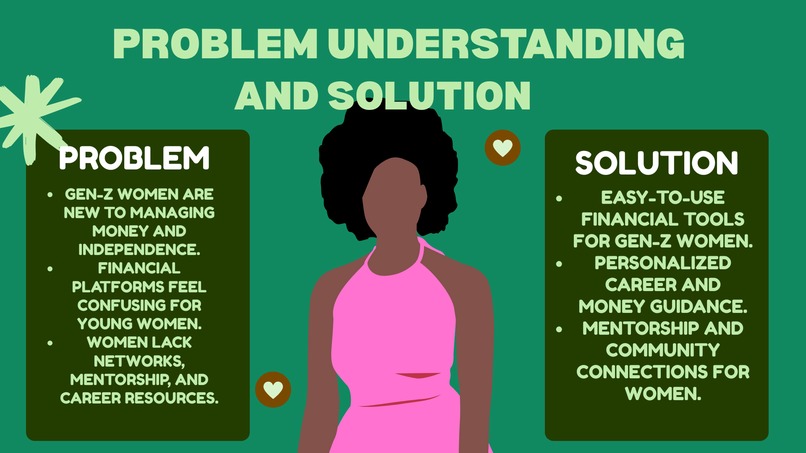
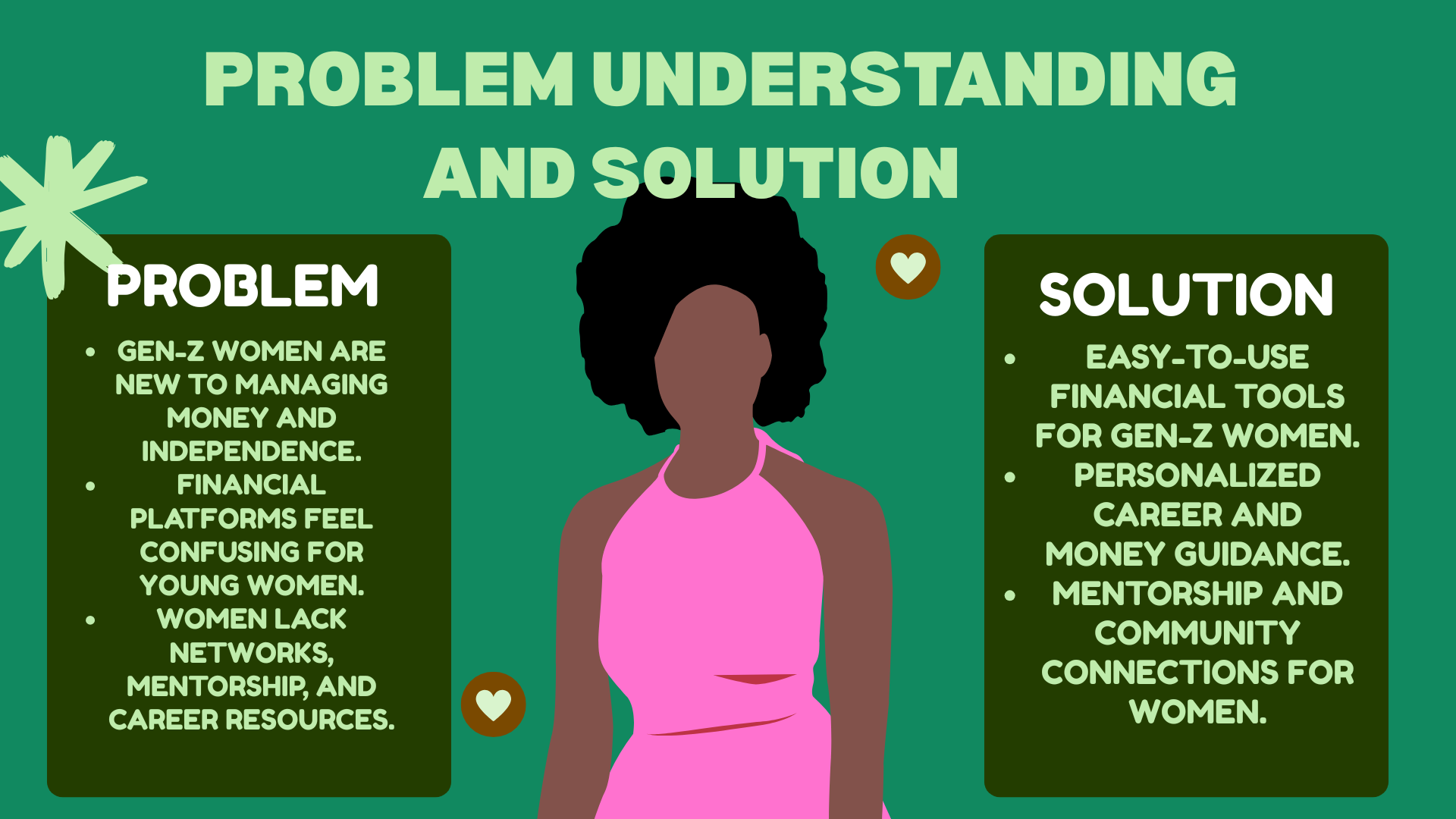
And yet, 64% of women have never invested. 45% say they have no financial role model. Only 24% of women leaders have ever had a formal mentor. 61% would rather discuss their own death than talk about money. By retirement, the average woman accumulates over a million dollars less than her male counterpart.
The gap isn't knowledge. It isn't ambition. It isn't the workforce. The gap is connection.
That gap hits first-year college women the hardest, exactly when they're making real financial decisions for the first time: student loans, campus jobs, first internship offers, first credit cards. The women a few steps ahead of them, sitting inside firms like Fidelity, Bank of America, and JPMorgan, have already lived through every one of those decisions. ConnectHer was built to close that loop.
What It Does
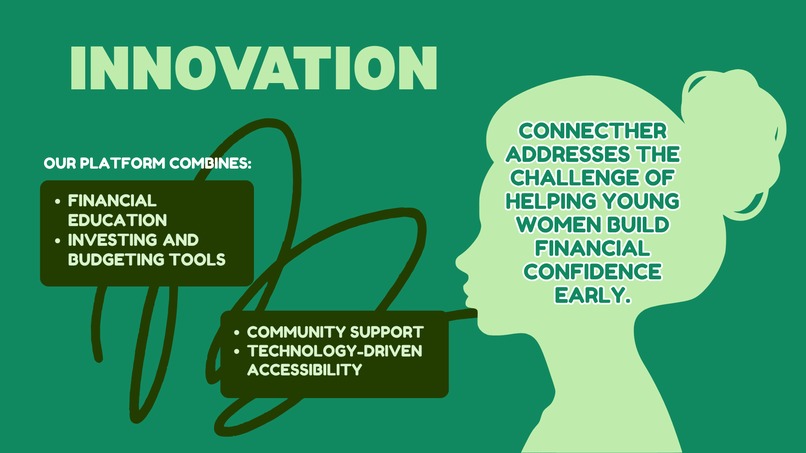
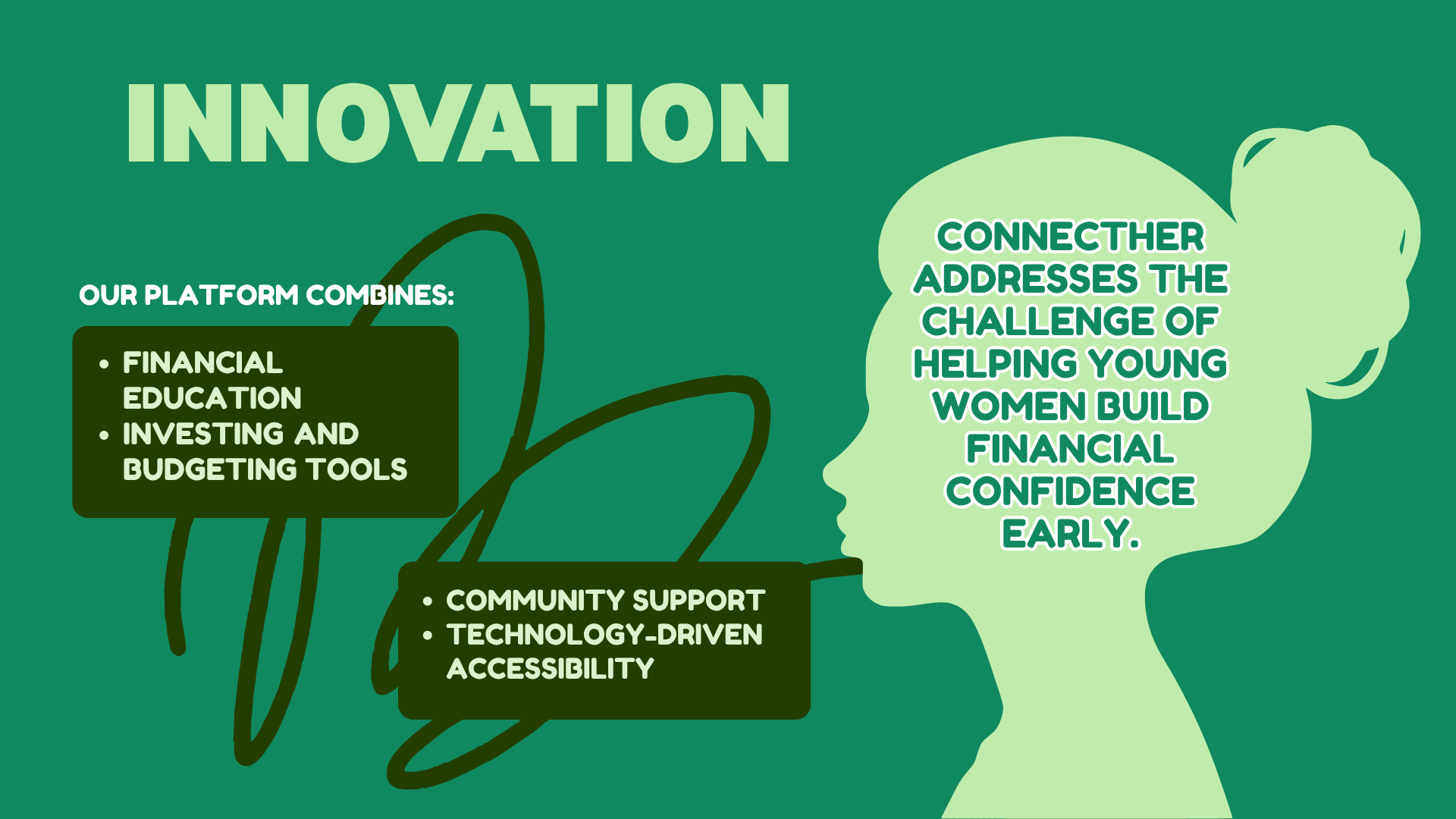
ConnectHer is a women-centered financial platform built around three pieces that talk to each other.
A personalized community board acts like a digital bulletin board, surfacing mentor notes, salary reality checks, scholarships, and women-only opportunities pinned to a user's specific goals. A built-in budget tracker frames every purchase in terms of goal impact rather than guilt, so users see how a decision today moves their emergency fund or savings timeline tomorrow. An AI assistant ties the two together, answering questions about salary expectations, negotiation scripts, or budgeting on a campus income, and pulling from the user's real data to give realistic answers.
The board surfaces an opportunity. The AI helps the user act on it. The budget tracker shows how it fits into their bigger picture. None of the three works as well alone.
How We Built It
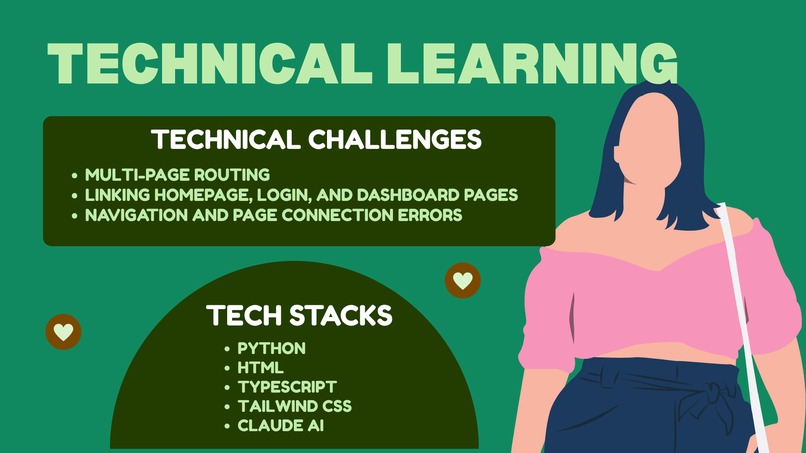
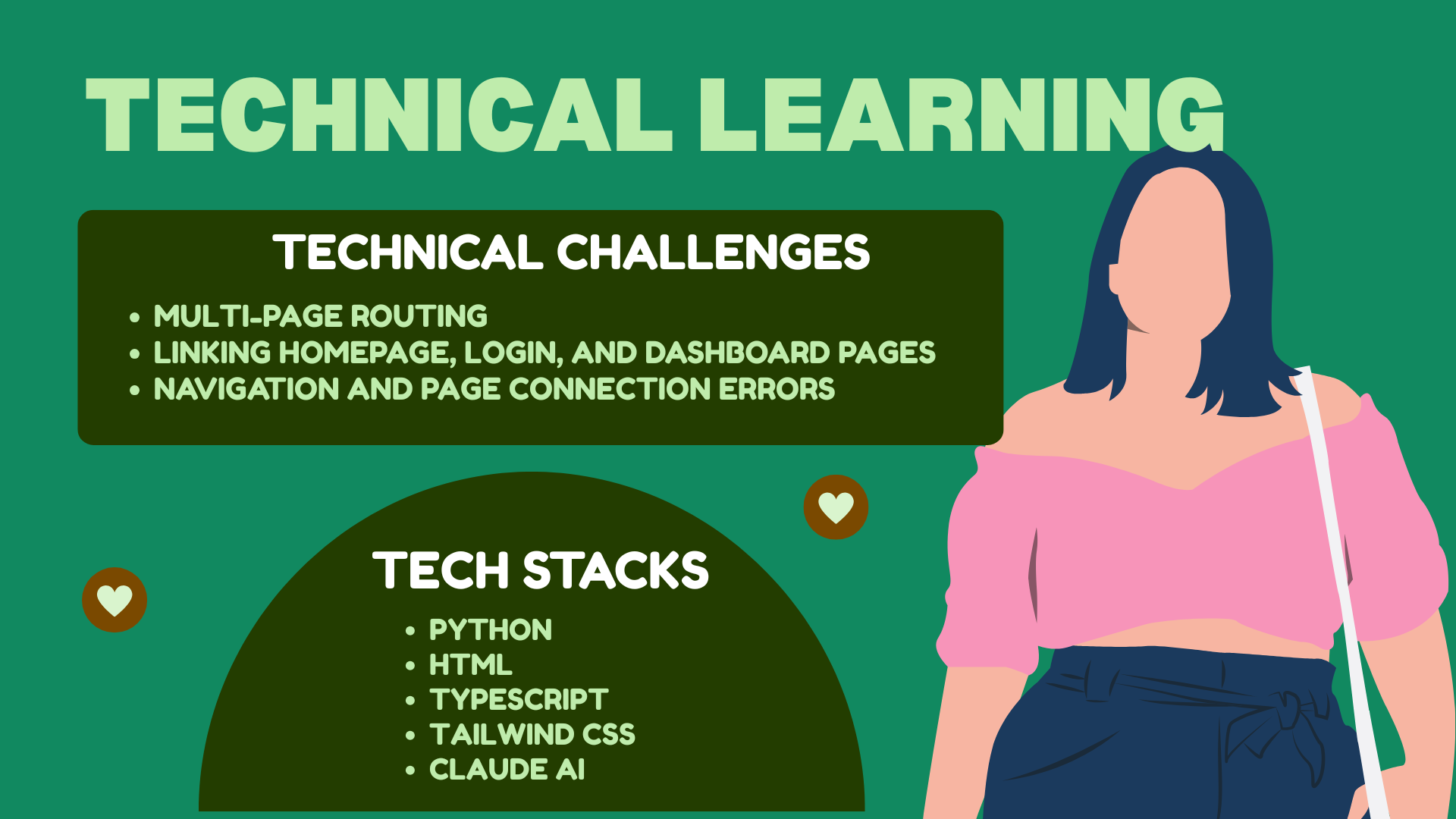
The demo runs on Next.js 16 (App Router) with React 19 and TypeScript, styled with Tailwind CSS v4 and lucide-react for iconography. The AI assistant powering the AskBoard advisor is wired through the Groq SDK running a Llama 3 model, with the response flow structured to return contextual pins rather than plain text answers.
The frontend is built around a typed schema (User, UserProfile, FinancialProfile, CareerProfile, and a unified Pin type) so every component — from onboarding to the dashboard to the AskBoard chat — speaks the same shape. Mock data for transactions, spending, salaries, opportunities, and scholarships lives in a structured data layer that's intentionally swappable, so a production version can drop in real sources without rewriting the UI.
For a full production build, the stack we'd scale into includes:
- Plaid for live bank account linking, replacing mocked transaction data
- Postgres via Supabase with Drizzle ORM for persistent user profiles and pin state
- Anthropic Claude (sonnet-4-6 / haiku-4-5) alongside Groq for the financial-advisor persona, with prompt caching on the system prompt
- OpenAI embeddings + pgvector for semantic search over pins and RAG over a user's own board
- Clerk for auth and onboarding flow management
- Inngest for background jobs — nightly board regeneration, transaction sync, embedding refresh
- Levels.fyi, Handshake, and Scholarships.com APIs to replace the mock salary, internship, and scholarship feeds
- Resend for weekly money summaries, Twilio for SMS purchase-pause nudges
- Sentry and PostHog for observability and onboarding funnel analytics
The demo proves the system. The production stack proves it can scale to actually handle a student's real money.
Challenges We Ran Into
Routing the website between pages caused the most early bugs. Connecting the homepage, login, onboarding flow, and dashboard required reworking navigation links and state handling more than once.
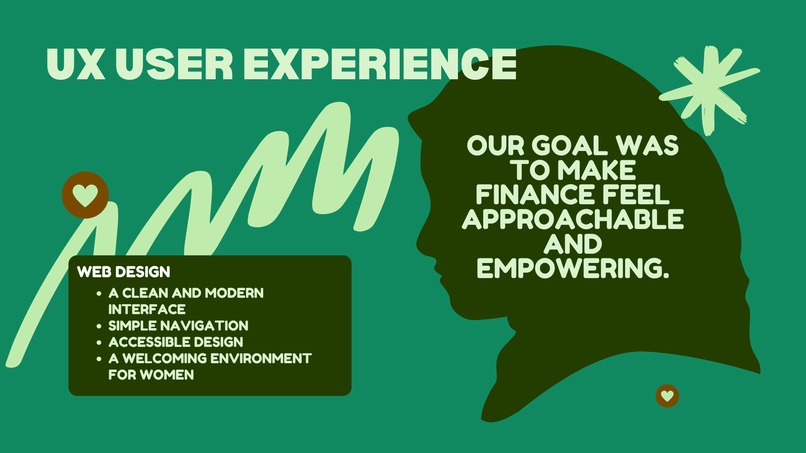
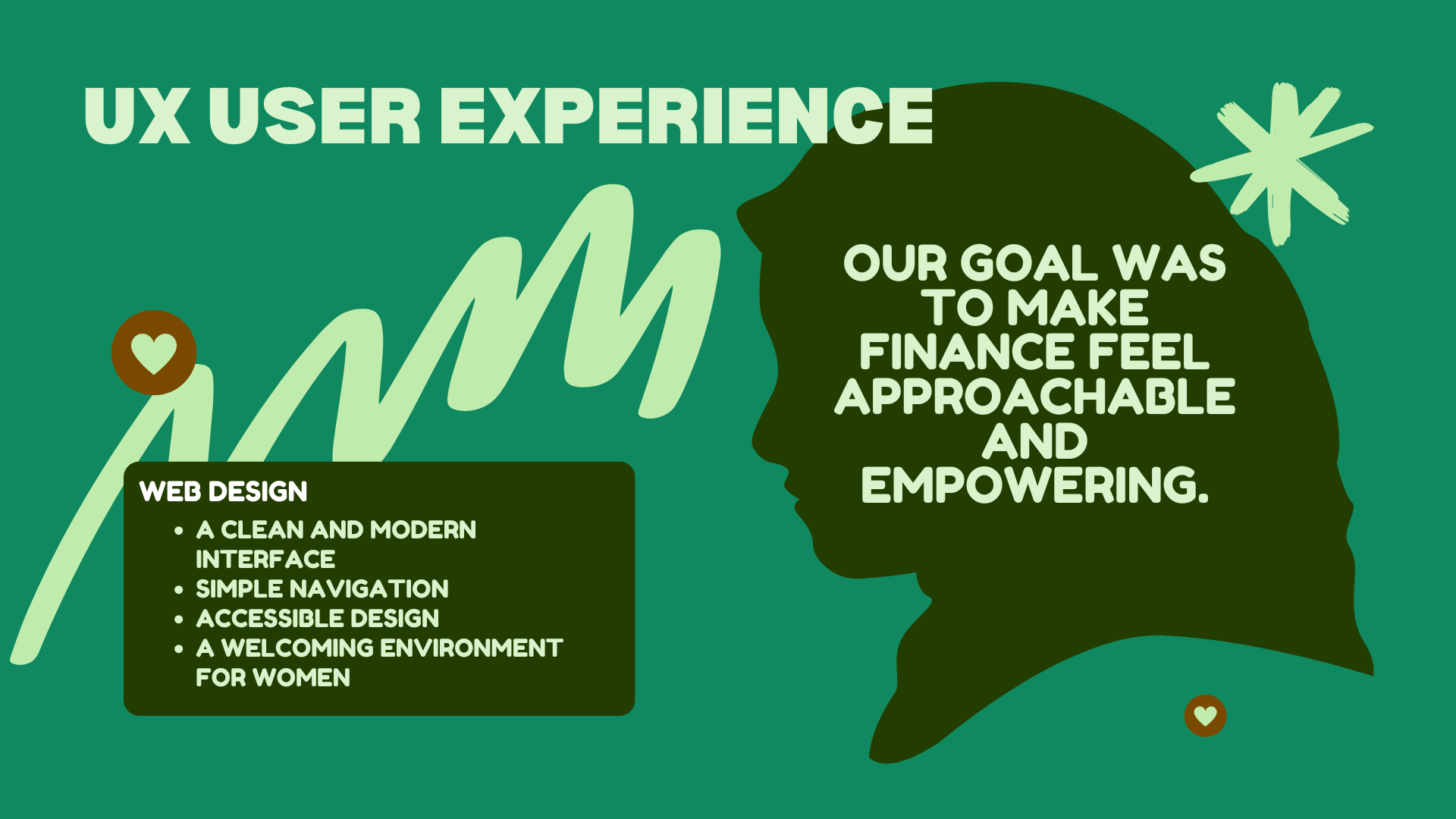
Tone was harder than code. Most finance apps default to shame-based language, and every line of copy had to be rewritten to frame money as freedom rather than restriction. "You overspent" became "this delays your goal by two weeks, want to pause?"
We also had to handle sensitive onboarding questions carefully. Information about family financial support or first-generation status is only used to expand a user's access to scholarships and affinity programs, never to narrow what she sees.
Accomplishments That We're Proud Of
We built a functioning multi-page platform with onboarding, a personalized dashboard, a budget tracker, and an AI assistant within a hackathon timeline. We created a brand identity that feels genuinely different from existing finance products, most of which are still designed for men by default. 86% of asset managers say they actively target male customers. ConnectHer was built for the other half of the workforce that the industry tends to forget.
Most of all, we are proud that the three pillars actually work as a system. The board, the tracker, and the assistant share the same profile and reinforce each other, instead of sitting as three disconnected features on a dashboard.
What We Learned
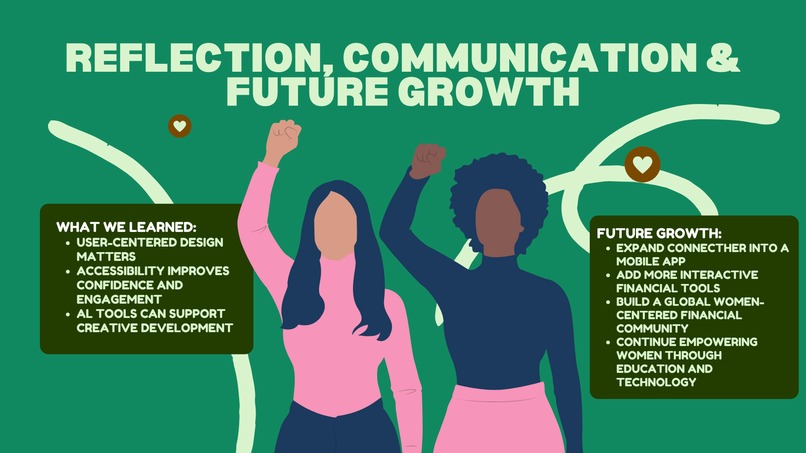
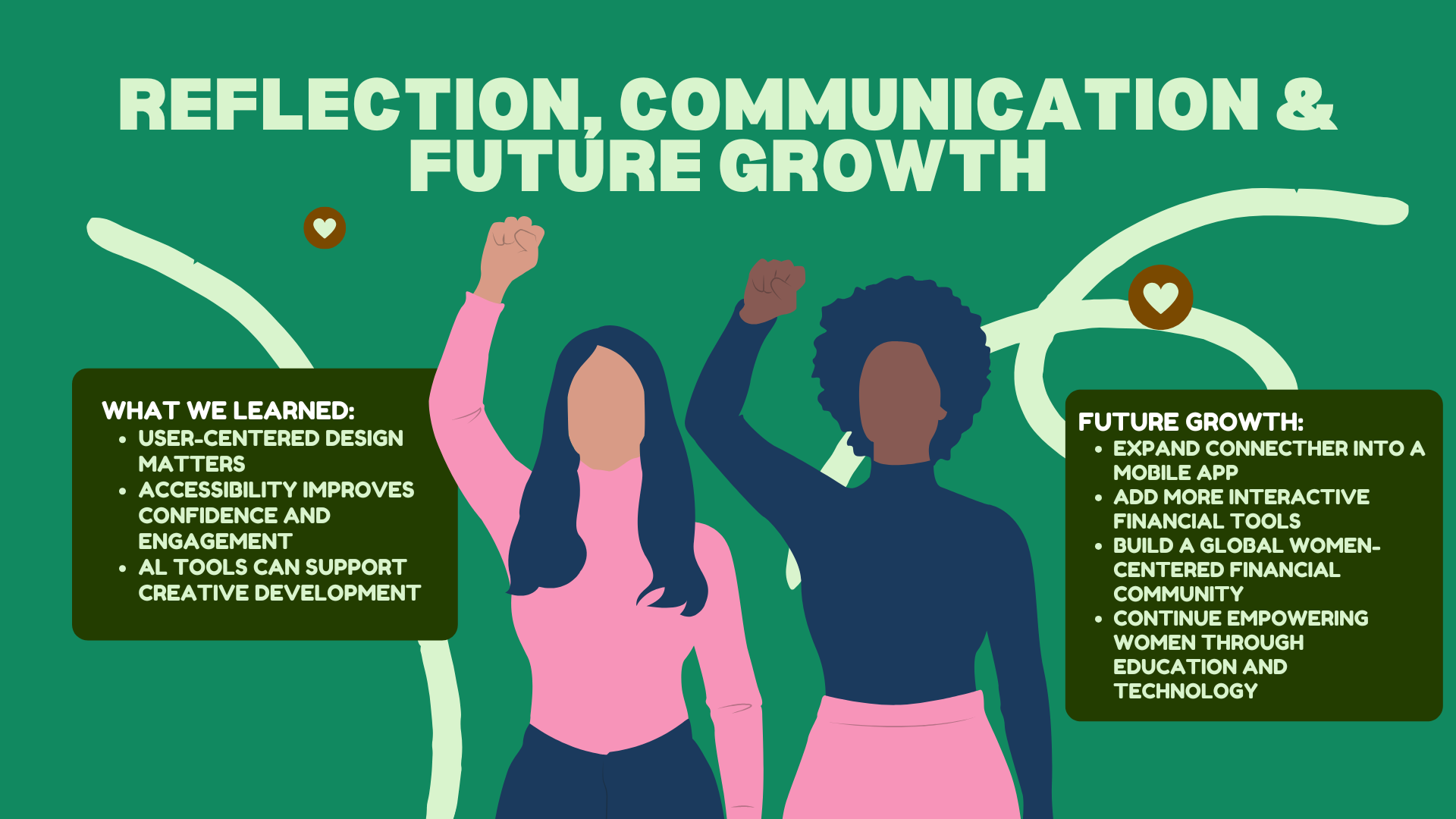
We learned the practical side of front-end development, page routing, and multi-page state handling. We learned how AI tools can act as creative collaborators without flattening a team's voice or design direction.
The bigger lesson was about the problem itself. When 29% of women say they lack confidence in investing and 27% believe they don't have enough money to invest, those are not knowledge gaps. They are design and access gaps. The interface is the product, and the tone of a finance app can be the difference between a user engaging or never opening it again.
What's Next for ConnectHer
Our next step is a mobile app, so users can act on a money move or pause a purchase in the moment. After that, we want to integrate live salary data and real scholarship and opportunity feeds to replace the demo data in the MVP.
The longest-term goal is mentor matching. The women's networks already exist inside firms like Fidelity, where 28% of senior leadership is female. Turning that existing workforce into an accessible mentor pool for first-year college women is what closes the loop ConnectHer was built to close.
References
- McKinsey & LeanIn.Org, Women in the Workplace: Financial Services
- Deloitte, Women in Financial Services Leadership
- Fidelity Investments, Diversity, Equity & Inclusion Report
- SoFi, 2024 Women and Finances Survey
- Bank of America Merrill Lynch, Women and Financial Wellness Study
- Goldman Sachs Asset Management, Mind the Gap: Women, Men, and Investment Knowledge
Built With
- claude
- css
- finanace
- html
- python
- tailwind
- typescript

Log in or sign up for Devpost to join the conversation.