-
-
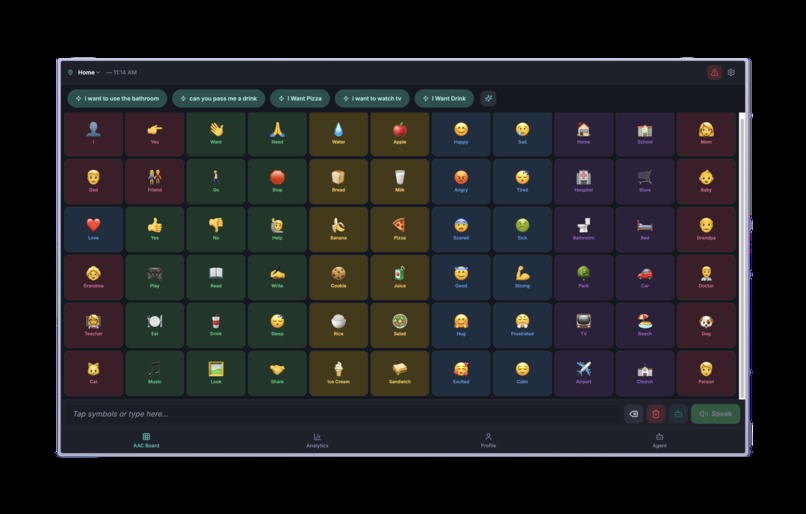
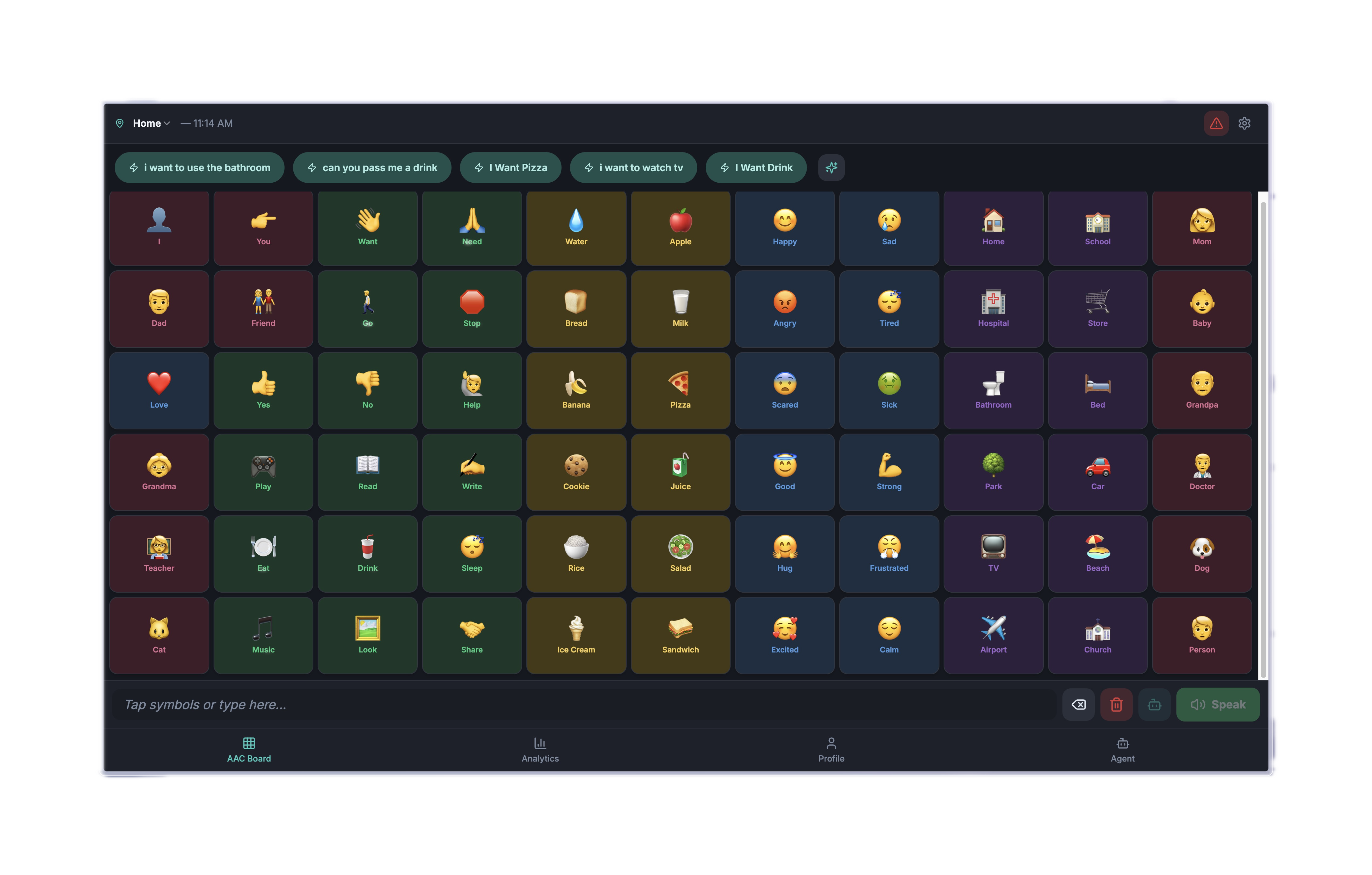
Home Page
-
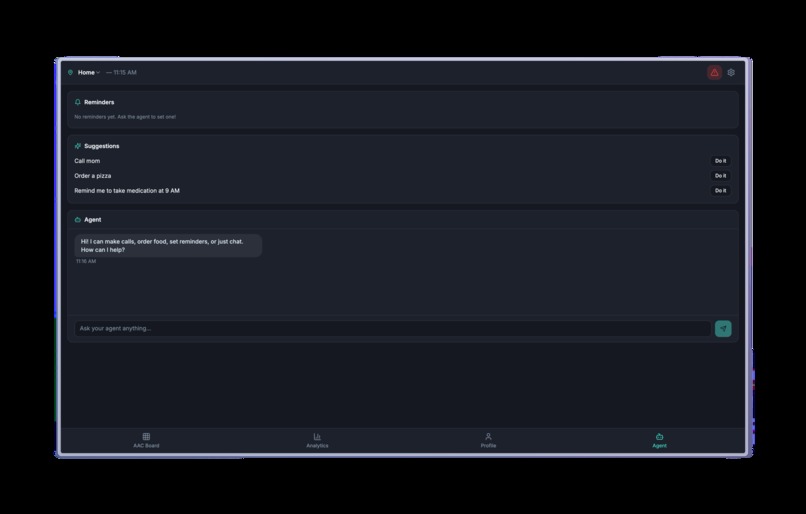
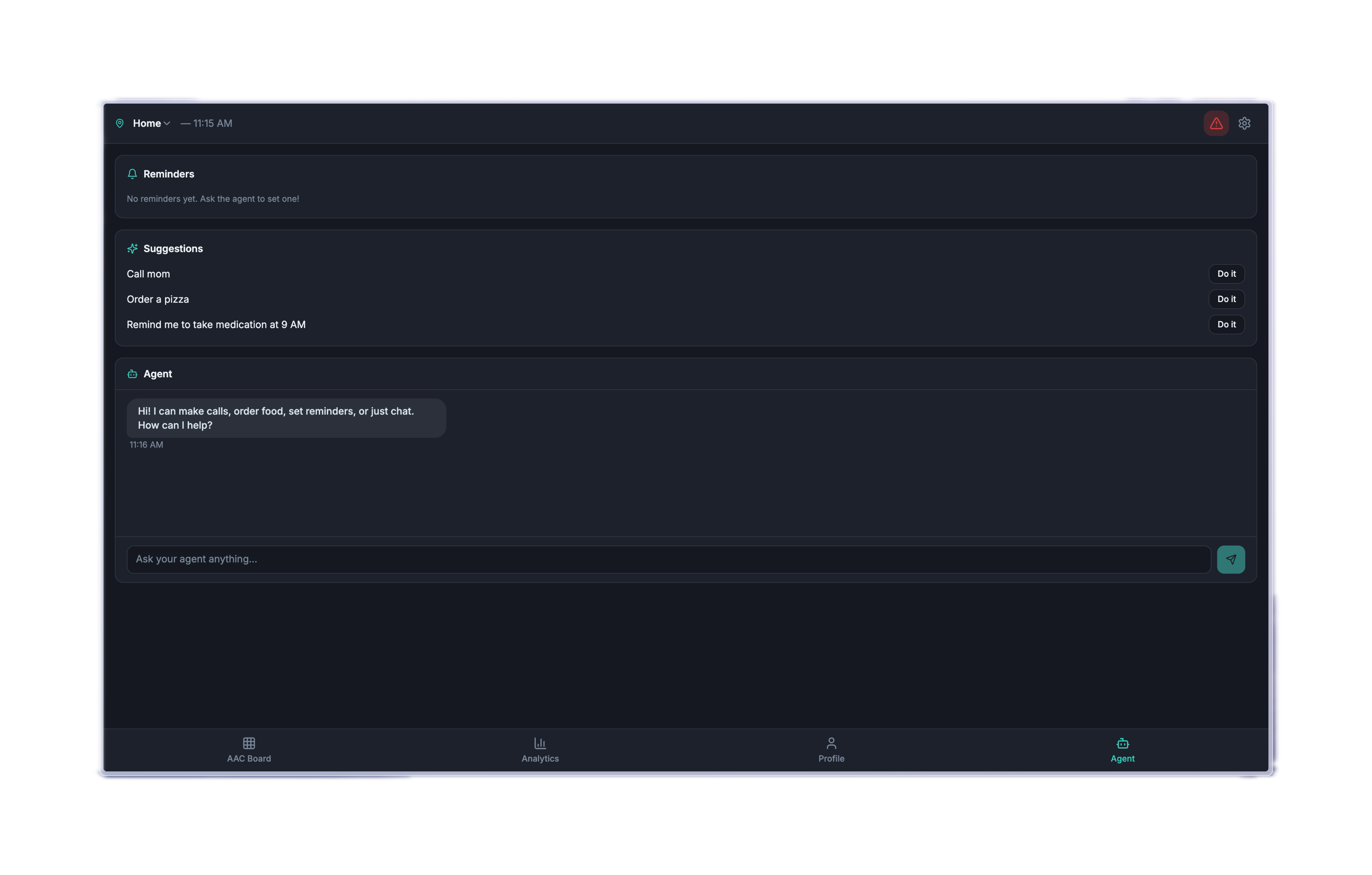
Agent Page
-
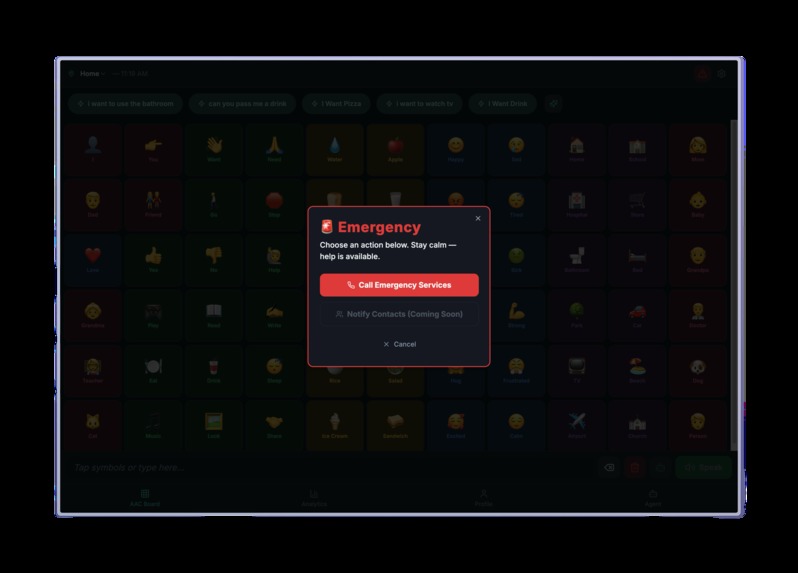
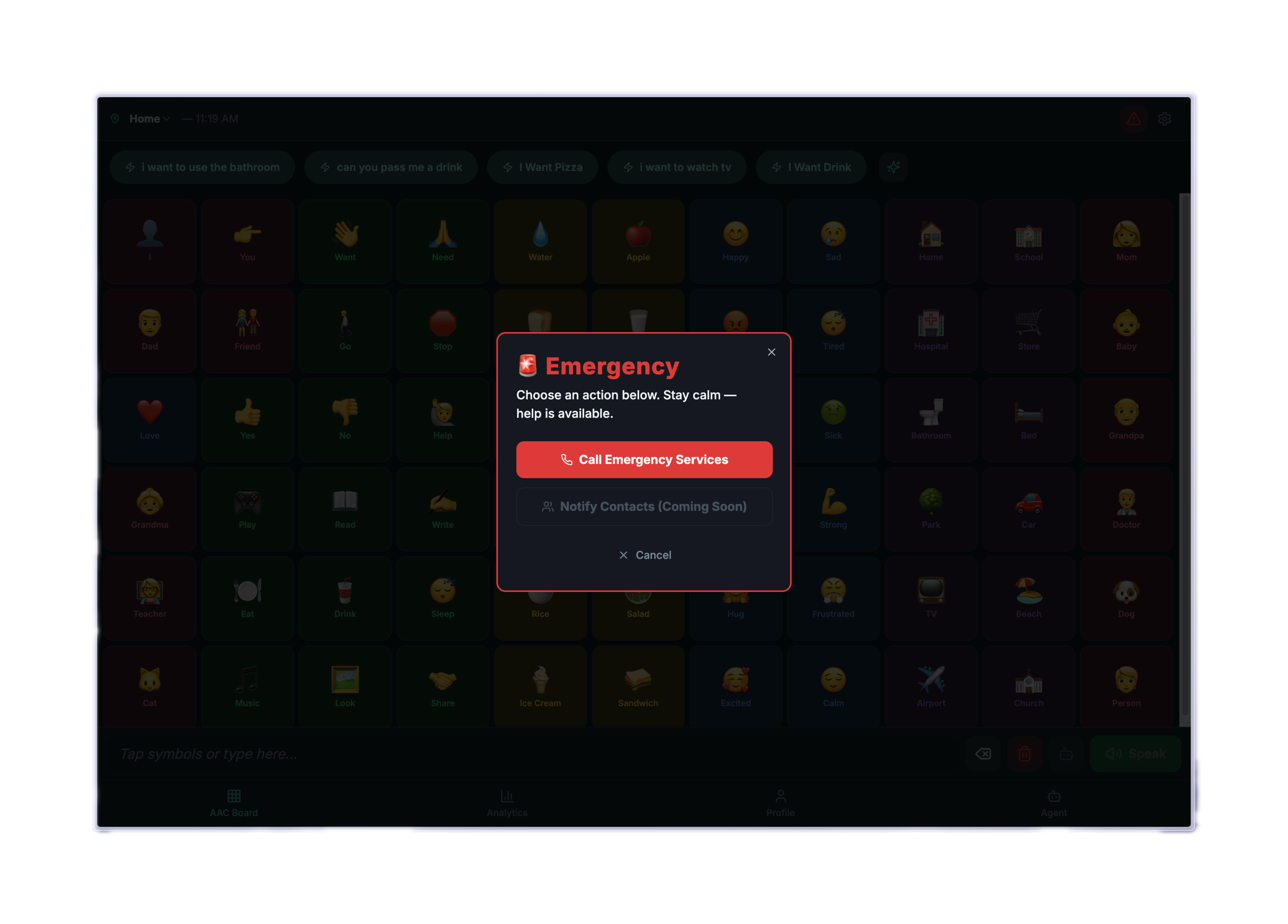
SOS is available on every page.
-
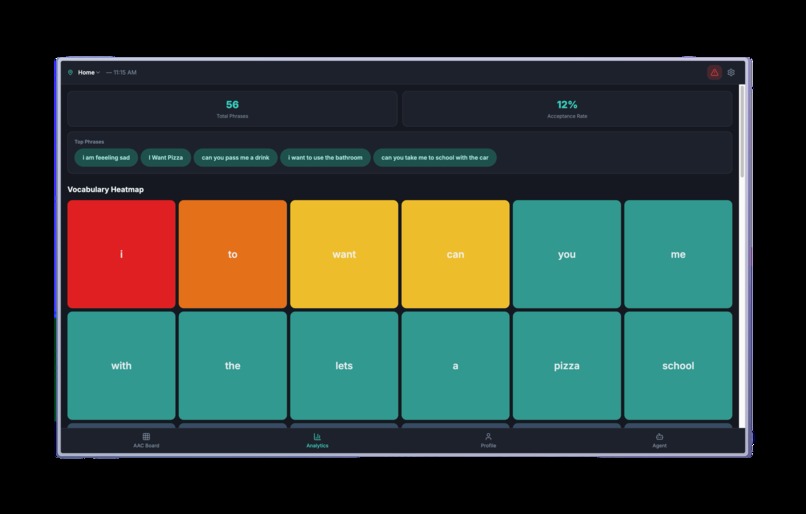
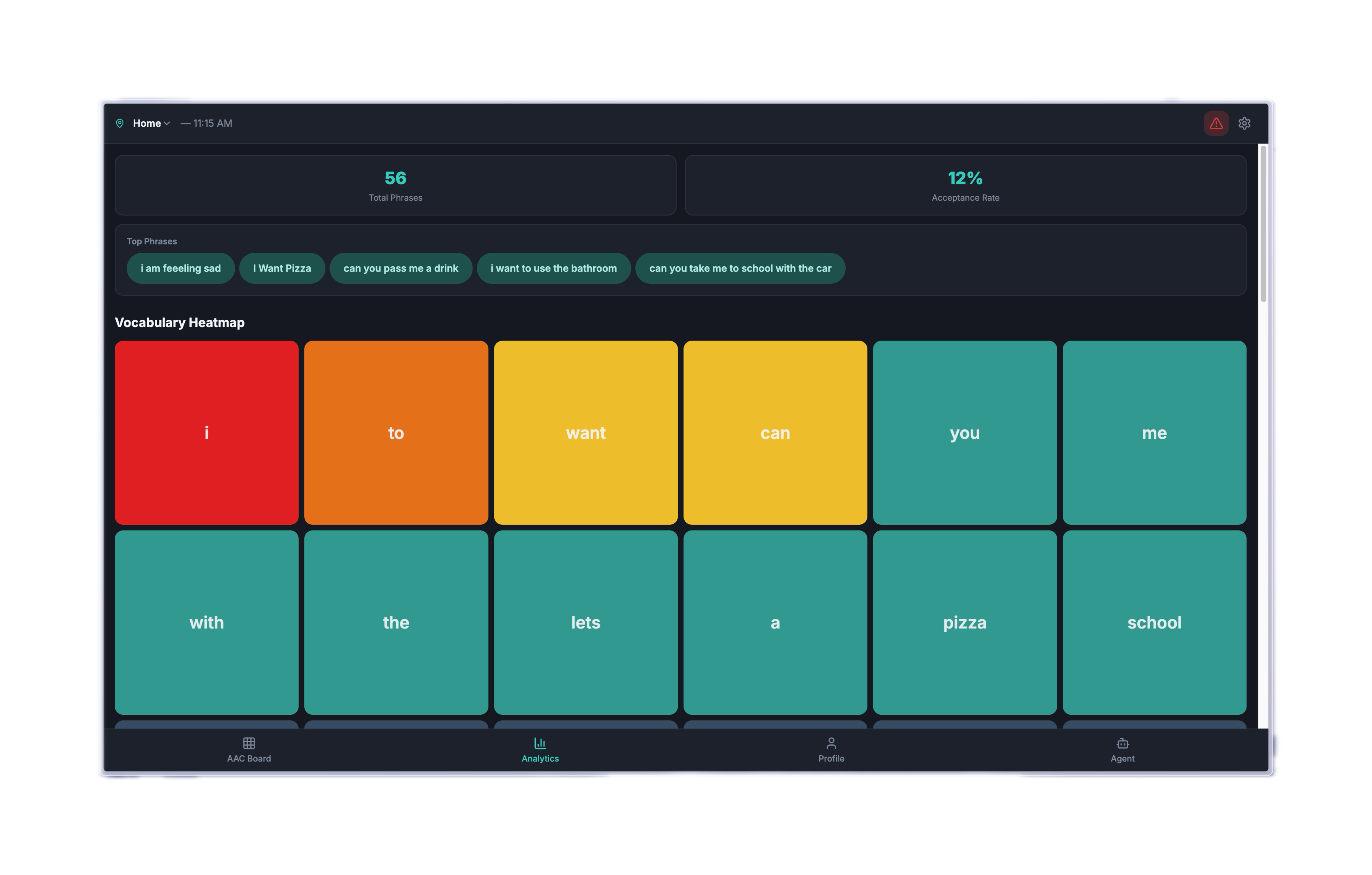
Analytics Page
-
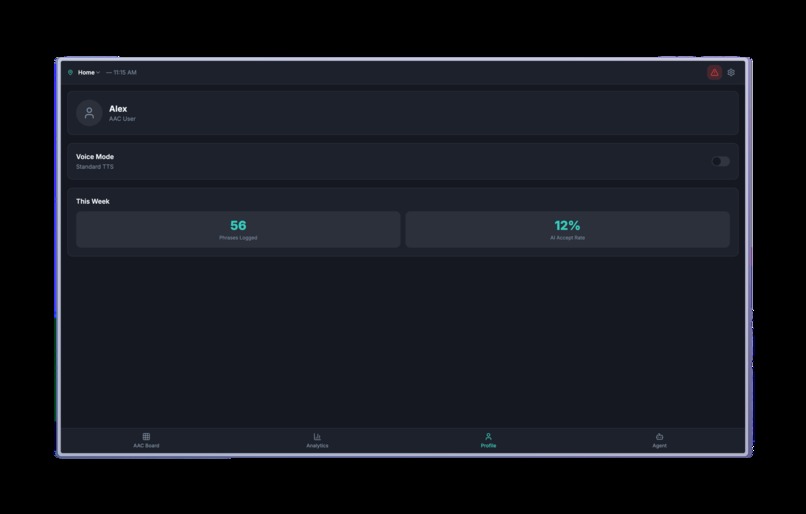
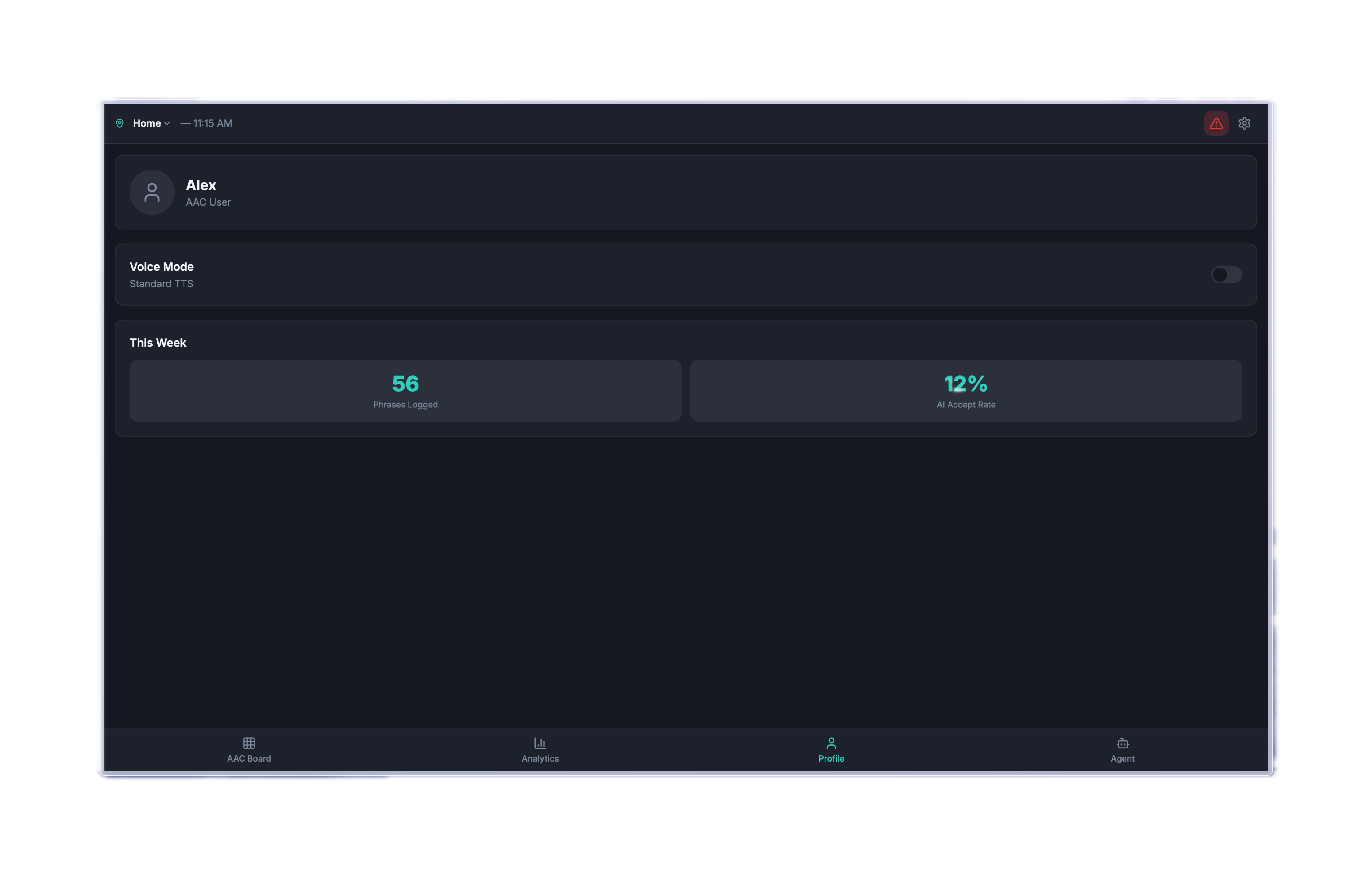
Profile Page
1. The Problem: Communication as a Luxury
Millions globally struggle to speak due to ALS, cerebral palsy, or stroke-induced aphasia. They aren't voiceless, but current assistive technology (AAC) often renders them so. Traditional software require hunting through deep, generic menus—the same for a child in school as an adult at home. By the time a user finds "I want to share my perspective," the conversational moment has passed, making real-time connection nearly impossible.
2. The Solution: Personal Independence
ConnectAble is a full-stack system that learns a user’s unique voice and patterns. After one week, it recognizes morning routines and favorite Friday orders, predicting thoughts in a single tap. By retraining nightly based on location and time, it evolves from a static tool into a personal extension. Beyond speaking, it acts as a digital bridge to independence, allowing users to control their environment and schedule without constant caregiver intervention.
3. A Real Scenario
8 AM at home: Sarah, who has ALS, taps "I" then "want." ConnectAble instantly suggests "water" based on her routine. One tap speaks the phrase and logs the data.
2 PM at the hospital: Her daughter calls. Recognizing the medical setting and time, the system prioritizes "I am at the hospital, will call you later" in the suggestion bar for an instant response.
Evening: Sarah want to order pizza, she taps pizza and order icon and delegates the task to the built in agent which places the order for her.
Late night: Sarah regains autonomy via "Agent Chat," typing "Remind me to take meds at 8 AM." The AI executes the command directly, bypassing complex menus.
4. Three Tabs, One System
| Tab | Functionality |
|---|---|
| AAC Board | 66 emoji-labeled buttons with real-time AI predictive suggestions. |
| Agent Chat | Natural language interface to "Call mom" or "Order pizza" independently. |
| Profile | Customization: Voice modes, dyslexia fonts, and high-contrast visuals. |
5. What Makes ConnectAble Different
| Feature | Legacy AAC software | ConnectAble |
|---|---|---|
| Vocabulary | Static and generic | Dynamic and personalized ; learns individual patterns |
| Speed | 30–45 seconds per phrase | 4–5 seconds via LLM prediction |
| Privacy | No data stored | Fully offline, encrypted on-device data |
| Autonomy | Communication only | Integrated AI Agent for tasks and reminders |
| Context | None | Understands location, time, and flow |
6. Real-World Impact
For those with speech disabilities, cutting response time from 30 seconds to 4 seconds rescues the ability to be spontaneous, humorous, and present. ConnectAble transforms "patients" back into active participants in their own lives.
By automating daily tasks and providing caregivers with data-driven health insights—such as shifts in thirst or energy levels—ConnectAble doesn't just provide a voice; it restores the independence and dignity that speech loss often takes away.
7. The Future: Scaling Autonomy
Adaptive Input Integration: Support for specialized hardware, including eye-tracking, sip-and-puff switches, and future BCI (Brain-Computer Interface) linkages to bypass physical limitations.
Agent Delegation: Expanding "Agent Chat" to communicate directly with external AI ecosystems, allowing the system to independently manage smart homes, medical refills, and scheduling.
Active Context Curation: Real-time "listening" to identify ongoing discussion topics, automatically surfacing relevant vocabulary to keep the user synced with the current conversation.
Hybrid Cloud Backend: A secure, encrypted infrastructure to synchronize preferences across devices while utilizing cloud-based LLM training to refine the user’s personal linguistic model.
Built With
- chromadb
- claude-code
- css
- elevenlabs
- fastapi
- llm
- lovable
- microsoft-azure-geolocation
- node.js
- ollama
- phi3-msft-model
- python
- pyttsx3
- react
- sentence-transformers
- sqlcipher3
- typescript
- vite


Log in or sign up for Devpost to join the conversation.