-
-

icon
-
title
-
game
-
game
-
game
-
game
-
game
-
profile
-
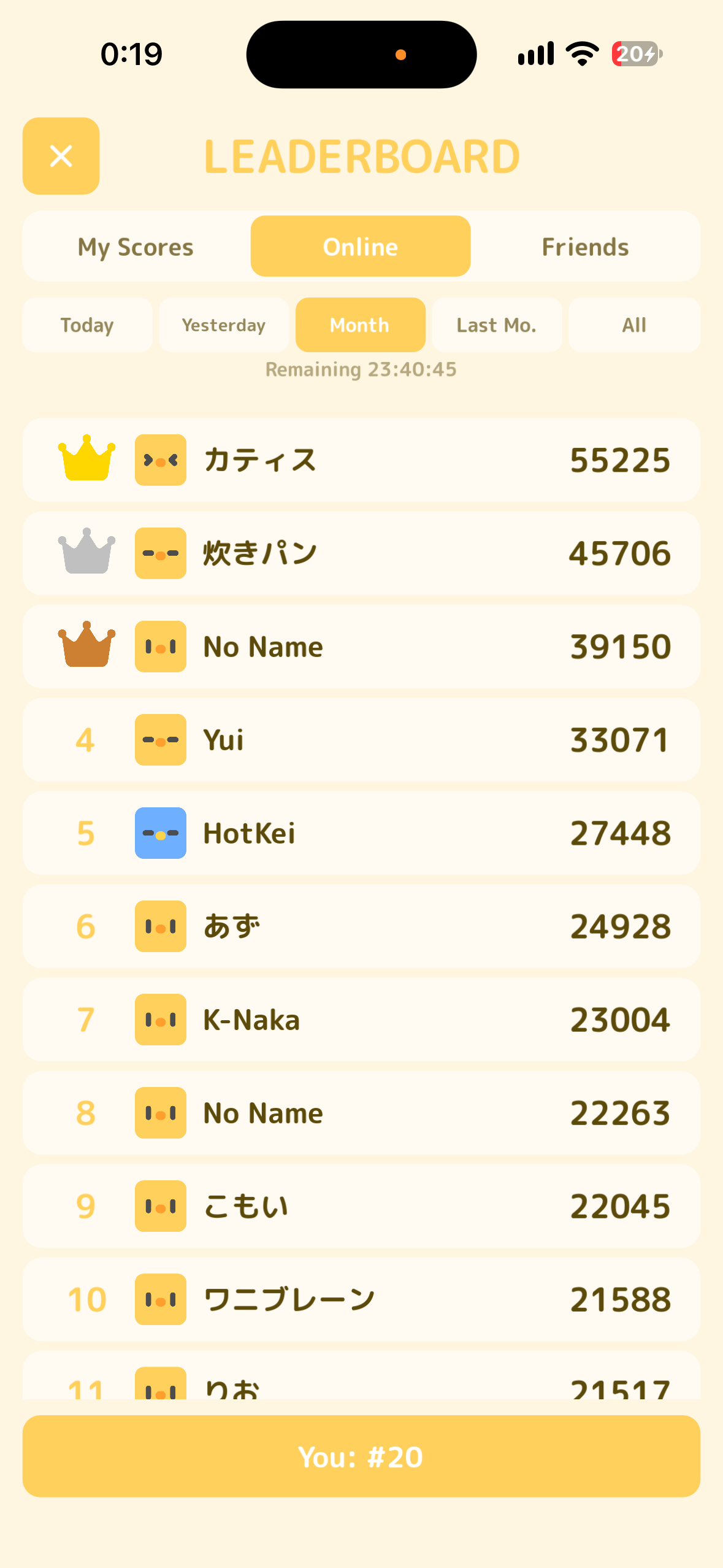
leaderboard
-
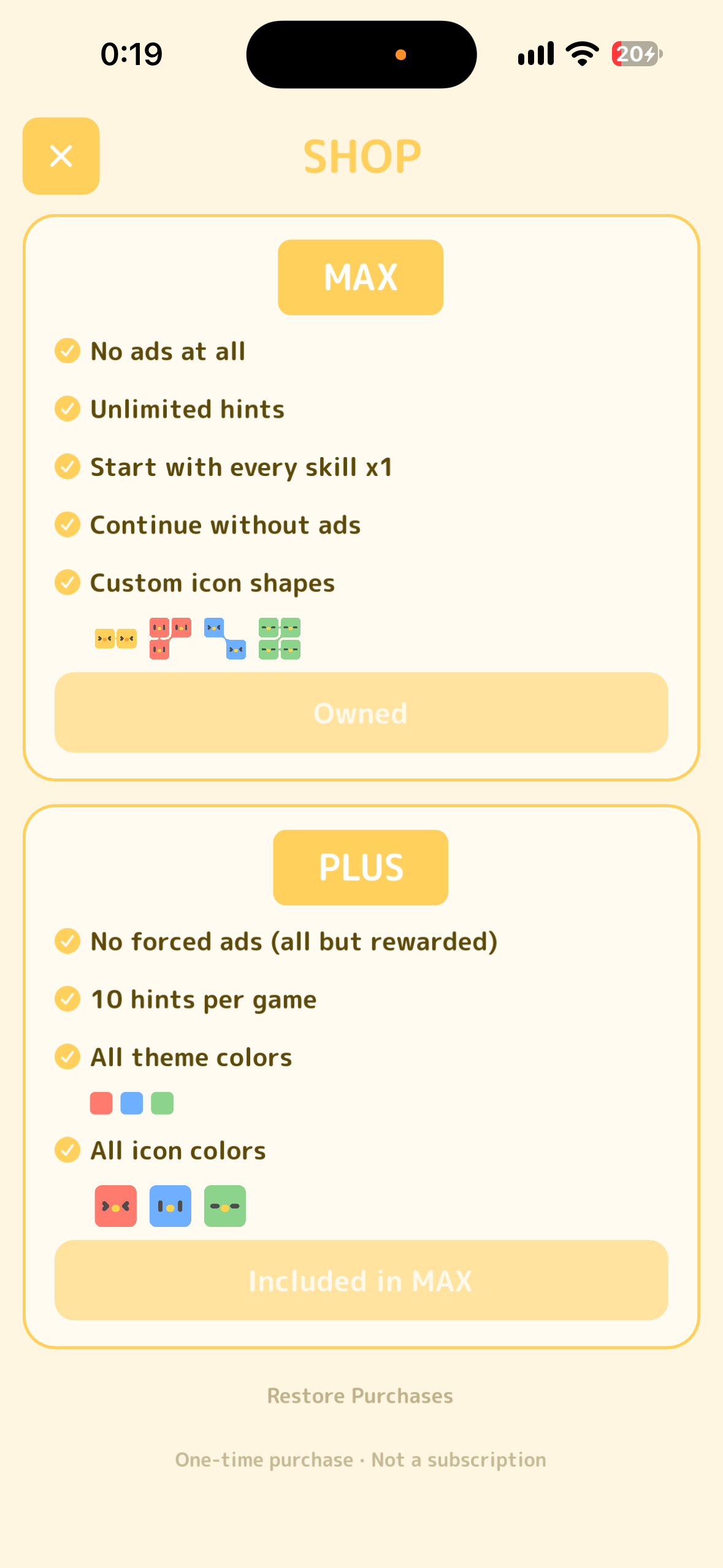
shop

Inspiration
I wanted to make a puzzle that's clear the moment you see it — one anyone can play, that still goes deep. The idea for how to do that came to me all at once, and that was the start.
What it does
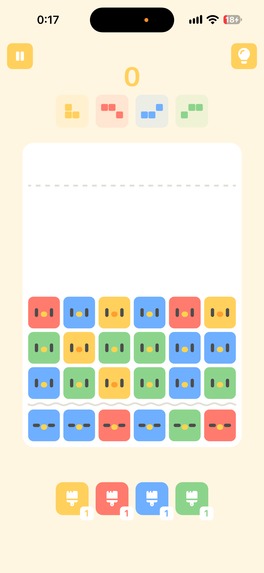
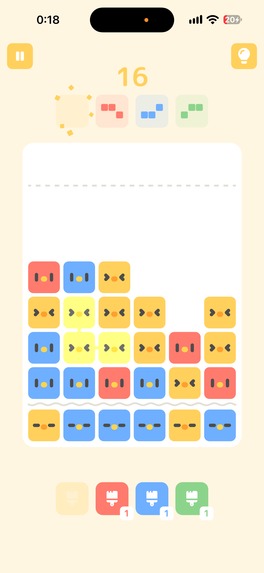
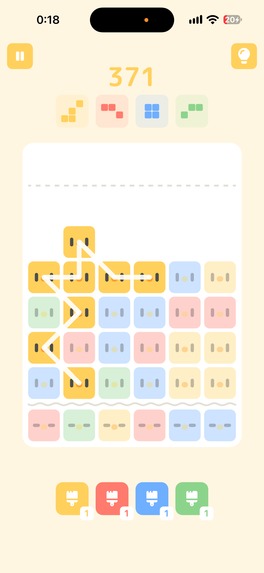
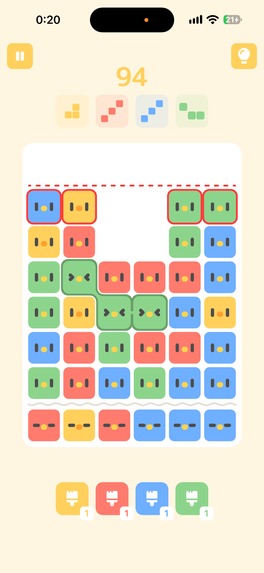
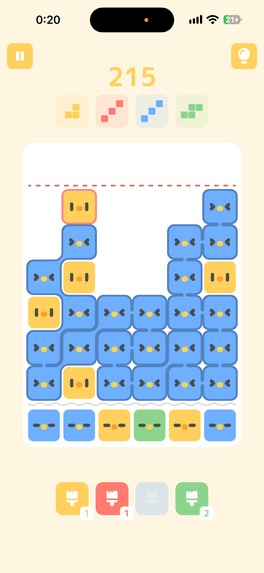
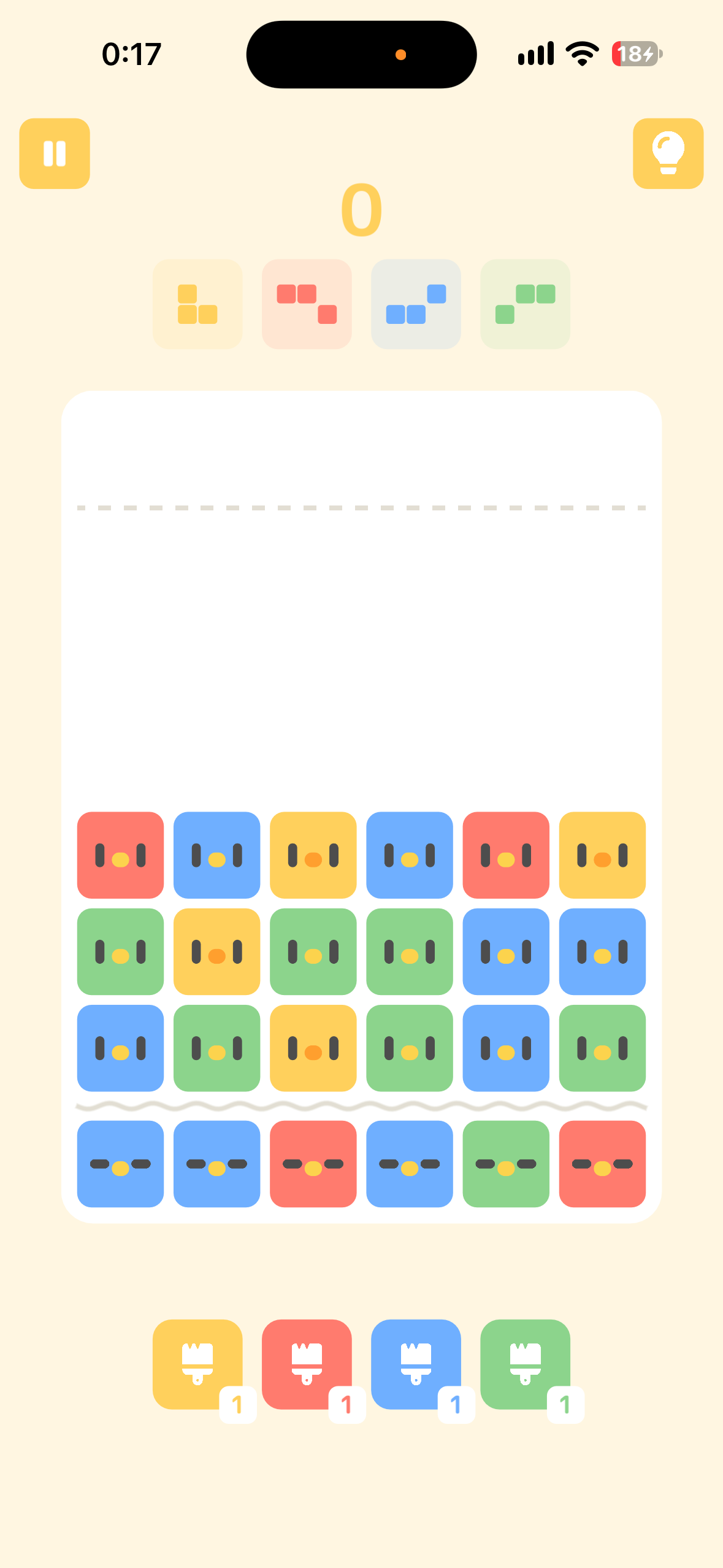
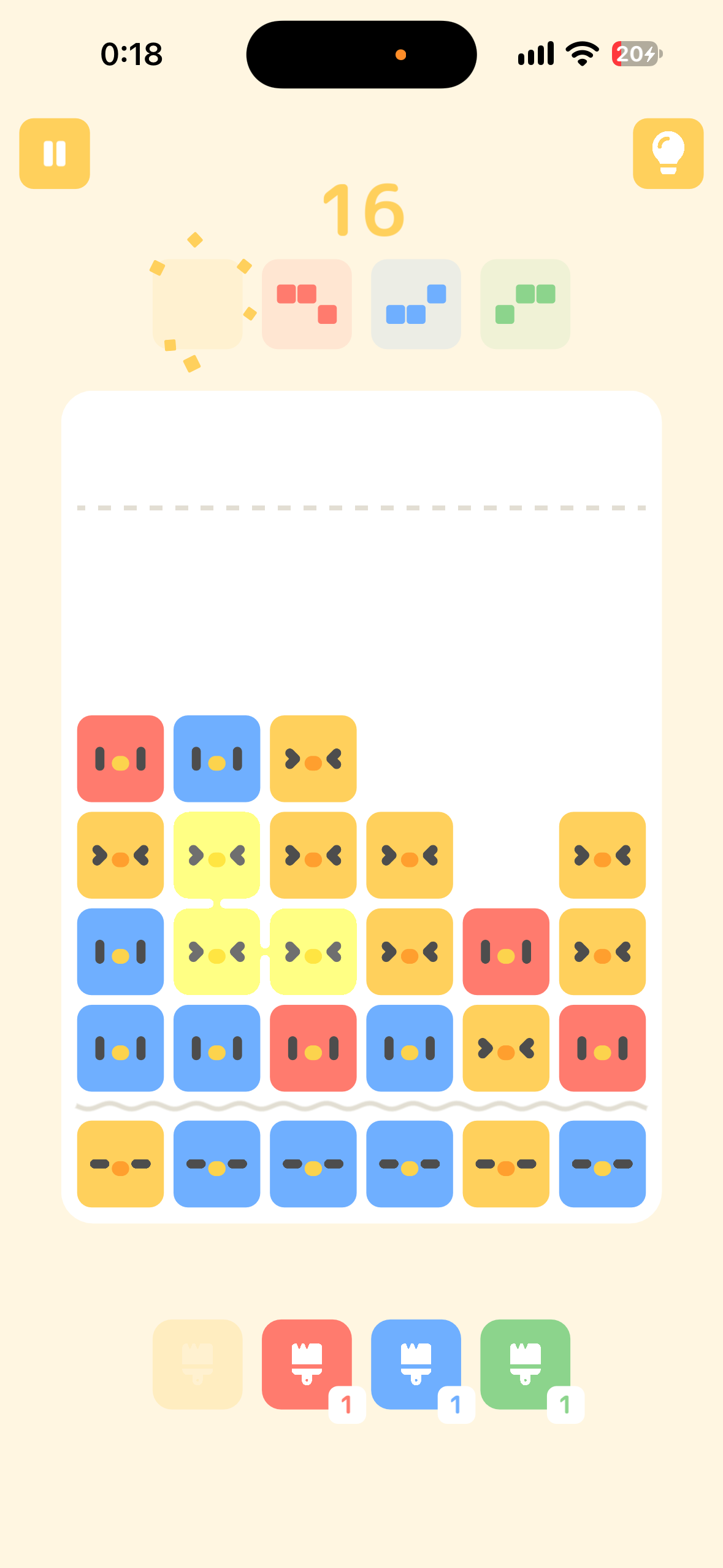
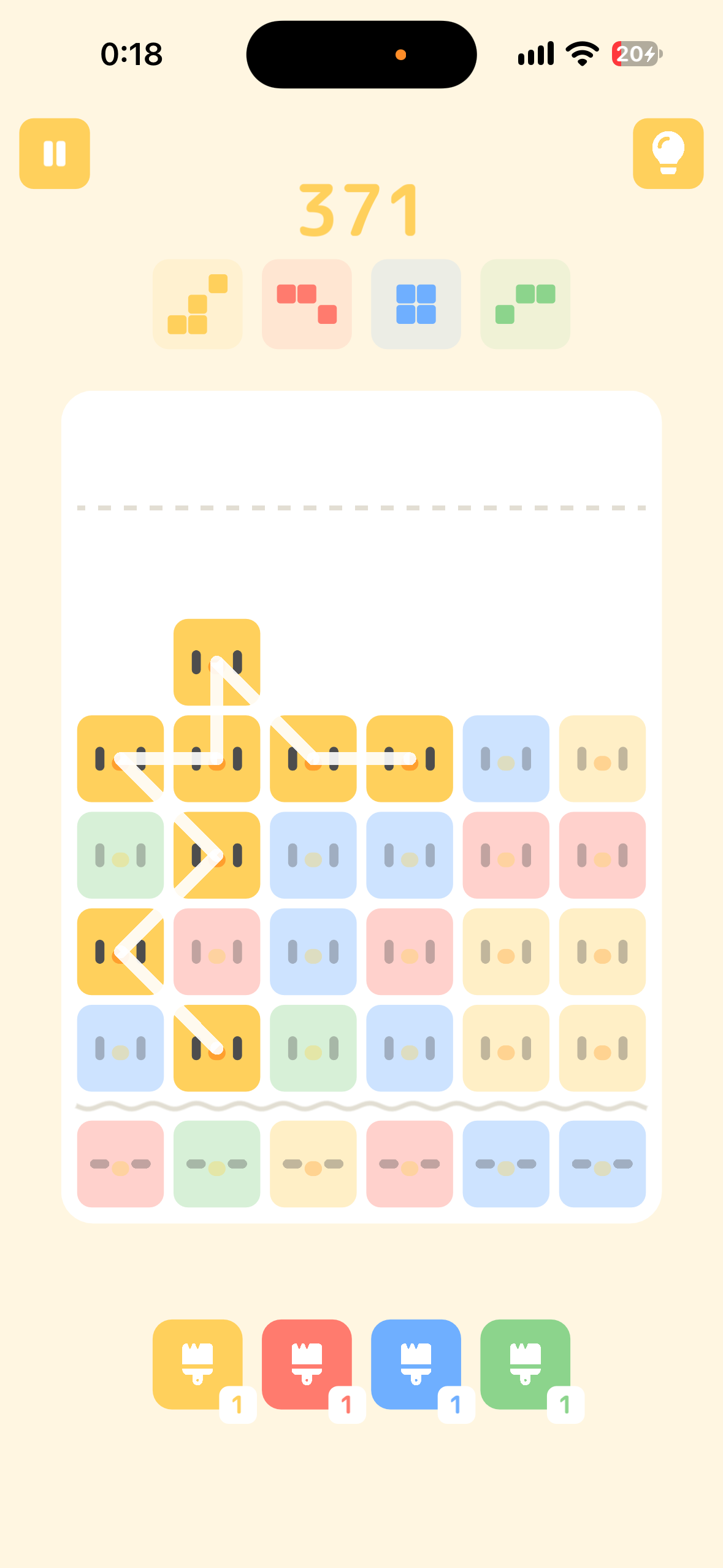
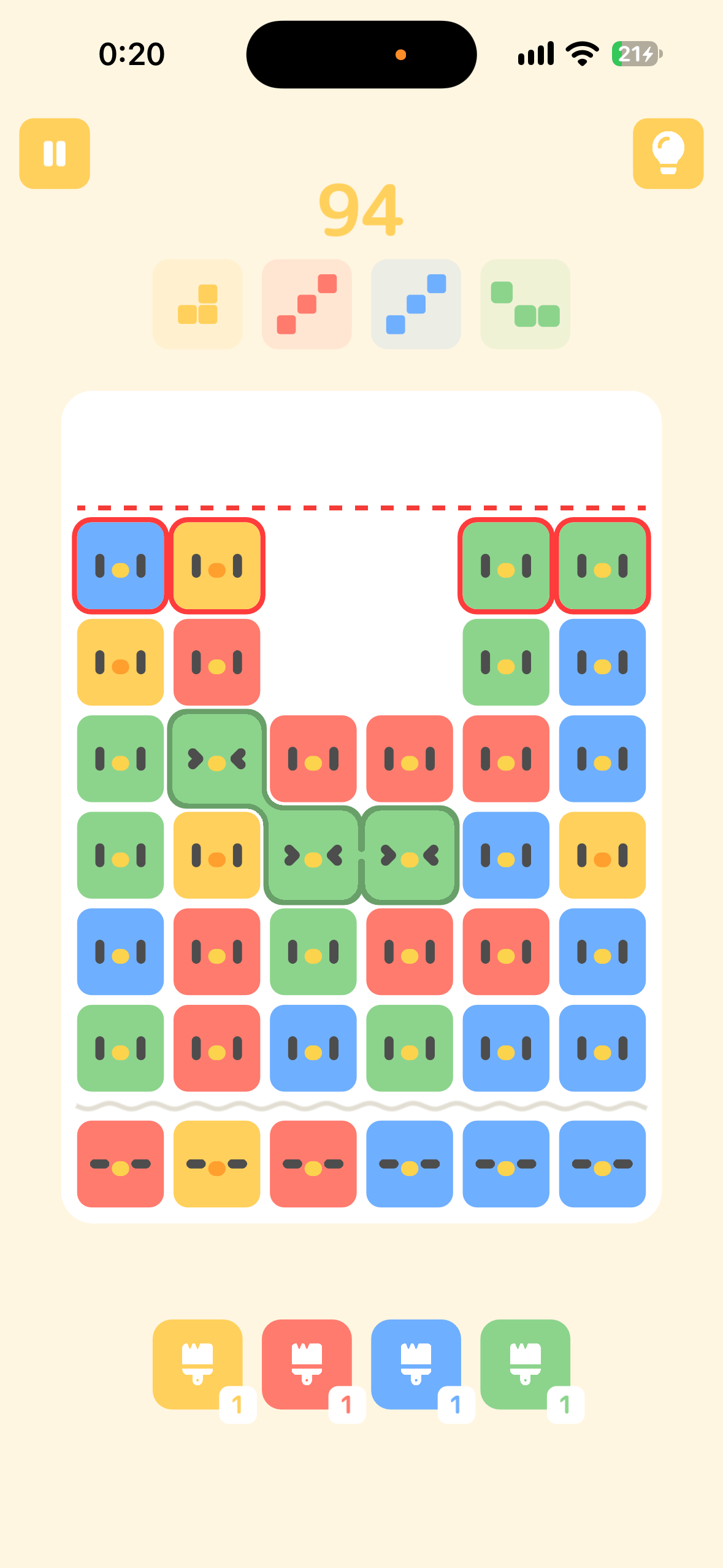
1. Connect birds of the same color. Trace a path over birds of one color, in any of eight directions, to clear them. The birds above drop into place, and every clear pushes a new row up from the bottom. When the stack reaches the top, the run is over — you'll always see it coming. Score is the square of the number cleared, so one long chain is worth far more than several short ones.
2. Complete the target shapes. Each color has a target shape posted above the board. Trace that shape and every bird of that color clears at once, and you earn paint of that color. Each target starts as a shape of three birds and grows by one every time you complete it, so it keeps getting harder.
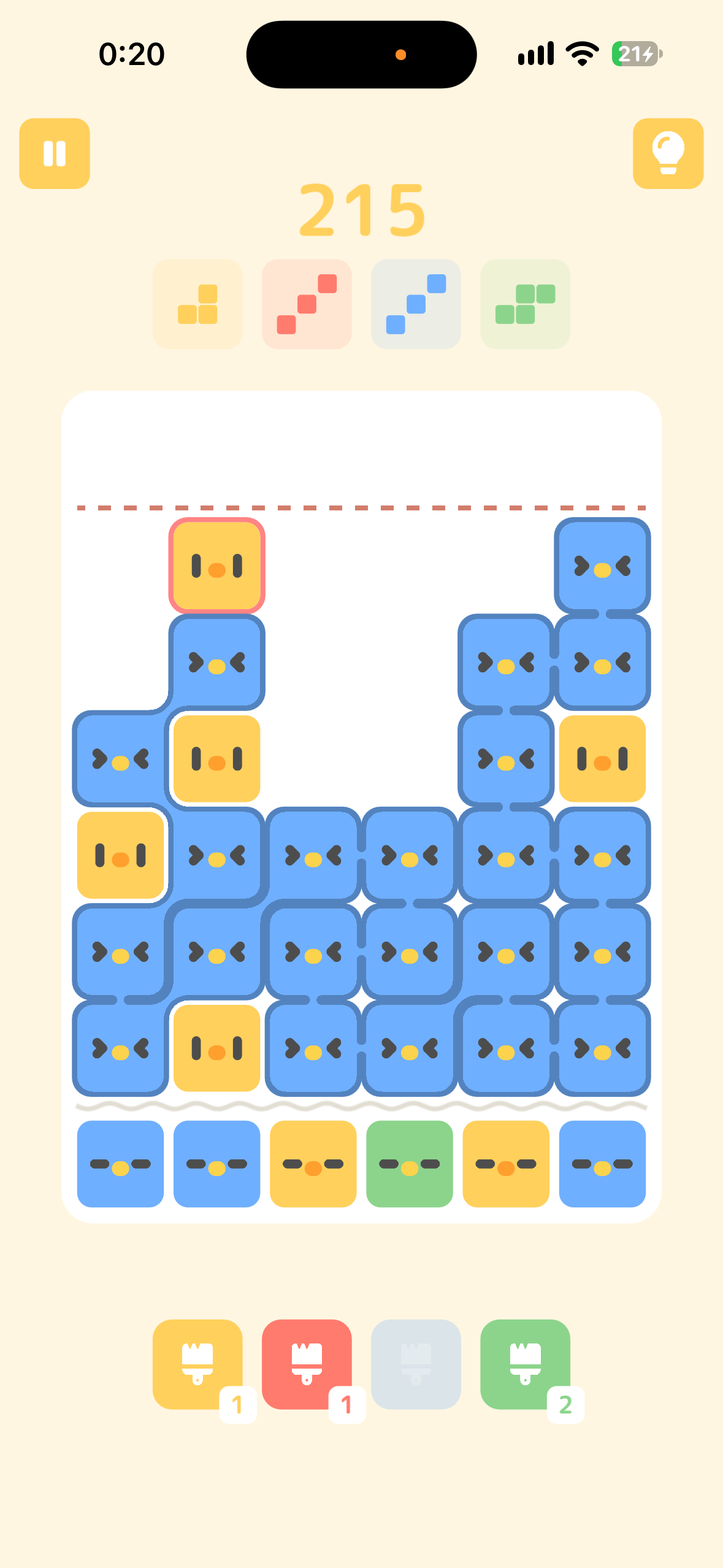
3. In a pinch, change colors with paint. Paint turns every bird of one color into another. It's your own way out of a tight spot, and when to use it is up to you.
The board is small, and what I wanted most was to fit endless depth into it — whether clearing here completes a target, whether this color connects next turn, whether to spend the paint now. Working that out yourself is the fun, so there's no timer rushing you, and if you close the app, the run picks up where you left off. The best moments are connecting a long route in one stroke and completing a target you set up yourself.
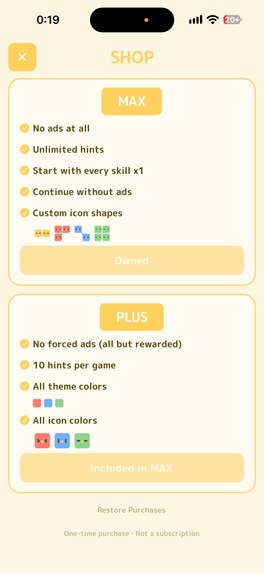
Two premium tiers, both one-time purchases:
| Free | PLUS | MAX | |
|---|---|---|---|
| Hints per run | 3 | 10 | Unlimited |
| Themes | 1 color | All 4 colors | All 4 colors |
| Ads | All (banner, interstitial, rewarded) | Banner & interstitial removed | All removed, including rewarded |
How I built it
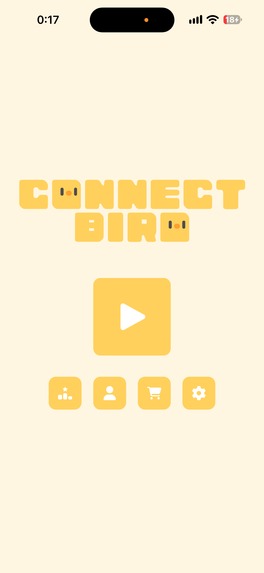
I started from the name. CONNECT BIRD came first, and I designed the game system out of the idea of connecting.
To ship quickly, I turned everything outside the game itself in my previous game, BOUND BIRD — rankings, accounts, the API connections — into a template, set up so that swapping in new API keys is all it takes to bring that side up. That let me put my attention on the game itself, its core and what makes it fun, and build something that lives up to what players expect.
Challenges I ran into
Setting the difficulty. This took more thought than anything else. Make the game a little easier than it is now, and a good player can go on forever — the run never ends. Make it a little harder, and every run ends early, nobody feels themselves getting better, and they stop playing. It had to sit where you always improve if you keep playing, inside a UI that looks compact and simple.
Letting the player notice. I didn't want to add a tutorial, so everything had to explain itself. It's kept simple so the chain you're drawing is easy to see, and you can play by intuition from the first move. There are four colors because five would make the board hard to read and three would make it dull. The target shapes sit at the top and the paint buttons at the bottom, as a matching pair: completing a target is how you earn that color's paint. None of this is explained anywhere. It's laid out so that you notice it as you play.
Accomplishments that I'm proud of
What I'm proudest of is keeping both the look and the rules this simple while still making the game this deep. That is genuinely hard.
The obvious way to satisfy beginners and experts alike is stages or a difficulty setting. CONNECT BIRD doesn't rely on either; one set of rules satisfies both.
The board is small, six columns by eight rows, because that's what stays easy to see and easy to trace on a phone. Any more cells and every bird gets smaller, harder to read and harder to touch. Tracing with your finger is the whole game, too; with a mouse or a gamepad it would lose the directness that makes it intuitive. Each bird you connect answers with a small tap in your hand, and when you let go, they pop one by one, each with a tap of its own. It's a game made to be played on a phone.
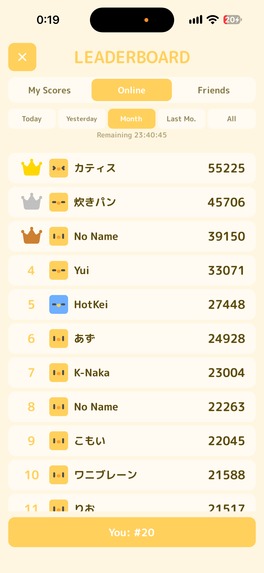
And it found its players. In Japan it goes by its Japanese title, and people post about it on X under #コネクトリ — a lot of them say it's fun, and puzzle fans in particular have enjoyed how much it asks you to think about your score. GameWith, one of Japan's major game media sites, also wrote it up: "Don't let the cuteness fool you — a tracing puzzle that tests foresight and judgment."
What I learned
A puzzle that's simple to look at but makes you think is something a lot of players enjoy — but not everyone, and that's fine. People like different games, and it's the player who decides. Some want to think their way through; some just want to blow off steam. No single game can satisfy everyone.
What I learned is the one thing I can't compromise on: feel. If someone decides a game isn't for them, I want that to be about the game's system, not about something I could have fixed, like how it feels to play. When the feel is the best that design can deliver, the players who were looking for exactly this kind of game come away completely satisfied.
What's next for CONNECT BIRD
The game is complete. What's next is getting it in front of more players, and I plan to take it to an in-person game event.

Log in or sign up for Devpost to join the conversation.