Inspiration
We started this hackathon building Bitcoin applications. Then our own demos hit wallet and signer setup friction: getting from a connect button to a working identity and payment took more explanation than we wanted. We built Connect to bring those first steps into one desktop browser extension.
Our primary users are first-time Nostr users, local Bitcoin learners and African developers demonstrating their projects. The aim is to make a workshop or demo easier to start. Independent learner outcomes are the next thing to measure.
What it does
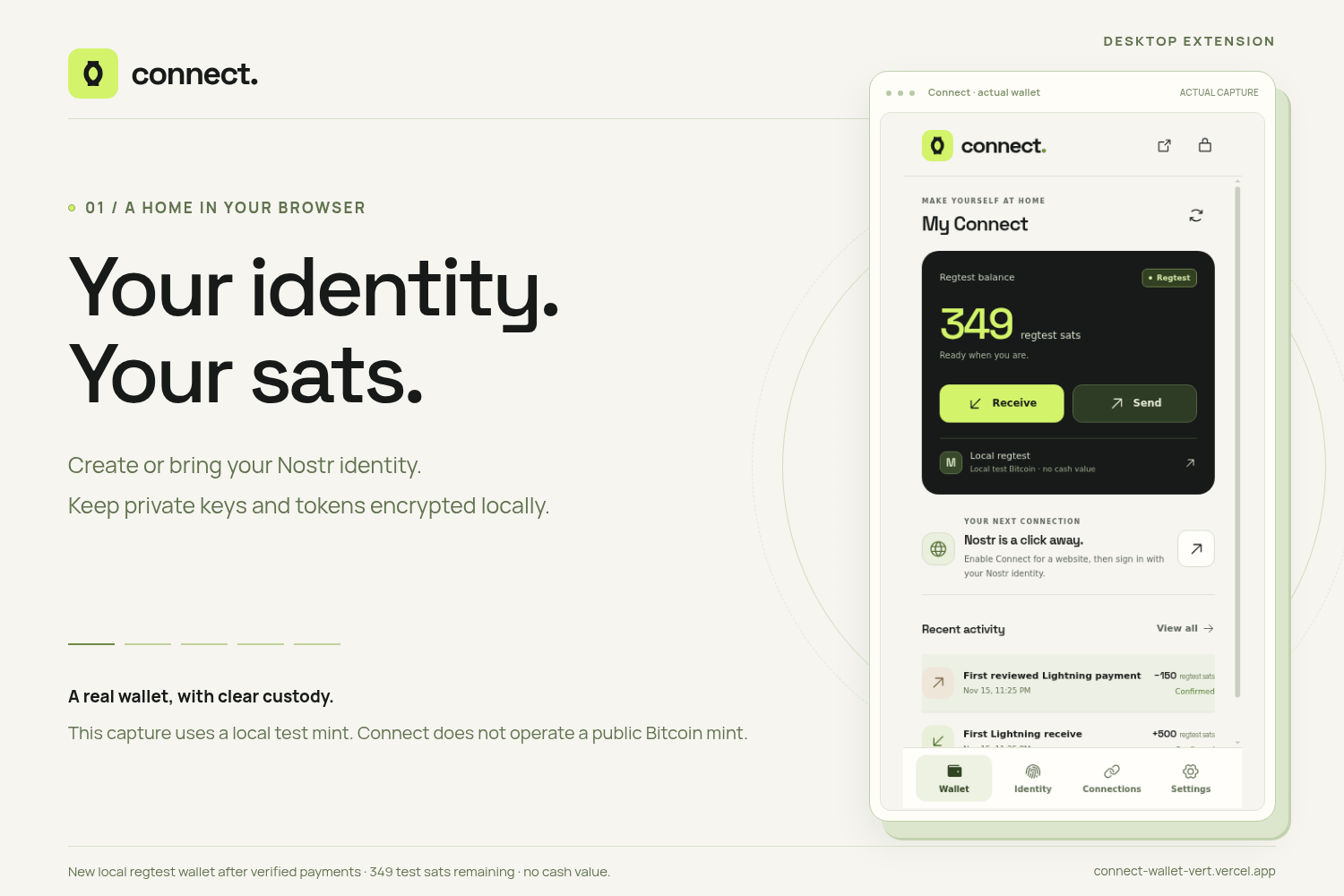
- Creates a Nostr identity or imports an existing Nostr key inside the extension.
- Protects private keys and Cashu wallet tokens in a password-encrypted local vault, with full encrypted wallet backups.
- Provides NIP-07 signing, NIP-44 message encryption/decryption and WebLN wallet access to enabled websites.
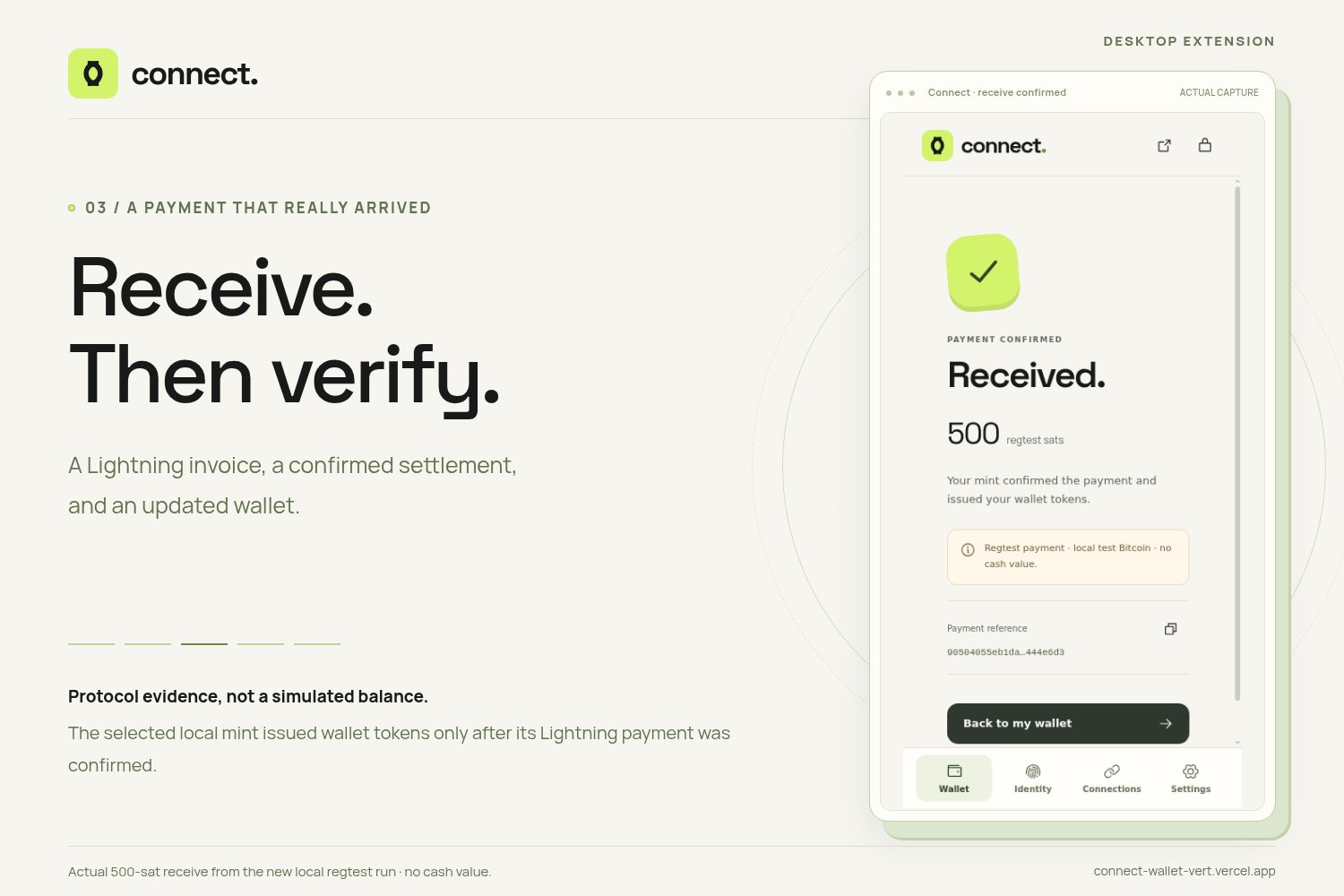
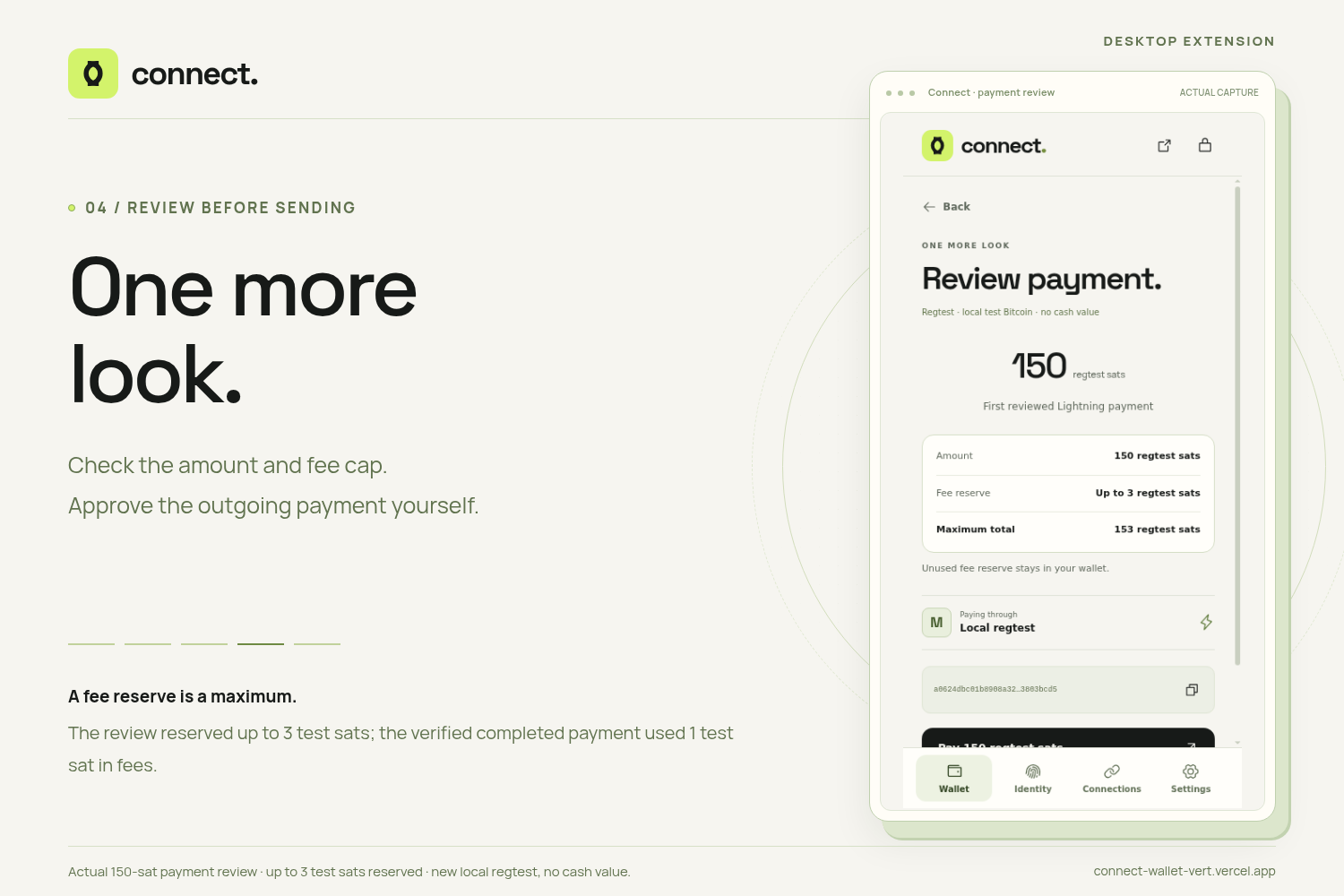
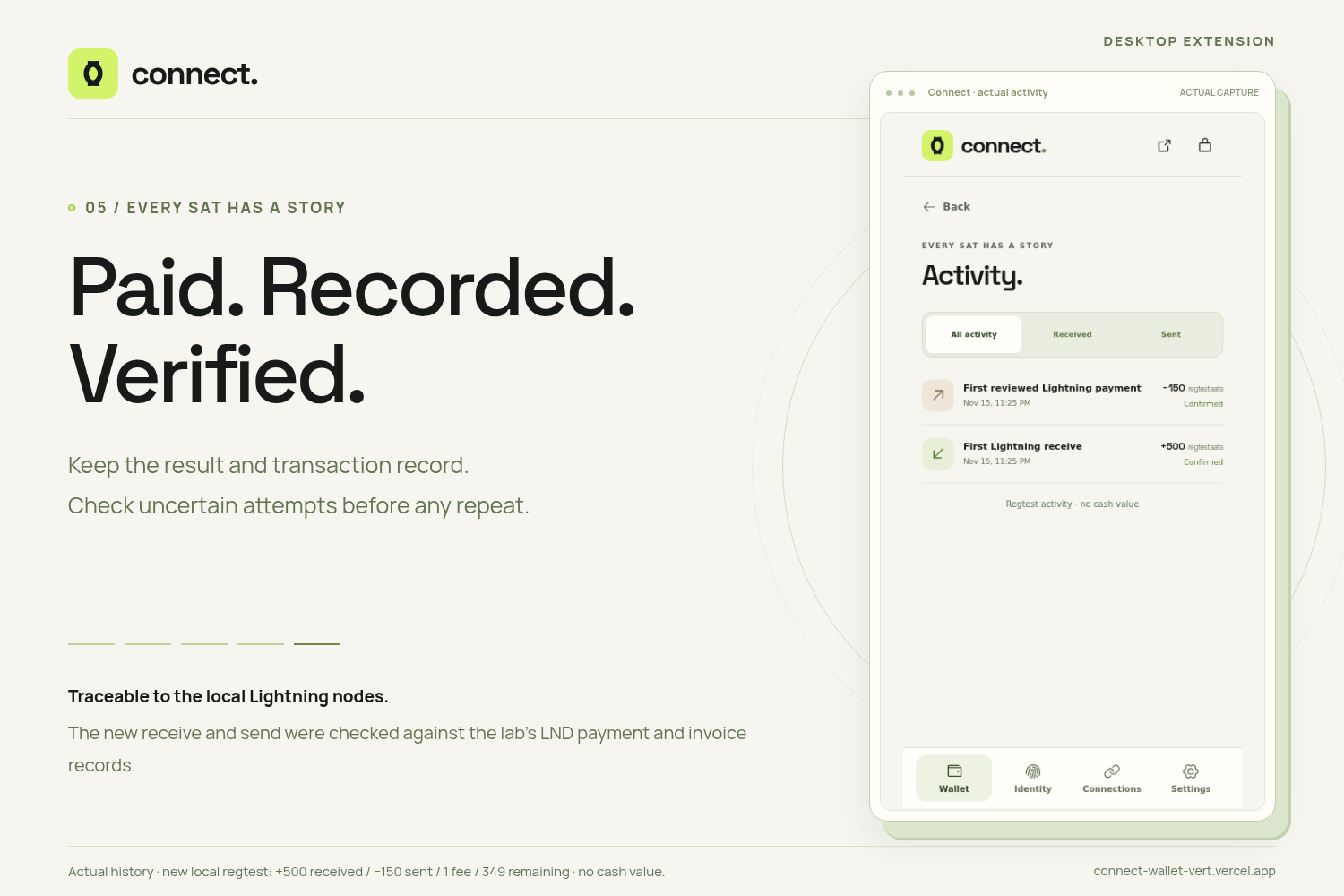
- Lets users receive Lightning invoices, review outgoing amounts and fee caps, and check transaction records.
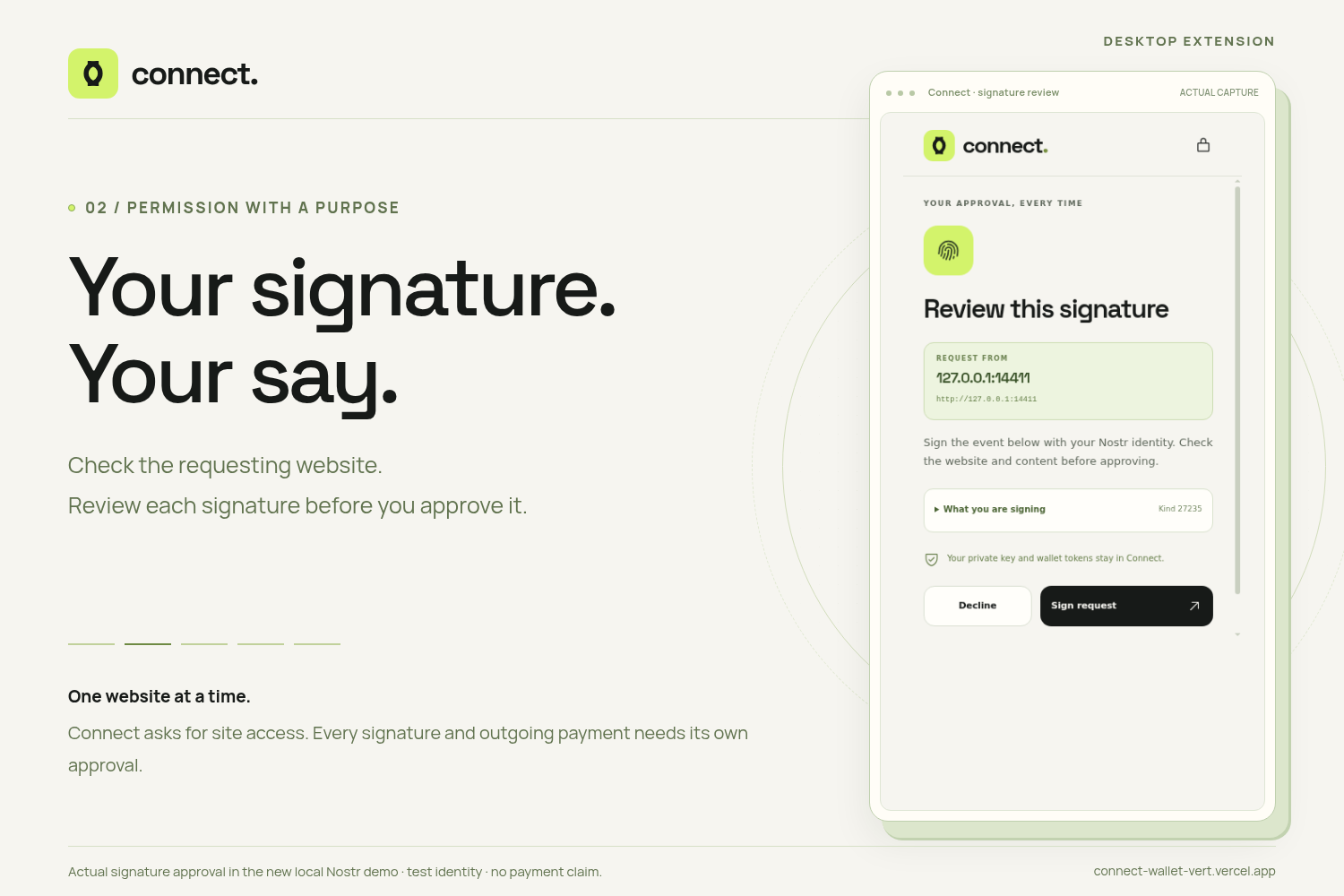
- Requests browser access for each website origin. Every signature and outgoing payment requires explicit approval showing the requesting address.
- Saves uncertain payment attempts for status checking instead of automatically sending again.
Identity, encryption and wallet-read/invoice permissions can remain granted to an origin until disconnect and run while unlocked without another prompt. Approved NIP-44 decryption can return readable message text to that website.
The selected Cashu mint holds the Bitcoin backing the wallet tokens. Users must trust that operator. Connect keeps private wallet data locally; it does not provide independent Bitcoin custody. Mints receive the proofs and network metadata needed for wallet operations. Public wallet labels remain readable local metadata.
How we built it
Connect uses TypeScript, React and Vite in a Chromium Manifest V3 extension. A background controller handles private vault state and validates website requests. The vault uses the Web Crypto API; established nostr-tools and Cashu libraries handle protocol operations. Fonts and icons are bundled locally.
Bitcoin Core, two LND nodes and Nutshell form our controlled regtest lab. Playwright exercises the installed extension, including Chrome's native website-consent dialog. Vercel hosts the installation guide, public download, privacy notice and integration example; GitHub hosts the source and build pipeline.
What we learned
A connect button is only useful when installation, permission, approval and recovery all make sense together. An enabled provider is different from an approved action. We also learned to separate local key ownership from mint custody, and to explain a lost payment response without inviting a duplicate payment.
Challenges we faced
Native browser permission prompts can close an extension popup and interrupt a flow. We moved persistent work into a wallet tab and preserved the original click gesture for permission requests. Payment timeouts, pending invoices and encrypted restoration needed durable journals and serialized state changes. We tested those boundaries rather than relying on a browser success callback.
Actual working proof
The retained, builder-controlled installed-Chromium run recorded 600 regtest sats received, 200 sent, 2 in fees and 398 restored. Four receipt lookups against our lab's LND nodes checked settlement. A full encrypted restore preserved the identity, balance and receipts, cleared website connections and made zero additional payment calls.
The run also checked native website consent, signed Nostr requests, NIP-44 messaging, lock/unlock and isolation after a page reload. These are actual local Bitcoin/Lightning protocol operations, with no monetary value.
The public extension ZIP is available now. Its 21 wallet runtime files match the accepted build; licensing notices explain the different archive checksum. The clean build pipeline passed 84 unit checks. Financial browser checks require the local lab and are retained separately from ordinary CI.
Browser evidence · Reproduction guide
What is next
Independent security review, browser-store publication, interoperability trials and a small consented onboarding pilot with local developers and learners. We will measure completed installations, time to a valid signature, time to a verified payment, recovery completion and failed-request rate.
The current release is an unpacked desktop developer preview. Mainnet settlement, a store listing and independent adoption have not been established.
