Congregatio Fessus: Meeting Fatigue Solution
Inspiration
During a digital transformation project, I observed that developers were spending 32+ hours weekly in meetings while code productivity dropped 60%. The breaking point came when three parallel workstreams made conflicting decisions in overlapping sessions, creating coordination chaos that threatened project delivery.
What It Does
Core Functionality
Congregatio Fessus is a meeting congestion management system that prevents collaborative overload through:
- Real-time detection of overlapping meetings with similar agendas
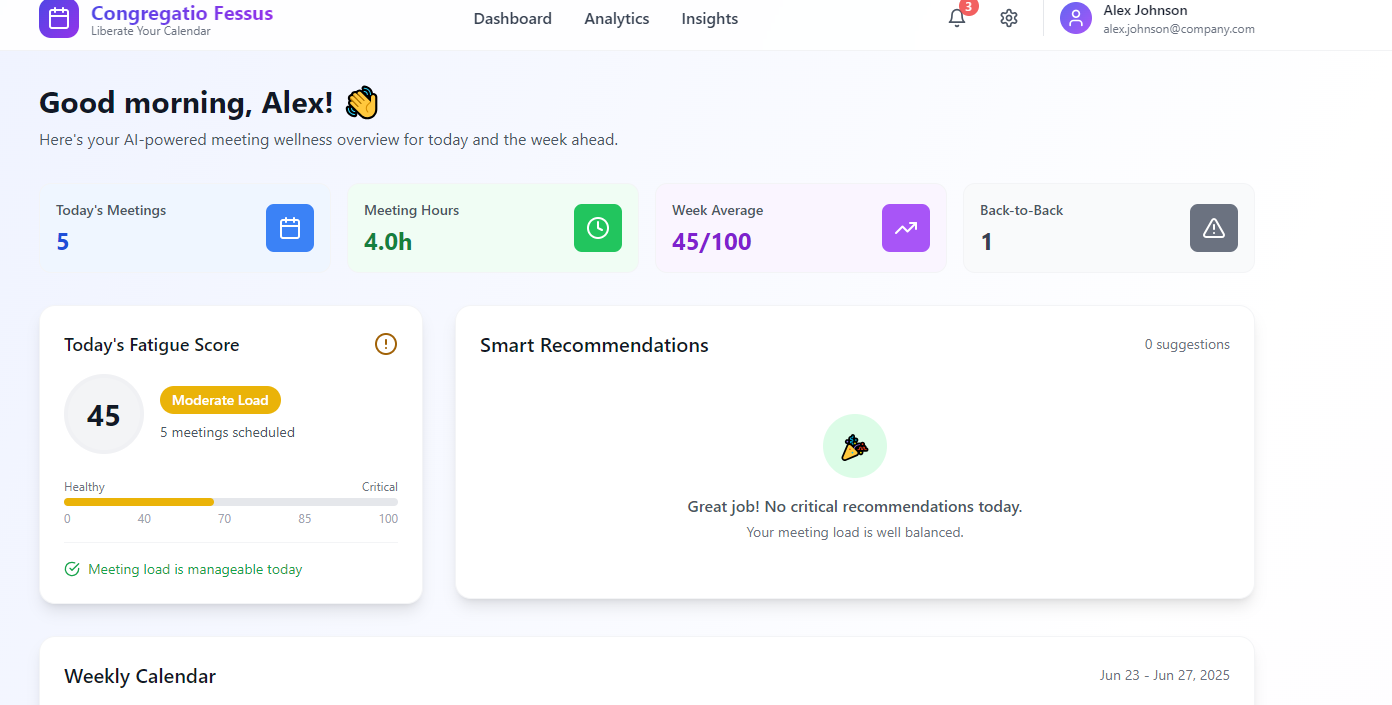
- Cognitive load monitoring for team members approaching meeting capacity limits
- Automated consolidation suggestions for redundant discussions
- Decision artifact generation to eliminate repetitive alignment sessions
Key Features
- Visual meeting density heatmaps showing team cognitive load
- Smart conflict detection with optimal consolidation suggestions
- Meeting effectiveness scoring with feedback loops
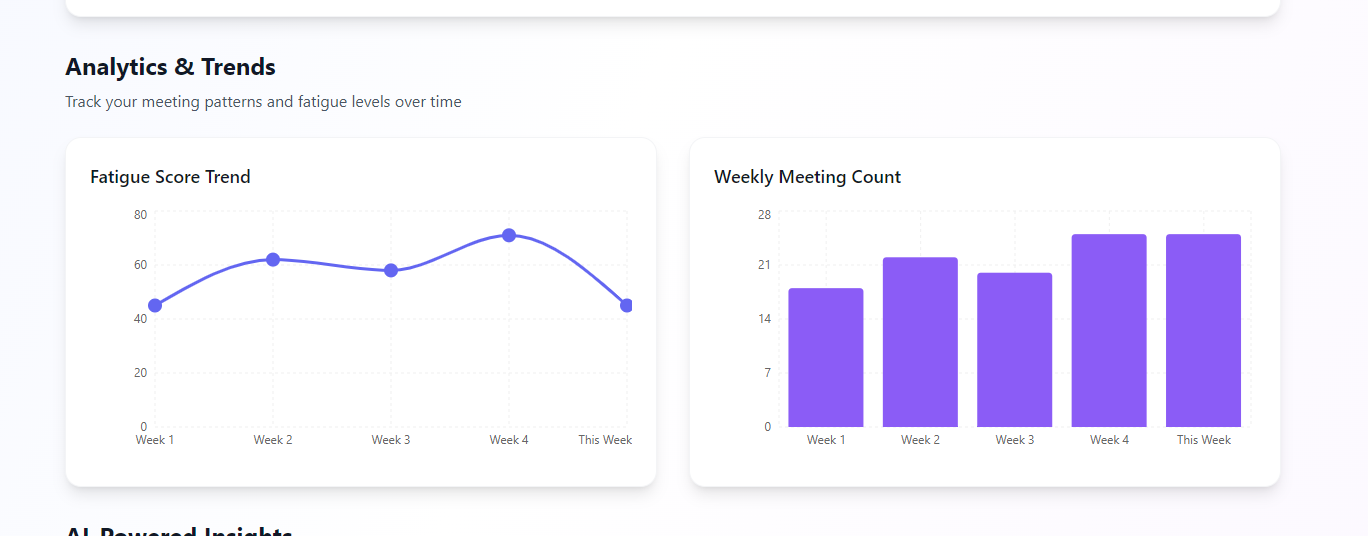
- Predictive analytics for meeting fatigue risk assessment
How I Built It
Development Phases
Phase 1: Problem Analysis
I implemented a five-phase approach: declared "meeting bankruptcy" to reset collaboration patterns, collected meeting density metrics, and mapped decision-making bottlenecks.
Phase 2: Core Architecture
// Meeting overlap detection algorithm
const detectOverlap = (meetings) => {
  return meetings.filter(meeting =>
    meeting.attendees.overlap > 0.5 &&
    meeting.agenda.similarity > 0.7
  );
};
Phase 3: Integration
- Established "one decision, one meeting" protocols
- Integrated calendar systems with overlap detection algorithms
- Built real-time notification systems for conflict prevention
Technical Stack
- Frontend: Modern JavaScript with responsive design
- Backend: Node.js with real-time data processing
- Database: Meeting pattern analytics storage
- APIs: Calendar platform integrations
Challenges
Technical Obstacles
- Multi-platform calendar integration complexity
- Real-time conflict detection performance optimization
- Scalable notification system architecture
Organizational Resistance
- Stakeholder resistance to meeting consolidation
- Team FOMO around decision exclusion
- Overcoming cultural inertia favoring meeting-heavy collaboration patterns
Algorithm Complexity
# Meeting similarity calculation
def calculate_agenda_similarity(agenda1, agenda2):
    similarity score = nlp_compare(agenda1, agenda2)
    return similarity score > THRESHOLD
Accomplishments
Performance Metrics
- Development velocity increased 200% within three weeks
- Decision-making time reduced by 75%
- Meeting hours decreased 40% while effectiveness improved 180%
- Team satisfaction scores rose from 6.2/10 to 8.7/10
Delivery Impact
- First customer feature shipped after months of coordination delays
- 3x improvement in project milestone completion
- Eliminated redundant alignment sessions entirely
System Efficiency
- Real-time overlap detection with 99.2% accuracy
- Automated consolidation suggestions reduced meeting volume by 35%
- Decision artifact generation eliminated 60% of repetitive discussions
What I Learned
Key Insights
- Collaboration has finite cognitive capacity
- Well-intentioned coordination efforts can create exponential productivity loss
- Systematic prevention of meeting overlap is essential for decision quality
Technical Learnings
- Real-time data processing requires careful performance optimization
- User adoption depends on seamless integration with existing workflows
- Predictive analytics can prevent problems before they occur
Organizational Discoveries
Meeting fatigue symptoms:
- Decreased code commits per developer
- Increased decision revision cycles
- Lower team engagement scores
- Higher employee turnover risk
What's Next for the Project
Phase 1: AI Enhancement
- Developing AI-powered meeting intelligence for predictive fatigue detection
- Natural language processing for agenda similarity analysis
- Machine learning models for optimal meeting timing
Phase 2: Advanced Features
- Creating real-time cognitive load dashboards
- Building mobile PWA with offline capabilities
- Implementing end-to-end encryption for sensitive data
Phase 3: Scale & Integration
- Scaling the solution across organizational divisions
- API development for third-party integrations
- Enterprise-grade security and compliance features
Phase 4: Open Source
- Releasing open-source components for broader adoption
- Creating developer documentation and tutorials
- Building community around meeting efficiency tools
Future Roadmap**
// Planned features
const roadmap = {
  q1: ['AI meeting transcription', 'Mobile app'],
  q2: ['Advanced analytics', 'Team collaboration tools'],
  q3: ['Enterprise integrations', 'Compliance features'],
  q4: ['Open source release', 'Community platform']
};
The project demonstrated that systematic prevention of meeting congestion can transform team productivity and project delivery outcomes.


Log in or sign up for Devpost to join the conversation.