-
-
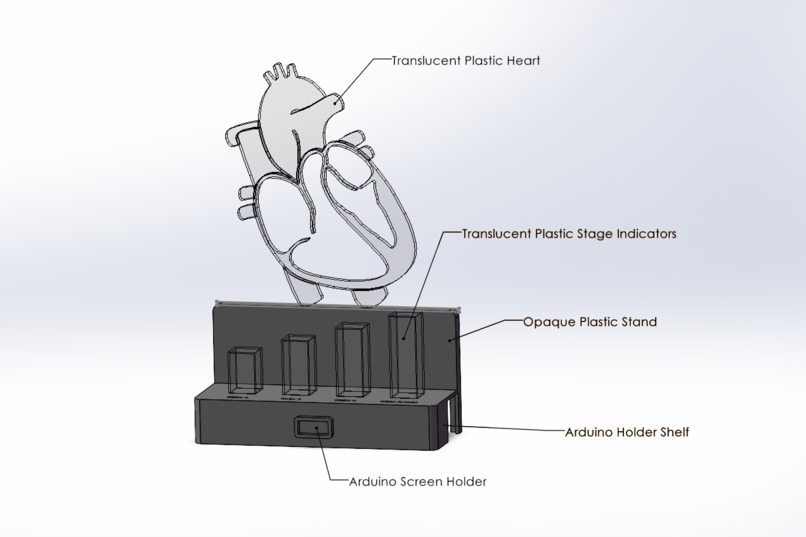
Cardiac Heart Function Model
-
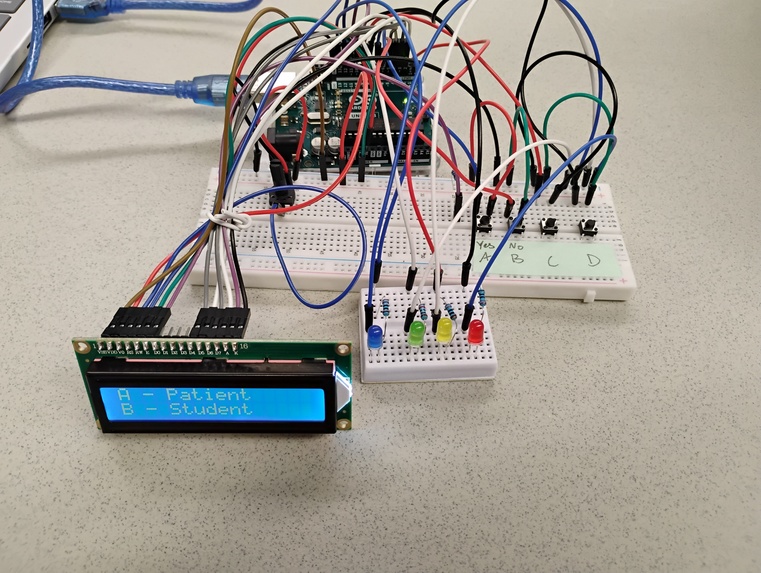
Arduino Component Demo
Congestive heart failure (CHF) is a common and chronic condition that unfortunately impacts over 6 million people annually according to the Heart Failure Society of America. This happens when the heart cannot pump blood efficiently enough, leading to blood and fluid buildup in the body. Although there is no cure, there are ways to mitigate the condition and reduce the risk of its advancement. The commonality of CHF requires increased education for not just medical students, who will be providing the care, but for patients as well. This is important because if patients improve their own knowledge of CHF, they can prevent the condition from presenting in themselves, or to know how to recognize the causes and potential ways to treat the condition. There are many potential causes of CHF (family history, hypertension, alcohol or drug usage, diabetes, etc.) that a better understanding of CHF result in possibly lower mortality rates. An education device like the one we created is therefore necessary because if people know what to look out for, they may get help earlier.
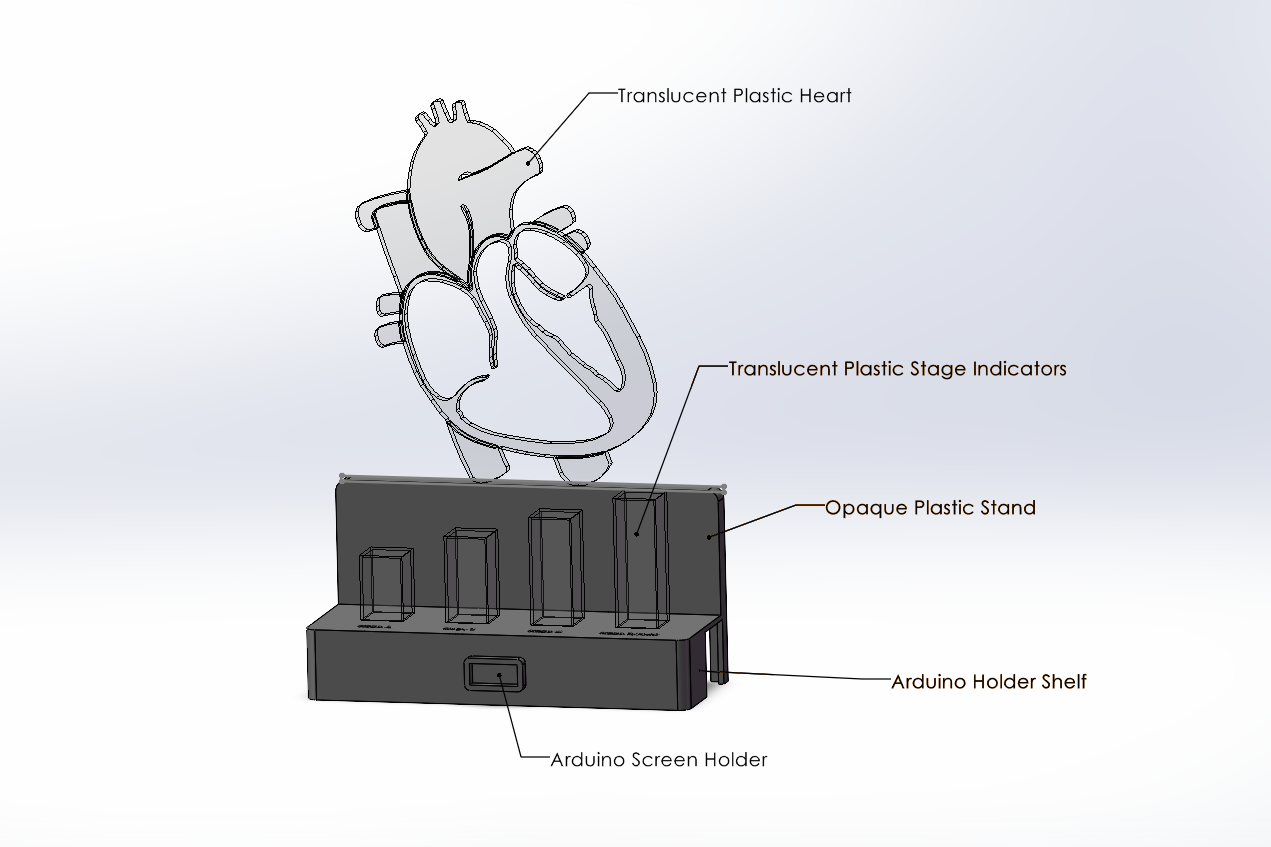
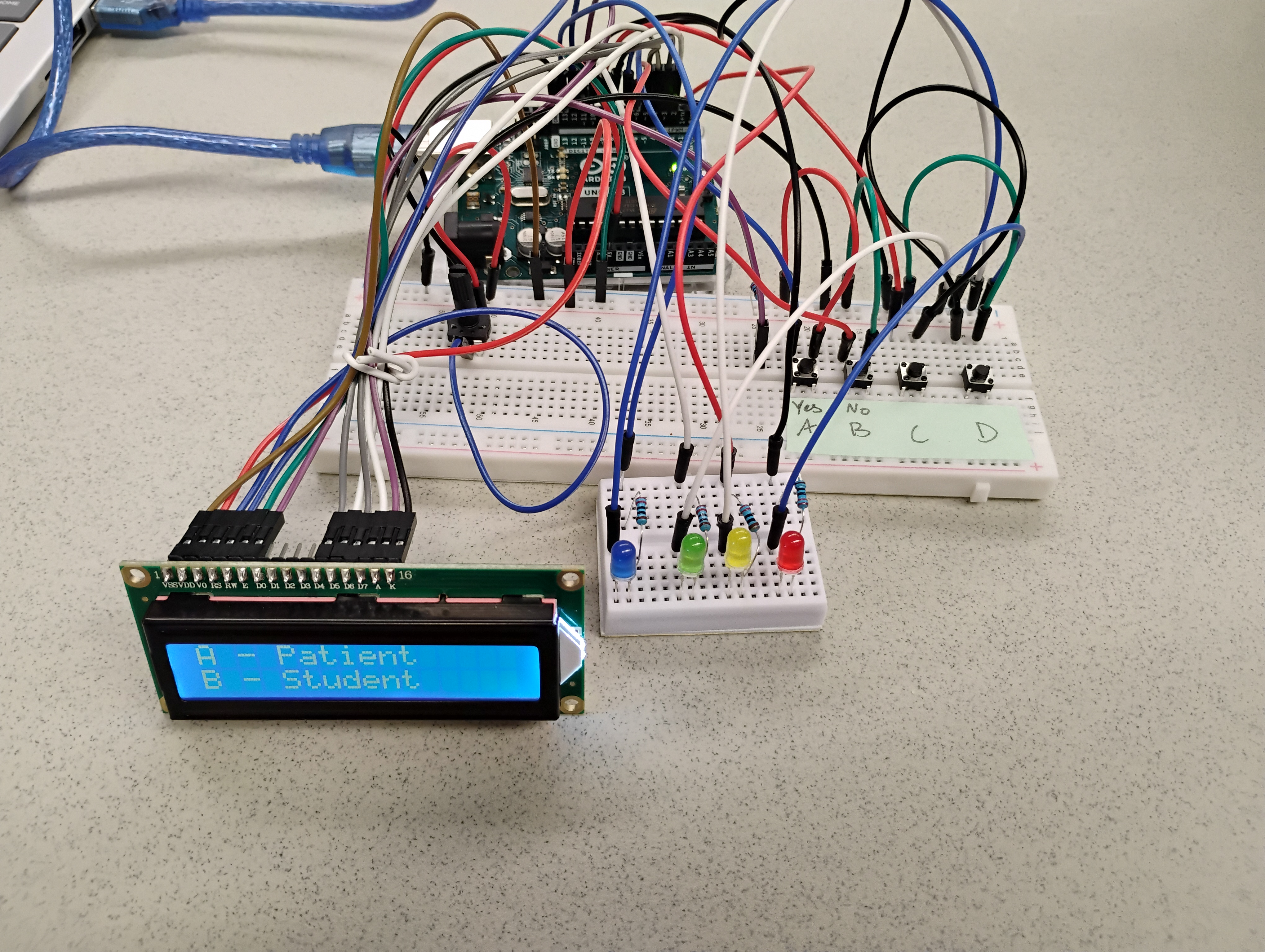
We created an innovative and interactive heart model with light up bars to represent the four stages of CHF with two modes of difficulty. This device is not meant to be diagnostic but instead an interactive teaching instrument with levels for medical school students and potential patients meant to increase understanding and aid in preventative care. It consists of a plastic base which supports four transparent plastic beams of increasing height and light up with increasingly darker shades of red, representing the four progressive stages of CHF. A transparent model of the cross section of the heart is welded to the top of the base and lights up as well. Within the plastic beams and the chambers of the heart there are LED lights affixed to light up different components at different times. An LCD screen is attached to the front of the base with an Arduino nestled in a back port of the base.
Plastic is the main material for accessibility and manufacturability purposes. The material is light, easy to use, and cheap, allowing for the device to be created and distributed more easily in medical centers across the country and worldwide.
The screen starts with a message asking the user if they are a medical student or patient. If the user is a medical student, the device begins asking a series of questions in a quiz-like fashion. Each question is associated with a certain stage of CHF, so the transparent heart model lights up in the corresponding area of the heart (ventricle, aorta, etc.) that the stage is most associated with. Medical students may learn with exams and studies in medical school, but, according to a 2024 study on the subject by Wendy James et al., more interactive and gamified learning mechanisms have been found to improve retention rates due to the use of active learning. This can lead to better trained physicians who know how to mitigate the effects of CHF.
If the user is a patient, the device begins to ask a series of hypothetical diagnostic questions. This will teach them about the many ways CHF can be caused and offer ways to reduce the symptoms of the condition. This interactive “game” is accessible to people of all ages and can be placed in a hospital room or in doctors’ offices while the patient waits for the physician to come in. Often, waiting rooms have games for children, books, or magazines for parents to entertain themselves with. An interactive device like the one proposed here can use valuable waiting time to educate the general population on the causes and remedies of CHF in a way that anyone from a child to a grandparent can understand. Congestive heart failure is a life threatening condition that requires consistent tracking. Increased education on the subject can not only create a better treatment environment but it can also lower mortality rates. If more of the general public knows about CHF, its causes, and its treatment, then they will be more knowledgeable on what to look out for, leading to more doctors visits. This, coupled with increased knowledge in doctors thanks to this device, will lead to better prognosis levels and a better outlook for the condition.
Sources: Heart Failure Facts and Information. Heart failure facts & Information. (n.d.). https://hfsa.org/patient-hub/heart-failure-facts-information#:~:text=Current%20estimates%20are%20that%20nearly,new%20heart%20failure%20cases%20annually.
James, W., Oates, G., & Schonfeldt, N. (2024, March 5). Improving retention while enhancing student engagement ... Taylor & Francis. https://www.tandfonline.com/doi/full/10.1080/09639284.2024.2326009

Log in or sign up for Devpost to join the conversation.