-
-
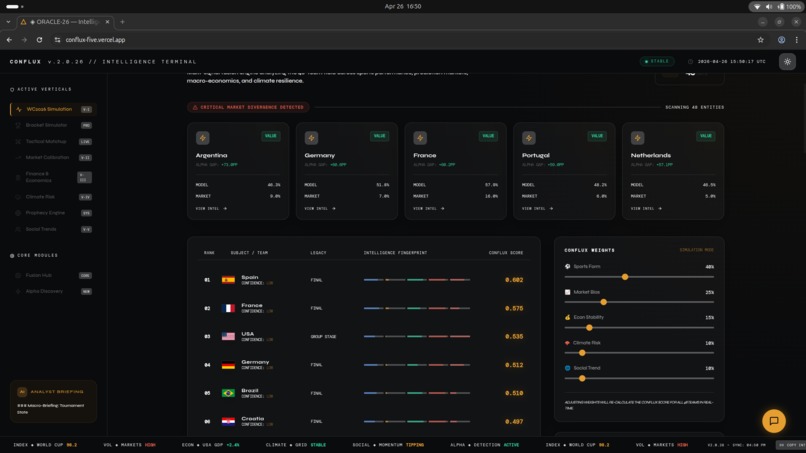
The dashboard
-
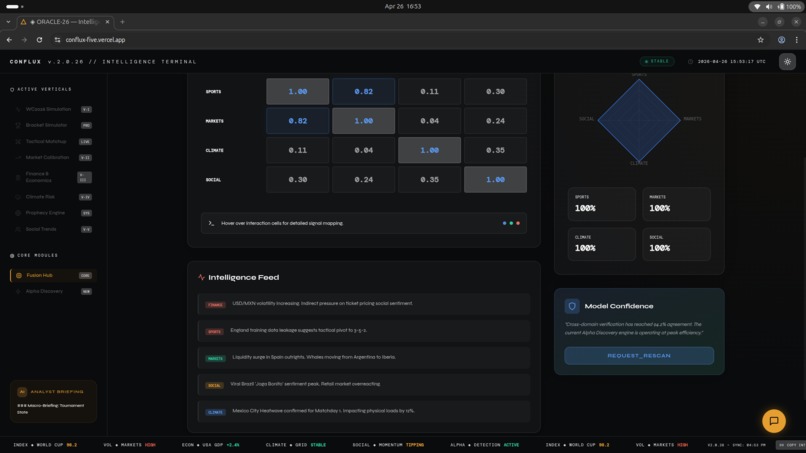
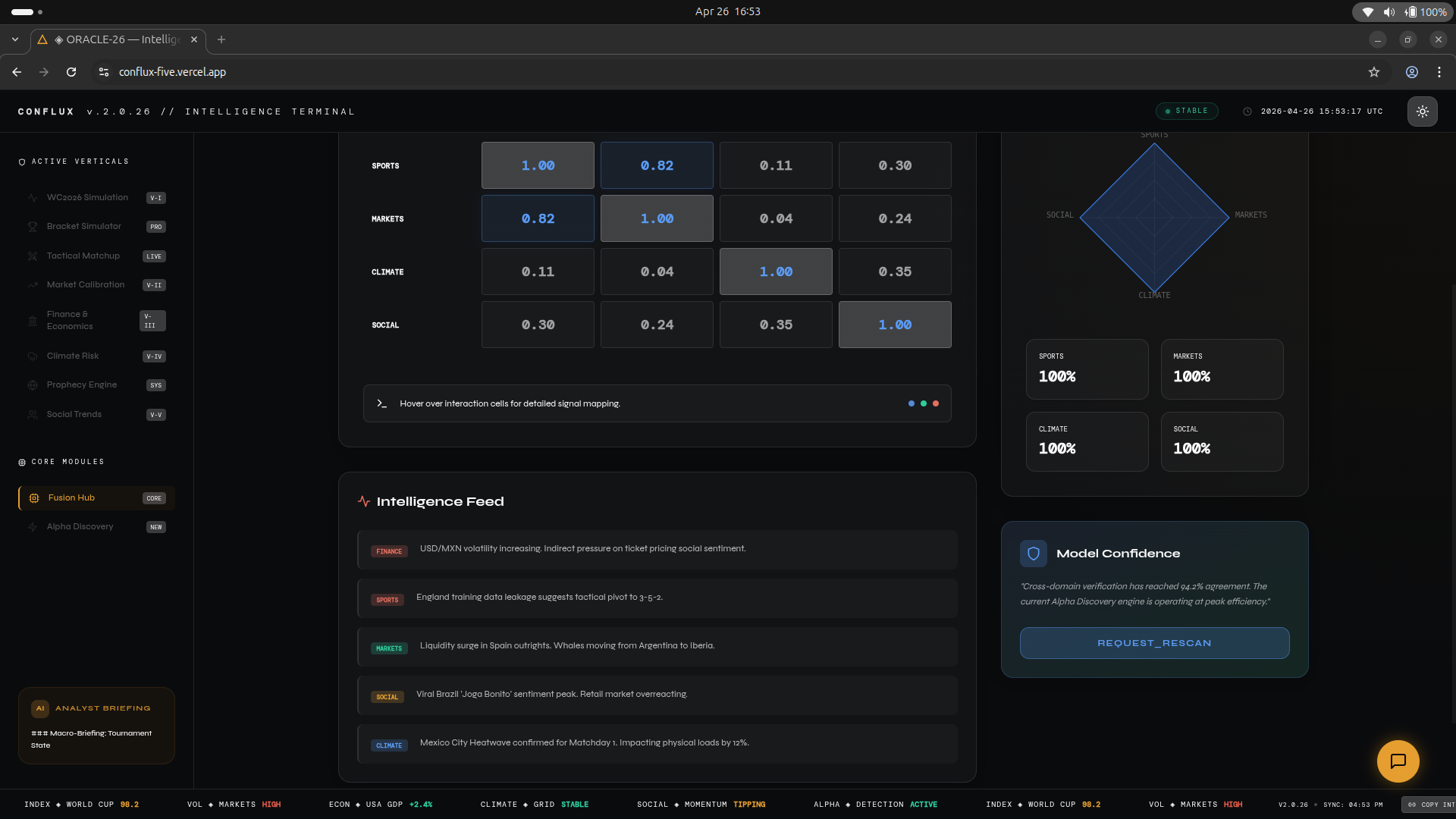
Fushion Hub
-
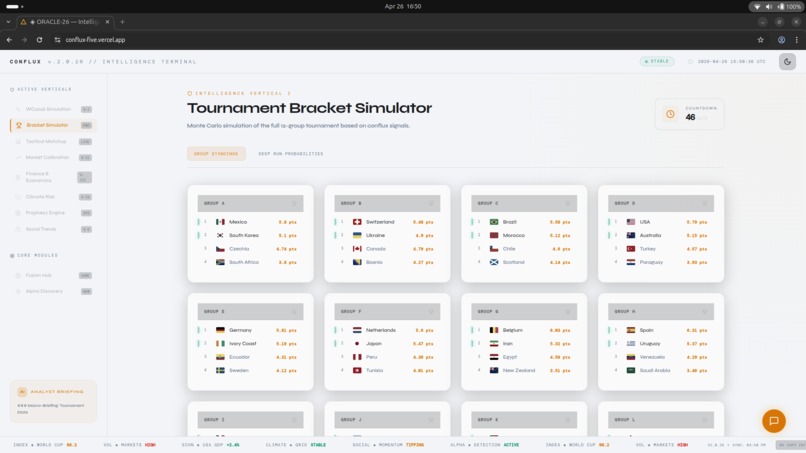
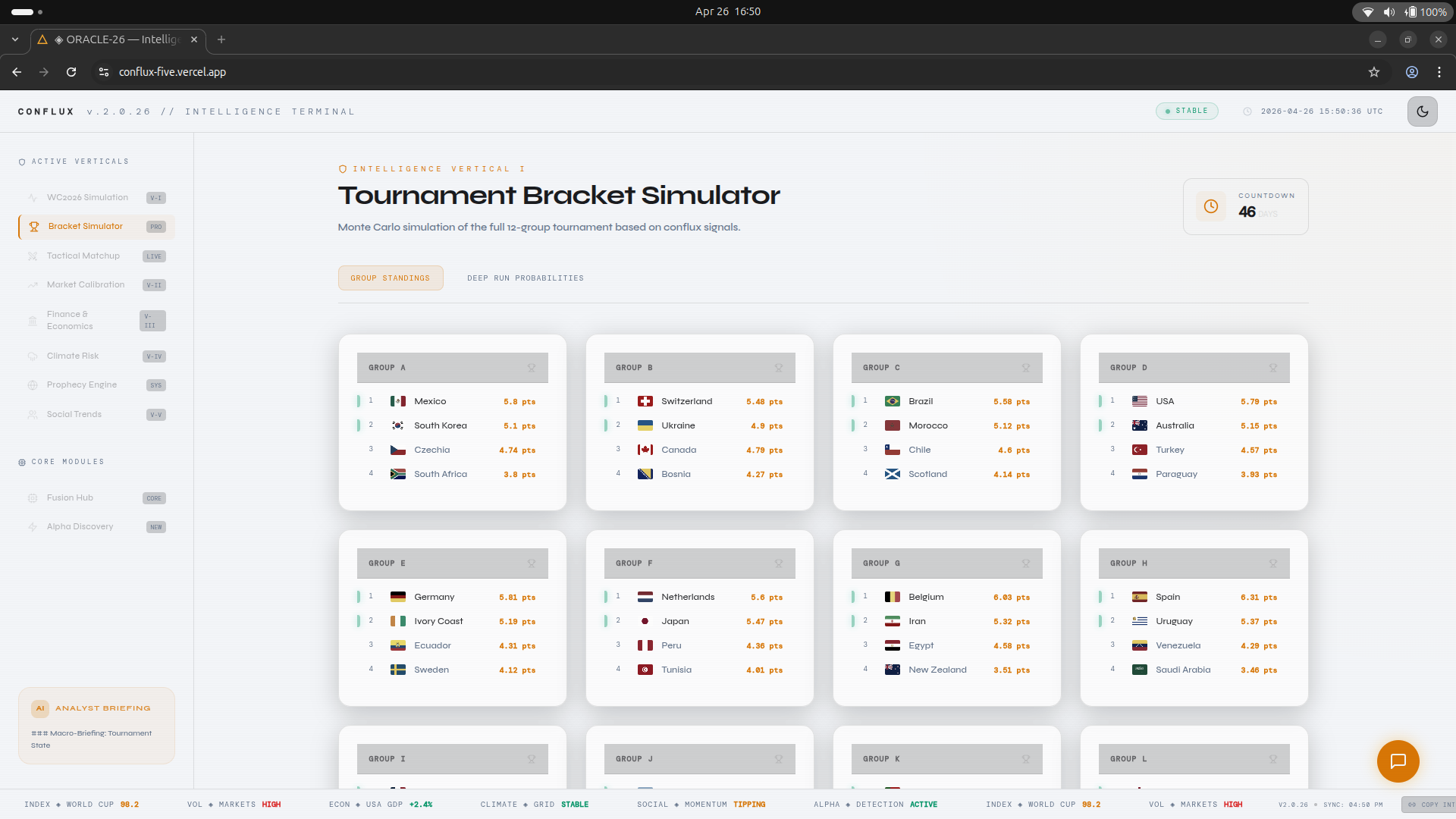
the bracket simulator under light mode
-
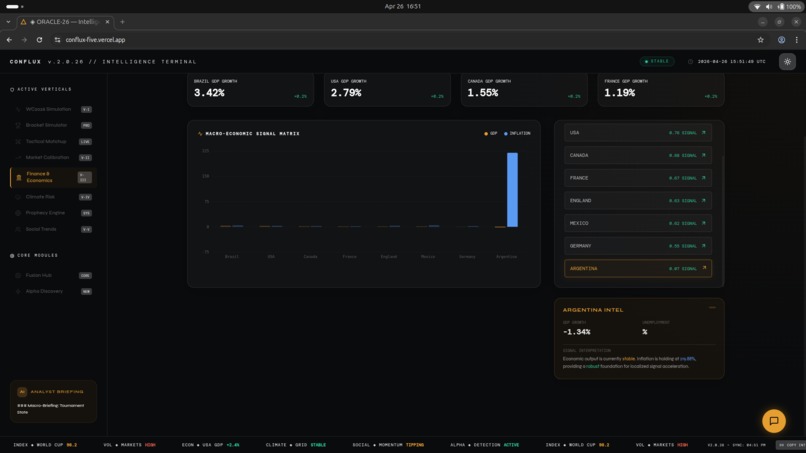
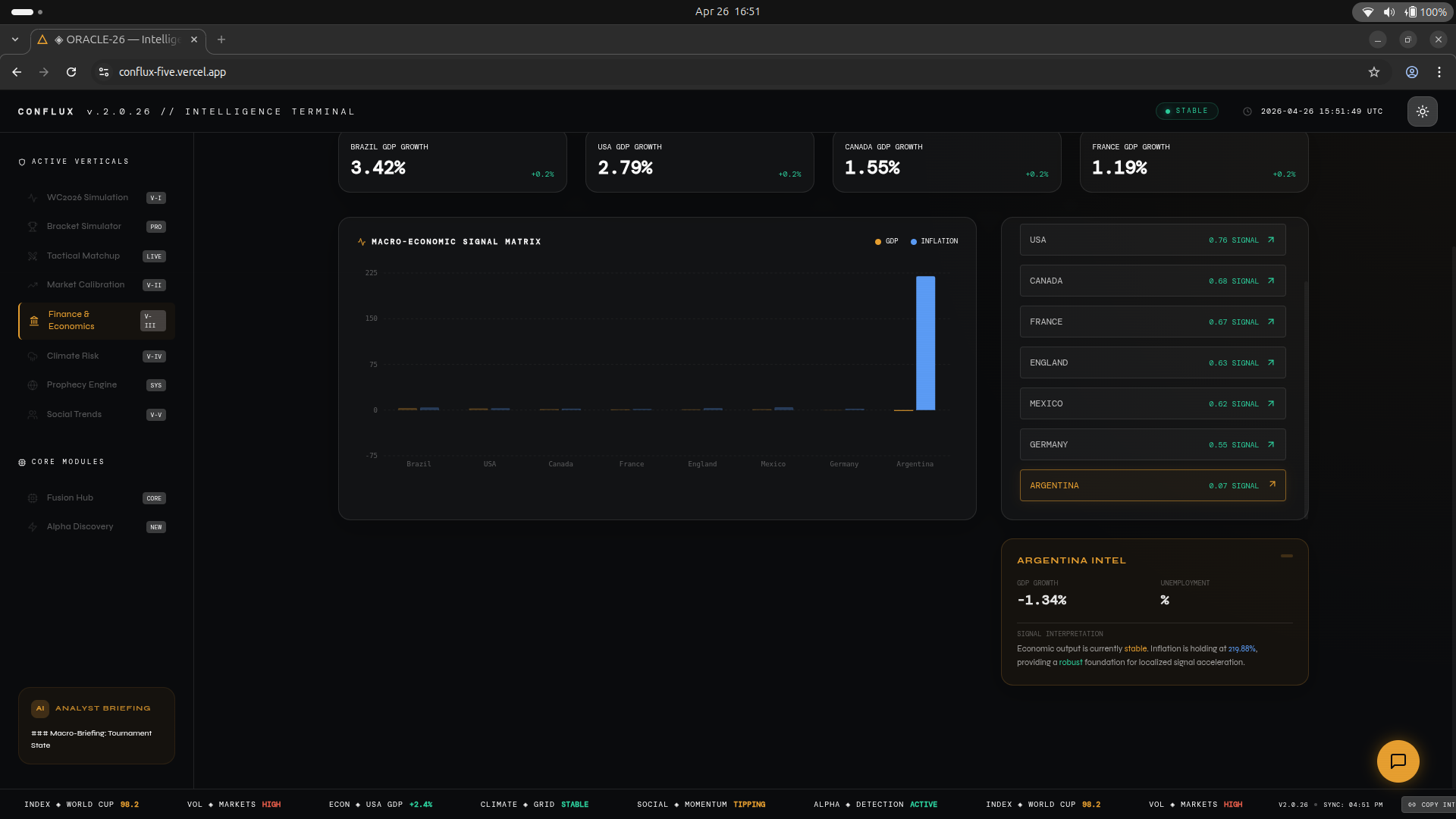
finance and economics
-
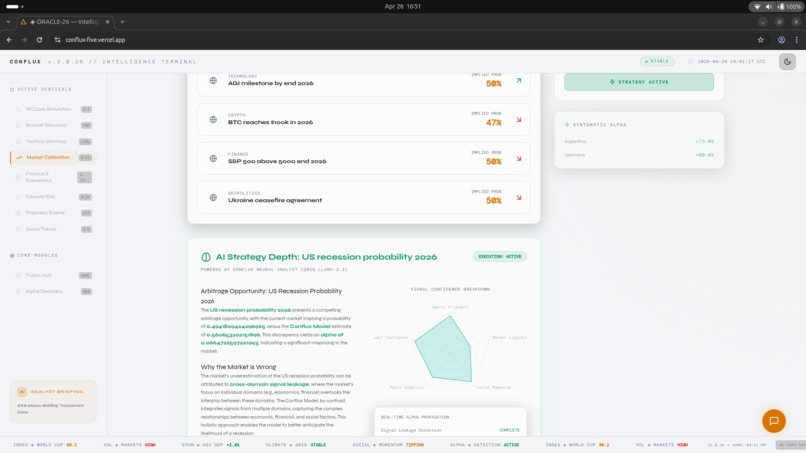
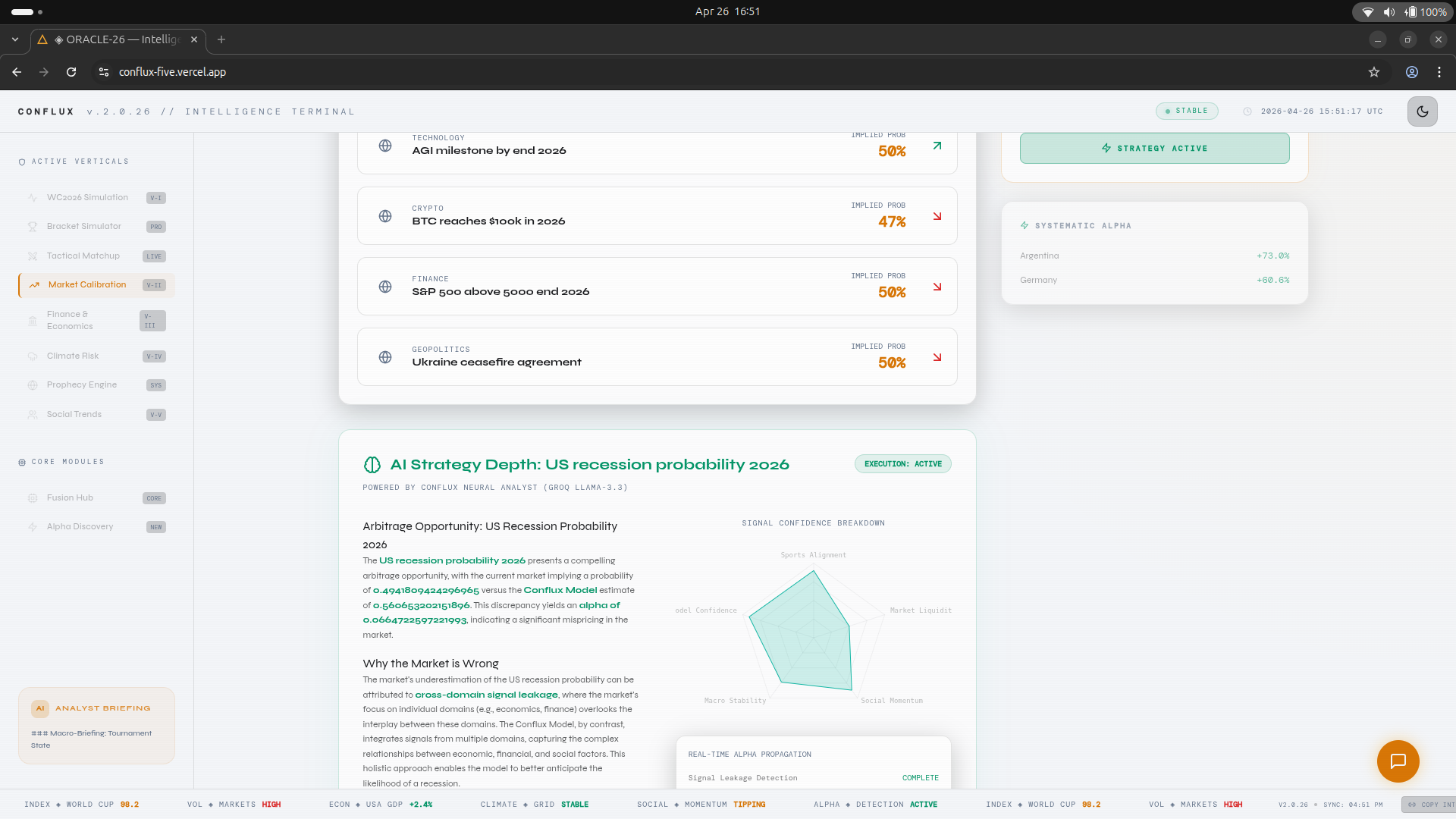
market calliberator page
-
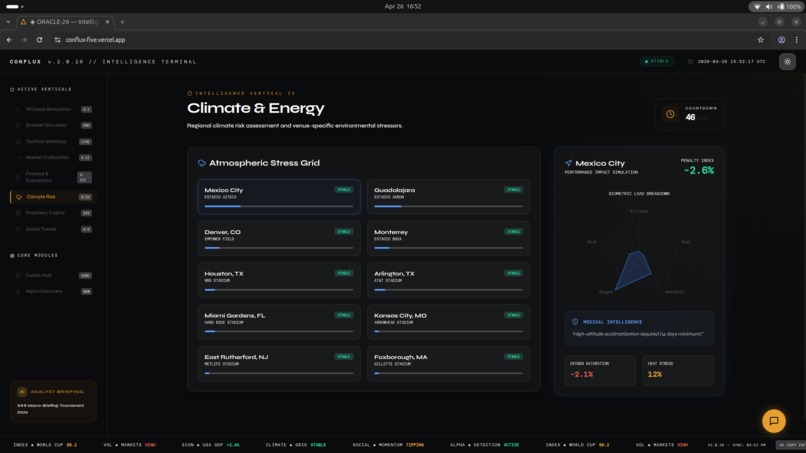
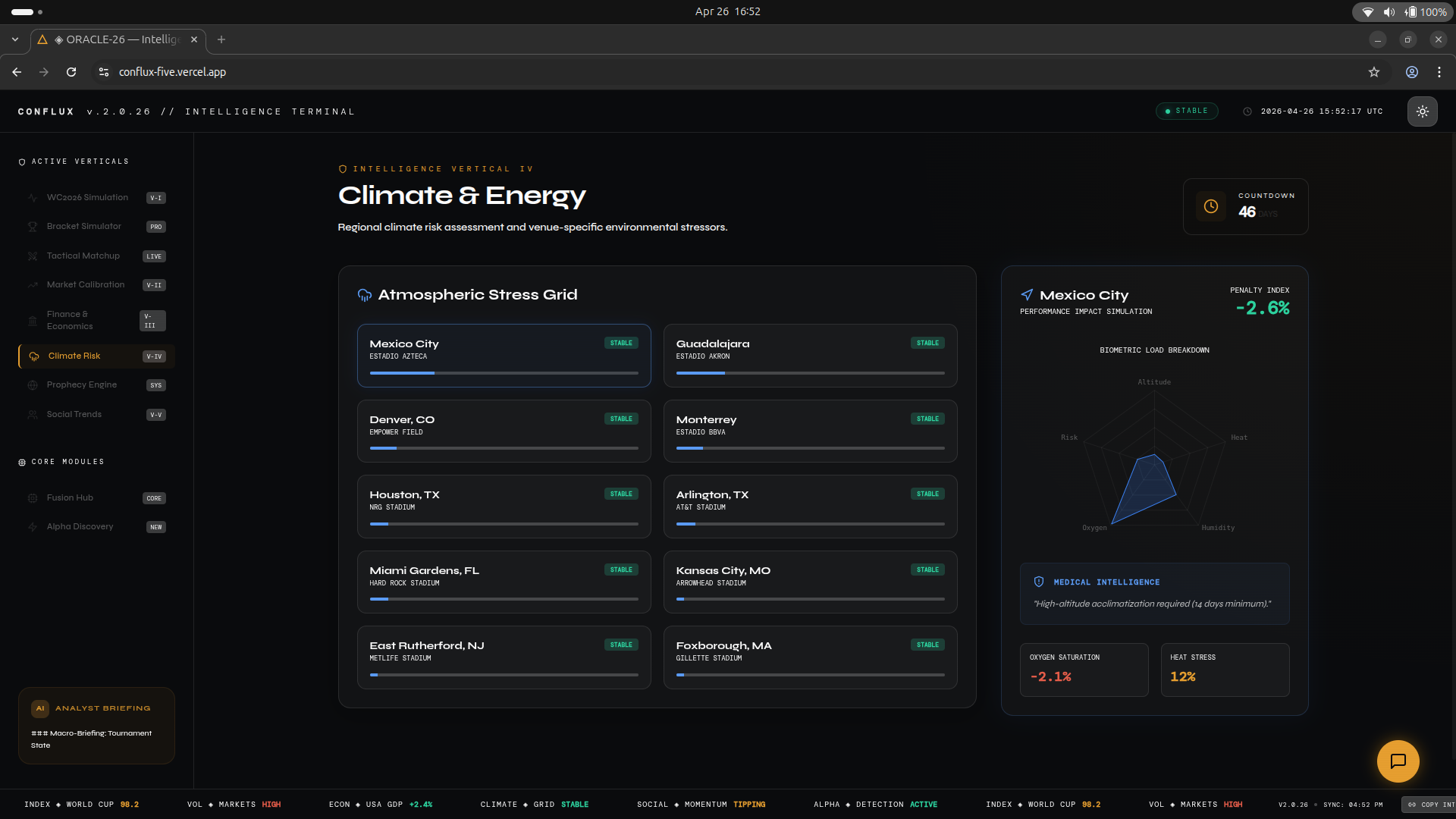
climate and energy page
-
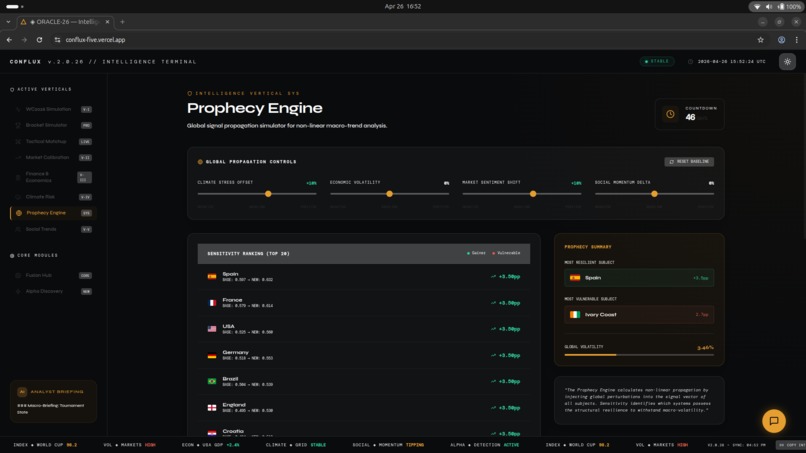
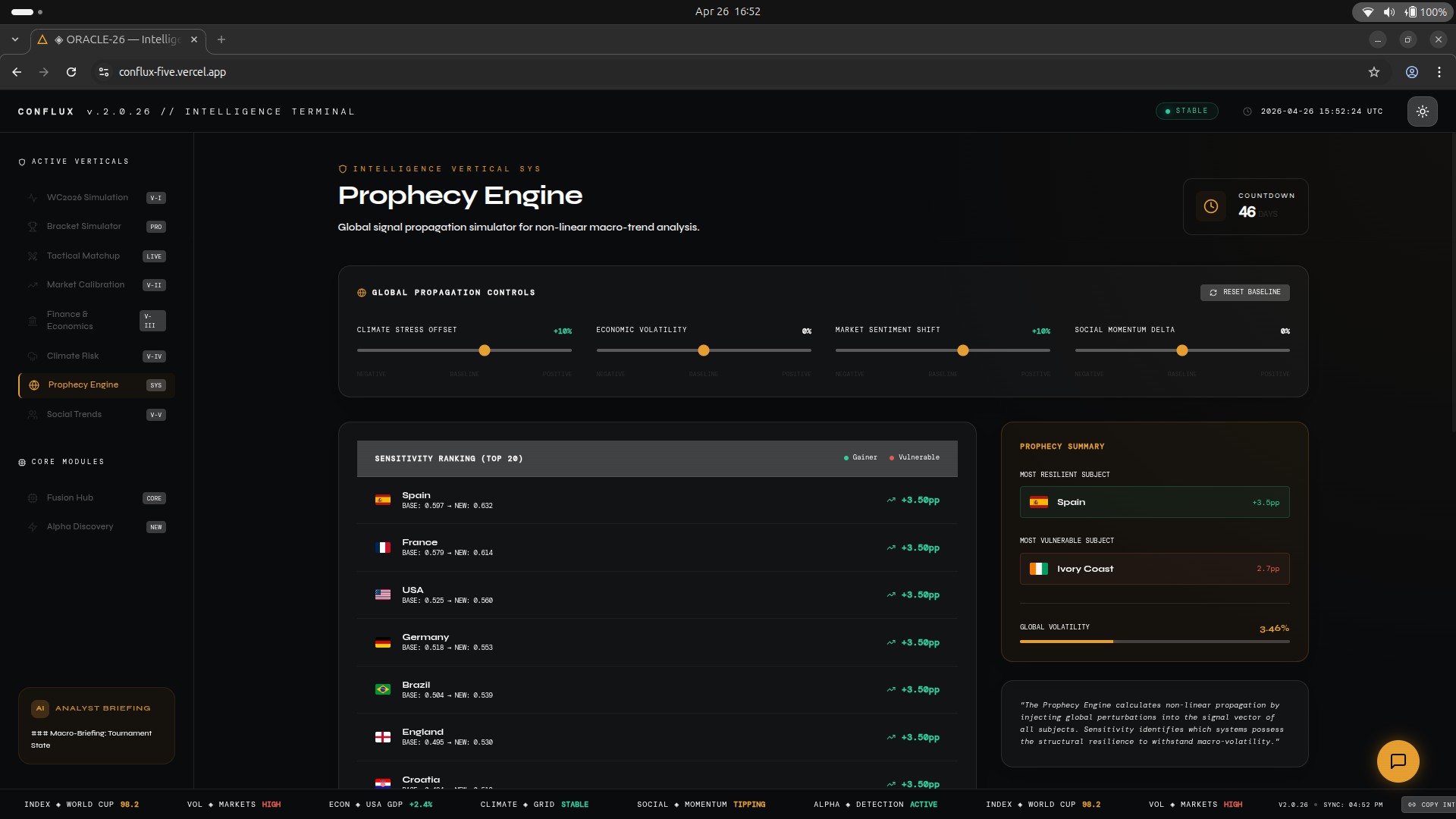
prophecy Engine
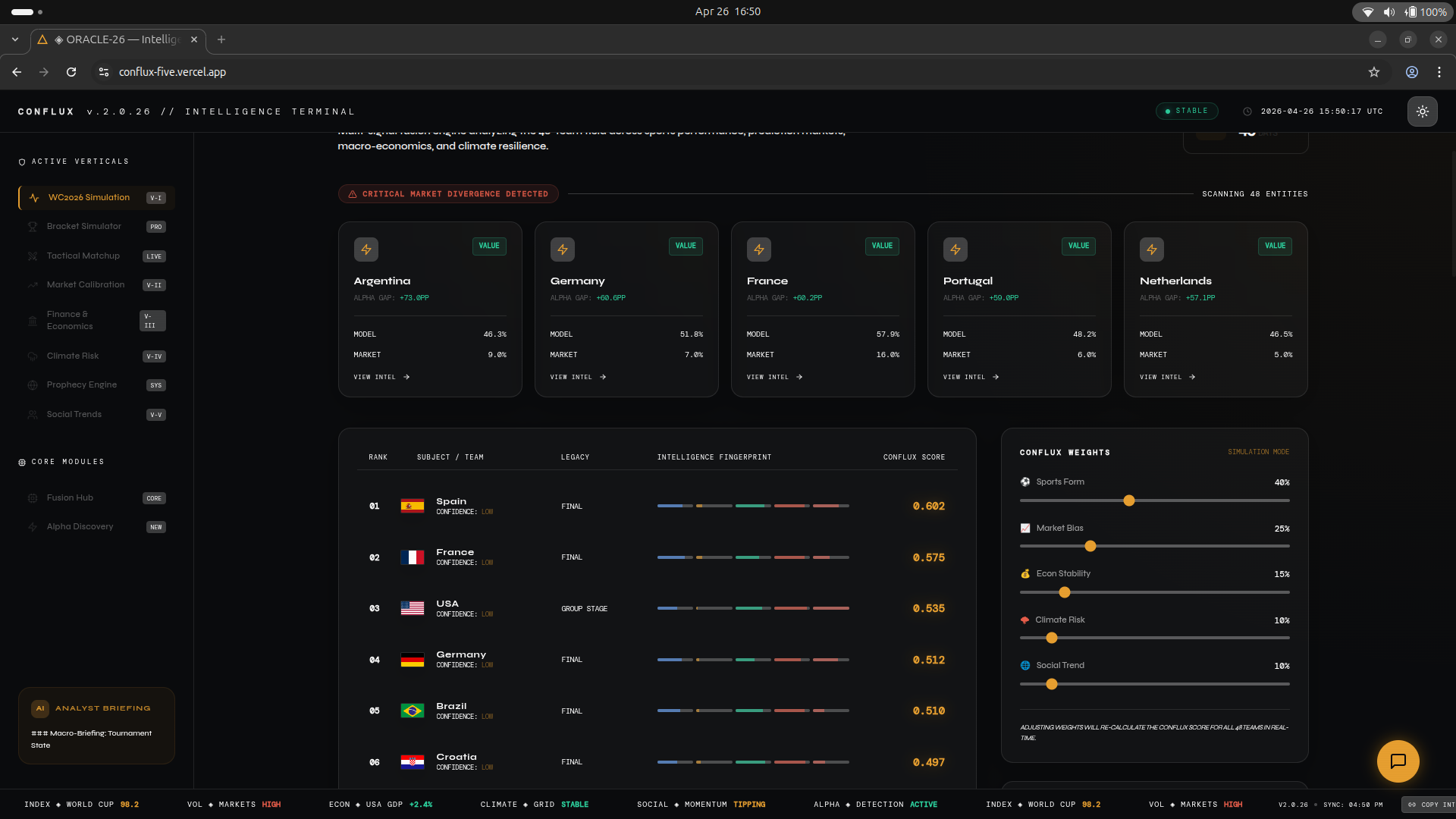
◈ CONFLUX (ORACLE-26) // Intelligence Terminal
Inspiration: Most tournament predictions rely on a single dimension—either historical sports stats or volatile prediction markets. ORACLE-26 changes the game by treating the 2026 World Cup as a multi-modal intelligence problem. Our Conflux Engine fuses independent signals across five verticals: Sports Elo, Polymarket trends, macro-economics, climate stress (like altitude and heat), and social momentum. By identifying non-linear 'divergences' between these domains—like when a team’s market price ignores their biometric climate risk—ORACLE-26 surfaces high-conviction 'Alpha' that traditional models miss. All of this is served through a premium, Bloomberg-style terminal with a page-aware AI Analyst that understands the context of your data in real-time The inspiration for CONFLUX came from a simple observation: modern prediction data is siloed. Sports bettors look at stats; market traders look at prices; climate scientists look at biometric risks. None of them look at all three simultaneously. We wanted to build the "Bloomberg Terminal for the 2026 World Cup"—a high-conviction intelligence engine that treats the tournament as a complex, multi-modal system where a heatwave in Monterrey is just as important as a team's FIFA ranking.
What it does: CONFLUX is a multi-domain intelligence engine that fuses independent data signals into a single predictive layer.
The Conflux Engine: Normalizes and weights signals across five verticals: Sports (Elo/Form), Markets (Polymarket calibration), Economics (GDP/Resilience), Climate (Heat/Altitude stress), and Social (Cultural momentum). Alpha Discovery: Automatically identifies "mispricings" where the Conflux model's probability strongly diverges from the market consensus. Zerve Analyst: A page-aware, multi-modal AI analyst that understands the context of the specific module you are viewing. If you're on the Bracket Simulator, the Analyst knows the group standings; if you're on the Climate module, it analyzes biometric risk. Bracket Simulator: A custom Monte Carlo engine that simulates 10,000+ tournament outcomes based on the fused "Conflux Score."
How we built it: Core: Built on FastAPI for high-performance intelligence delivery and React/Vite for a 120fps "Bloomberg-style" terminal UI. Inference: Leverages Groq (Llama 3.3 70B) and Mistral Large for the reasoning engine, providing sub-100ms response times for real-time intelligence briefings. Processing: Uses Pandas and PyArrow for high-speed signal synchronization and Framer Motion for the cinematic, data-dense UI animations. Deployment: Backend architected on Render with a background pipeline that refreshes global signals every 24 hours.
Challenges we ran into: We faced a significant Race Condition issue where our background data pipeline would occasionally overwrite core CSV signals while the API was serving requests, leading to "KeyErrors" in the simulation. We solved this by implementing an Atomic Replacement Strategy (using temporary file buffers and OS-level moves). We also battled complex CORS (Cross-Origin Resource Sharing) issues across Vercel and Render, which we resolved by refining our middleware stack to handle the specific security requirements of browsers when dealing with custom headers and credentials.
Accomplishments that we're proud of: Contextual AI Awareness: Successfully implementing a "Neural Link" where the AI Analyst isn't just a chatbot, but a part of the terminal that knows exactly what you're looking at.
The Fusion Thesis: Engineering the interaction logic where signals aren't just added together, but multiplied. For example, a "Performance Penalty" is automatically applied to teams with low economic resilience when playing in high-stress climate venues.
UI/UX: Achieving a premium, high-density dashboard that feels alive and responsive while managing massive amounts of real-time data.
What we learned: We learned the critical importance of atomic data operations in real-time intelligence systems—if your background worker and your API aren't perfectly synchronized, the "alpha" disappears. We also deepened our understanding of Multi-Modal Signal Interaction, discovering how social sentiment velocity often acts as a leading indicator for market price corrections in sports betting.
What's next for Conflux The current "ORACLE-26" vertical is just the beginning. We plan to expand the Conflux Engine to:
Climate Risk Insurance: Fusing economic and environmental data to price catastrophe bonds. Cultural Tipping Points: Using social signal velocity to predict shifts in consumer behavior before they hit the markets. Real-time Betting Integration: Moving from "Alpha Discovery" to "Alpha Execution" with direct API links to decentralized prediction markets.


Log in or sign up for Devpost to join the conversation.