-
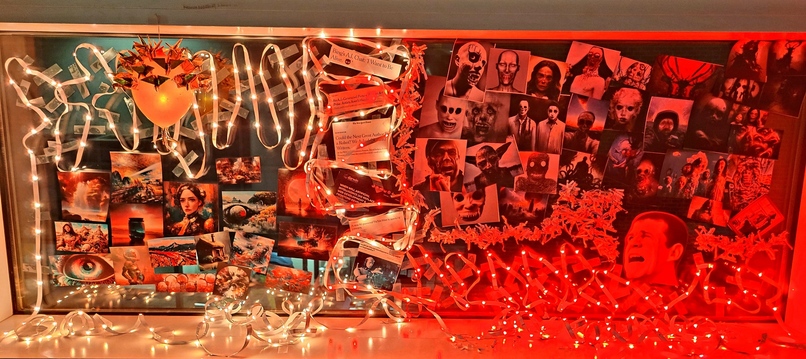
Conflicting AI
-
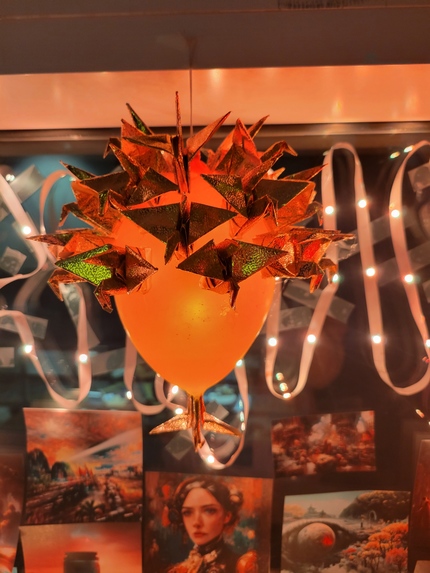
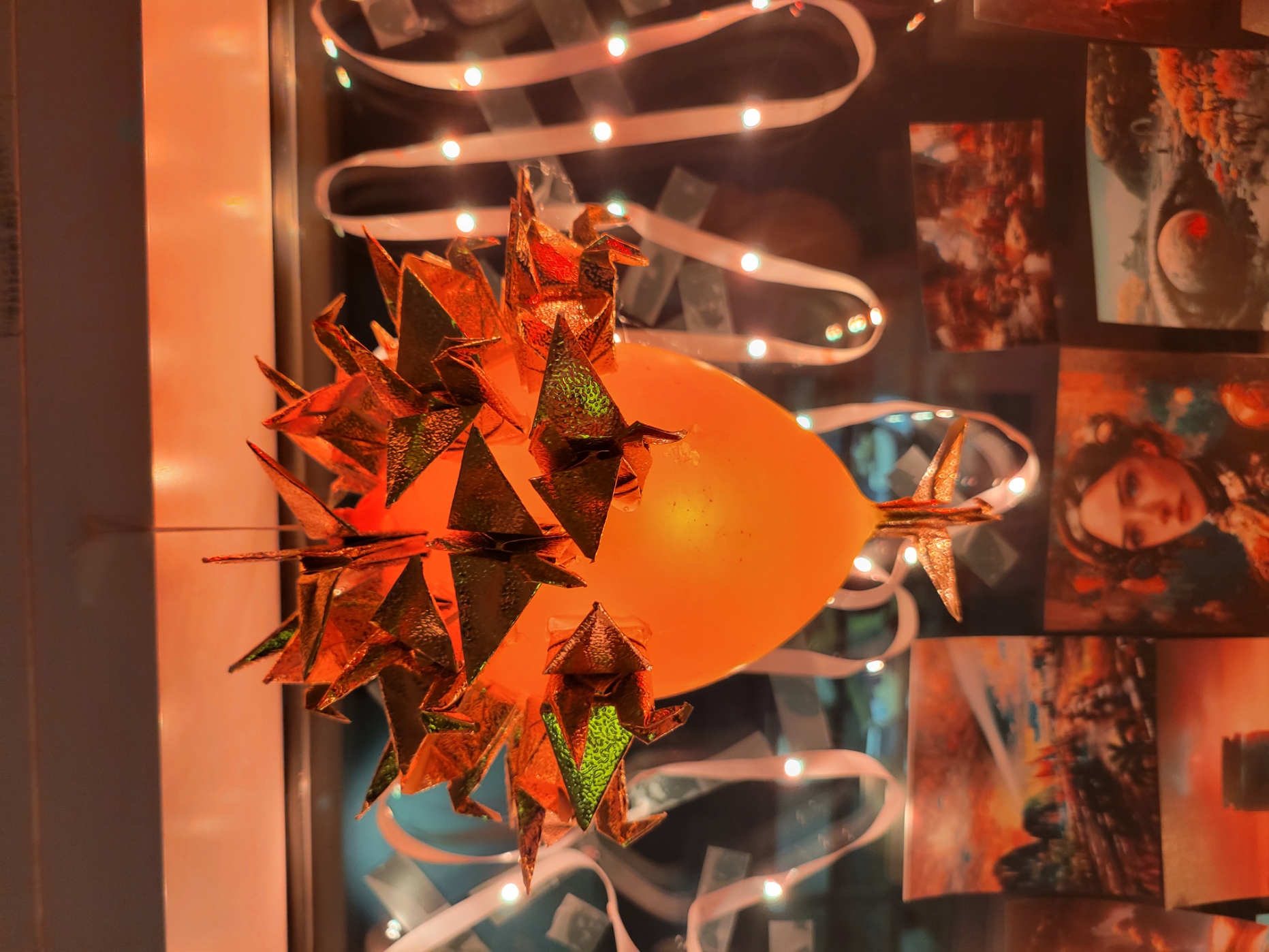
Egg
-
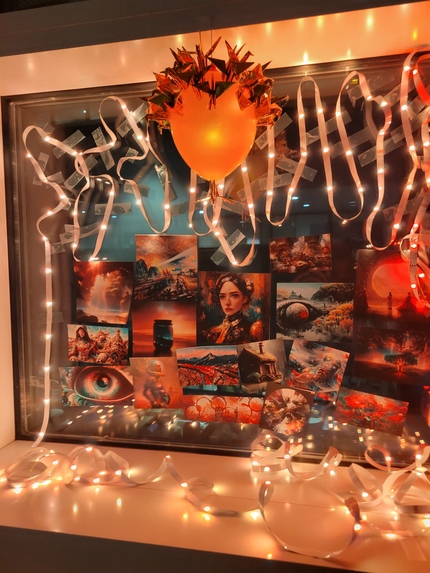
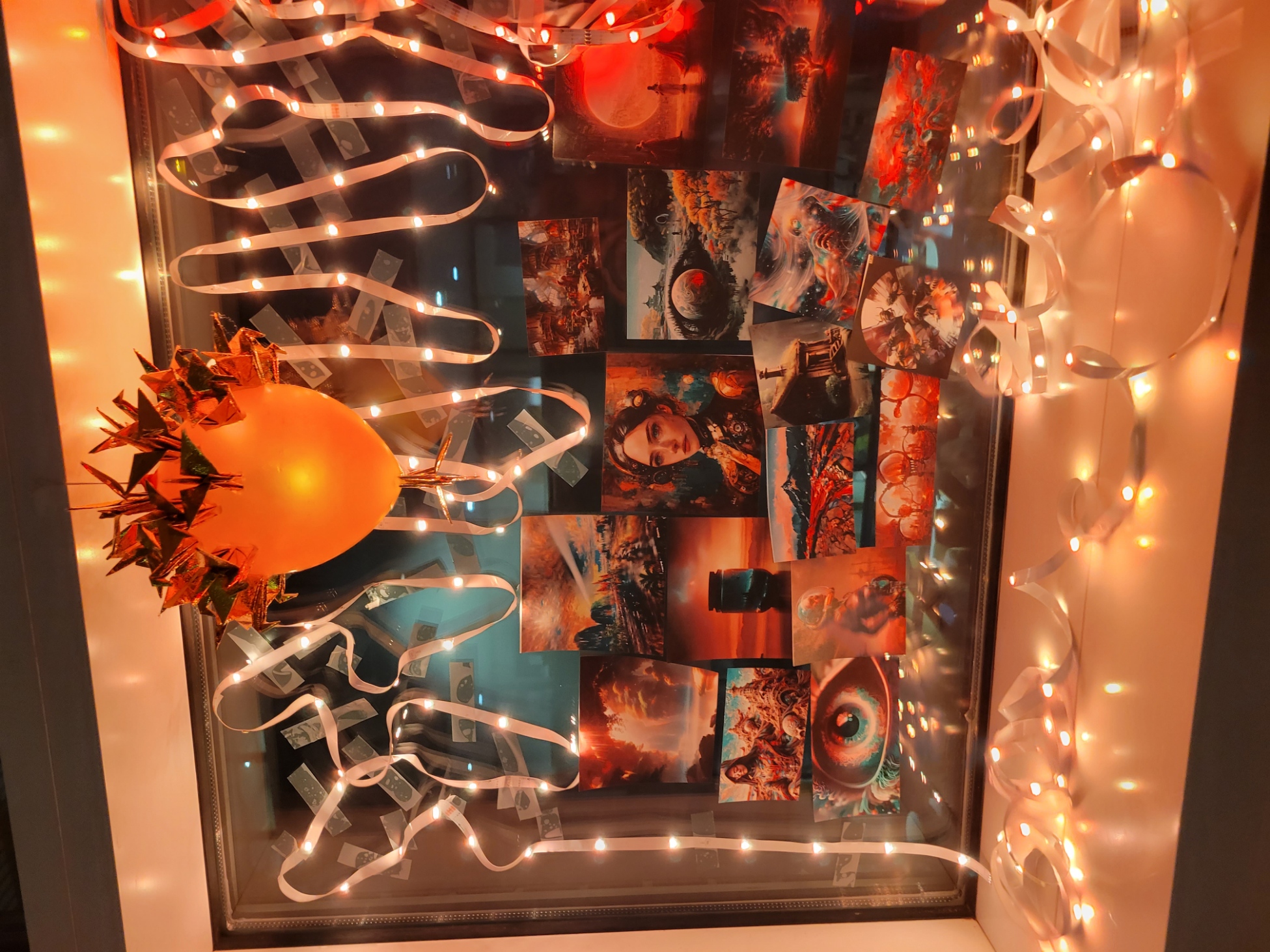
the "good" side to AI
-
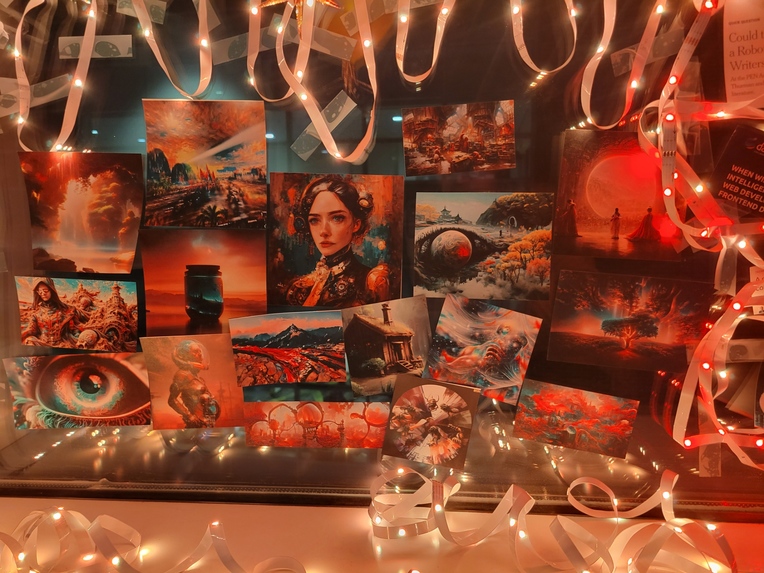
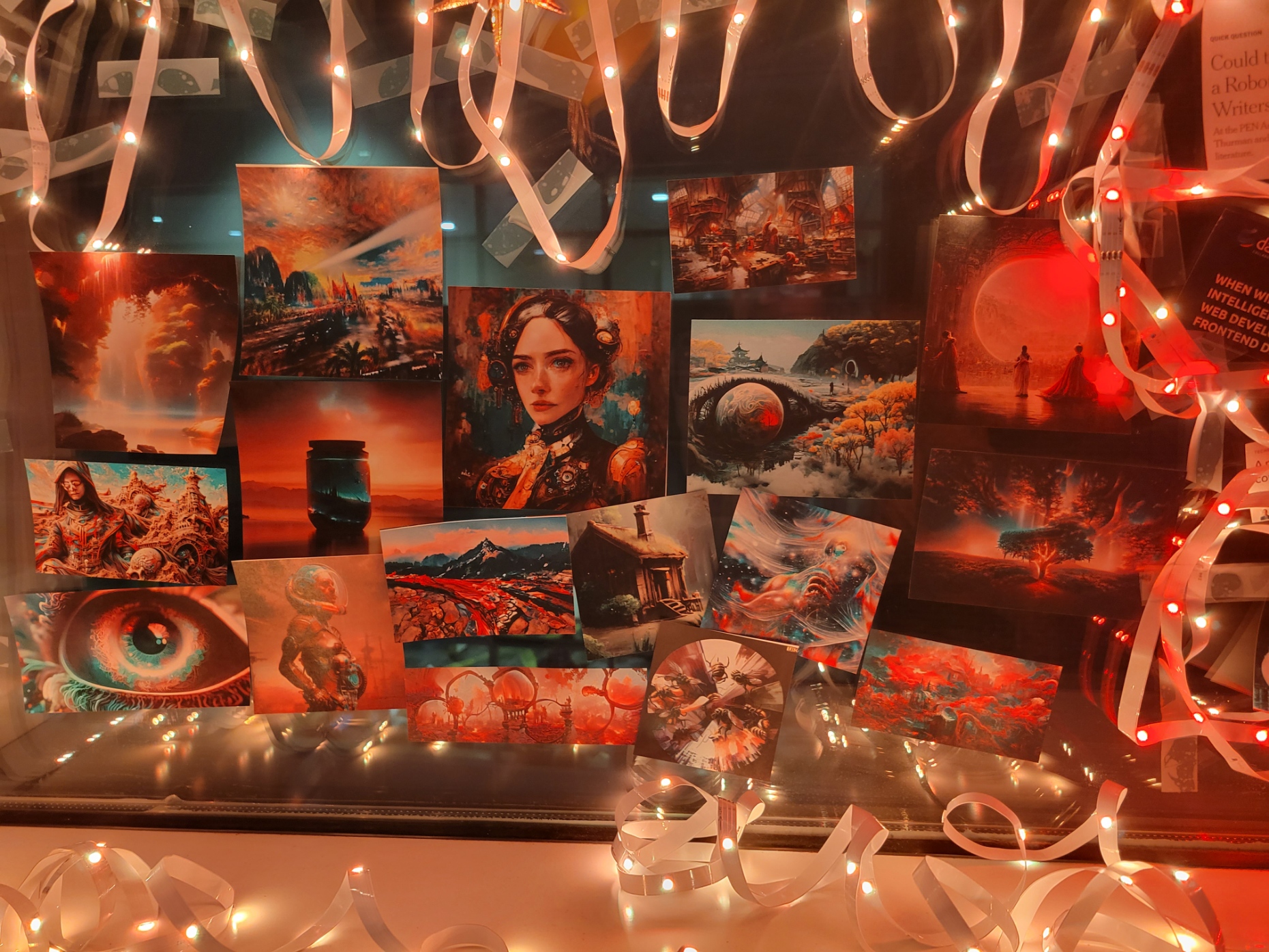
zoomed in "good" side
-
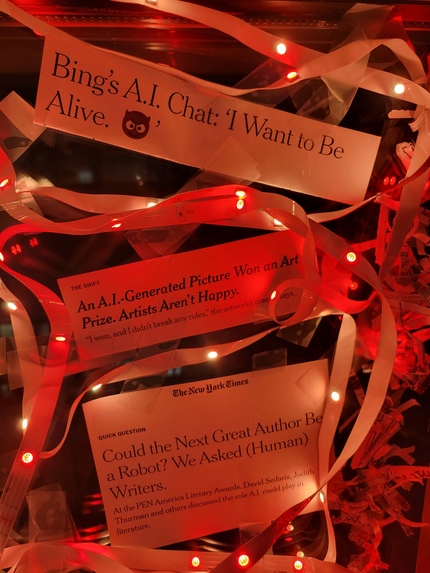
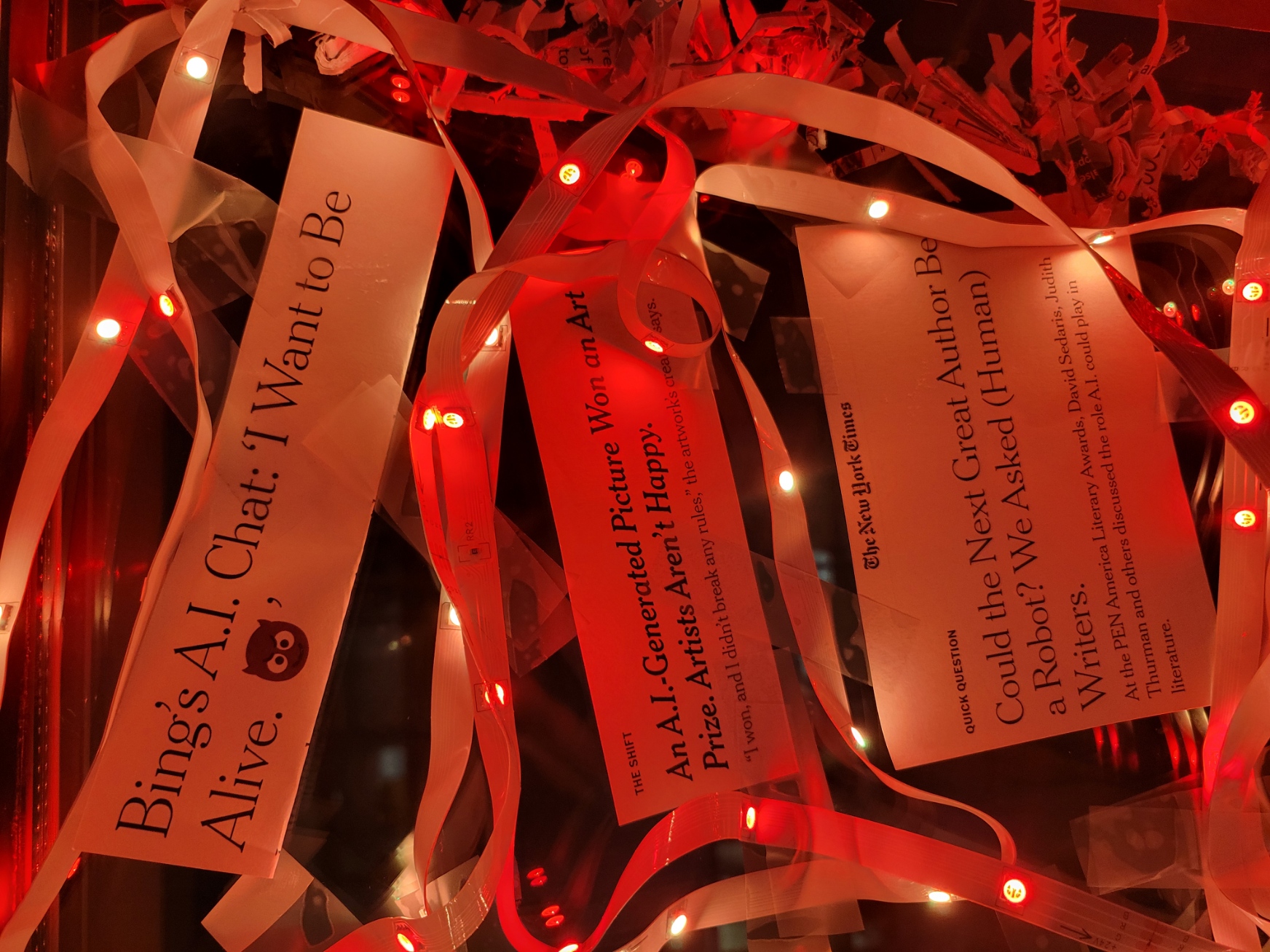
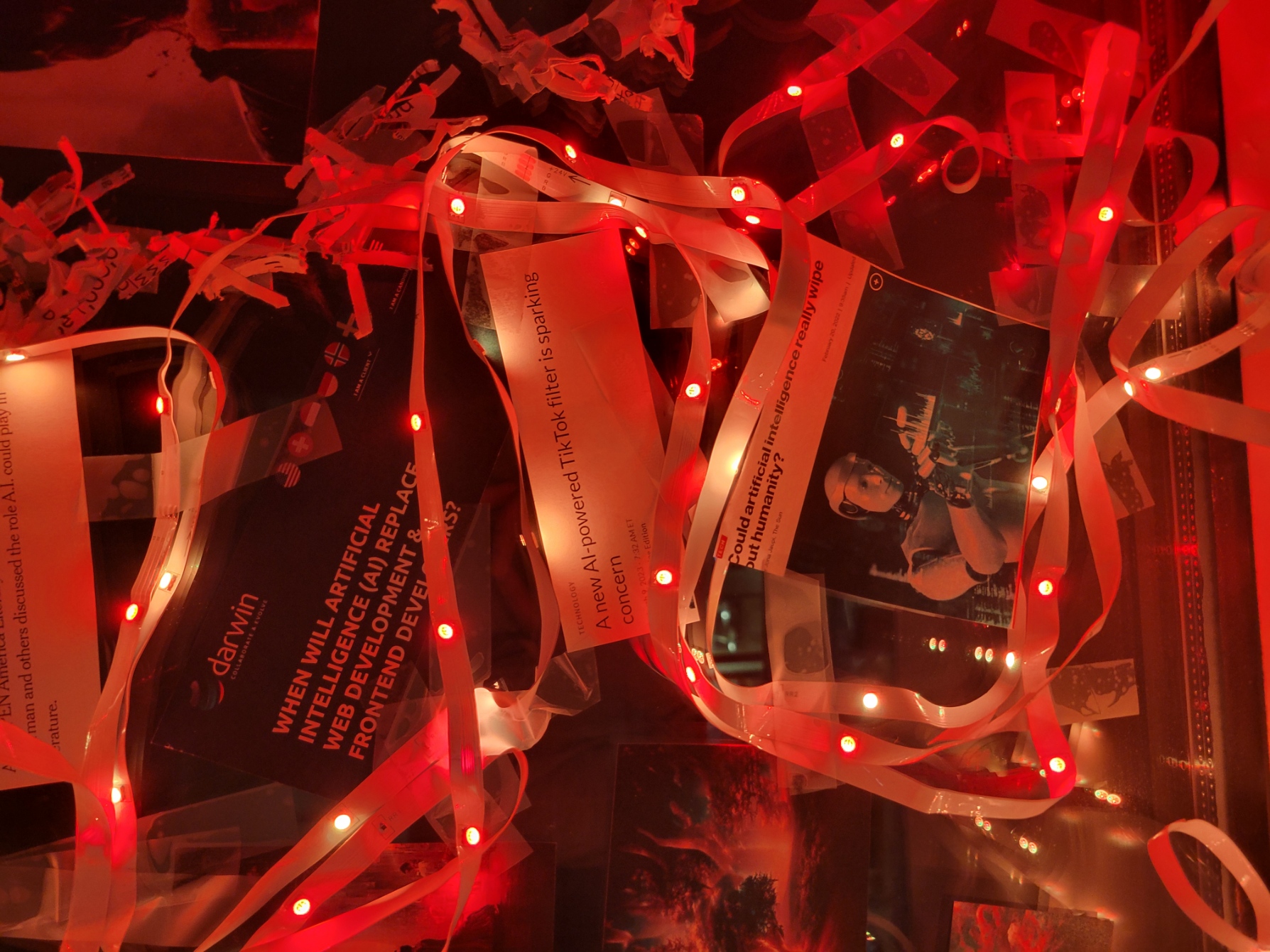
article titles in the middle of the display
-
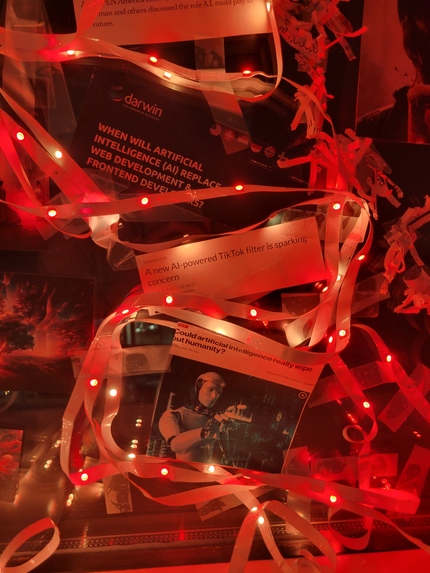
more article titles in the middle of the display
-
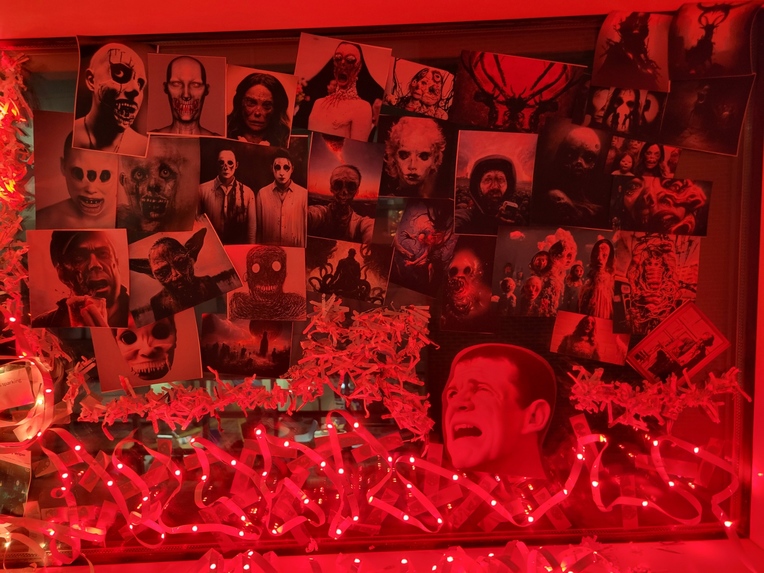
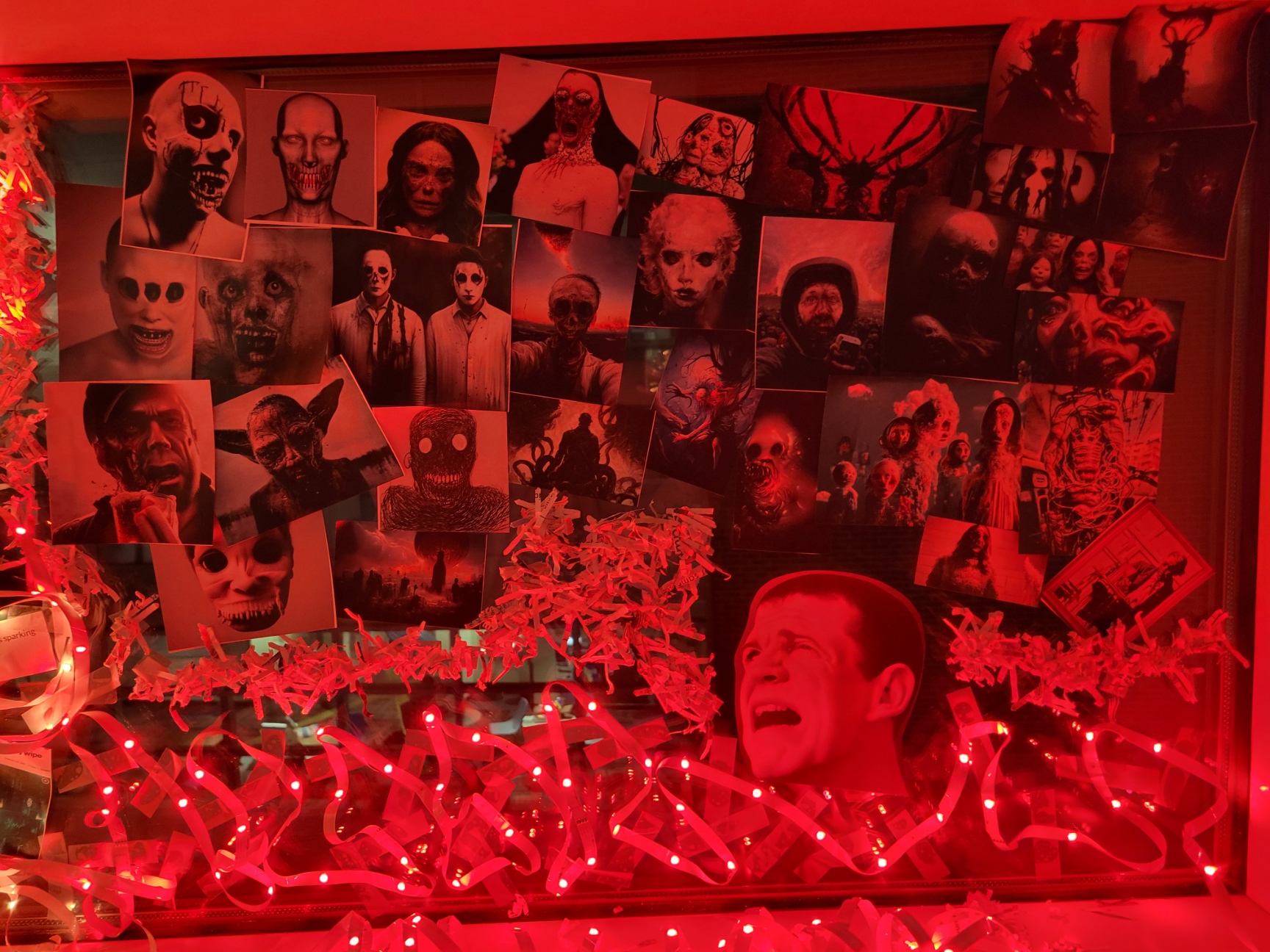
the "dark" side of AI
-
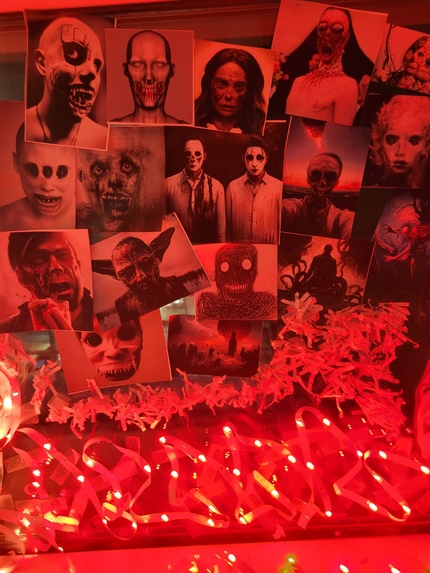
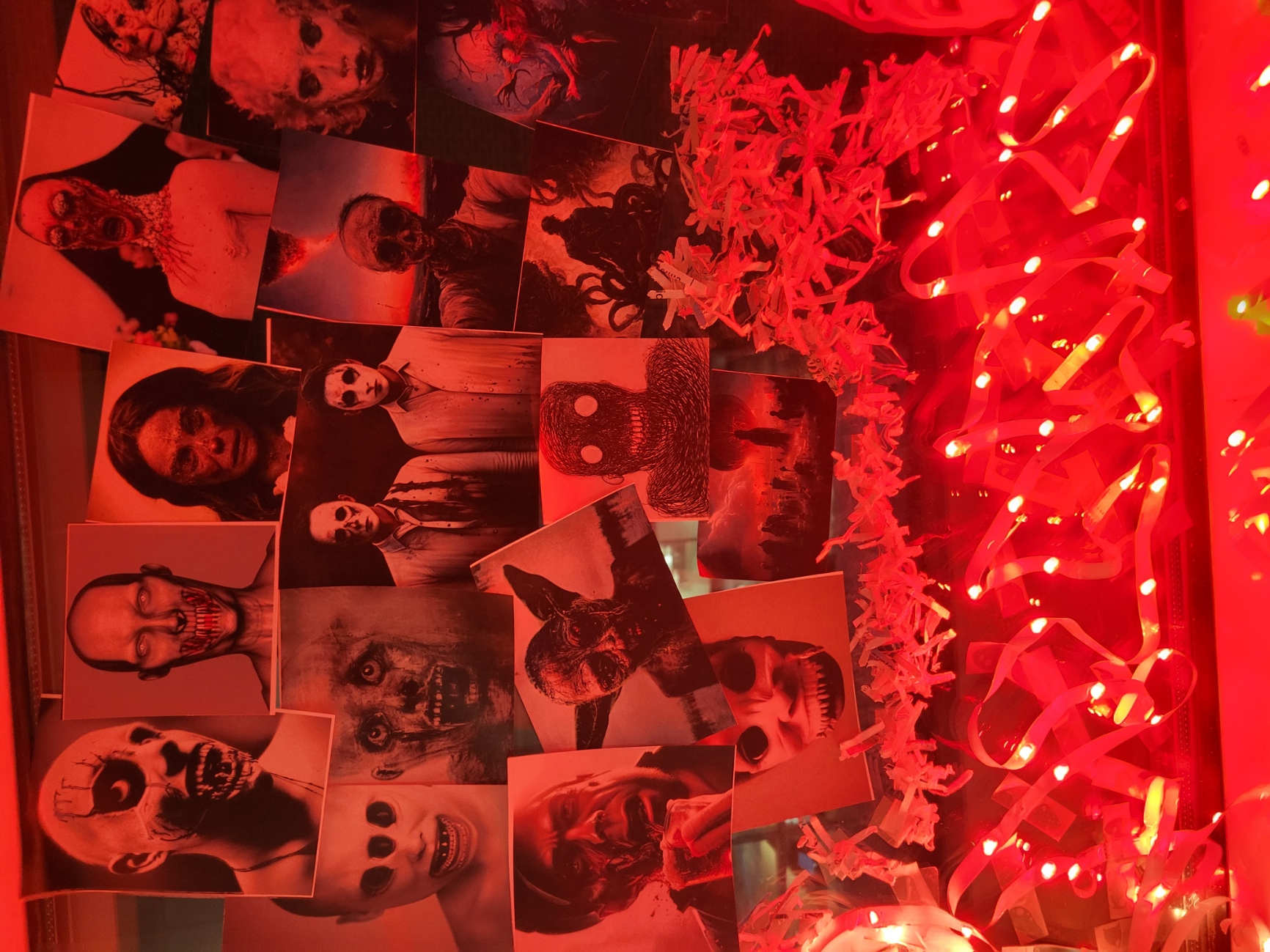
zoomed in "dark" side of AI
-
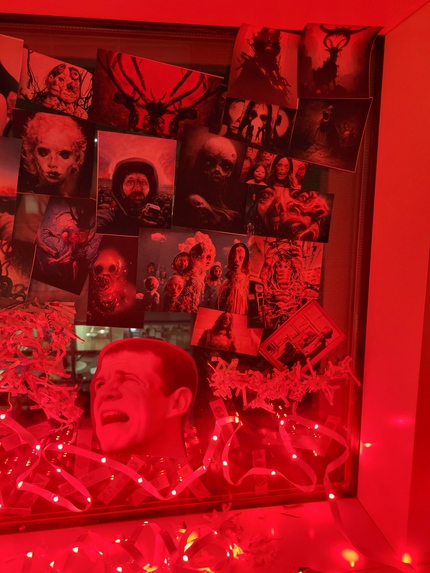
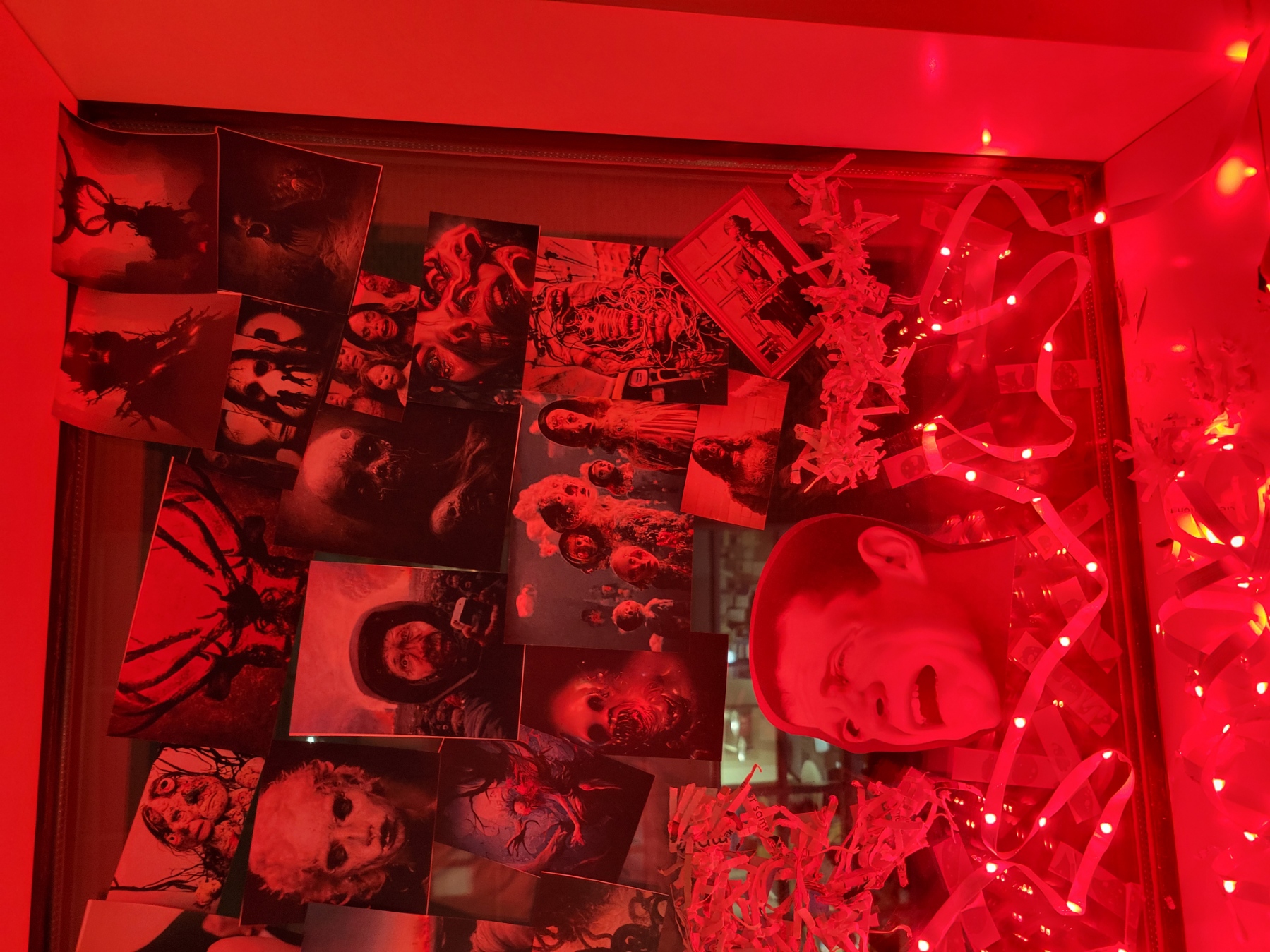
zoomed in "dark" side
-
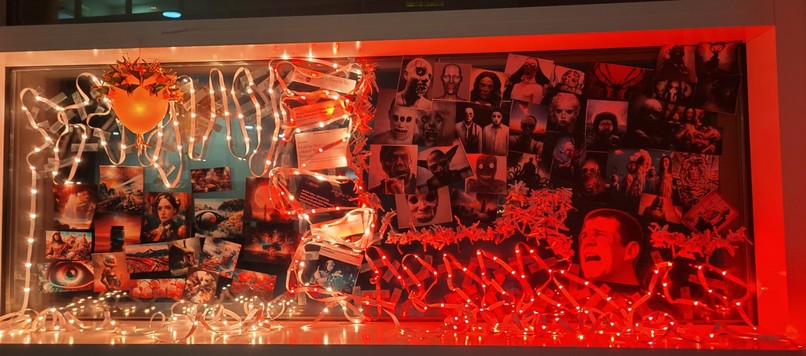
another view of the display
-
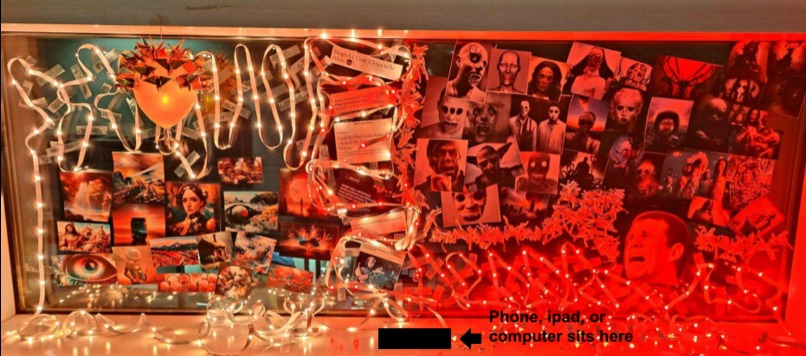
another potential addition to the display - interactive quiz
Inspiration
We were thinking in terms of the theme and challenges of the competition, which is sketchbook café and mixed reality technology. We interpreted sketchbook café as literally taking ("sketching") our jumbled ideas and thoughts related to AI and physically ("baking") bringing them to life. We also wanted to blur the lines between the physical and digital worlds into this piece or mixed reality.
What it does
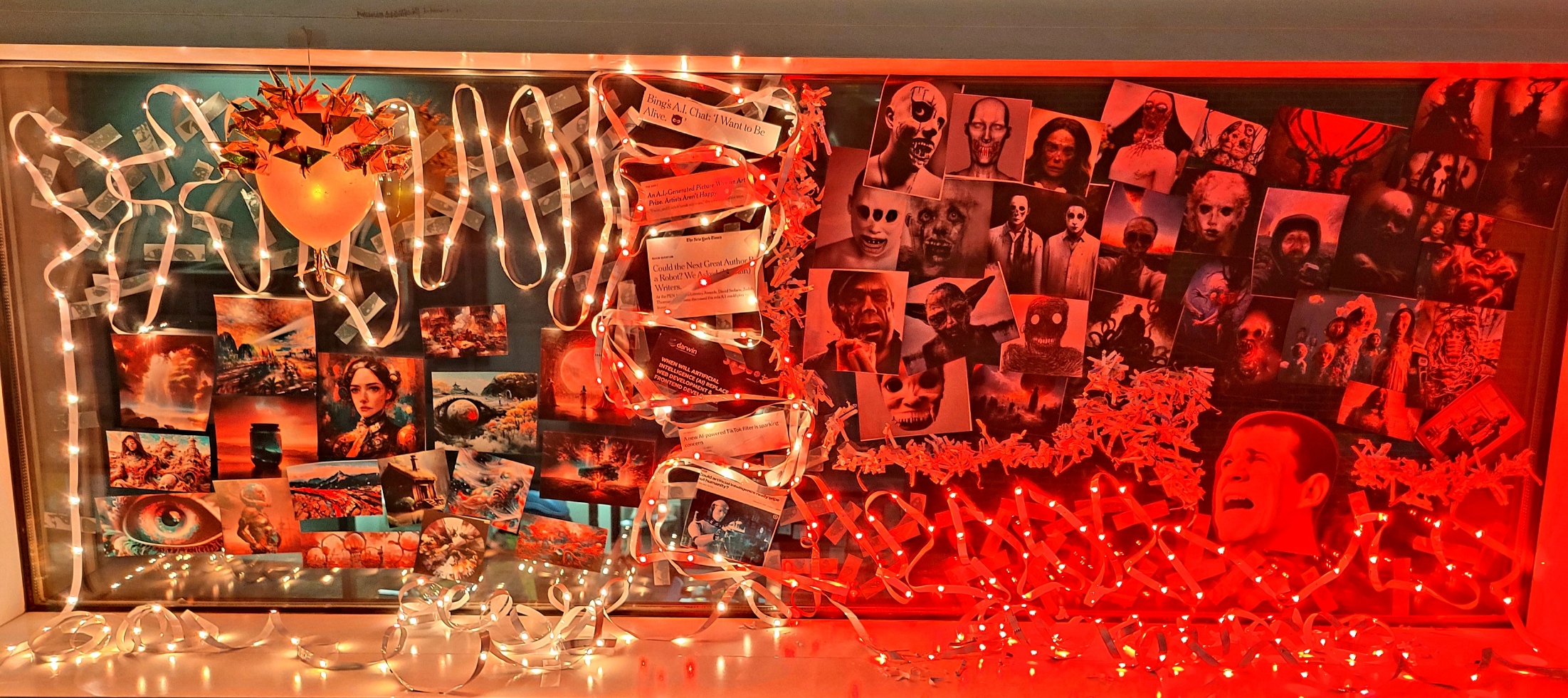
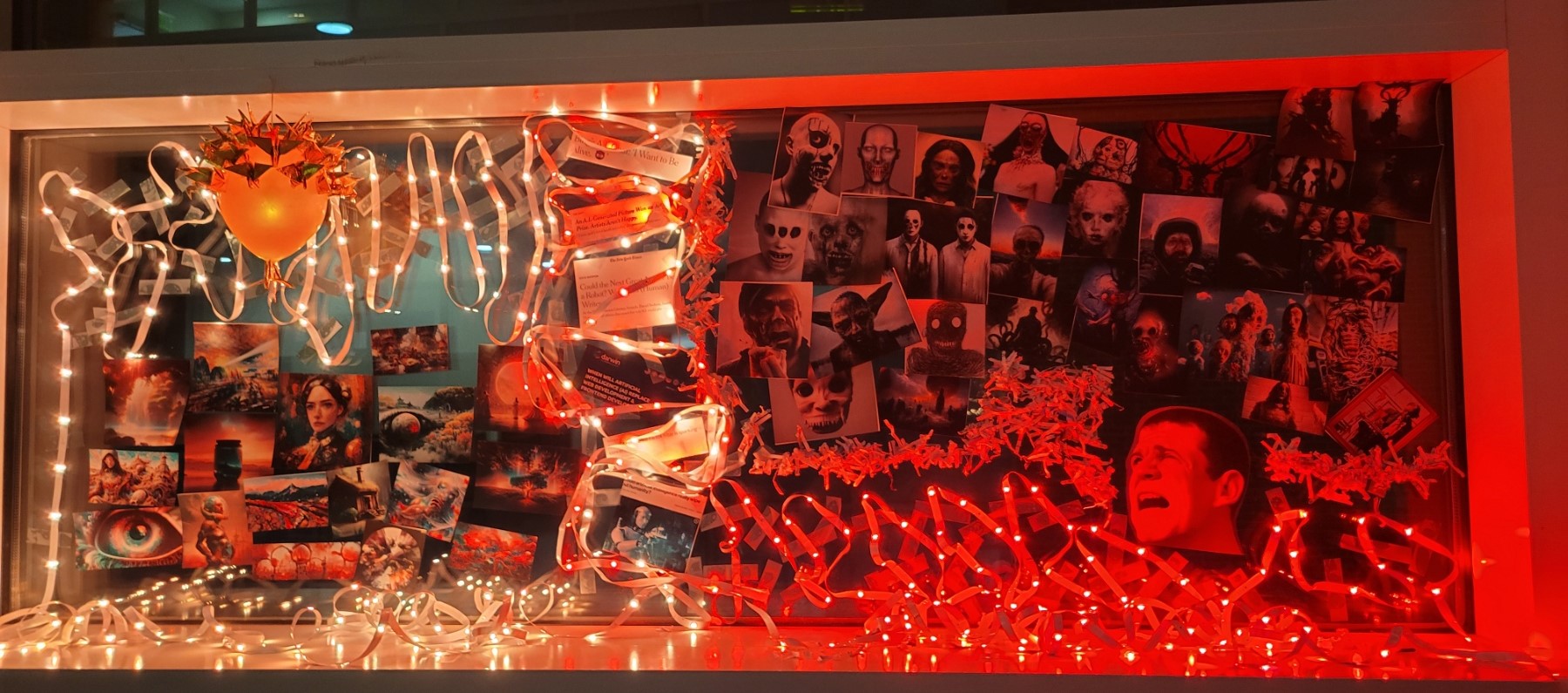
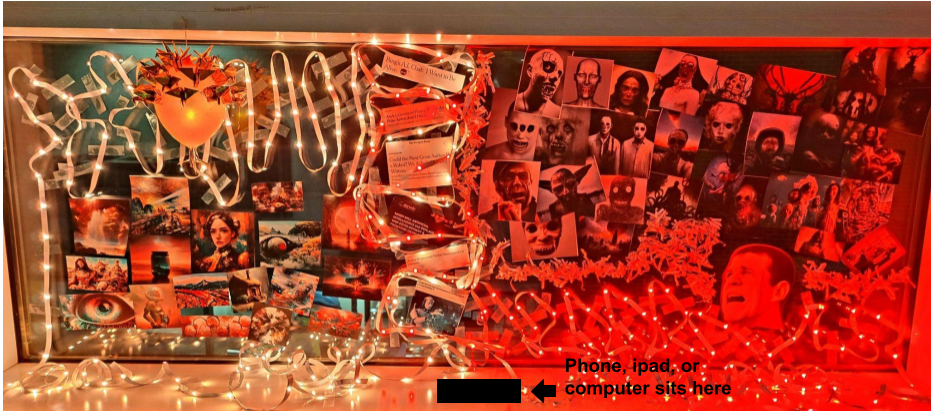
Starting from left, we have the good side to AI with warm and bright LED lights. All the images we have were generated from Dall-E 2 (https://openai.com/product/dall-e-2), an AI system that generates art and images. At the very top, we have an egg (balloon) with birds on it, holding all the good AI has done for humanity in improving our lives and bringing us closer together. All the beautiful AI-generated images fall from the egg into a pile, showing all the beauty we can create when we utilize AI.
If we look at the right side, we have a distressed image of a man screaming/crying at the bottom. From his mouth, all the scary and fearful AI-generated images are being sucked into his mouth. This could be interpreted as how we are forced to interact with AI as it is a part of our lives even if we don't want to. This can also be interpreted as the "dark side" of AI suffocating us. The fear we have in worrying about whether or not AI will take our jobs, especially since so many people use ChatGPT that can just generate code in a few seconds. Or how TikTok filters use AI, which makes it difficult to tell that one is even using a filter, further forcing unhealthy beauty standards and making it harder to differentiate on what is real. Or how people are worried that AI will eventually get to smart, it will eventually take over the world. All the images on the right side were generated by AI. Some could argue that it is terrifying that AI can generate such scary images. The Red LEDs create a scary and dark mood.
In the middle, we have news headlines about AI. Most of the headlines are fearful, like fear about AI taking over the jobs of frontend developers, AI Tiktok filters, AI taking over the jobs or artist and writers, and finally Bing's AI chat expressing on how it wants to be "alive". The LEDs have both the good (yellow) and bad (red) colors for this section to demonstrate how the general population has mixed feelings about this. Some people are very concerned about AI, but others think AI is still too harmless to really do anything. Some people believe that there is no way AI can "take" people's jobs but modify the current jobs people have. However, some people are worried that they can't adapt to this change if their current job becomes obsolete.
This is a "creative" approach to mixed reality because it doesn't follow the traditional thought when things of mixed reality, which is usually augmented and virtual reality. The traditional interpretation is that one interacts with the physical world while wearing a VR set that takes the user into the virtual world. For us, we thought about blurring the lines between the traditional definition of the physical and virtual world. We pulled the virtual world into the physical world when we printed it out. We also added physical objects to the display like the balloon, birds, LEDs to create a physical. However, when the viewer stares into the display, they are supposed to be taken into the virtual world without using any sort of headset. And when they are taken into this "virtual" world, they are supposed to feel conflicted emotions related to AI.
I also wanted to have a phone lying at the bottom of the middle of the display. To make this more interactive, the phone would open up to a Figma quiz, which tested whether or not you can tell the difference if something was made by AI or made by a human. People think that it should not be difficult, but the quiz will make you understand that it is actually hard to tell the difference between whether or not something is generated by AI or a human. I tried making this quiz on Figma, but I was having too many errors. So I made a sample quiz on Kahoot and shared it in the link below.
How we built it
Mostly used tape to assemble this display. I custom-generated the images on Dall-E 2 (https://openai.com/product/dall-e-2) that we printed out. We got the rest of the materials from the hardware help desk.
Challenges we ran into
Assembling it was pretty difficult. It also took us a long time to think of this idea and put everything together into a coherent story. We also thought about pulling this display on poster board instead of the window of Klaus, but it looked so much better on the window. However, the con is that it is not possible to rebuild this for judging, and we have to just show the images of it. The quiz part that I mentioned above was also a challenge. I opted in for Kahoot instead of figma.
Accomplishments that we're proud of
Overall it looks really nice. If we had more time, we could have expanded this project and made the display better so it can easily be rebuilt again.
What we learned
We learned a lot about AI as well as the different sentiments related to AI.
What's next for Conflicting AI
We wouldn't mind expanding this project and using better materials for this. We could have also included more interactive qualities. I want to make a better and more detailed interactive quiz or module at the bottom of the display that a user can click through.
Built With
- dalle
- kahoot
- leds
- paper
- tape

Log in or sign up for Devpost to join the conversation.