-
-
logo
-
attack screen
-
login screen
-
game screen
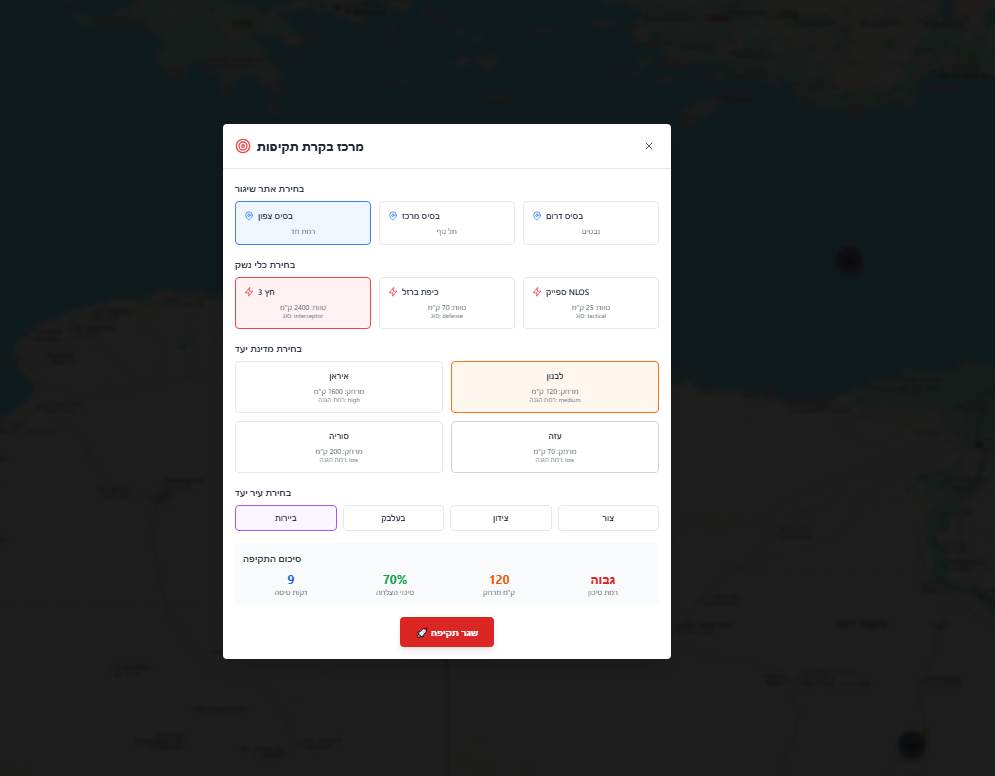

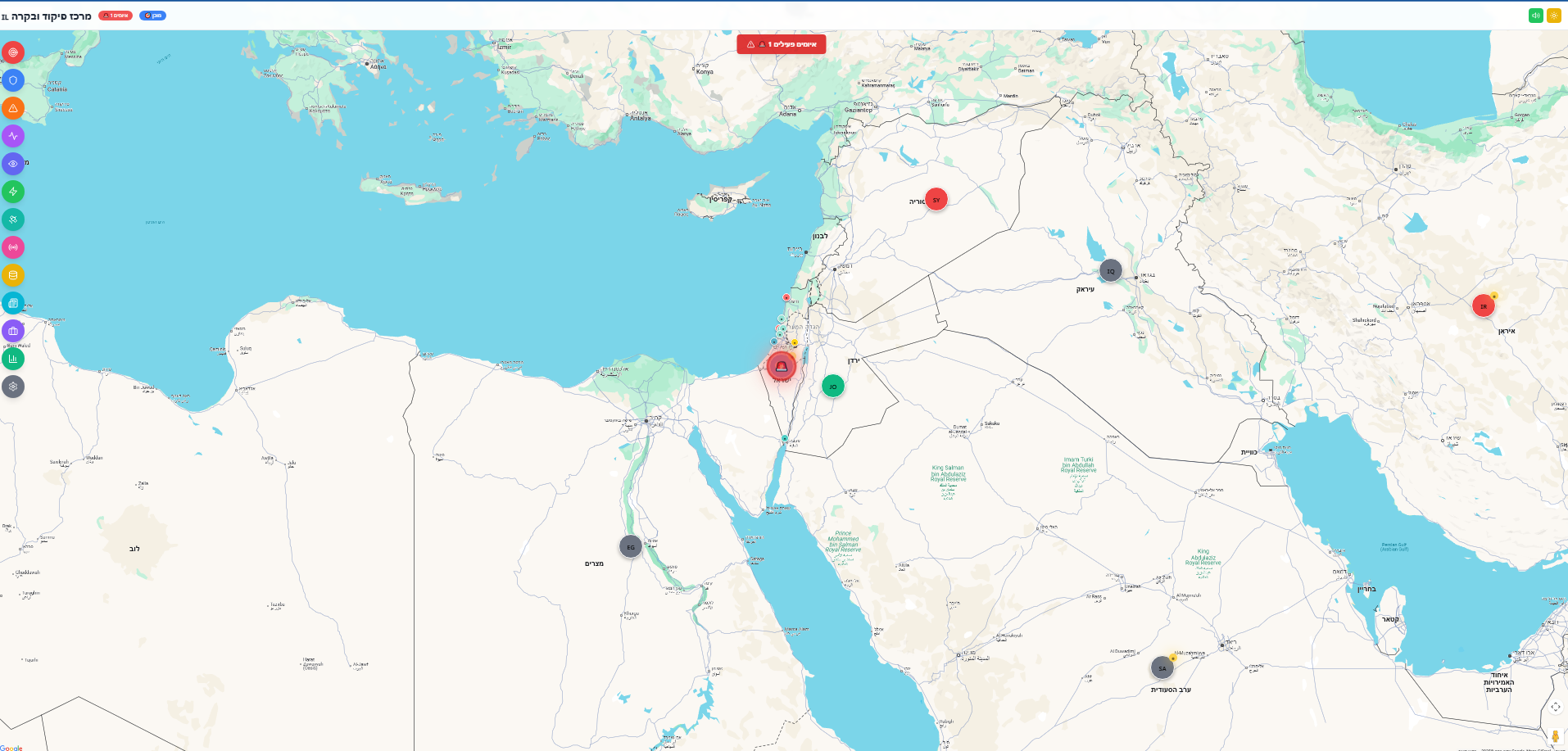
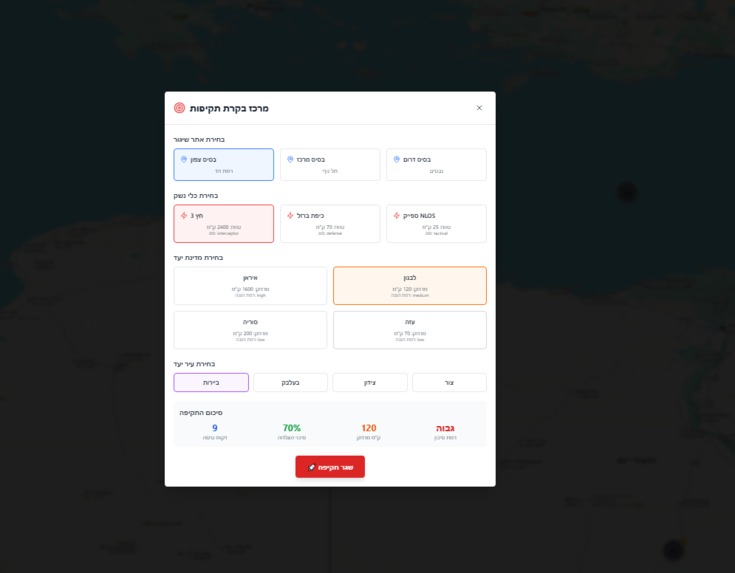
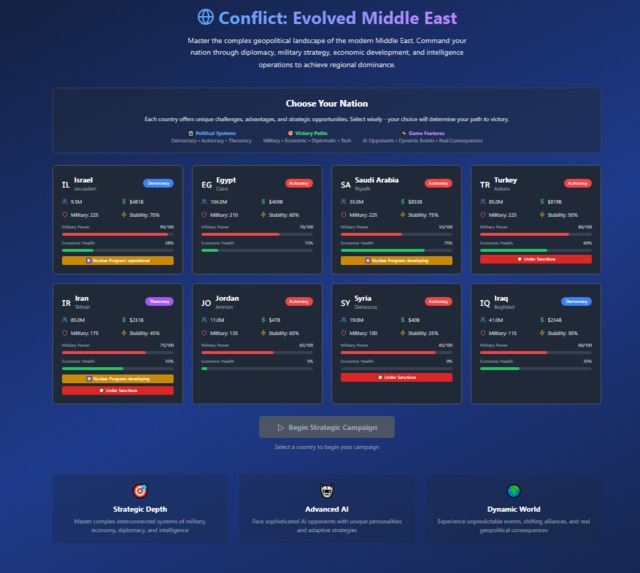
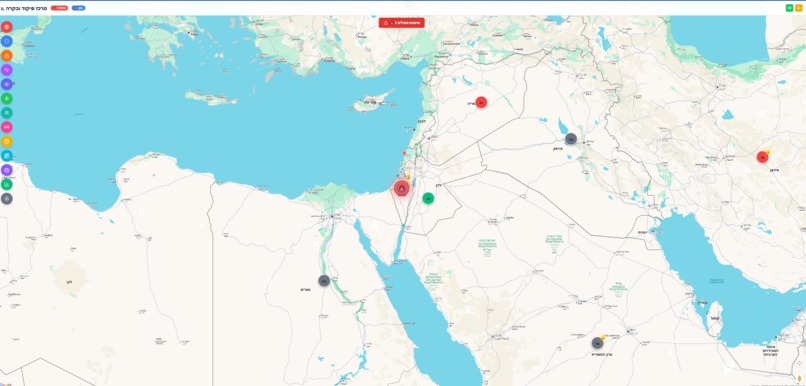
Inspiration My inspiration for Conflict: Evolved Middle East stemmed from my deep passion for strategy games and a fascination with the intricate geopolitical dynamics of the Middle East. I aimed to craft an engaging and educational simulation that immerses players in the complex decision-making processes faced by regional leaders, while shedding light on critical real-world issues like diplomacy, economics, military strategy, and international relations. What it does Conflict: Evolved Middle East is a turn-based strategy game that simulates the geopolitical landscape of the Middle East. Players take on the role of a regional leader, making decisions on diplomacy, resource management, and military actions. The game features dynamic scenarios, AI-driven opponents, and an interactive map, providing an immersive experience that educates players about the region’s challenges while offering strategic depth and replayability. How we built it I built the game using a modern tech stack to ensure scalability and a polished user experience:
Frontend: Developed with React and TypeScript, leveraging functional components and hooks for efficient state management. Game Engine: Created a custom useGameEngine hook to manage core game logic, including player actions, AI decision-making, and victory conditions. Data Modeling: Structured all countries, actions, and scenarios in TypeScript files for easy maintenance and extensibility. UI Components: Designed reusable components like panels, modals, and dashboards, styled with Tailwind CSS for a sleek, modern interface. Map Integration: Integrated Google Maps to display real-time country locations, events, and military actions. Deployment: Configured the project for seamless deployment on Netlify, with environment variables to securely handle sensitive keys.
Challenges we ran into Building Conflict: Evolved Middle East came with several challenges:
Complex State Management: Coordinating interactions between numerous countries, actions, and events demanded meticulous planning and robust logic. AI Logic: Crafting AI personalities that are challenging yet fair, while avoiding predictable or unbalanced behavior, was a significant hurdle. Bug Fixing: Resolving issues like out-of-range errors, white screens, and missing data required thorough debugging and defensive programming techniques. Scalability: Ensuring the codebase remains maintainable as new features, countries, and scenarios are added was a constant consideration. User Experience: Striking a balance between realism and playability while keeping the interface intuitive despite dense information was a key challenge.
Accomplishments that we're proud of I’m incredibly proud of several achievements:
Creating a fully functional, turn-based strategy game that combines entertainment with educational value. Building a scalable and modular codebase using React and TypeScript, which supports future expansions. Designing an intuitive and visually appealing UI that enhances the player experience. Successfully integrating Google Maps for real-time visualization of game events. Overcoming complex technical challenges to deliver a polished and engaging simulation.
What we learned This project was a tremendous learning experience. I gained expertise in:
React and TypeScript: Mastering modern React hooks and strong typing for a modular, scalable frontend. Game Logic: Designing a turn-based engine to handle complex state transitions, AI decisions, and dynamic scenarios. UI/UX: Crafting an intuitive and visually appealing interface with interactive maps, dashboards, and animated events. State Management: Efficiently managing a large and evolving game state, including actions, events, and achievements. Debugging and QA: Systematically identifying and resolving bugs while implementing defensive programming for a smooth user experience.
What's next for Conflict: Evolved Middle East Moving forward, I plan to enhance the game by:
Adding more countries and scenarios to increase depth and variety. Improving AI decision-making to create even more dynamic and challenging opponents. Introducing multiplayer functionality to allow players to compete or collaborate. Expanding educational content to provide deeper insights into Middle Eastern geopolitics. Optimizing performance to ensure smooth gameplay as the game scales.
Built With
- database
- design
- react
- typescript


Log in or sign up for Devpost to join the conversation.