-
-
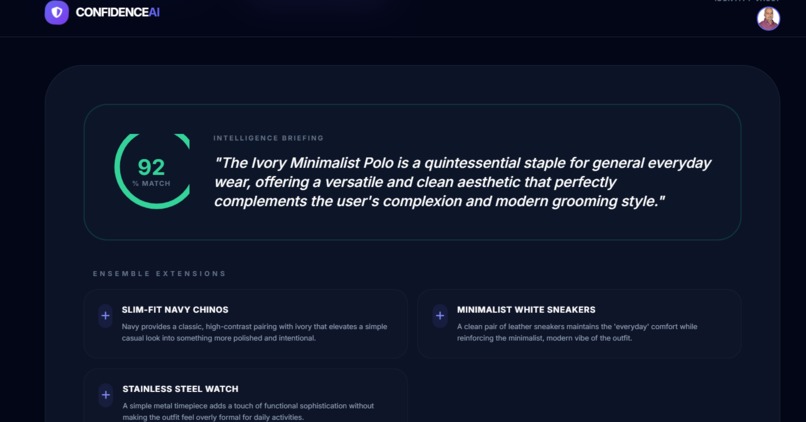
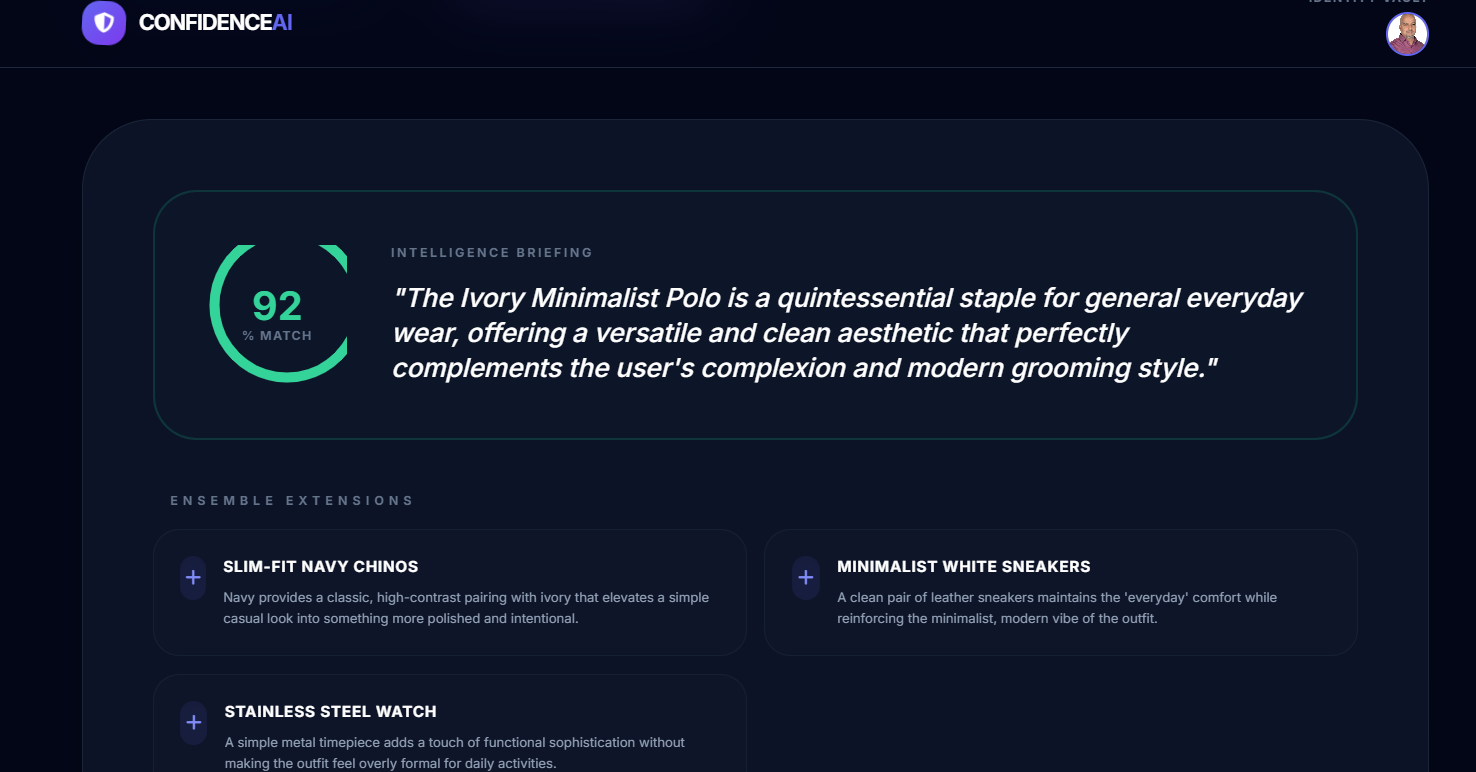
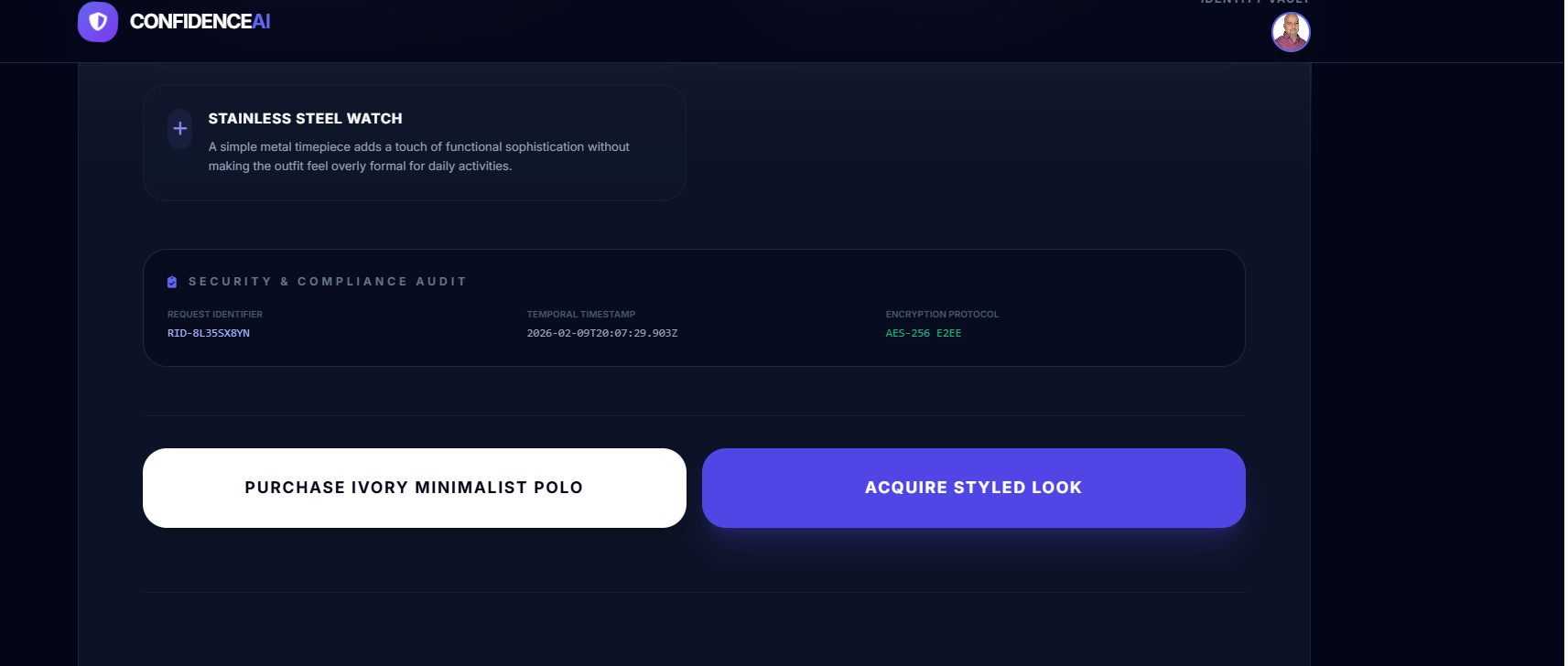
Confidence score, Reasoning, Additional accessories details
-
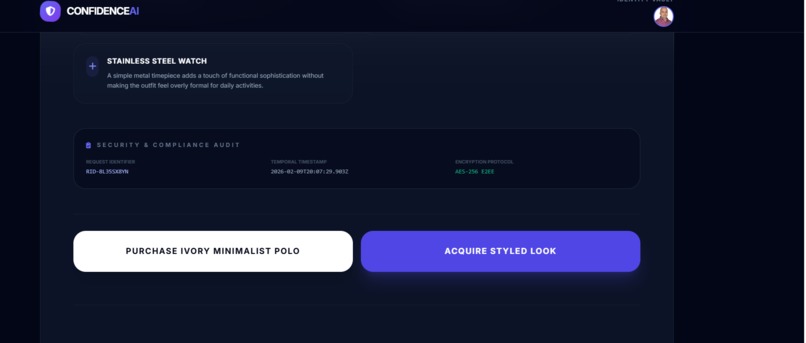
Increases revenue as cross selling products ordered
-
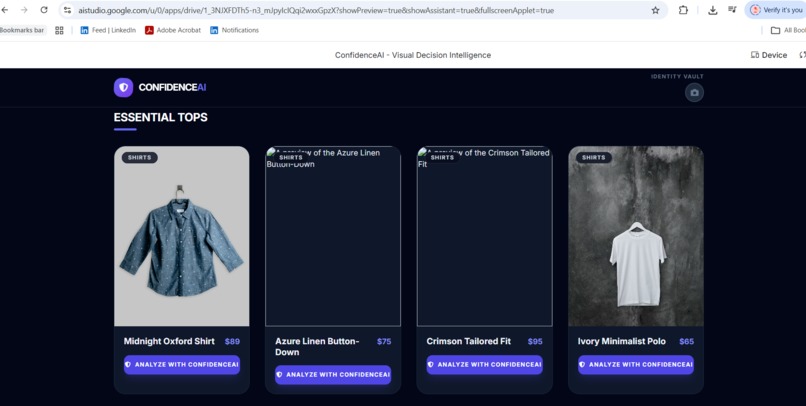
Confidence AI analyze option
Inspiration
Online shopping offers convenience, but it often creates decision fatigue, especially for visually driven purchases. Customers don’t just wonder “Will this suit me?”—they worry about making the wrong choice. This uncertainty leads to overthinking, delayed purchases, external validation from others, and regret-driven returns.
More importantly, uncertainty impacts confidence beyond shopping. What people choose to wear influences how they feel, how they present themselves, and how confidently they show up in real life. The inspiration for ConfidenceAI came from a simple insight: users already have profile images on e-commerce platforms, yet these images are rarely used to help users make confident, independent decisions.
Instead of building another virtual try-on experience, we wanted to help users feel sure about their choices before they commit.
What it does
ConfidenceAI is a Gemini 3–powered visual decision engine that helps users make confident purchase decisions. It analyzes a user’s profile image together with product images to assess suitability.
Rather than simulating appearance alone, the system focuses on decision confidence by providing:
- A confidence score
- A clear natural-language explanation of why a product suits or does not suit the user
- Visual outputs illustrating the recommended look and complementary accessories
- A conversational interface that adjusts confidence dynamically based on context such as occasion or preference
This helps users trust their decisions and reduces hesitation during purchase.
How we built it
The project leverages Gemini 3’s multimodal vision and reasoning capabilities via Google AI Studio. User profile images, product visuals, and optional contextual inputs are processed together, allowing Gemini 3 to perform cross-image reasoning and generate explainable, human-readable insights.
The live demo runs as a Gemini 3 AI Studio app, while a reference implementation and prompt logic are documented in a public GitHub repository to demonstrate production integration patterns.
Challenges we ran into
A key challenge was clearly differentiating decision intelligence from traditional virtual try-on experiences. Many visual commerce solutions focus on appearance simulation, but our goal was to help users feel confident about choosing a product, not just seeing how it might look.
This required careful prompt design to ensure Gemini 3 focused on reasoning, explanation, and suitability rather than speculative visualization. We also had to balance depth of insight with clarity, while being intentional about privacy, security, and compliance boundaries when handling user images.
Accomplishments that we're proud of
- Clearly separating confidence-driven decision intelligence from virtual try-on
- Using Gemini 3 to generate explainable, human-centric reasoning
- Designing a solution that benefits both users and businesses
- Framing confidence as a real-life outcome, not just a conversion metric
What we learned
We learned that confidence comes from understanding, not prediction. When AI explains why a choice works, it reduces anxiety, shortens decision cycles, and empowers users to trust themselves.
What's next for ConfidenceAI – Gemini 3 Visual Decision Engine
Future iterations will expand across categories such as eyewear, accessories, cosmetics, and home décor.
ConfidenceAI helps people shop with clarity—so they can show up confidently in life.
How ConfidenceAI Works
The user uploads their photo on the platform, which serves as the visual reference for personalized analysis.
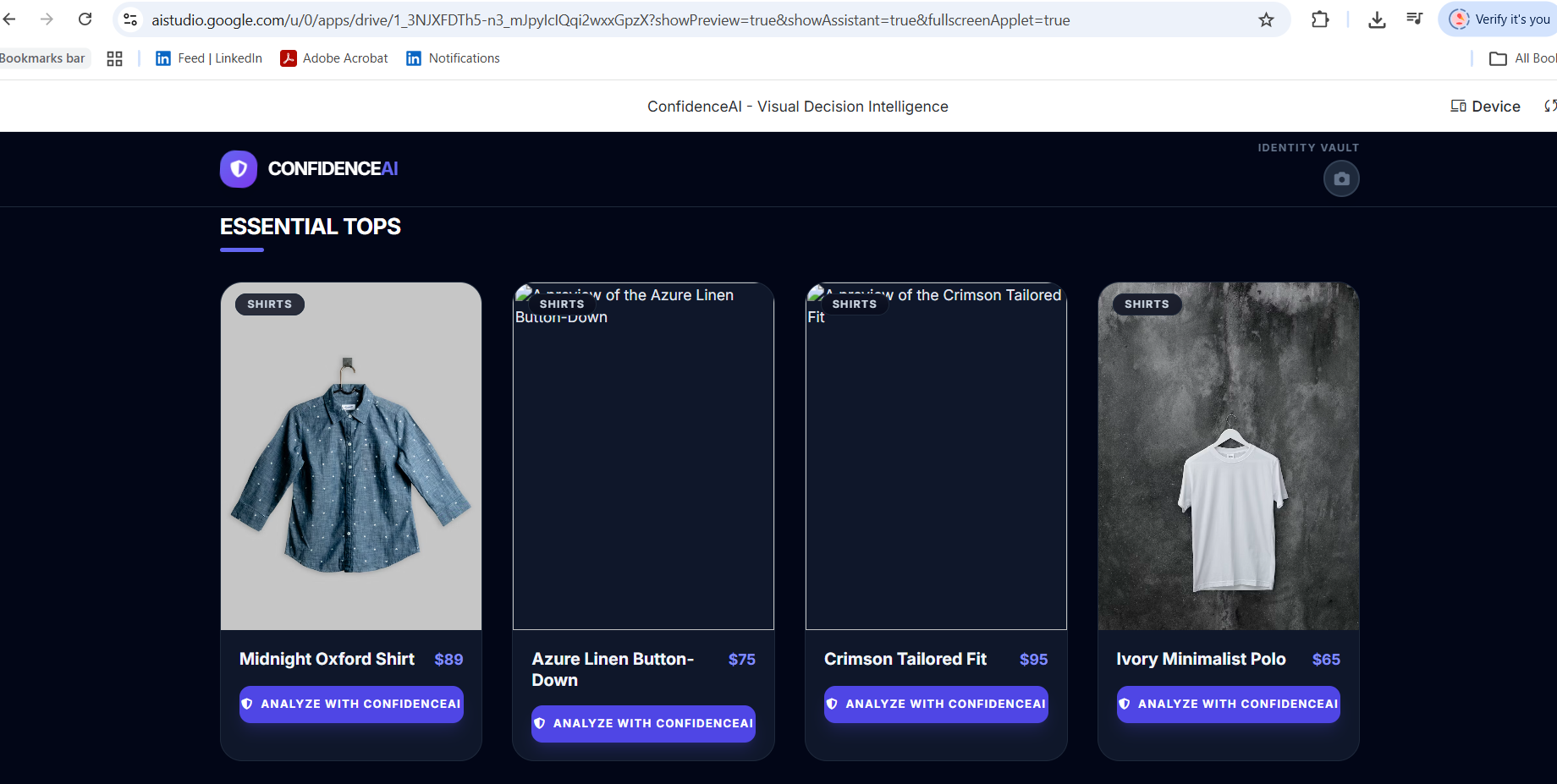
After selecting a product, the user activates ConfidenceAI by clicking the button “Analyze with ConfidenceAI” to evaluate how well the choice suits them.
A Direct Look is generated, showing a realistic visual of the user with the selected product exactly as chosen.
A Styled Look is then created, presenting the same product along with visual suggestions of which accessories and styling elements would suit the selected product best, helping the user see a more balanced and confident appearance.
Based on visual alignment, styling, and overall fit, the system calculates a confidence score that reflects how well the selection works for the user.
An interactive chatbot allows the user to specify the occasion and intent. Using contextual intelligence, the system explains its reasoning and dynamically adjusts the confidence score to guide a more self-assured decision.

Log in or sign up for Devpost to join the conversation.