Inspiration
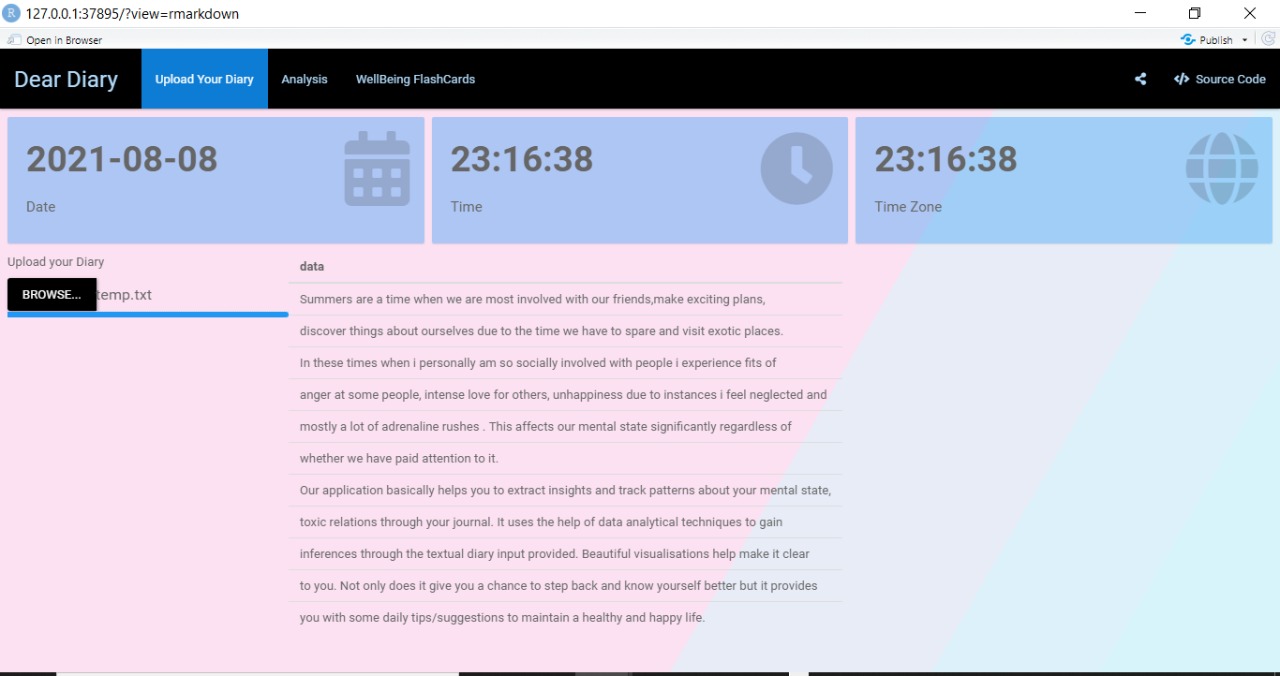
Summers are a time when we are most involved with our friends,make exciting plans, discover things about ourselves due to the time we have to spare and visit exotic places. In these times when i personally am so socially involved with people i experience fits of anger at some people, intense love for others, unhappiness due to instances i feel neglected and mostly a lot of adrenaline rushes . This affects our mental state significantly regardless of whether we have paid attention to it. Research states " those who wrote for 15 minutes three days a week over a 12-week period had increased feelings of well-being" which makes the advantages of journaling clear to us. However that is a fact we all are acquainted to and that's not what triggered this project. Re-reading some of my previous journal entries this summer it was intriguing to notice how much the diary can tell about me as i noticed patterns about my moods, people i interactive with and my reactions to situations. It was so insightful that i noticed that some friends were for toxic for me, i wish i could have taken a step back to see this before it effected my life.
What it does
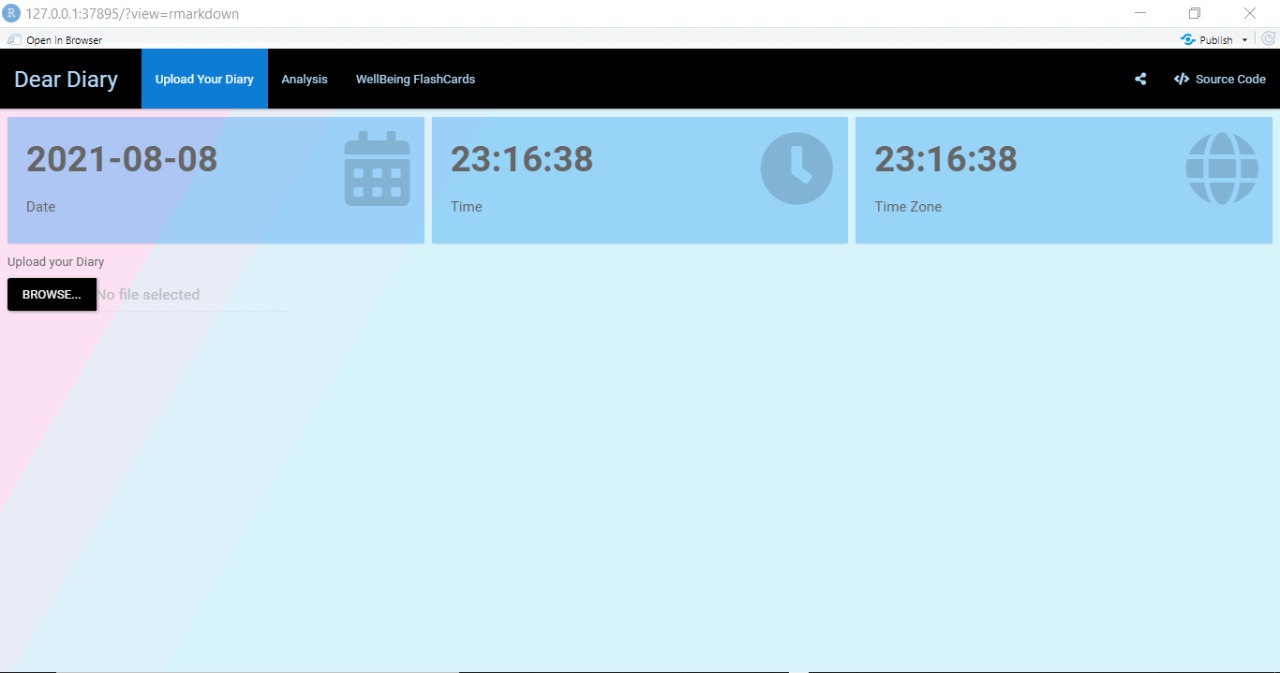
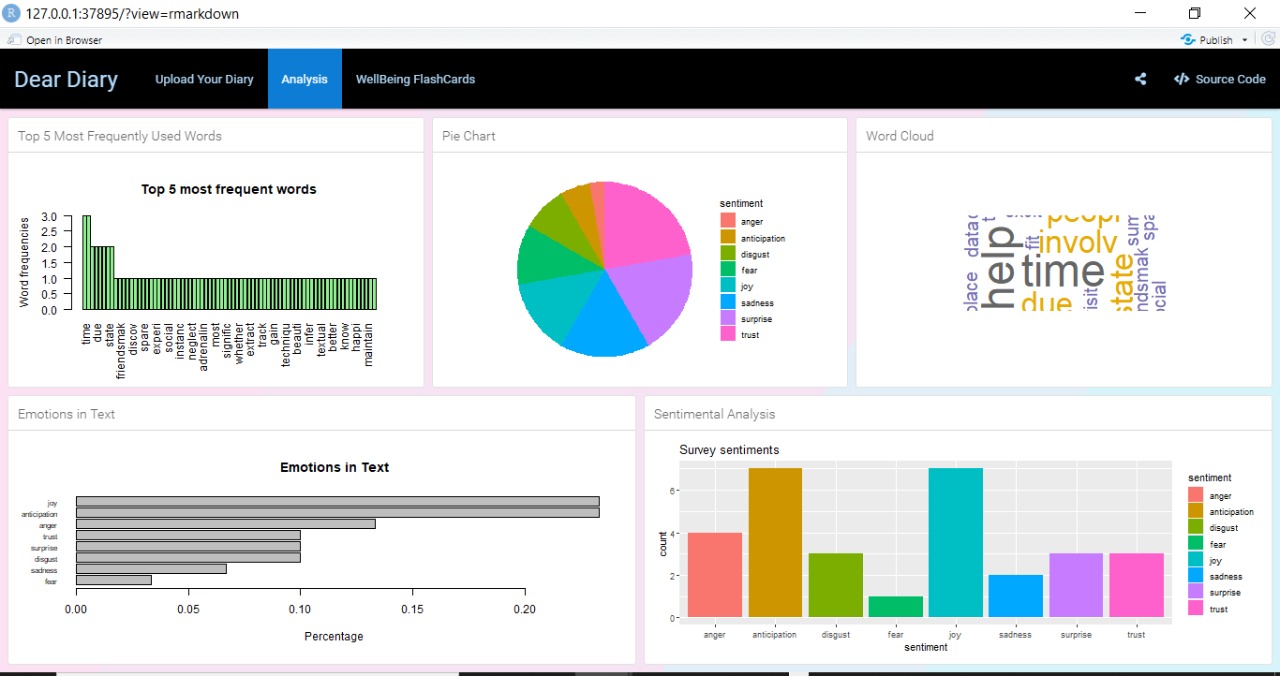
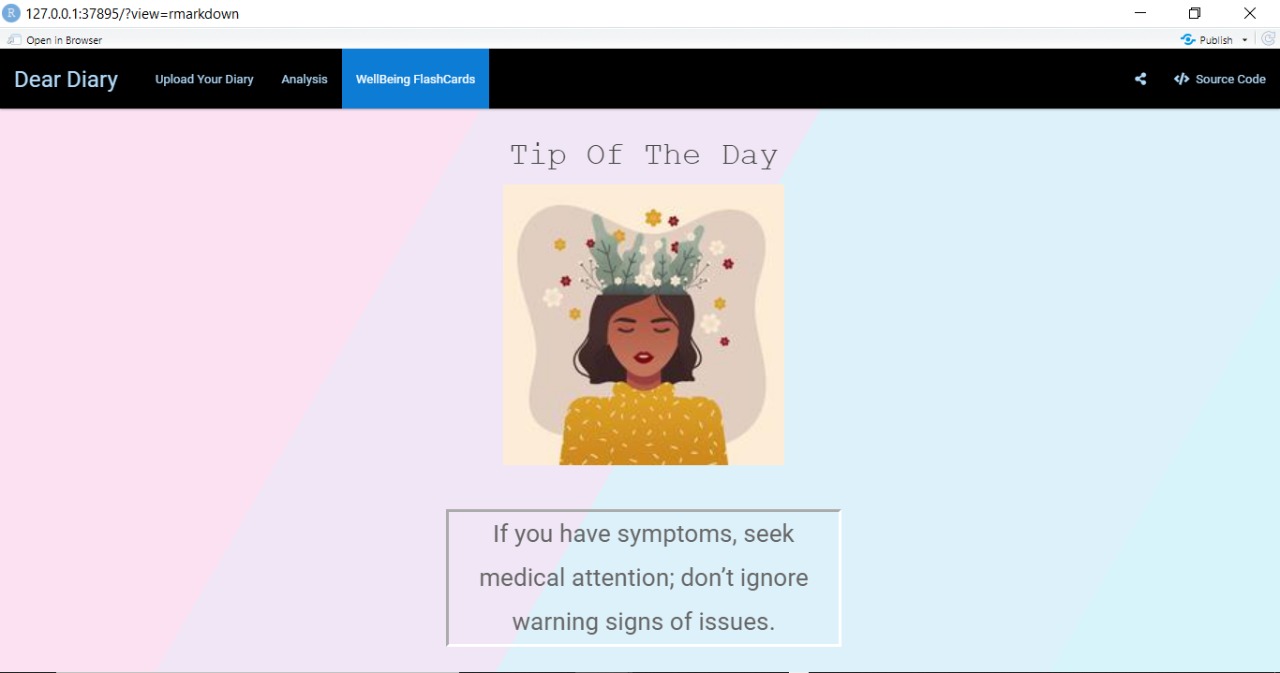
Our application basically helps you to extract insights and track patterns about your mental state, toxic relations through your journal. It uses the help of data analytical techniques to gain inferences through the textual diary input provided. Beautiful visualisations help make it clear to you. Not only does it give you a chance to step back and know yourself better but it provides you with some daily tips/suggestions to maintain a healthy and happy life. All in all aiming to cater to your personal mental well being and help track emotional habits to improve them. You might have never noticed but maybe tracking your emotions you can find out, you often burst into fits of anger and it has adversely effected your relations?
How we built it
We have used Data science Algorithm in R to derive inferences from textual data provided to us as input. The algorithm mainly used is Emotional/Sentiment Analysis (NRC,TinyText etc) and we have taken this one step ahead to consider sentences instead of specific words to derive inferences so that they are more precise and are deciphered based on the overall picture.
Natural language processing (NLP) has also been tried to used to decipher the most frequently used names associated with a specific emotion. For example if sadness is heavily associated with a persons name that person could be potentially toxic.However we weren't able to fully integrate a few NLP ideas we had due to time constraint.
We have also used combinations of frameworks such as: Flex-dashboard and Shiny to make interactive dashboards with exotic UI/UX since it is a challenge in R to integrate codes from various languages
Challenges we ran into
It was difficult for us to integrate some ideas we had due to lack of compatibility of R with some other languages or at least we weren't aware of it's intricacies. R is usually considered to be used mainly for it's vivid visualisations but we took it up as a challenge to work with it's limitations and shill it's strengths to make a project. Time was a huge constraint for us, with so much in our mind and limited time.
Accomplishments that we're proud of
We have never really worked to create a interactive project with R. It was briefly used and didn't realise it's power up until we worked on this. There was a point we were so discouraged to use the flex-dashboard framework because a lot of components we wanted to use lacked implementation details and so we planned on switching to shiny-dashboard which didn't adhere to the vision we had. However we persisted to the very end trying really hard to get everything together and i am elated to share our project is made with flex-dashboard, it honestly took a lot of effort.
What we learned
We have never really worked to create a interactive project with R. It was briefly used and didn't realise it's power up until we worked on this. The most important thing however we learnt was to believe in ourselves and not be dependant on others. Since flex-dashboard was a framework with not as much documentation and R not being as commonly used as python, youtube videos and mentors were not so much of a help as much as our persistence to experiment with it and learn ourselves
What's next for DearDiary
We definitely aim on using better and more insightful algorithm of make our inferences more meaningful such as details about potential toxic people in our life etc. This can also be a great application which can be utilised in real life and something i would love to use. The project also has some research potential if thought of more intricately.


Log in or sign up for Devpost to join the conversation.