-
-
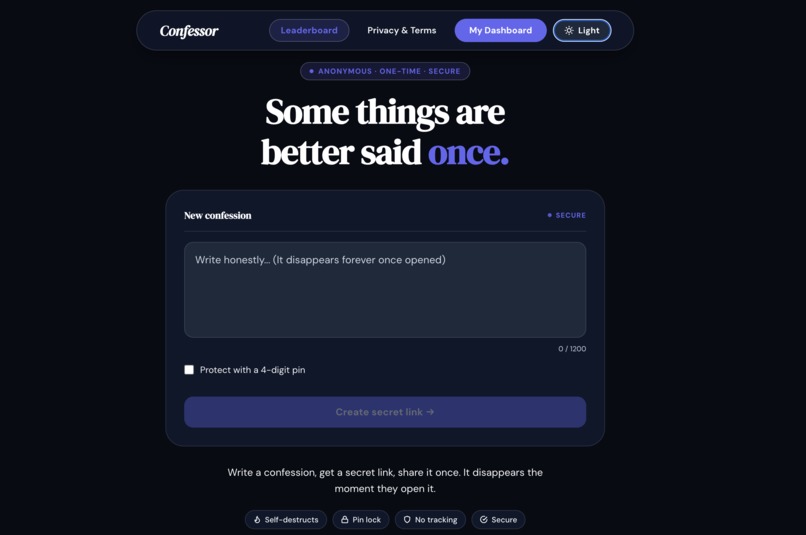
landing page
-
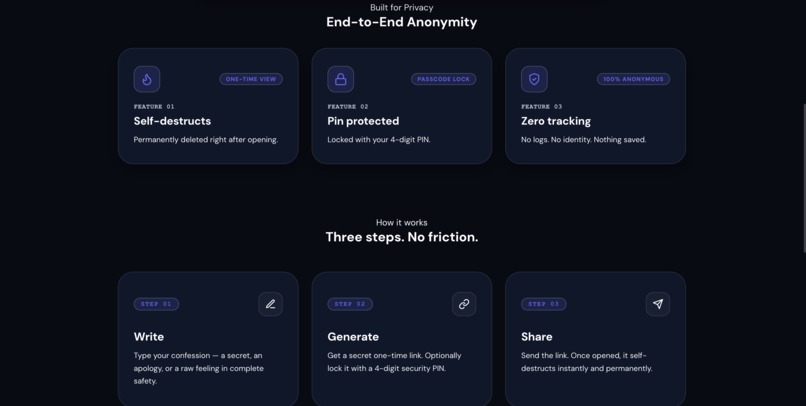
-
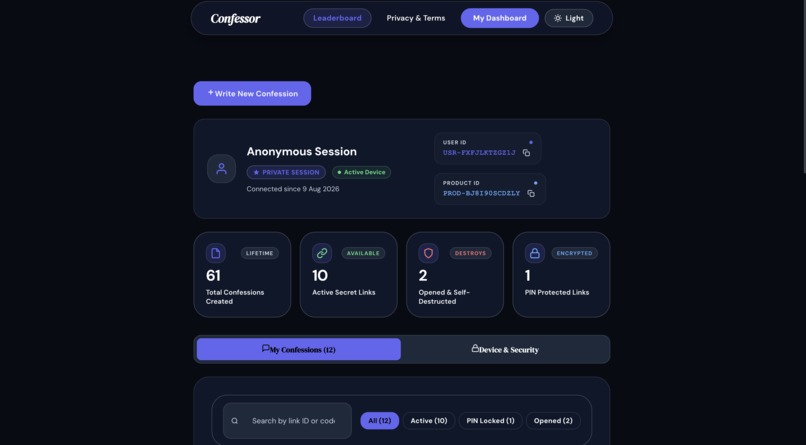
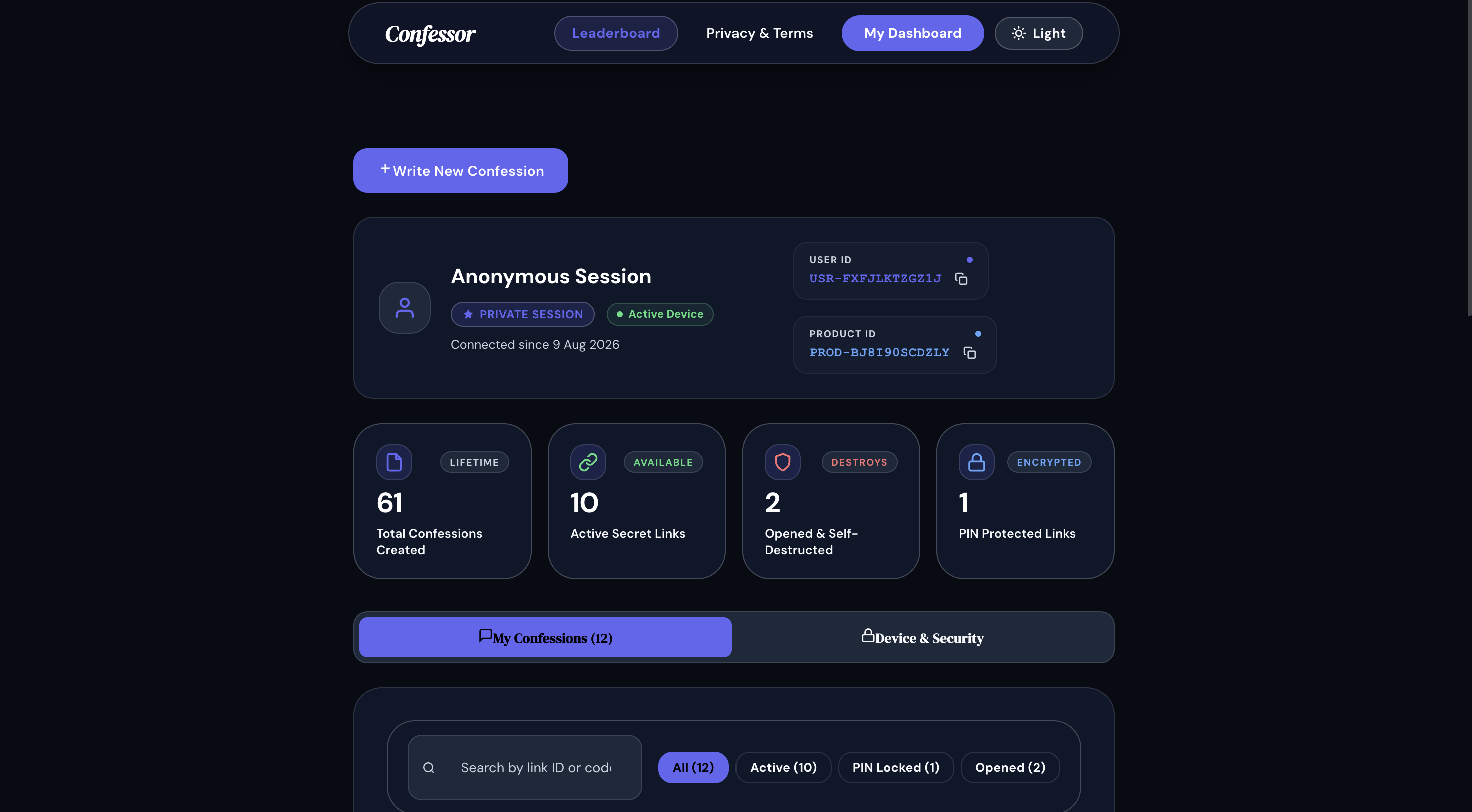
Dashboard View
-
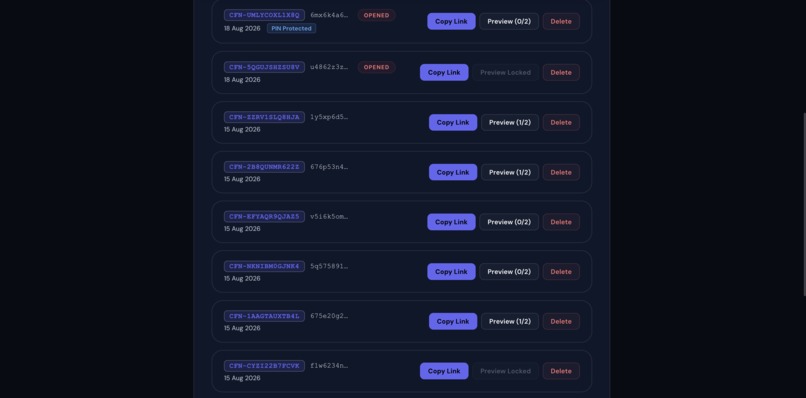
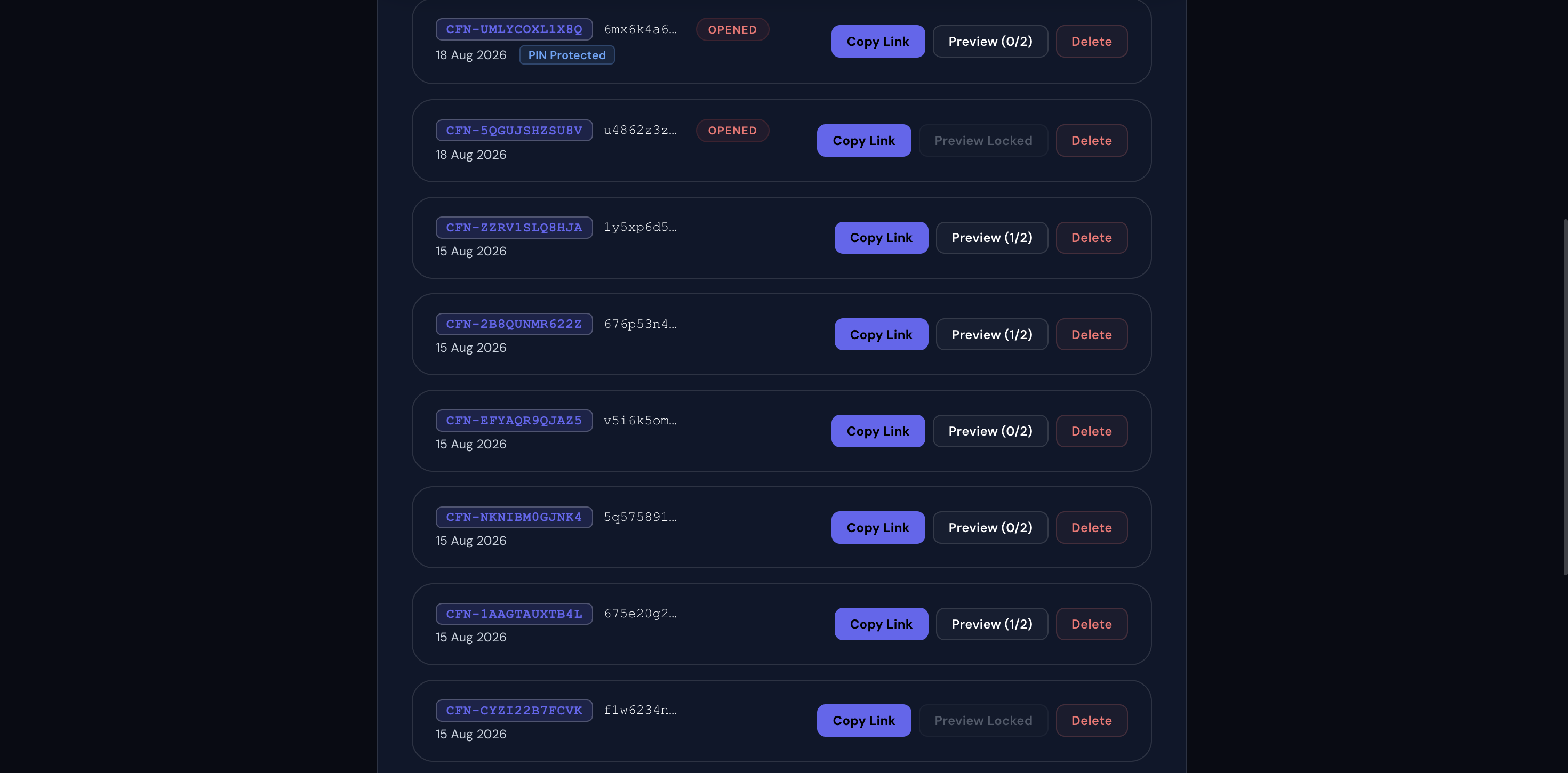
Detailed Stats
-
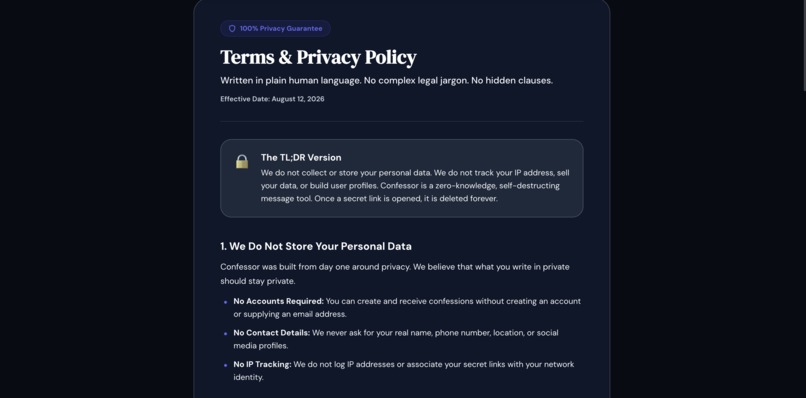
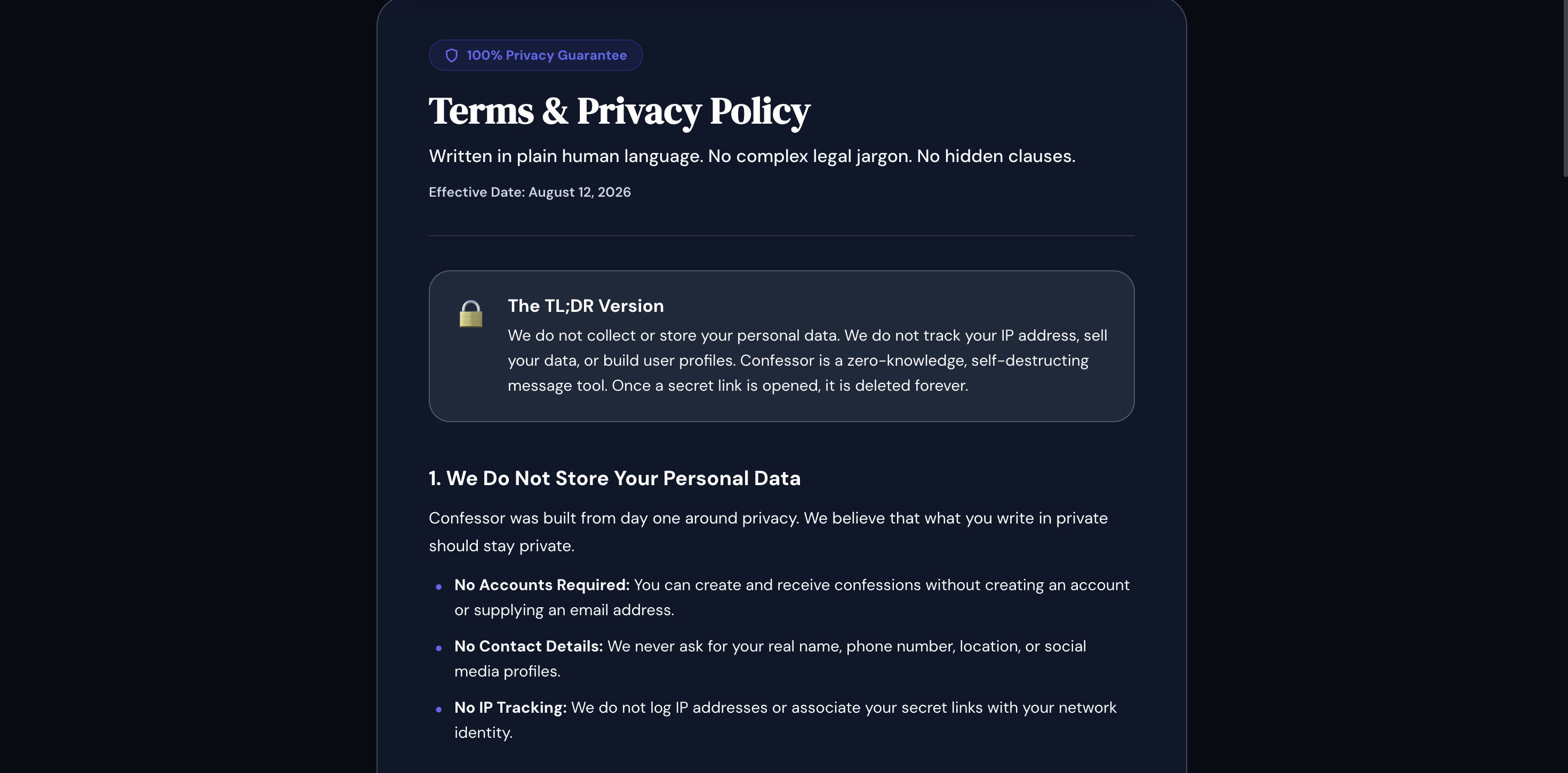
Privacy Policy
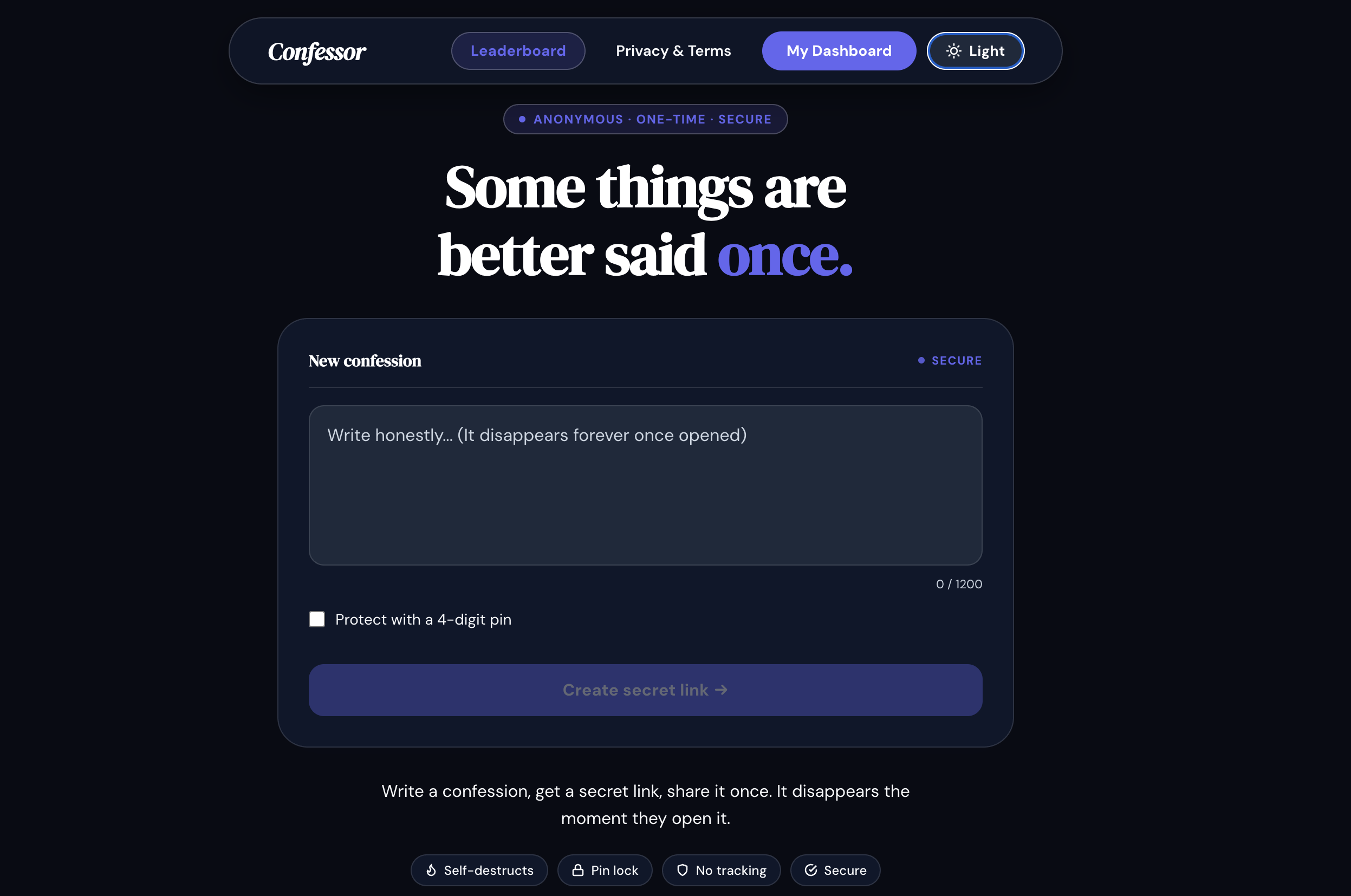
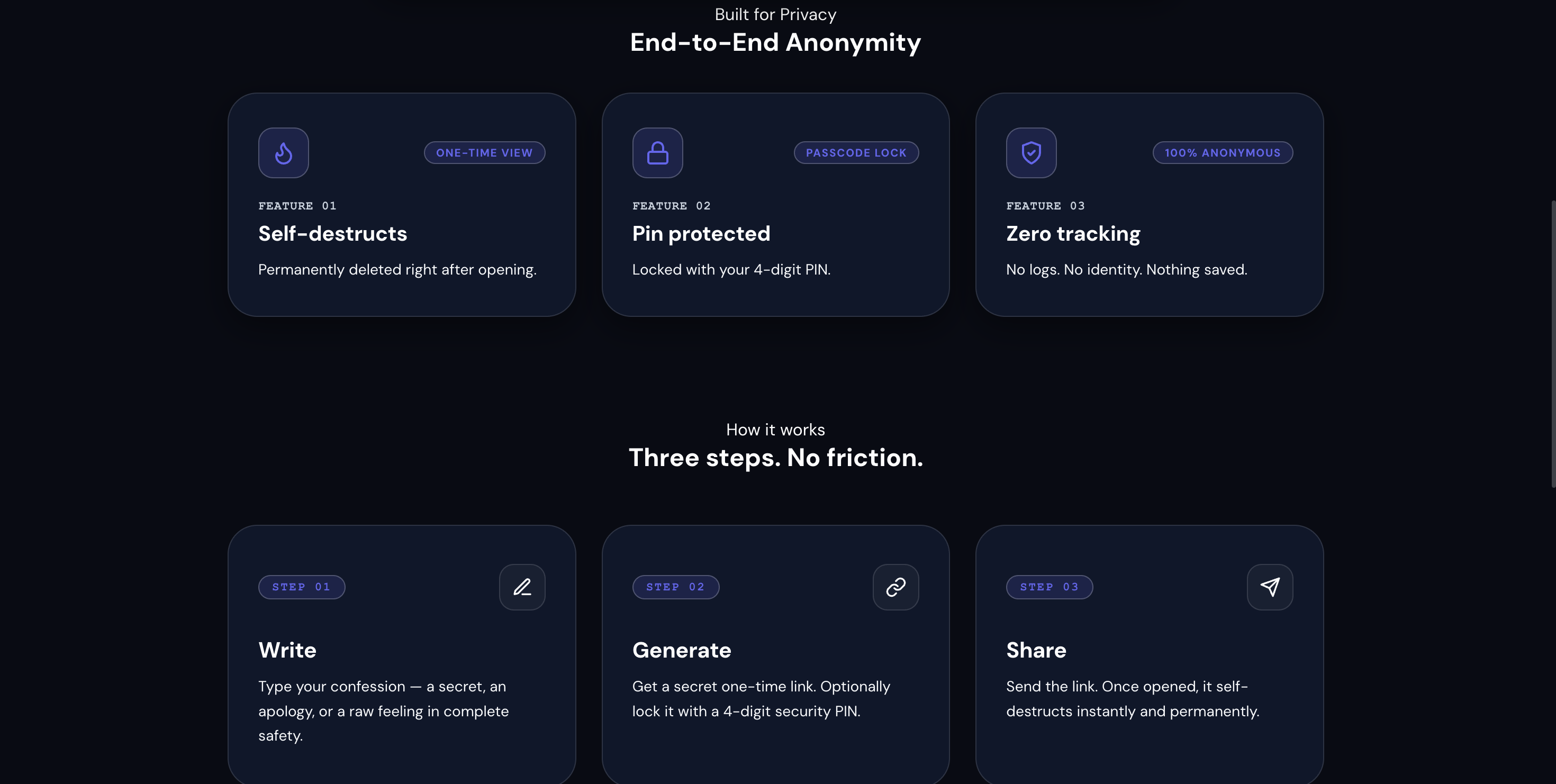
Confessor: Some things are better said once.
What Inspired Me
In a digital world where everything is logged, tracked, and stored indefinitely, true privacy has become a luxury. I have always wanted to make online conversations more exciting, authentic, and genuinely anonymous. There is a specific thrill in sharing a secret, knowing it exists only for a fleeting moment before vanishing forever. I built Confessor to bring back the magic of the "whispered secret"—a zero-tracking, privacy-first platform for sharing one-time self-destructing messages. No digital footprint, no identity requirements, just pure, ephemeral communication.
How I Built It
Confessor is designed around a modern, serverless architecture to ensure high performance and zero persistent tracking.
- Frontend: I utilized React 18 with TypeScript and Vite for a blazingly fast user interface, paired with React Router 6 for seamless navigation. I opted for Vanilla CSS to keep the bundle lightweight and the design entirely custom.
- Backend: The core logic runs on Vercel Serverless Functions, allowing the platform to scale effortlessly on demand.
- Database: I integrated Neon Serverless Postgres (
@neondatabase/serverless). To ensure maximum security, all interactions with the database use strictly parameterized queries to prevent injection attacks. - Testing: Robust unit testing was implemented using Vitest to ensure the core destruction logic is foolproof.
- Admin Dashboard: I also built a comprehensive control panel for platform administration, system diagnostics, and database health metrics.
Security & The Math Behind the PIN
To add an extra layer of confidentiality, Confessor features an optional 4-digit PIN lock. Assuming an attacker has no knowledge of the PIN and attempts a brute-force attack, the probability $P$ of guessing the correct PIN in $n$ attempts is governed by simple probability:
To prevent automated brute-forcing of the $10,000$ possible combinations, the serverless functions strictly rate-limit and validate requests, ensuring that even a mathematically simple PIN remains cryptographically sound in practice.
Challenges I Faced
Building a platform where data must be destroyed immediately upon viewing introduced several unique challenges.
- The Self-Destruction Race Condition: Ensuring that a confession is permanently destroyed on its first view required meticulous state management and transactional database logic to prevent race conditions from concurrent requests.
- Deep Debugging: Debugging serverless functions, especially those interacting with a serverless Postgres instance, required a shift in how I trace logs and handle edge-case timeouts.
- The Cold Start Problem: Getting real users to actually use the site. Building a secure app is one thing, but finding an audience willing to trust and use an anonymous platform required me to step out of my developer comfort zone and actively market the product.
What I Learned
This project was a massive learning curve.
- UI/UX Design: I leveled up my designing skills, learning how to create a clean, intuitive, and trustworthy interface using purely Vanilla CSS.
- Advanced Debugging: My debugging skills improved dramatically by navigating the complexities of serverless architecture and database interactions.
- User Acquisition: Most importantly, I learned that building the product is only half the battle. Actively finding users who engage with the platform taught me valuable lessons about product-market fit and the psychology of anonymous sharing.
Confessor isn't just an application; it's an exploration into privacy, ephemeral data, and the excitement of the unknown.
Built With
- css3
- neondb
- react
- typescript
- vercel

Log in or sign up for Devpost to join the conversation.