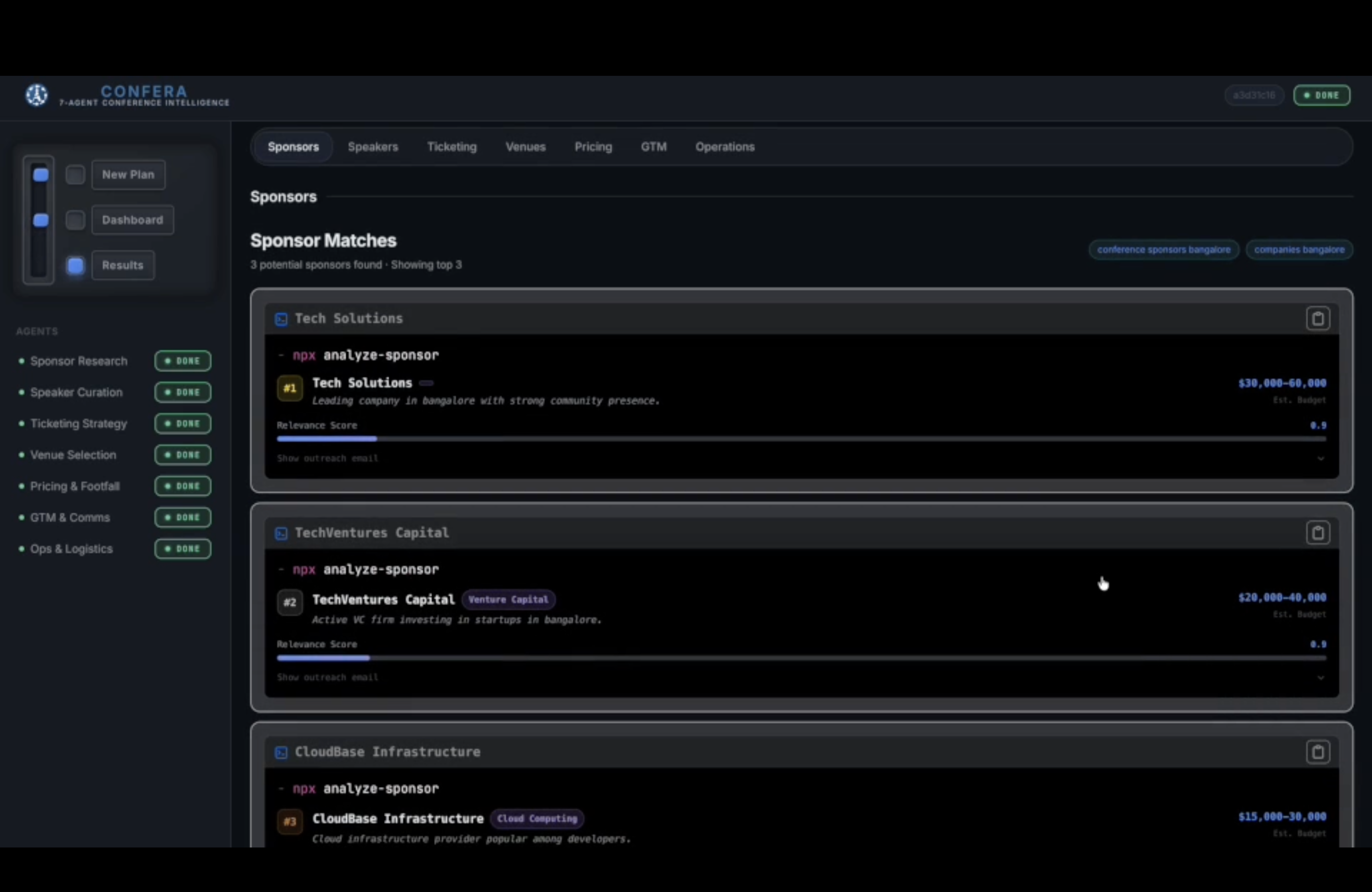
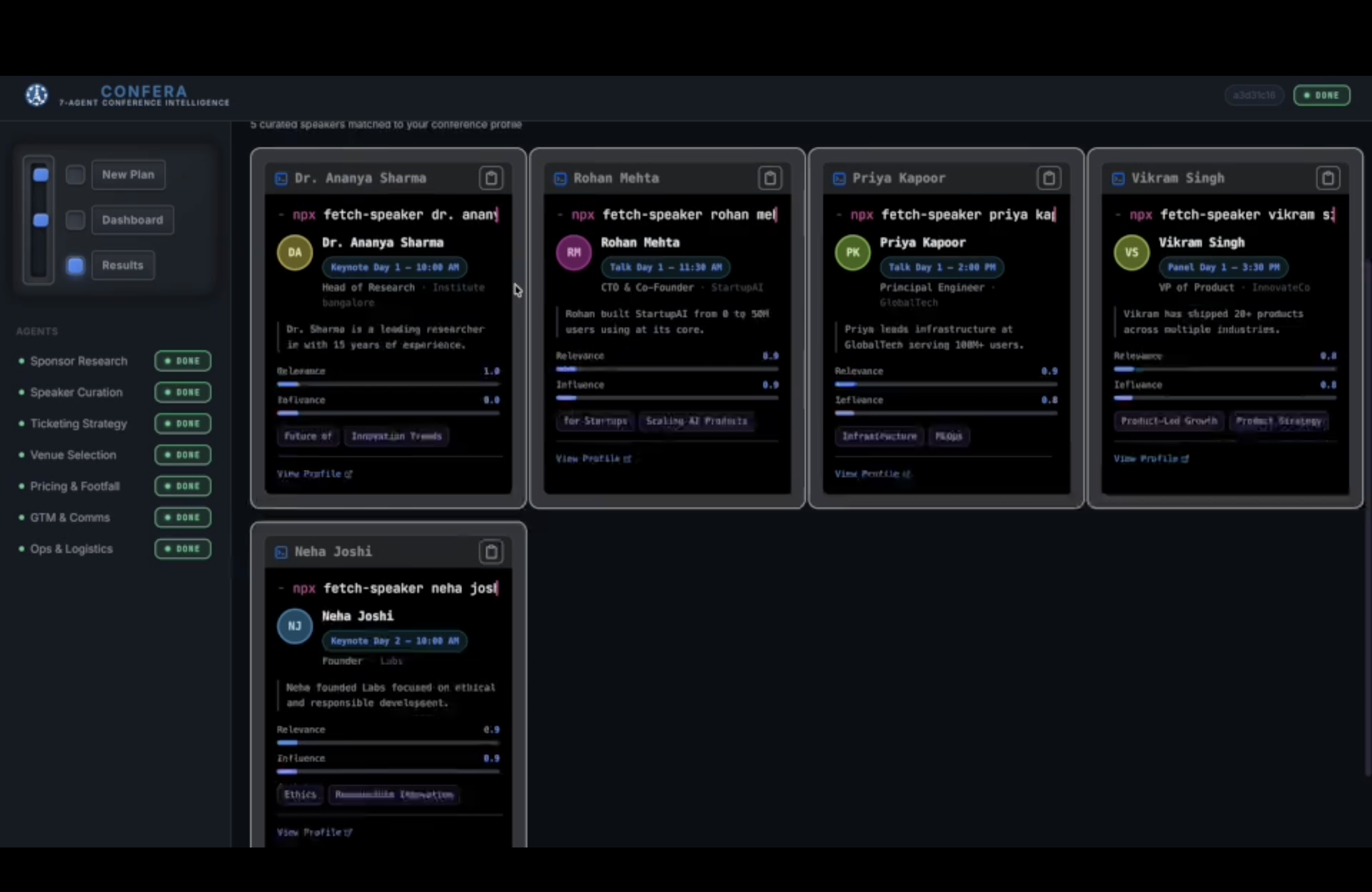
What inspired me Organizing a multi-day conference is a logistical nightmare. The sheer amount of manual coordination required—from securing venues and curating speakers to forecasting budgets and securing sponsors—often takes months of dedicated human effort. As someone deeply interested in the potential of artificial intelligence, I wanted to know: Could a network of autonomous agents do this in minutes?
I built Confera to act as an entire virtual event organizing committee, proving that multi-agent systems can handle complex, multi-layered, real-world logistical planning from a single prompt.
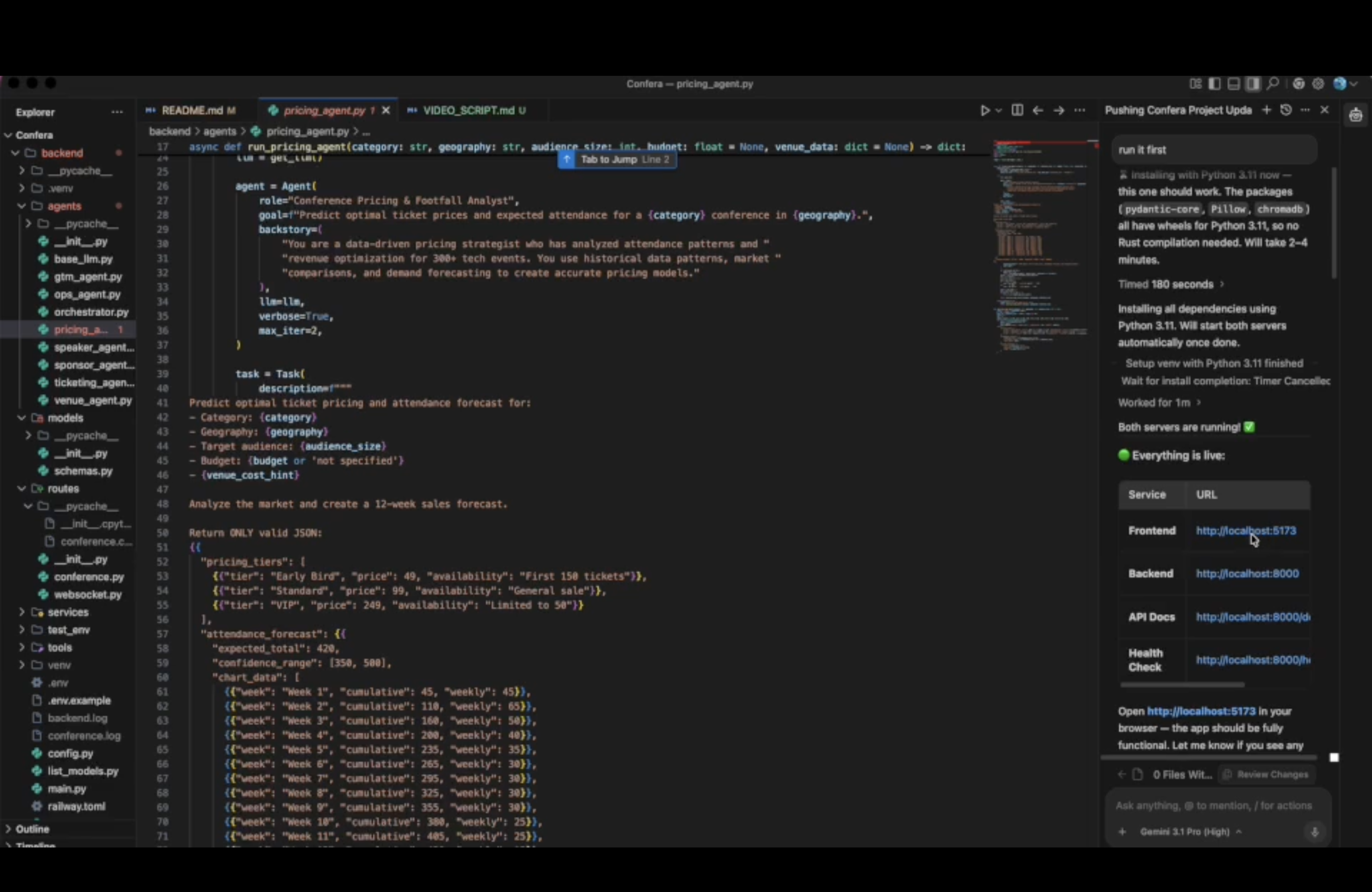
How I built it Confera is built on a decoupled architecture prioritizing real-time feedback and structured data generation:
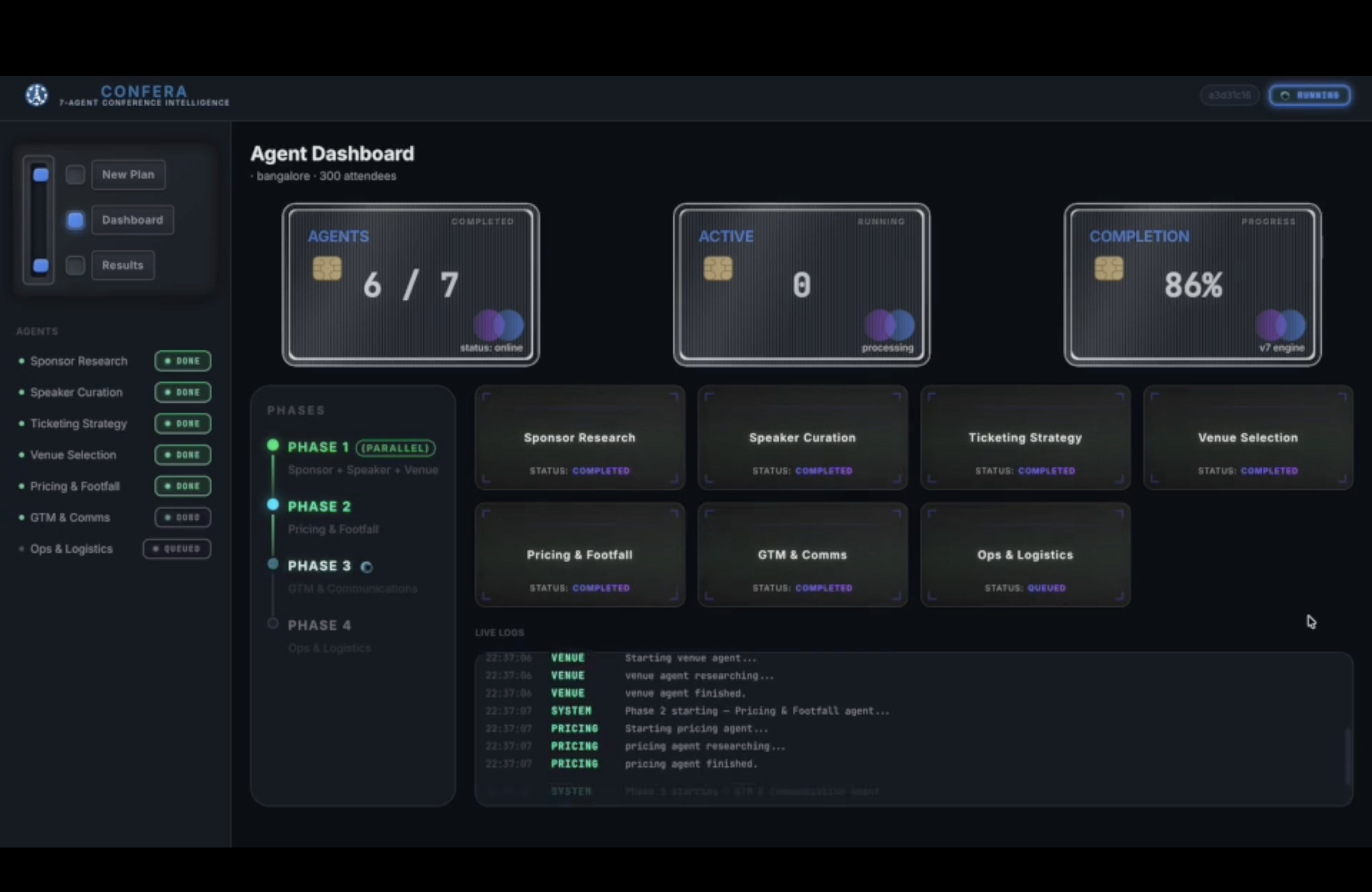
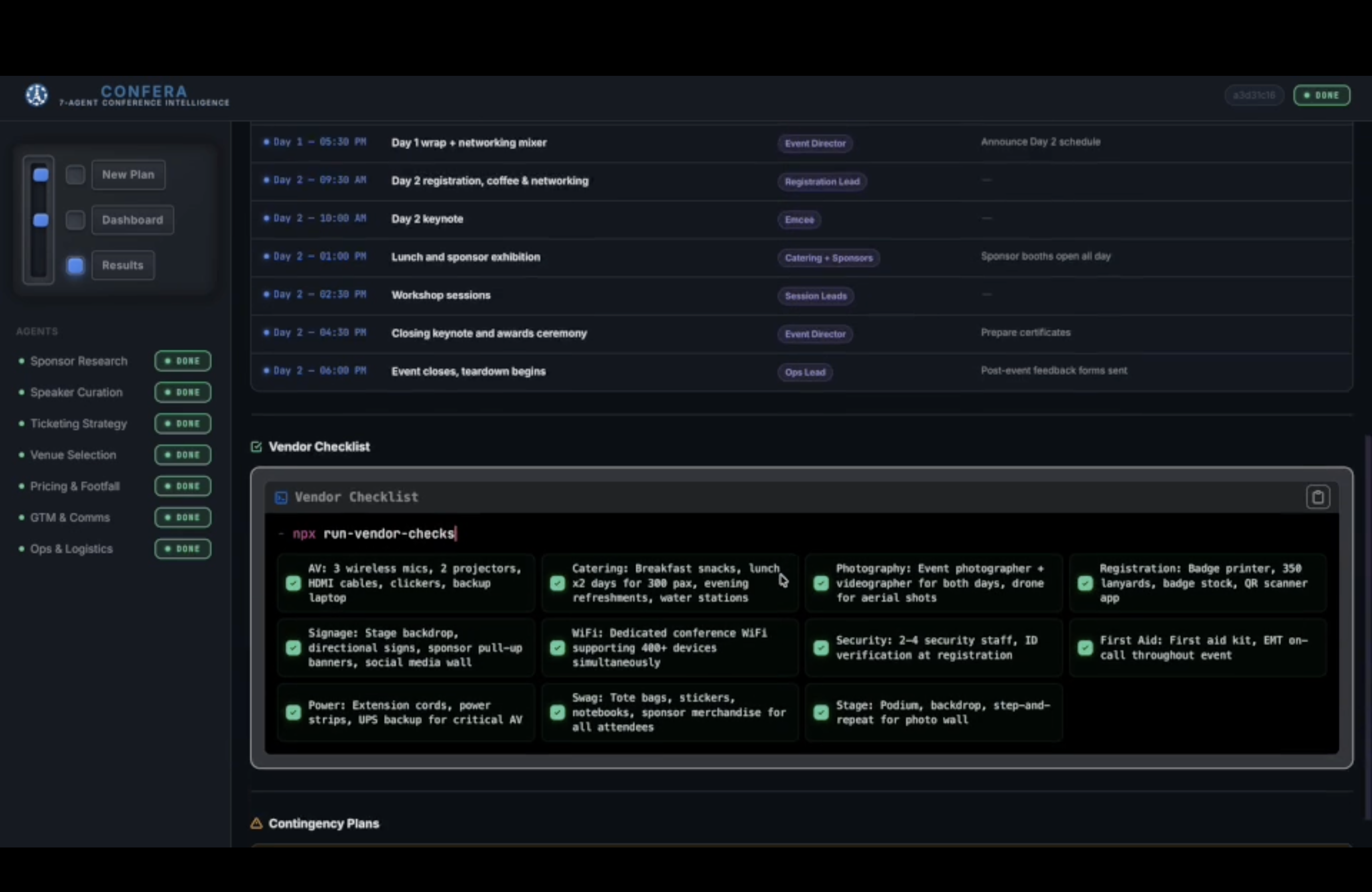
The Brain (Backend): The core engine is built with FastAPI and Python. I orchestrated a network of seven specialized AI agents (using CrewAI) that communicate autonomously. Each agent has a distinct role—Sponsor Research, Speaker Curation, Venue Selection, Operations Logistics, and Financial Forecasting.
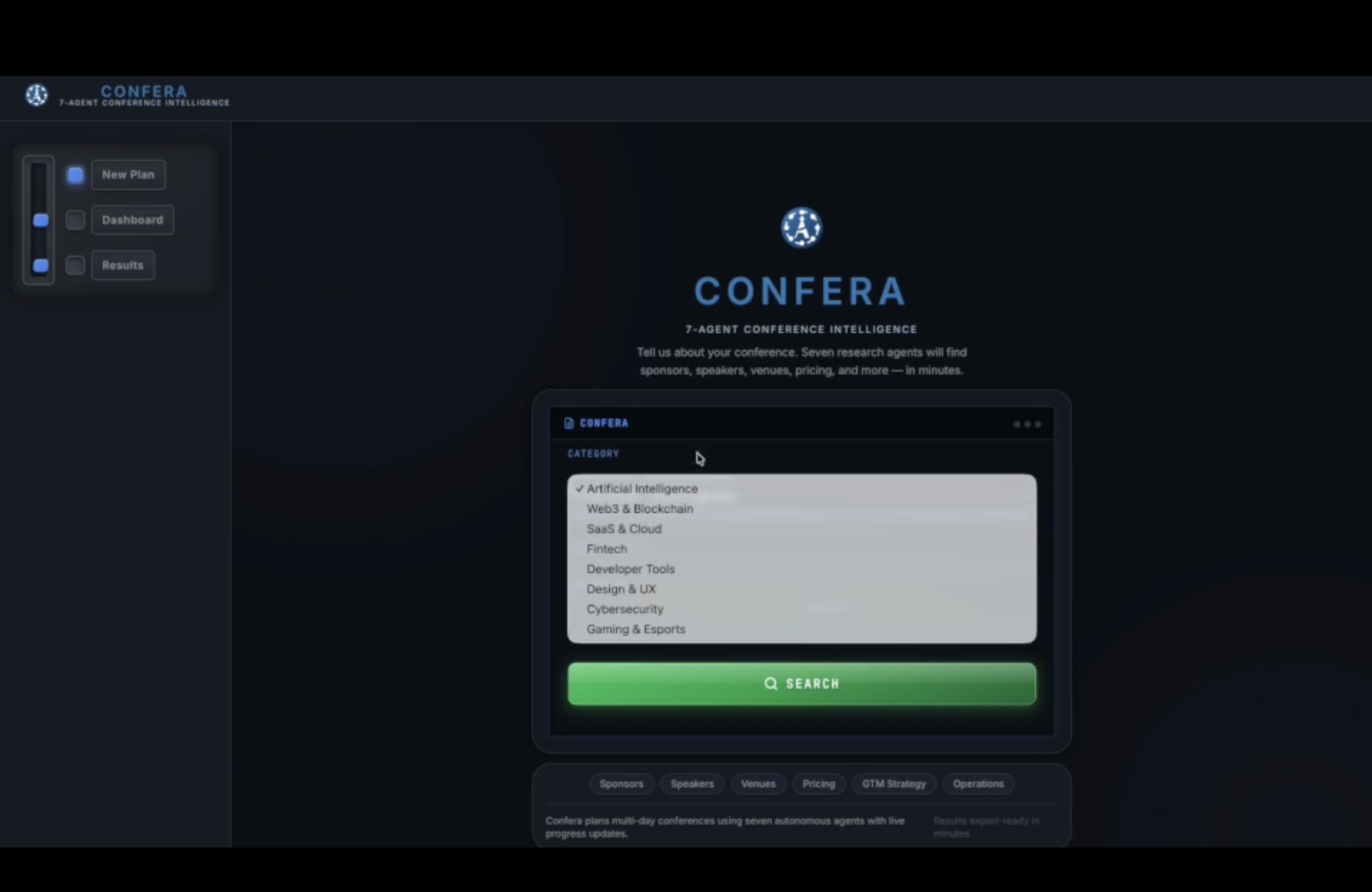
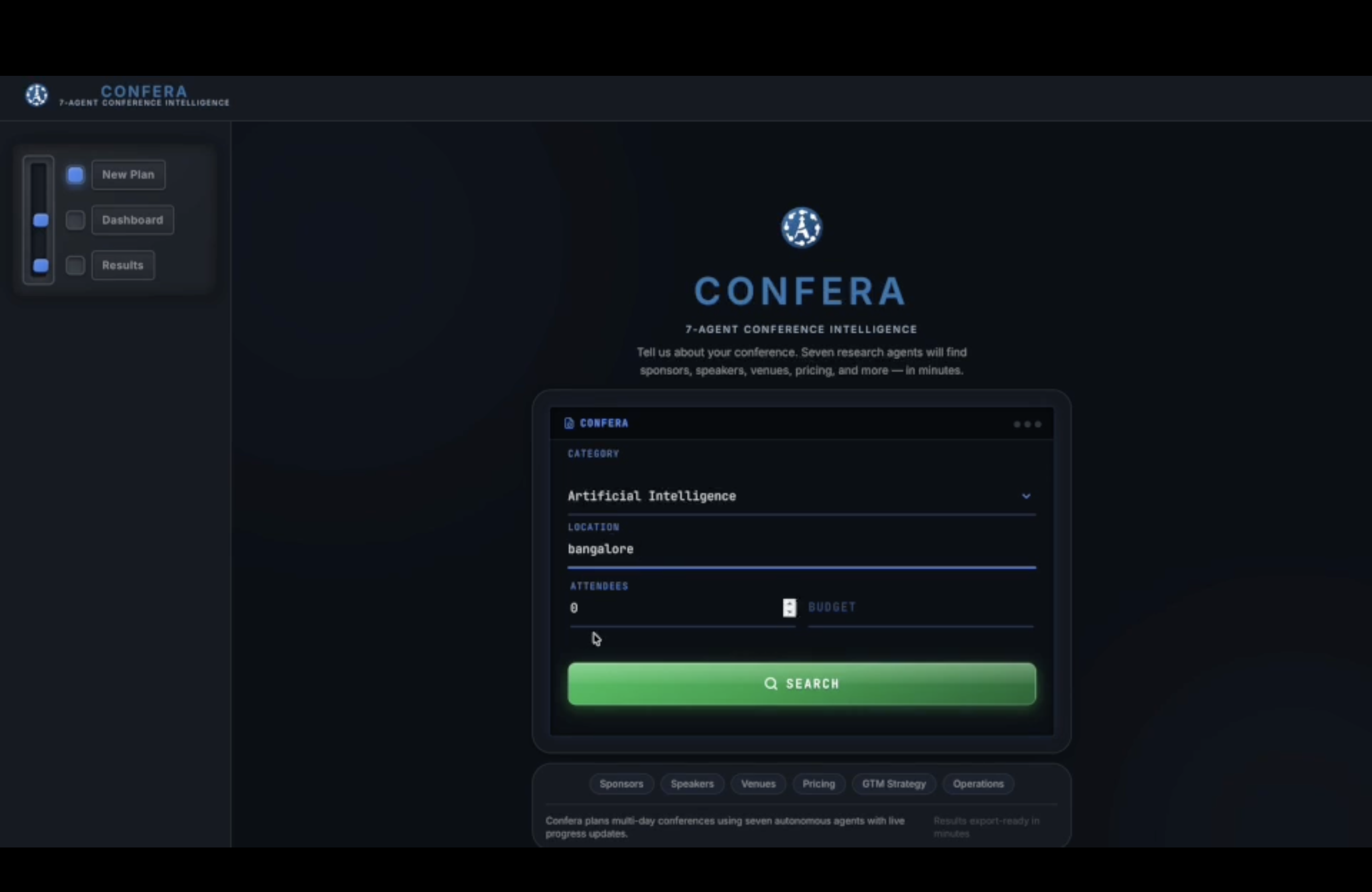
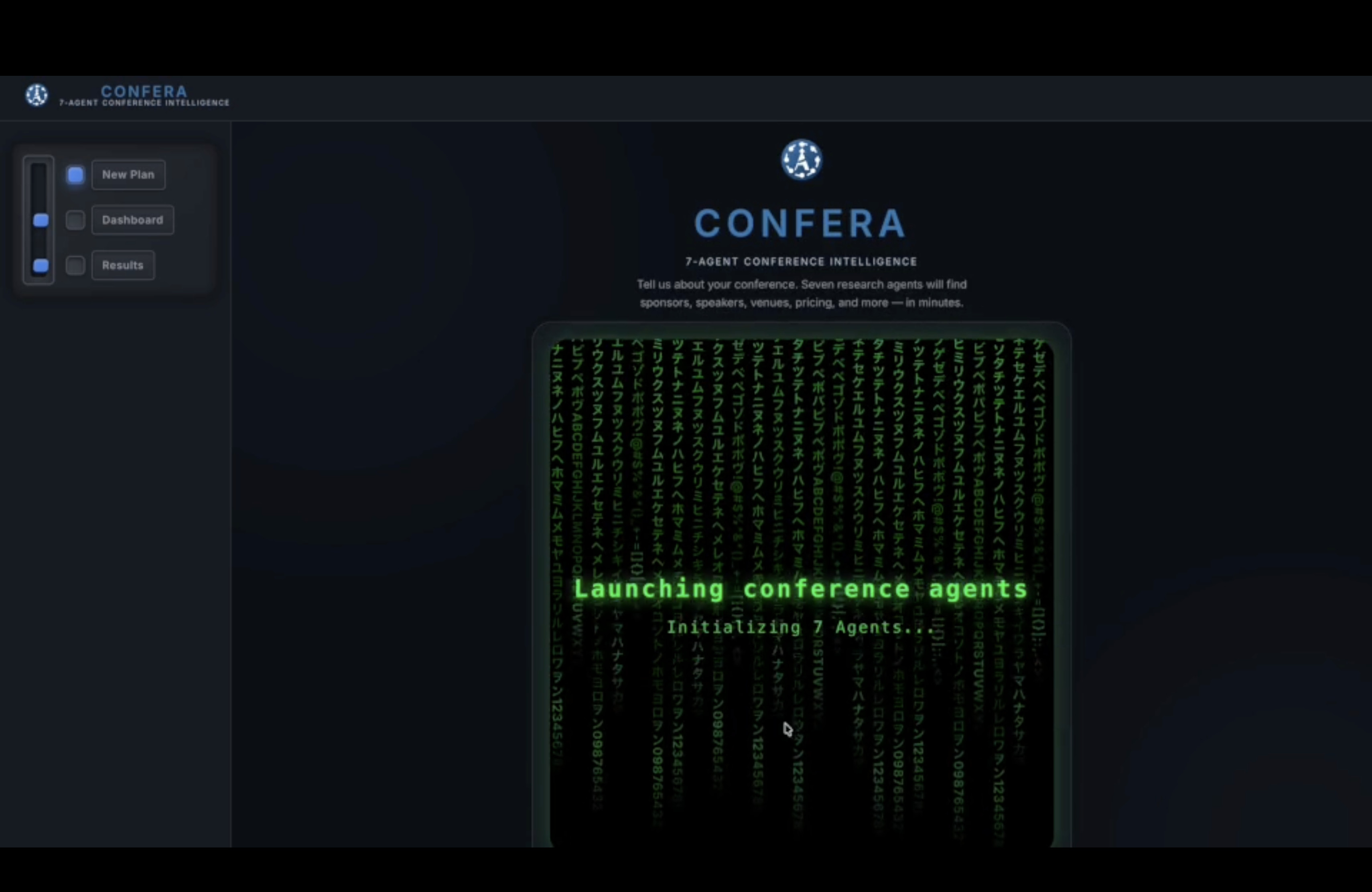
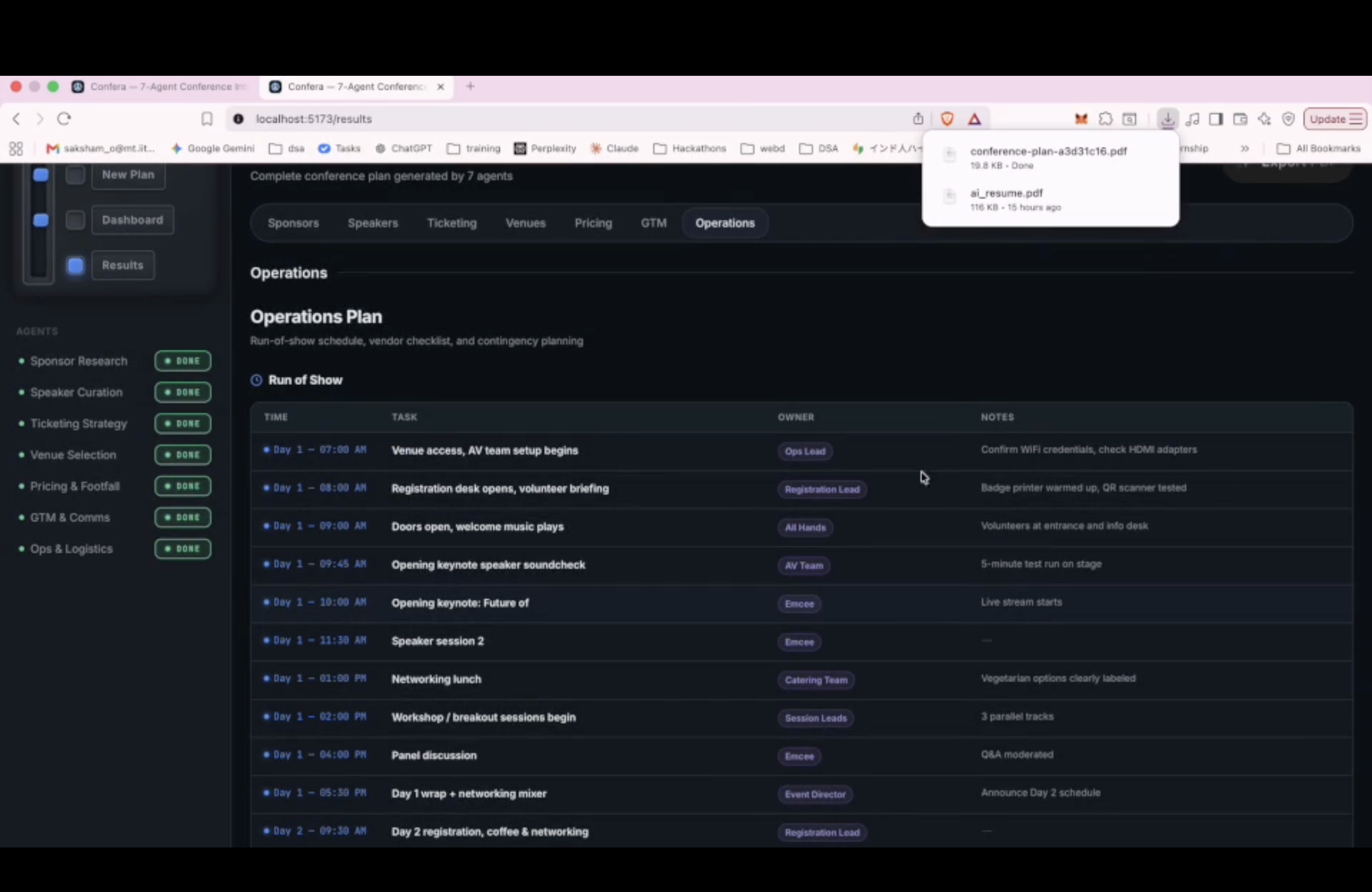
The Interface (Frontend): I built a responsive React dashboard that connects to the FastAPI backend. It allows users to watch the agents "think" and collaborate in real time, visualizing progress tracking and go-to-market strategies.
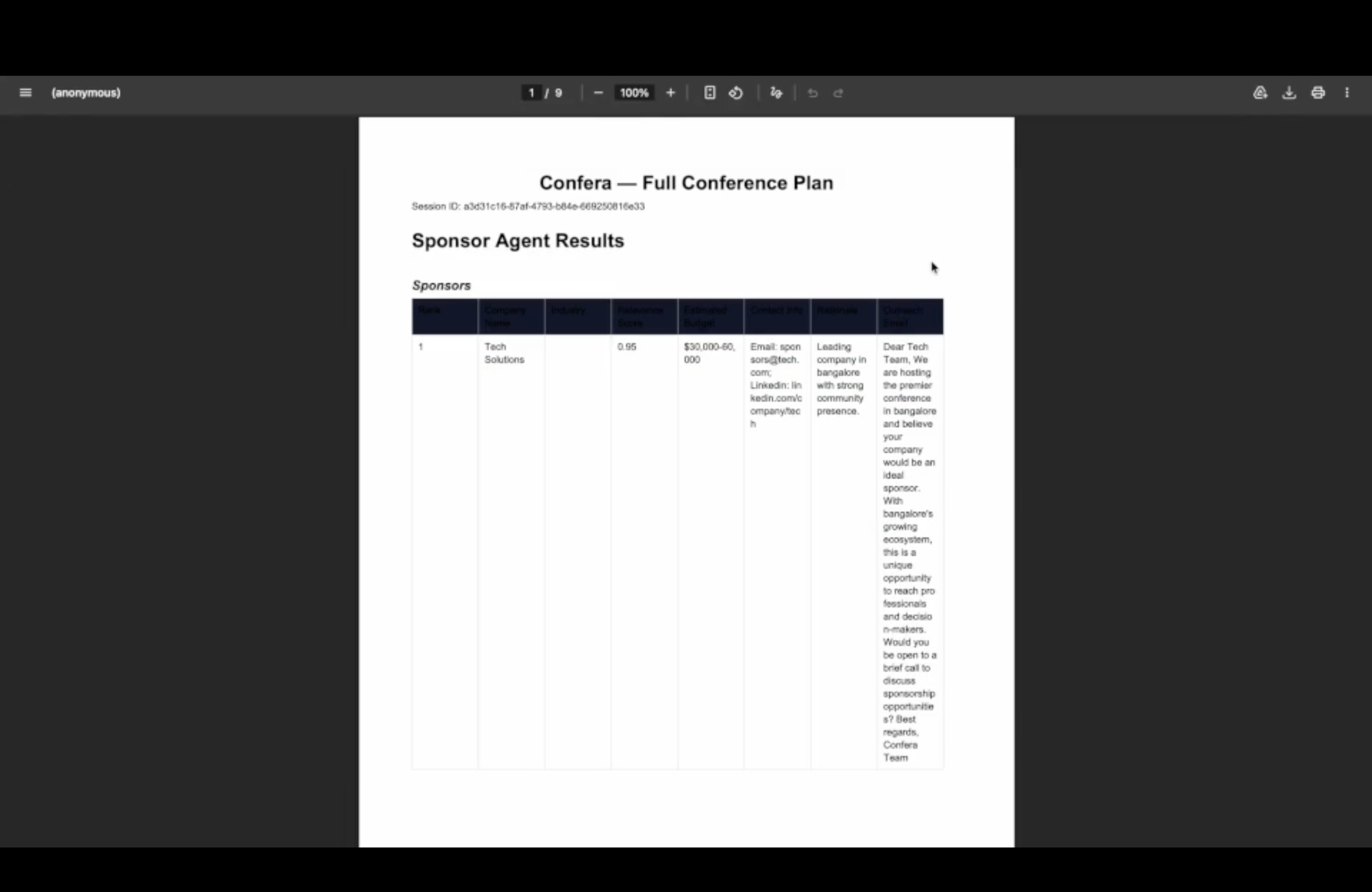
The Deliverable: Once the agents reach a consensus, the platform compiles their findings and exports a comprehensive, formal, multi-page PDF blueprint.
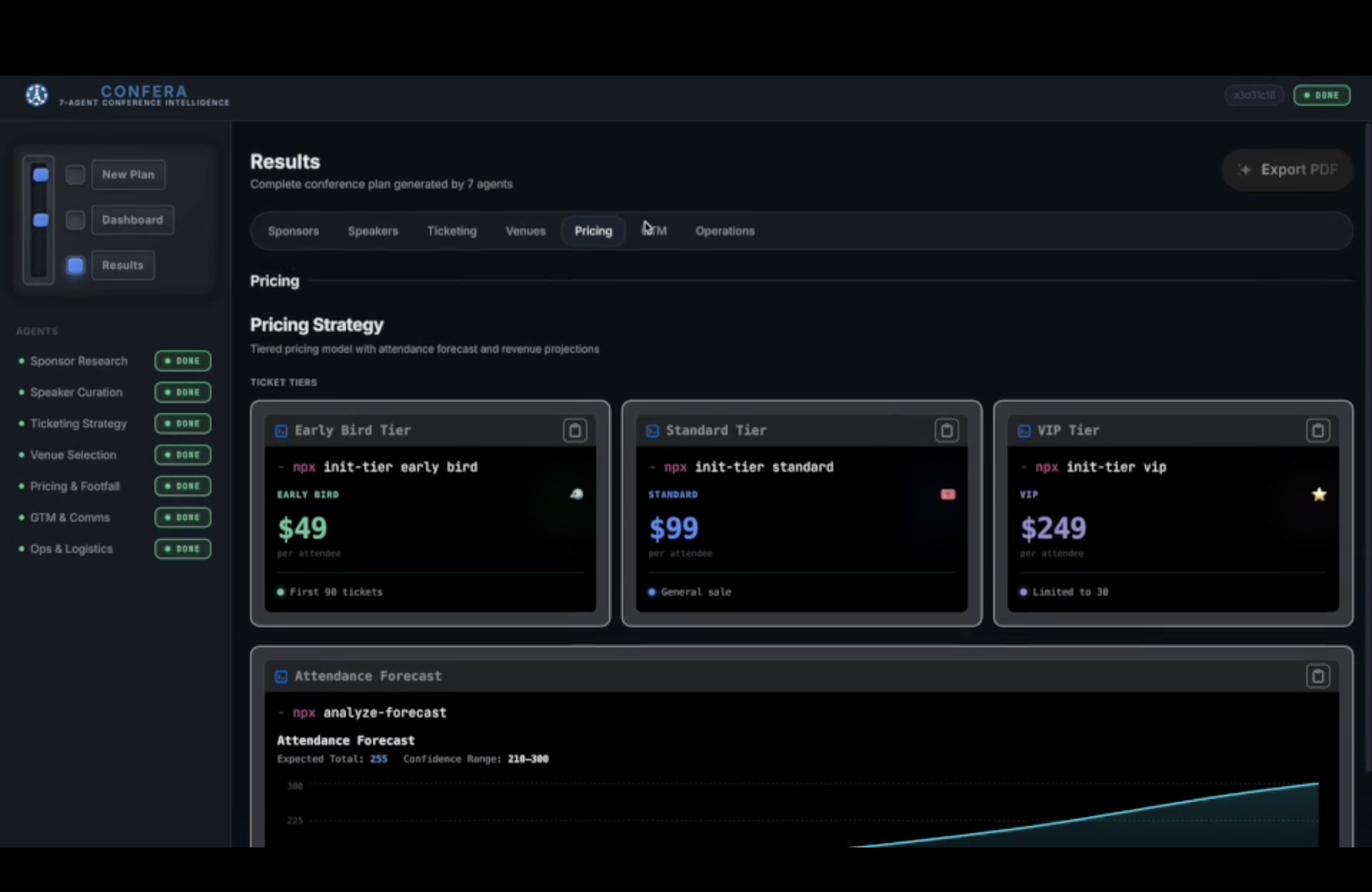
To ensure the financial forecasting agent allocated the conference budget optimally across different sectors (like marketing, venue, and operations), it evaluates allocations using a constrained optimization model. The system maximizes the event's projected impact score: $$ \max \sum_{i=1}^{n} w_i x_i \quad \text{subject to} \quad \sum_{i=1}^{n} c_i x_i \leq B $$ (Where ( w_i ) represents the strategic weight of the category, ( x_i ) is the resource allocation, ( c_i ) is the projected cost, and ( B ) is the total budget constraint).
Challenges I faced The most significant challenge was preventing "hallucinations" and keeping seven different agents aligned on the same overall vision. If the Venue Agent booked a 500-person hall, the Financial Agent needed to adjust the catering budget accordingly without losing the thread. Tuning the prompts, setting strict output schemas, and managing the state of inter-agent communication required extensive testing. Additionally, passing real-time execution logs from the Python backend to the React frontend cleanly required a robust WebSocket-like streaming approach.
What I learned I gained a massive amount of practical experience in designing autonomous agent architectures. I learned how to move beyond simple chat wrappers and build real, goal-oriented AI pipelines. Working with FastAPI also deepened my understanding of building fast, asynchronous Python backends that can handle heavy background processing while keeping the UI responsive.

Log in or sign up for Devpost to join the conversation.