-
-
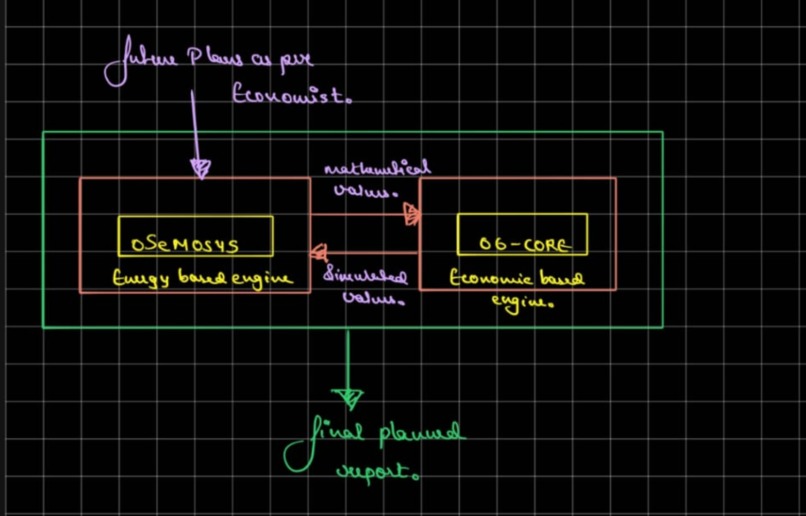
architecture of the model
Conduit was inspired by the high-stakes "policy fog" that surrounds the global energy transition—a trillion-dollar challenge where national energy plans and fiscal budgets are dangerously disconnected. The inspiration came from observing a critical systemic failure: energy planners optimize for the lowest-cost grid while ignoring macroeconomic stability, and finance ministries optimize for debt-to-GDP ratios while ignoring the physical laws of power. This creates a "blind" decision-making environment where a "least-cost" energy transition could inadvertently trigger a national debt crisis or a generational wealth collapse.
The problem lies in the semantic and mathematical gap between these two worlds. Physical energy models are precise about megawatts but silent on wages and inflation, while macroeconomic models are experts in human lifecycle savings but treat the power grid as an abstract number. Conduit is the proposed solution—a sophisticated orchestration engine designed to bridge this divide through a high-precision, iterative feedback loop. By establishing a "mathematical handshake" between infrastructure optimization and lifecycle economics, Conduit forces these siloed systems to negotiate until they reach a joint numerical equilibrium. It replaces fragmented guessing with a unified strategic compass, enabling leaders to simulate the long-term impact of massive shifts—such as nuclear deployment or carbon pricing—on the economic prosperity of both today’s workers and future generations.
Built With
- api
- claude
- python
- rest
- transformers

Log in or sign up for Devpost to join the conversation.