Inspiration
As a product team, we grew frustrated with slow, resource-heavy qualitative research—endless hours crafting guides, chasing responses, and manually coding themes. We wanted to make deep user insights accessible to every PM, researcher, and founder, regardless of team size or budget. That’s where UserResearch AI was born.
What it does
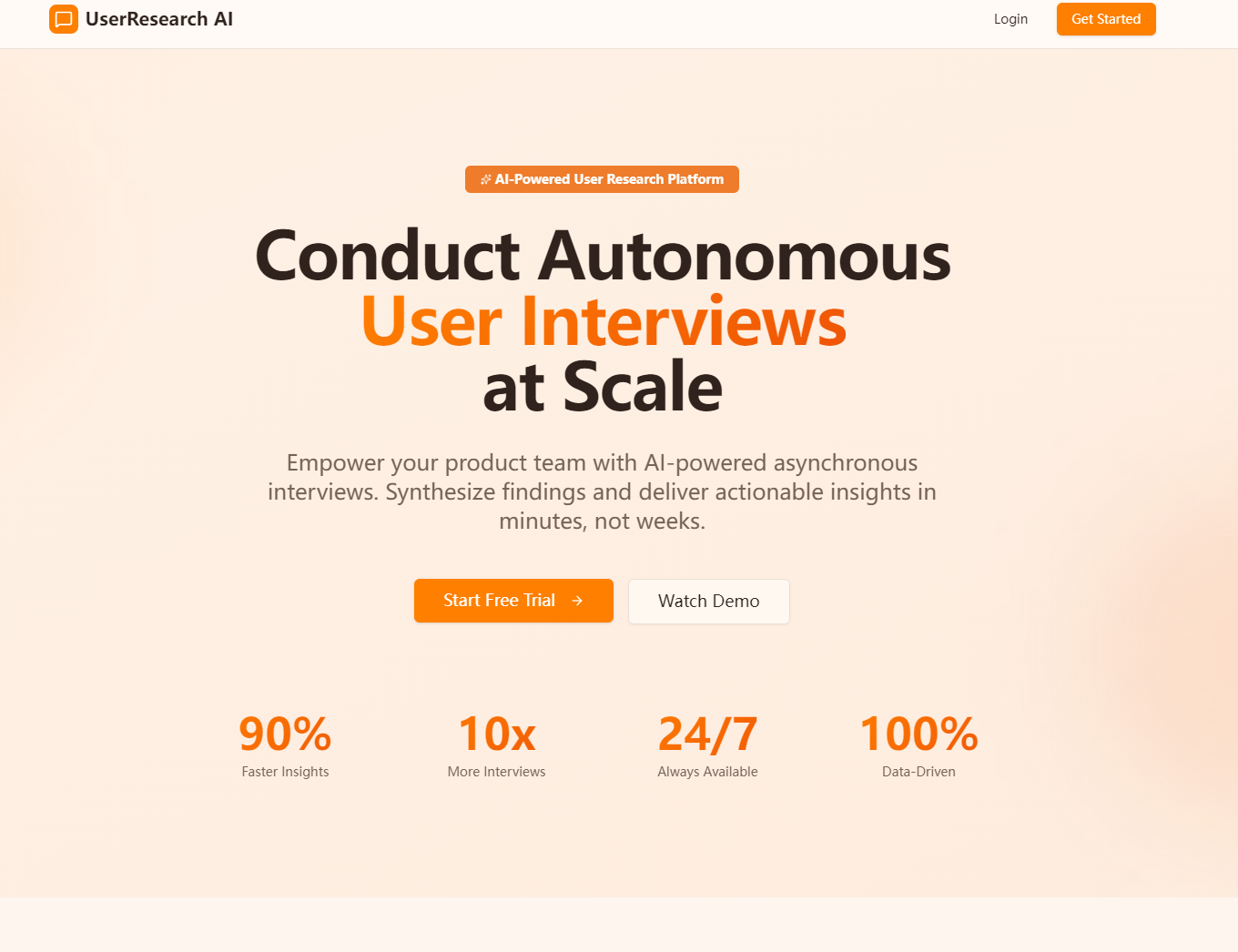
UserResearch AI automates end-to-end qualitative user research: it generates AI-powered interview guides, distributes shareable links, conducts asynchronous text interviews with contextual follow-ups, analyzes responses to identify key themes, and delivers prioritized product recommendations with user quote evidence—all in one platform.
How we built it
We started by mapping core user workflows (from project creation to report export) and defining AI logic for question generation/theming. We built the frontend with React for intuitive UX, backend with Node.js/Express, used PostgreSQL for data storage, and integrated OpenAI’s API for natural language processing. AWS hosted the platform, with Firebase handling authentication.
Challenges we ran into
The biggest hurdle was fine-tuning the AI to ask natural follow-up questions—early versions felt robotic. We also struggled with theme consistency (AI would split similar responses into separate themes) and had to build manual merge/split tools. Scaling interview data analysis without lag was another battle—we optimized with Pandas for data processing.
Accomplishments that we're proud of
We created a tool that cuts research timelines from weeks to days: AI generates 8-15 tailored questions in 30 seconds, and analysis triggers automatically with just 5 completed interviews. Users love the actionable recommendations (tied directly to user quotes) and seamless report export—PDF, PPT, CSV options make sharing insights easy.
What we learned
We learned that balancing AI automation with human control is key—users want AI to do the heavy lifting but still need to tweak themes/questions. We also realized how critical real-time progress tracking is for participants, so we added auto-save and progress indicators to boost completion rates (now 75%+).
What's next for this project
Next, we’ll add multi-language support to reach global users, integrate speech-to-text for voice-based interviews, and build third-party tool connections (Slack/Jira) to streamline insight handoff. We’re also testing predictive insights to help teams anticipate user needs before they’re explicitly stated.
Built With
- amazon-web-services
- chart.js
- openai-api
- postgresql

Log in or sign up for Devpost to join the conversation.