-
-
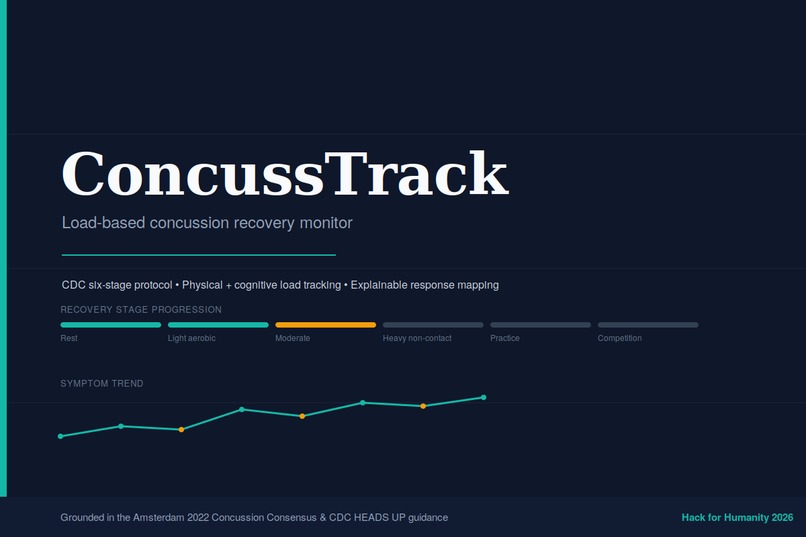
A clinically-staged recovery companion designed to help users track symptoms, activity load, and recovery patterns.
-
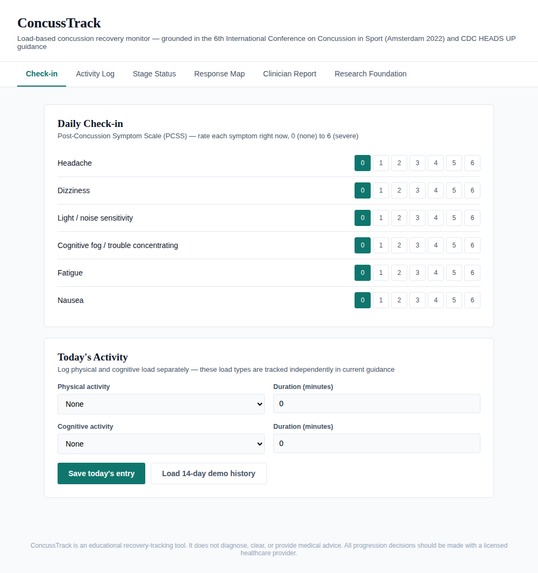
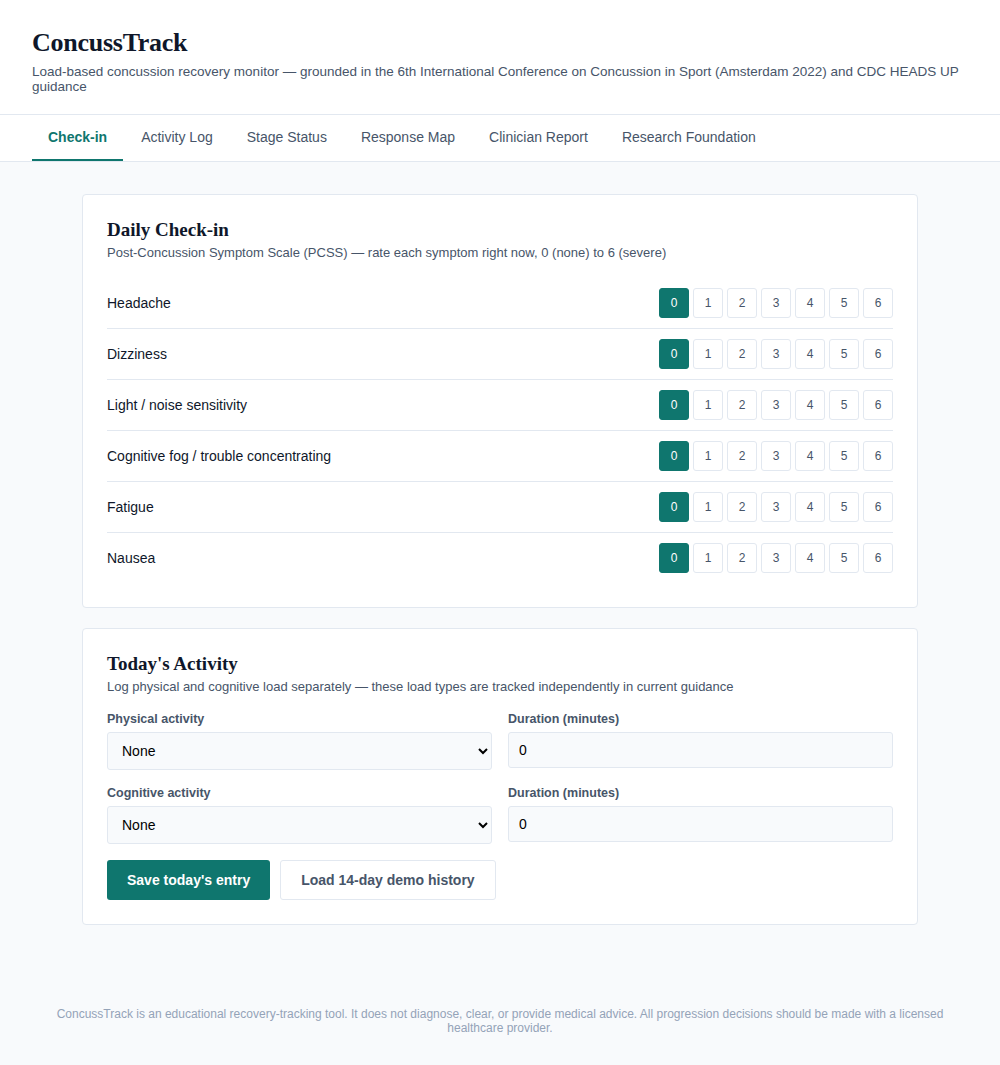
Daily symptom check-in using six PCSS symptoms to create a consistent snapshot of the user’s recovery.
-
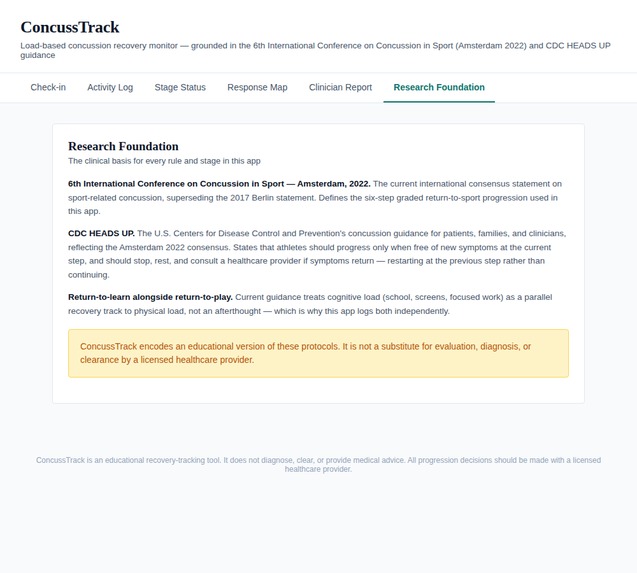
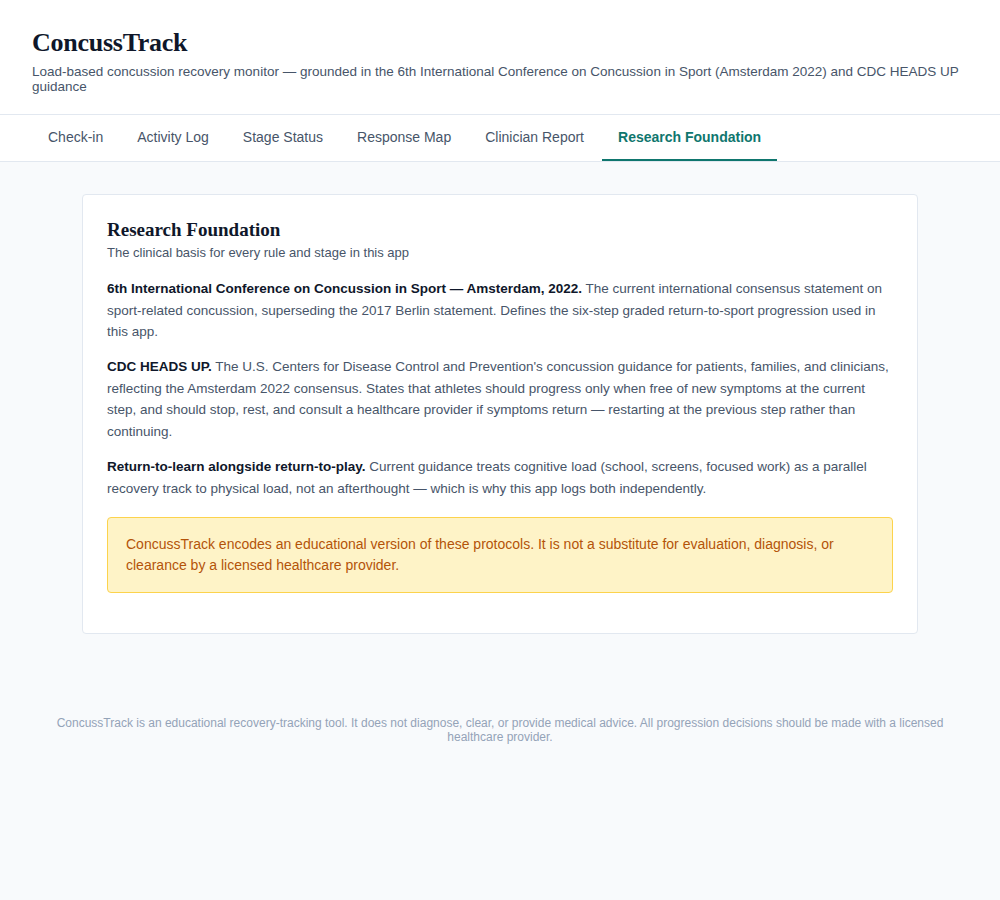
Built with an evidence-informed foundation, referencing the Amsterdam 2022 concussion consensus and CDC HEADS UP guidance.
-
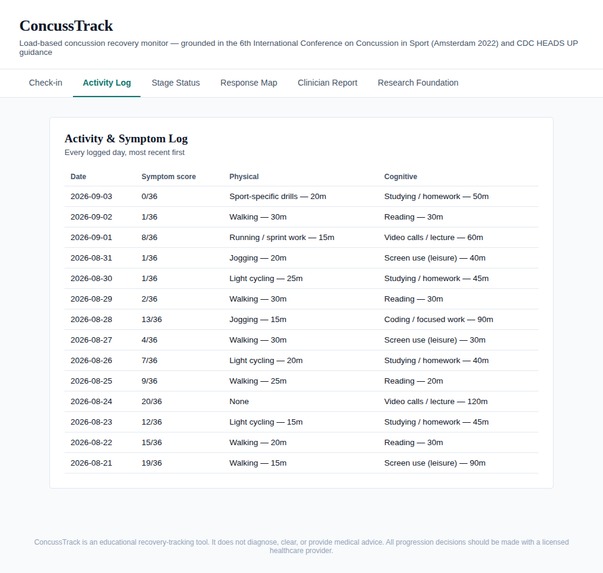
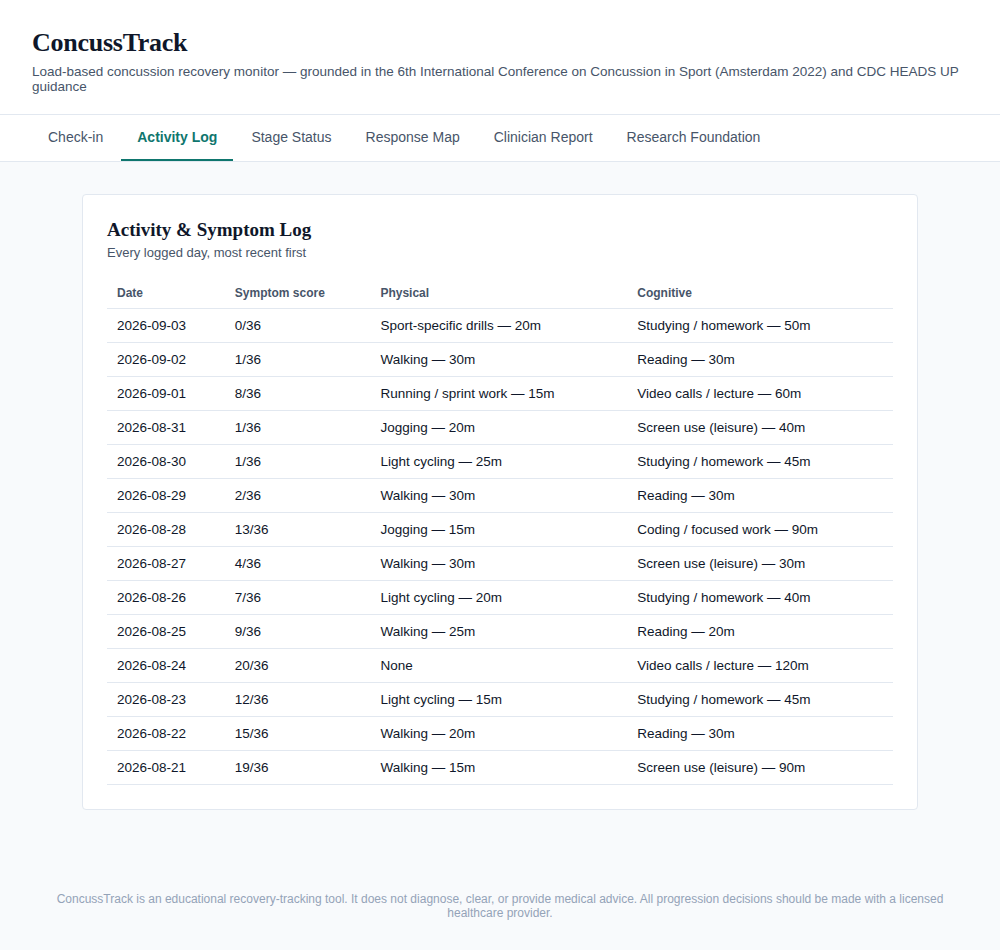
Tracks physical and cognitive activities alongside duration to capture the load experienced during recovery.
-
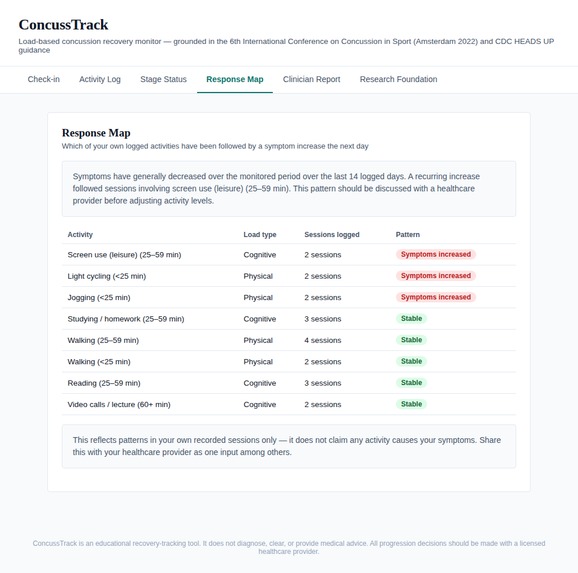
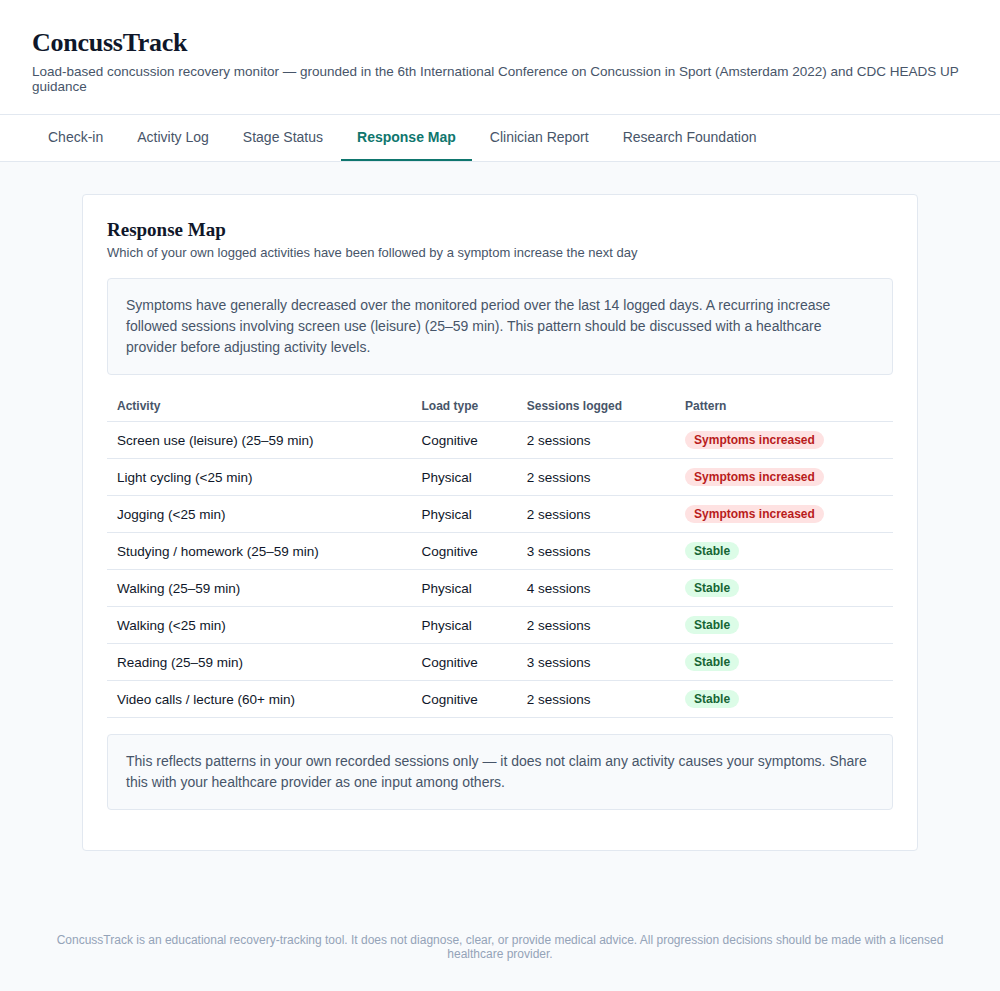
Identifies repeated next-day symptom patterns following physical or cognitive activity to make personal recovery data more actionable.
-
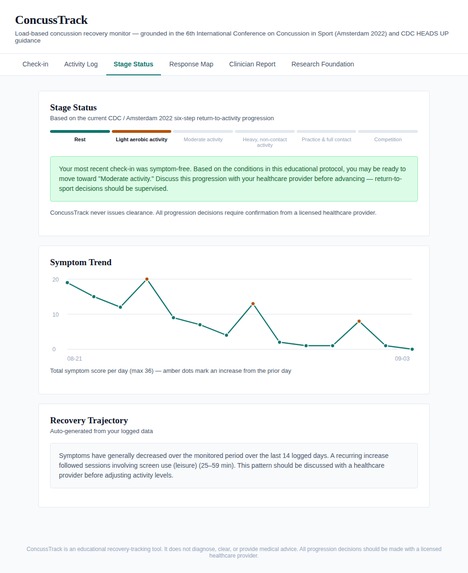
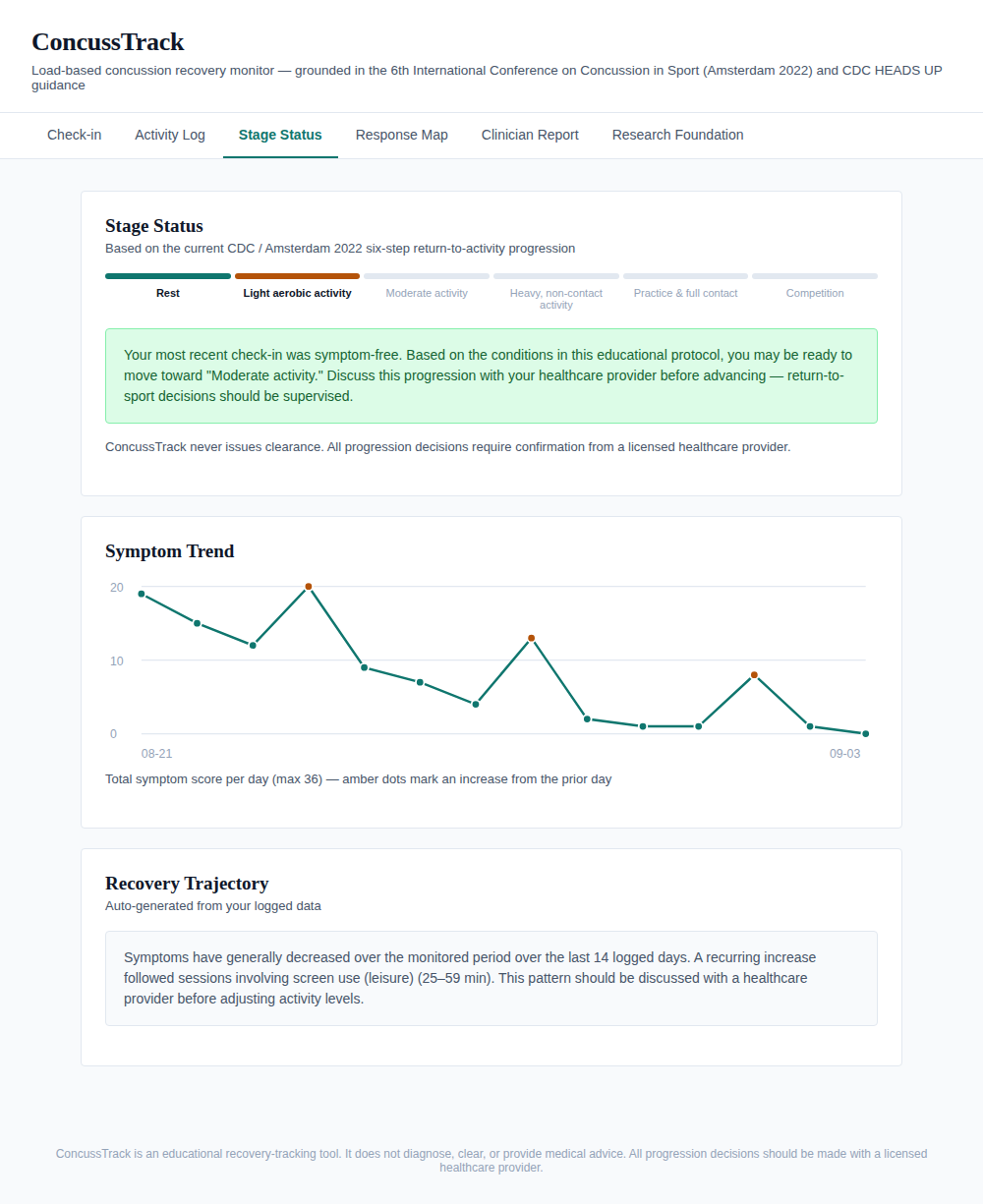
Maps the user’s recovery progress to a structured six-stage return-to-activity framework while keeping progression under clinical guidance.
-
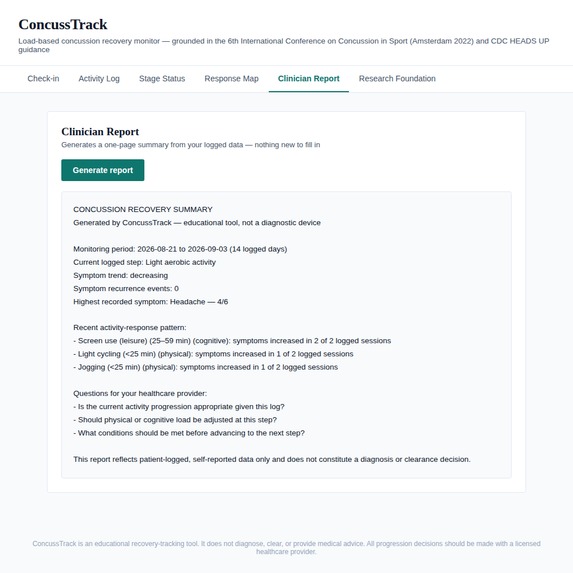
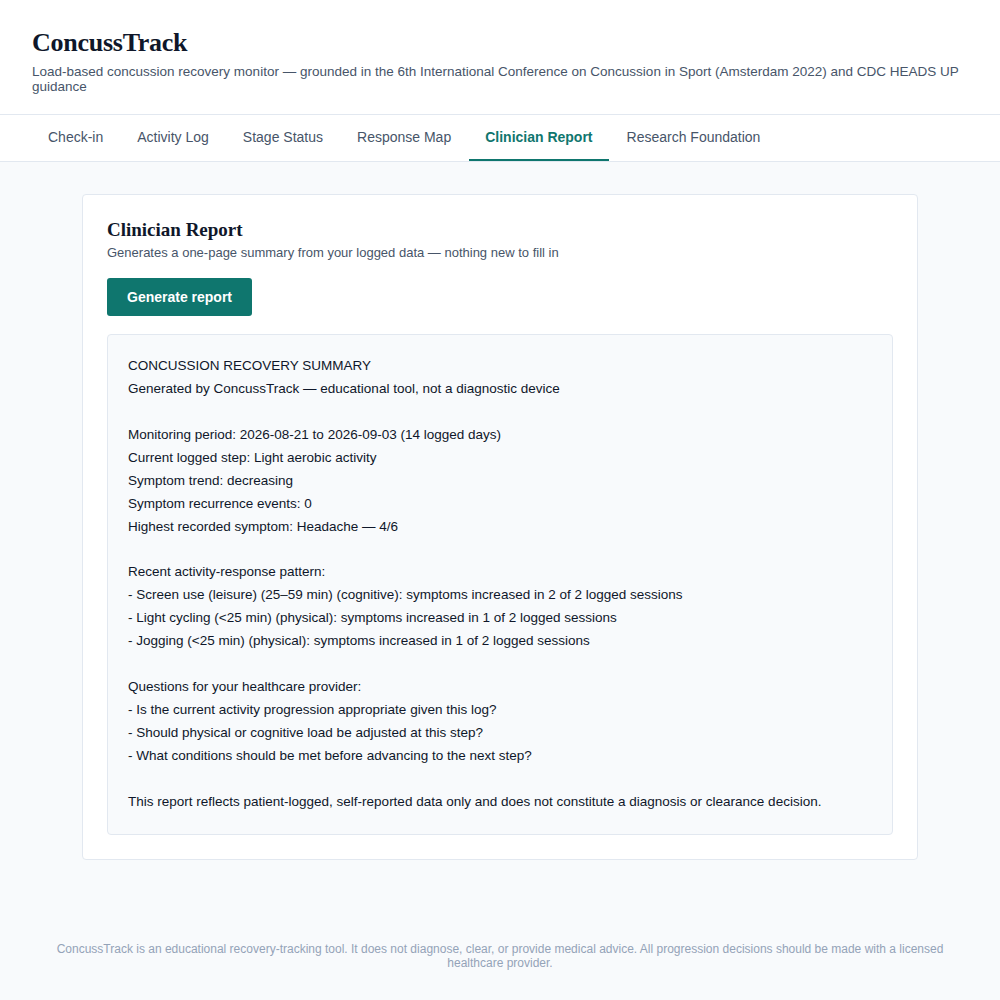
Transforms logged symptoms and activity history into a concise report that can support conversations with healthcare providers.
Inspiration
Most concussion recovery apps we looked at are just symptom diaries log how you feel, see a number, repeat. But that never answered the question that actually matters during recovery: what specifically made me worse?
Current medical guidance (the Amsterdam 2022 concussion consensus, and CDC HEADS UP) treats recovery as two parallel tracks physical load and cognitive load that both need to be managed carefully. Someone scrolling their phone for two hours is loading their brain just as much as someone going for a run loads their body. Almost no consumer tool tracks these separately, or connects a specific logged activity back to a specific symptom response. That gap is what we set out to build for.
What it does
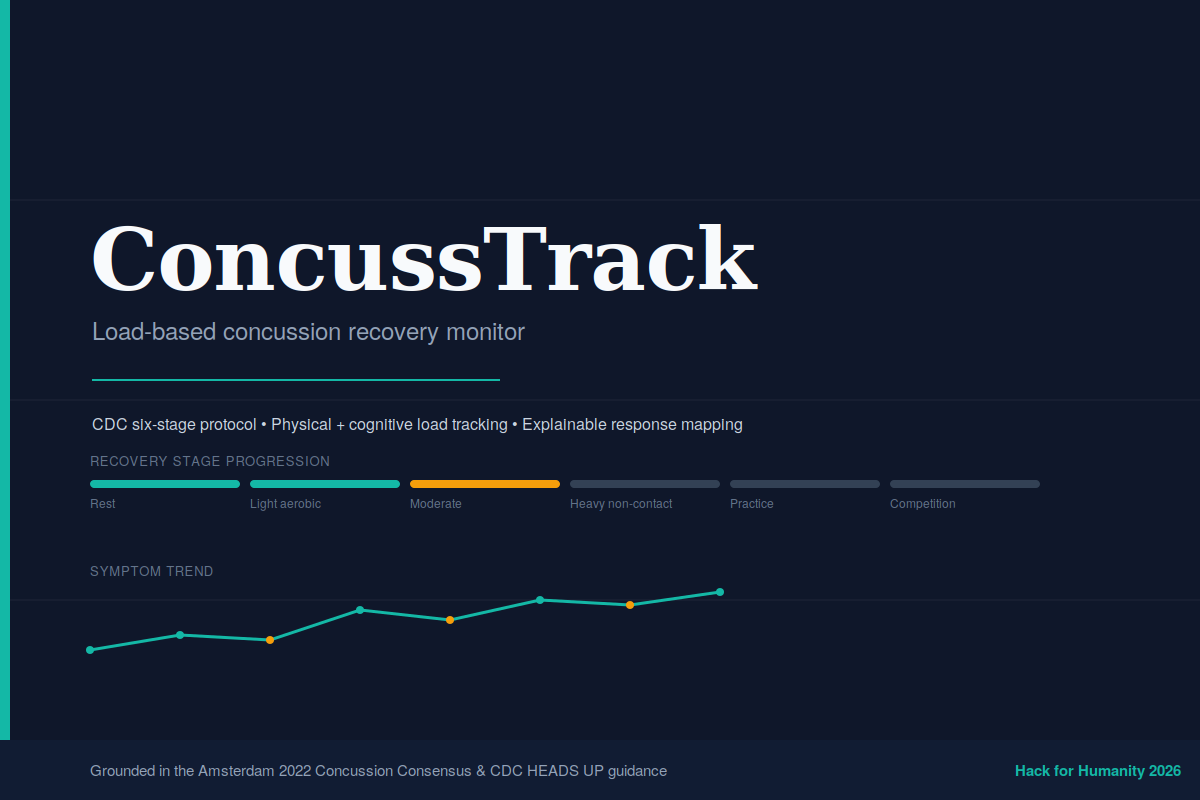
ConcussTrack is a load-based concussion recovery monitor:
- Daily Check-in — logs symptoms using the real Post-Concussion Symptom Scale (PCSS)
- Activity Log — logs physical and cognitive activity separately, by type and duration
- Stage Status — tracks progress through the actual CDC six-step return-to-activity protocol, paired with a symptom trend chart and an auto-generated recovery trajectory summary
- Response Map — flags which of the user's own logged activities have repeatedly preceded a symptom increase, phrased strictly as a correlation in their own data — never as a causal claim
- Clinician Report — a one-click, print-ready summary formatted as open questions for a provider visit, not conclusions
- Research Foundation — the clinical sources every rule in the app is built on, visible in-app
Critically, the app never tells a user they're "cleared" to advance. Every stage message defers the final decision to a licensed healthcare provider.
How we built it
Vanilla HTML/CSS/JS, no framework, no backend all data stays in the browser's local storage. We deliberately kept the "AI" component (the Response Pattern Matcher) fully transparent: it's a rule that checks whether a logged activity preceded a next-day symptom increase, not a black-box model. For a health-adjacent tool, we felt an interpretable rule a user (or their doctor) can verify by re-reading their own log is more trustworthy than a prediction no one can inspect.
We wrote a standalone ETHICS.md documenting every safety decision the language choices, the data handling, the correlation-not-causation framing and where each is enforced in the code, rather than treating safety as an afterthought bullet point.
Challenges we ran into
- Getting the return-to-activity language right was harder than the code. Early drafts said things like "cleared to advance," which we scrapped once we dug into current CDC guidance real protocols require clinician supervision, and an app implying clearance could encourage premature return to activity.
- Deciding how "smart" to make the Response Map. We could have oversold it as predictive AI; instead we scoped it to what it honestly is, a transparent pattern check and leaned into that as a strength for the Responsible AI category rather than downplaying it.
- Time. Going from idea to a working, safety-reviewed, fully documented app in under 48 hours meant cutting scope aggressively and protecting the demo over adding more features in the final hours.
What we learned
That "more advanced" isn't always "better" for a tool like this, a transparent, explainable feature that's honest about its limits is more defensible, and arguably more responsible, than a flashier black-box version would have been.
Built With
- css3
- github
- html5
- javascript
- localstorage
- svg


Log in or sign up for Devpost to join the conversation.