-
-
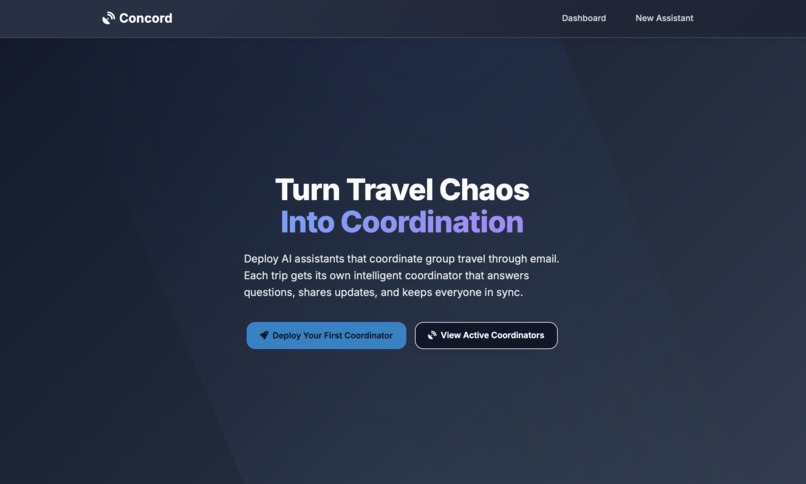
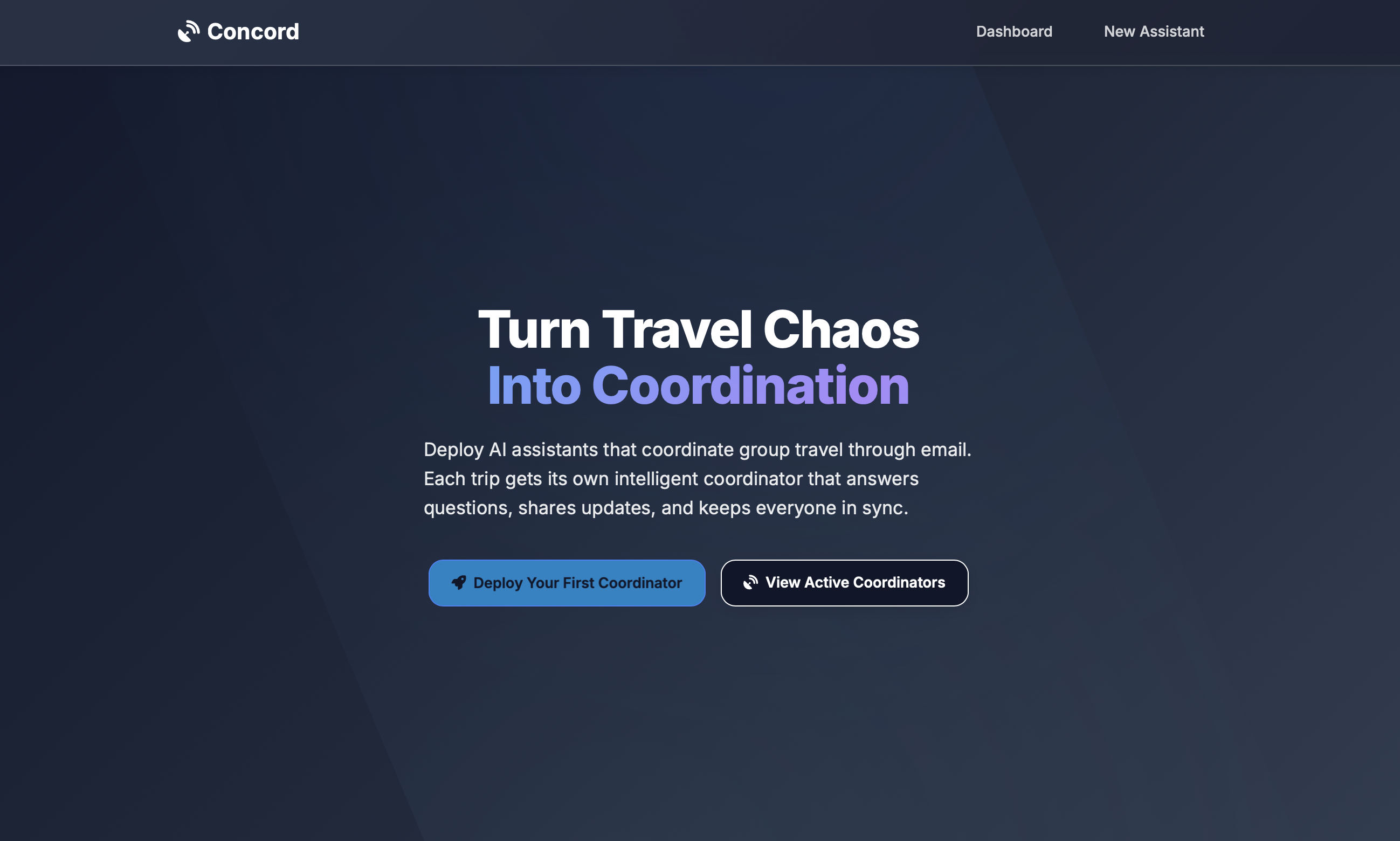
Landing Page
-
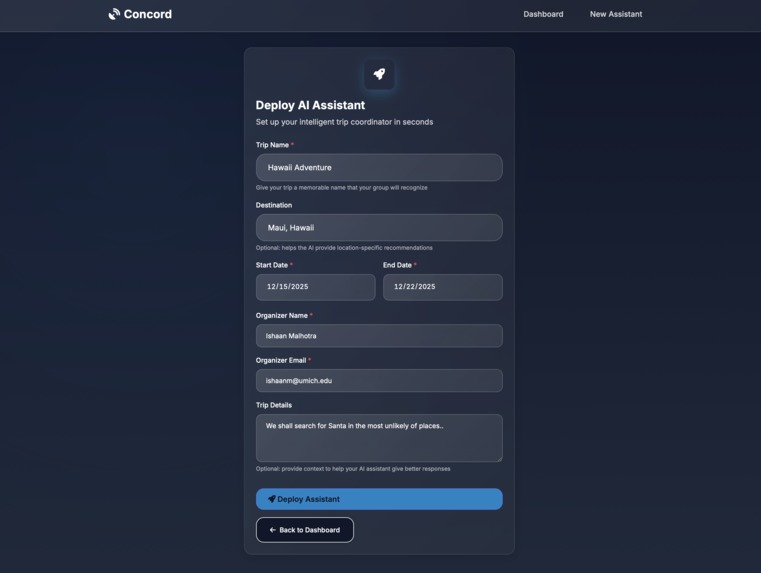
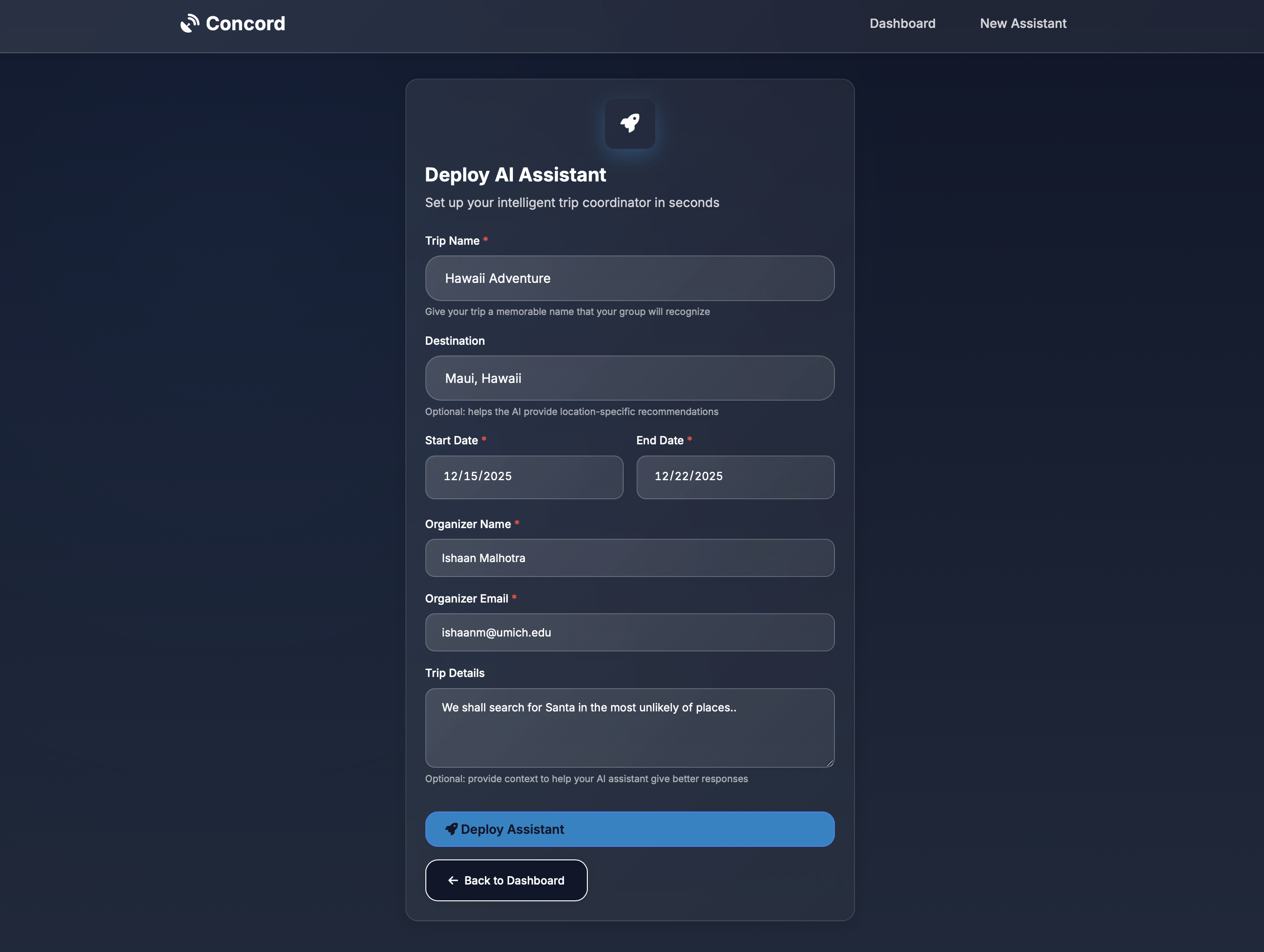
Event Creation Page
-
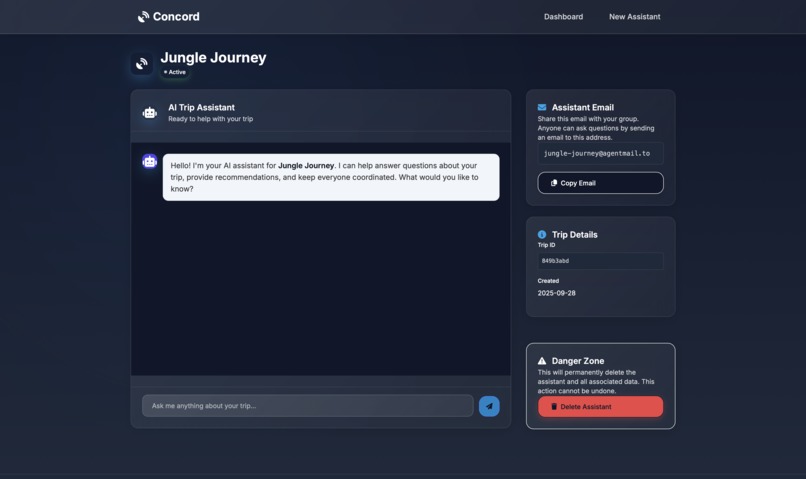
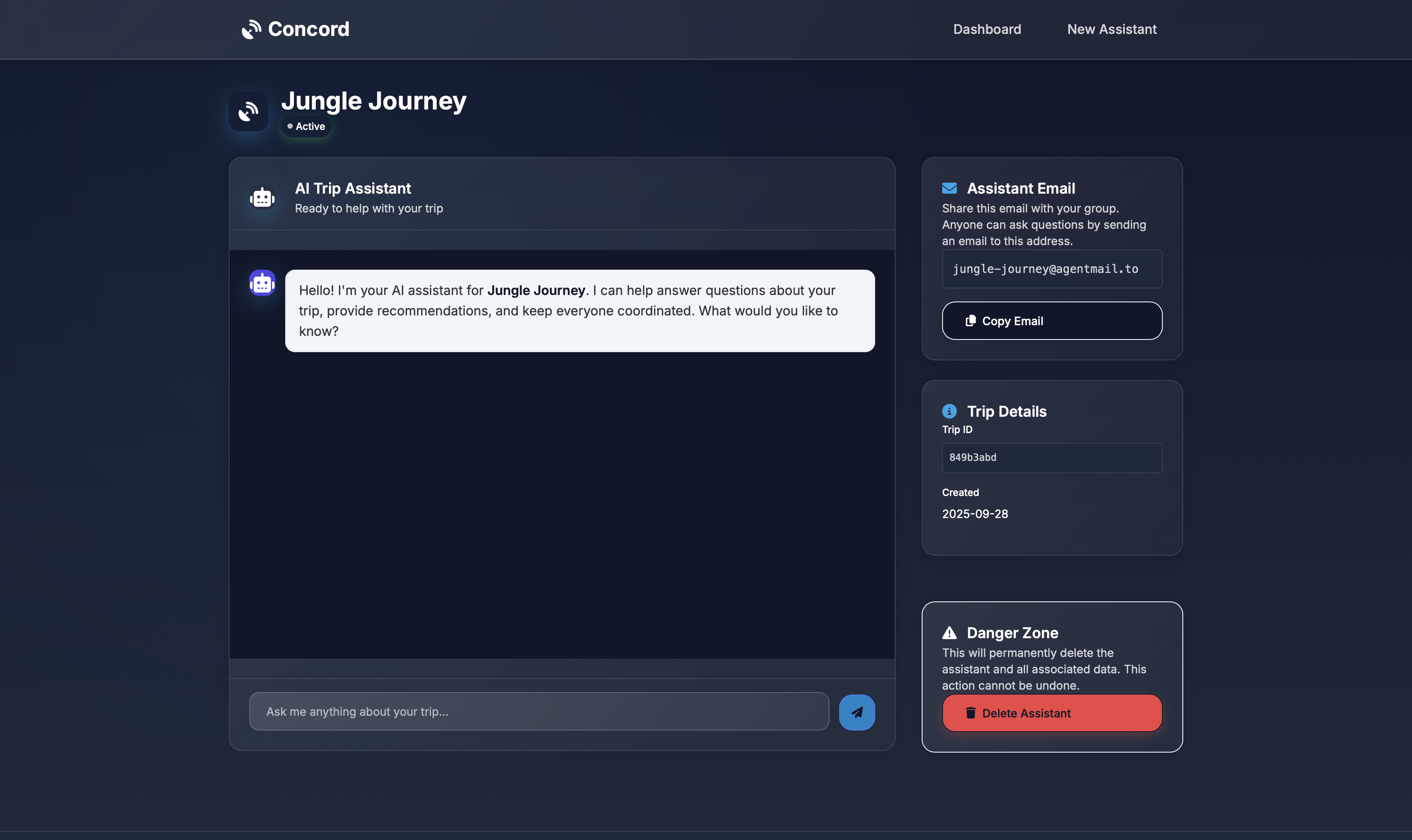
Detail Page
Inspiration
As a group of friends we enjoy going on trips together, but the burden of coordinating times and dealing with dropouts makes planning a quality excursion a daunting idea at the best of times. We looked for a service which allowed us to communicate with a digital planner to makes planning various events less time consuming, but every service we tried was either too rigid or too unspecific in its use-cases. Through our trials and errors, the idea of Concord came to life.
What it does
Concord is an AI-powered trip coordination platform that bridges the gap between email and web interfaces to simplify group travel planning. At its core, Concord creates a dedicated AI assistant for each trip that can communicate with all participants through email or a web interface.
Each trip gets:
- A unique email address participants can message directly
- A web dashboard for trip details and management
- A persistent AI chatbot that remembers all conversations
- Itinerary tracking with key details like dates, budget, and participants
- Central message processing that works across both email and web interfaces
The AI helps coordinate dates, locations, activities, and budgets while maintaining context across all communications. Whether someone emails the trip coordinator or uses the web interface, the conversation history is preserved and accessible to everyone involved.
How we built it
We built Concord as a Python-based platform with several key components:
Web Interface: We used Flask to create a clean, responsive web application that allows users to create trips, view details, and chat with the AI assistant.
Email Integration: We integrated AgentMail to create unique inboxes for each trip, allowing the AI to receive and send emails as a true coordination assistant.
Persistent Storage: High-level trip data is stored in JSON format, while persistent trip context gathered through conversations is embedded and maintained in ChromaDB, enabling retrieval augmented generation while chatting for smart, aware replies.
Message Processing Pipeline: We developed a centralized message processor that handles both web chat and email interactions, ensuring consistent AI responses regardless of the communication channel.
Dynamic Inbox Creation: We implemented robust inbox creation with fallback mechanisms to handle naming conflicts and ensure each trip gets a unique, human-readable email address.
The architecture follows a modular design with clear separation between the web UI, message processing logic, and storage components, allowing for future extensibility.
Challenges we ran into
Building Concord came with several technical hurdles:
Email Integration Complexity: Integrating with email systems proved more challenging than expected. We had to handle various error conditions like username conflicts and ensure webhooks were properly configured to receive messages.
Error Handling: Creating robust error handling for all possible failures (network issues, API rate limits, etc.) while maintaining a smooth user experience was particularly challenging.
User Experience Design: Creating an intuitive interface that worked well for both technical and non-technical users required multiple iterations and careful consideration of the user journey.
Accomplishments that we're proud of
Despite these challenges, we achieved several notable accomplishments:
Seamless Multi-Channel Communication: Successfully bridging email and web interfaces with a unified backend that provides consistent responses regardless of how users interact with the system.
Persistent Context Memory: Building a conversation history system that allows the AI to recall previous interactions across different users, channels, and methods of communication, all while maintaining coherent planning assistance.
Clean API Architecture: Creating a modular system where components can be independently improved without affecting other parts of the system.
Intuitive Web Interface: Designing a user-friendly web UI that makes trip creation and management straightforward for users of all technical abilities.
What we learned
Throughout this project, we gained valuable insights:
AI Integration Best Practices: We learned effective patterns for integrating AI assistants with multiple communication channels while maintaining consistent behavior.
Email System Complexities: The nuances of email delivery, receipt, and processing taught us valuable lessons about asynchronous communication systems.
User Experience Design: We gained practical experience in creating interfaces that balance simplicity with powerful functionality.
Error Recovery: We developed better patterns for graceful degradation and recovery from various failure modes.
What's next for Concord
We have ambitious plans for Concord's future:
Mobile Application: Developing native mobile apps to complement our web and email interfaces.
Enhanced AI Capabilities: Expanding our AI's understanding of travel planning with specialized knowledge of destinations, travel logistics, and activity planning.
Integration with Travel Services: Building connections to booking platforms, weather services, and other travel APIs to provide more comprehensive assistance.
Group Payment & Expense Tracking: Integrating shared payments, budget splitting, and expense reconciliation directly into Concord so groups can easily track who paid for what, settle costs transparently, and avoid awkward money conversations.
By continuing to refine our platform, we hope to make group travel planning a joy rather than a burden, helping more friends and families create memorable experiences together.


Log in or sign up for Devpost to join the conversation.