-
-
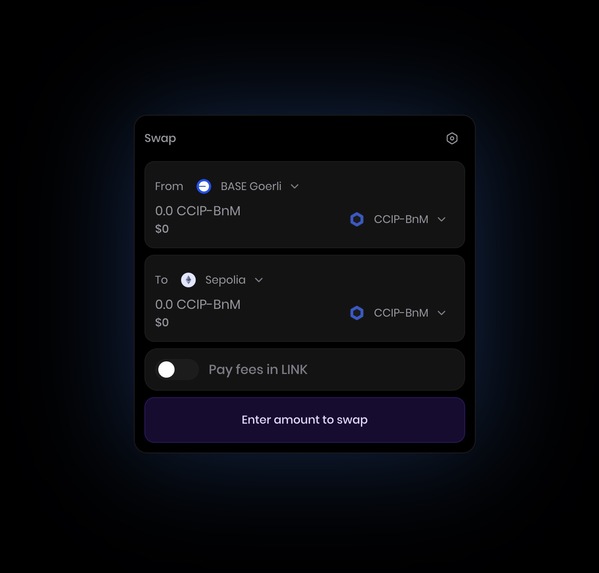
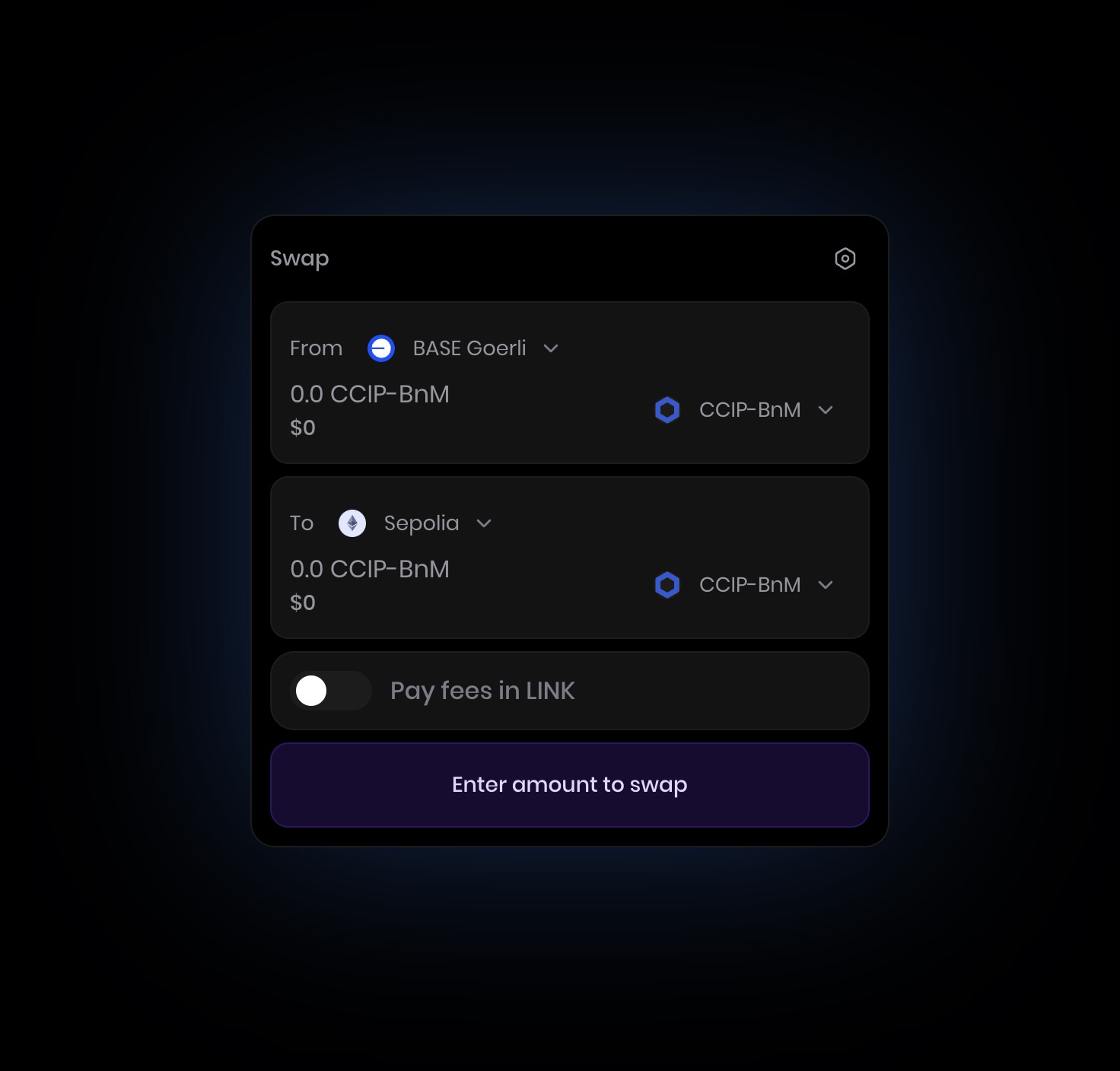
User inputs From & To Chains & Tokens
-
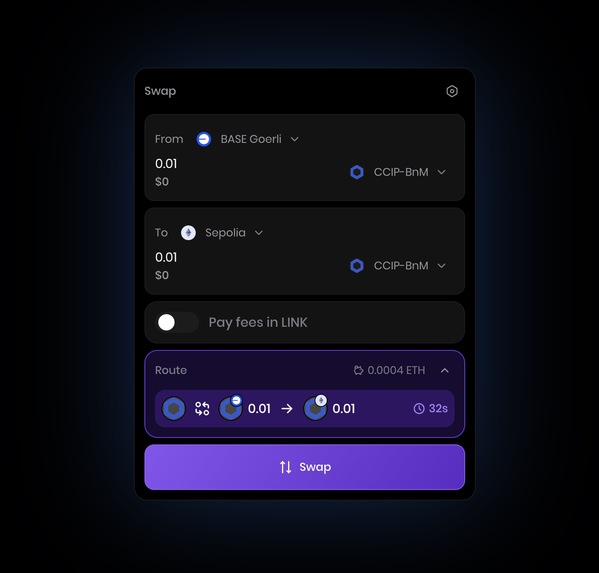
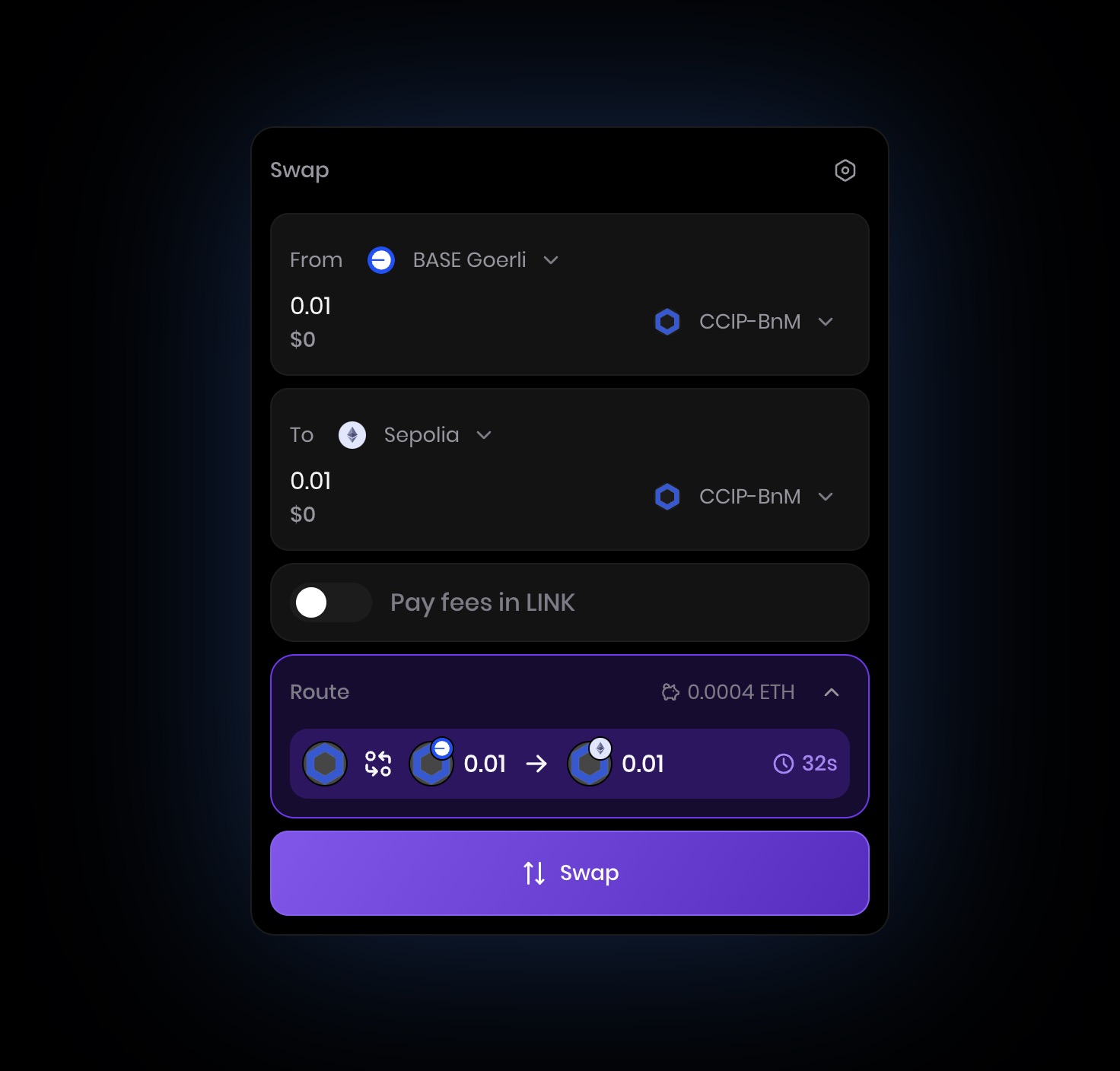
We display a route and fees
-
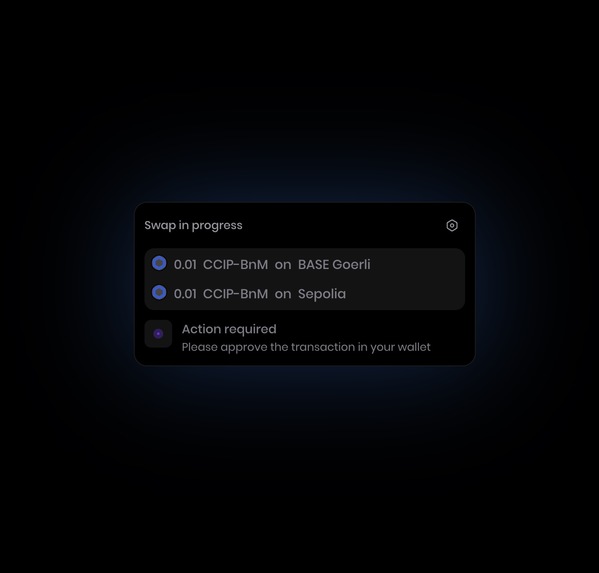
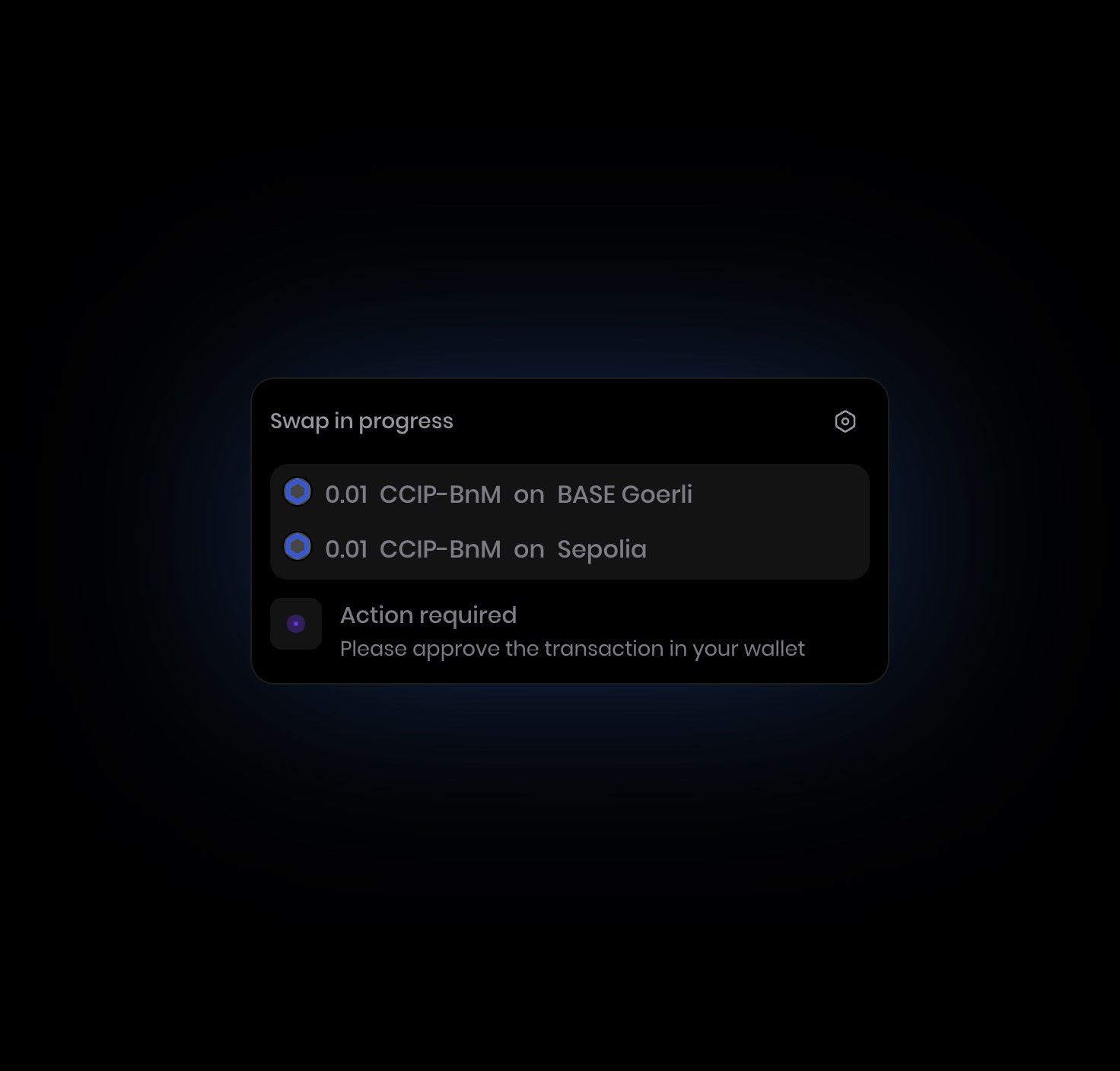
User approves and signs the transaction
-
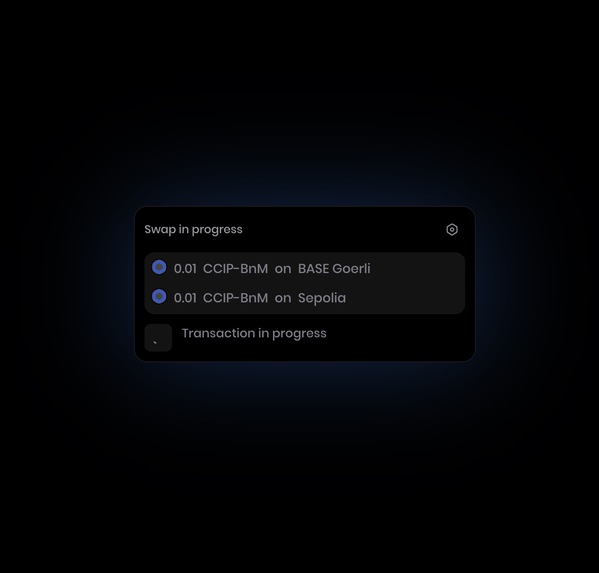
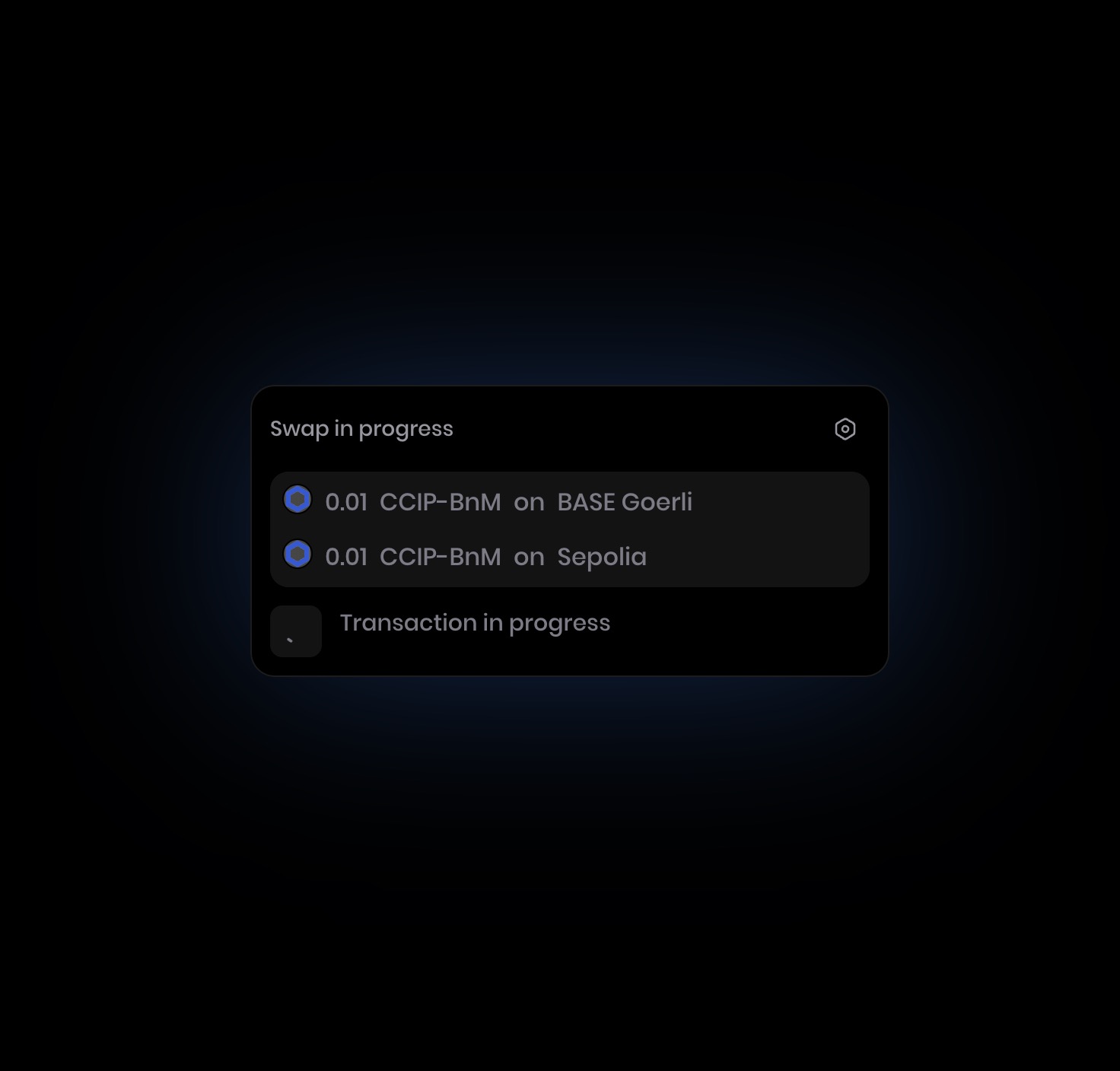
We fetch live updates of the transaction state
-
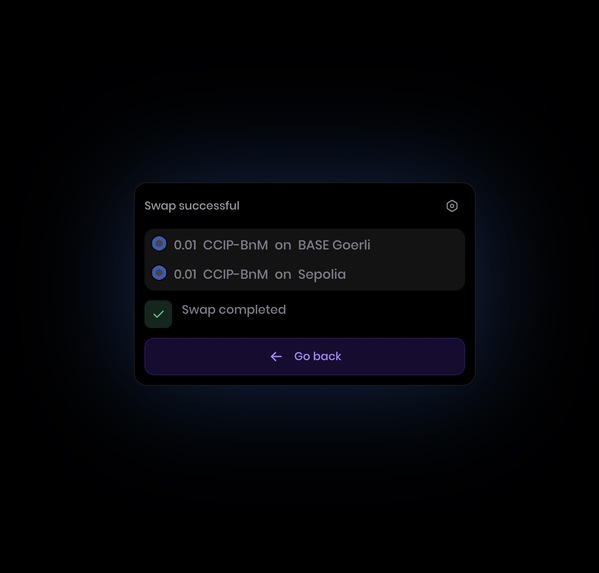
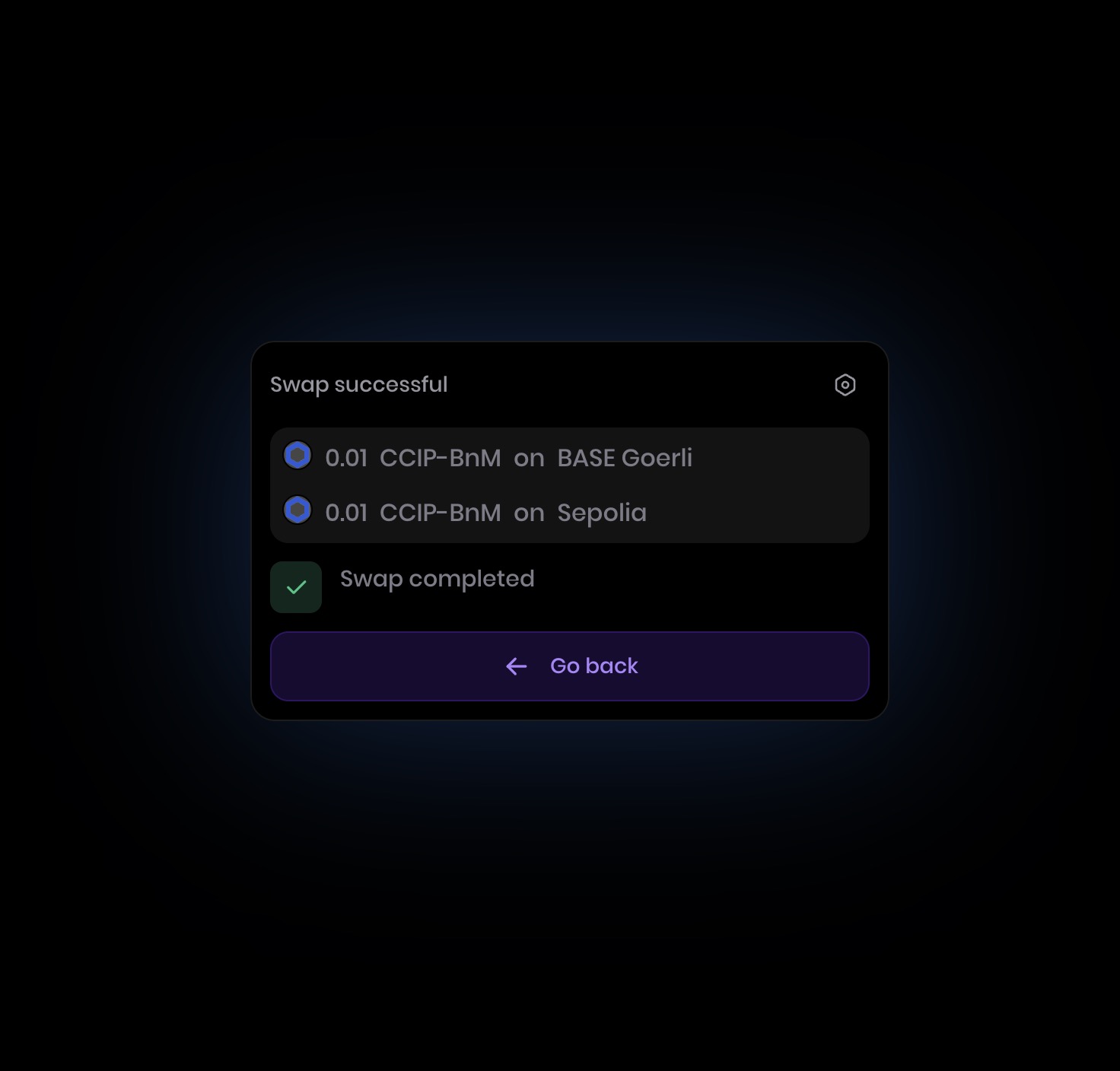
The bridging is done!
Inspiration
The fees, slow speeds and frequent hacker attacks in existing bridging solutions, calls for safer and more efficient bridging. By leveraging Chainlink's Cross-Chain Interoperability Protocol (CCIP), we aim to disrupt the status quo of bridging, by a safer and faster alternative for cross-chain transactions.
What it does
Our app bridges assets between Layer 1 and Layer 2 chains in the Ethereum ecosystem using Chainlink CCIP. It enables users to securely and efficiently move their assets across different EVM networks.
How we built it
Frontend: React, TypeScript, Wagmi, Ethers.js, Chain Scanners for realtime TX updates. Blockchain: Solidity smart contracts utilizing Chainlink CCIP.
Challenges we ran into
The primary challenge was understanding and implementing Chainlink's CCIP, as it's new technology in the blockchain space.
Accomplishments that we're proud of
We successfully developed a fully functional application in just one week. This rapid development cycle is a testament to our team's technical skills and years of experience in blockchain.
What we learned
Our work with Chainlink CCIP has reinforced our belief that Chainlink CCIP is the future standard for cross-chain operations. It offers security, lower transaction fees, and faster processing times compared to traditional bridging methods. The multiple anti-fraud systems embedded in Chainlink CCIP make it a much more reliable choice for bridging.
What's next for Concero CCIP bridge
The next step is to fully integrate Chainlink CCIP into our existing cross-chain swap application, app.concero.io, so our users will get the benefits of cheaper, faster and safer cross-chain swaps.
How to test
At the moment the bridge supports the following routes: sepolia -> base, base -> sepolia, sepolia->bnb, bnb->sepolia, sepolia->arb, arb->opt The 'Pay in LINK' function may not work reliably.
Built With
- chainlink
- ethers
- react
- solidity
- typescript
- wagmi


Log in or sign up for Devpost to join the conversation.