Inspiration
For the last 6 years, I’ve worked on an innovation team at Samsung exploring new product and technology opportunities. Every step of every project requires diverging and converging consideration of options. That is true whether I’m exploring user needs, brainstorming project names, scoping my prototypes, selecting technical components, deciding on hero use-cases when pitching to stakeholders, or anything else.
What it does
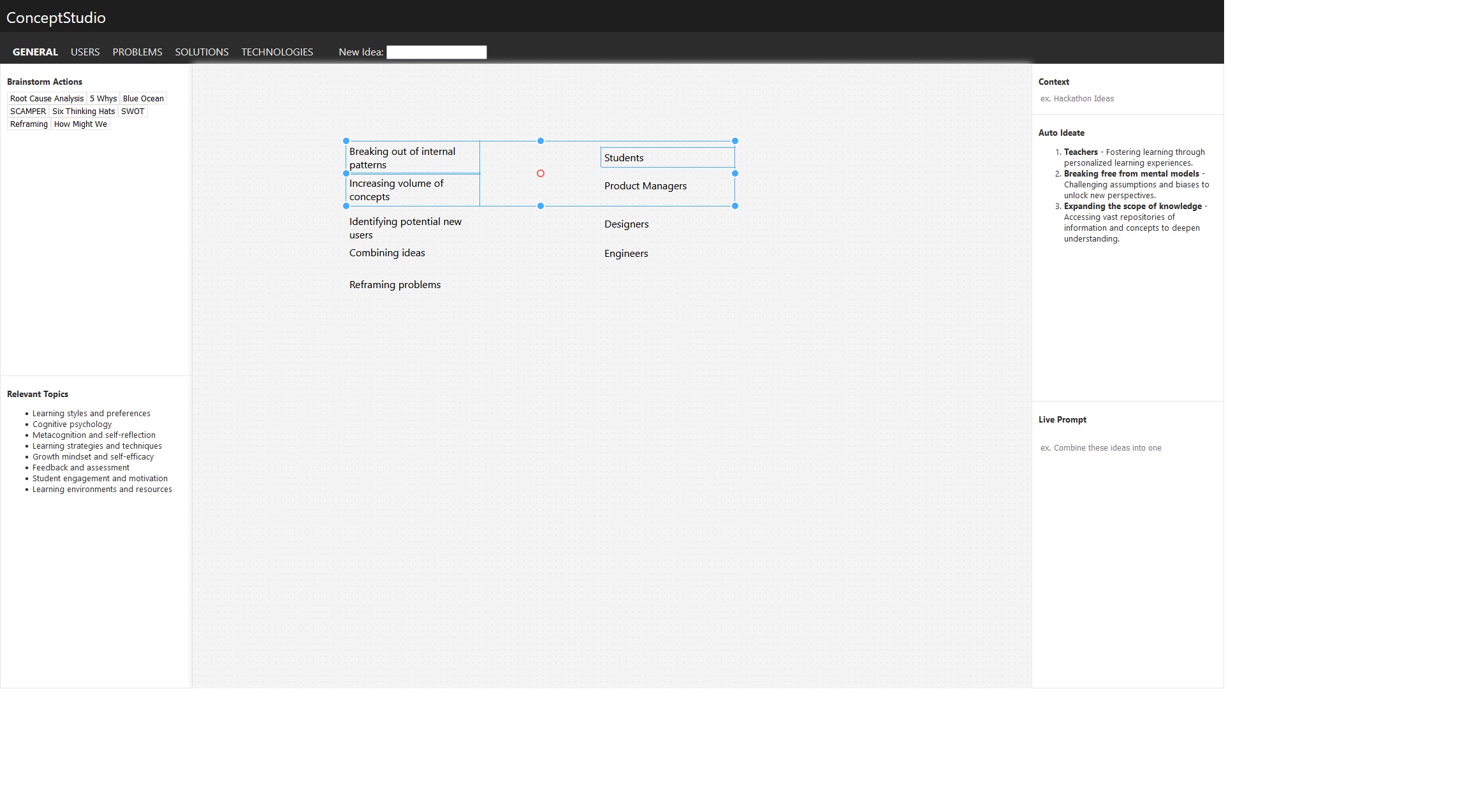
ConceptStudio provides two main sources of value:
- A set of tools that empower users to quickly explore their ideas through divergent or convergent thinking.
- A point of view other than their own that can spark unexpected connections in the users mind. Much like discussing ideas in person, often the value comes from a new thought that neither participant would have had alone.
How we built it
ConceptStudio is built using mostly vanilla HTML/JS with Netlify functions making calls to Groq’s low-latency inference of Mistral 8x7b model. For the intractable canvas elements, Daybrush’s Moveable & Selecto JS libraries were used.
Challenges we ran into
- UI/frontend development took longer than expected
- occasional latency on Groq requests (high token rate but occasionally delay before starting)
Accomplishments that I’m proud of
I’m proud of how far I was able to get as a solo contributor. I’m also proud of the generative UI concepts (such as dynamically generated context menus) that take unique advantage of the fast inference to unlock new possibilities.
What we learned
LLMs and the supporting compute are becoming fast enough to enable us unique opportunities in UX well beyond chat and voice.
What's next for ConceptStudio - Figma for concept exploration
Polish this demo a bit more and continue to use for my own brainstorming and explorations. I will also share with a few others so help gather feedback and improve to the point that it can become a publicly accessible tool.
Built With
- groq
- javascript
- mistral
- netlify

Log in or sign up for Devpost to join the conversation.