-
-
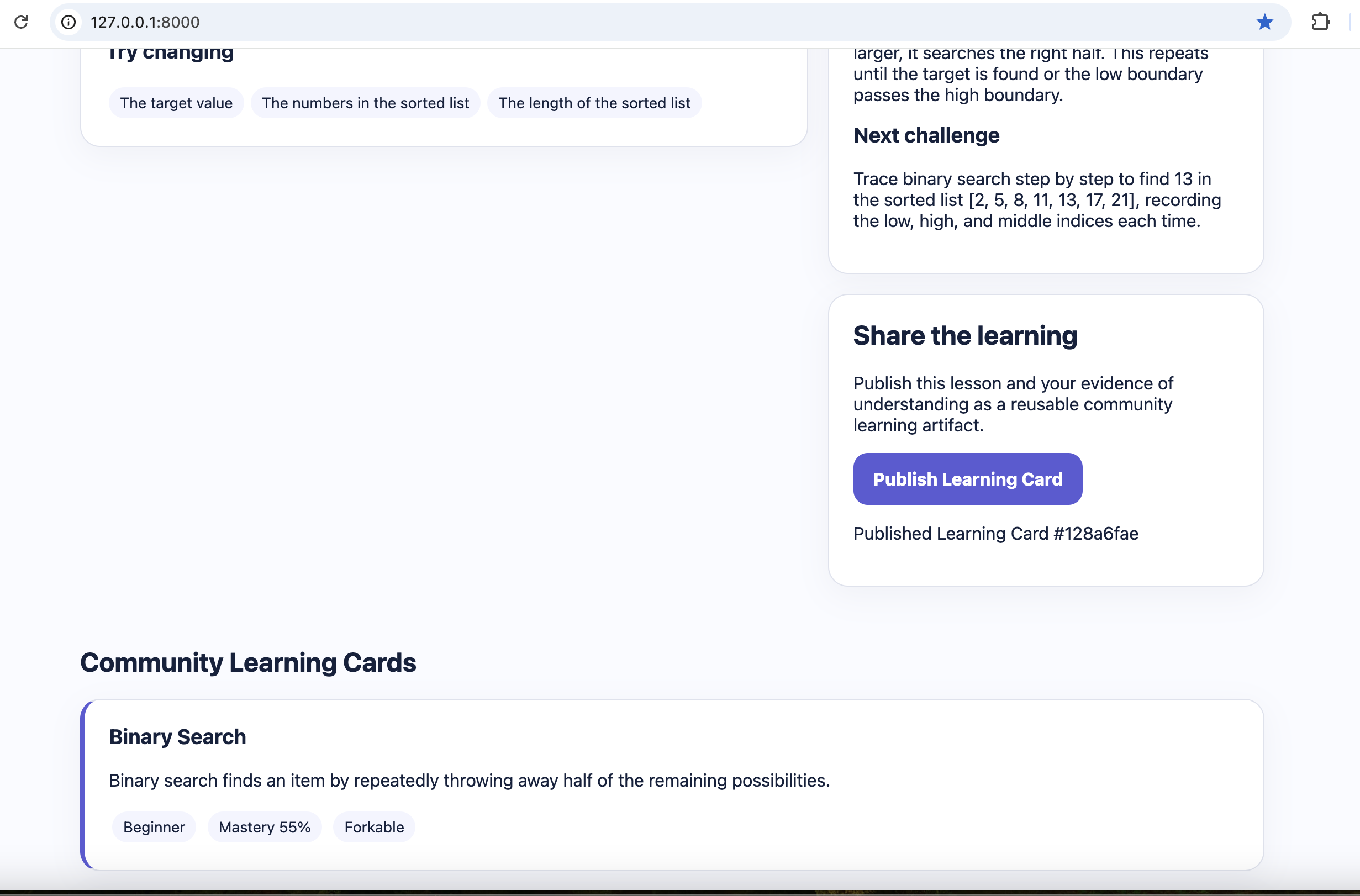
Community Card
-
Learning lab
-
Visual Learning
-
Quiz and teach back
Inspiration
Most AI learning tools are excellent at explaining concepts, but I kept asking myself a simple question: How do we know someone actually understands what they just read? As someone who enjoys teaching and mentoring, I've always believed that the best test of understanding is whether you can explain a concept in your own words. That's the idea behind the Teach Back method, and I wanted to see how GPT-5.6 could support that process instead of only generating answers. The goal became simple: build an AI learning platform that doesn't stop after producing content. It should guide the learner through an entire learning cycle—from understanding to demonstrating mastery and finally sharing knowledge with others.
What it does
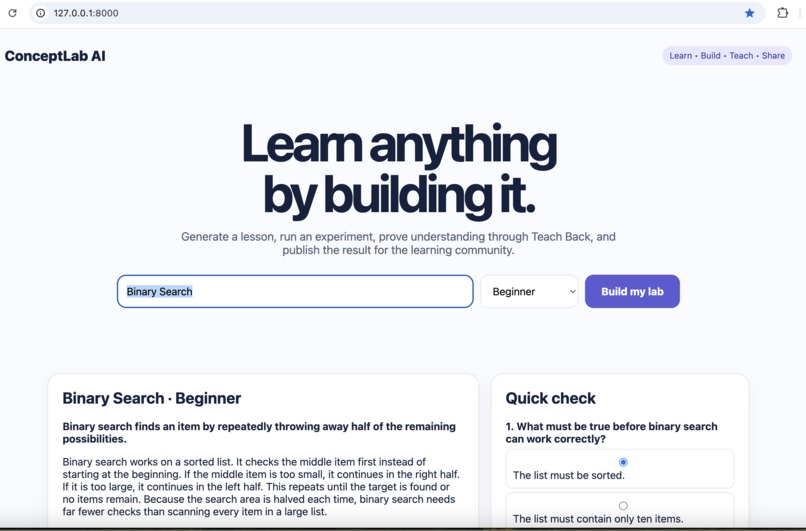
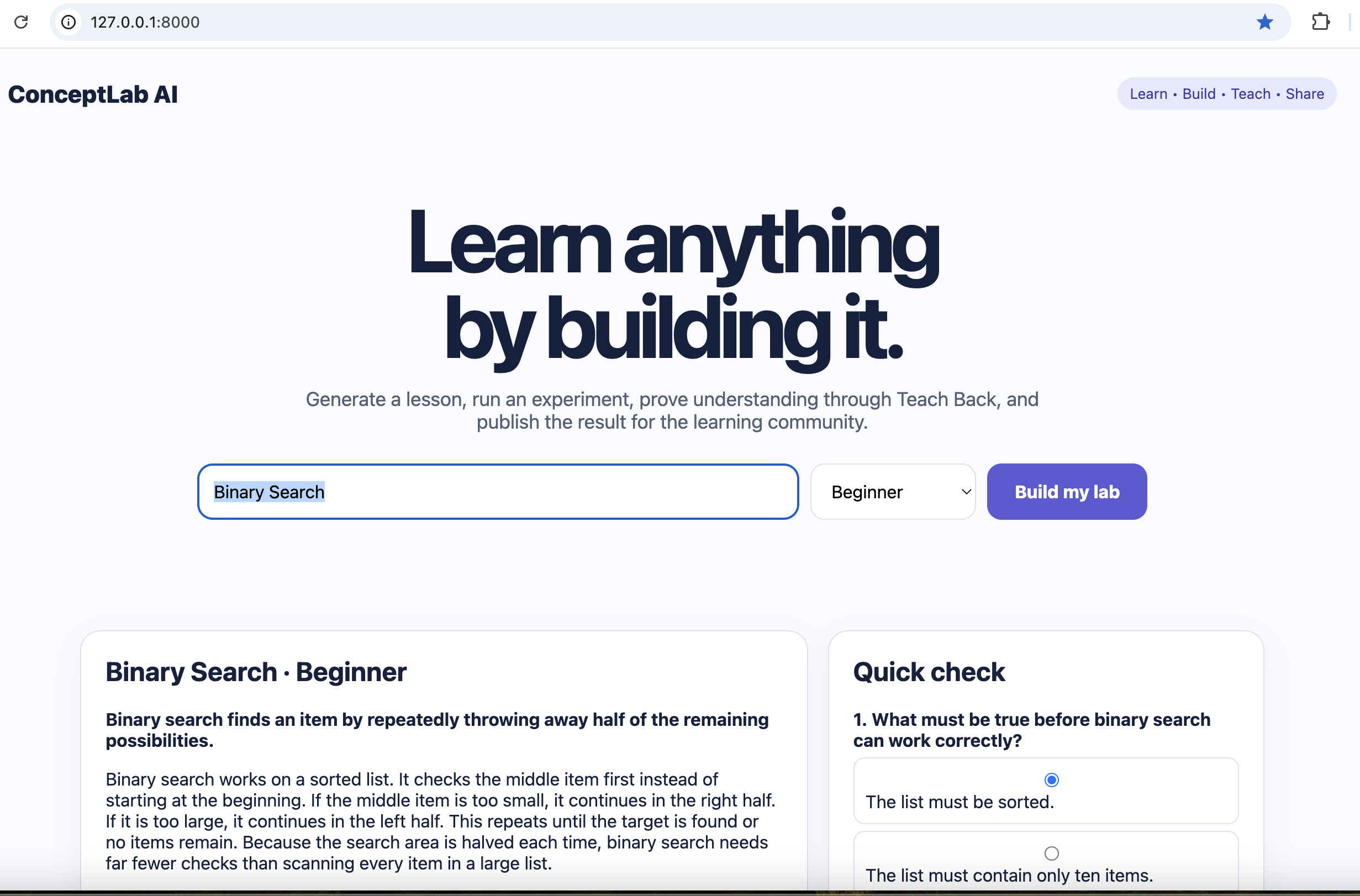
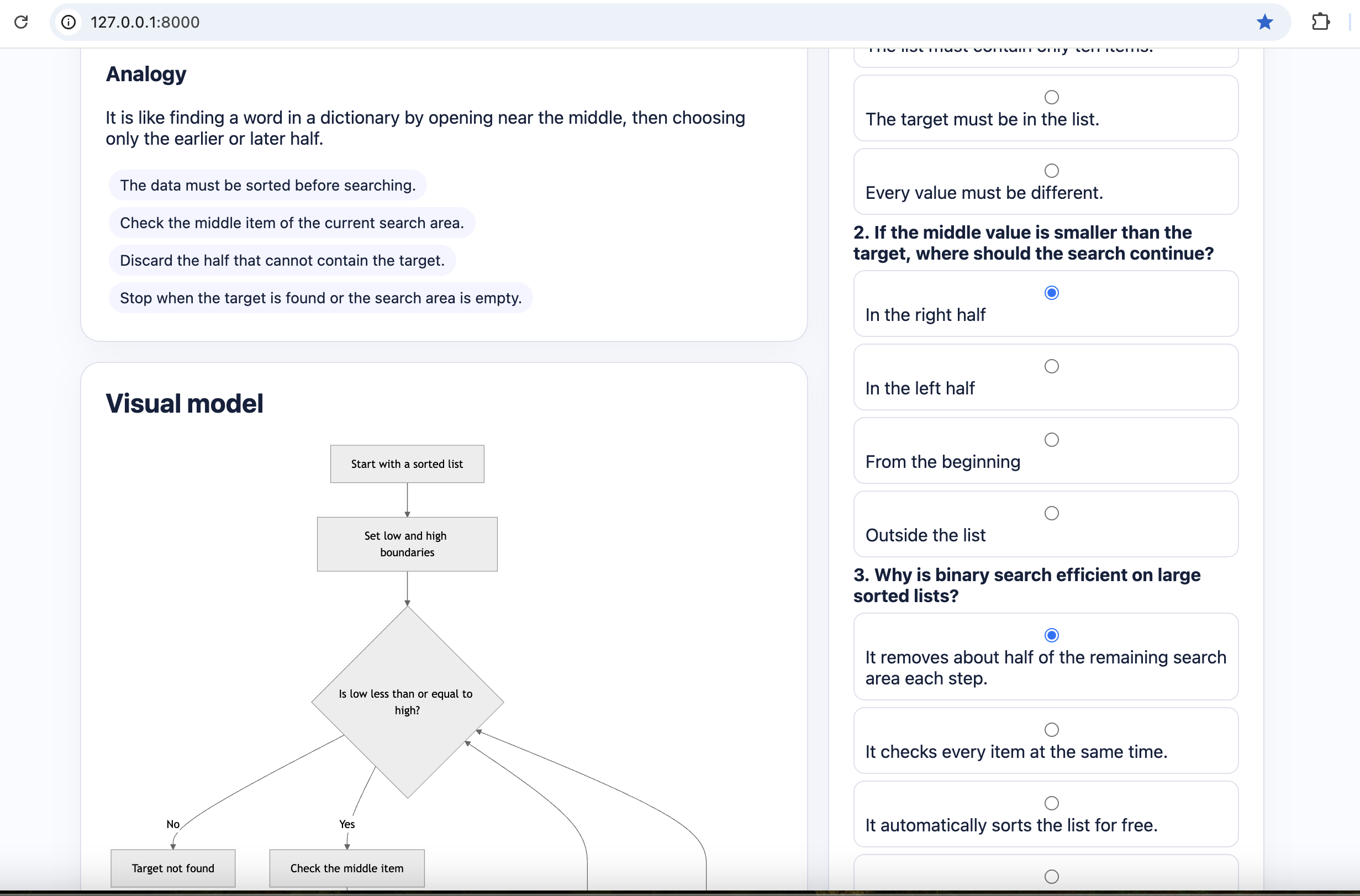
ConceptLab AI generates a complete learning lab for any topic. Each lesson includes:
- a concise explanation,
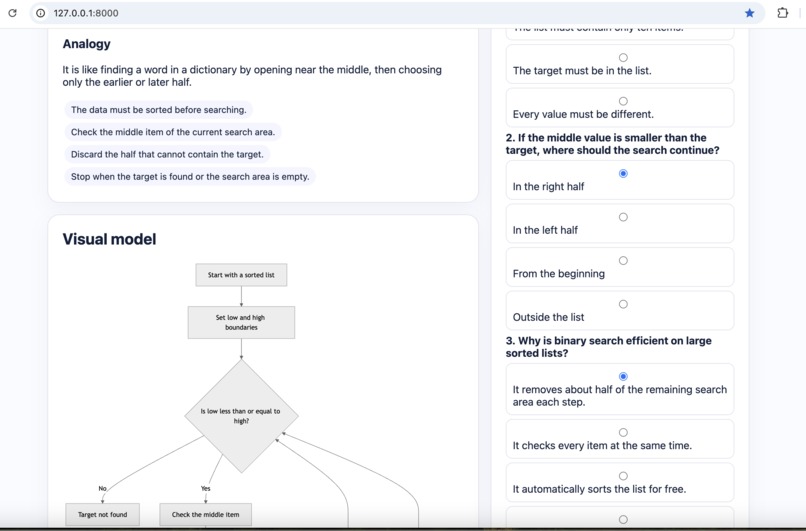
- an intuitive analogy,
- a Mermaid concept diagram,
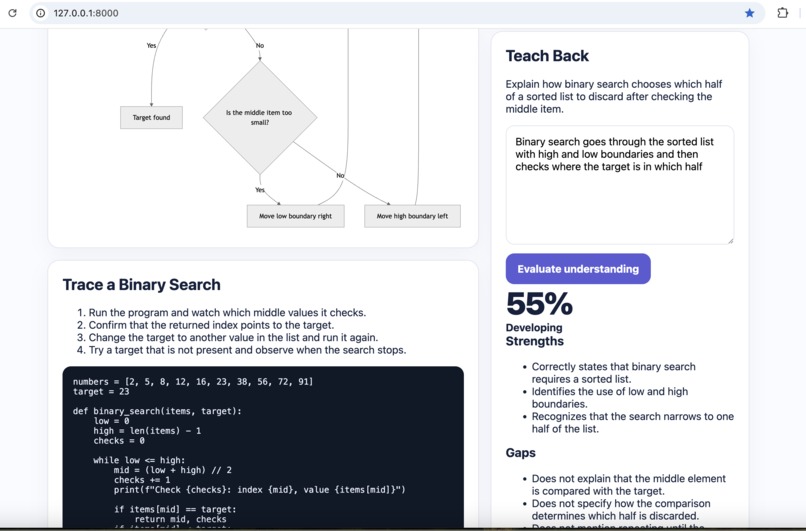
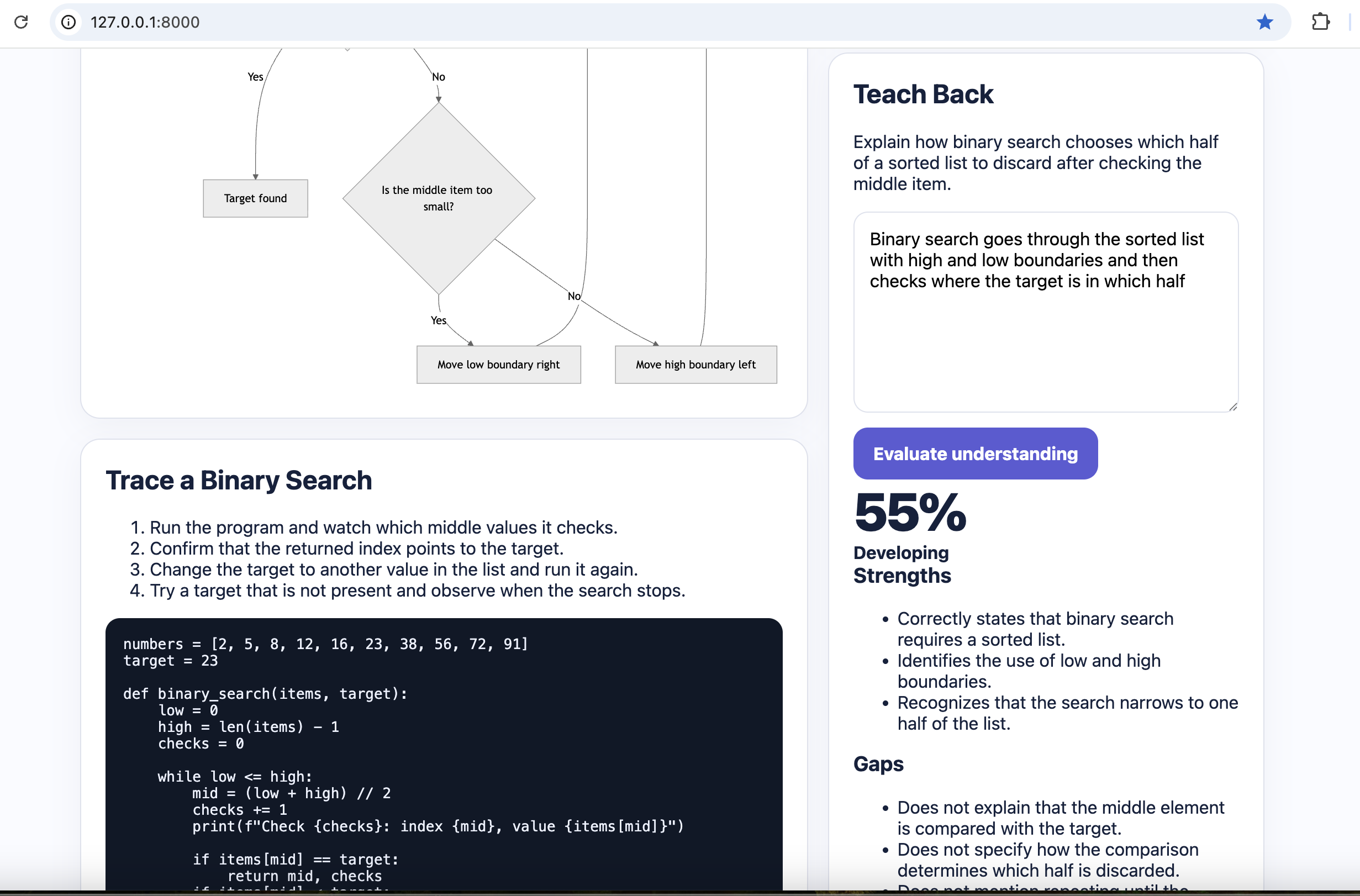
- a safe Python experiment, and a short formative quiz. After completing the lesson, the learner explains the concept back in their own words. GPT-5.6 evaluates the explanation, identifies missing ideas or misconceptions, estimates the learner's mastery, and provides constructive feedback.
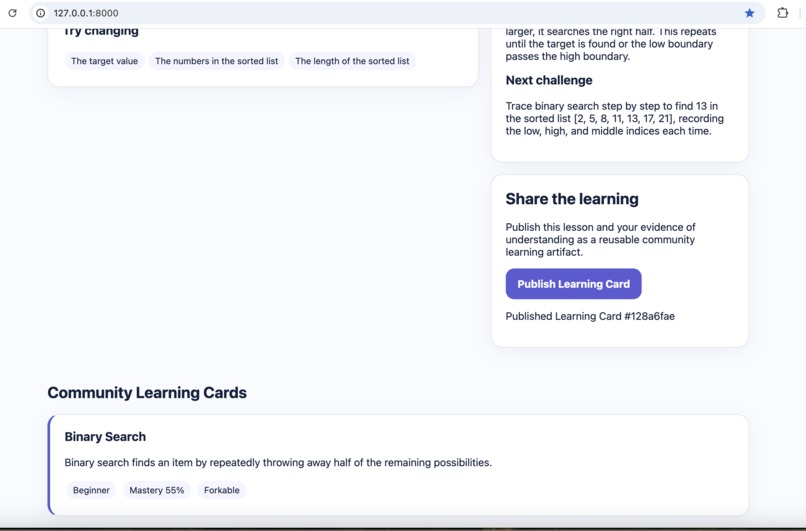
Finally, the learner can publish a Learning Card, turning an individual learning session into a reusable resource for the community.
The learning flow is intentionally simple:
Learn → Test → Teach Back → Share
How we built it
The application is built as a lightweight FastAPI web application with a vanilla HTML, CSS, and JavaScript frontend. GPT-5.6 powers the two most important stages: generating the complete learning lab, and evaluating the learner's Teach Back explanation. I used the OpenAI Responses API through the official Python SDK to keep the integration straightforward and focused on the learning experience rather than infrastructure. Codex also played an important role during development. Rather than using it only for code completion, I used it as an engineering assistant to review the codebase, identify bugs, improve the frontend-backend integration, and help validate the end-to-end workflow.
Challenges we ran into
One challenge was keeping AI responses structured enough for the frontend to render consistently. I spent time refining prompts and defensive parsing so that diagrams, quizzes, experiments, and evaluations remained predictable. Another challenge involved compatibility. During development I encountered Python version differences and frontend rendering issues, including request-contract mismatches and JavaScript bugs that prevented parts of the workflow from functioning correctly. Tracking those issues down and fixing them helped make the application much more reliable. Finally, deciding what not to build was just as important as deciding what to build. I deliberately kept the MVP focused on one complete learning loop instead of adding authentication, databases, or social features too early.
Accomplishments that we're proud of
I'm most proud that the application demonstrates a complete educational workflow rather than a collection of disconnected AI features. Instead of generating content and stopping there, ConceptLab AI encourages learners to actively explain concepts, receive feedback, and contribute reusable learning artifacts. I'm also proud that the application remains simple enough to understand while still showing how GPT-5.6 can be used as a learning partner instead of only a content generator.
What we learned
Building ConceptLab AI reinforced an important lesson: good AI applications are rarely about making bigger prompts—they're about designing better user experiences. I also learned how valuable iterative development with Codex can be. Having an AI engineering assistant review code, identify bugs, and suggest targeted fixes made it easier to focus on product design and learning outcomes. Most importantly, I came away convinced that the future of AI in education isn't replacing teachers or learners—it's creating better feedback loops that help people understand, reflect, and improve.
What's next for ConceptLab AI
This MVP is intentionally lightweight, but there are many directions to explore:
- persistent user accounts and learning history,
- PostgreSQL-backed community learning cards,
- adaptive lesson difficulty,
- multimodal Teach Back using voice and diagrams,
- instructor dashboards,
- collaborative lesson forking, and personalized learning paths based on demonstrated mastery. The long-term vision is to build a platform where learning is measured not only by what AI can explain, but by what learners can confidently teach to others.
Built With
- codex
- community
- educationtech
- fastapi
- generative
- gpt-5.6
- javascript
- mermaid
- openaiapi
- pydantic
- python
- restapi
- teach
- teachback


Log in or sign up for Devpost to join the conversation.