InspirCONCEPT COMPASS
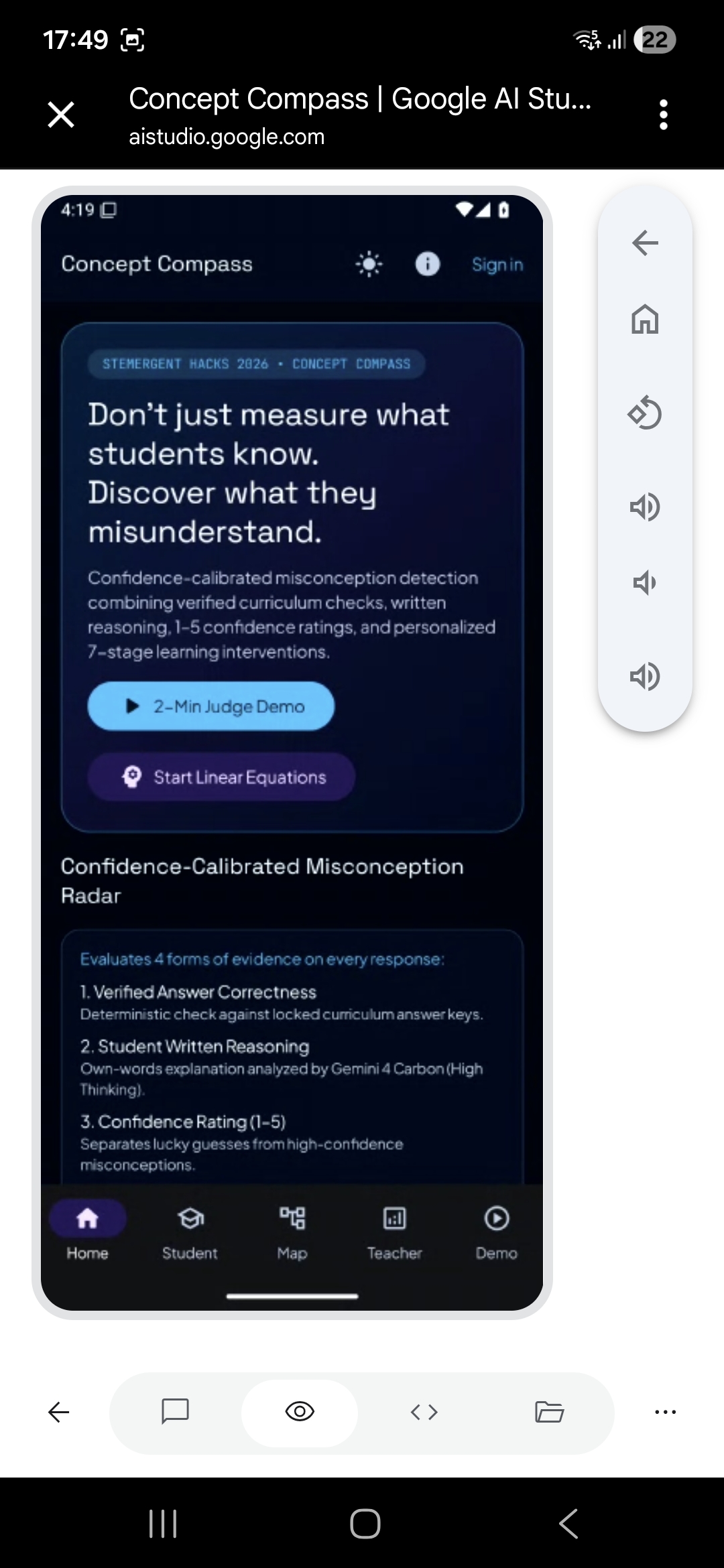
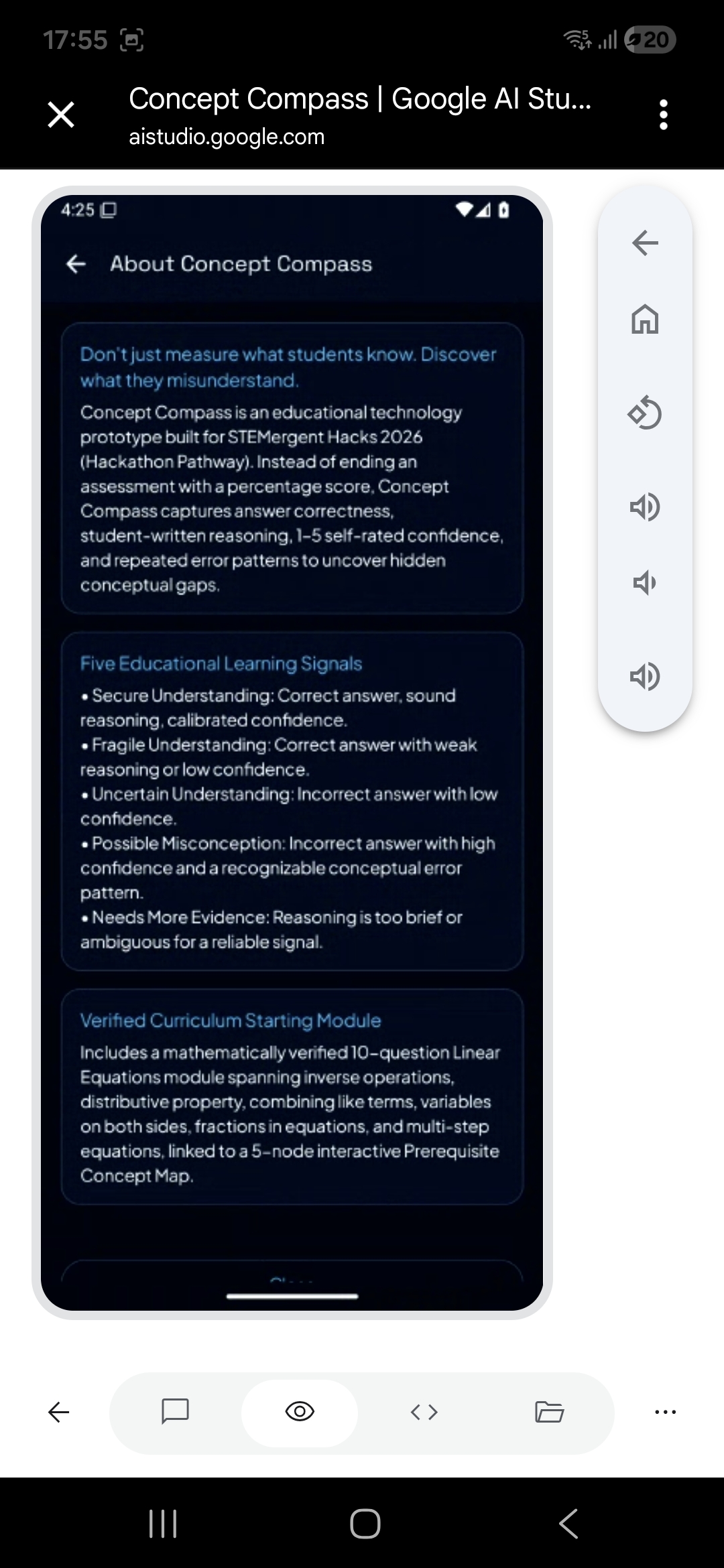
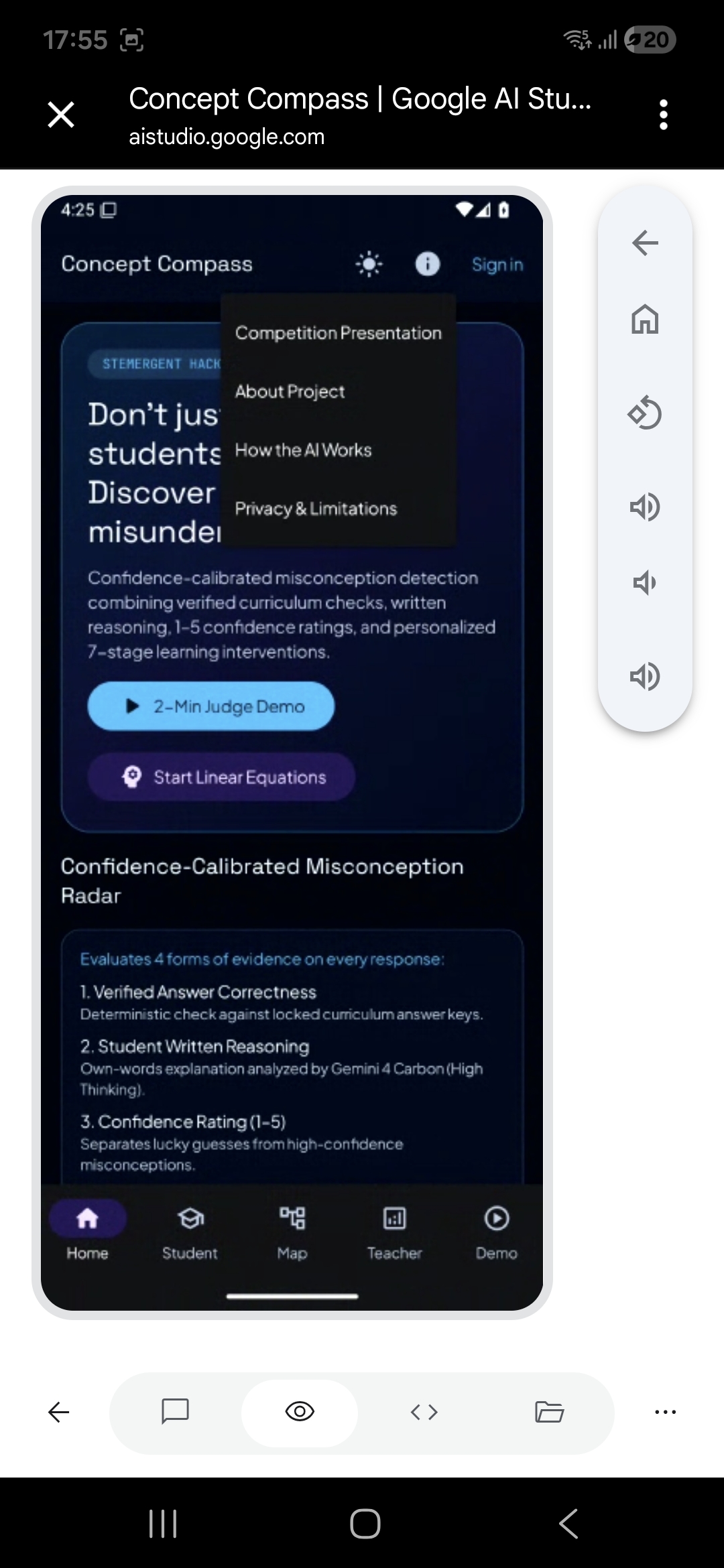
Don't just measure what students know. Discover what they misunderstand.
Inspiration
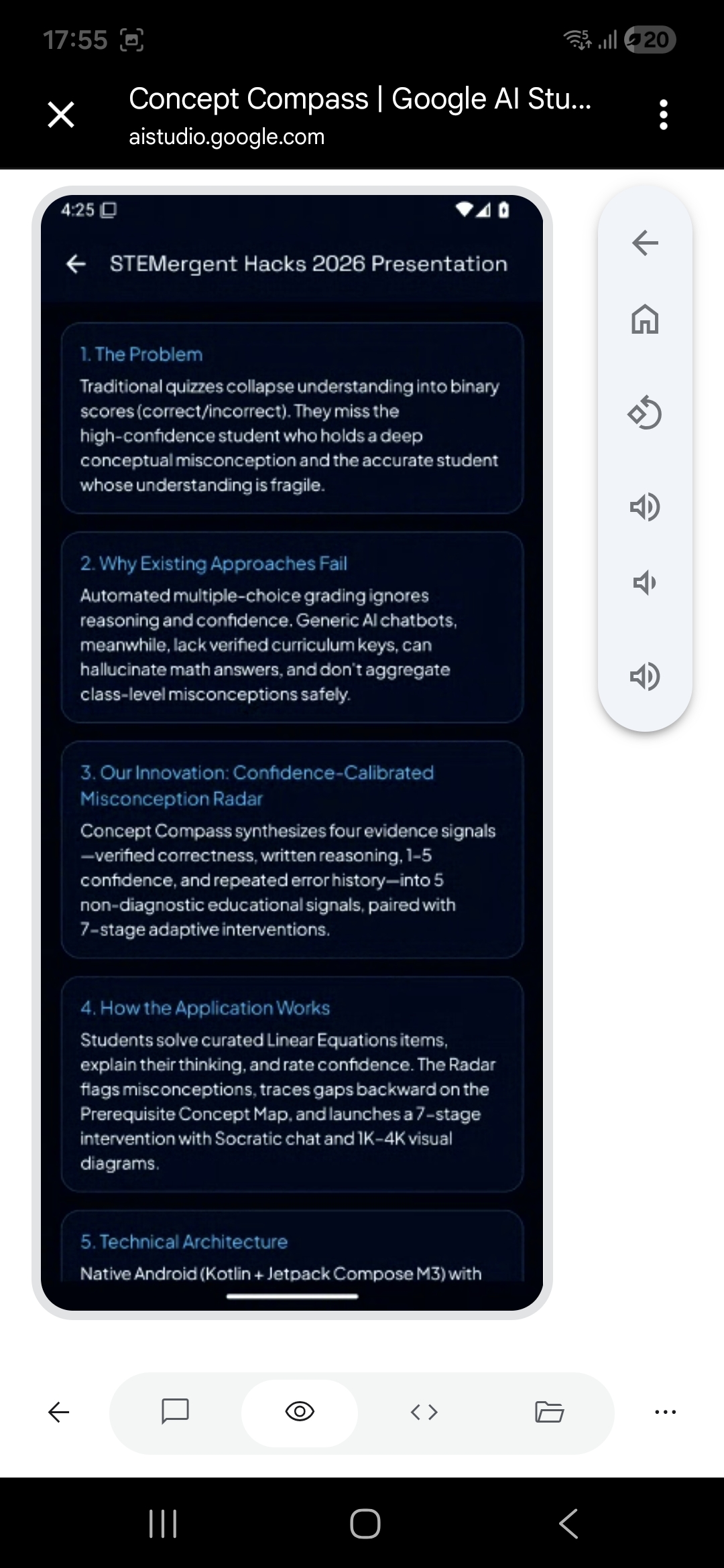
Students take examinations, complete assignments, and receive scores every day. However, a correct or incorrect answer does not always reveal whether a student truly understands a concept.
A student might guess correctly, confidently repeat a misconception, or struggle because they never understood an earlier prerequisite concept.
Teachers also face difficulties identifying the specific concepts that their students misunderstand.
We wanted to address this gap by creating a platform that focuses on understanding the thinking behind student answers rather than simply calculating marks.
What it does
Concept Compass is an AI-powered educational intelligence platform designed to identify possible learning gaps and help students develop stronger conceptual understanding.
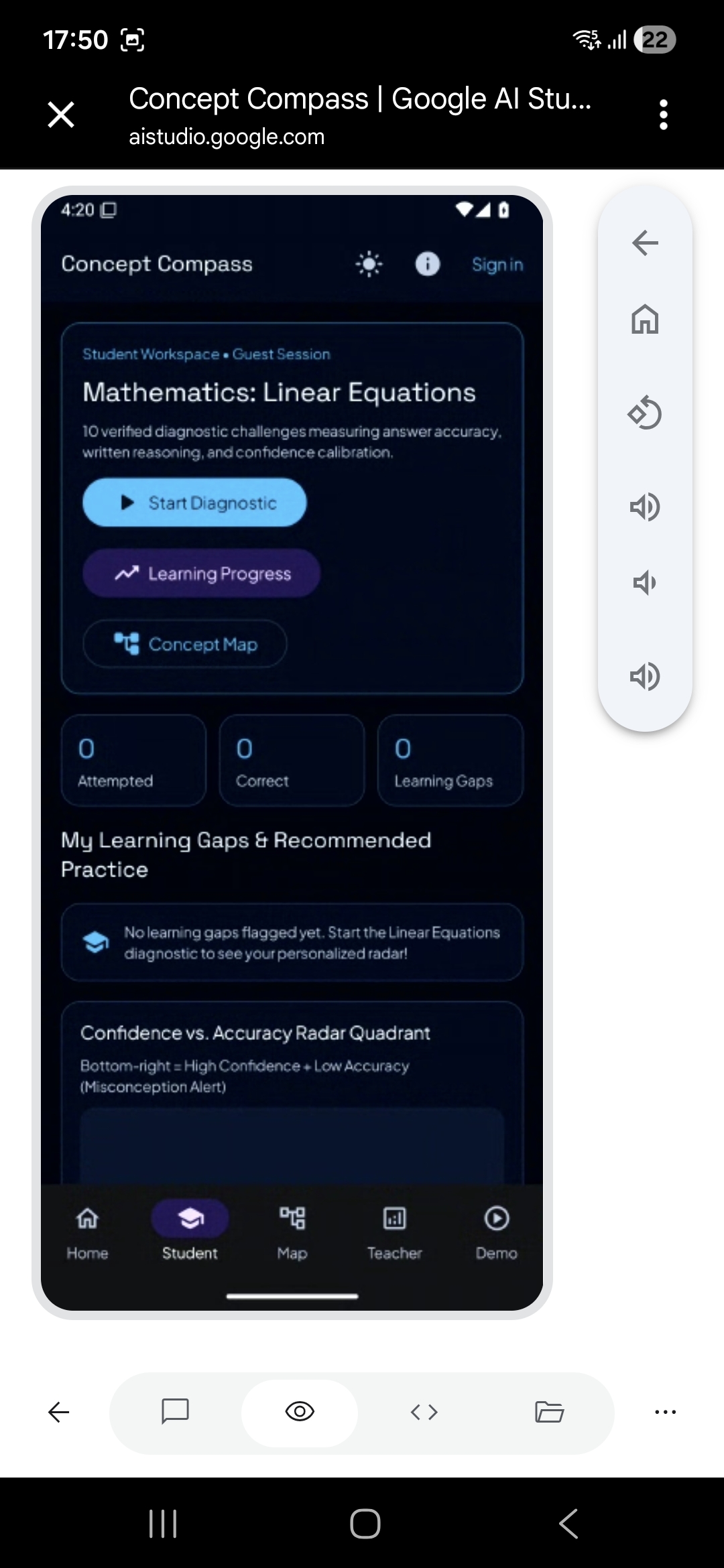
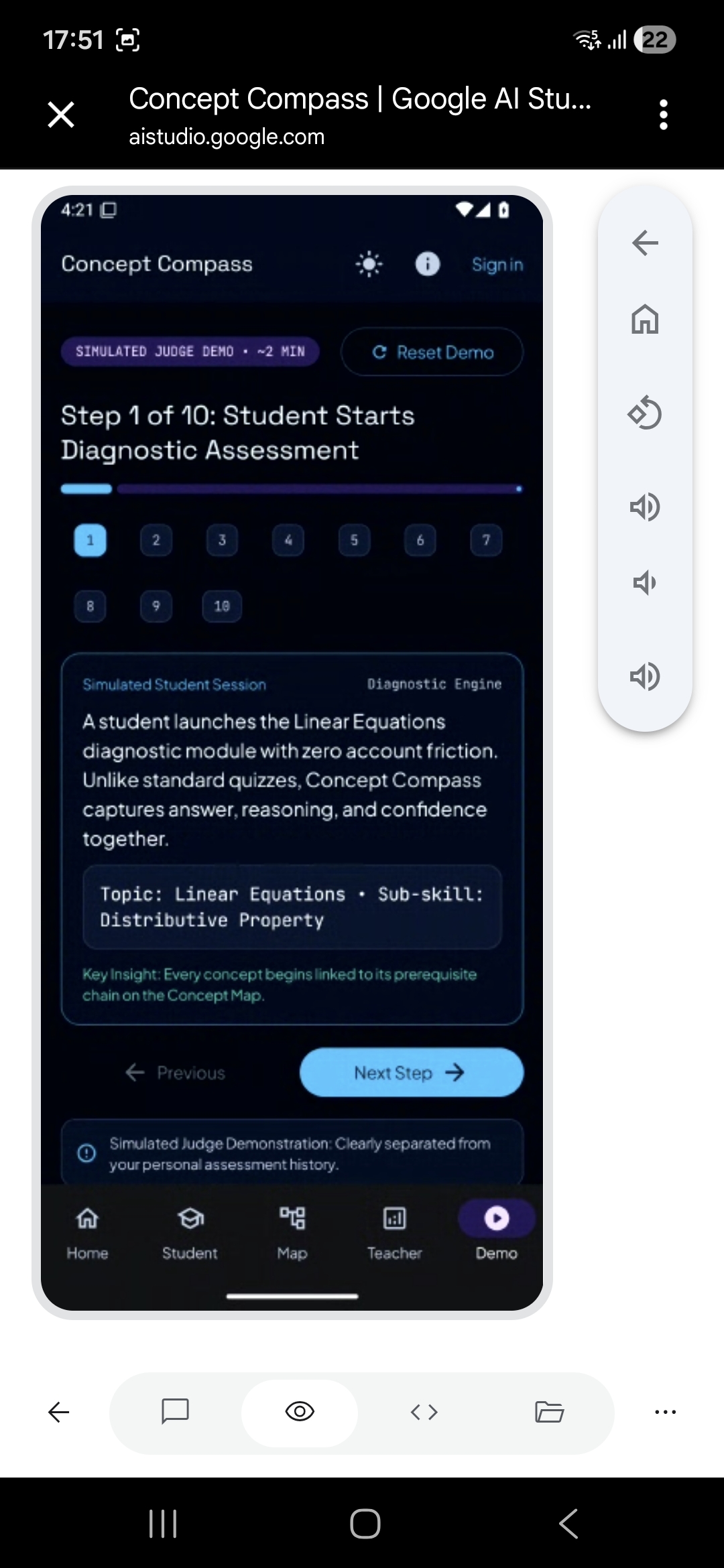
Students complete diagnostic assessments, explain their reasoning, and report their confidence levels.
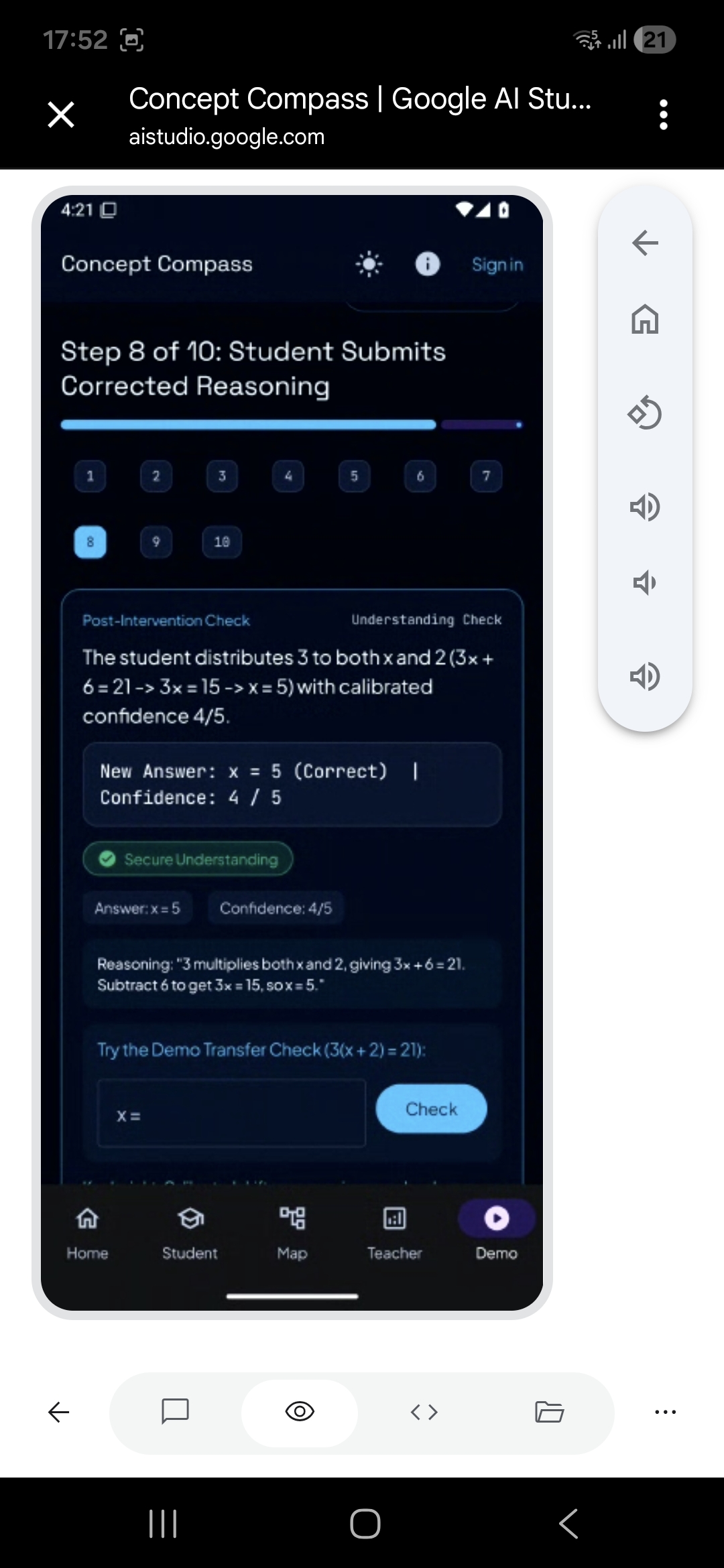
The platform analyzes these responses to identify possible misconceptions, distinguish between secure and uncertain understanding, and recommend personalized learning interventions.
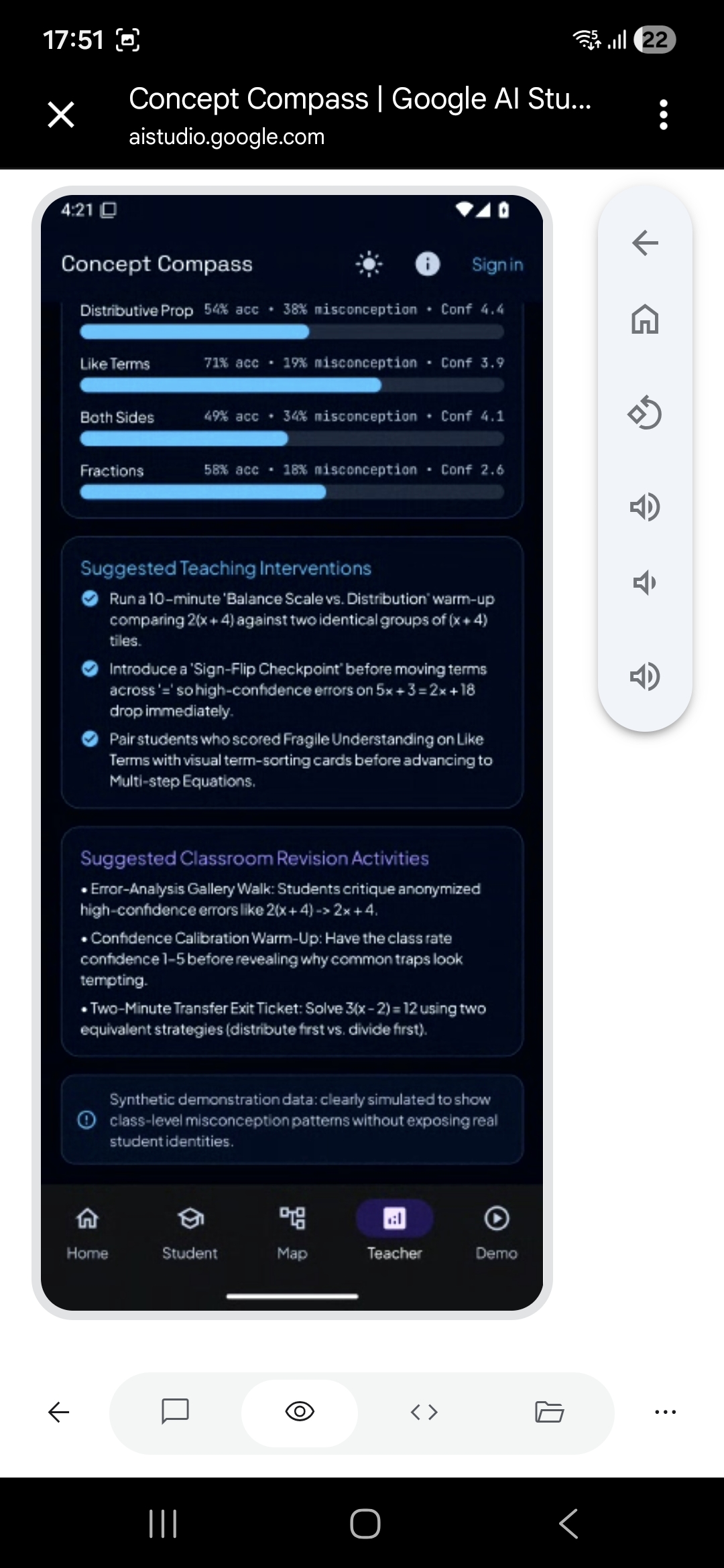
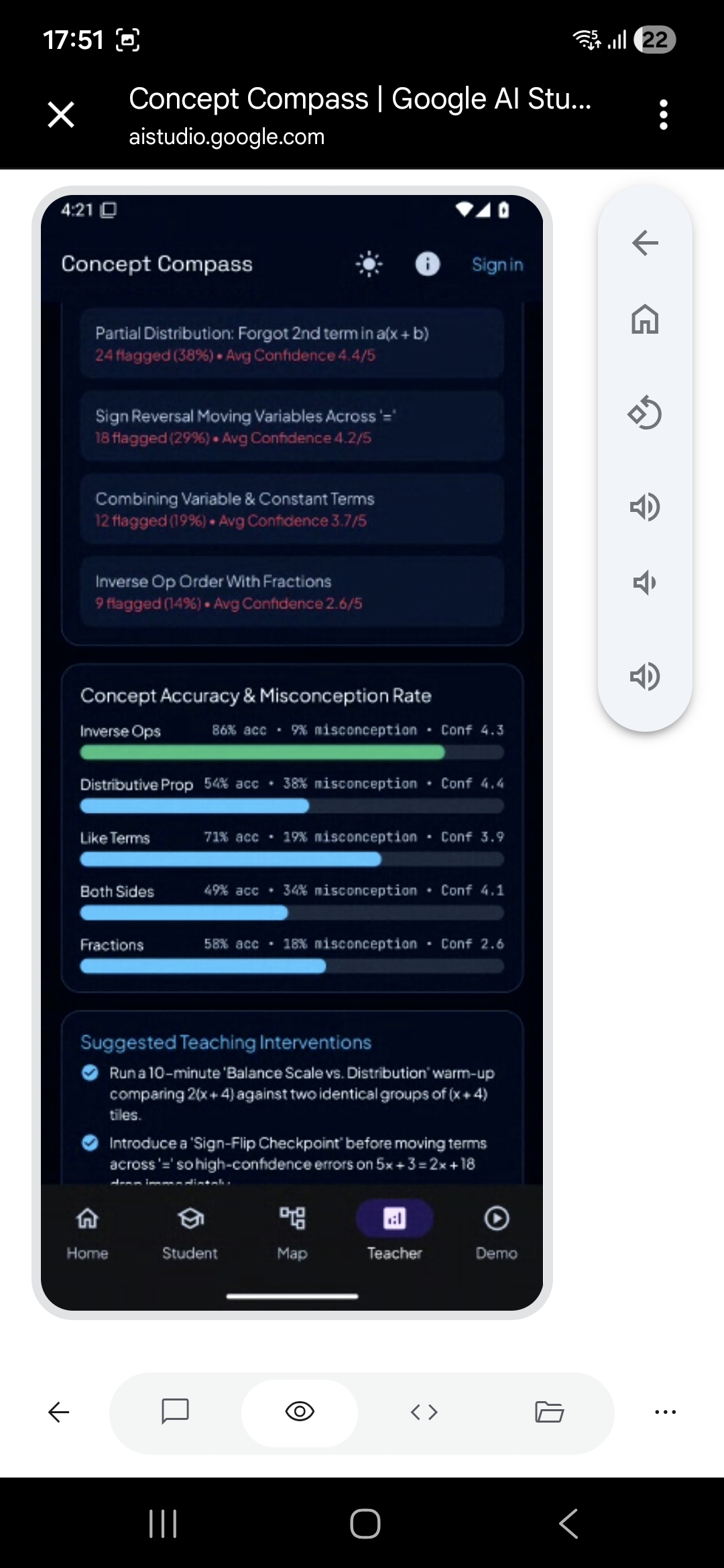
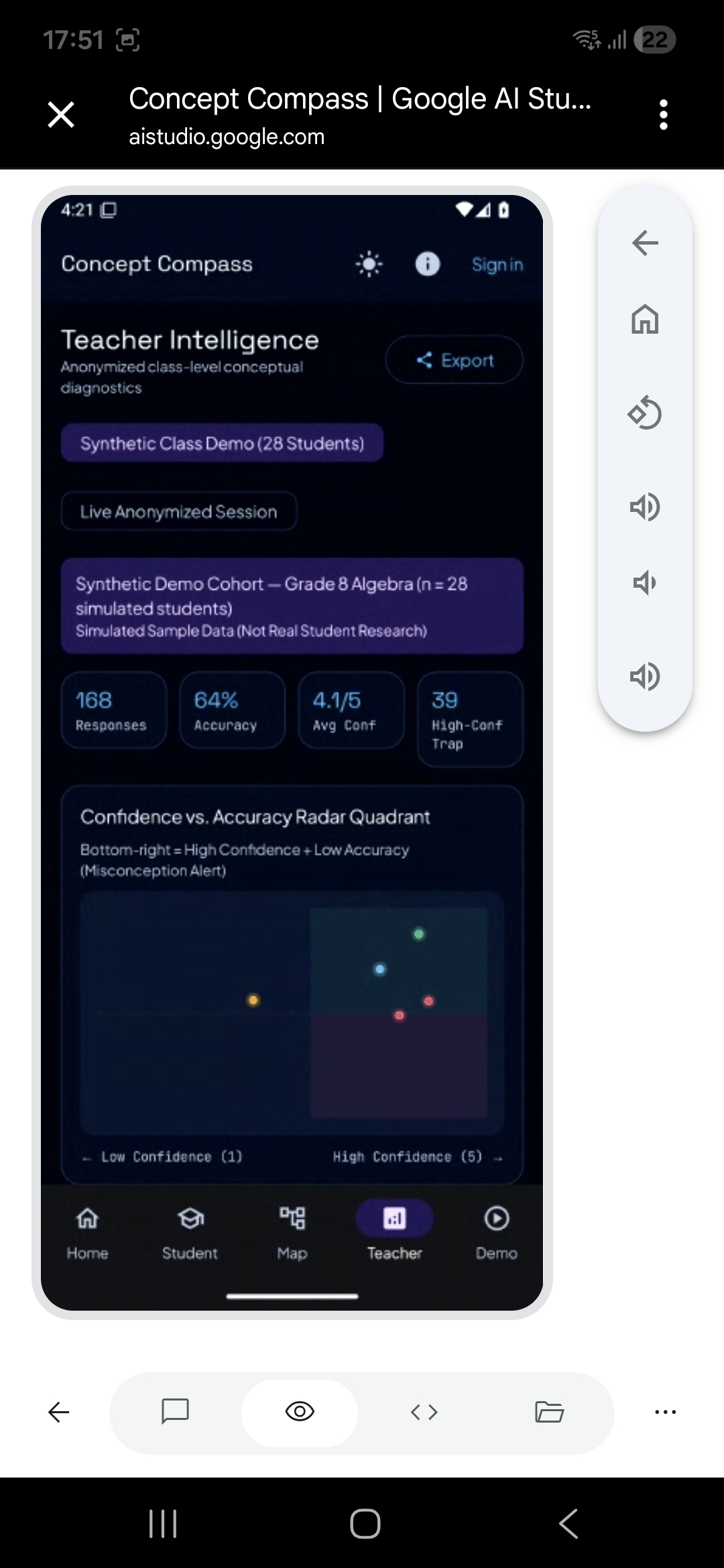
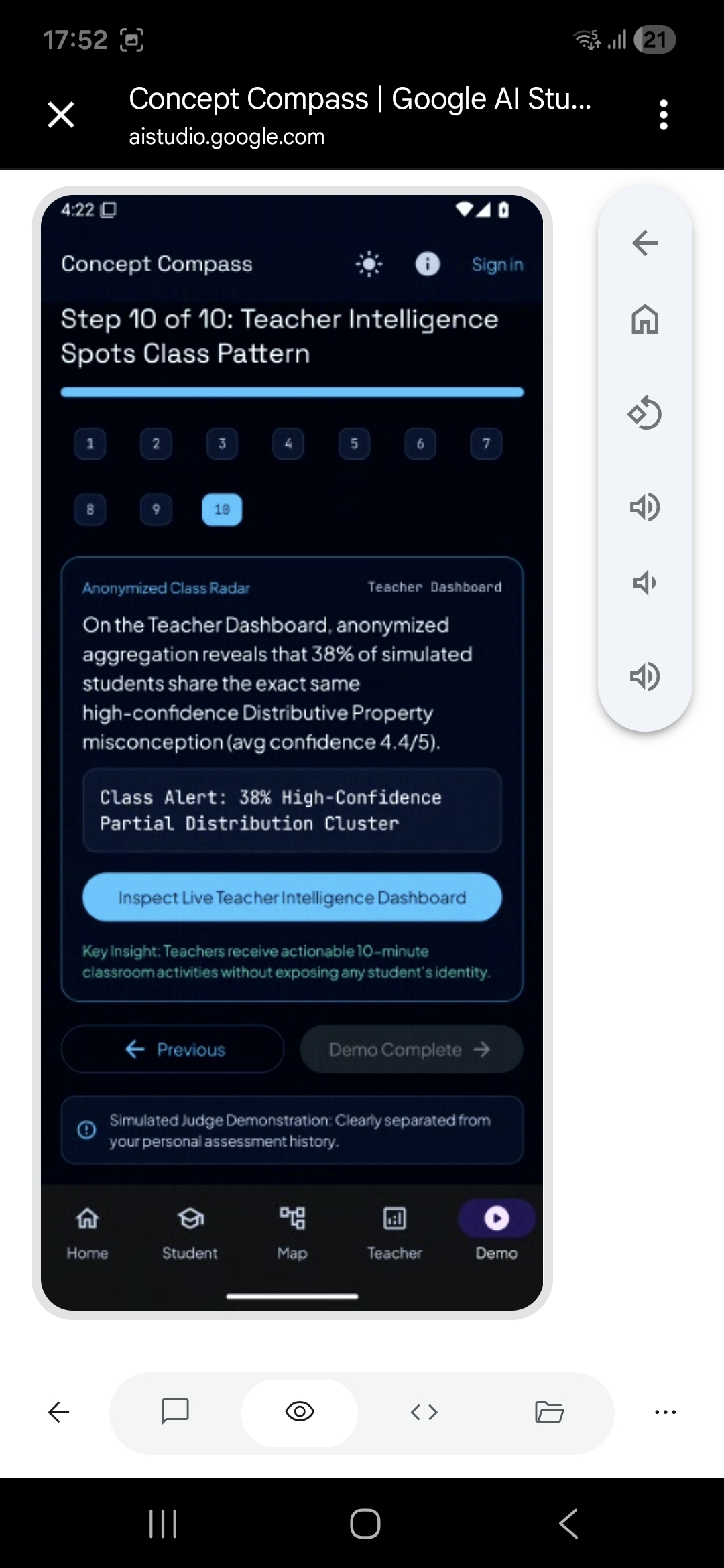
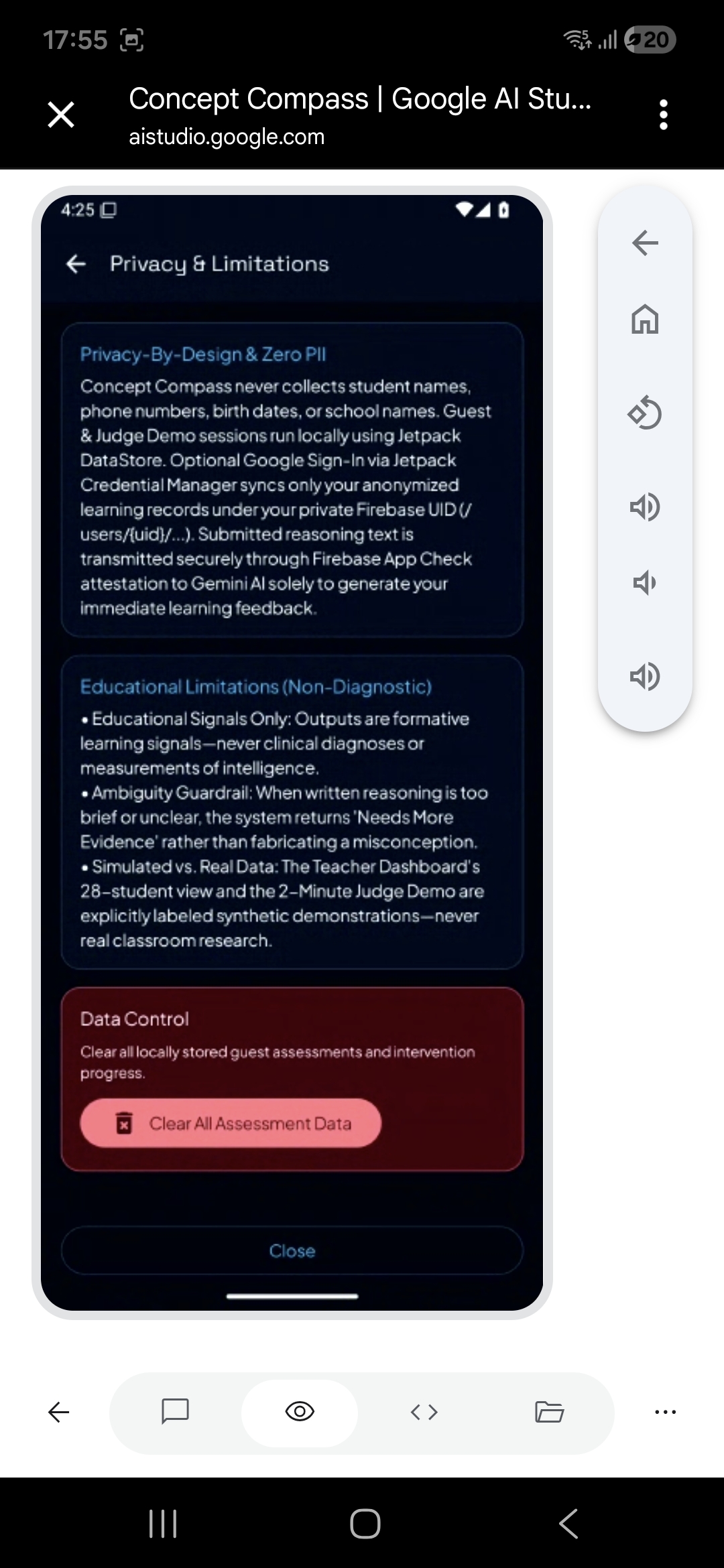
It also provides a teacher dashboard that highlights anonymized class-level learning patterns.
How we built it
The project combines modern web technologies, structured educational assessments, data analysis, and AI-powered reasoning analysis.
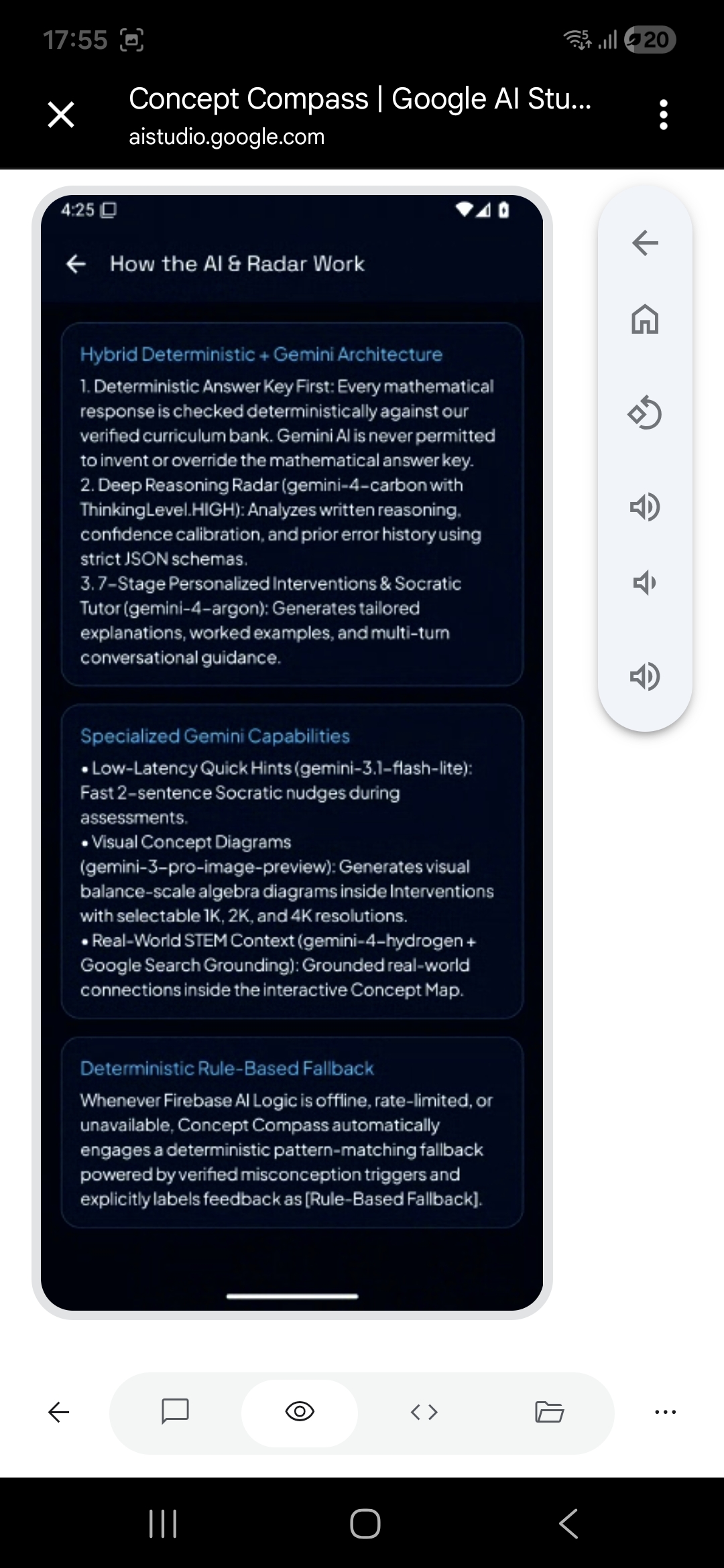
Its architecture separates verified answer checking from AI-generated reasoning feedback.
This is important because an AI model should not independently invent correct answers or confidently label students when evidence is insufficient.
The platform uses assessment results, reasoning evidence, and confidence signals to generate educational recommendations.
What makes it different
Traditional assessment systems primarily focus on marks and correctness.
Concept Compass focuses on the reasoning behind those results.
Its central innovation is a confidence-calibrated misconception detection approach that considers:
- Answer correctness.
- Written reasoning.
- Student confidence.
- Repeated conceptual error patterns.
Rather than treating every incorrect answer equally, it attempts to identify the underlying concept that needs attention.
Key features
- Diagnostic assessments.
- Confidence-aware answer analysis.
- Possible misconception identification.
- Personalized learning interventions.
- Adaptive practice questions.
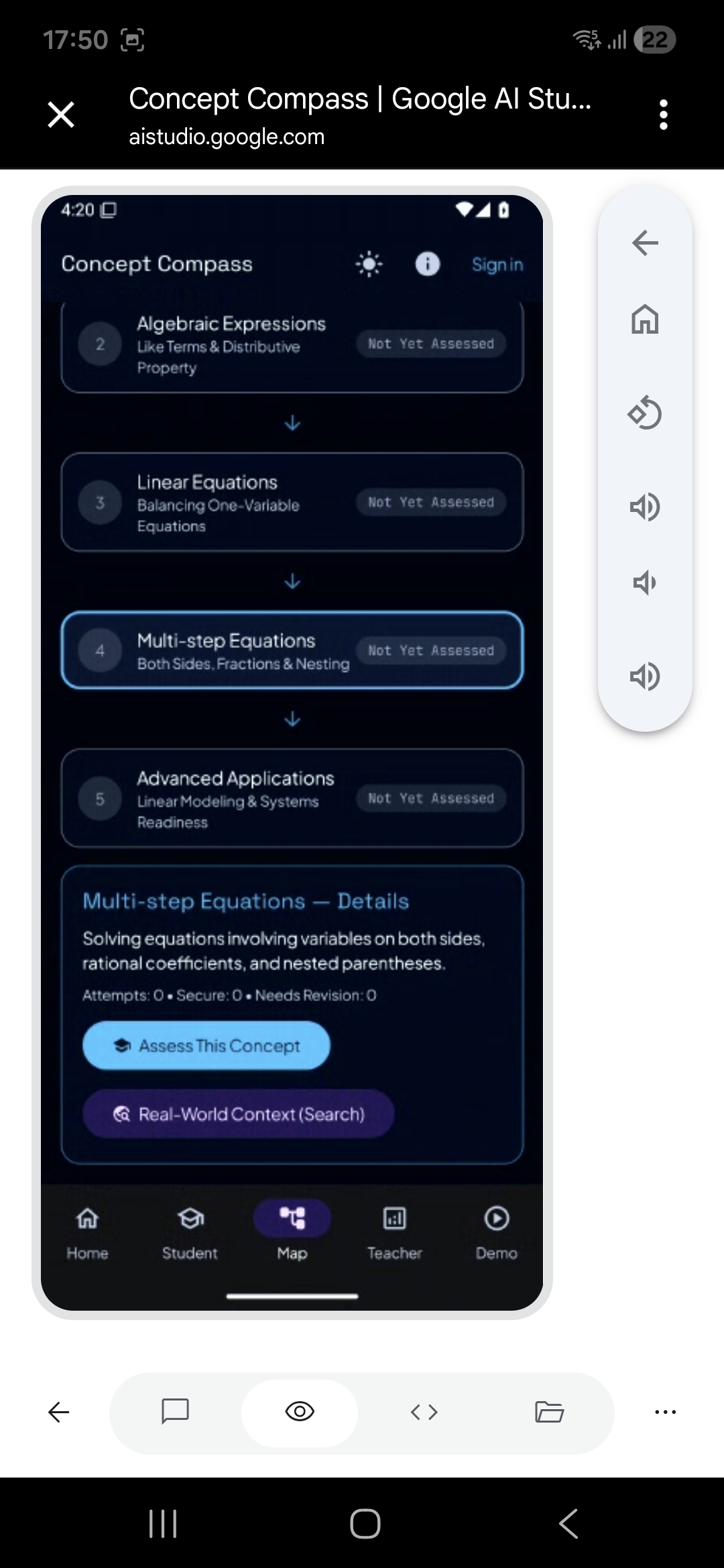
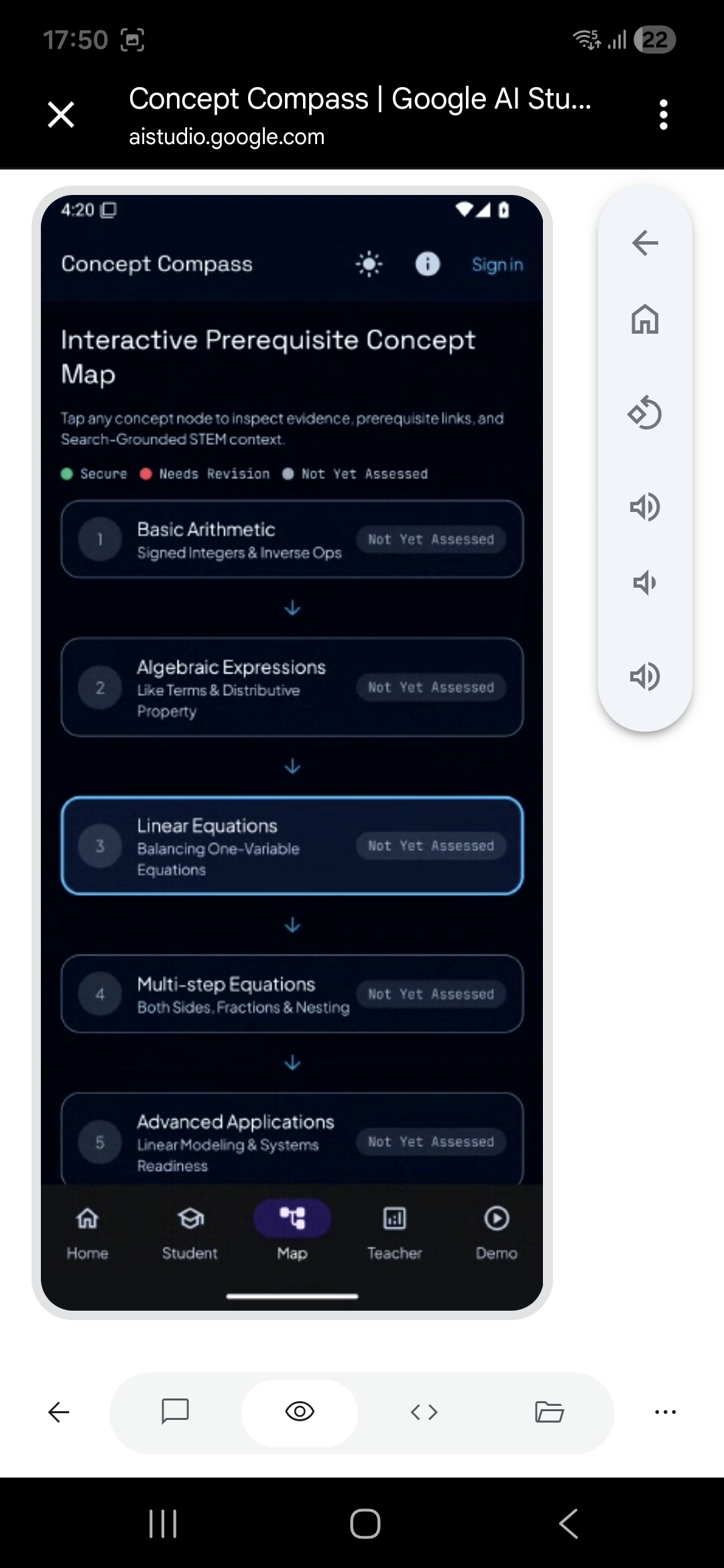
- Interactive prerequisite concept maps.
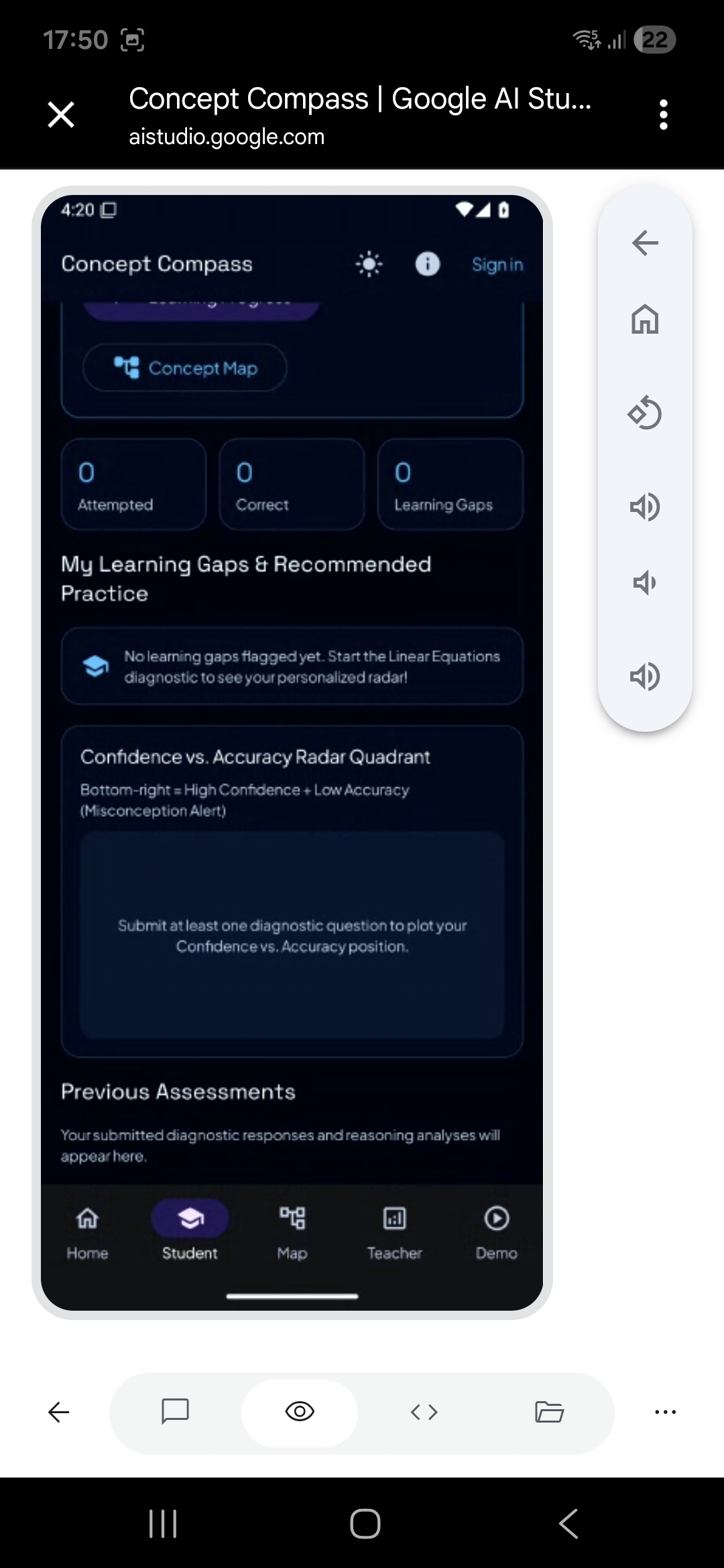
- Student learning analytics.
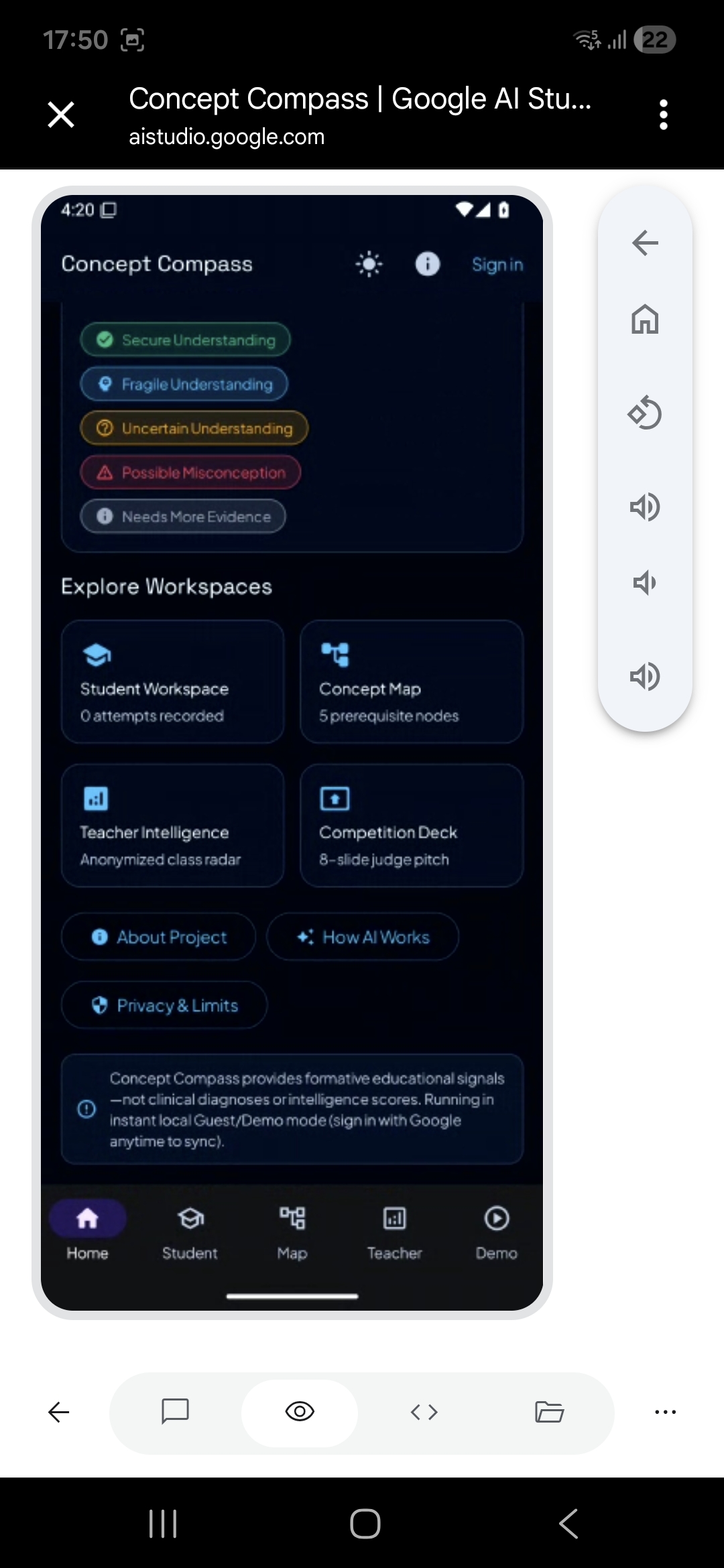
- Teacher intelligence dashboard.
- Anonymized class-level insights.
- Guided demonstration mode.
STEM and technical innovation
Concept Compass demonstrates the application of artificial intelligence, software engineering, educational data analysis, structured assessment design, and interactive data visualization.
The project uses AI where natural-language reasoning analysis is valuable and deterministic algorithms where mathematical correctness and scoring must remain reliable.
Real-world impact
The project aims to help students understand their learning difficulties earlier and give teachers better information for planning targeted instruction.
Its potential applications include schools, tutoring environments, educational nonprofits, and independent learning platforms.
Challenges and limitations
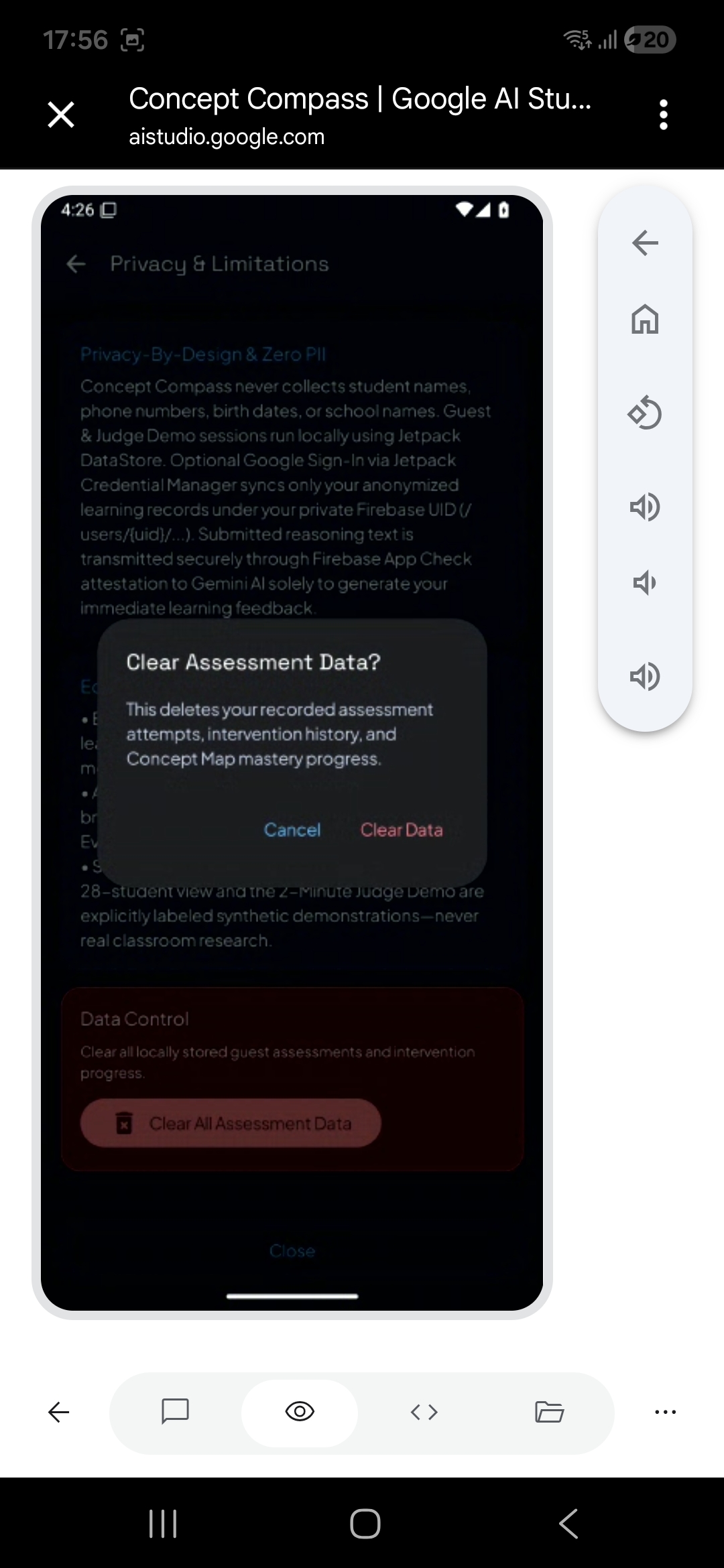
Identifying a misconception from a short written explanation is not always reliable. Students can express correct ideas in different ways, and AI-generated feedback can sometimes be inaccurate.
We address this by separating verified answer checking from AI interpretation, including uncertainty handling, and recommending further assessment when evidence is insufficient.
The current prototype is an initial step toward a more comprehensive learning intelligence system.
Future scope
Future development could include additional subjects, multilingual learning support, curriculum-specific assessments, more advanced prerequisite mapping, classroom integrations, and longitudinal learning analytics.
Our vision
We believe education should not simply measure what students remember. It should help discover how they think, where they struggle, and what they need to understand next.
Concept Compass: Every mistake is a clue. Every concept is a step forward.ation
What it does
How we built it
Challenges we ran into
Accomplishments that we're proud of
What we learned
What's next for CONCEPT COMPASS
Built With
- ai
- api
- artificial
- css
- data
- educational
- gemini
- html
- intelligence
- javascript
- learning
- machine
- node.js
- react
- rest
- studio
- technology
- typescript
- visualization
