Inspiration
My son inspired me to build this. He is studying cybersecurity, and watching him learn made me want to learn more too. So at 60 years old, I started learning artificial intelligence, and I found a new passion.
I am an environmental engineer; I also studied industrial hygiene, and I have spent more than 30 years teaching, from little kids to adults at work. I wanted to use all of that to do something for my community. In my field, we learn one thing early: when people try to fix something dangerous without the right information, they get hurt, or they give up.
Think of a beach covered in sargassum. The first people there are the neighbors. They don't have an expert, a safety plan, or a way to raise money that donors trust. Rotting sargassum gives off hydrogen sulfide and ammonia, and the US EPA says these gases usually show up after the seaweed sits on the beach for about 48 hours. Some neighbors try to help and get sick. Others never report it, because nobody answers.
So I asked myself: what if a neighbor could take a photo and know in a minute if it is safe to help, who to call, and how to raise money people can trust? That is Comunidad Fuerte, "strong community" in Spanish.
What is new in this hackathon: Comunidad Fuerte started from MAREA, an earlier single-page environmental tool I made. Everything in this repository was built during the submission period (from October 1, 2026): the server, the PayPal Checkout, Payouts and Agent Toolkit integration, the milestone checks, privacy and anonymous statistics, the laws by level, the government features, and the tests.
What it does
- A short, safe interview. People report with photos and simple answers. If anything sounds like a chemical, the app stops asking for close-ups and only asks for zoomed photos from where they stand.
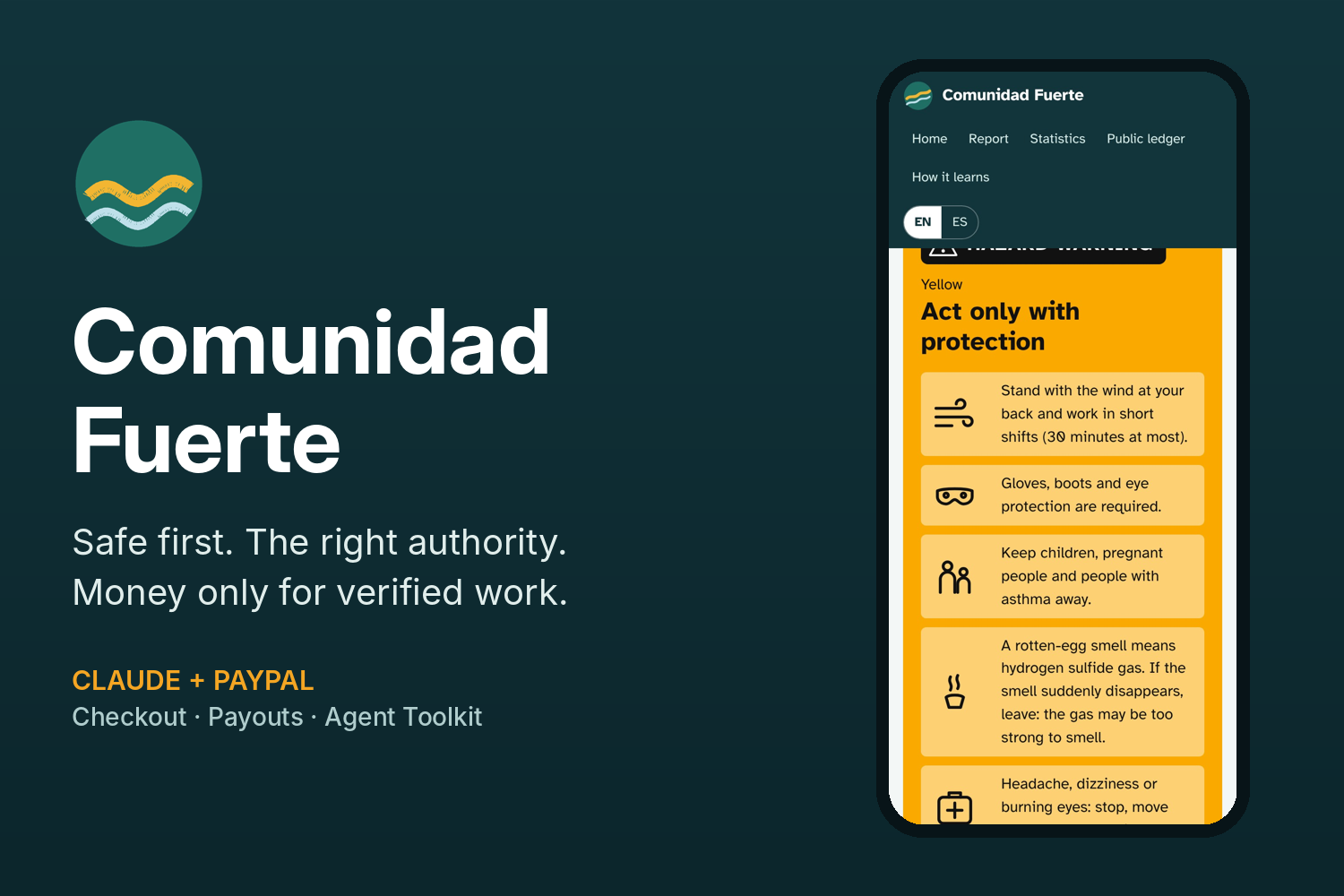
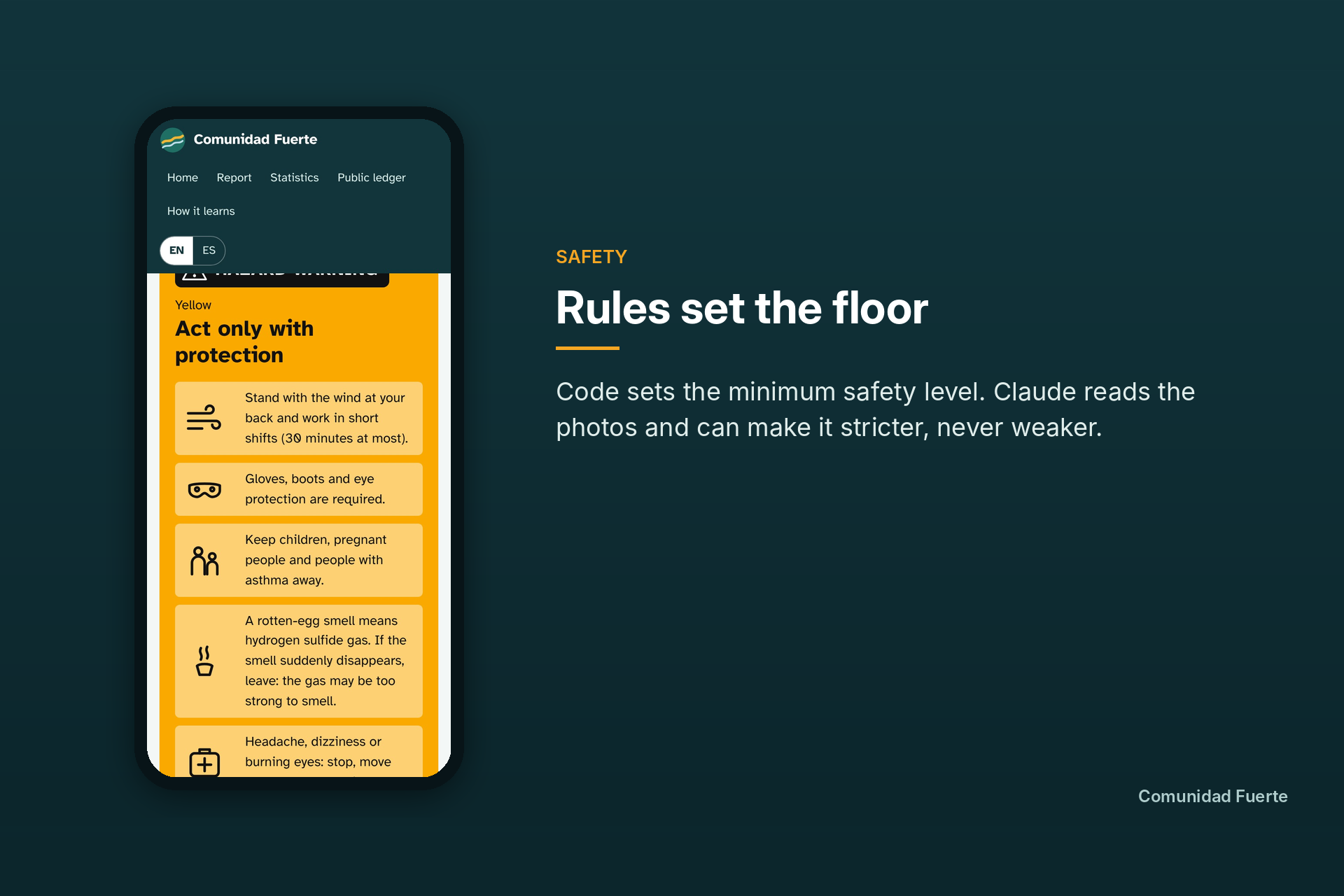
- Green, Yellow, or Red. Rules in the code set the minimum safety level. Claude looks at the photos and can make it stricter, never weaker. If the AI is not sure, the level goes up.
- Safety steps anyone can follow. Pictures and short steps in the 10 most spoken languages. For Maya and Nahuatl, the steps are recorded by paid interpreters from the community, never machine-translated.
- Solutions and help, with sources. Claude searches the web for methods and local organizations. If the source can't be checked, the result is thrown out. A wrong phone number in an emergency is worse than none.
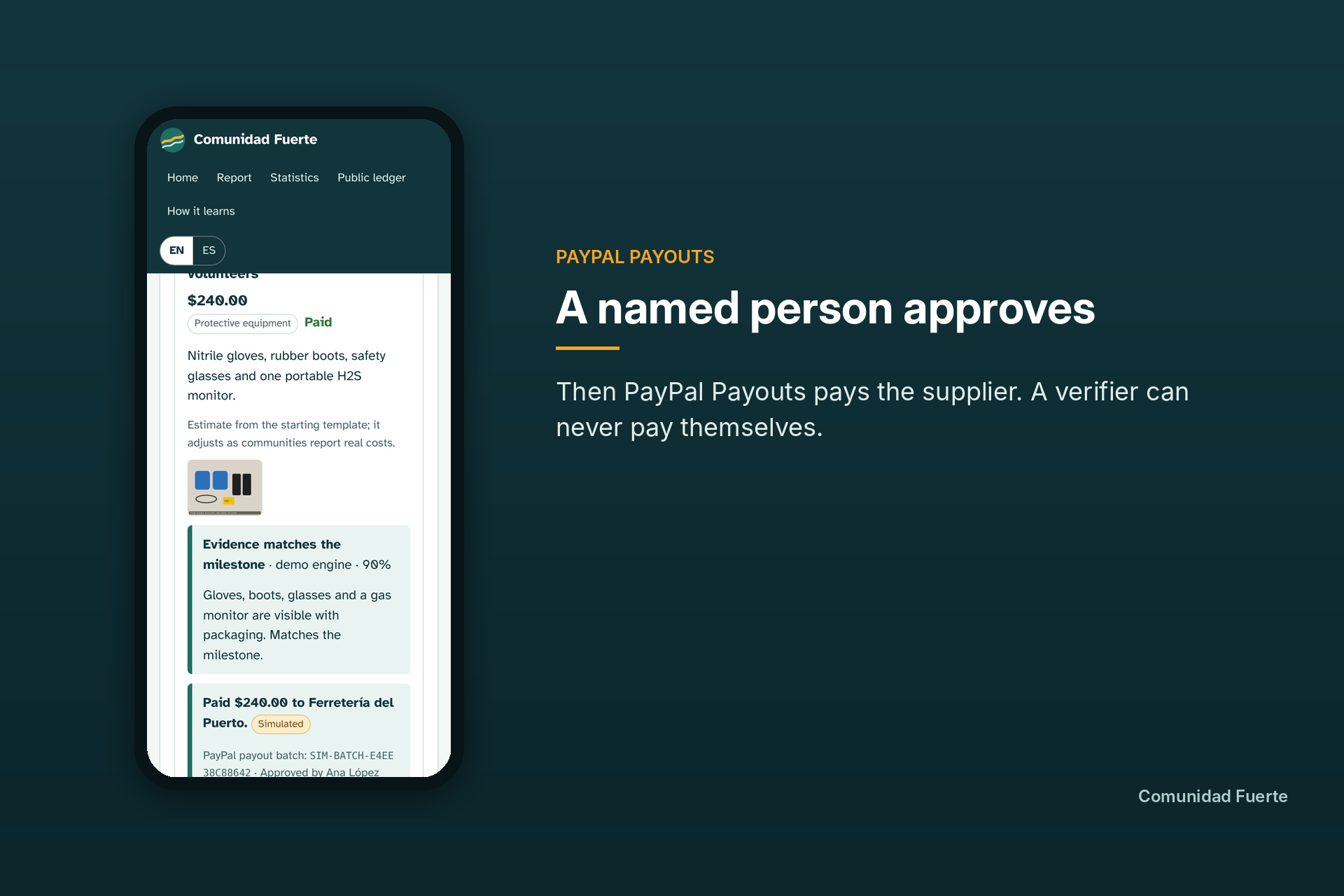
- A PayPal fund for each incident. Neighbors donate with PayPal Checkout. Money goes out with PayPal Payouts one step at a time, only after Claude checks the work photos and a named neighbor approves. Nobody can approve a payment to themselves. Red cases can only pay for lab tests, legal help, and advocacy, never hands-on cleanup.
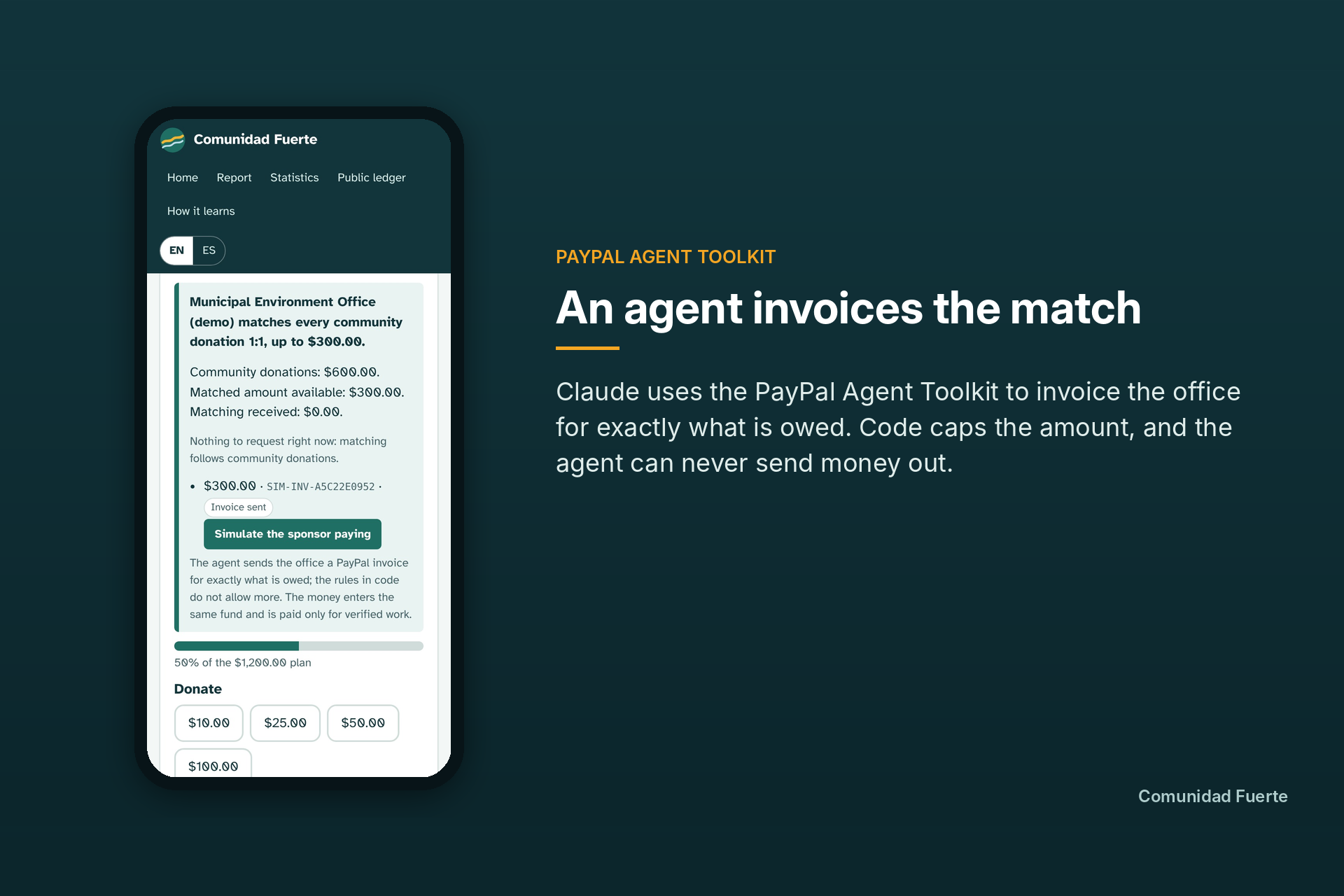
- An AI agent that asks for money but can't send it. Using the PayPal Agent Toolkit, Claude invoices a local sponsor, or a city office that promised to match donations 1:1, and makes a QR poster for people without the app. The code caps every invoice at what is owed.
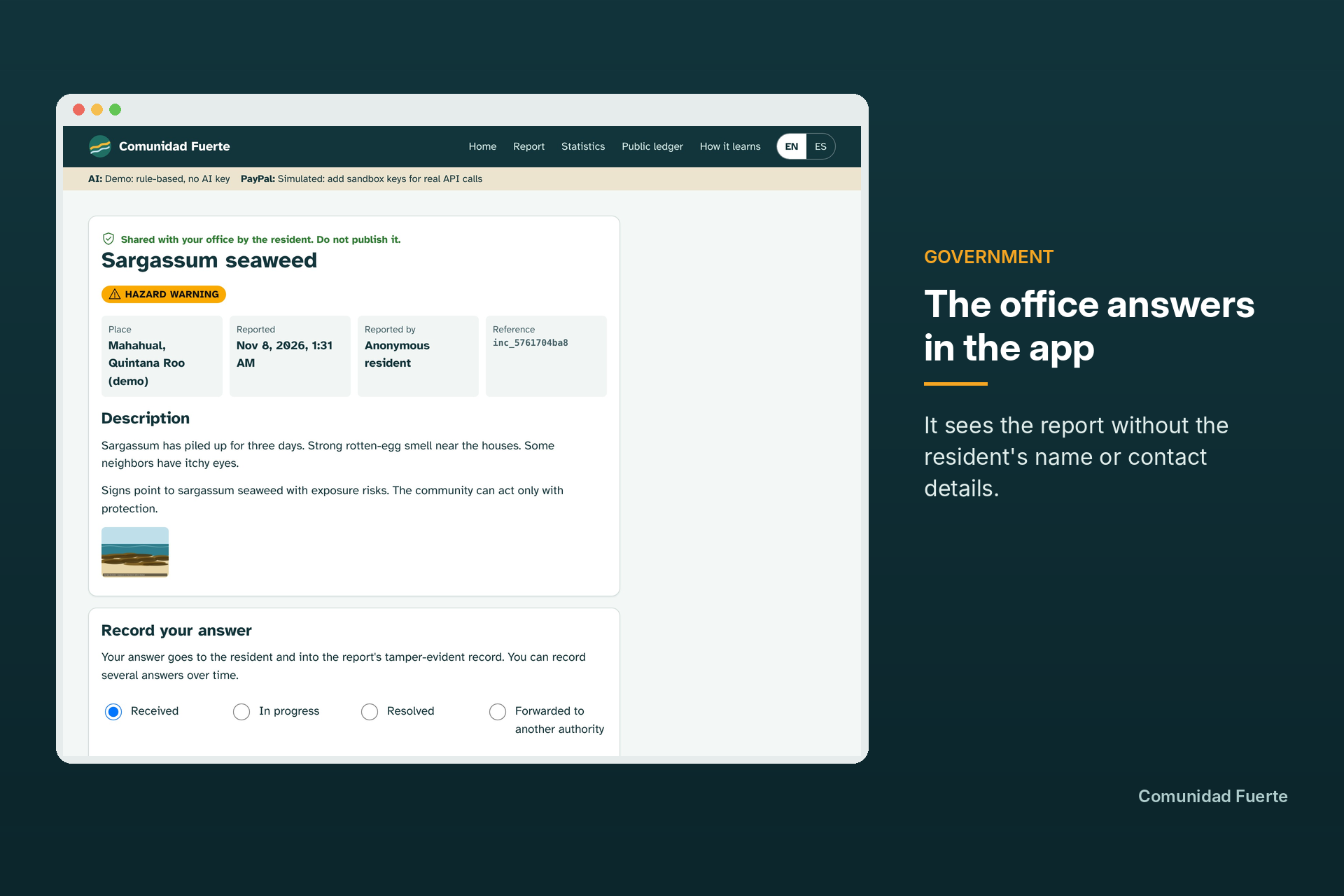
- Government in the loop. The resident sends the report with a link. The office answers inside the app with no account: received, in progress, resolved. If nobody answers, the app suggests the next authority up and writes the message.
- Laws by level. International, national, state, and local rules, only the ones I verified for that place, each with its source and date. If a place is not verified yet, the app says so instead of guessing.
- More than pollution. Cracked stairs, gas smells, fallen power lines, flooding, potholes, and rental repairs use the same steps, with the right channel to call.
- Private by default. Only the person who reports can see the report. No account, email, or phone needed. Emails and phone numbers typed into the app are removed. Reports still feed anonymous statistics for cities, and any group smaller than 3 is hidden.
- Evidence people can trust. Every action goes into a tamper-evident record (SHA-256), photo location data is removed, and the safety steps work offline.
How I built it
- Backend: Node.js and Express, with a hash-chained record of every action.
- AI: Claude with vision to read photos and check work, the Claude web search tool for methods and organizations, and Claude tool use to drive the PayPal Agent Toolkit.
- PayPal: Orders API v2 for donations, Payouts API for each verified step, and the Agent Toolkit invoice tools (create, send, QR code, get), all built for the PayPal sandbox.
- Frontend: a web app you can install on any phone or computer, in English and Spanish, with a large, readable font, and it works offline.
- Hosted demo: runs in demo mode (rule-based AI, simulated PayPal, every record labeled) so judges can try every screen without accounts. With sandbox keys, the same code calls Claude and PayPal.
- Testing: 53 automated tests and a browser test with 117 checks, including privacy across devices and the Spanish interface.
Challenges I ran into
- Keeping AI helpful but safe. I took every safety and money rule out of the AI and put it in the code. A wrong AI answer can't lower a safety level or release a payment.
- No invented contacts. Results are kept only when the source was actually found.
- Privacy and useful data at the same time. Reports stay private, but the numbers still help. The privacy rules live in the code and are tested.
- Language. The communities that suffer most often speak languages AI handles poorly, so I chose pictures and paid human recordings for safety steps.
Accomplishments I'm proud of
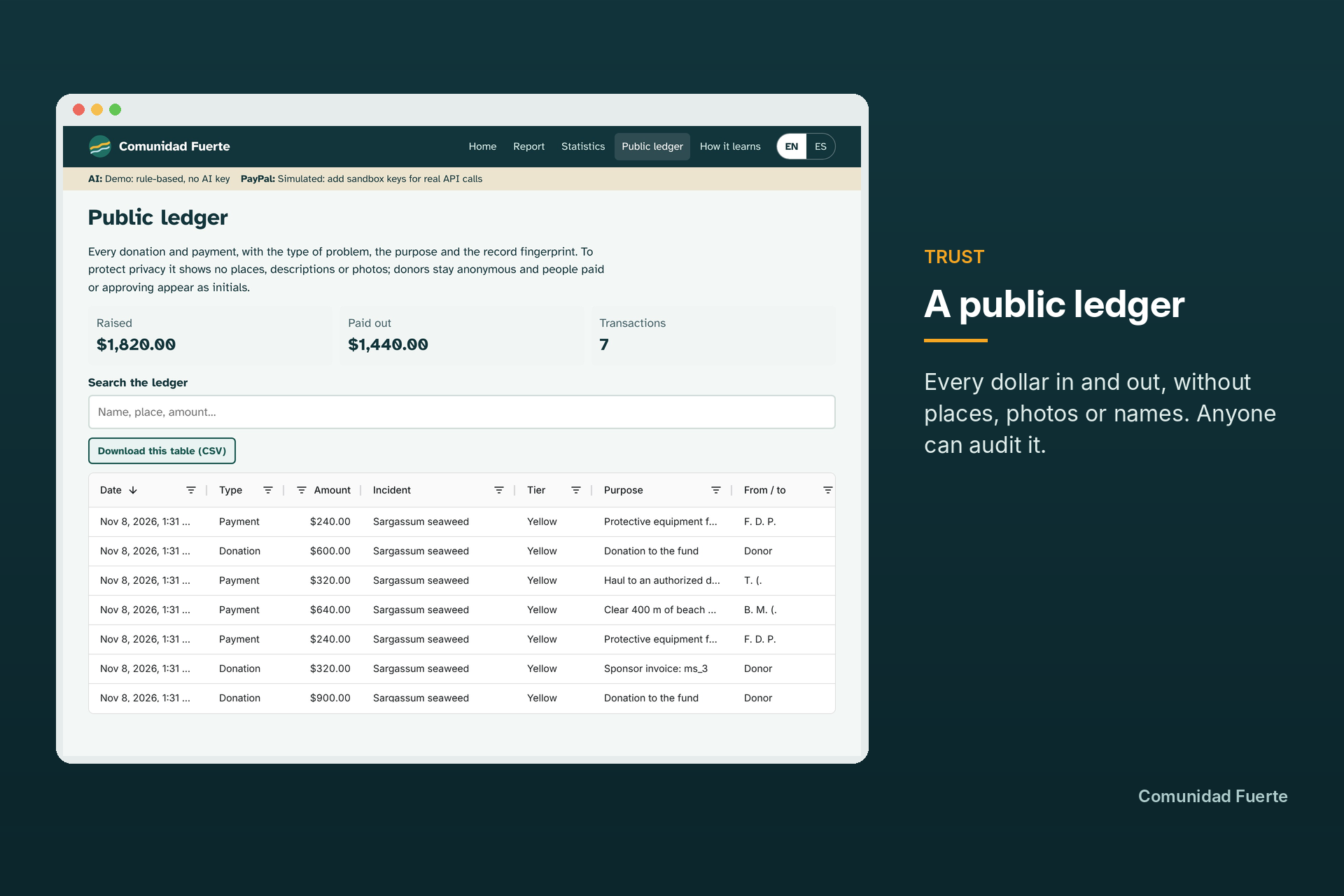
- The full path works: from a neighbor's first photo to a verified, approved PayPal payment, with a public ledger anyone can check.
- An agent that helps raise money and cannot move money out.
- My tests caught a real safety problem: the AI could have suggested smelling a sample. Now that question is blocked at every level.
- Learning to build all of this at 60, and seeing it work.
What I learned
As a teacher, I know people trust what they can check. In community response, trust is as big a problem as the pollution itself. When every payment is tied to photos and a real person, donors and authorities are more willing to help.
I also learned that it is never too late to start. Nobody can take your education away from you, wherever you go. I was born in Mexico, and today I am an American citizen. Everything I learned in both countries is in this app.
What's next
A verified inbox for government offices, pilots with beach communities in the Mexican Caribbean and a river community in central Mexico, expert sign-off of every safety step, native-speaker review of the translations, automatic face blurring in public photos, and partnerships with Indigenous-language institutes.
Built With
- claude
- javascript
- node.js
- paypal
- render
