-
-

Development of Video and HD Image Compression technique for Transmission over Half Duplex Very - High Frequency (VHF) Band.
-
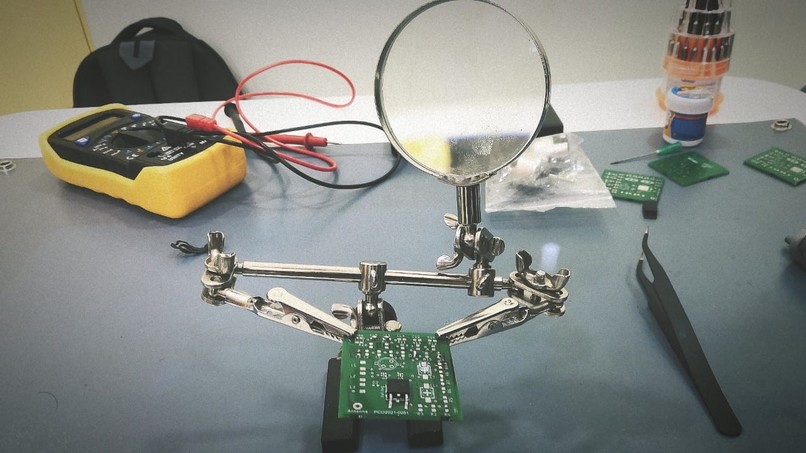
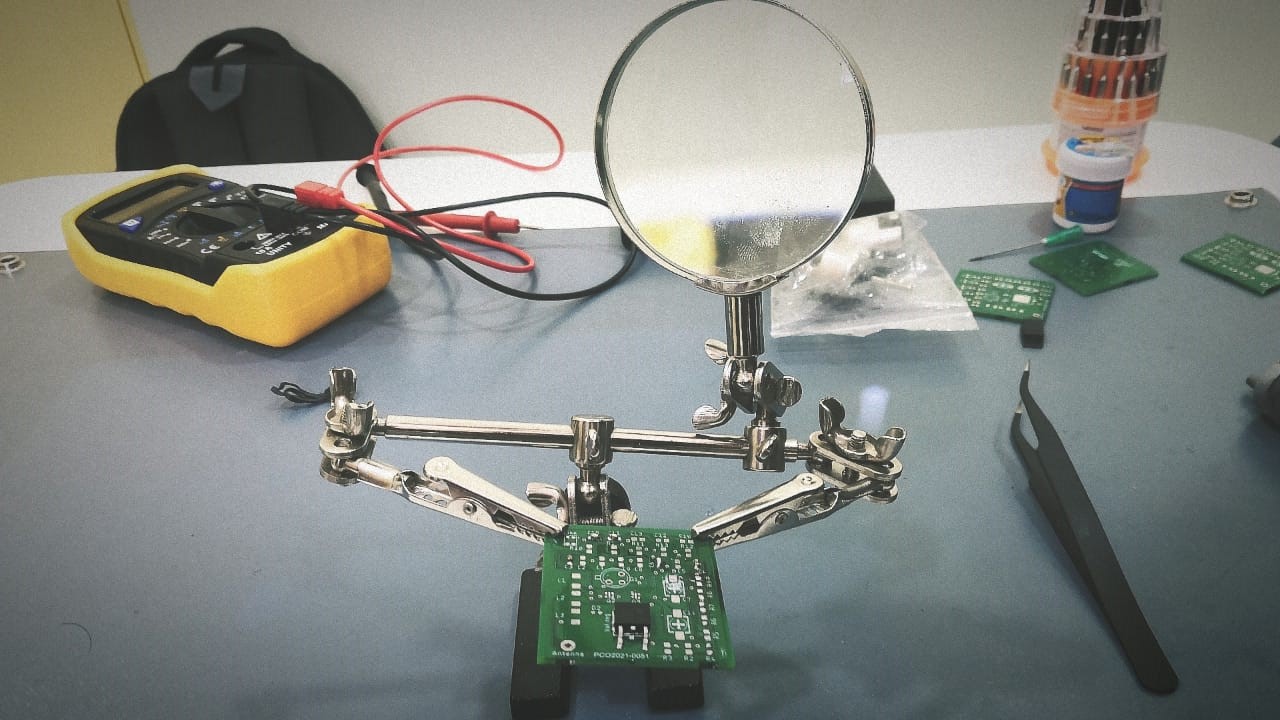
A Picture of an FM Transmitter being Developed by Team Aeolus for another Project.
-
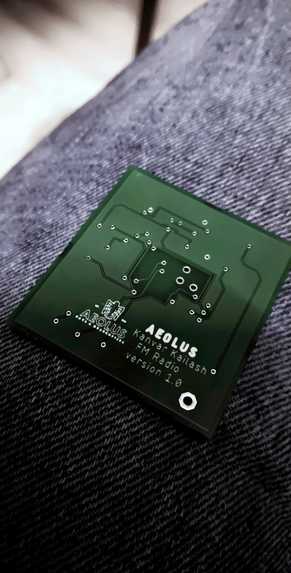
A Picture of an FM Transmitter being Developed by Team Aeolus for another Project.
-
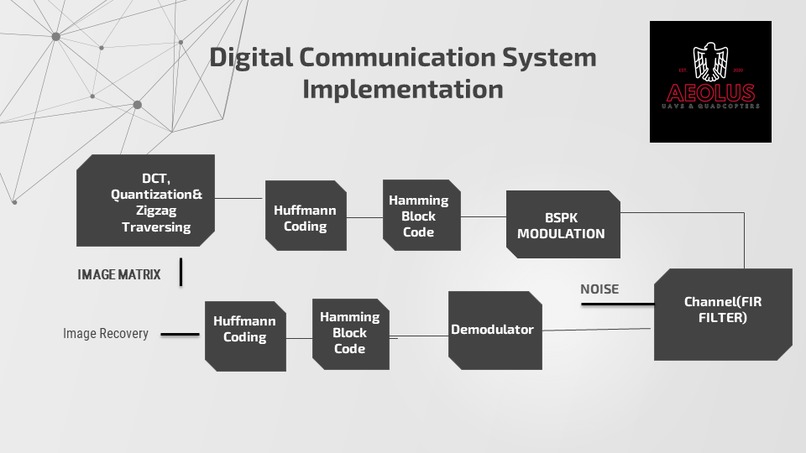
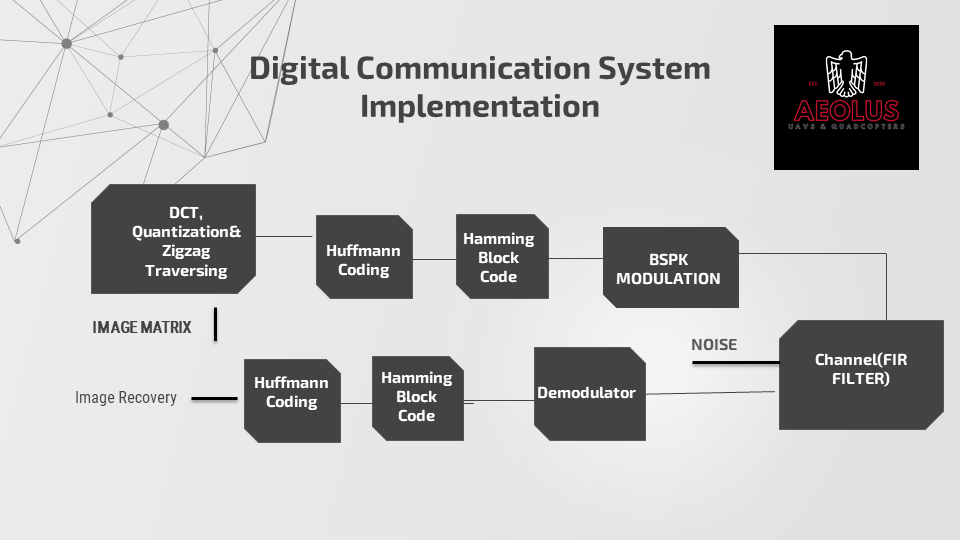
Block Diagram of the Process.
-
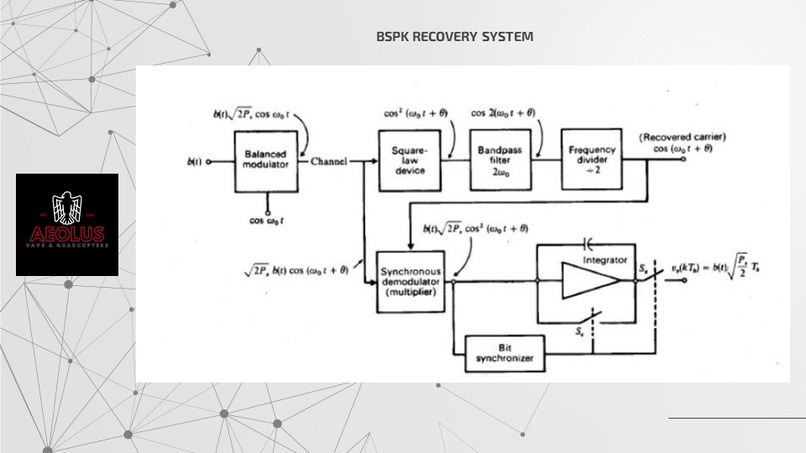
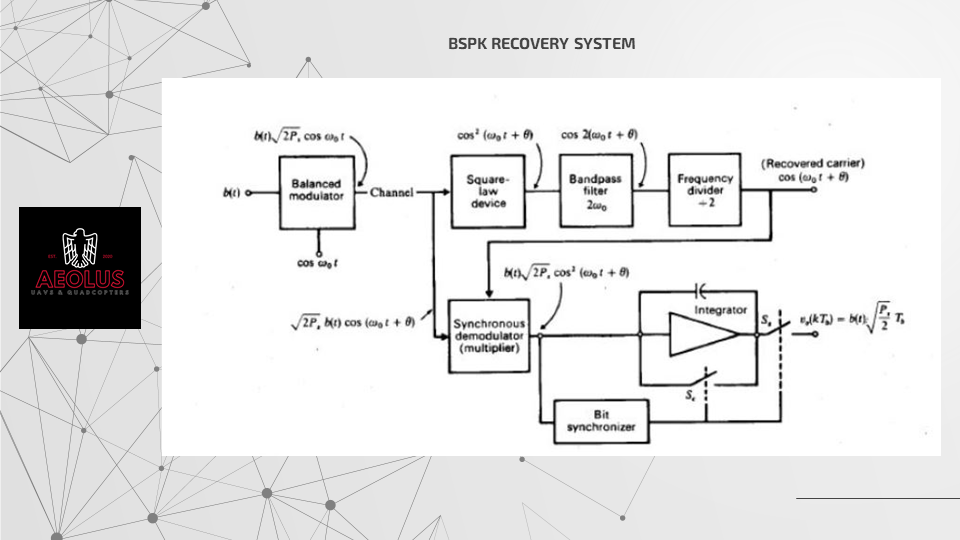
Block Diagram of BSPK Recovery System.
-
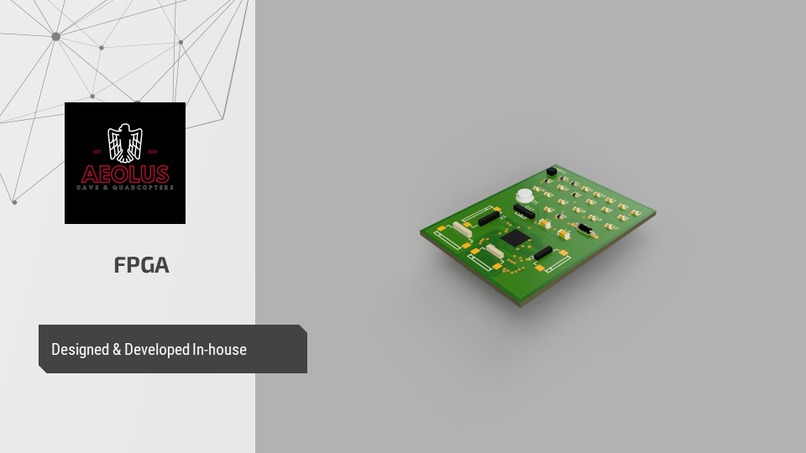
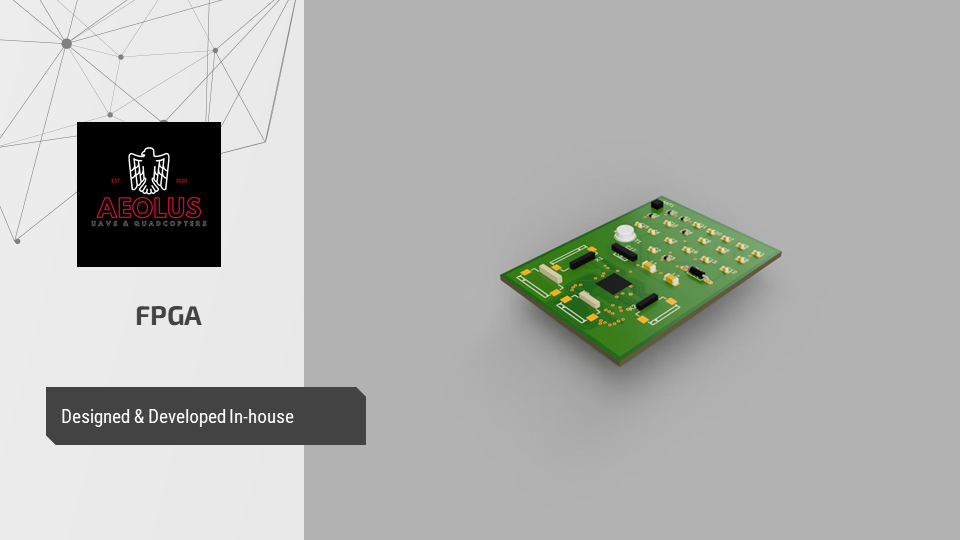
In-House Designed & Developed FPGA.
-
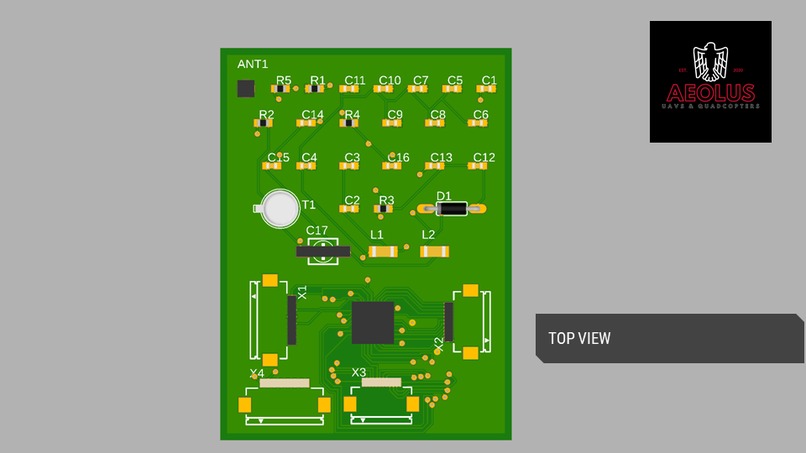
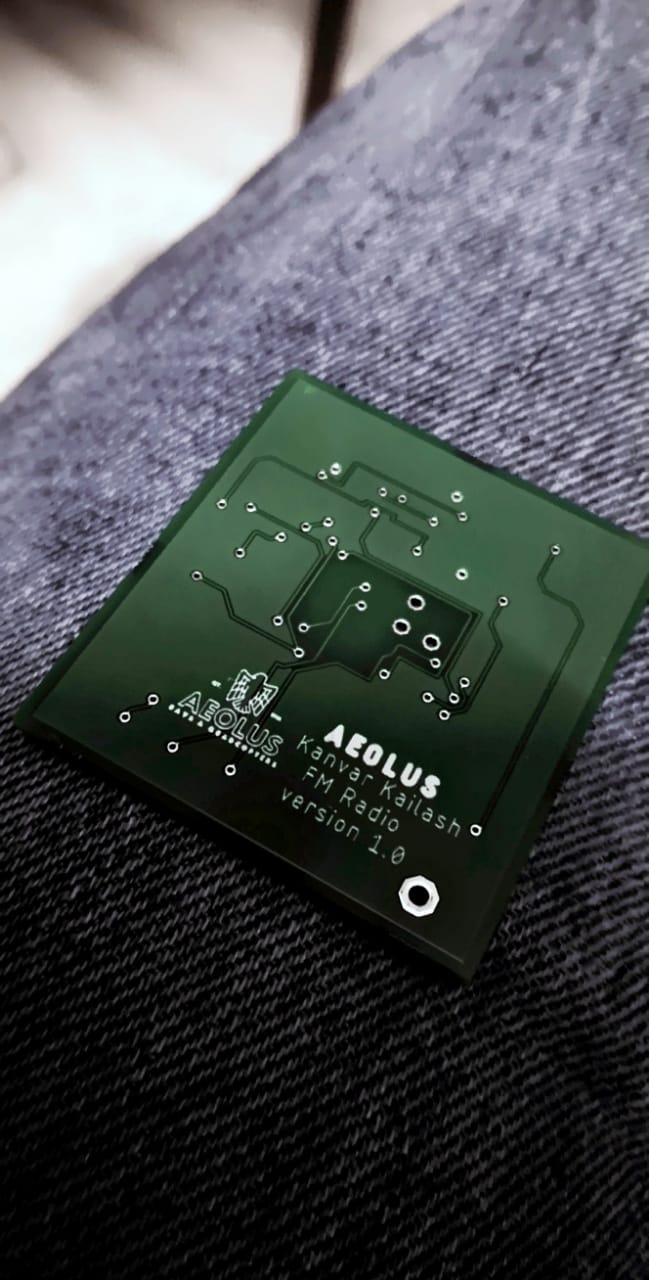
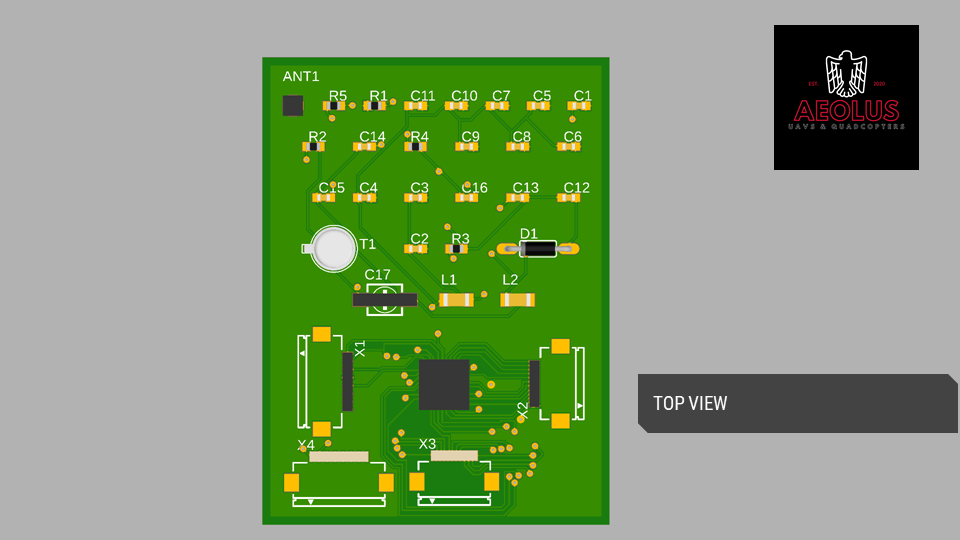
Top Side of the Developed FPGA
-

Bottom Side of the Developed FPGA
-
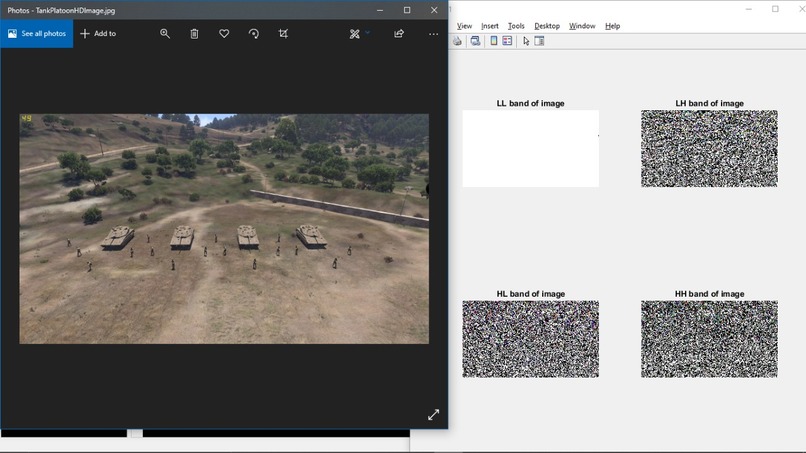
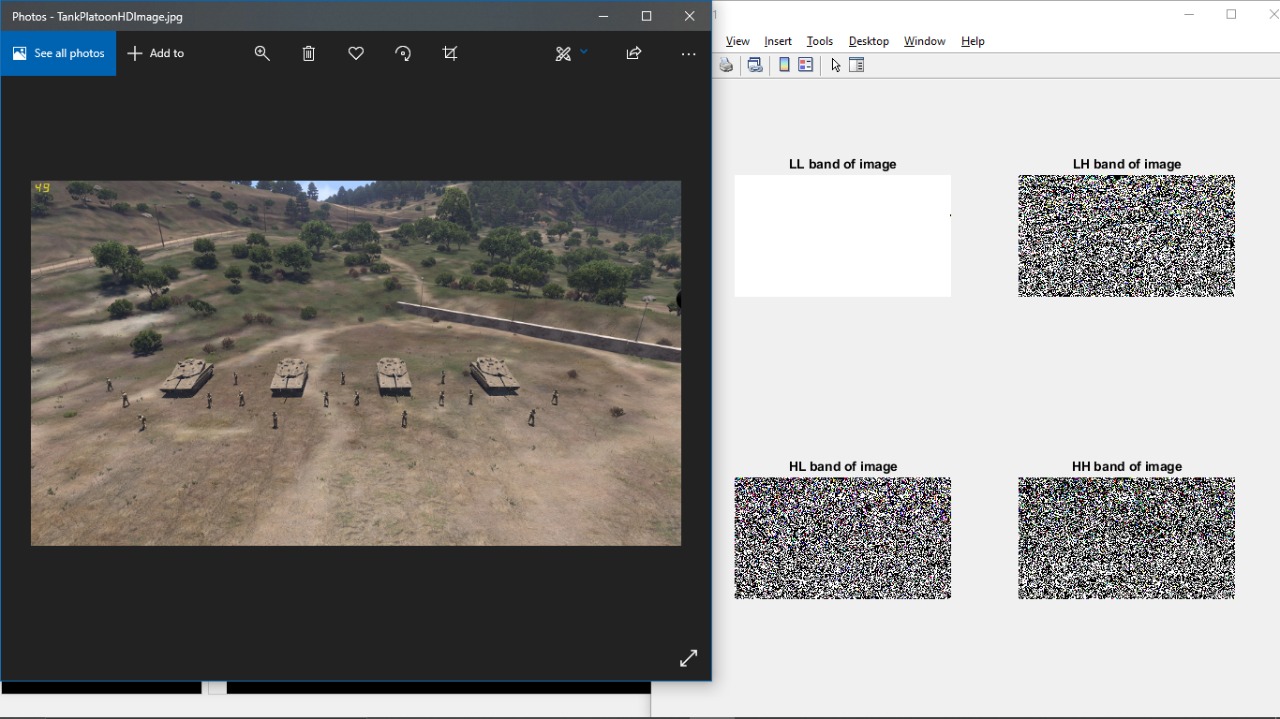
A Snapshot of an Eagle's Eye View (Aerial View) of Platoon of tanks. Image Processed Spatial to Frequency Domain of the Image after DWT.
-
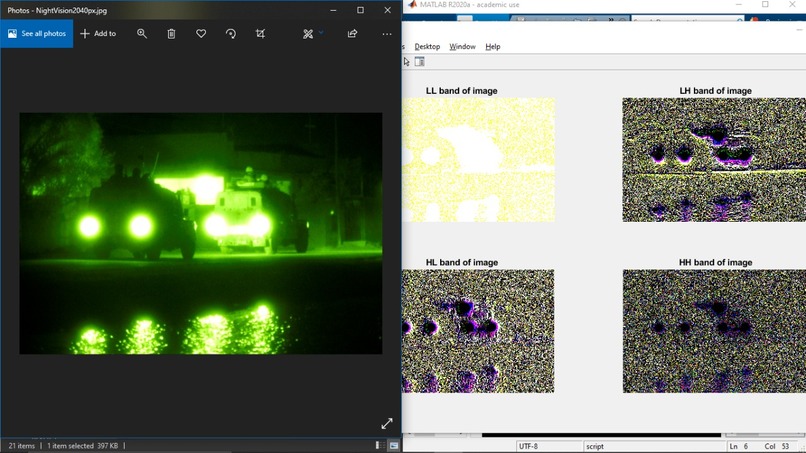
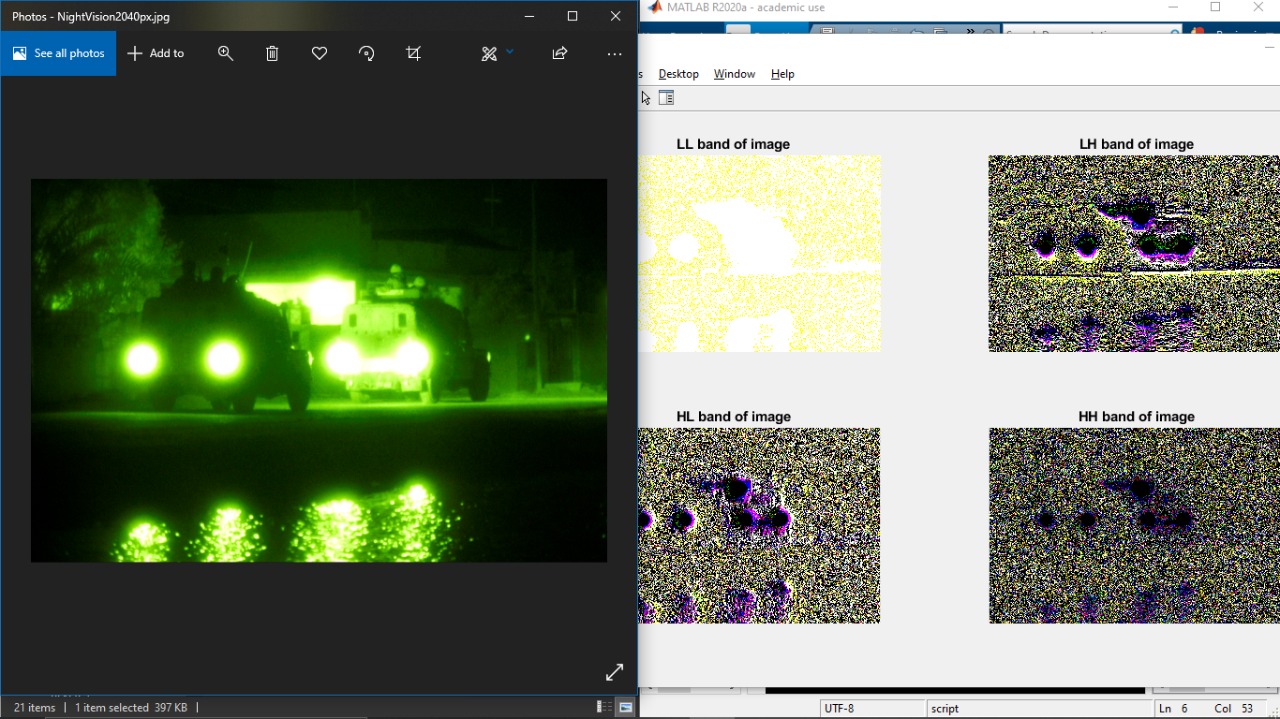
A Snapshot of a Night Vision of Armored Vehicles. Image Processed Spatial to Frequency Domain of the Image after DWT.
-
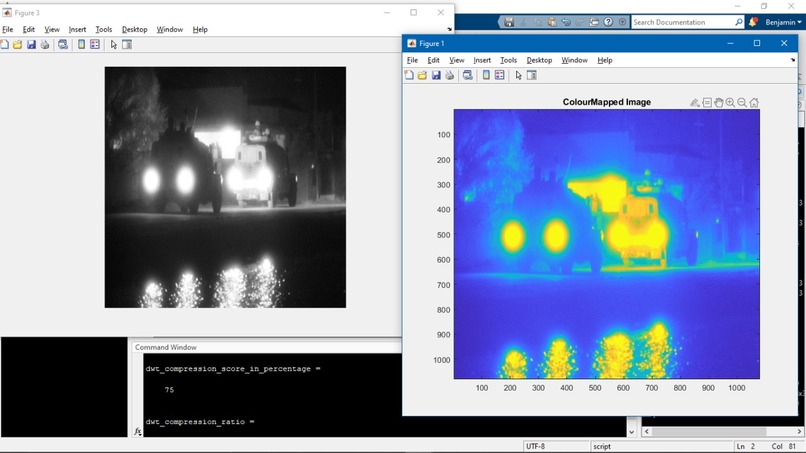
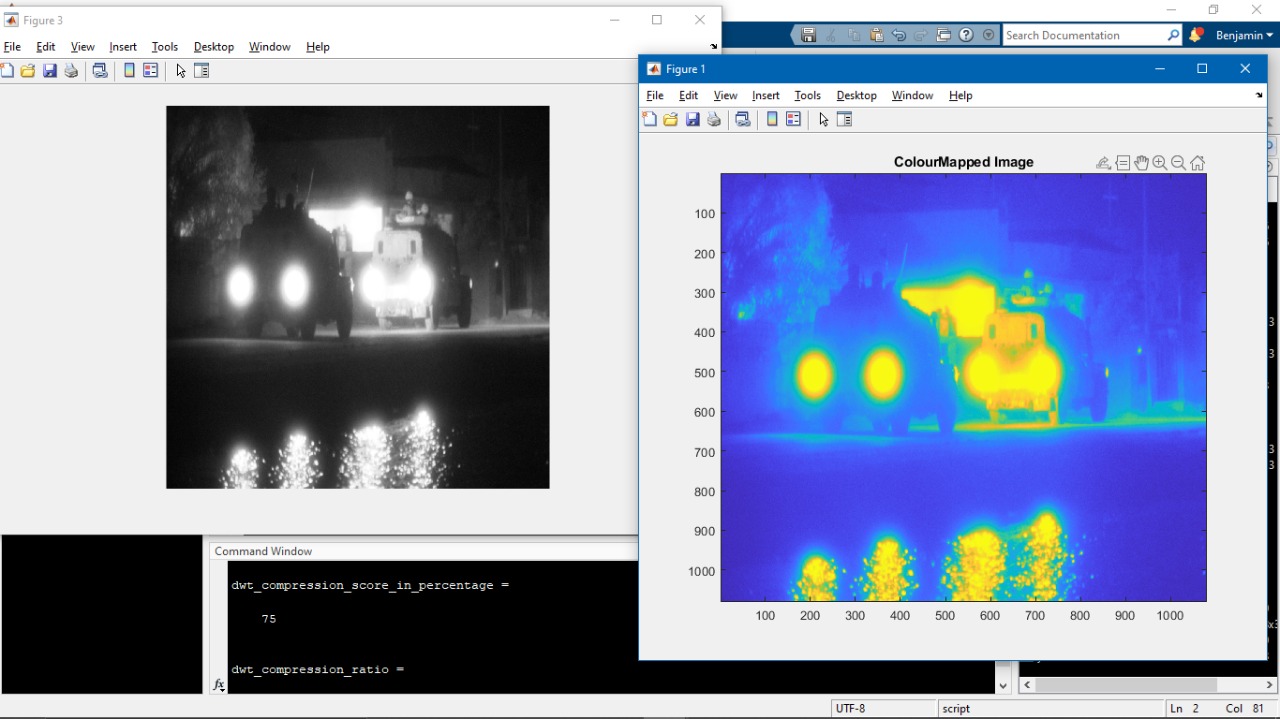
Image Processed and Compressed. Compression Score in % mentioned.
-
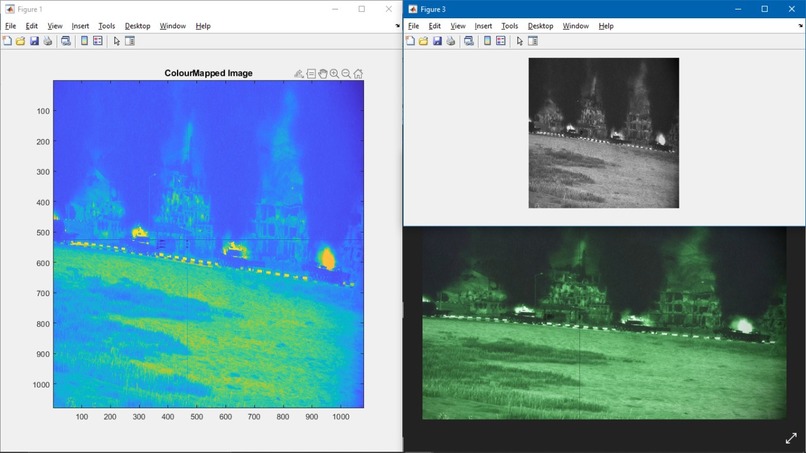
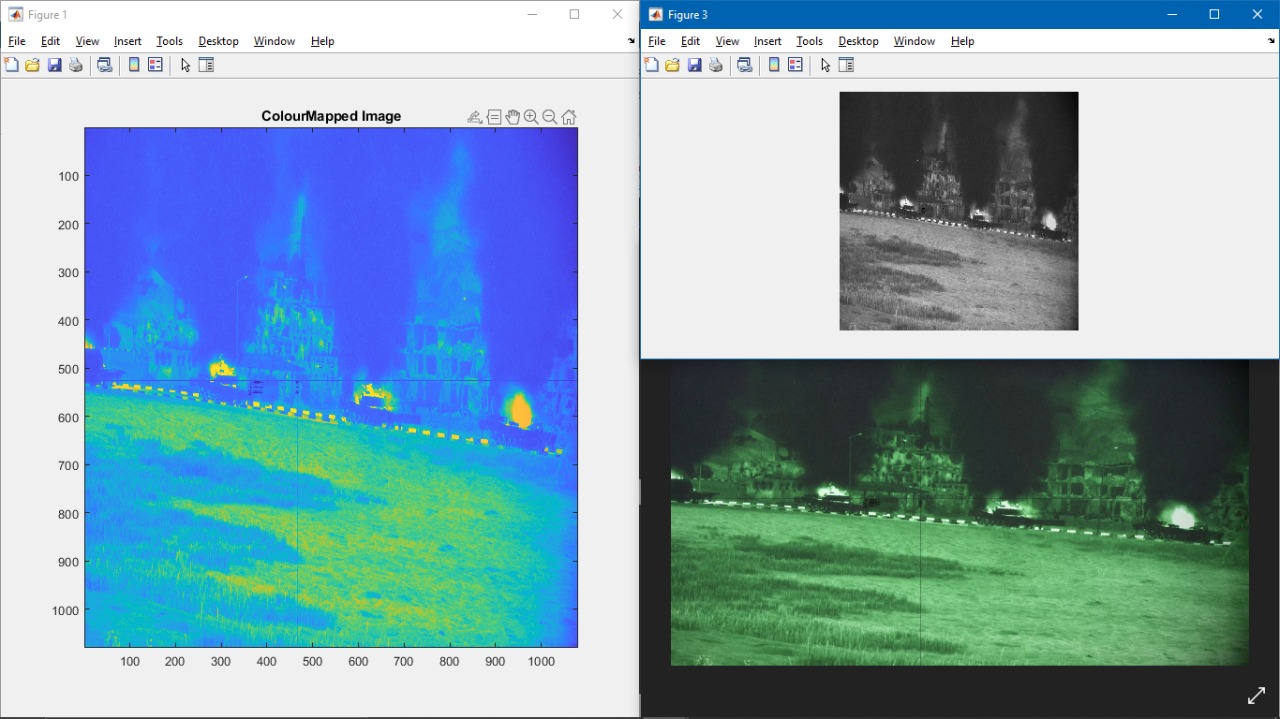
Night Vision Image of Destroyed Artilleries being processed and compressed using MATLAB.


Development of Video and HD Image Compression technique for Transmission over Half Duplex Very - High Frequency (VHF) Band.
I. About Us: TEAM AEOLUS
We, Team Aeolus are a group of technologically driven Electronics & Communication Engineering pursuant students with the core-electronic skill-set and have designed and developed various Avionics and Electronic Modules indigenously and in-house, keeping third-party components to a minimum. We are looking forward to using this skill for the benefit of making a scientific breakthrough & for the glory of our nation, India.
II. Our Inspiration:
We've always been fascinated by Army Intelligence Collection Protocols and Techniques. The Tech.-Oriented Segment of the Defense, that actually helps us win battles in the most efficient way with very little collateral - damage in terms of both personnel and machinery. We take our inspiration from here to make this process more efficient and streamlined. Saving Time at the same time transferring quality intel-information. Because when it comes to war, time is of the essence.
III. Solving the Problem Statement:
- Since the inception of data & image compression algorithms, the Discrete Cosine Transform (DCT) & the Discrete Wavelet Transform forms the foundation for every other algorithm developed further in history. After our Review. Our Team got together and started figuring out an algorithm or a group of algorithms which can be selected by the user itself to compress the data accordingly as how he/she seems best. However, the choice of algorithm will be defined by the Design of the Software to keep the complexity to a minimum. We've concluded that we could develop our software further into the following: i. Multi-Level Perceptron based Compression: It is actually analogous to DCT & DWT in-terms of quantization, binary coding (symbols) & pixel-by-pixel spatial domain transformation. So, we'll be adding on Neural Networks & train models to determine the optimal binary code combination to the archaic DCT & DWT Compression Algorithms. Back-Propagation can be done at the receivers end. ii. Lossless Image Compression inspired by Dropbox's "Lepton": Another Example of the infamous DCT Algorithmn in action. Predicting. This algorithm reduces the file size of JPEG-encoded images (and that’s most of them) by as much as 22 percent, yet without losing a single bit of the original. This algorithmn saves petabytes of data when actually it is saved on the Servers. In our case, we'll be deploying the same by reducing the brightness coefficients of the image and towards the end of the decompression bit, the algorithm looks at the border between two of the 8×8-pixel blocks JPEG creates, where on one side the decoding is already done. The un-decoded side tends to follow a brightness gradient established by that found in the pixels leading up to that middle area, so the algorithm makes a prediction based on that. From the "Middle-Out". It then saves only the delta between this prediction and the real value — formatted to be a good fit for the VP8 arithmetic coder.
- Compression of the Image solves just one half of the problem. The next half lies on transmitting the image in a Fast & Reliable VHF Channel. So, after the compression of the algorithmn, we'll be Modulating the Image Data - Signal under Binary Phase Shift Keying Modulation, before sending it into amplifiers for transmission over an antenna.
- Since we are a team built upon the core-electronics background, we believe that the hardware plays a very vital role as the software, starting from the Printed Circuit Board to the on-board processor for the image processing.
We have designed and developed an Field Programmable Gate Array (FPGA) Board which can be used as a Digital Image Processor. To compress as well as transmit the data.
IV. Building the Software & Hardware:
The software part, we've been using Mathworks MATLAB & Simulink R2020A for Signal & Image Processing, (screenshots of the codes have been attached below for your perusal). The Time-Frame we had to develop the software since we found out about this event was very narrow, yet we did our best in putting two-and-two together. We are still working on the same.
In the meanwhile, we've been developing the Hardware on Autodesk Eagle & Autodesk Fusion360. As of now, we've built an hardware where a Camera Module can be attached to capture required Image/Video, we are looking forward to developing Digital Image Processors that can be attached straight into the Firmware of DSLR Camera to capture High Definition Images via USB / Local Wi-Fi. We have also prospected into developing an Real-Time Operating System (RTOS) that would be very user-friendly which can actually help capturing images across multiple electromagnetic spectrum (IR-Night Vision, IR-Thermal UV, Visible Light etc.), processing all these images about what exactly is required, then compressing and transmitting the same.
V. Present Challenge & Offered Solutions:
We've had some hiccups at the coding level and still have some more, we've debugged codes day-in & day-out. To be frank, we are still new when it comes to the Software side and could really appreciate a little more light in the form of Guidance the SRM Innovation & Incubation Centre. Although, we indeed have developed something with the limited resources we had.
The major disadvantage of the VHF Band is the Short Range it offers and in-ability to penetrate solid objects and poor quality in bad weather. Now, let us take into account of our soldiers protecting us at very high altitudes, where the weather is bad and they need good intel data of the position of the enemy troops there. Let's say we have a Camera in an Outpost near the enemy troops that captures images of their position. Relaying of that information via Ground - Ground is unreliable. What solution we propose is of making use of low-earth orbit military satellites is to receive that Image Signal and transmit the same to our troops who require the intel data ASAP & as well as sending a copy via a network of military satellites to Research & Analysis Wing (RAW), New Delhi. However, this seems very possible, actual practicality of this solution can be know only after we test.
VI. Accomplishments:
We've successfully Designed and Developed the Hardware Printed Circuit Boards (PCB), which can be sent right away to a PCB Fabricator for Prototype Manufacturing. Acquiring the necessary parts assembling them is next in-line.
VII. Post-Review Updates & Clarifications:
Apart from the updates mentioned in III. 1i, III. 1ii and V. 2. There are few more things that we'd like update:
- Encryption of the Radio Channel: An Intel Information does no good to us, if the enemy has that leaked information that we have. Thus, Cryptographic Hashing of the Modulated BPSK Signal of the Compressed Image / Video has come to our attention and we've started working on the same. Integration of Data Security into our system. To keep intact vital image data before transmitting the same via Ground-to-Ground or Ground-to-Air-to-Ground.
- Also, we'd like to bring to your attention that we have designed a modular prototypic device which can be interfaced to any Camera Module. It can be a Camera aboard a Drone for Aerial Reconnaissance or to a Surveillance CCTV Camera at an Outpost or Line of Control (LOC), or to a Small Camera or a DSLR of an Espionage Agent and even on to the Helmet Camera of a Solider in Encounter.
VIII. The Way so Far & The Way Ahead:
- [X] Research of Compression Techniques & Algorithms.
- [X] Schematic Design of Hardware Equipment (FPGA).
- [X] PCB Design of Hardware Equipment (FPGA).
- [X] Commencement of Software Development.
- [ ] Polishing of MATLAB Image Processing & Process Codes
- [ ] MATLAB -> Simulink -> Verilog
- [ ] Verilog -> Xilinx ISE Design Suite
- [ ] Pin Planning of the FPGA Processor for necessary functions.
- [ ] Timing Analyzes & RTL Architecture Design
- [ ] Upload Synthesis Files into the Digital Image Processor (FPGA).
- [ ] Hardware-in-Loop Testing on Simulink. Dotting the _"i"_.
- [ ] After Successful Testing, Design of an ASIC / SOC from the Successful FPGA Model.
- [ ] Large Scale Production / Manufacturing of the Hardware.
- [ ] Deployment into the Defense Services.
- [ ] Service Support from the team.
Post Script: This Literature has every piece of information we've gathered in our encounter with the given problem statement. We don't have a Demo Video to be precise that actually encapsulates everything in this document, since our approach to the problem was in such a way in the limited time we had. But we've some files and pictures that actually speak for itself. We've attached the same in the additional links. The video in the "Video Demo Link" is a bit noisy kindly do turn on captions.
Built With
- autodesk-fusion-360
- c
- eagle
- imageprocessing
- matlab
- simulink
- verilog
- xilinxise


Log in or sign up for Devpost to join the conversation.