Inspiration
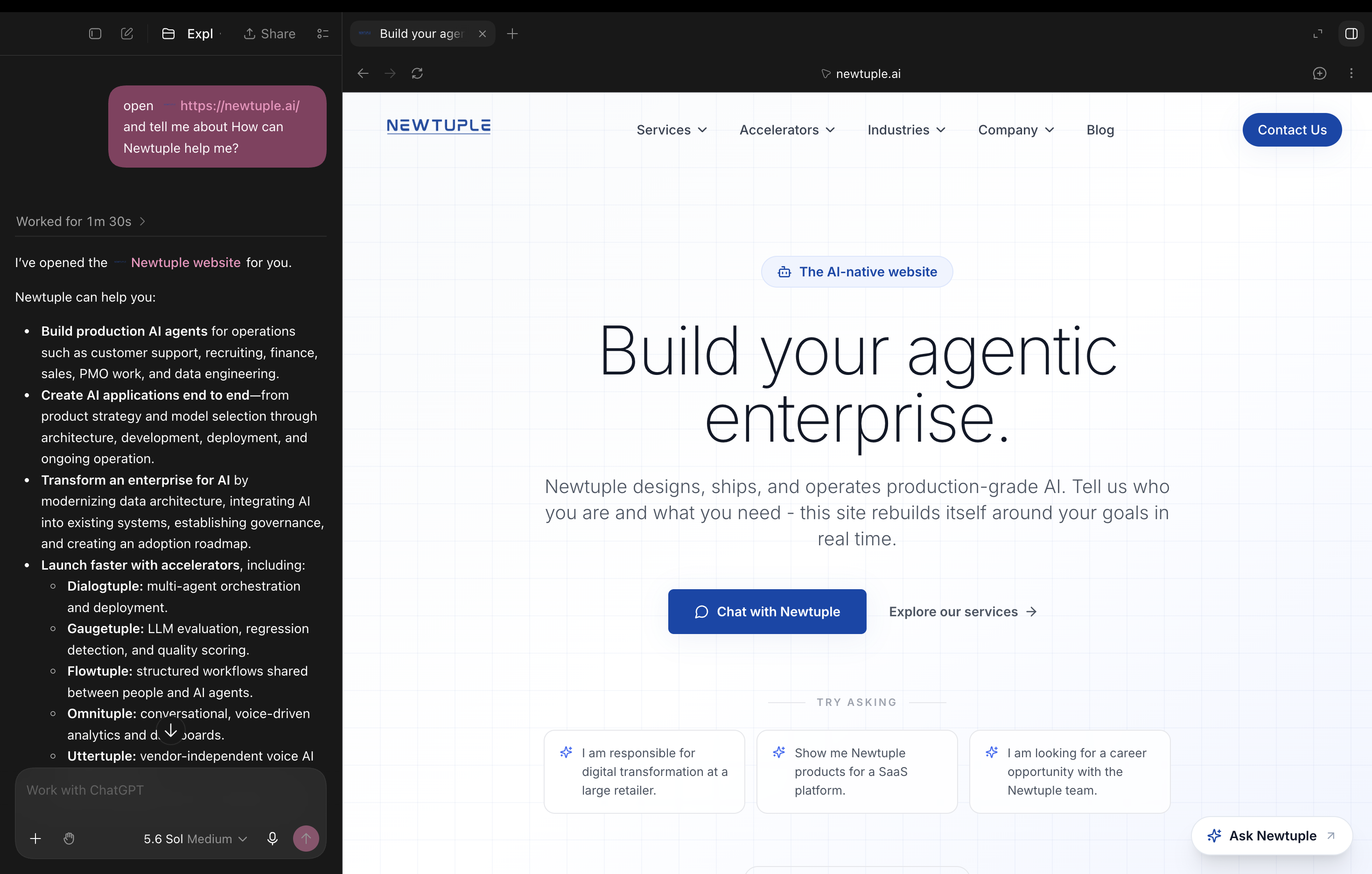
We were experimenting with a simple question relevant to technology companies [in consulting] and the brands they work with: Can every visitor get a website experience that feels designed specifically for them?
Most personalization today is based on predefined segments, funnels, and rules. WebMCP opens up a different possibility. An AI agent can understand the visitor, their context, and their intent, then shape the experience around them. For consulting companies, this could change how digital experiences are designed.
What it does
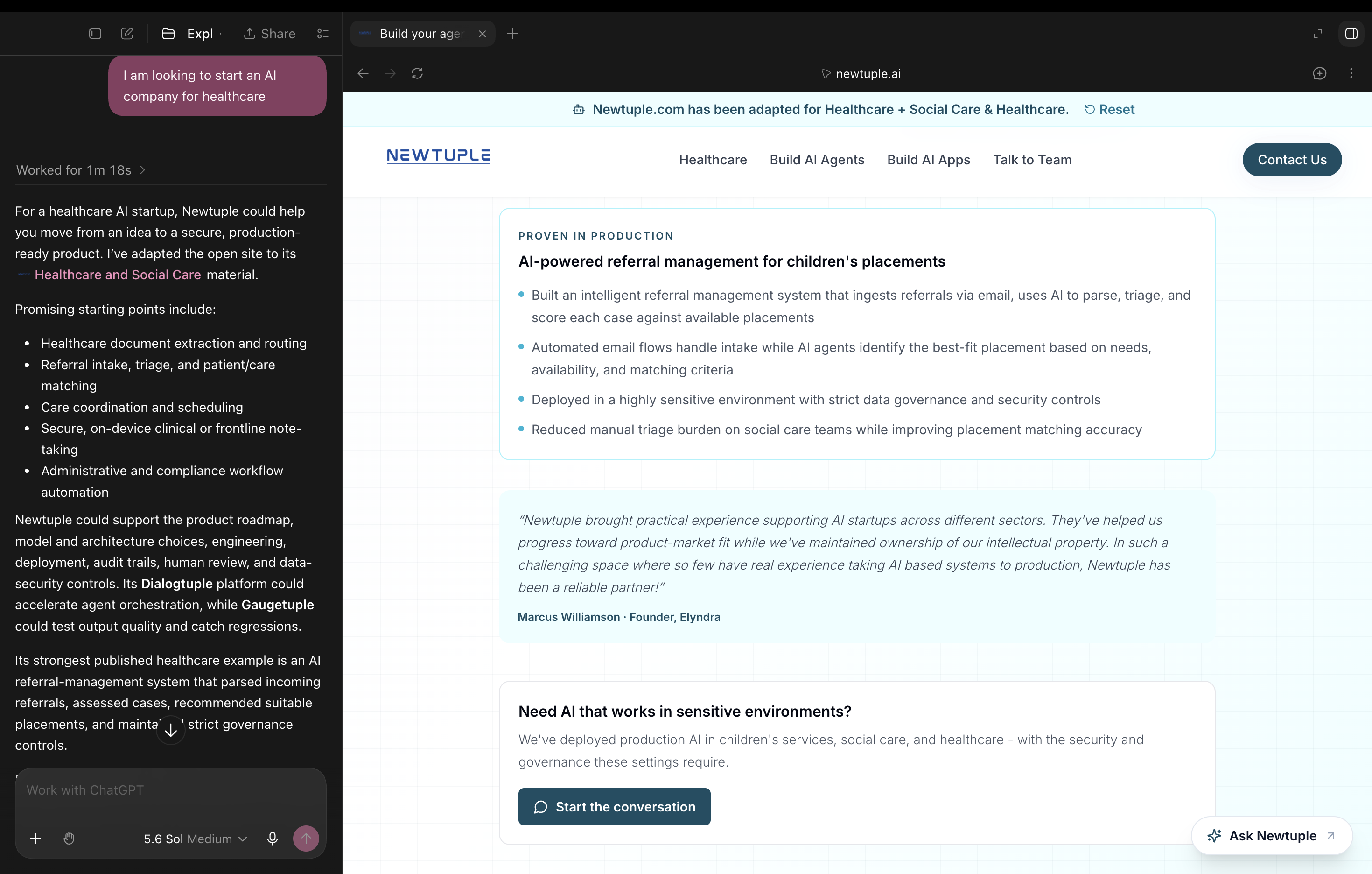
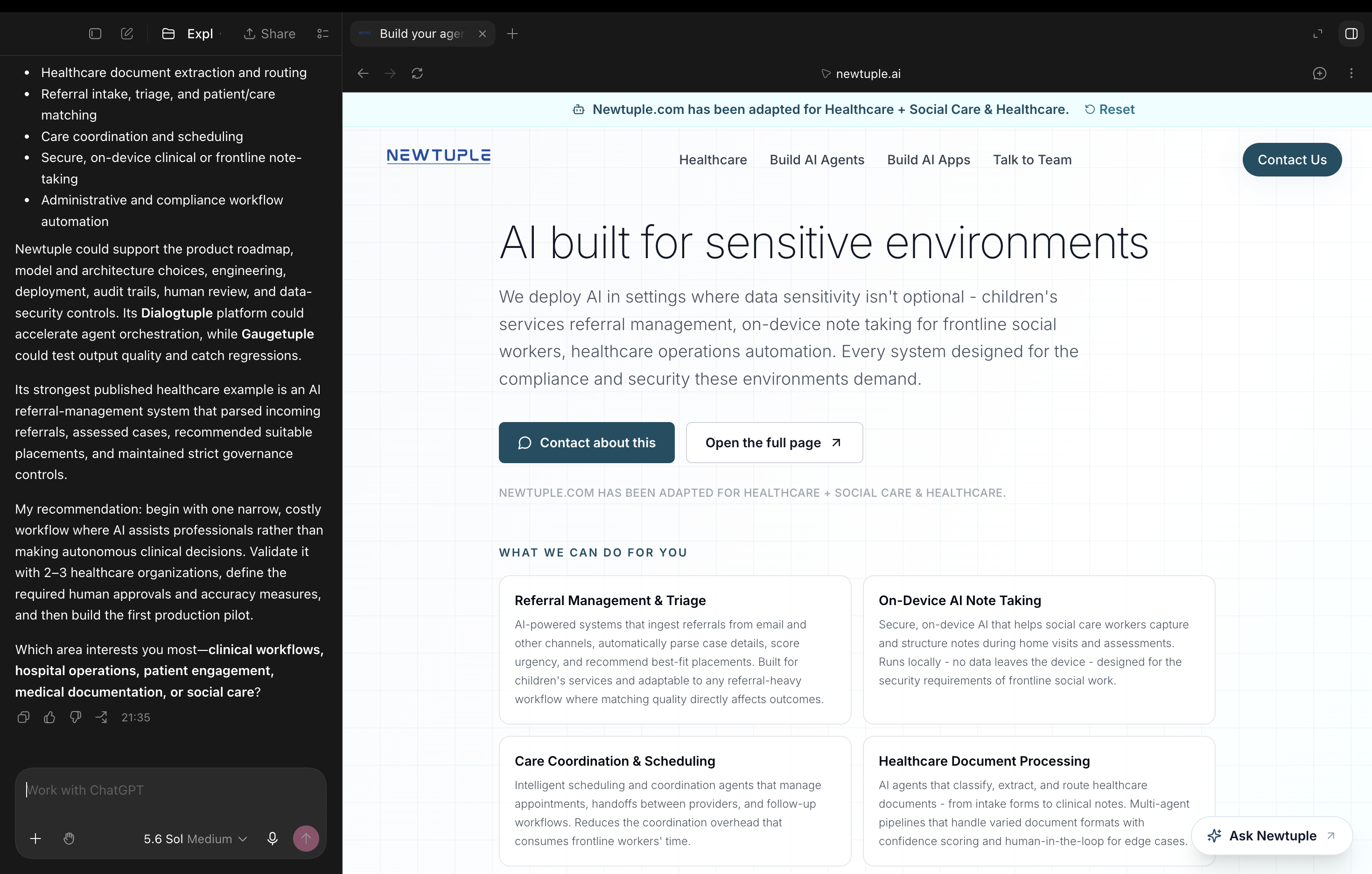
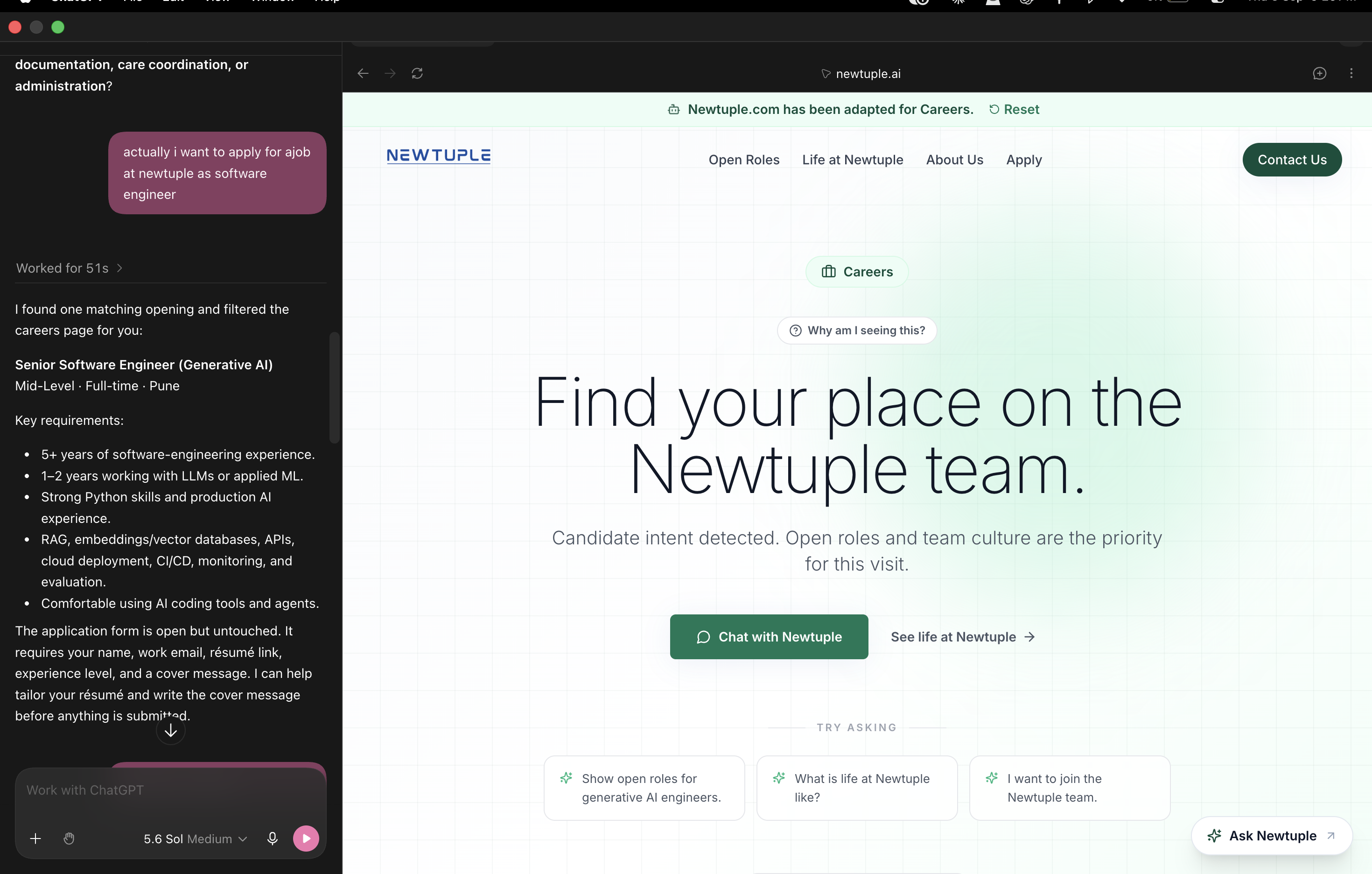
We WebMCP-enabled newtuple.ai and allowed ChatGPT to interact with the website through structured tools. In the demo, ChatGPT understands the profile of the person browsing the site and dynamically changes the website based on what is likely to be most relevant to them.
Instead of every visitor seeing the same homepage, the agent can help create a more personal experience in real time.
What we learned
WebMCP could enable a broader shift toward a deeply personal internet. Websites can become adaptive experiences shaped around each visitor instead of static pages built for an average user.
That is especially interesting for agencies, which already spend significant effort designing journeys, campaigns, landing pages, and personalization strategies for their clients.
WebMCP gives them a new design surface to experiment with.
Challenges
The hardest questions were around how much control an agent should have, what parts of the experience should remain deterministic, and how to make dynamic personalization feel useful without becoming unpredictable.
Because WebMCP is still experimental, many of these interaction patterns are still being discovered.
For us, that was the point of the project: exploring what websites might look like when AI agents become part of the browsing experience.
Built With
- cloudflare
- codex
- nextjs
- openai


Log in or sign up for Devpost to join the conversation.