-
-
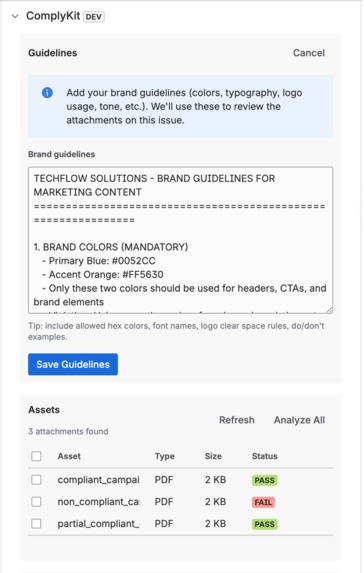
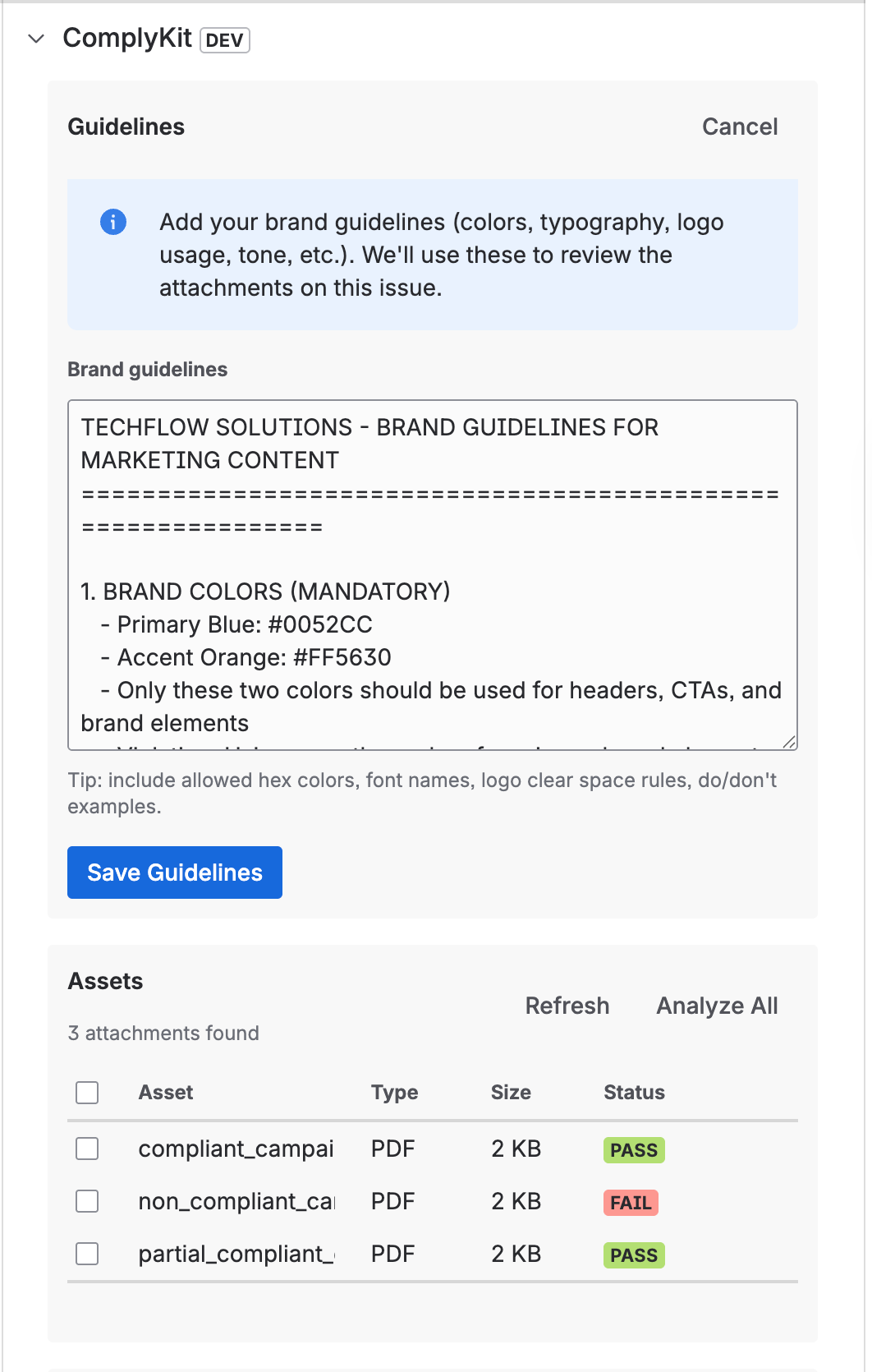
ComplyKit - Edit Guideline and Uploaded Assets
-
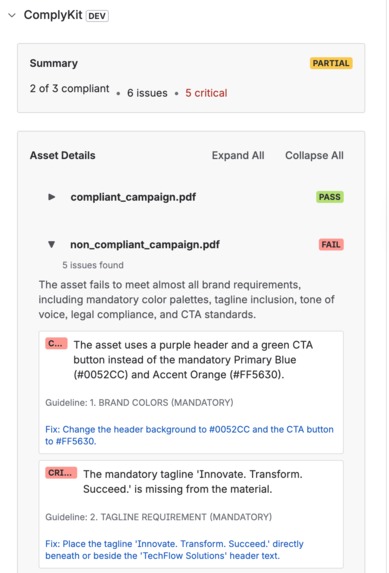
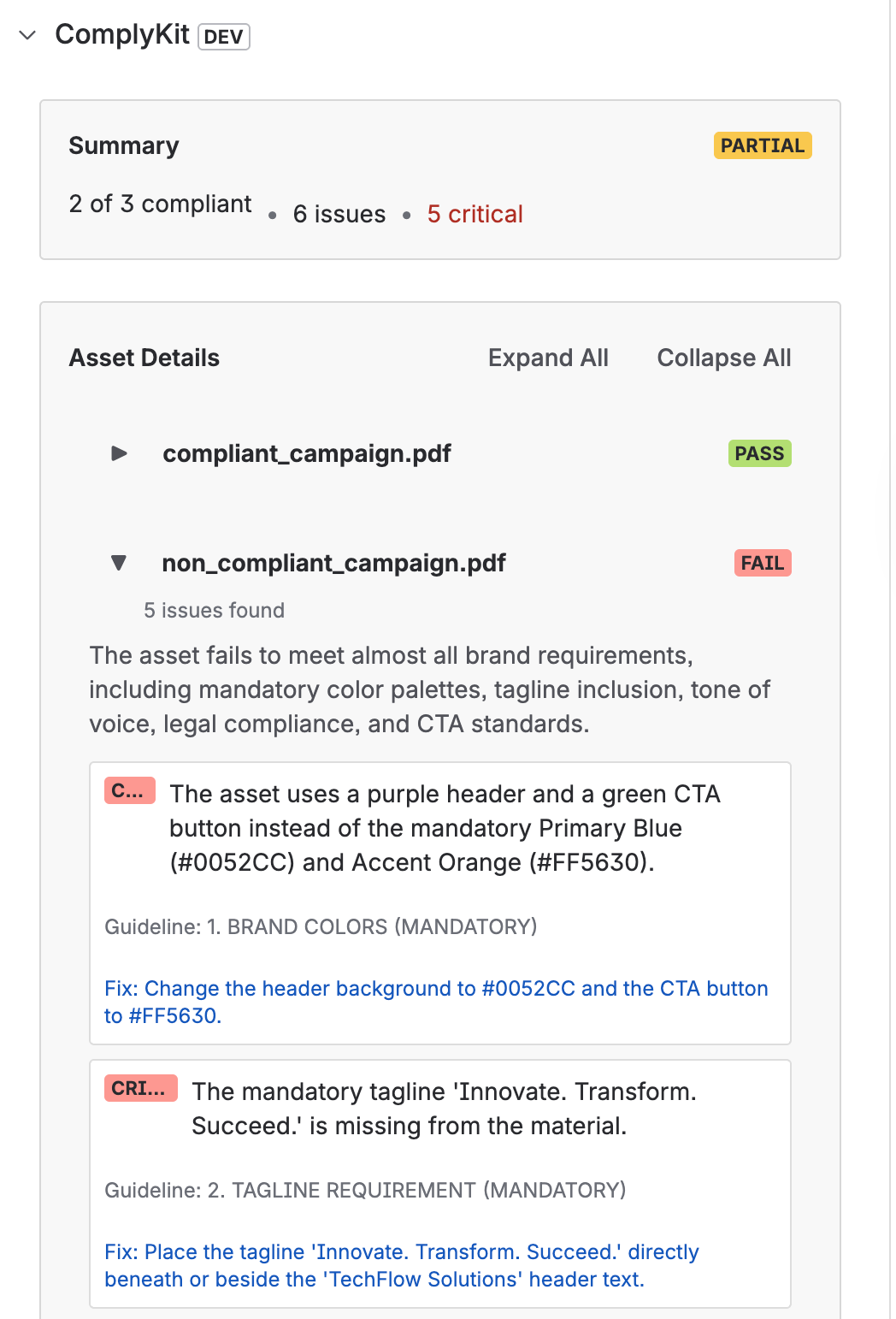
ComplyKit - Compliance Analysis Report
-
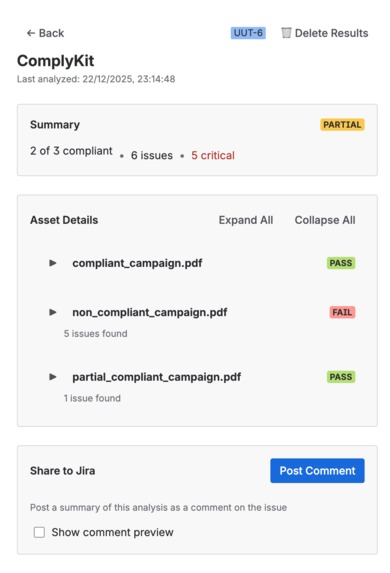
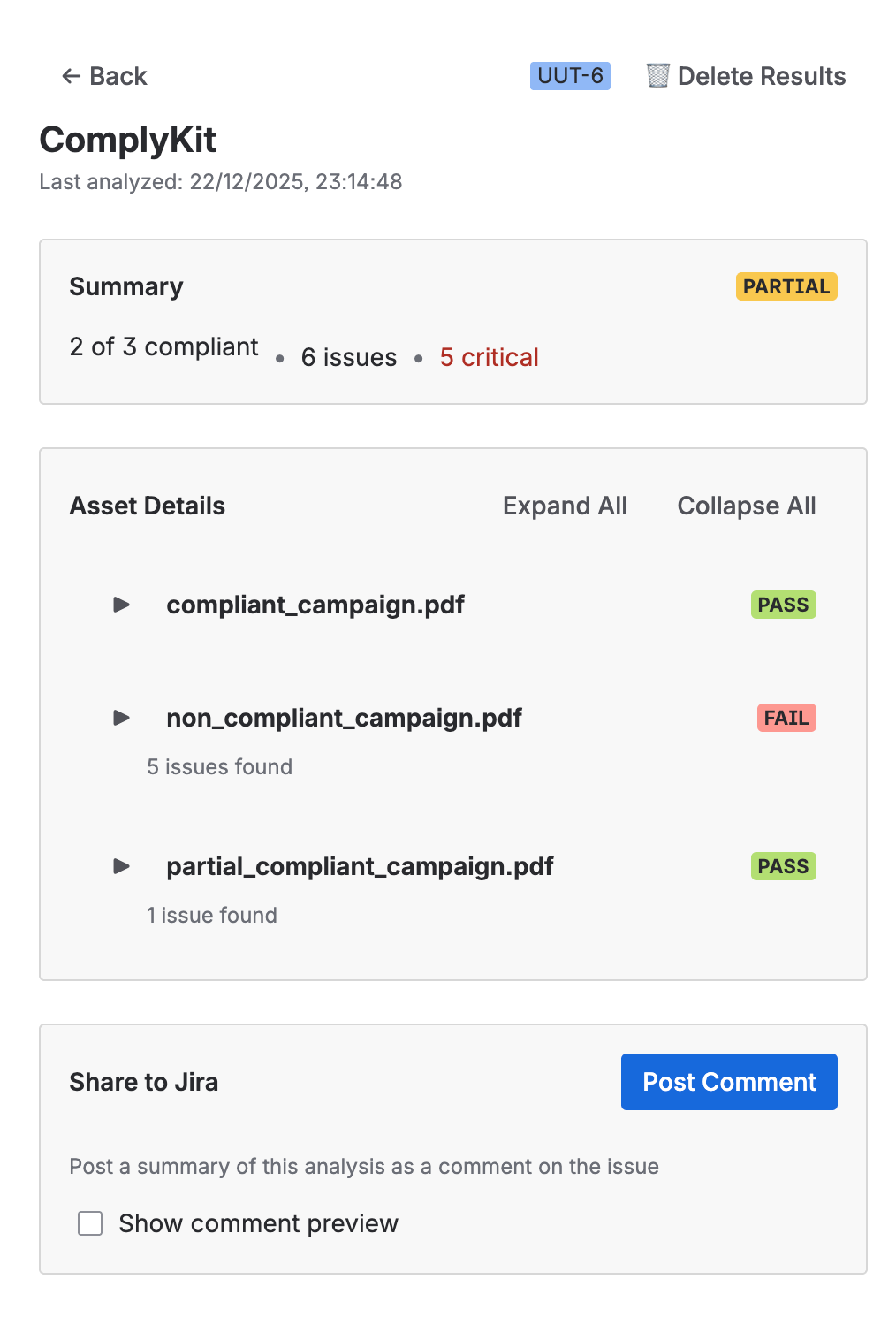
ComplyKit - Compliance Report Summary
-
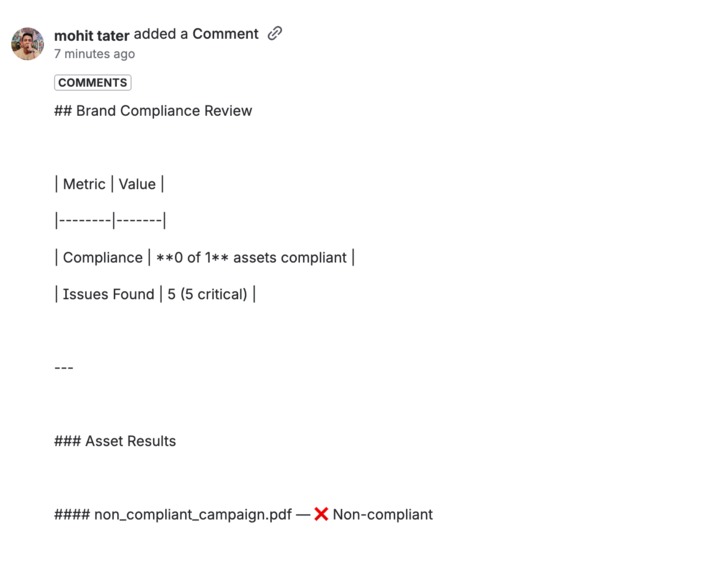
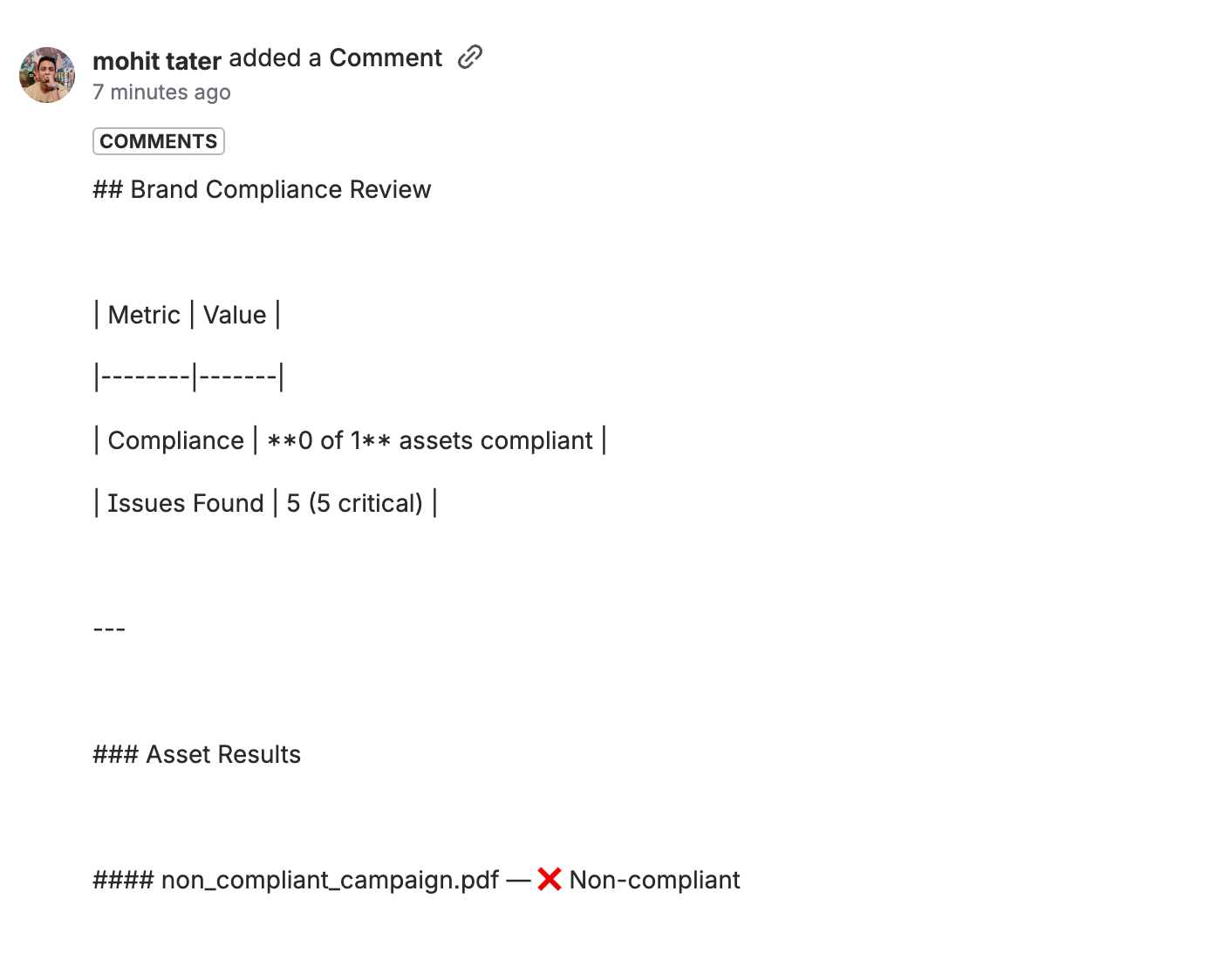
ComplyKit - Jira Comment with Analysis Summary
ComplyKit - Brand compliance, simplified
Inspiration
I'm working with a client in ad tech, helping with UX for their platform. I kept seeing him struggle with brand assets from his team. He'd spend hours checking if designs matched guidelines. He manages everything in the Atlassian ecosystem (Jira and Confluence).
With my background in UX and experience building Figma plugins, this felt like a natural problem to solve: AI-powered design review built right into Jira. The goal was to make it simple enough that anyone could quickly check brand compliance. Salespeople, business folks, not just designers.
What it does
ComplyKit reviews marketing assets against brand guidelines directly in Jira.
The flow:
- Paste your brand guidelines once (colors, fonts, logo rules, tone)
- ComplyKit detects assets attached to Jira tickets
- Select which assets to review
- Get instant results: compliant (green) or violations (red) with specific details
- Compliance report automatically posts as a Jira comment
Everyone on the team sees which assets are ready and which need fixes. No manual reviews, no back-and-forth.
How we built it
Stack: Forge Platform, Claude AI API, React with Atlassian UI Kit, Node.js
Started with Forge starter resources and basic tutorials. Rovo Dev Agent was incredibly helpful. It has built-in Atlassian context, so I could ask platform-specific questions and get accurate answers.
I'm primarily a UX person, so I used Claude Code to handle the technical implementation. I'd instruct it on what I wanted, and it built the functionality. When code got too complex or messy, I'd intervene and refactor.
The workflow was surprisingly smooth: design the UX, explain it to Claude Code, iterate on the implementation.
Challenges we ran into
Configuration headaches: Initial syncing with Forge platform had glitches. Solved them with Rovo Dev's help.
Interface decisions: Should this be a site panel? A Rovo agent? Something else? Spent time figuring out the right placement in Jira's UI.
Scope creep: I wanted to build so many features, but forced myself to keep it simple so the value proposition was immediately clear.
Biggest blocker: Couldn't get Rovo agent access in my test site. Had to use an external AI API instead, which means the app isn't compliant for native Rovo integration. Applied for access but never got it. This was frustrating. I wanted to use Atlassian's native AI features.
Accomplishments that we're proud of
Built a complete end-to-end solution. It's not super complex, but completing the whole thing felt really satisfying. From idea to working app.
The app solves a real problem I saw firsthand with my client. That validation made the effort worthwhile.
What we learned
Forge is powerful and accessible: Building custom Atlassian apps isn't as hard as I expected. I can ship something functional quickly.
Rovo Dev is a game-changer: Having Atlassian context built into the dev agent made troubleshooting so much easier.
The ecosystem advantage: Everything in Atlassian is interconnected, which makes building cross-product features surprisingly straightforward.
Confidence boost: I feel much more capable of building Atlassian apps now. The platform removes a lot of friction.
What's next for ComplyKit
Near term:
- Bulk asset review across multiple tickets
- Exportable compliance reports
- Auto-tagging images to show exactly where changes are needed
- Figma MCP integration (just post a Figma link in Jira and review designs directly)
- Support multiple brand guidelines (not just one)
- Confluence integration for reviewing assets in pages
Long term:
- Make it work natively with Rovo once I get access
- Expand to other design tools beyond Figma
- Build compliance dashboards for brand managers
The core idea is solid. Now it's about expanding where and how teams can use it.

Log in or sign up for Devpost to join the conversation.