-
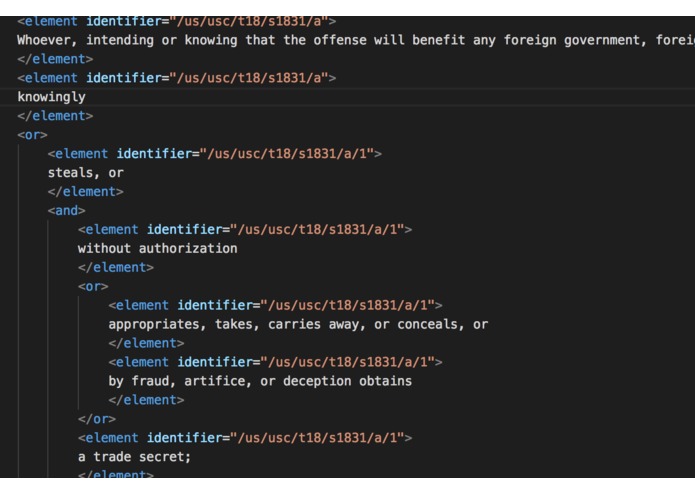
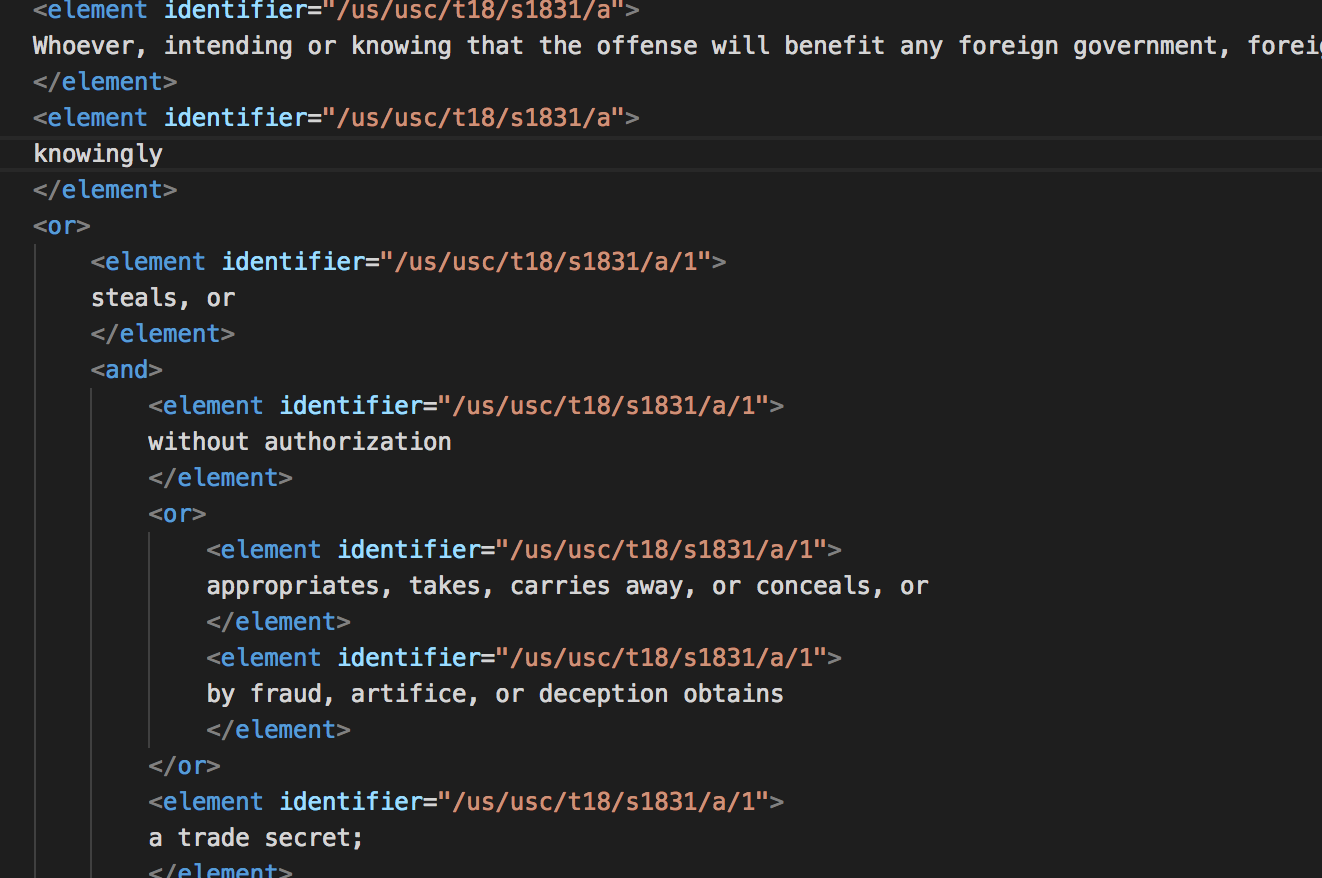
Legal elements from a claim in a complaint, as XML elements
Inspiration
The judicial branch is the branch of government with the least data transparency. This project was to create a tool to clarify how legal complaints interact with codified laws.
What it does
The project indexes allegations from a legal complaint, to show which ones relate to which party, which statute sections, and which elements of a legal claim.
How we built it
Used Google Cloud Vision for OCR of the image-only PDF of a complaint, used CourtListener for access to case dockets, used Python to mark up unstructured complaint text as XML, used the United States Legislative Markup (USLM) version of codified federal statutes, used spaCy for named entity recognition, and used Pandas for statistical analysis.
Challenges we ran into
We were hoping to create an interactive data visualization, but were unable to recruit a designer or a web developer.
Accomplishments that we're proud of
Refocused the project around data cleaning and statistical analysis for public records of the charges in criminal complaints, instead of breaking down the elements of a single complaint. That work hopefully can be integrated with the Tubman Project, which is also at Hack for Change this year.
What we learned
When marking up legal arguments, it's tempting to try to label every detail with mathematically precise logic, but it's usually better to rely on domain knowledge to find broader categories that are more practically relevant.
What's next for Complaint Map
It'll remain open for contributions as an Open Austin project.

Log in or sign up for Devpost to join the conversation.