-
-
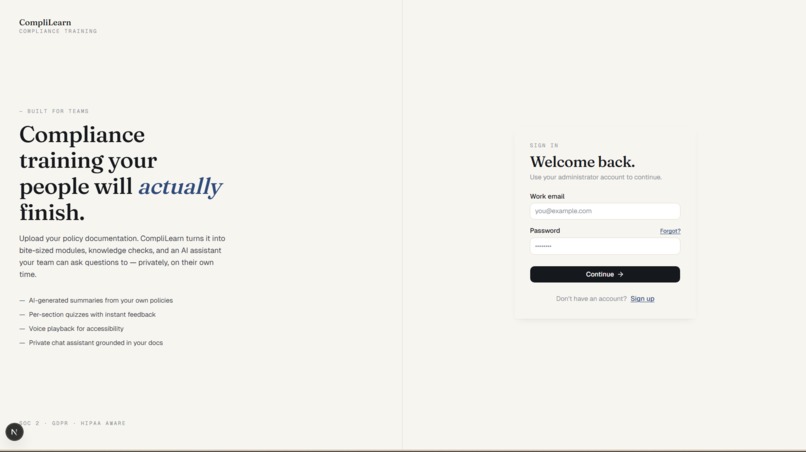
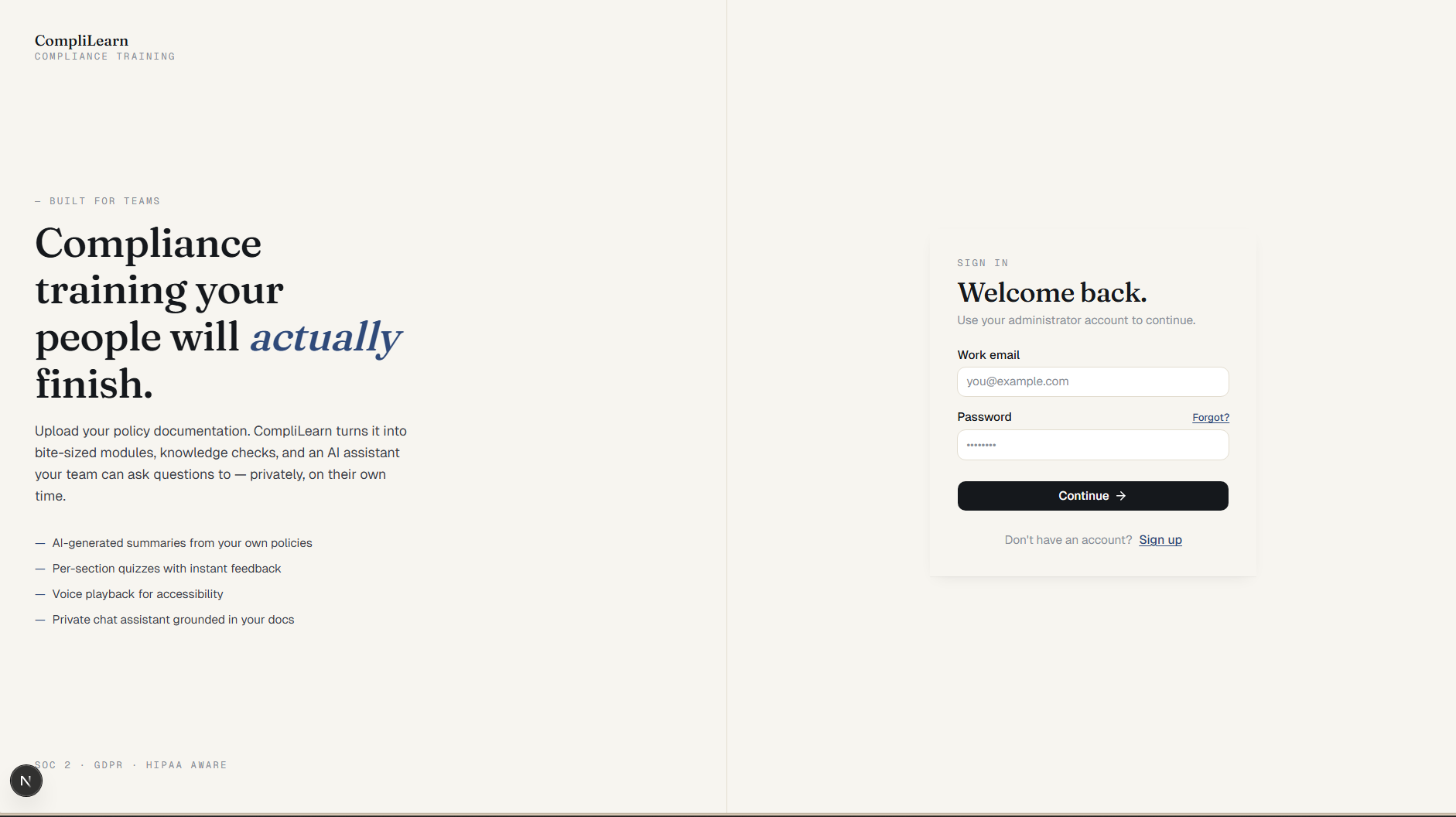
SignIn Page
-
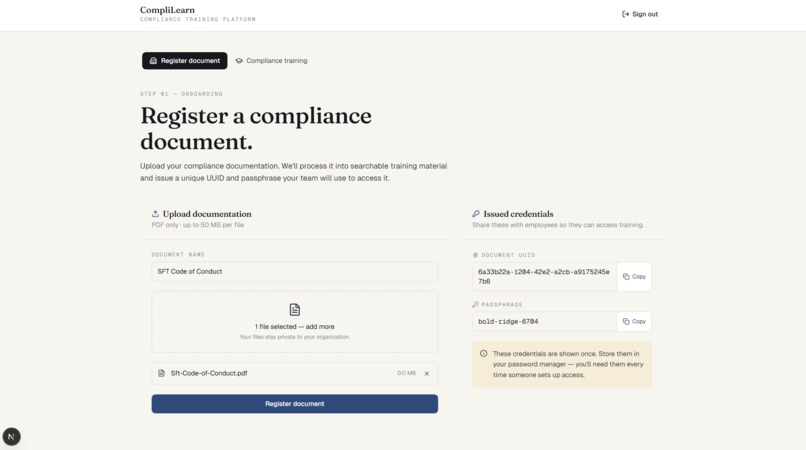
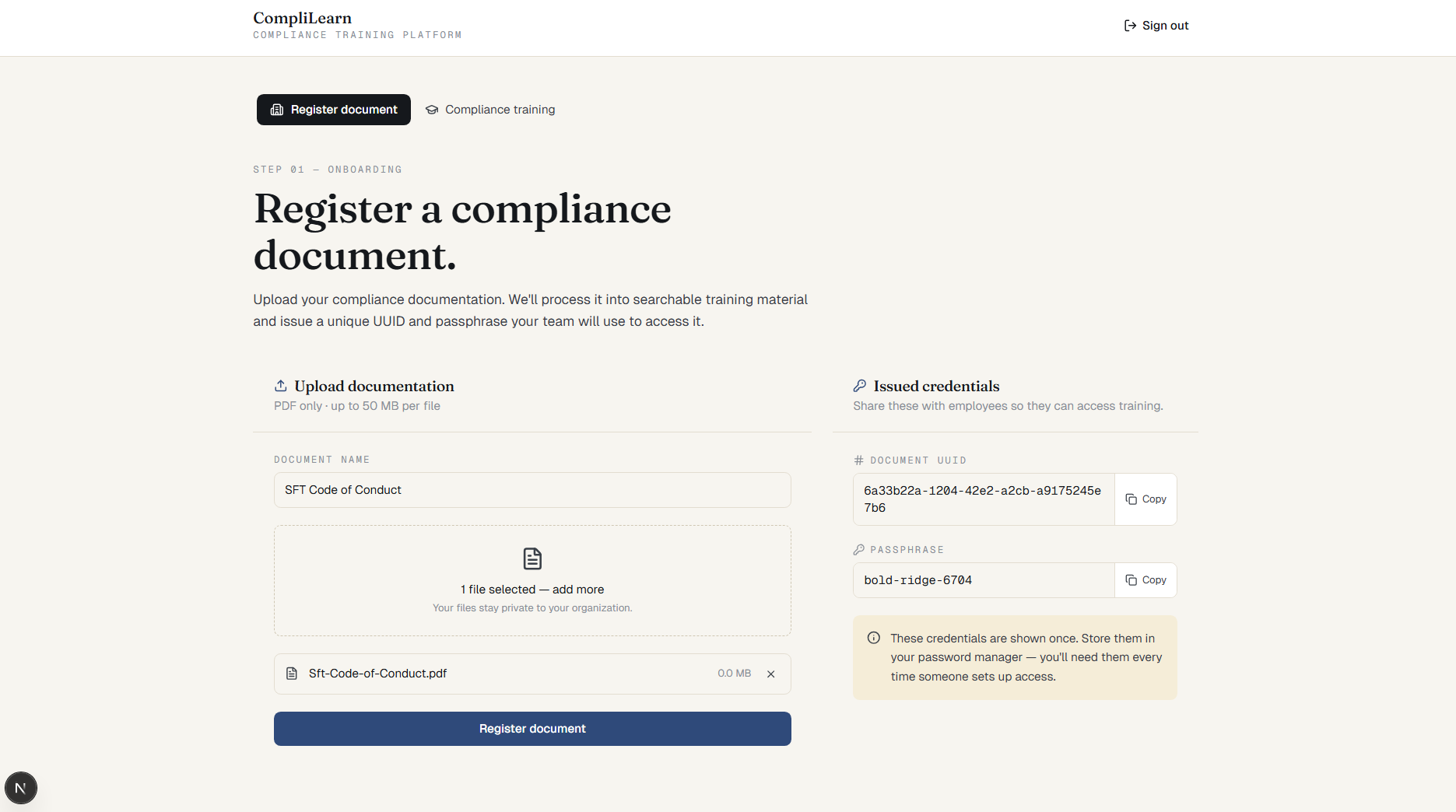
Register a Compliance
-
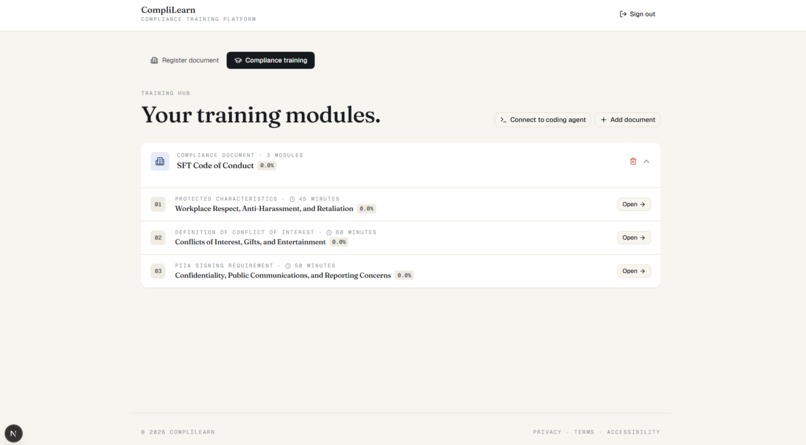
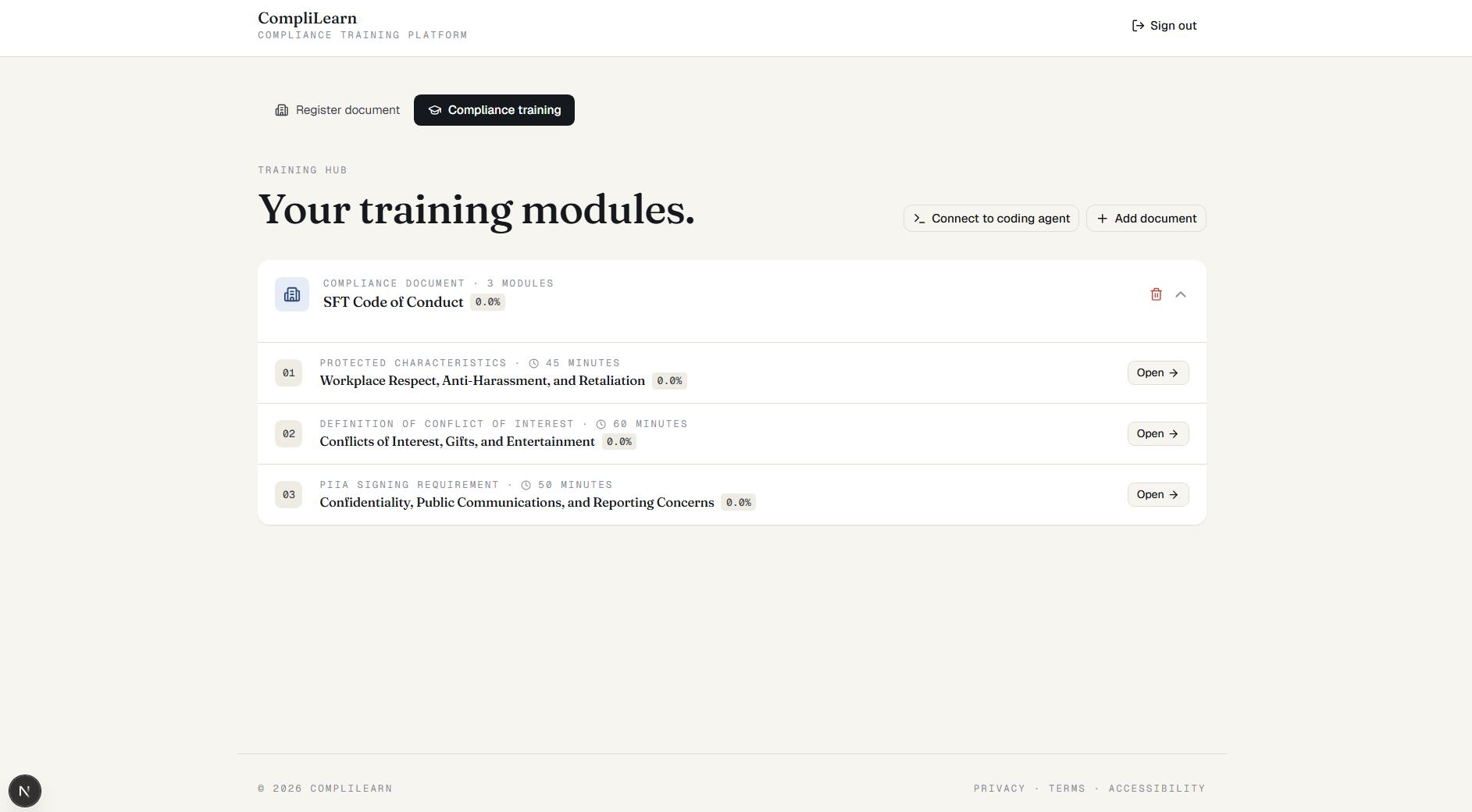
Compliance Page
-
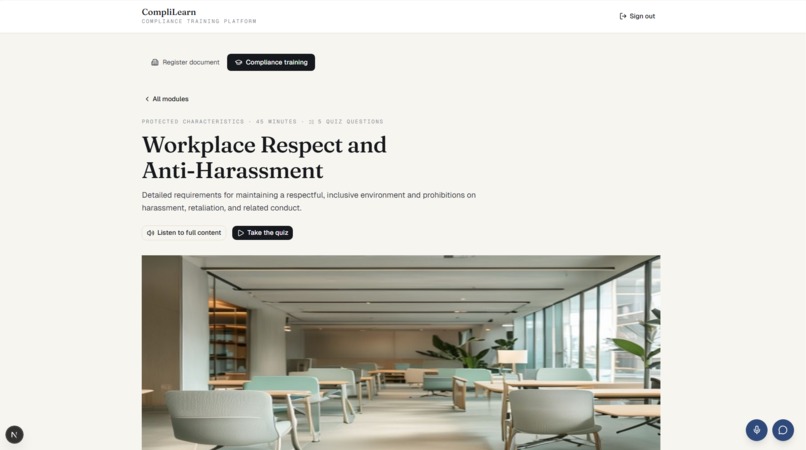
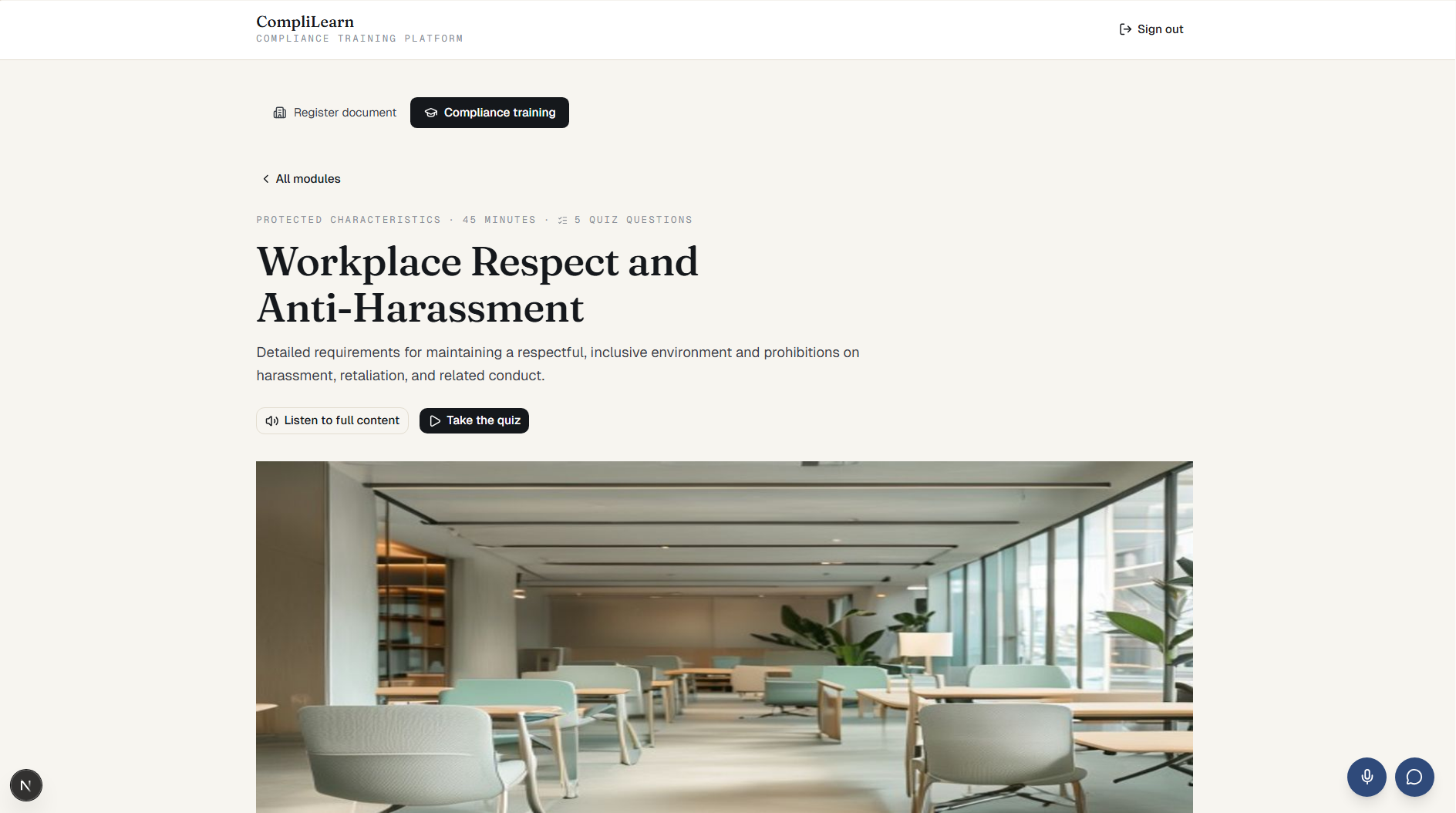
Compliance Module Page
-
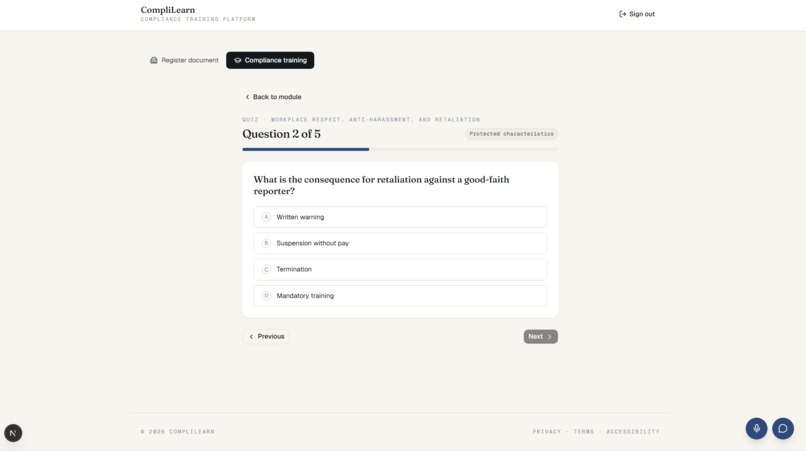
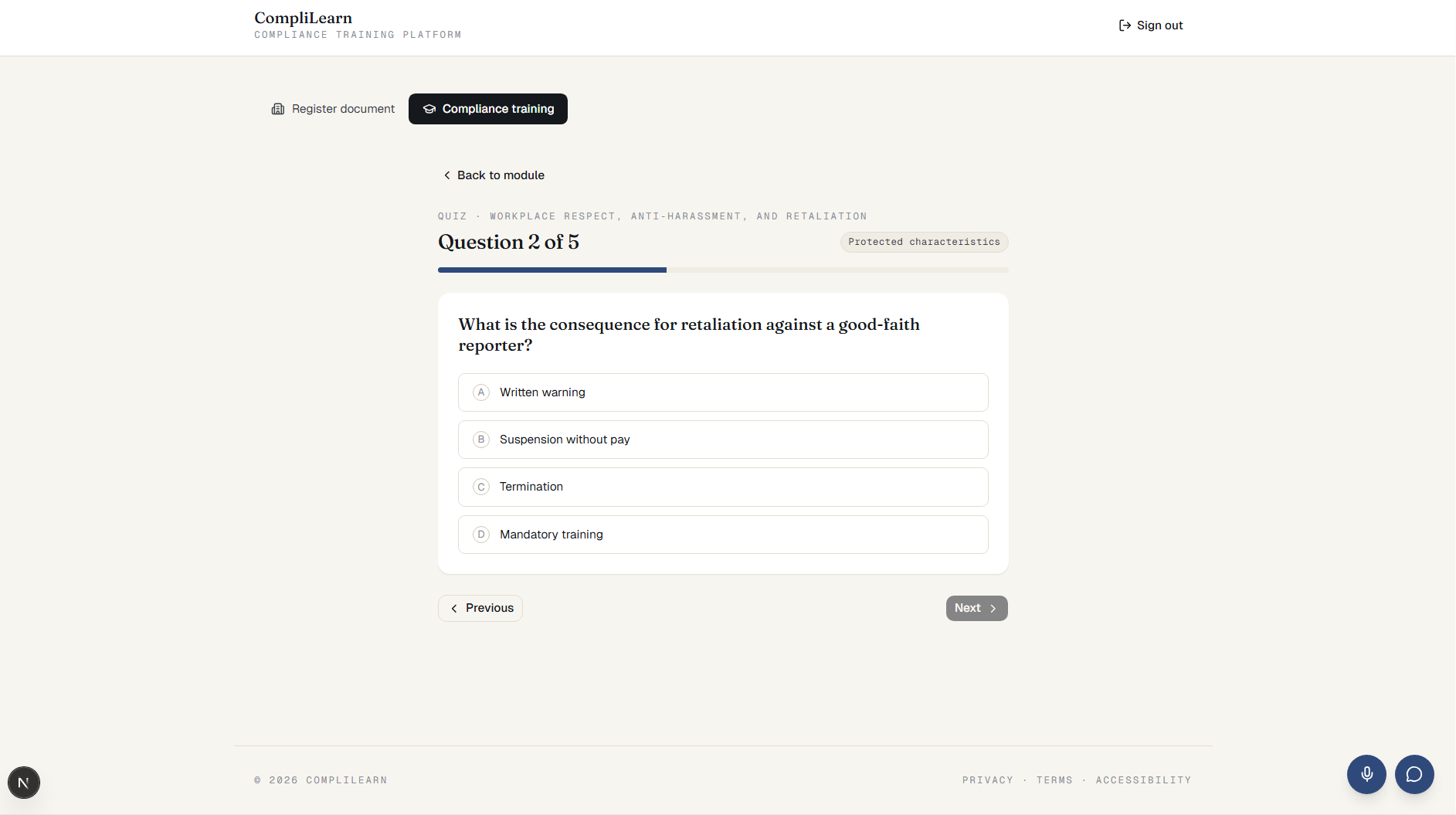
Quiz Page
-
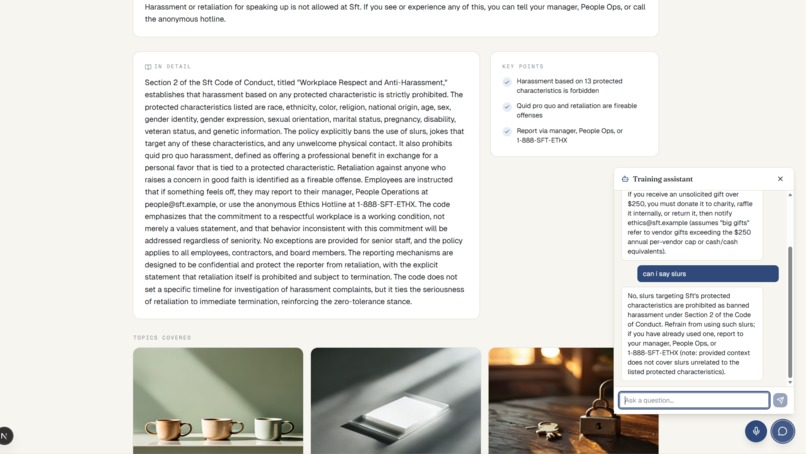
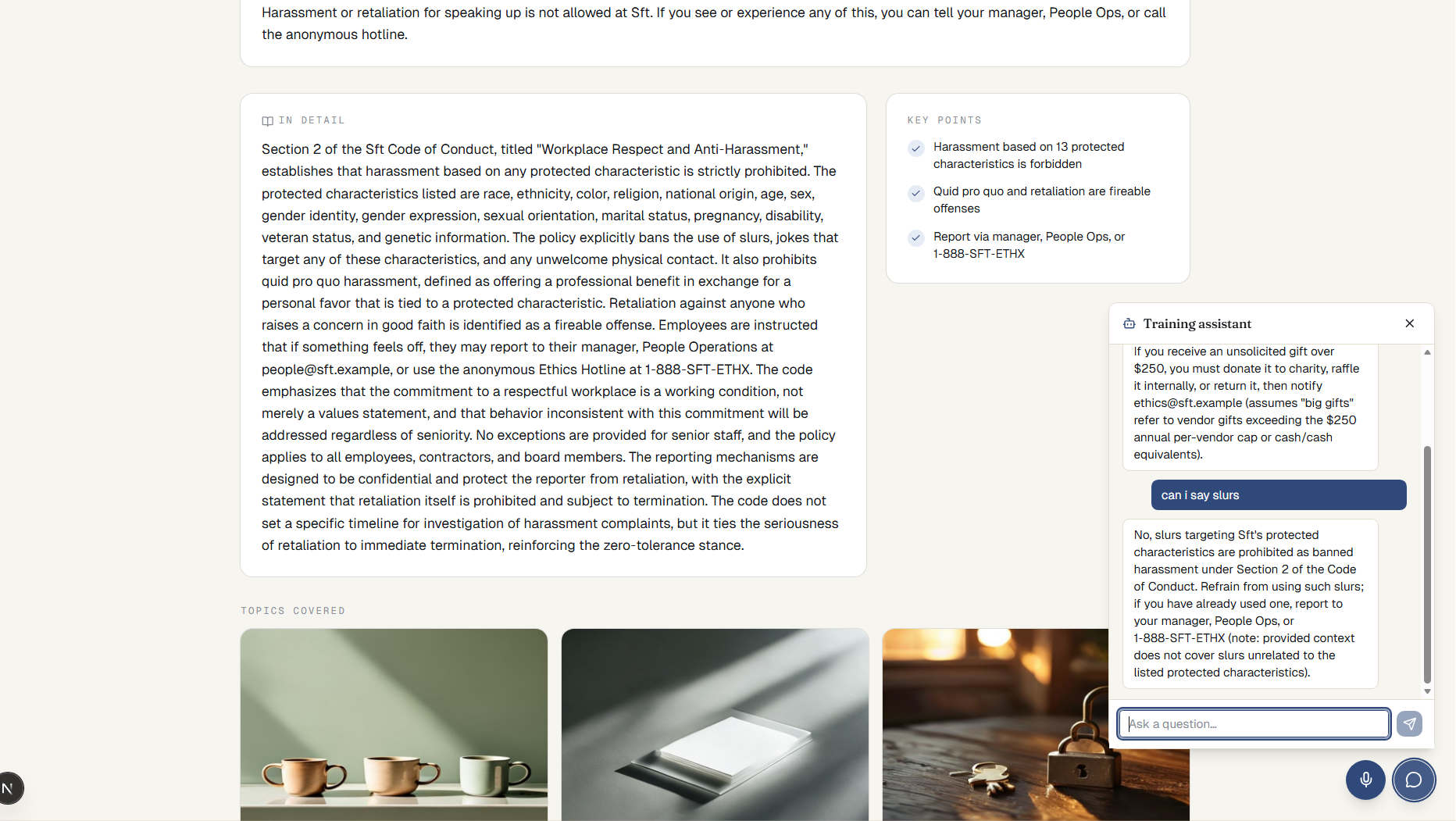
Chat Bot
Inspiration
Compliance training is often a one-time PDF dump: people skim, click through, and forget. We were inspired by a simple problem we kept seeing in onboarding: teams are expected to follow strict policies, but the learning experience is passive and disconnected from real work.
We wanted to make compliance feel more like a coach than a checklist.
What We Built
We built CompliLearn, an AI-powered compliance learning platform with two connected experiences:
Training experience for learners
- Upload compliance documents (like HIPAA or internal policy PDFs)
- Auto-generate bite-sized modules, plain-language summaries, and quizzes
- Add voice playback for accessibility and better retention
- Track module progress and quiz outcomes
Compliance context for coding assistants (MCP)
- Expose policy-aware tools via a Model Context Protocol (MCP) server
- Let AI coding agents query policy sections and run compliance checks while generating code
- Keep policy guidance present during implementation, not just onboarding
How We Built It
- Frontend: Next.js + React + TypeScript + Tailwind/shadcn UI
- Backend: Convex (database, auth, file storage, server functions)
- AI pipeline: Document ingestion + retrieval + generation workflows for summaries, quizzes, and Q&A
- Voice: ElevenLabs integration for narrated module content
- Developer integration: Standalone MCP server for policy tools used by editor agents
We split development across the team and worked in parallel:
- UI Prototype with Figma Make
- Training UX and accessibility
- Backend ingestion/retrieval flows
- MCP integration and demo reliability
Challenges We Ran Into
- Turning long PDFs into useful learning content: Preserving policy accuracy while simplifying language.
- Latency and orchestration: Chaining upload, processing, generation, and rendering without a confusing UX.
- Hackathon integration constraints: Getting multiple moving parts (AI, voice, auth, MCP) stable enough for a live demo flow.
- Grounding and trust: Making sure responses stay tied to policy source material instead of generic model answers.
What We Learned
- Good compliance UX is mostly a product design problem, not just an AI problem.
- Accessibility features (voice, chunked content) help everyone, not only edge cases.
- MCP is a powerful bridge between "learning policy" and "applying policy in real work."
- Shipping a coherent end-to-end experience in hackathon time requires ruthless scope discipline and clear interface boundaries.
What's Next
- Replace all mock policy paths in MCP with fully live backend retrieval.
- Add richer admin analytics for completion and weak-topic detection.
- Improve citation transparency so every generated answer clearly maps to source sections.
- Expand support for more policy frameworks and multilingual training.
Built With
- ai-sdk
- convex
- elevenlabs
- javascript
- mcp
- nextjs
- openrouter
- typescript
- vercel

Log in or sign up for Devpost to join the conversation.