Inspiration
Trading applications evolve rapidly. Features, visual interfaces, onboarding flows, pricing models, and localized experiences can change across versions and markets, but this information is scattered across app stores, release notes, screenshots, and user reviews.
For product and design teams, competitor research is often manual, inconsistent, and difficult to maintain over time. Important updates may be discovered late, historical screenshots are easily lost, and applications from different regions are difficult to compare using a consistent framework.
We built Recode to create a structured, traceable, and continuously updated research platform for global securities and cryptocurrency trading applications.
What it does
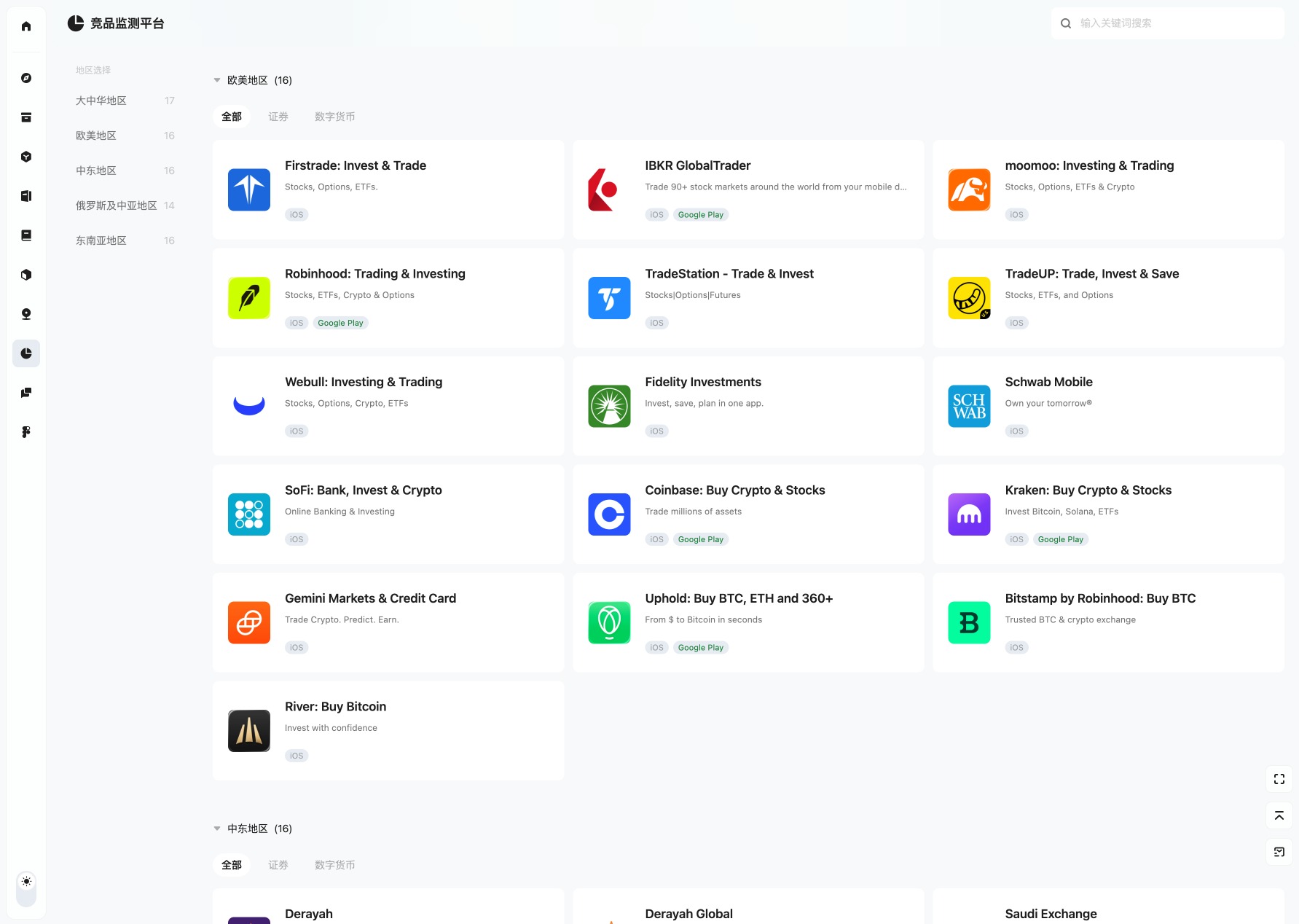
Recode is a competitive research website focused on stock brokerage, securities, and cryptocurrency trading applications worldwide.
The platform organizes applications into five regional markets:
- Greater China
- Europe and North America
- Middle East
- Russia and Central Asia
- Southeast Asia
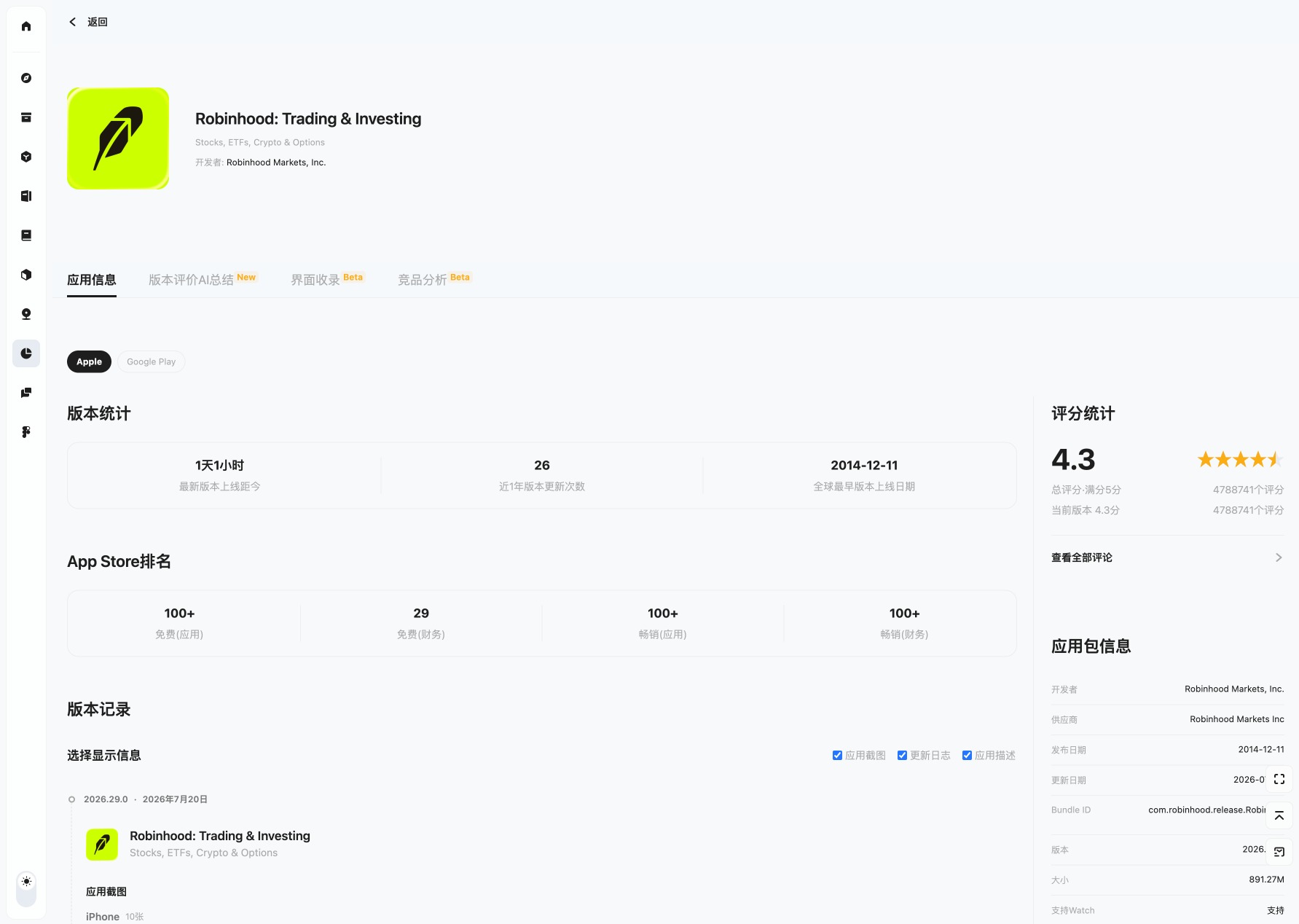
For each application, Recode presents:
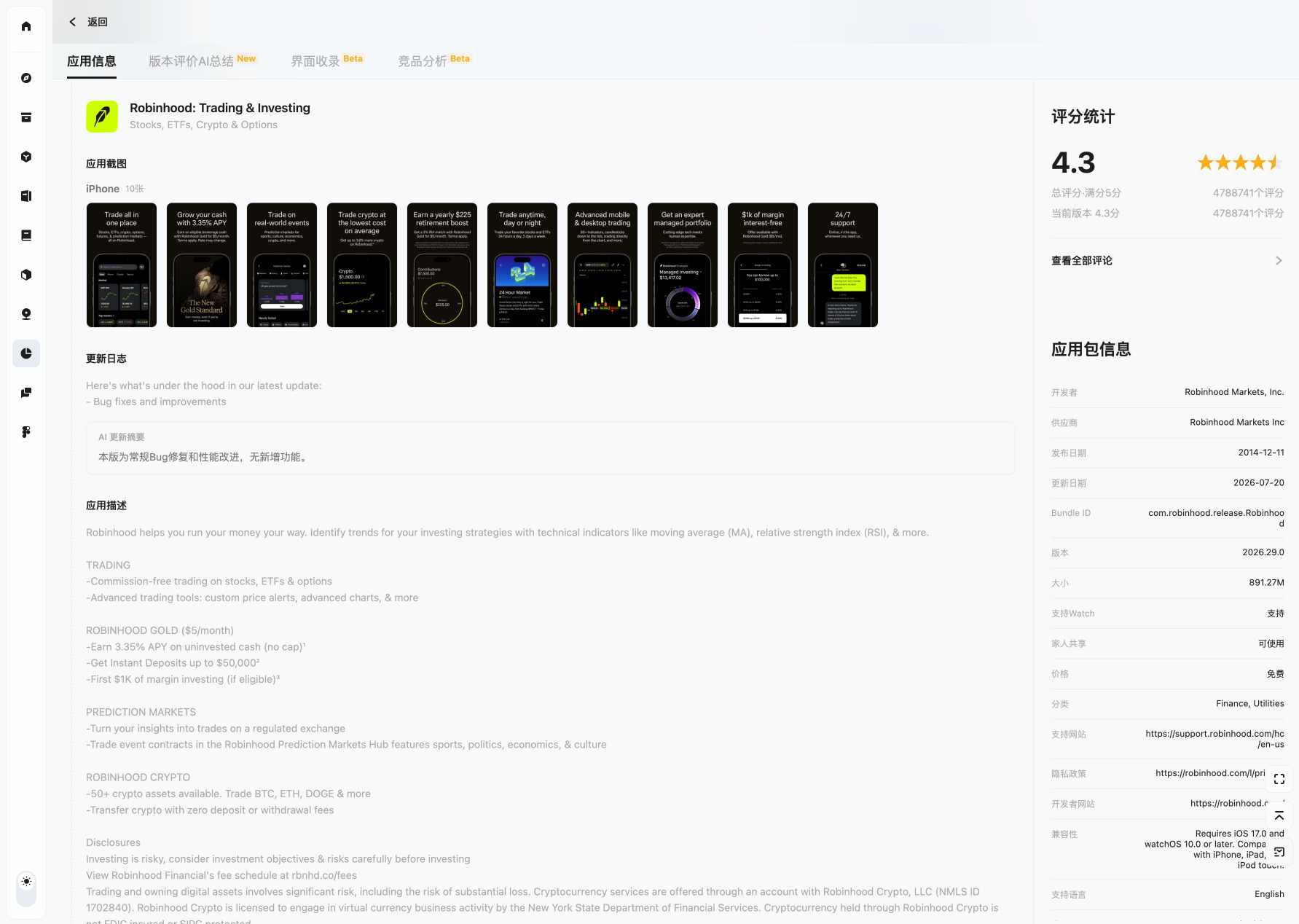
- Basic product and platform information
- Current version and historical release records
- App ratings and publicly available reviews
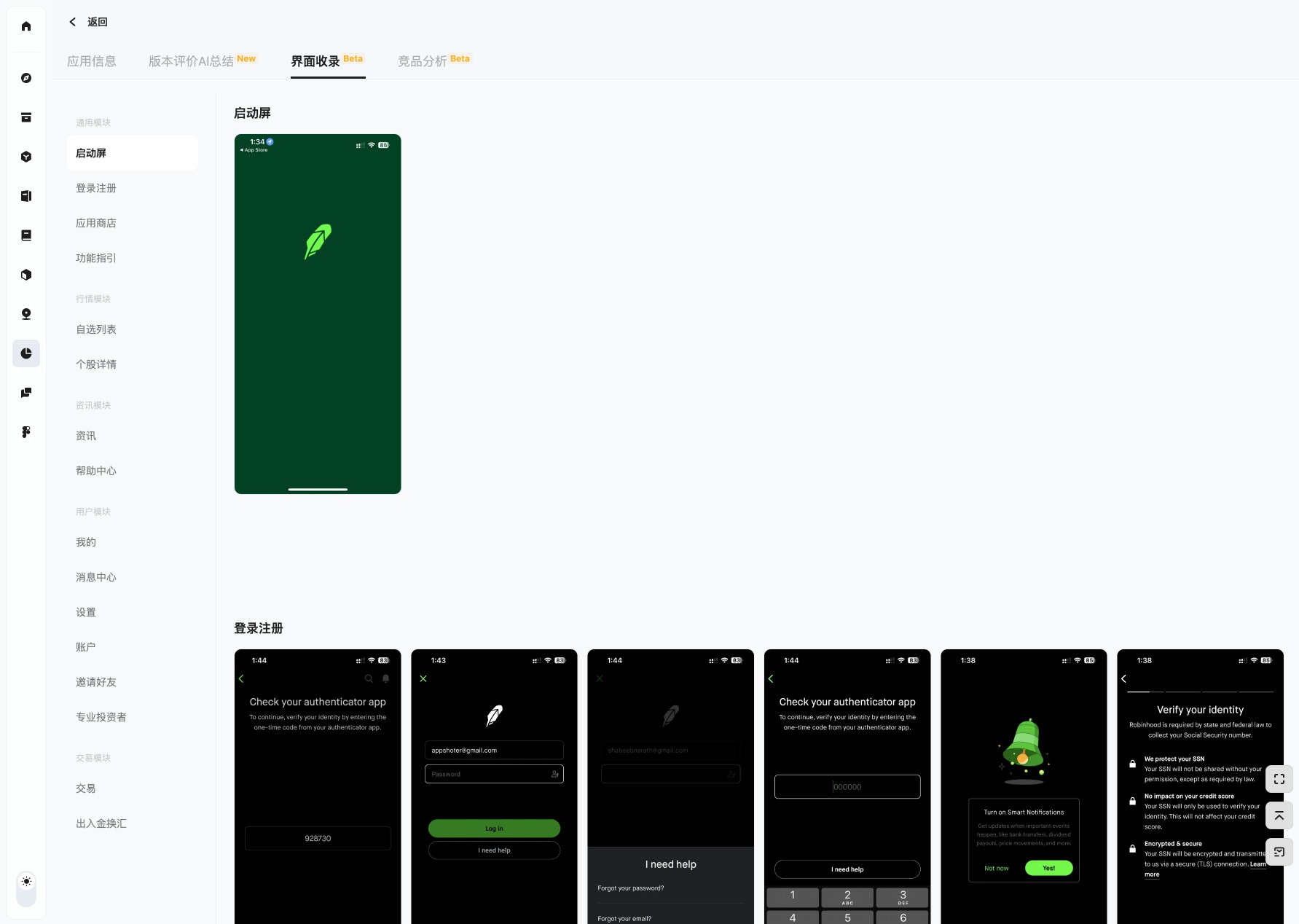
- Product interface screenshots
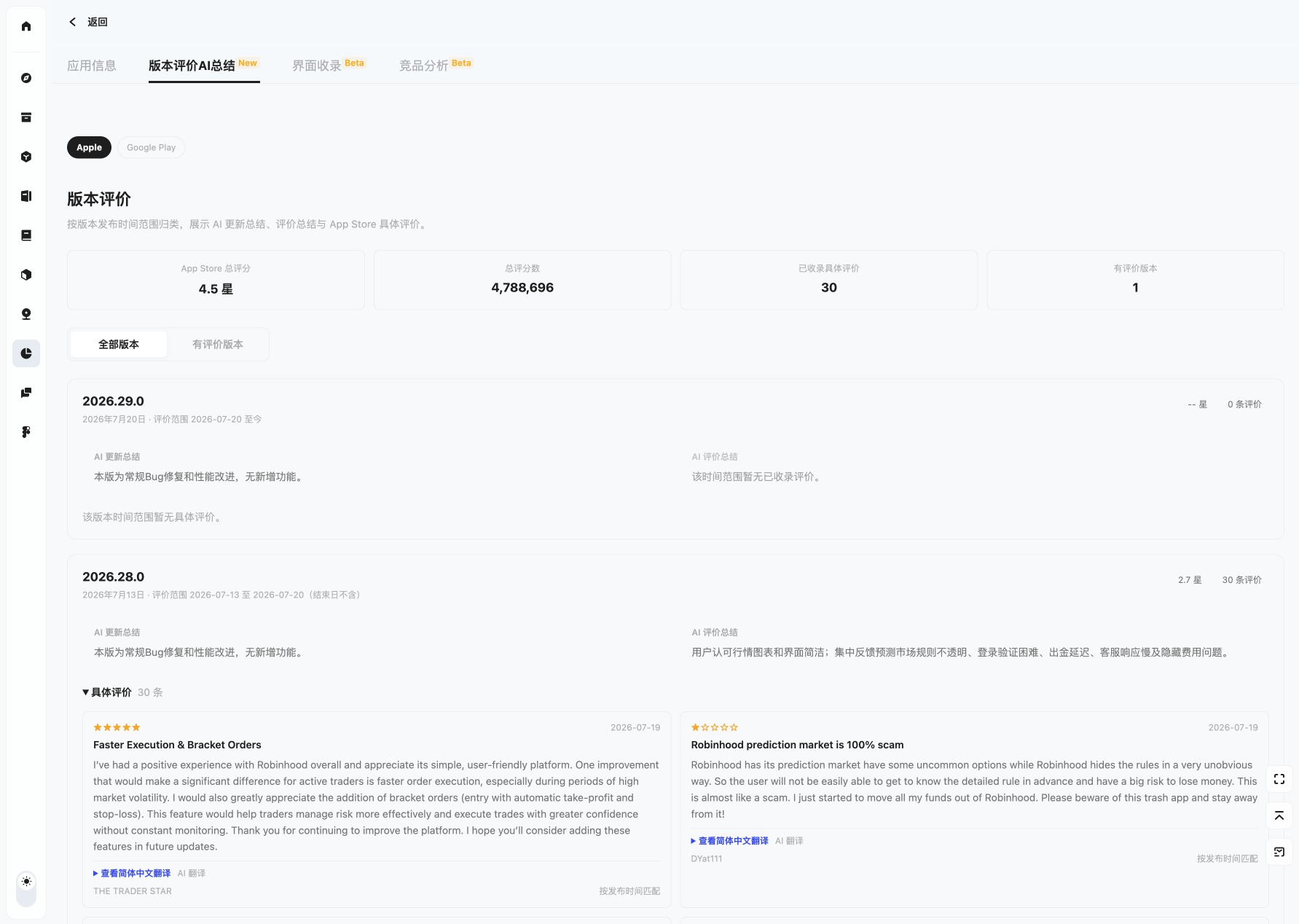
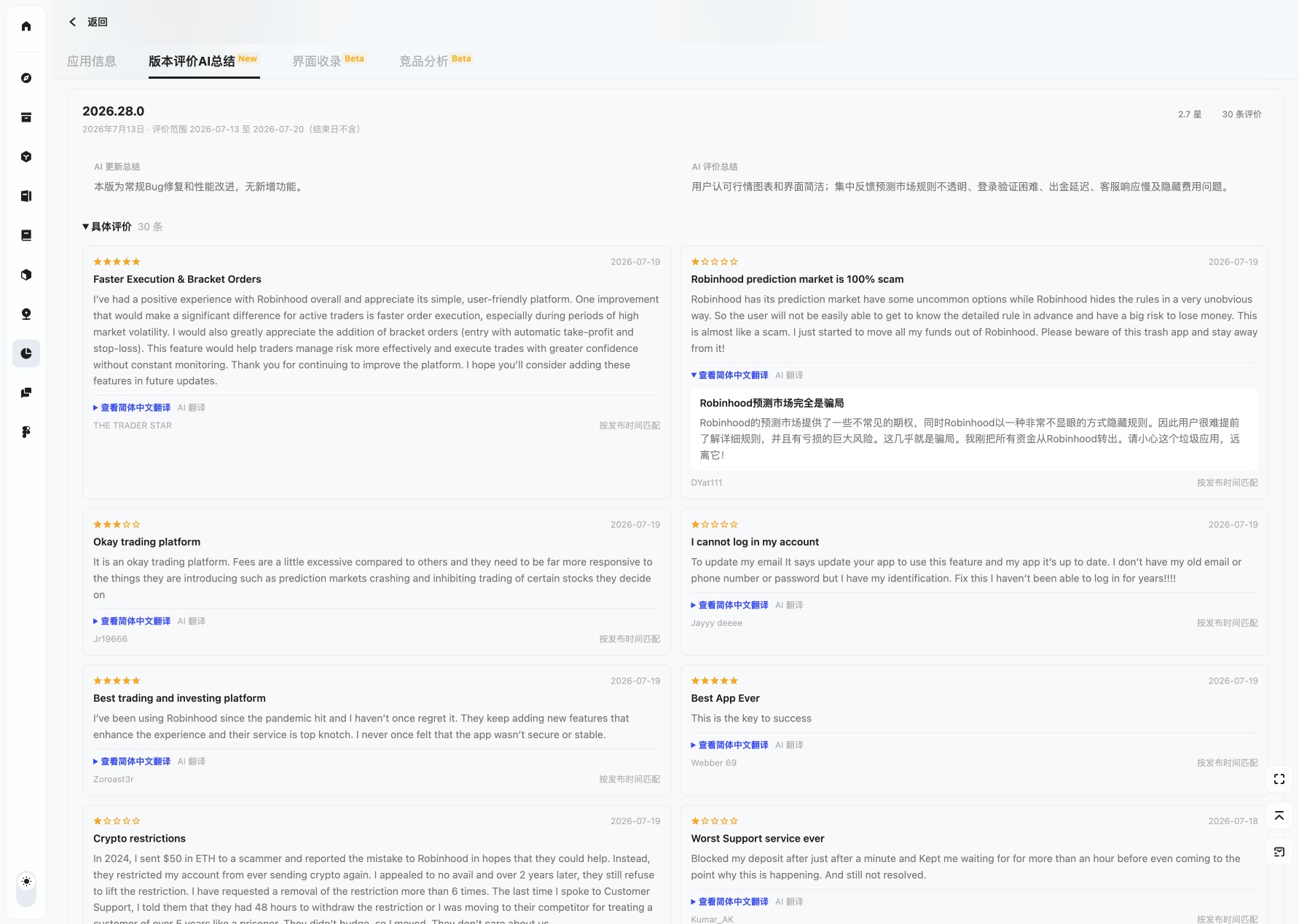
- Version update summaries
- Review summaries and Chinese translations
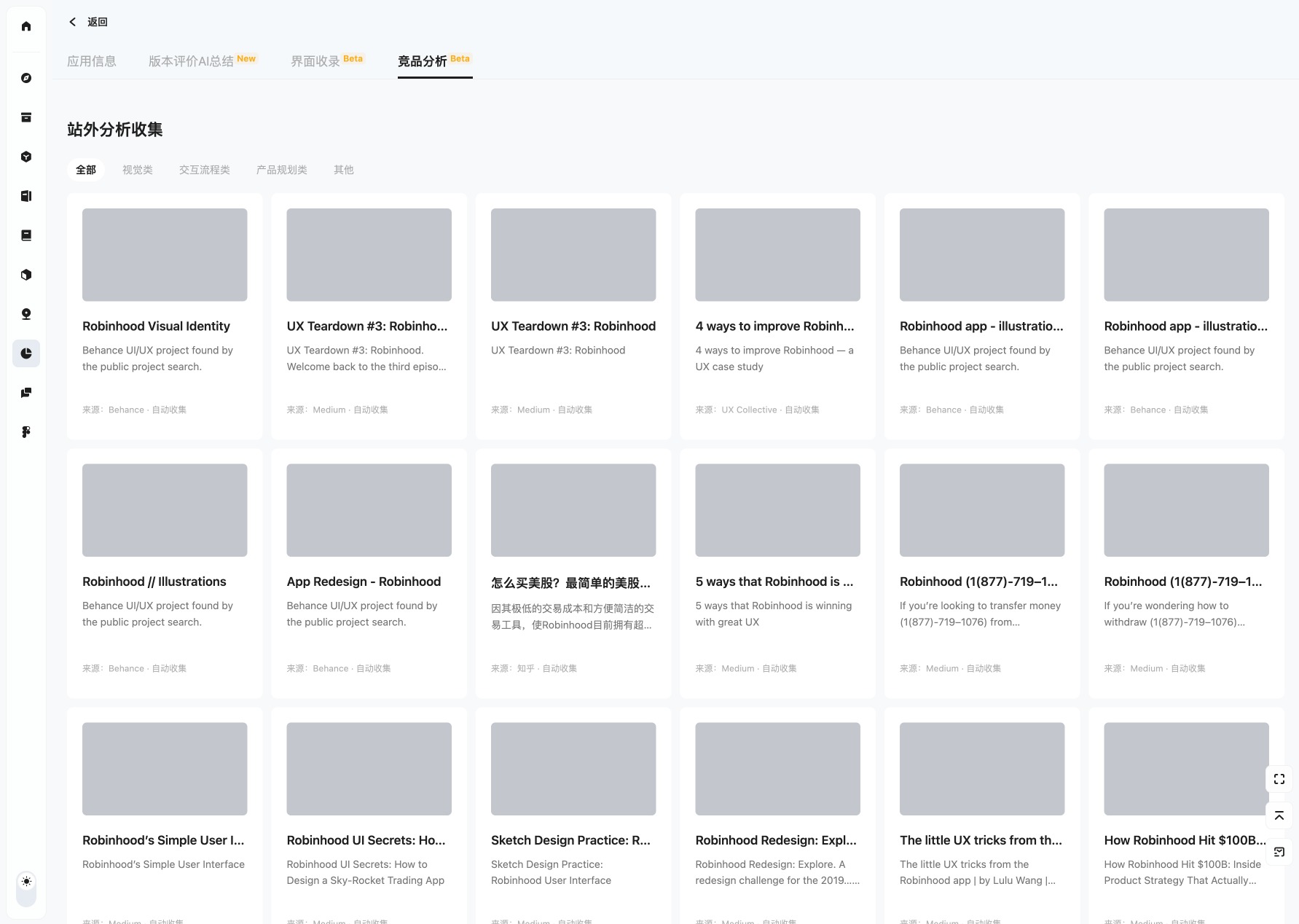
- Product, industry, UX, and visual design analysis
- Traceable update history
Apple App Store is currently the primary data source. Google Play automated data collection has also been integrated to retrieve publicly available application metadata, current versions, ratings, screenshots, and reviews.
Recode automatically generates structured summaries for version updates and user reviews, translates relevant content into Chinese, and records meaningful data changes over time.
How we built it
Recode uses Python scripts to collect, normalize, process, and maintain application data.
Each trading application has an independent data directory containing its platform information, version records, screenshots, review data, generated summaries, translations, and update history. This structure keeps the data modular, maintainable, and easy to audit.
The automated workflow includes:
- Retrieving public application data from the Apple App Store and Google Play
- Normalizing platform-specific fields into a consistent data structure
- Detecting changes in versions, ratings, screenshots, and reviews
- Generating version and review summaries
- Translating selected content into Chinese
- Saving update records for historical comparison
- Publishing the processed data to the research website
GitHub Actions supports both scheduled and manually triggered updates. When a workflow completes, verified data changes are automatically committed back to the repository.
Data reliability
A key principle of Recode is that platform information should not be displayed unless it can be verified.
The Google Play label and platform switch are shown only when valid Google Play data has actually been retrieved for an application.
If an application's package name cannot be confirmed, or if no reliable public Google Play data is available, the Google Play entry remains hidden. Recode does not guess package mappings or associate potentially incorrect applications simply to increase coverage.
This approach ensures that the research data remains traceable and reduces the risk of incorrect competitor information.
Challenges we ran into
Cross-platform application matching
The same application may use different names, publishers, regional listings, or package structures across the Apple App Store and Google Play. Incorrect matching could result in unrelated reviews, ratings, or screenshots being assigned to the wrong product.
We addressed this by requiring verified identifiers and successfully retrieved platform data before enabling cross-platform presentation.
Inconsistent app-store data
Apple App Store and Google Play expose different fields and content structures. Ratings, release notes, screenshots, localization, and reviews may also vary by region.
We created a normalized data model that preserves source-specific information while allowing applications to be compared through a consistent interface.
Maintaining historical information
App-store pages usually emphasize the current version, while meaningful competitor research also requires historical changes.
Recode stores data by application and records verified updates over time, allowing version evolution and product changes to remain accessible.
Separating facts from analysis
Store metadata, public reviews, generated summaries, and design analysis represent different levels of information.
We designed the content structure to preserve the original source data while clearly separating generated summaries and research conclusions.
Accomplishments that we're proud of
- Built a structured database of global securities and cryptocurrency trading applications
- Organized competitors across five major regional markets
- Integrated both Apple App Store and Google Play data workflows
- Automated application metadata, version, rating, screenshot, and review collection
- Added automated version summaries, review summaries, and Chinese translations
- Created independent, maintainable data directories for every application
- Implemented scheduled and manually triggered updates with GitHub Actions
- Automatically committed verified data changes
- Prevented unverified Google Play mappings from appearing in the product
- Established a traceable foundation for long-term product and design research
What we learned
We learned that useful competitive intelligence depends less on collecting the largest possible amount of data and more on maintaining reliable, comparable, and traceable information.
Cross-platform matching must be conservative. An incomplete but verified dataset is more valuable than a larger dataset containing incorrect application mappings.
We also learned that version histories, screenshots, reviews, and regional differences need to be studied together. A release note may describe what changed, while screenshots and user feedback help explain how the change affected the actual experience.
Automation significantly reduces repetitive research work, but human product and design analysis remains important for interpreting strategic intent, interaction patterns, and market differences.
What's next for Recode
The next stages of Recode include:
- Expanding coverage across more trading applications and markets
- Improving historical version and screenshot comparison
- Adding visual interface change detection
- Strengthening multilingual review classification and translation
- Building structured comparisons for trading, market data, account, and asset-management features
- Introducing market-level and category-level research reports
- Supporting competitor watchlists and update notifications
- Improving evidence links between analysis and original source data
- Adding more automated quality checks for application identity and platform matching
- Developing AI-assisted industry and UX analysis while preserving source traceability
Our long-term goal is to make Recode a reliable global research infrastructure for teams designing and operating securities and digital asset trading products.
Built With
- https://design.kingwei.ltd/recode/


Log in or sign up for Devpost to join the conversation.