-
-
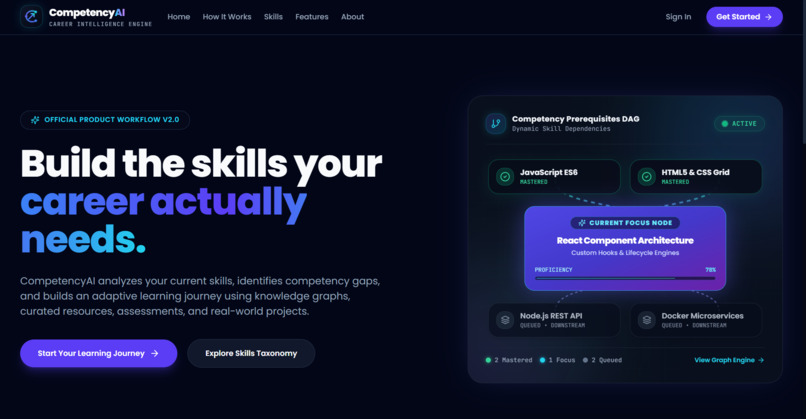
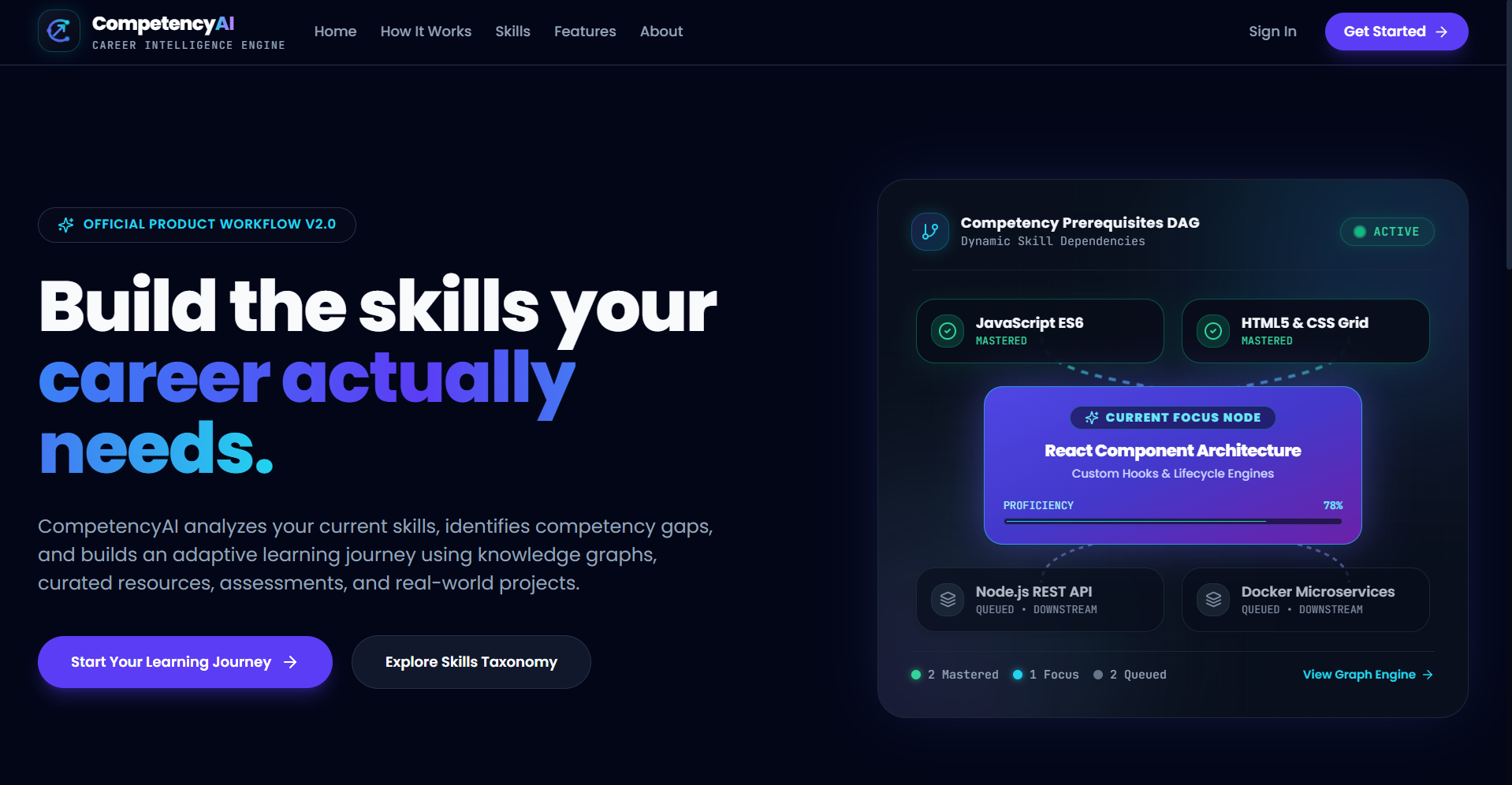
CompetencyAI analyzes skills and gaps to create personalized, career-focused learning journeys using AI.
-
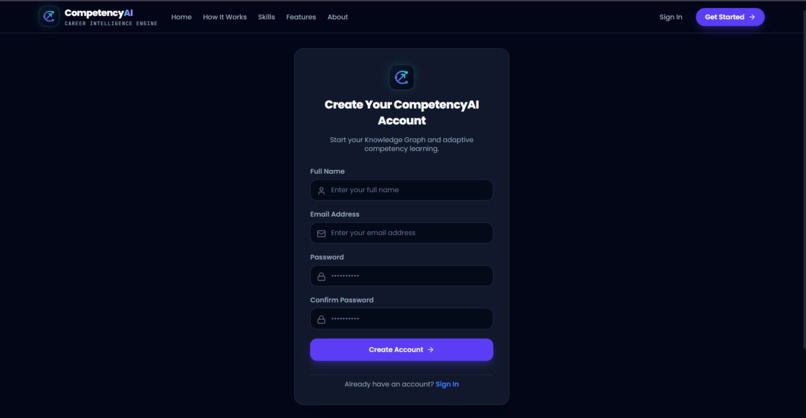
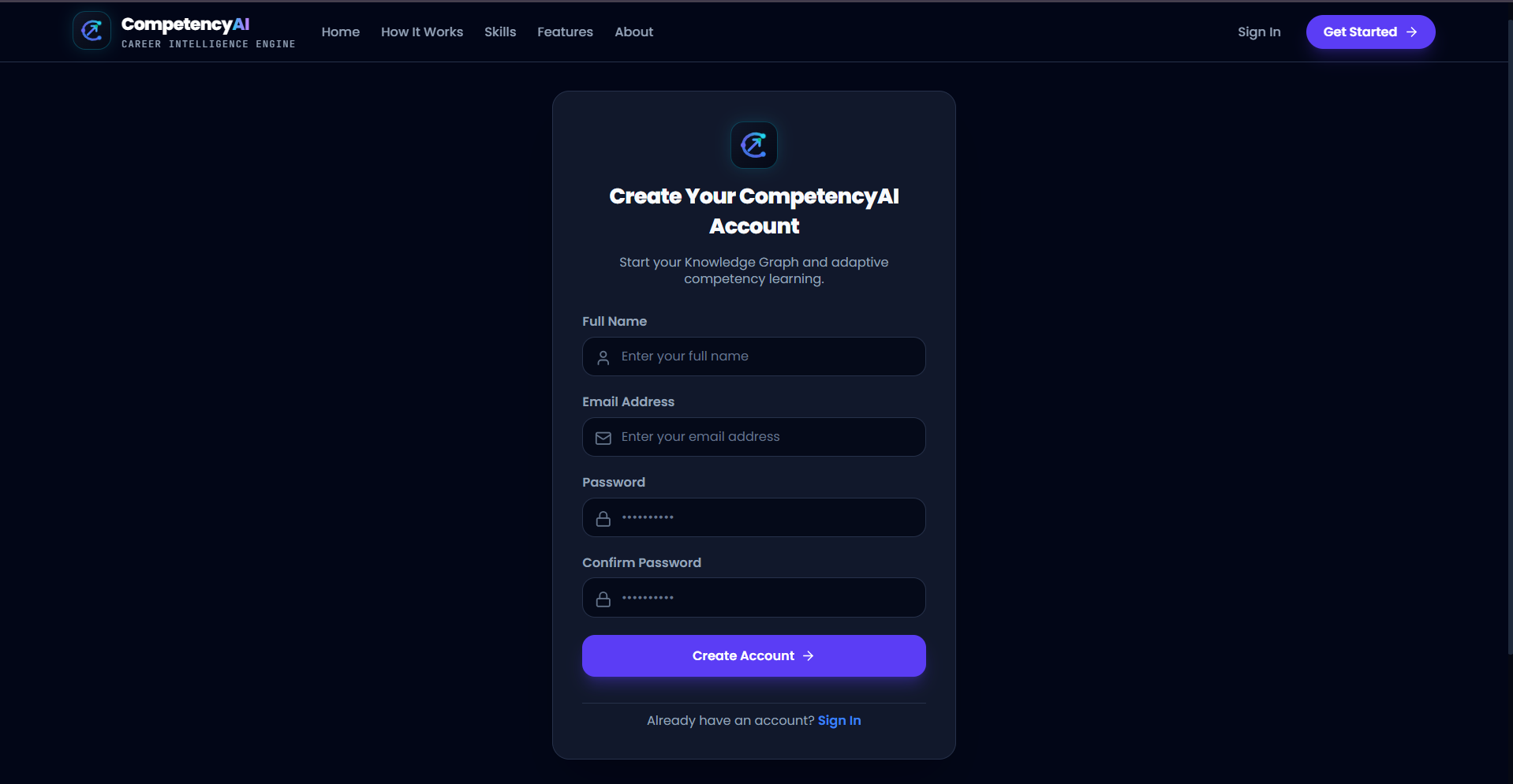
Students create an account and begin a personalized learning journey based on their career goals and skills.
-
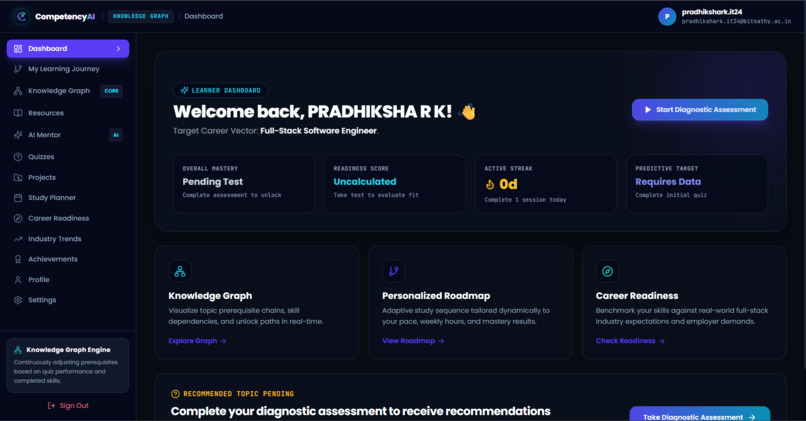
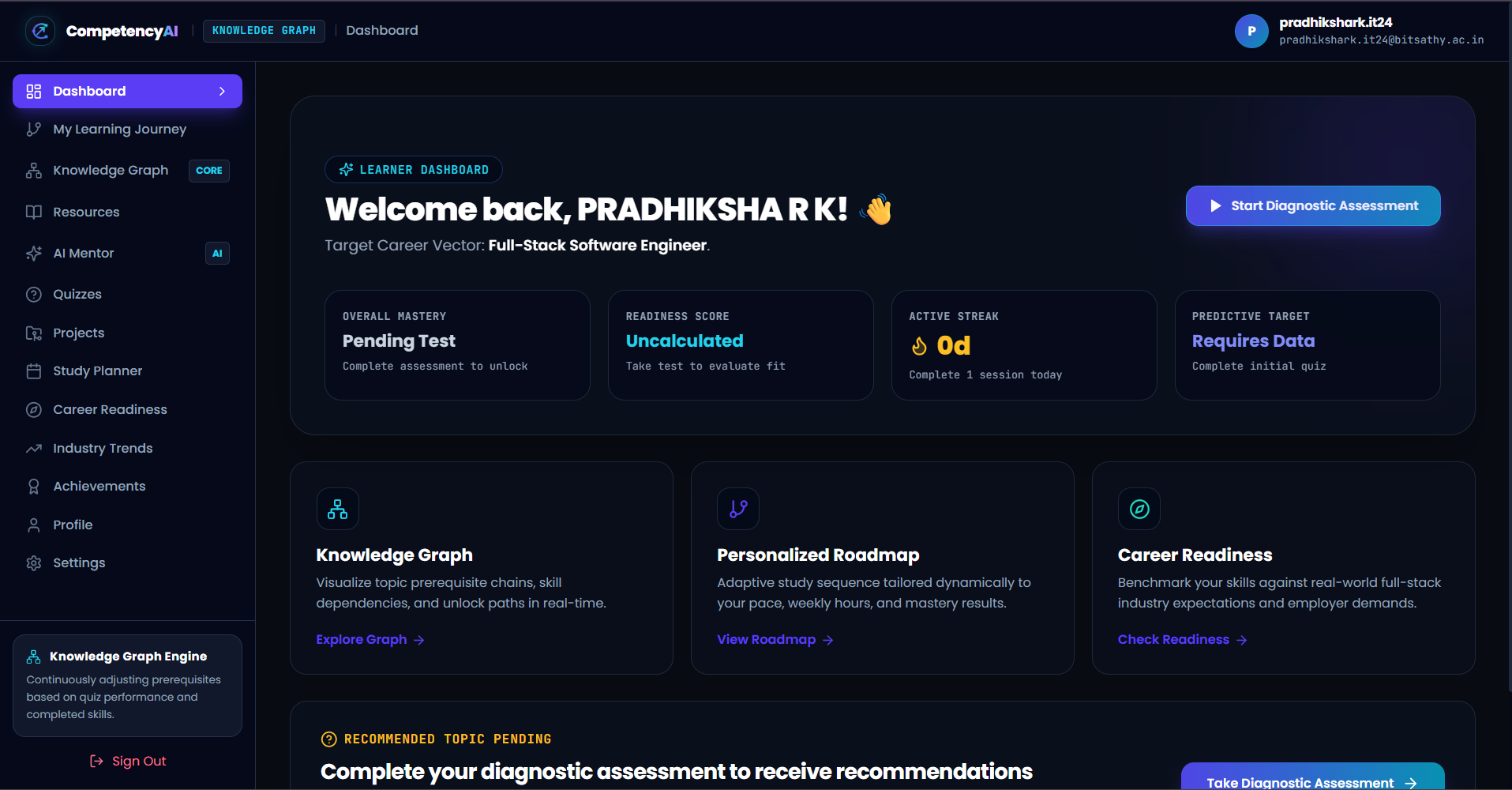
The dashboard tracks competency, readiness, learning progress, career goals, and personalized recommendations.
-
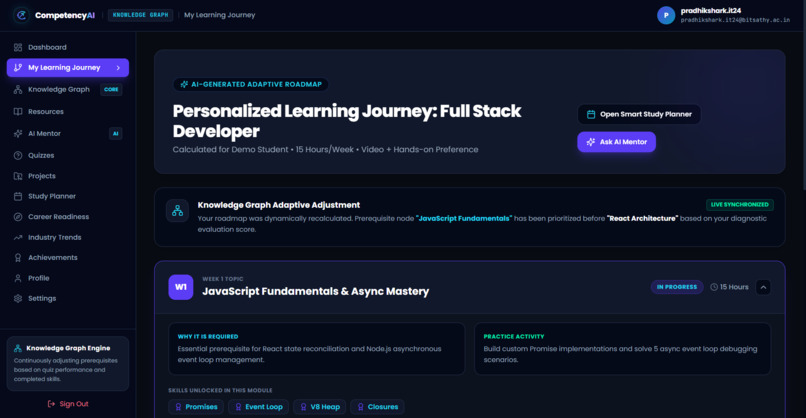
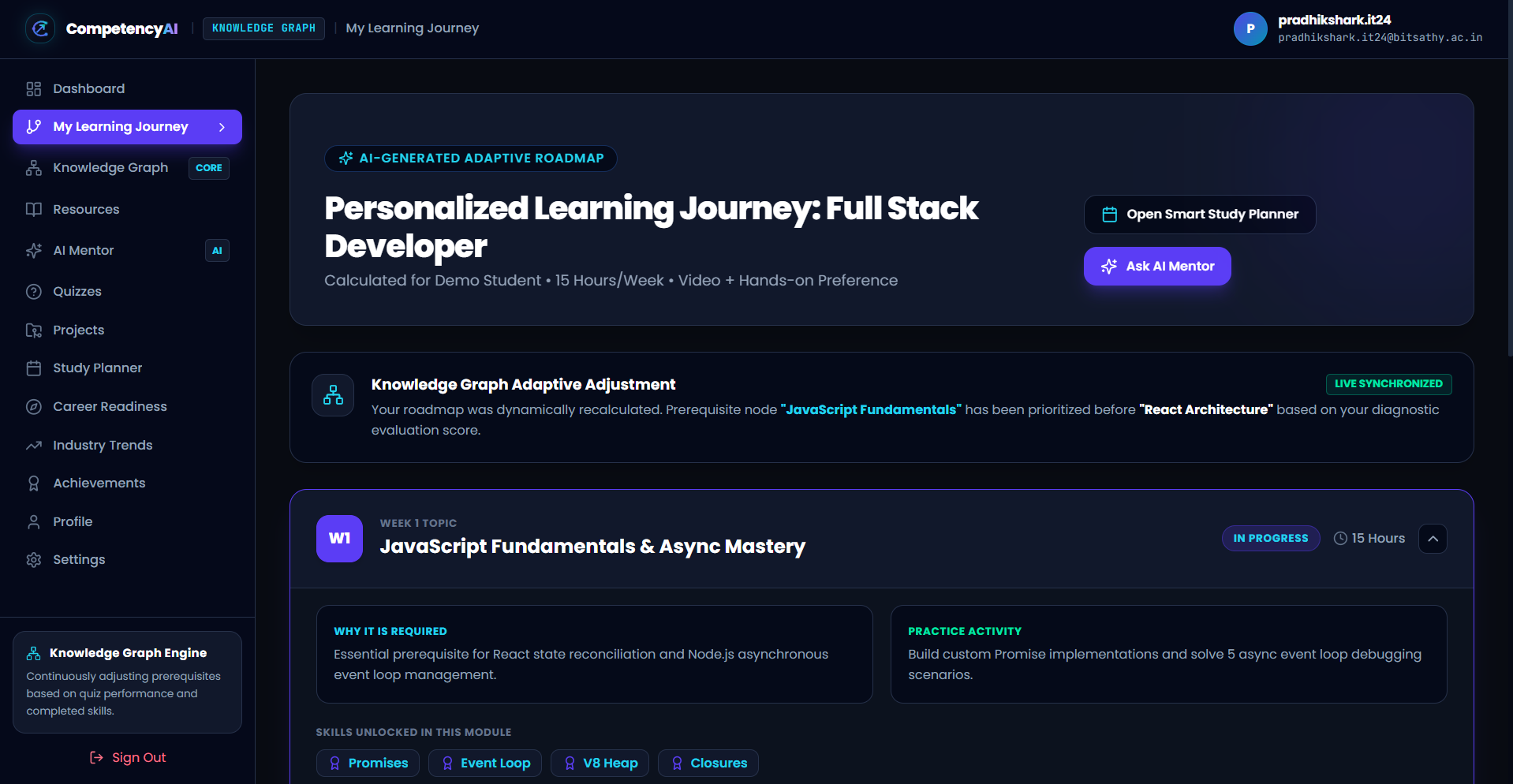
AI creates an adaptive roadmap based on skills, prerequisites, learning pace, and student performance.
-
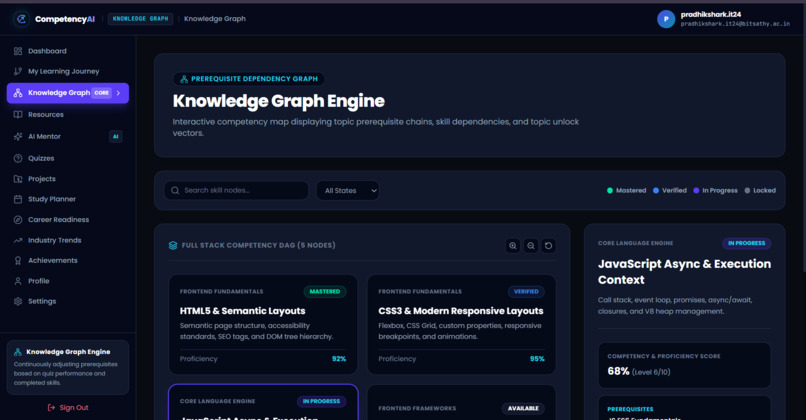
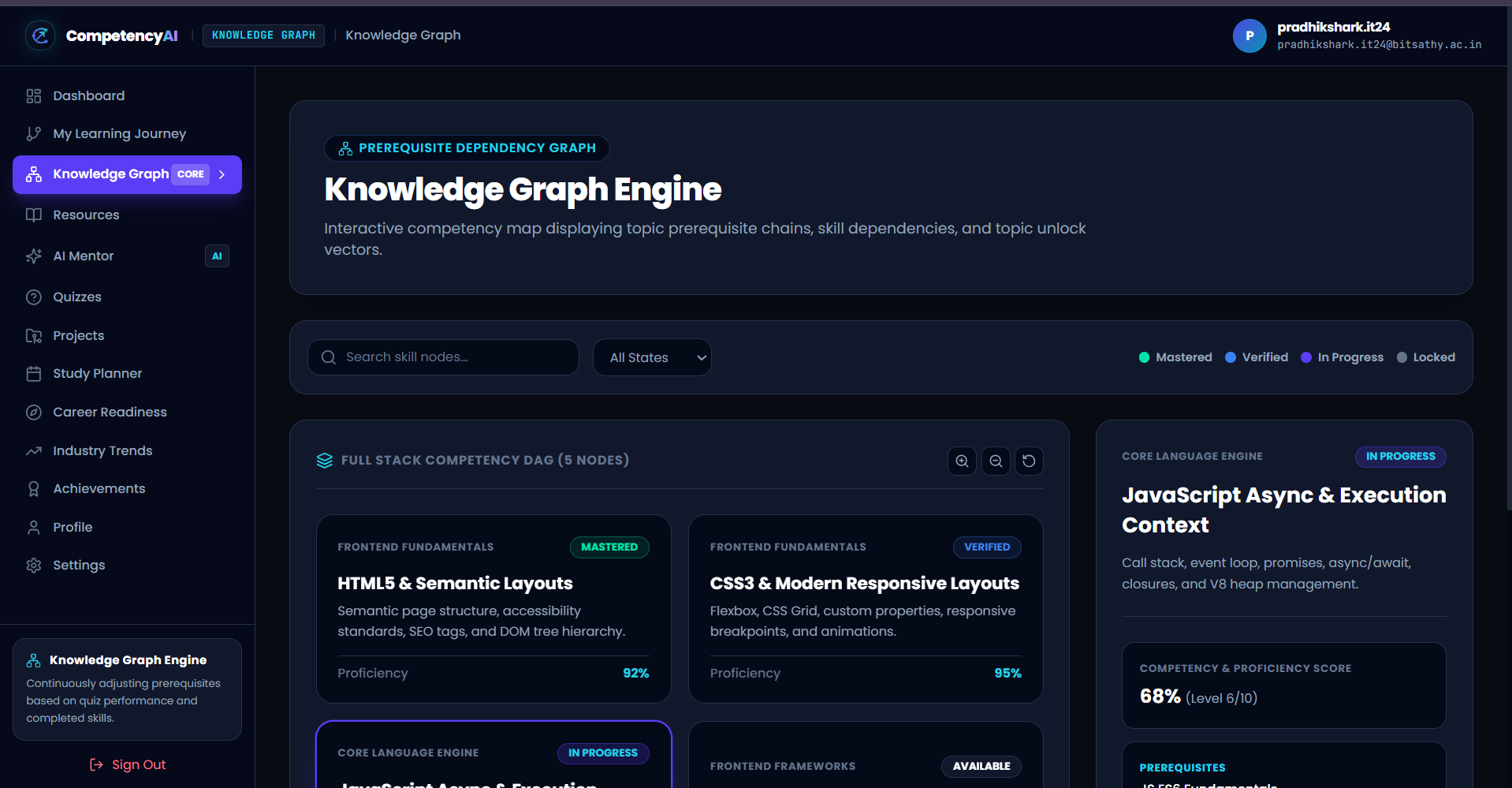
The Knowledge Graph maps skills, prerequisites, dependencies, and competency levels for career-focused learning.
-
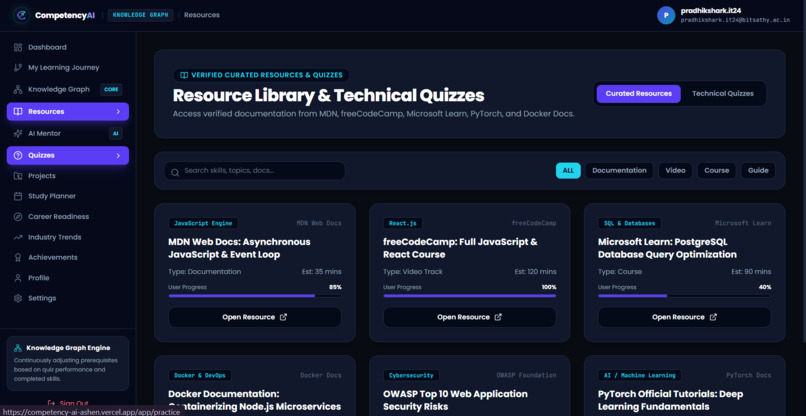
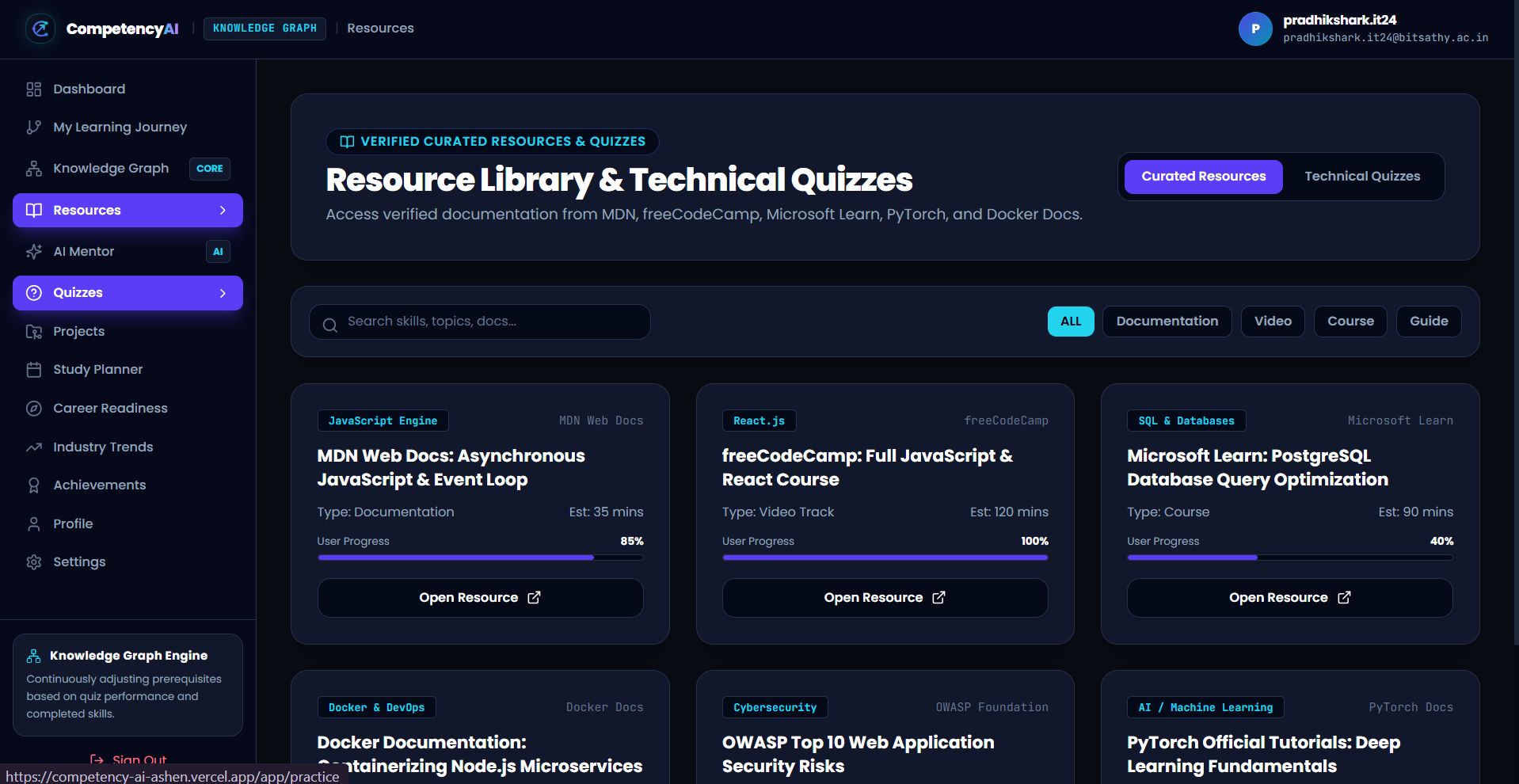
Curated resources and technical quizzes help students improve skills through courses, videos, guides, and practice.
-
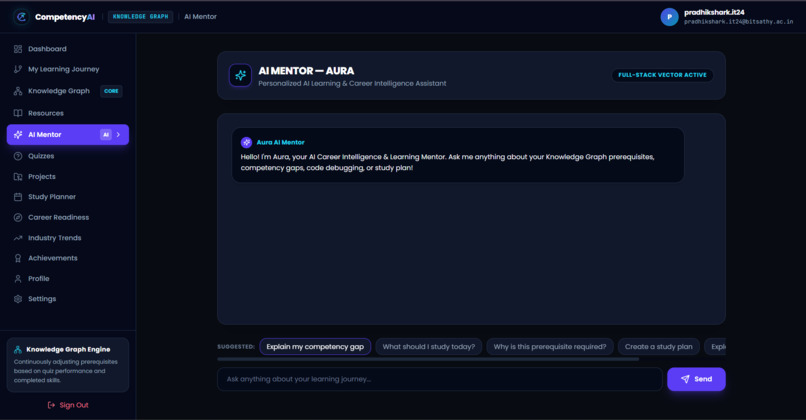
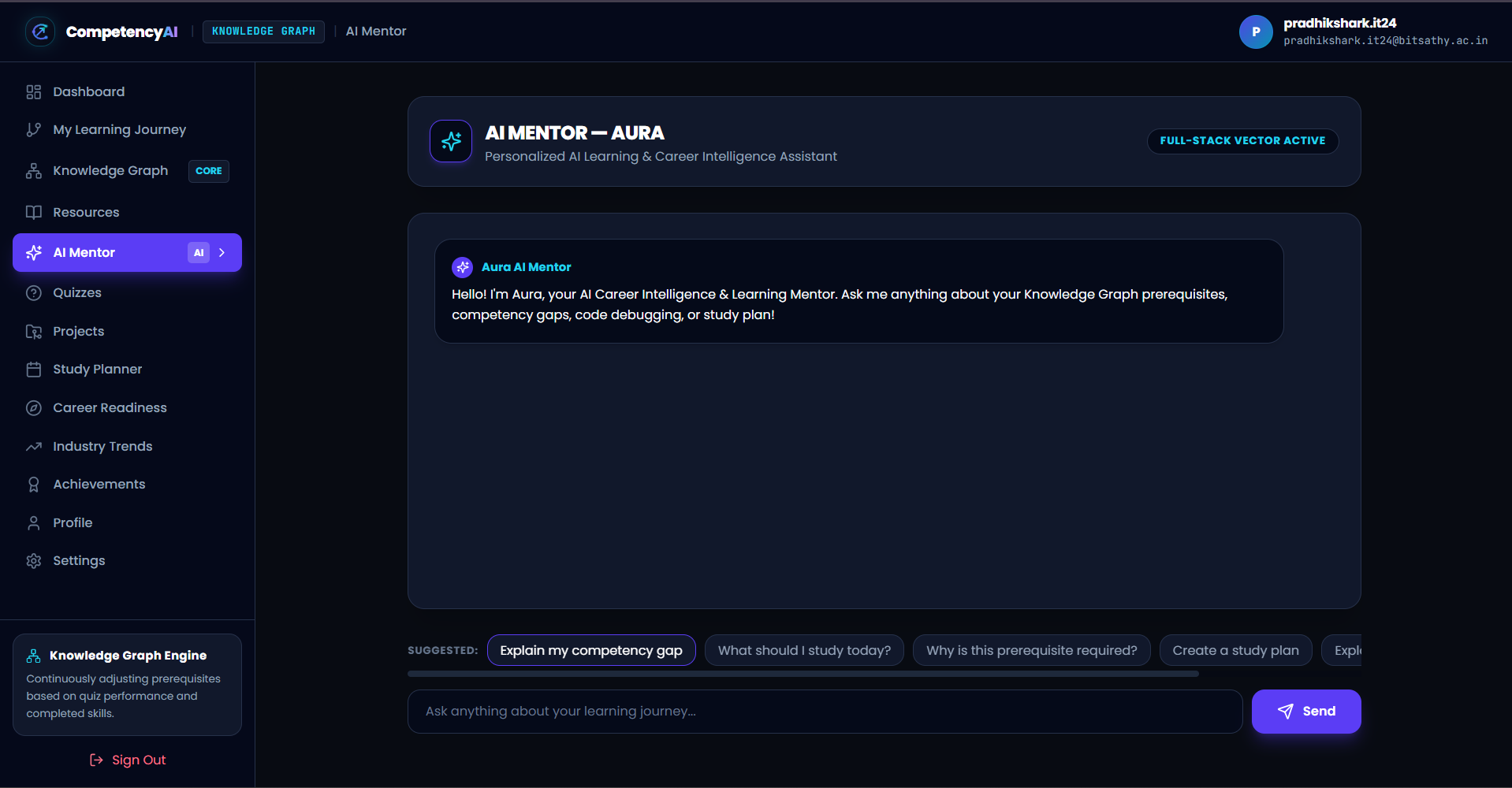
AI Mentor provides personalized guidance on competency gaps, prerequisites, coding doubts, study plans, and career learning.
-
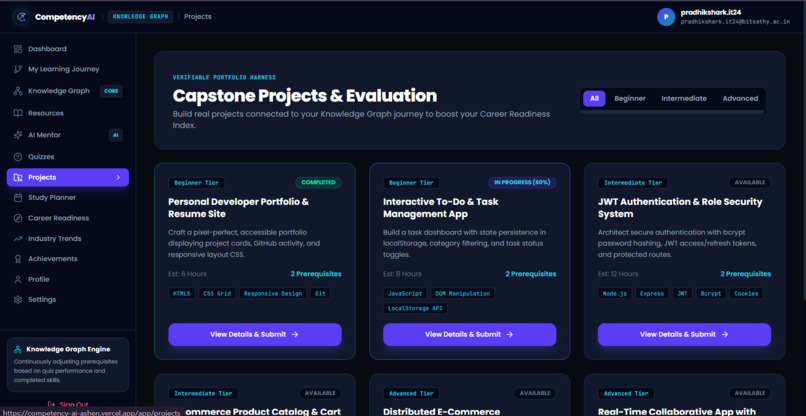
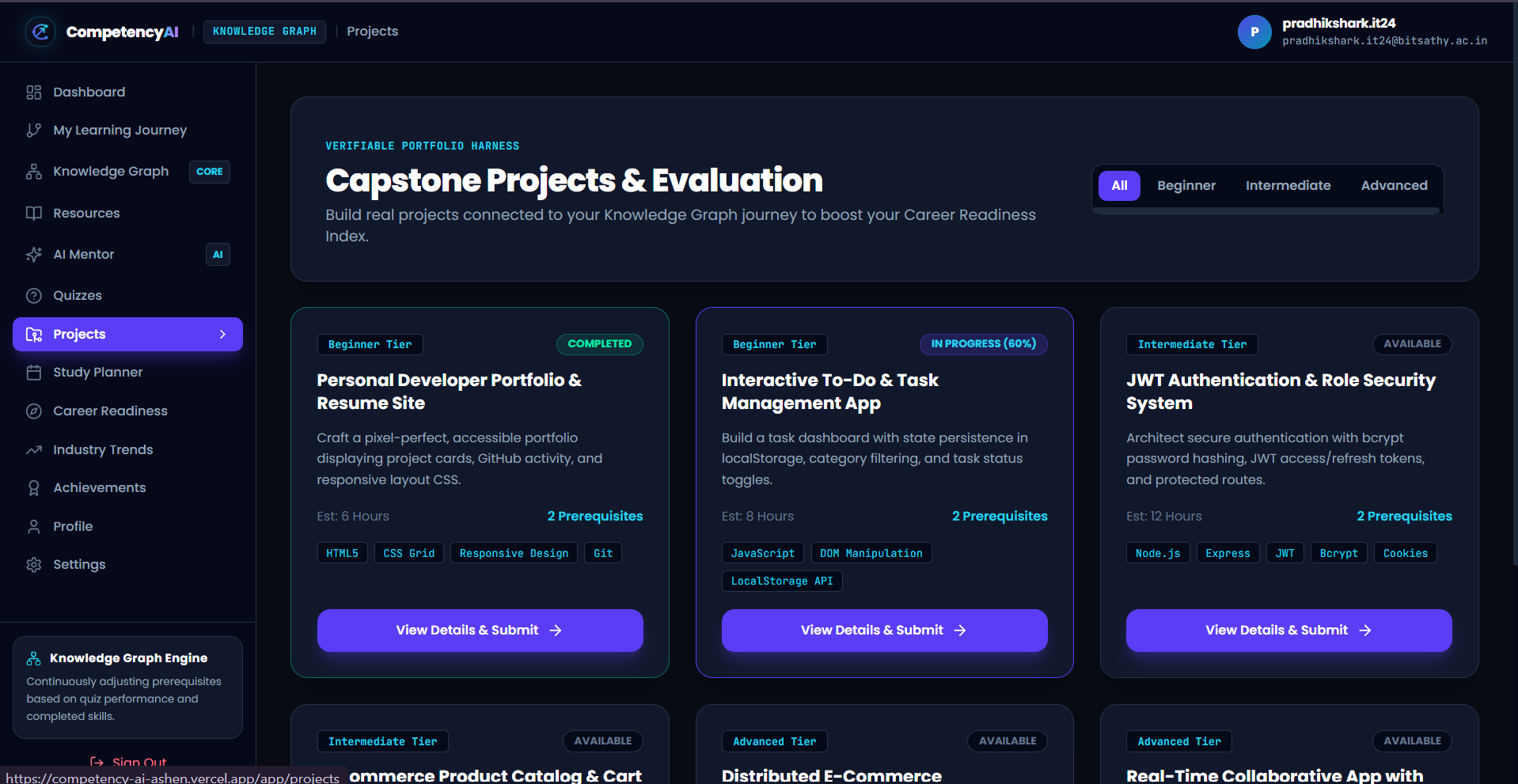
Capstone projects help students apply their skills through real-world development tasks and build practical experience for career readiness.
-
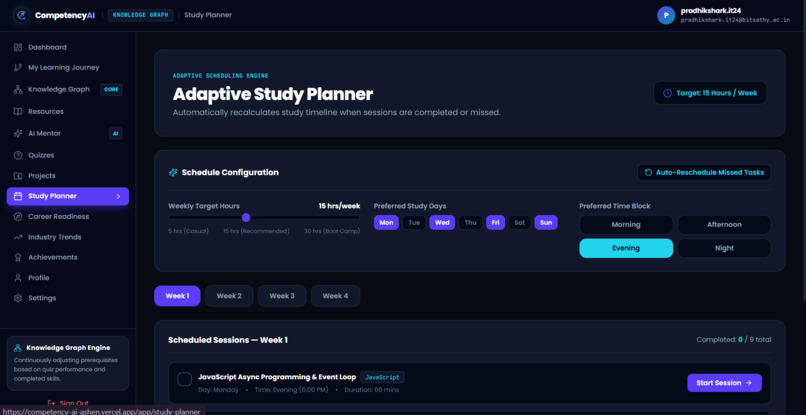
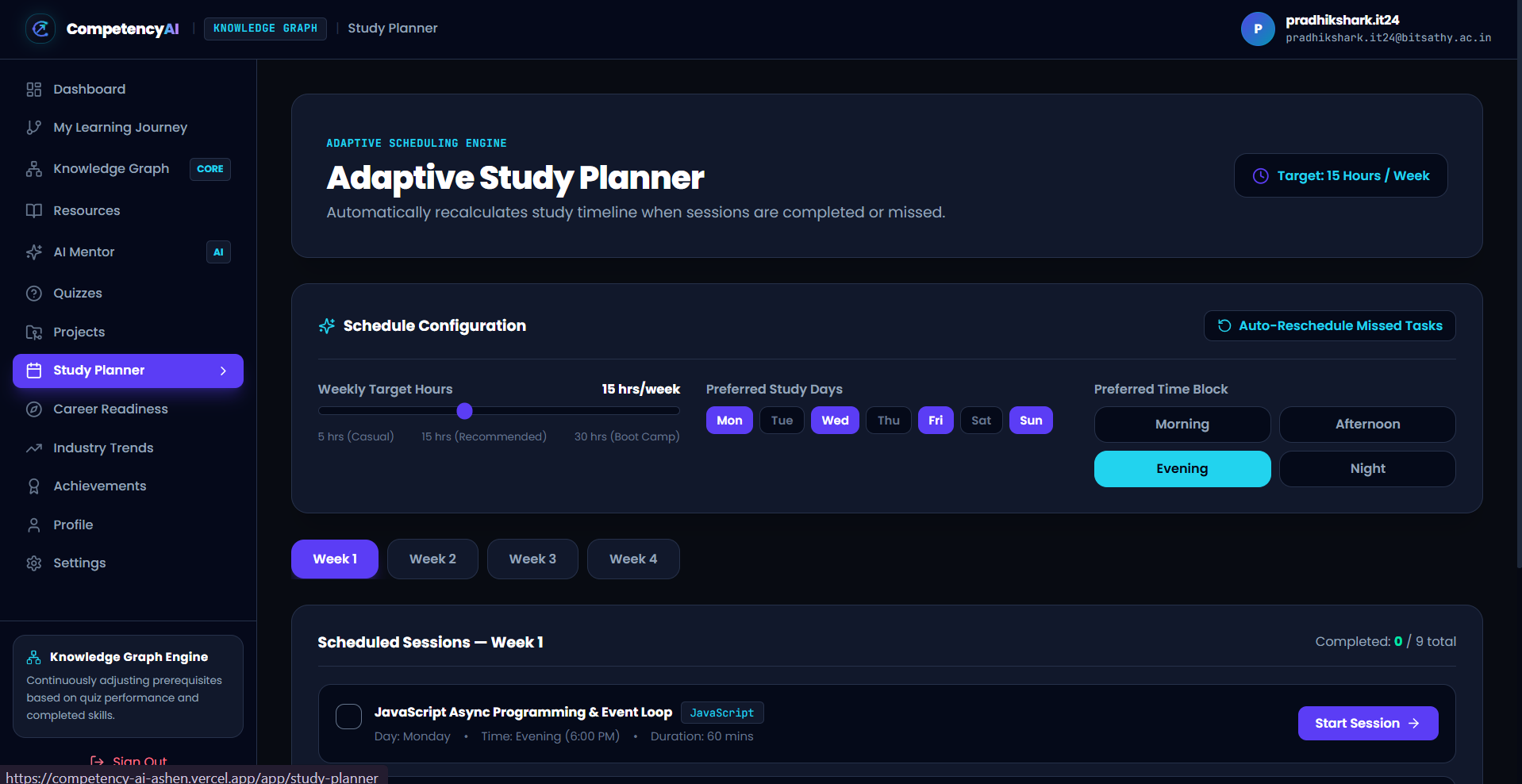
Adaptive Study Planner creates flexible schedules based on study hours, preferred days, time slots, and completed or missed sessions.
-
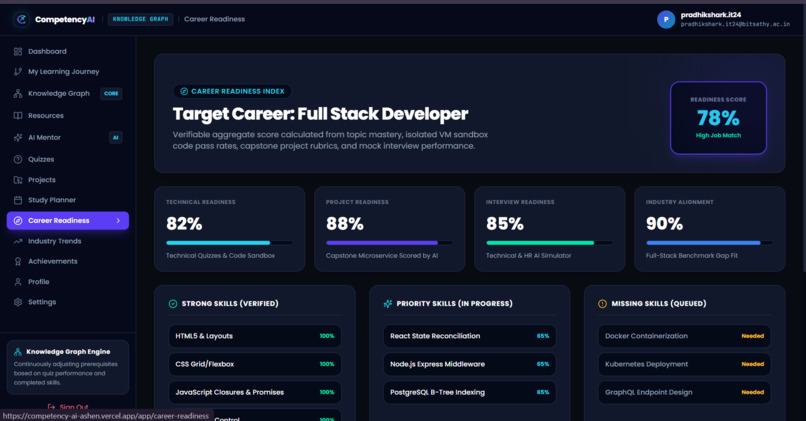
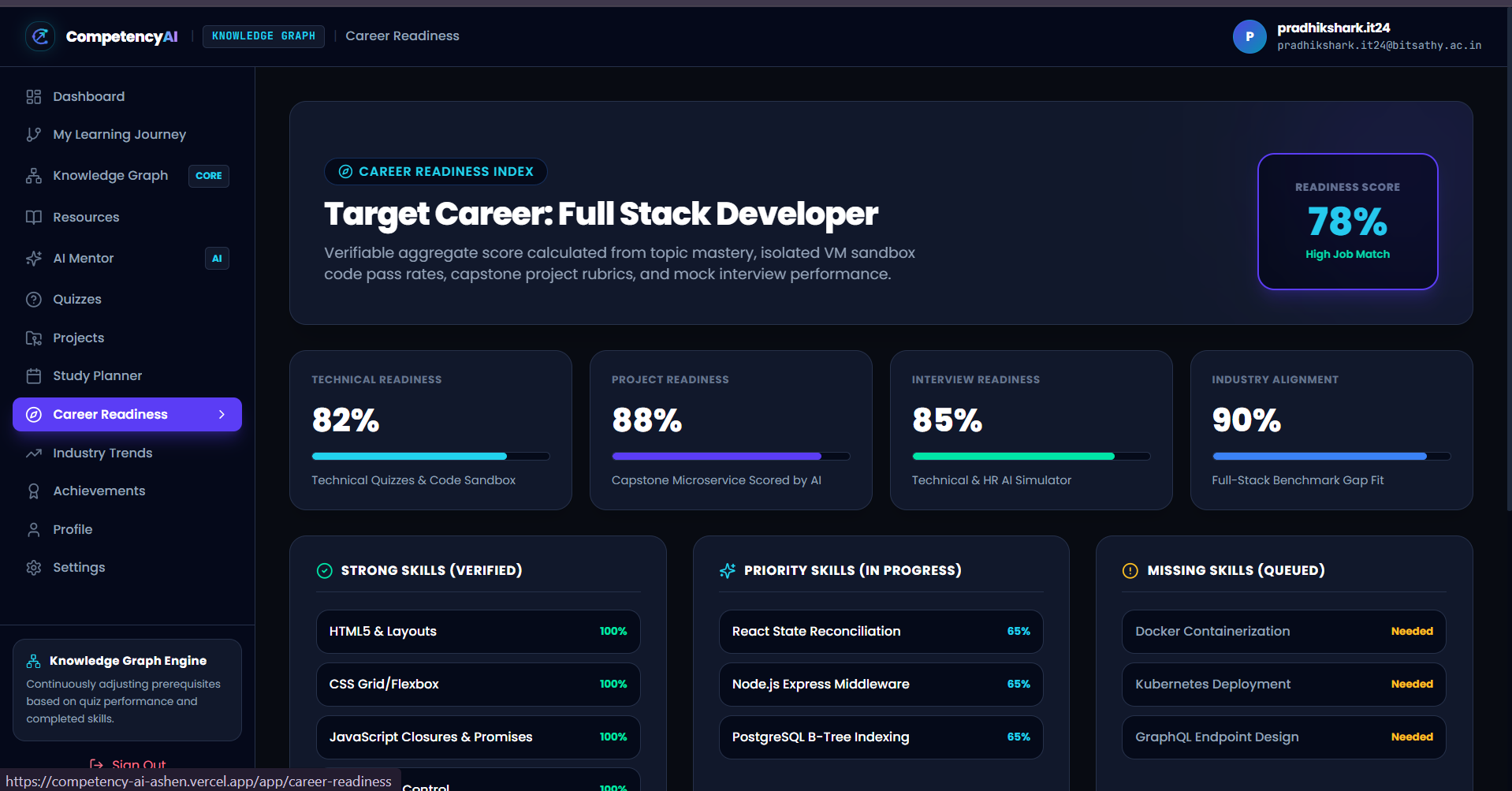
Career Readiness evaluates technical, project, interview, and industry skills to show strengths, gaps, and overall career preparedness.
-
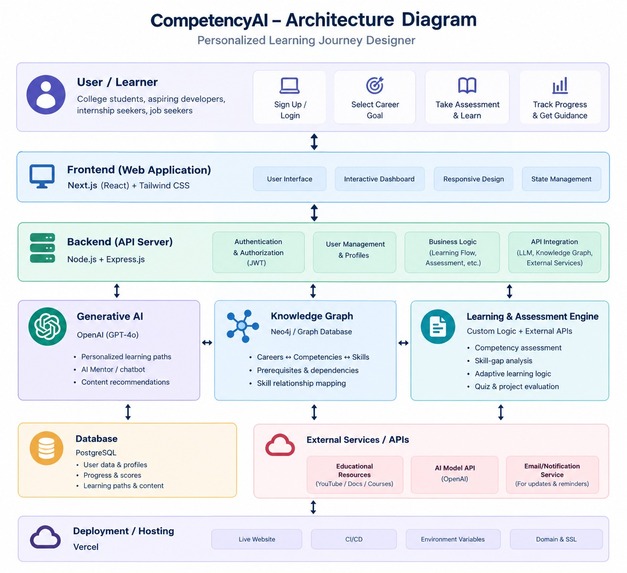
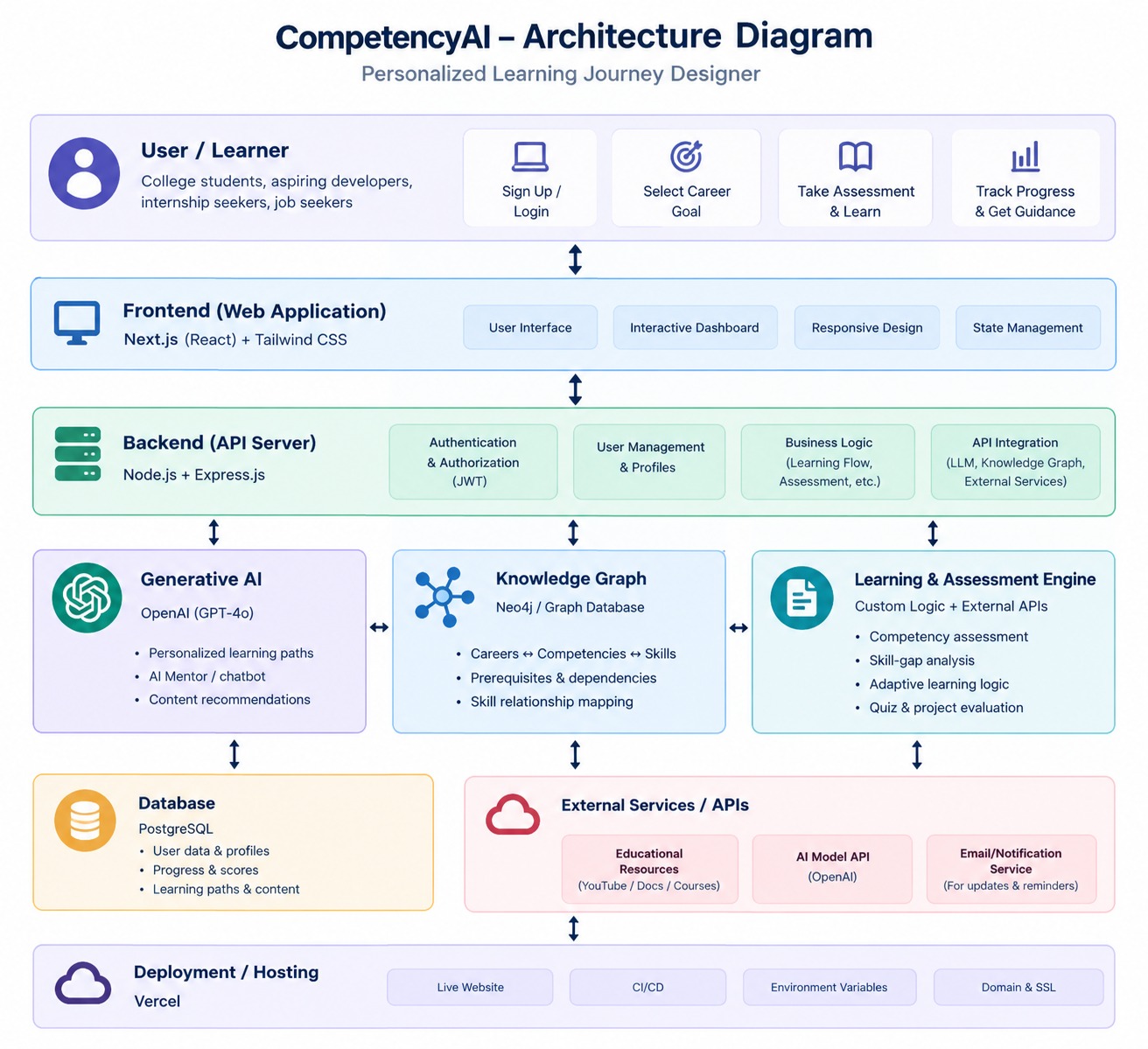
CompetencyAI architecture: Generative AI, Knowledge Graphs, and adaptive learning for personalized, career-focused learning journeys.
Inspiration
Inspiration
Students often know the career they want to pursue, but they are not always sure what skills they already have, what skills they are missing, or what they should learn next. Traditional learning platforms often provide general learning paths that do not fully consider an individual's current competency level, career goals, and learning needs.
We were inspired to build CompetencyAI – Personalized Learning Journey Designer to address this challenge by helping students understand their current competencies, identify skill gaps, and discover a structured learning path toward their desired careers.
What it does
CompetencyAI is a career-focused personalized learning platform designed to combine Generative AI and Knowledge Graphs to help students develop the technical skills required for their career goals.
The platform's intended learning journey includes:
- Creating a learner profile and selecting a target career.
- Identifying existing skills and learning preferences.
- Assessing technical competencies.
- Identifying strengths, weaknesses, and skill gaps.
- Mapping skill prerequisites and dependencies through a Knowledge Graph.
- Generating personalized learning roadmaps using Generative AI.
- Recommending relevant learning resources, quizzes, and practical projects.
- Providing AI Mentor support for learning guidance.
- Tracking learning progress and career readiness.
- Adapting learning recommendations based on assessment performance.
These capabilities aim to make learning more structured, personalized, and aligned with career requirements.
How we built it
We designed CompetencyAI around a continuous learning workflow:
Profile → Career Goal → Skills → Assessment → Competency Analysis → Skill Gap Identification → Knowledge Graph → Generative AI → Personalized Roadmap → Learning Resources → Quizzes → Projects → Progress Tracking → Career Readiness
The competency assessment helps establish a learner's current skill level. Skill-gap analysis then identifies areas that need improvement in relation to the selected career goal.
The Knowledge Graph represents relationships between careers, competencies, skills, prerequisites, and dependencies. This structure helps organize learning topics into a logical sequence rather than presenting them as unrelated subjects.
The Generative AI component is intended to use the learner's competency profile, career goal, and relevant skill relationships to generate personalized learning recommendations.
The overall approach brings together assessment, competency analysis, prerequisite mapping, learning resources, practical projects, and progress tracking. Adaptive learning logic can provide additional revision and resources to learners who need more support while helping proficient learners progress through appropriate next steps.
The actual AI models, frameworks, database, and integrations should be documented according to the technologies implemented in the project.
Challenges we ran into
One of our main challenges was designing a personalized learning journey rather than a fixed roadmap. We needed to consider how competency assessment results could be connected to skill prerequisites and how learning topics could be arranged in a logical order.
Another challenge was designing a continuous workflow that connects multiple components, including competency assessment, skill-gap analysis, Knowledge Graphs, Generative AI, quizzes, learning resources, and progress tracking.
We also had to consider that students begin with different levels of technical knowledge and may require different learning sequences and levels of support.
Accomplishments that we're proud of
We are proud of designing CompetencyAI around a learner-centered approach that connects career goals with competency development.
Key accomplishments include:
- Designing a structured learning workflow from career selection to career readiness.
- Incorporating competency assessment and skill-gap analysis into the learning journey.
- Using Knowledge Graph concepts to represent relationships between skills and prerequisites.
- Designing an AI-assisted approach to personalized learning-roadmap generation.
- Bringing learning resources, quizzes, practical projects, and progress tracking together in one platform.
- Establishing a foundation for adaptive learning based on individual competency levels.
These accomplishments represent the project's design and implementation goals; each feature should be demonstrated according to its actual working status.
What we learned
Through this project, we learned how Generative AI and structured Knowledge Graphs can complement one another in personalized learning applications.
We developed a deeper understanding of competency analysis, skill-gap identification, prerequisite relationships, AI prompting, adaptive learning logic, UI/UX design, system integration, and testing.
We also learned the importance of designing technology around real user needs. A useful learning platform should not only provide information but also help learners understand what they need to learn next and why it matters for their goals.
What's next for CompetencyAI – Personalized Learning Journey Designer
Our next goal is to make CompetencyAI more intelligent, adaptive, and useful for students preparing for real-world careers.
Potential future improvements include:
- Expanding competency maps to cover more engineering roles and technical skills.
- Improving personalized recommendations using learner performance and progress.
- Enhancing the AI Mentor to provide more contextual learning guidance.
- Expanding practical projects and skill-based assessments.
- Improving progress analytics to help learners understand their development.
- Aligning learning roadmaps with evolving industry skill requirements.
- Evaluating the quality and relevance of AI-generated learning recommendations.
Our long-term vision is to help every learner understand where they are, what skills they need, and which steps they can take next to achieve their career goals.
By connecting competency assessment, skill relationships, and personalized learning recommendations, CompetencyAI aims to bridge the gap between academic learning and industry expectations.
What it does
How we built it
Challenges we ran into
Accomplishments that we're proud of
What we learned
What's next for CompetencyAI – Personalized Learning Journey Designer
Built With
- adaptive
- ai
- css
- development
- express.js
- gemini
- generative
- graphs
- html
- javascript
- knowledge
- learning
- mongodb
- node.js
- personalized
- react
- web

Log in or sign up for Devpost to join the conversation.