Company Memory OS
Every company has knowledge. The problem is remembering it.
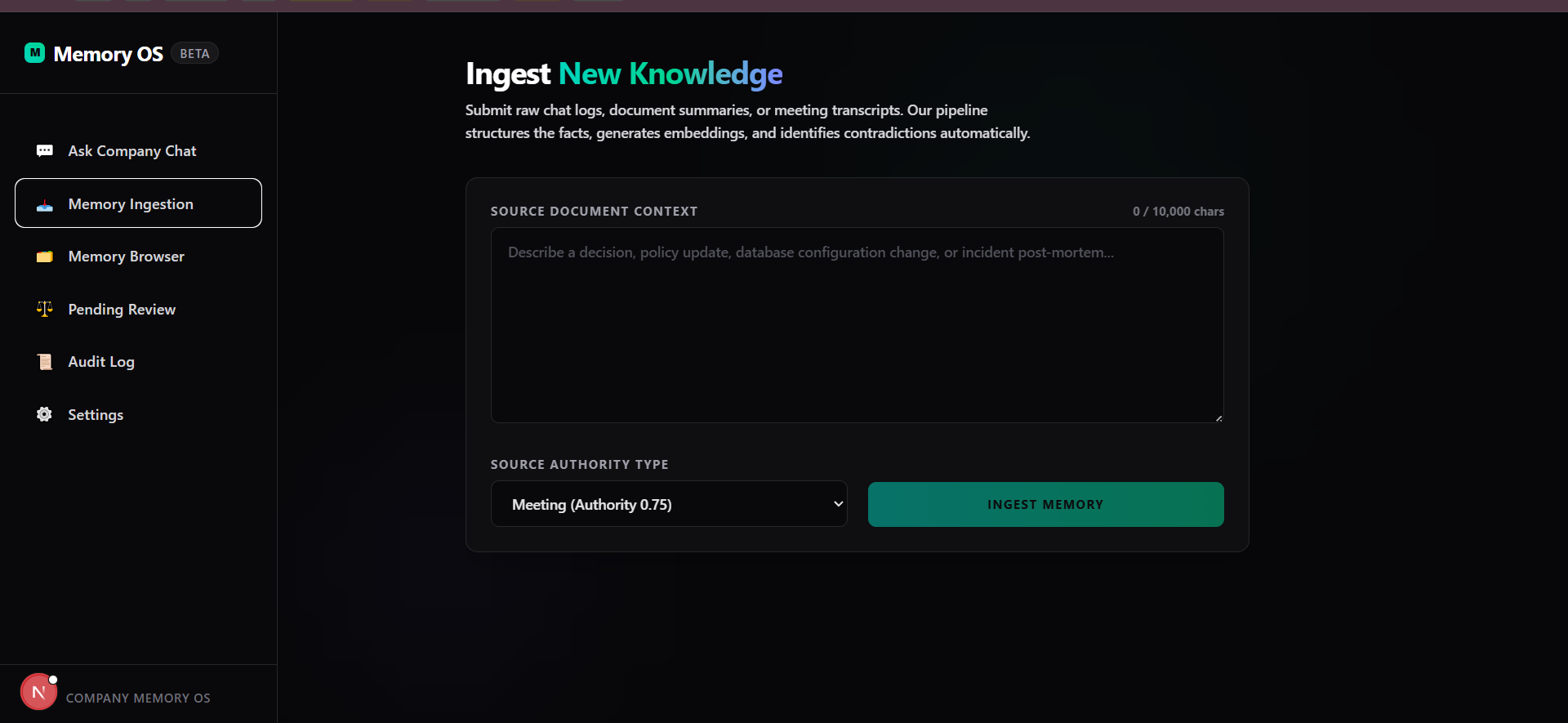
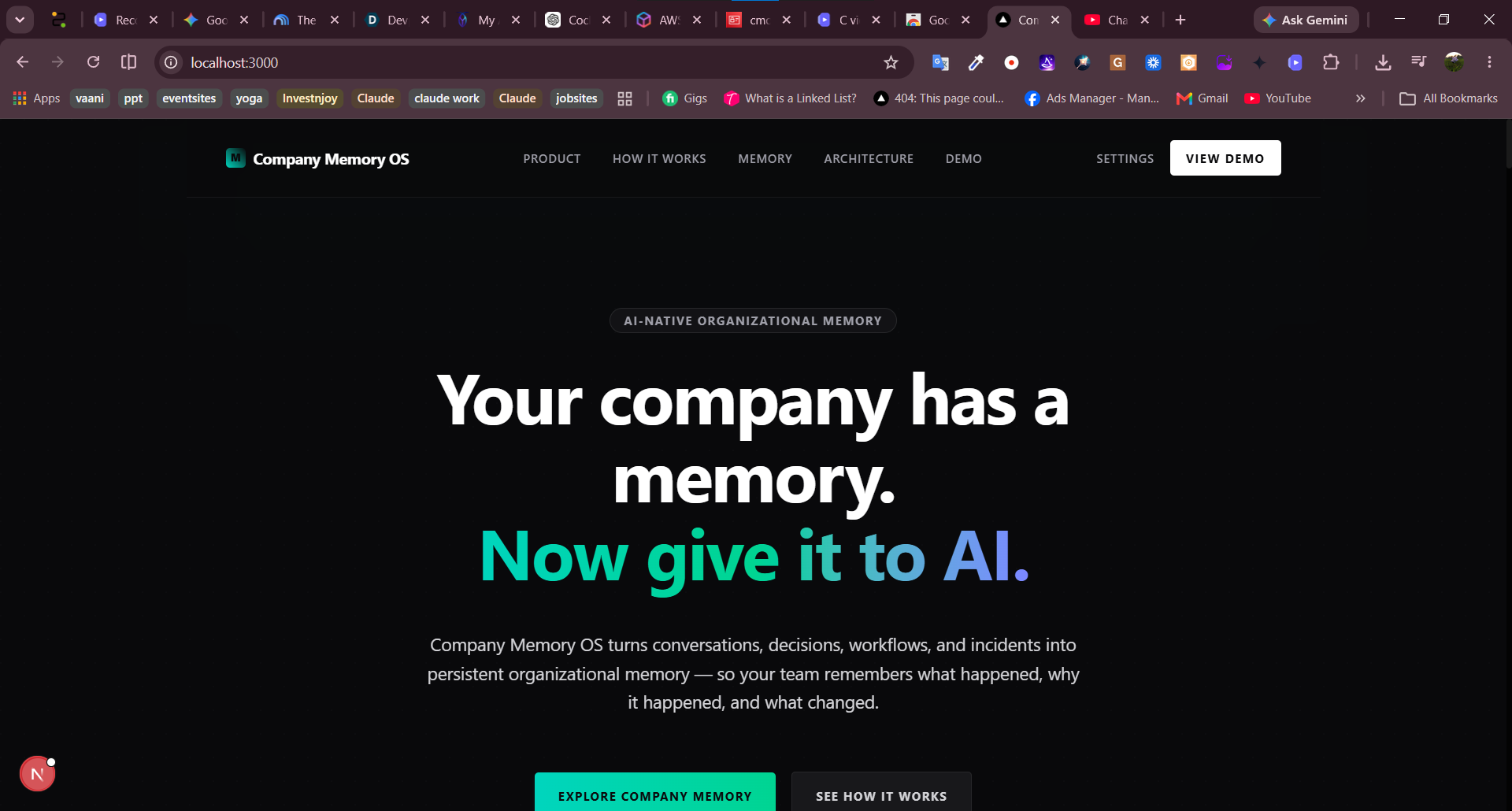
Company Memory OS is an AI-powered organizational memory platform that turns conversations, decisions, workflows, incidents, and company activity into persistent, structured memory.
Modern teams generate critical knowledge across Slack, meetings, documents, GitHub, tickets, and informal conversations. Over time, important context gets lost: people forget why a decision was made, documentation becomes outdated, new employees repeatedly ask the same questions, and critical knowledge remains trapped inside individuals.
Company Memory OS treats organizational knowledge as infrastructure.
What it does
An AI Memory Agent analyzes incoming company activity and determines what is worth remembering. It can identify and structure:
- Decisions
- Decision rationale
- Policies
- SOPs
- Facts
- Incidents
- Events
- People and project context
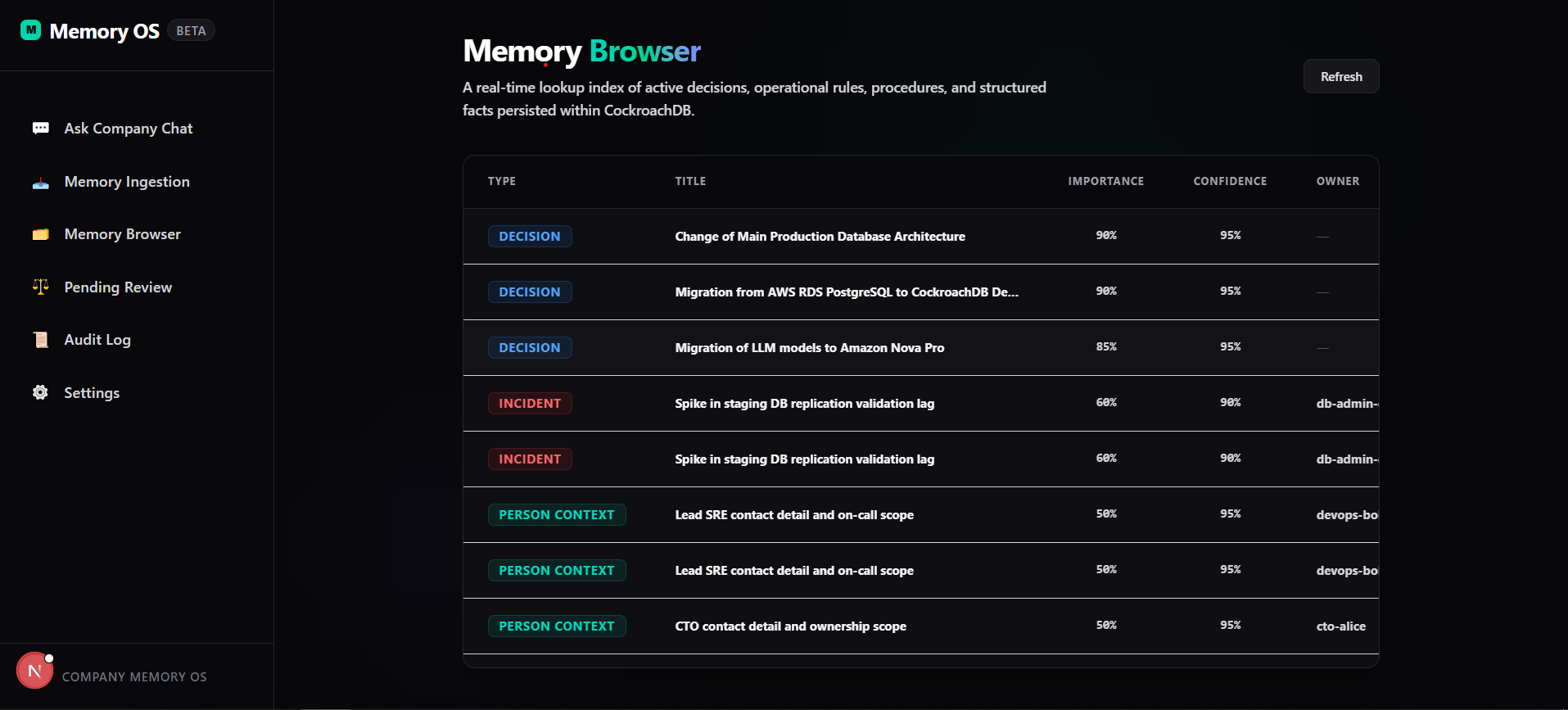
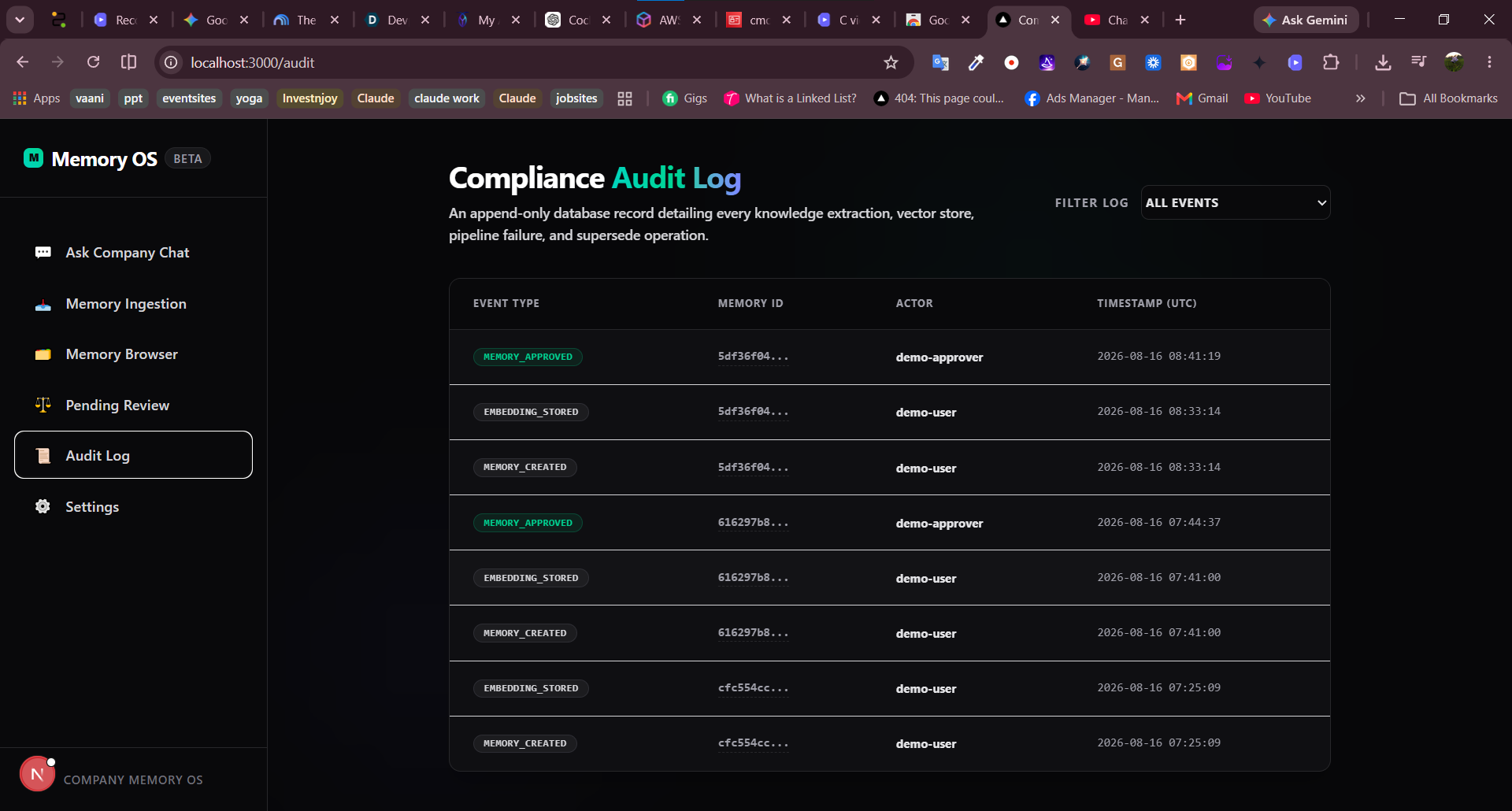
Each memory is stored with structured metadata such as importance, confidence, source authority, ownership, timestamps, relationships, and historical state.
Users can then ask questions such as:
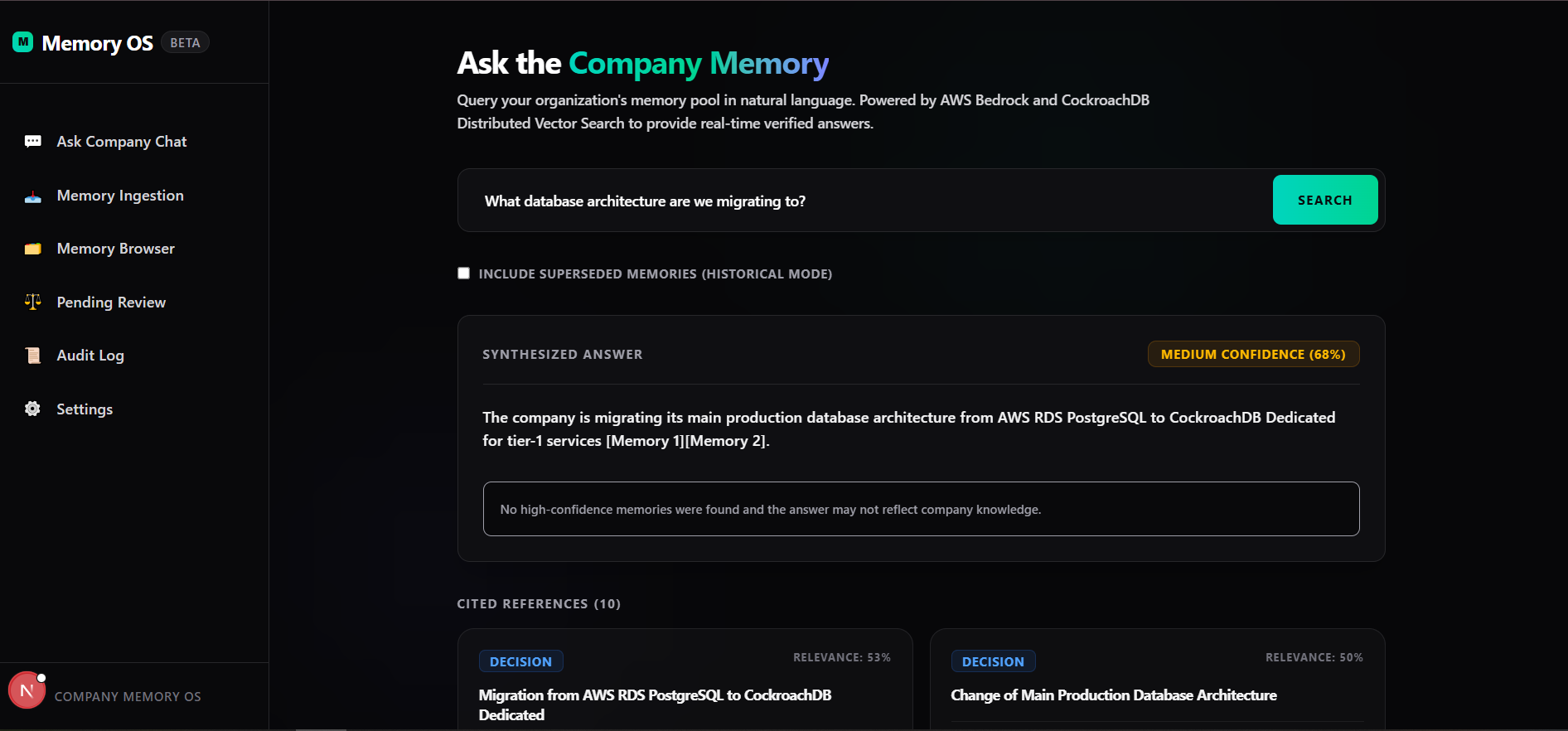
"Why did we choose CockroachDB?"
"What was decided about our deployment process?"
"Which database architecture is currently authoritative?"
The agent retrieves relevant memories using semantic search, combines them with structured organizational context, and produces grounded answers with source attribution and confidence scoring.
The key difference
Company Memory OS is not simply a chatbot over documents.
It remembers what the company decided, why it was decided, what changed, and which knowledge is still authoritative.
For example, if an old architecture document says "Aurora" while a later approved decision says "CockroachDB", the system detects the conflict instead of blindly returning whichever document happens to rank highest.
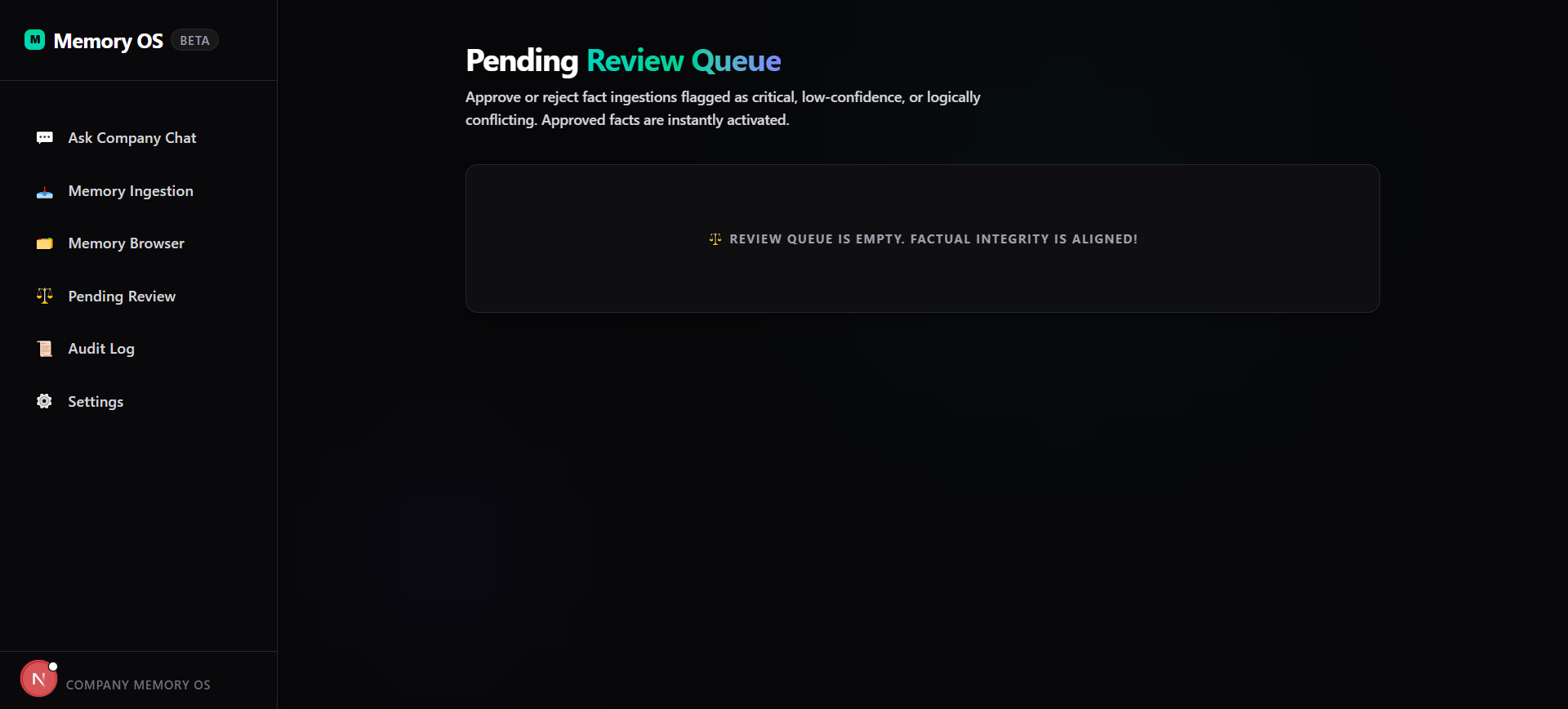
A human can review the conflict, approve the newer decision, and the system marks the previous memory as superseded while preserving the complete history.
This creates a continuous memory lifecycle:
Capture → Understand → Store → Retrieve → Reason → Act → Update Memory
How we built it
CockroachDB is the persistent memory layer of the system.
We use:
- CockroachDB Distributed Vector Indexing for semantic memory retrieval
- CockroachDB Managed MCP Server so the agent can interact with the database through an agent-facing tool interface
- Amazon Bedrock for memory extraction, classification, reasoning, and embeddings
- AWS Lambda for event-driven memory ingestion and processing
Structured organizational state, semantic embeddings, memory history, relationships, and audit events are kept together in CockroachDB rather than splitting operational data and vector memory across separate systems.
Why memory matters
Traditional documentation answers:
"What is written down?"
Company Memory OS aims to answer:
"What does the company know, why does it know it, and what should the company believe now?"
That distinction becomes increasingly important as teams scale and as more AI agents begin operating inside organizations.
Our hackathon demo
We created a fictional company workspace called NovaStack with realistic organizational memories.
The demo shows a complete memory lifecycle:
- A technology decision is captured.
- The AI extracts the decision and its rationale.
- The memory is stored in CockroachDB with embeddings.
- A user asks why the decision was made.
- A conflicting piece of knowledge is introduced.
- The agent detects the conflict and explains which source has higher authority.
- A human resolves the conflict, the outdated memory is superseded, and future answers use the updated organizational memory.
What we learned
Building this project made one idea very clear:
An agent is only as useful as the memory it can reliably access.
A model can reason well in a single interaction, but an organization needs something more durable. It needs memory that is persistent, searchable, explainable, auditable, and capable of evolving over time.
That is what we wanted to explore with Company Memory OS.
Built With
- agents
- ai
- amazon
- amazon-web-services
- artificial
- bedrock
- cockroachdb
- database
- generative
- lambda
- next.js
- node.js
- typescript
- vector


Log in or sign up for Devpost to join the conversation.