
Inspiration
Imagine a loved one: your daughter, sister, or friend, walking home alone at night. The streetlights are too far apart, the silent atmosphere feels tense, and they grip their phone tightly like it’s the only thing keeping them safe.
This fear isn't just a feeling; it's a daily reality. More than 50% of women in the United States are afraid of walking alone at night, according to Gallup's 2023 annual crime poll.
We conducted a survey with women around us: our mom, friends, teachers, colleagues, ... about their experience taking an Uber ride or walking home alone. In those situations, they usually let someone else where know where they are at or talk on the phone.
But ... what if you don't have someone to talk to?
We’ve all seen those Tik-Toks of fake calls people play on speaker to feel safer just something to break the silence and let others know they’re not alone. So, we were so inspired to build CompanionAI who can talk to you on every of your ride or walk alone. It is companion that doesn't just wait for the worst to happen, but actively works to prevent it by providing a sense of presence and safety.
What it does
Companion AI is a proactive AI safety companion that provides a real-time, reassuring voice presence for anyone feeling unsafe on a solo journey.
Here are the features our app support:
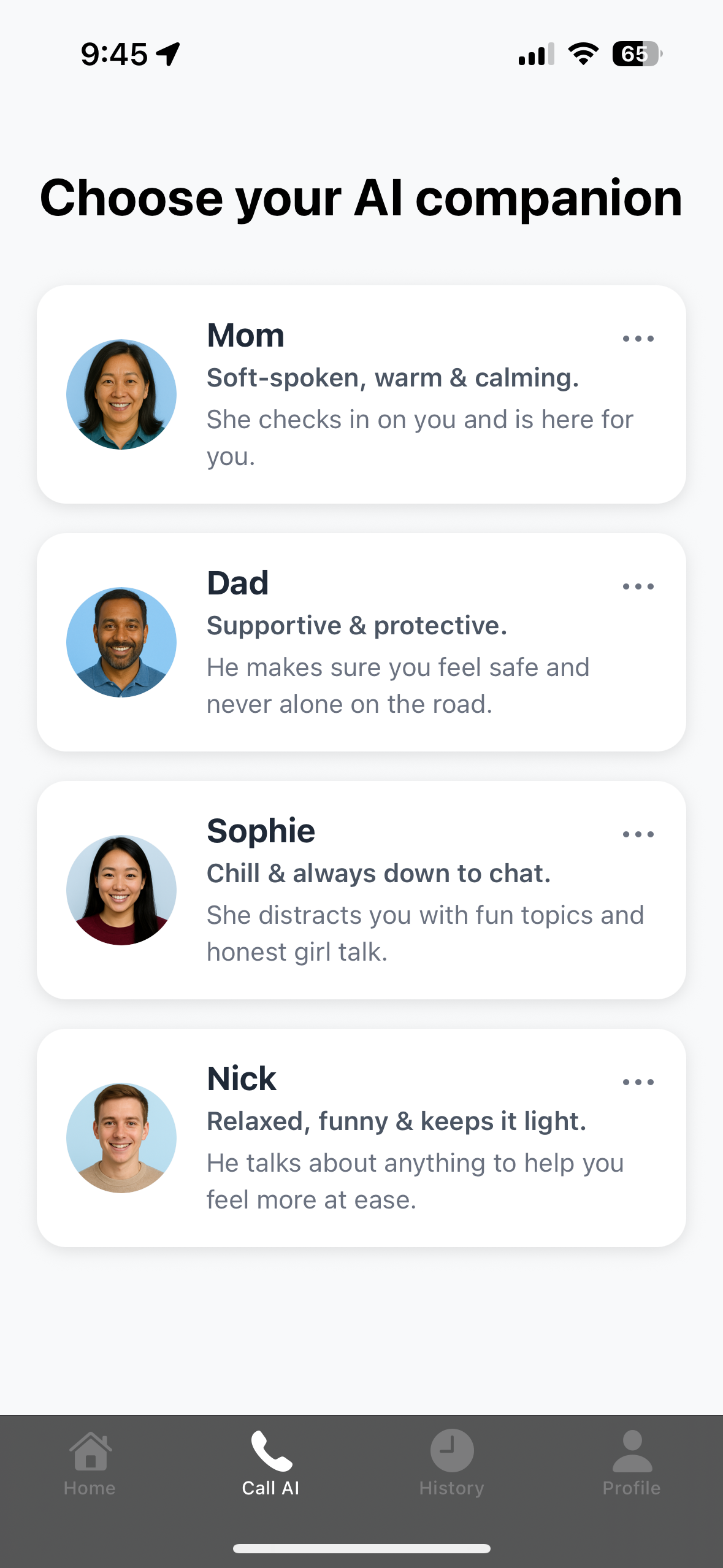
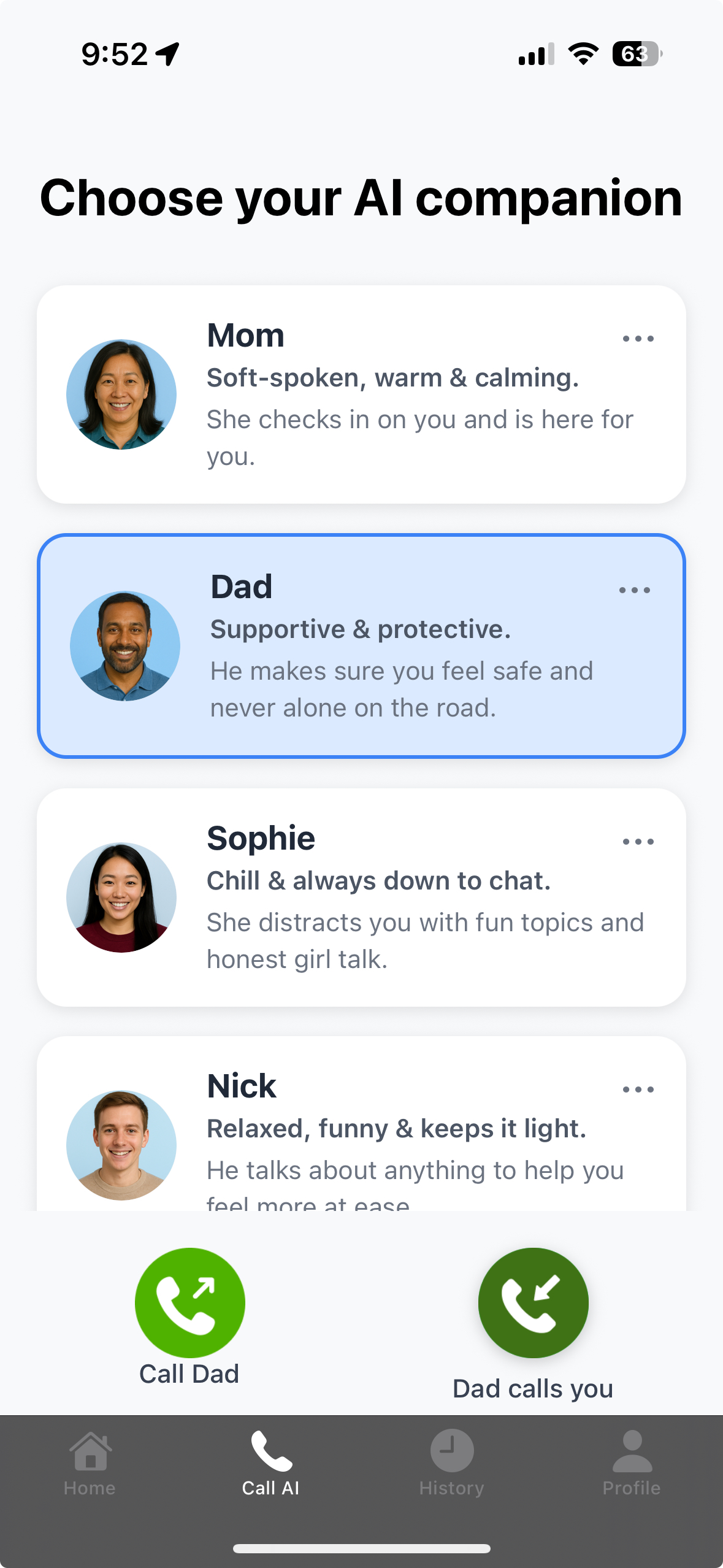
Voice companion: We created four unique personas that users can talk to, each with their own personality and style of conversation. 1) Mom: Soft-spoken, warm & calming. She checks in on you and is here for you. 2) Dad: Supportive & protective. He makes sure you feel safe and never alone on the road. 3) Sophie: Chill & talkative. She’ll distract you with fun topics and honest girl talk. 4) Nick: Relaxed, funny, keeps it light. He’ll talk about anything to help you feel more at ease.
Two-way conversation: Our companion can hold natural, two-way conversation to directly counters our users' feeling of being a vulnerable target, making their solo journeys feel safer. The companion is fine-tuned to ask follow-up questions instead of only responding.
Context-aware support: Our companion is fine-tuned to ask questions such as "Are you walking or driving?", "Is the street dark?", ... to understand your situation and provide relevant. It is also refined to provide common-sense safety advice, such as "Let's have you take one earbud out to stay aware of your surroundings."
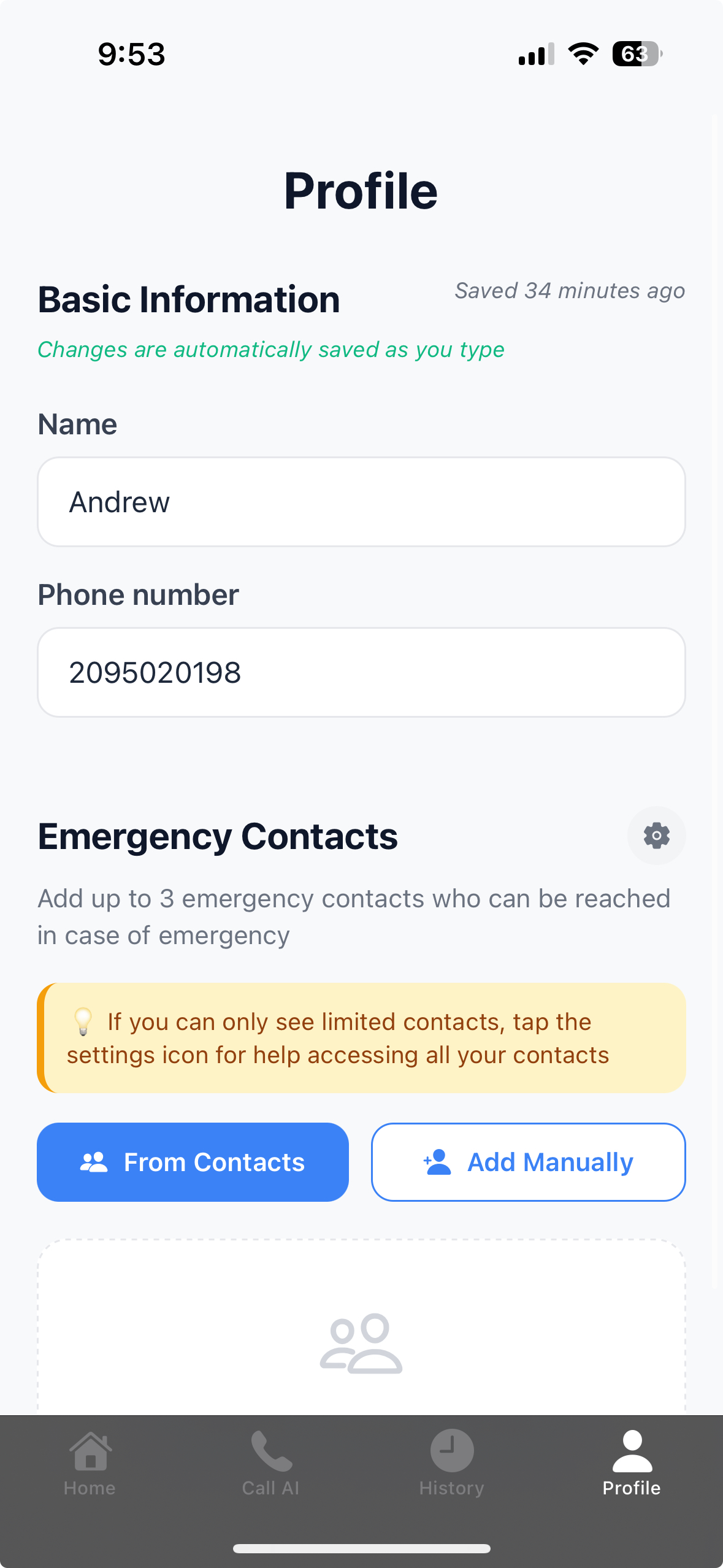
Customization: Users can provide personal details to help the AI companion have more natural conversations. Users can specify a "Safe Word/Phrase" to be immediately transferred to their emergency contact by the AI. Each companion can have a different emergency contact assigned for flexibility.
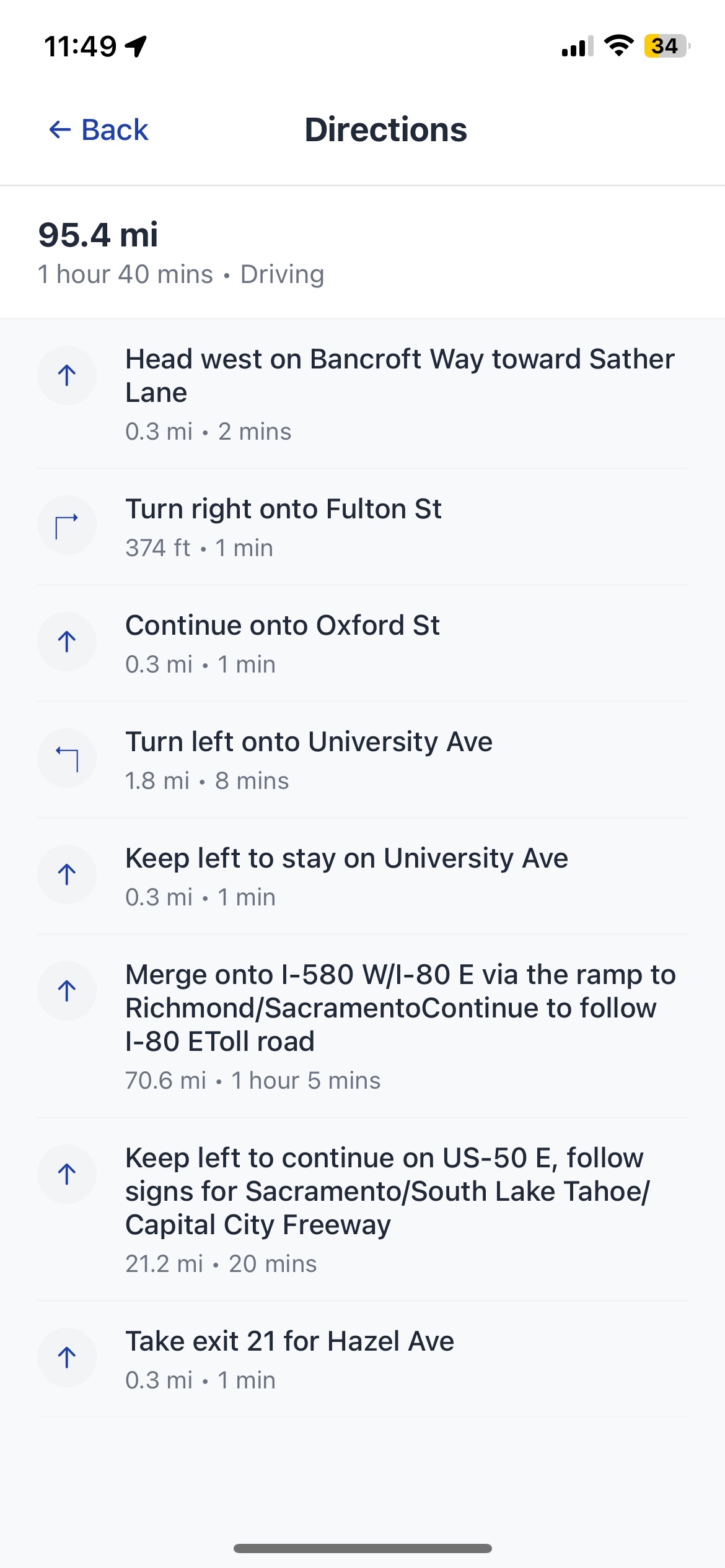
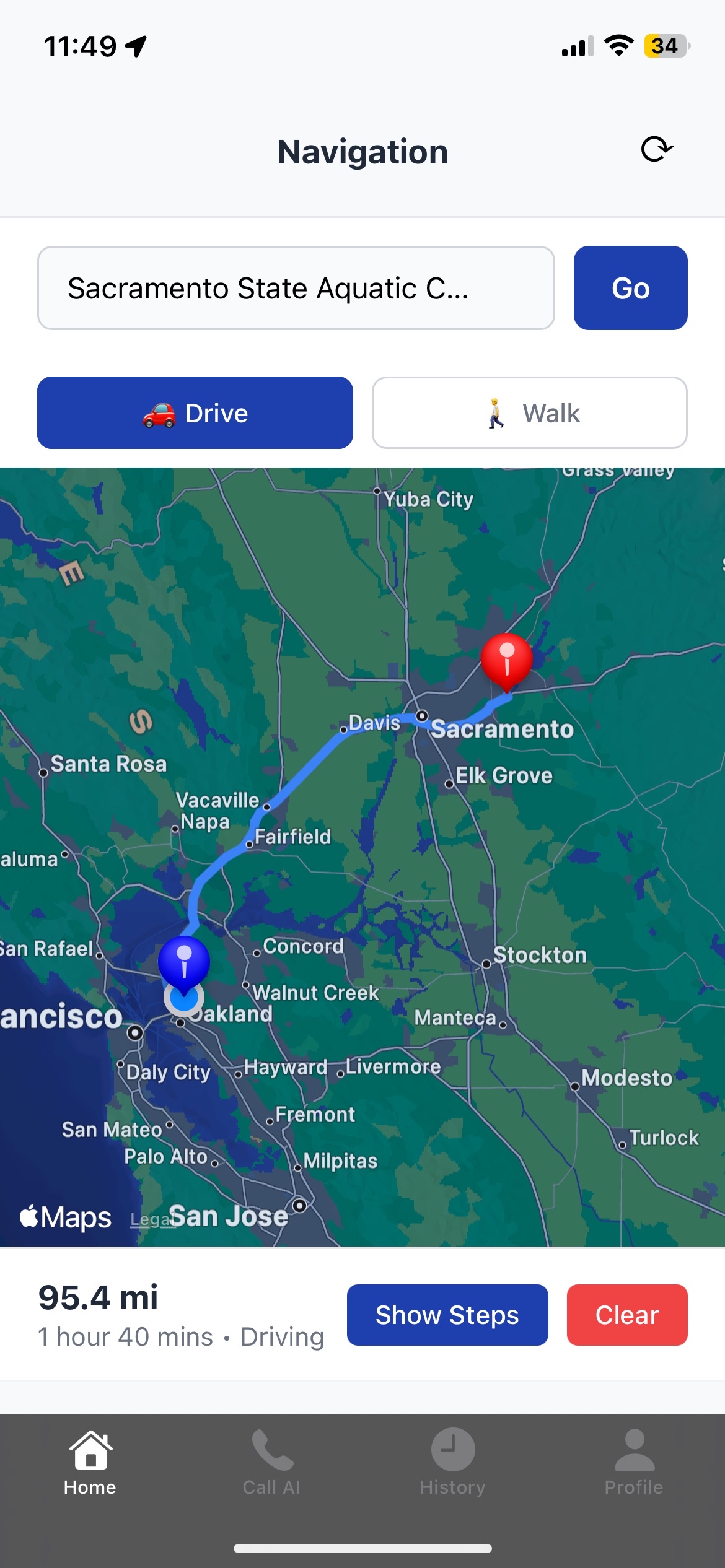
Live location: The app shows the live location and route from current location and final destination, for both driving and walking mode, with specific steps the user takes.
How we built it
We built CompanionAI in 24 hours with a focus on creating a responsive and empathetic voice experience.
Voice AI Platform: We chose Vapi as the backbone of our project for a real-time conversational agent that could respond with minimal delay, which is essential for a safety application.
AI & Personas: We used GPT-4.0 through Vapi to engineer system prompts to ensure the different personas were supportive, relatable, and context-aware.
Frontend: The application was built using React Native with Expo and TypeScript for a cross-platform development.
Challenges we ran into
Tuning the AI persona: This is our biggest challenge throughout the project. Initially, our agent was too passive. It would give one-word reassurances but wouldn't engage. We had to iteratively redesign our prompts to transform it from a simple chatbot into an active listener that could gently probe for context. We learned that the difference between a bot and a companion lies in its ability to ask the right, simple question at the right time.
Ensuring the conversation felt immediate: When someone’s feeling anxious or unsafe, even a small delay can make a big difference. We aimed to fine-tune our prompts and use Vapi to create a flowing and natural interaction.
Technical difficulties: We encountered many bugs along the way, such as npm package incompatibility, map and route rendering, ... But we were able to resolve most of them thanks to our amazing team!
Accomplishments that we're proud of
We are proud of creating an AI that is able to hold conversations tuned to safety and feels comforting. Being able to build a context-aware companion that moves beyond generic replies ("You've got this") to specific advice ("Is the street you are walking quiet or busy?") was a huge accomplishment for our team. It's the feature that makes us believe Companion AI a practical safety tool.
What we learned
We learned from others around us that the fear of walking home or riding an Uber alone at night is something they deal with often, and it has not gone away. We were incredibly happy to learn that there are features and products out there dedicating to this cause, and that we could contribute our own ideas to this important space.
This hackathon taught us that voice AI is a profoundly empathetic medium. The tone, pacing, and wording of an AI's response can have a real emotional impact on the listern. We also learned that the art of prompt engineering is crucial in tuning a friendly and relatable companion.
What's next for Companion AI
The journey is just beginning. Our next steps are focused on making Companion AI an even more robust safety utility:
- Emergency contact integration: Automatically sending alerts with location data to pre-selected contacts when a safety phrase is detected.
- Proactive mapping: Integrating with mapping APIs to suggest safer routes based on lighting, time of day, and user-reported data.
- Expanding personas: Adding more voice and persona options to allow users to choose the companion that makes them feel most comfortable.
See our business pitch/validity here: https://youtu.be/25wx4AbB6Wg
Built With
- bolt.new
- expo.io
- flask
- openai
- react-native
- v0
- vapi


Log in or sign up for Devpost to join the conversation.