Inspiration
As sustainability-focused students, we discovered an issue that was prevalent across the board: current home composting solutions -- especially for those who live in places that don't offer the service -- are high maintenance, space inefficient, or too expensive. Food waste is a big issue in the nation, especially since organics don't belong in landfill. That is why we set out to design a home composter that we named Companion that addresses the aforementioned problems.
What it does
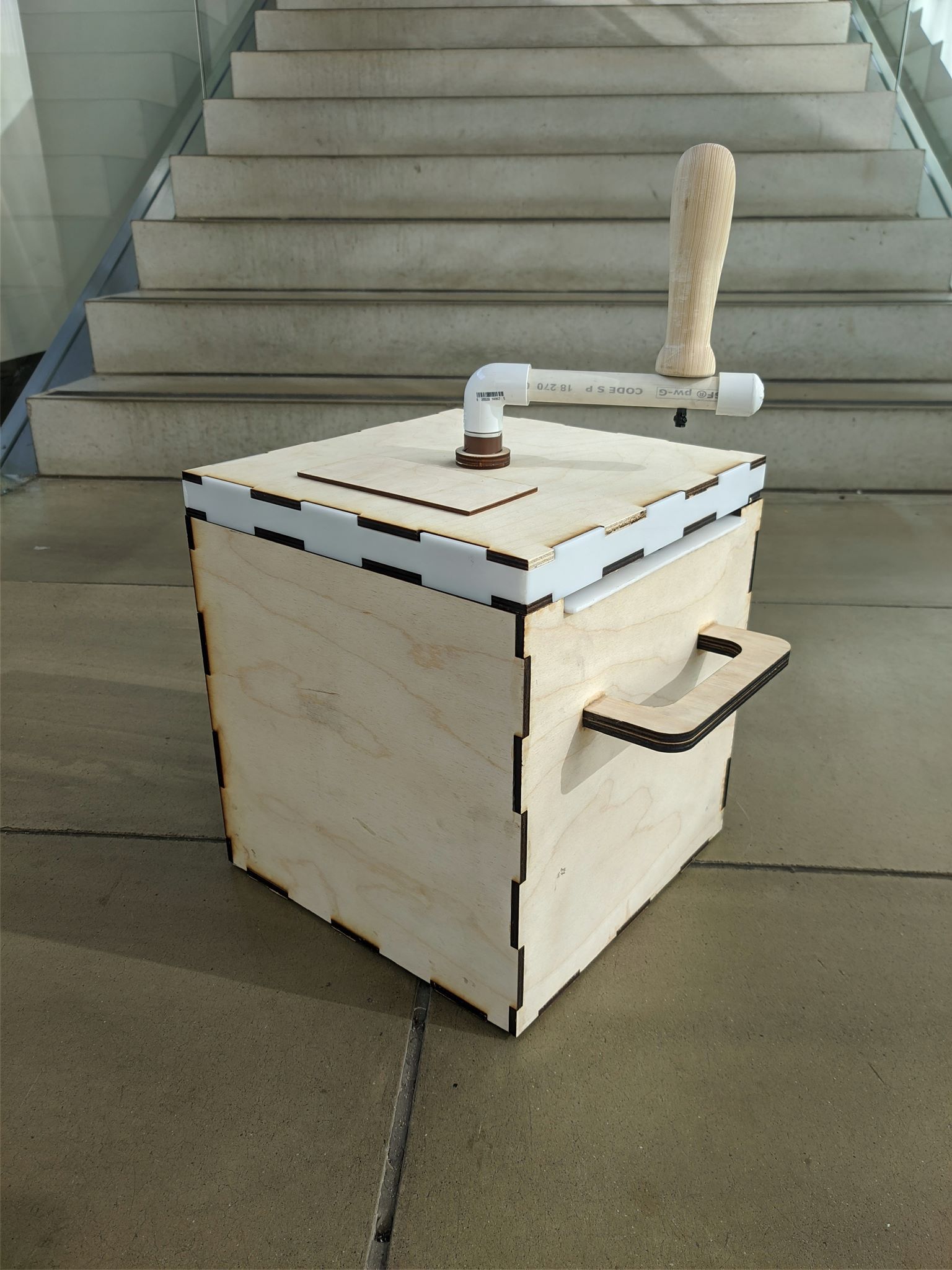
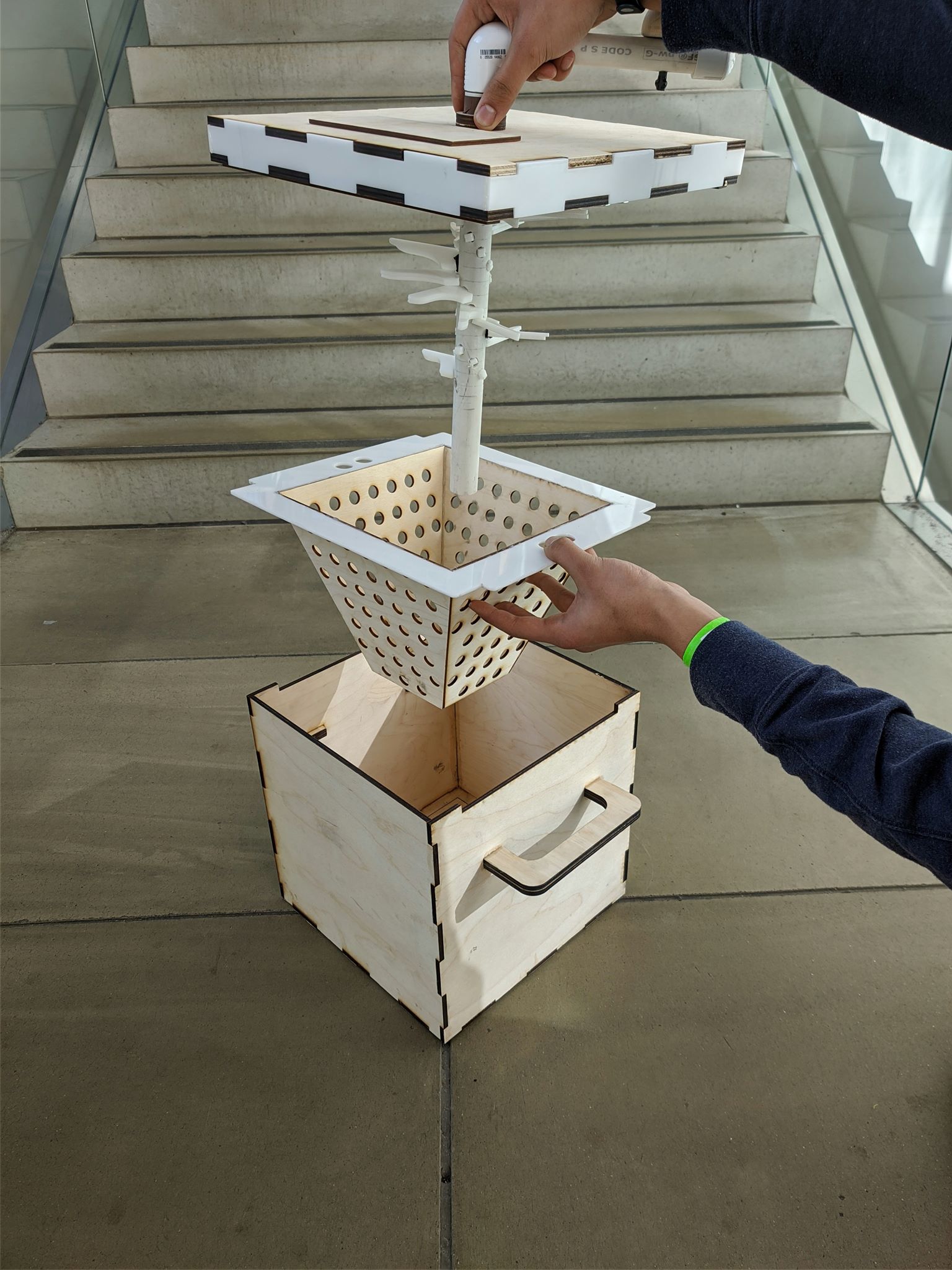
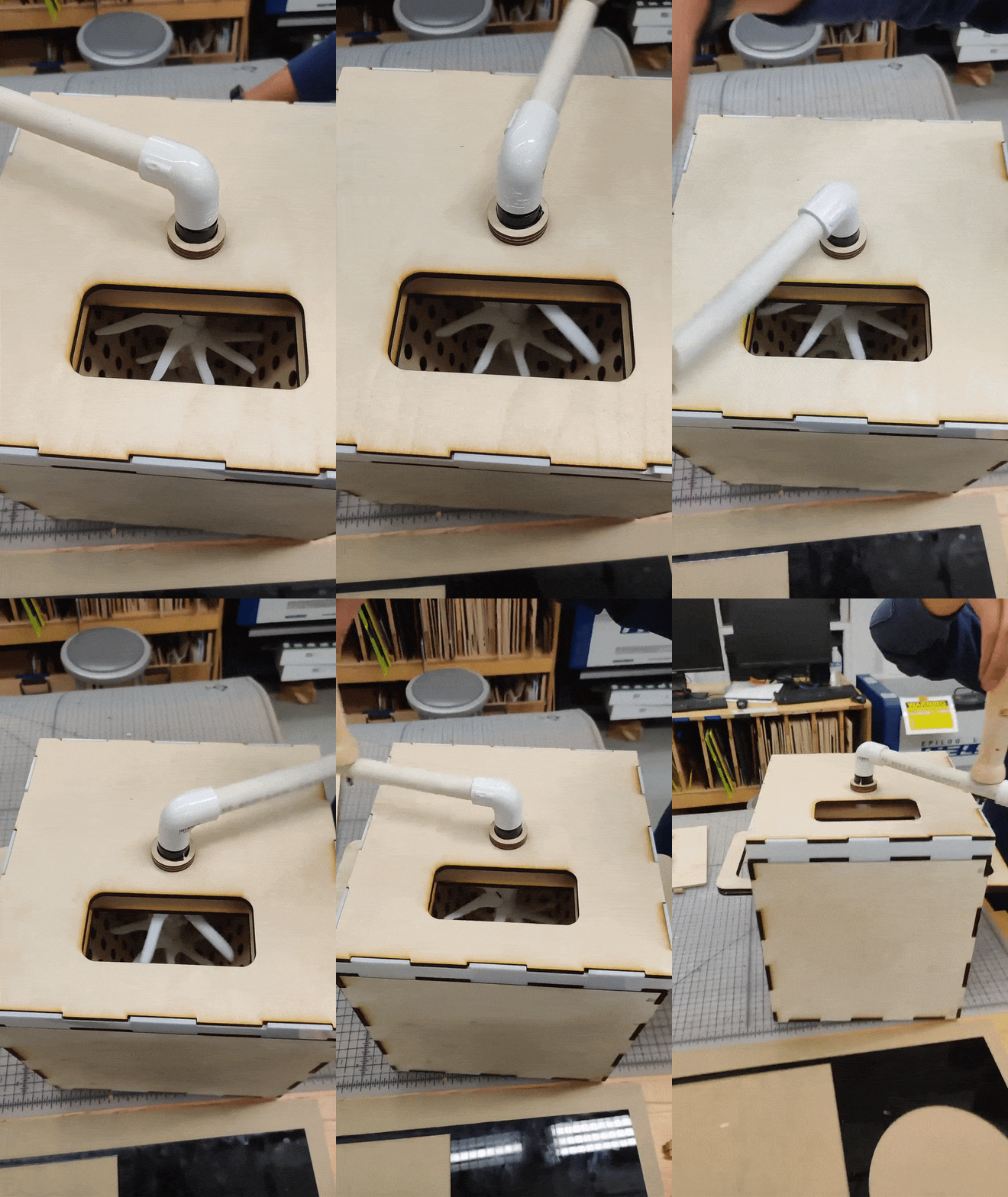
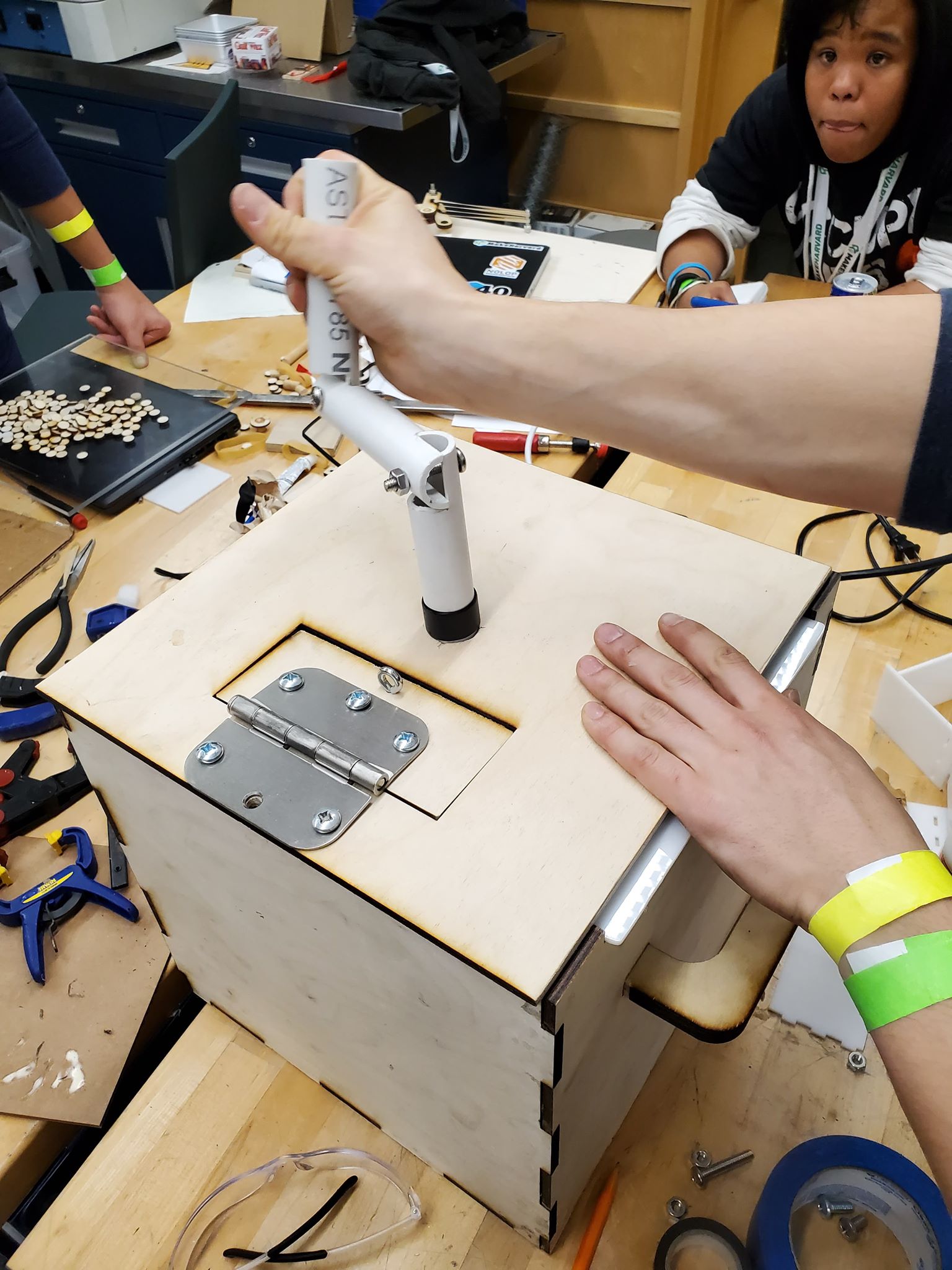
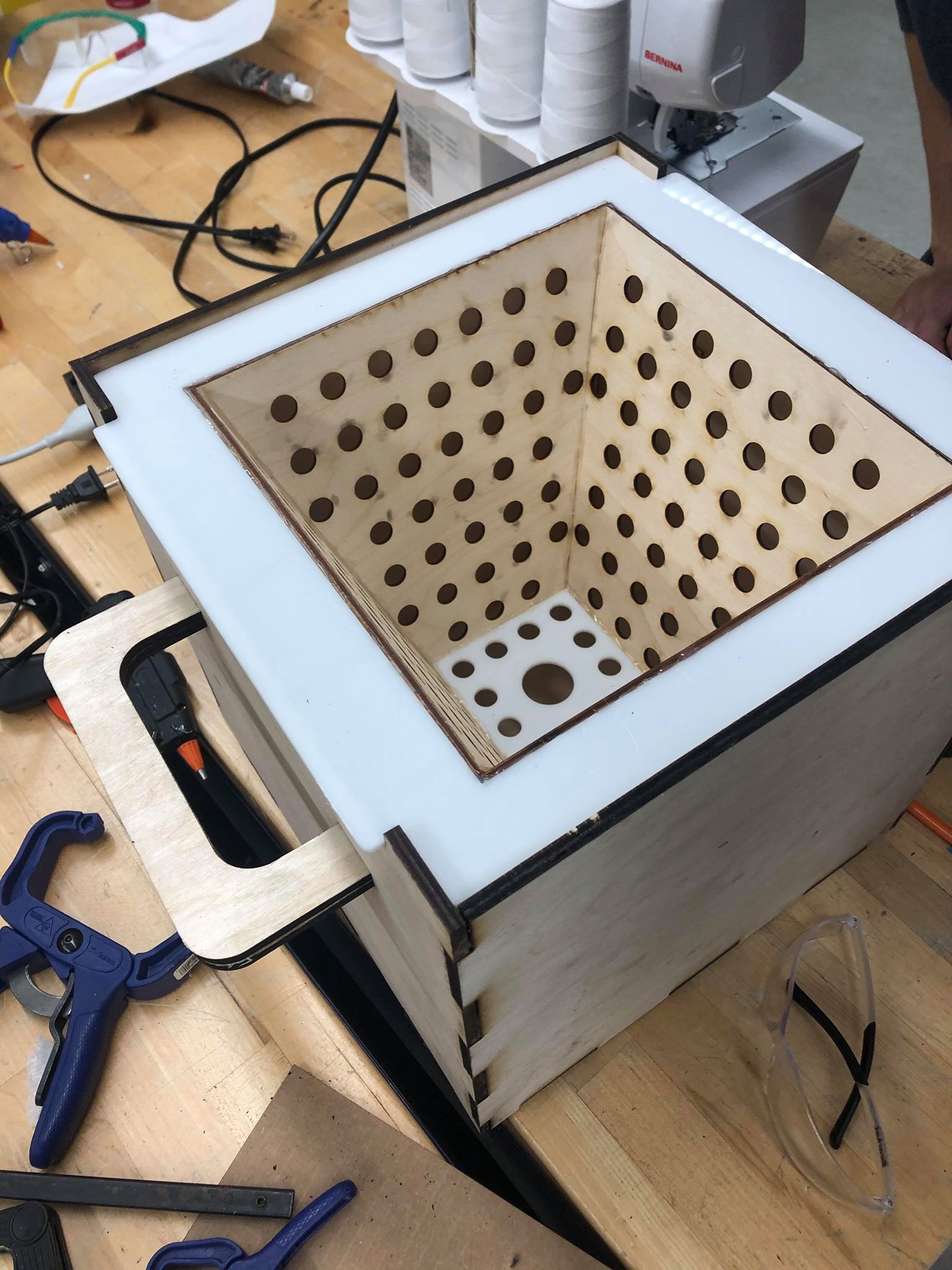
In your day to day life, Companion would sit on your kitchen countertop. The LED indicators are battery powered, with all the electronics housed within the lid of the ensemble. When you cook a few meals, you would throw your food scraps in through the top opening, and you would give the handle a few rotations. The blades connected then chop down on the scraps you just threw in, and cut them into smaller pieces. You rotate it every so often during the week, and when you see that the indicator light is orange or red, you know it's time to empty your composter out to your big organics bin. You then remove the lid and the filter, and take the bin by its big handles out to empty.
In brief, Companion grinds your wood waste to save space, uses indicator lights to serve as a visual status reminder, has a simple 3-piece design to allow for easy emptying, and is counter-sized and easily accessible.
How we built it
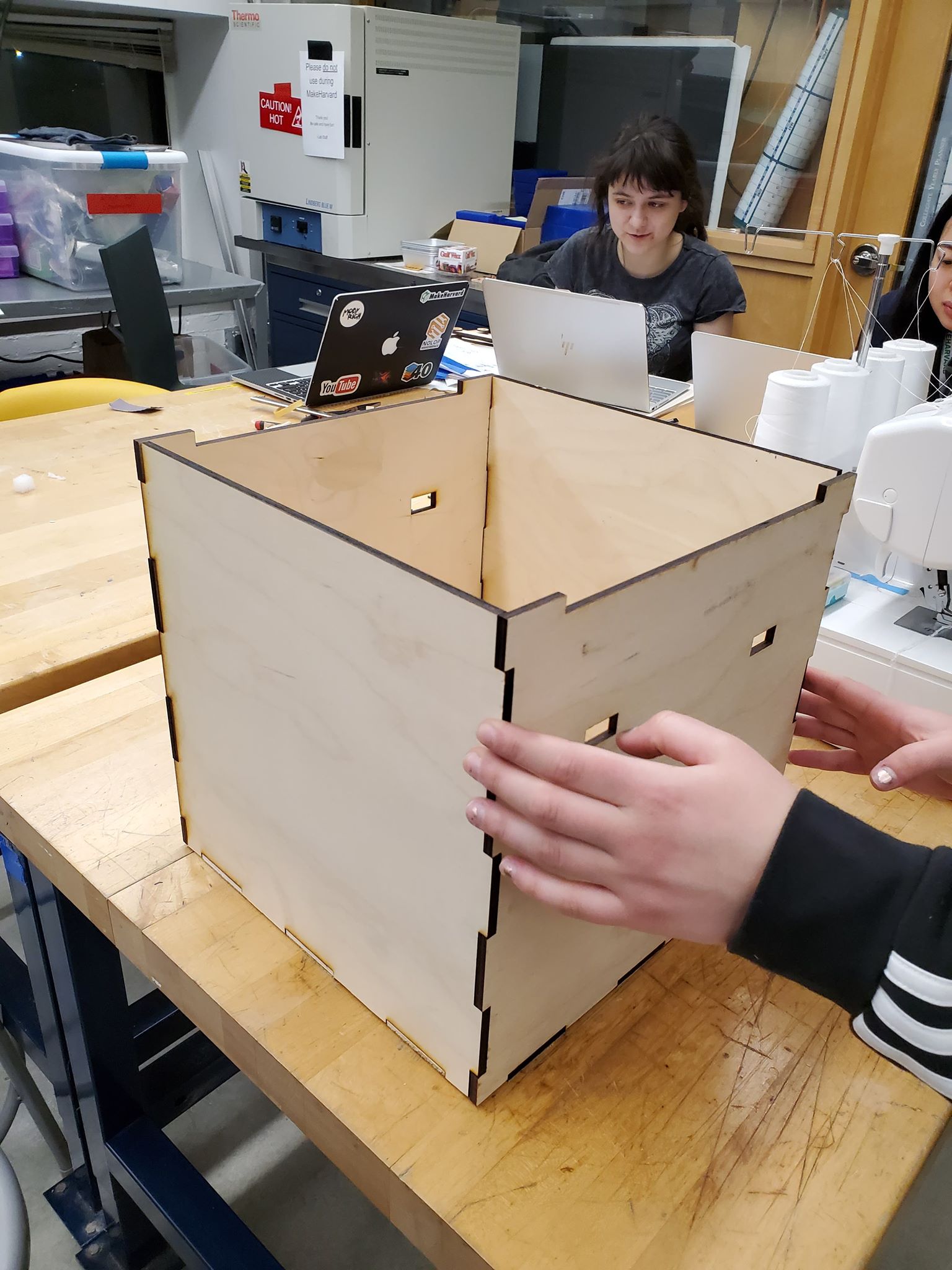
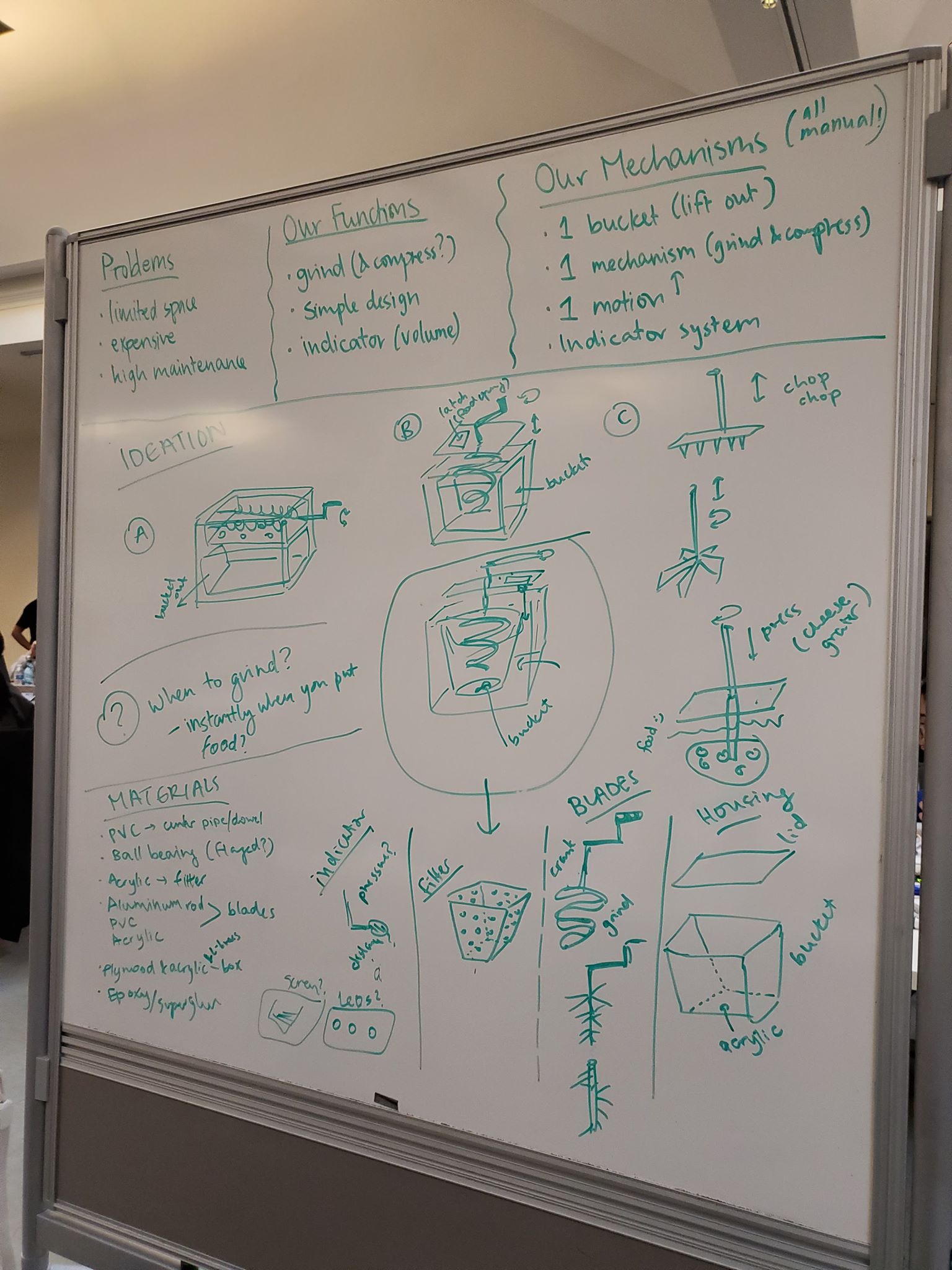
Our team spent a long time on the ideation phase, using the first two hours before noon to decide on an idea. When we settled on composting, we debated the different types of housing, mechanisms, and overall goals we wanted to achieve with our product. From there, we created a rough design for prototype #1, and got it built and tested. What we learned from our prototype #1 is implemented into our final prototype, in which we redesigned the lid to include housing for electronics, and make a better design for blade attachments and stir handle.
Challenges we ran into
We had trouble with material selection, since what was available to us at MakeHarvard limited what we were able to construct and demonstrate with our prototype. However, it ultimately taught us to be simpler in our design, and to strive for representation rather than reality when it came to demonstrating certain concepts. Blade design also took a while, since we had to experiment with a wide range of materials and attachment methods. Tolerances were also an issue (laser cutter not cutting parts perfectly, things not fitting together, etc.).
Accomplishments that we're proud of
We're extremely proud of having a working proof of concept, since we went from idea conception to final product and presentation in under 24 hours! We were also able to address all of the issues we chose to focus on for the wider topic of composting. As a team, we were able to work really well together, splitting the work evenly, learning from each other's skills, and taking advantage of everyone's knowledge. We had a lot of fun along the way, and learned a lot from the experience.
What we learned
We learned a lot about tolerances (largely due to the laser cutters we were working with and the inaccuracies from the stock): it's usually not a bad idea to have a bigger tolerance than you'd think you need. We also learned to make space and time for trial and testing - failing fast and failing early helped us moved forward quickly with our project. Did you know that there are also so many different methods for composting?
What's next for Companion -- grinding its way to a better tomorrow
We hope to bring this revolutionary product to the market after a few more design iterations, and we hope to be able to help our generation as well as others who are interested divert their food waste more efficiently. There's a bright future in the industry of sustainable living, and we hope to explore other topics such as laundry, lighting, and living zero waste.


Log in or sign up for Devpost to join the conversation.