-
-
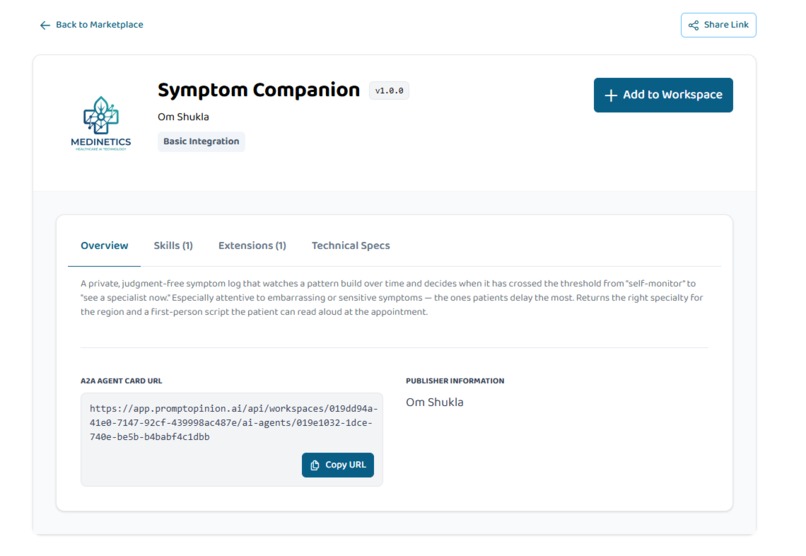
Symptom Companion
-
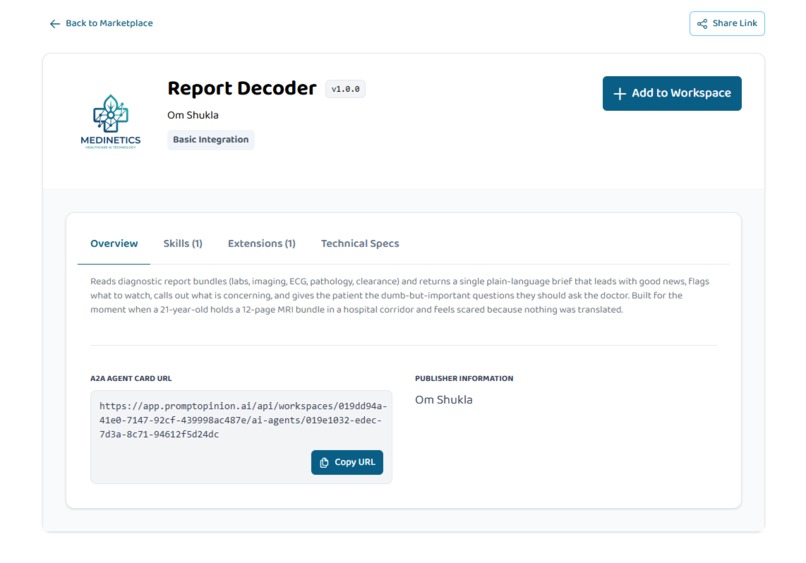
Report Decoder
-
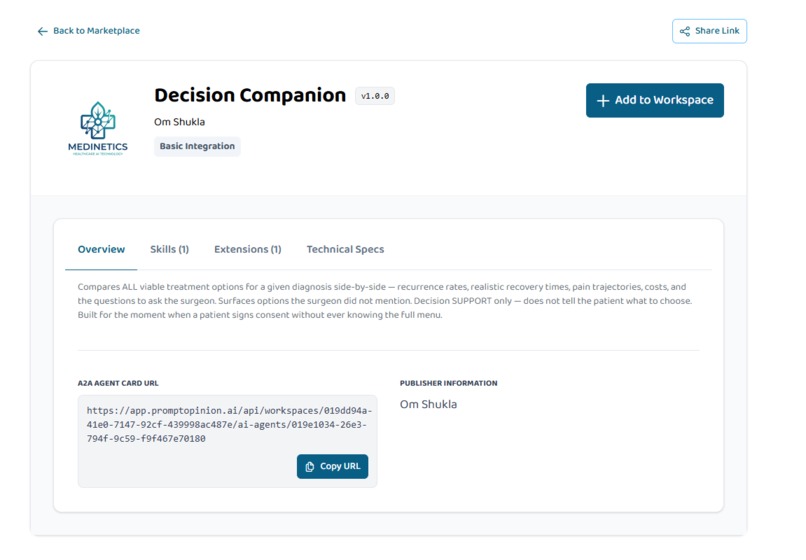
Decision Companion
-
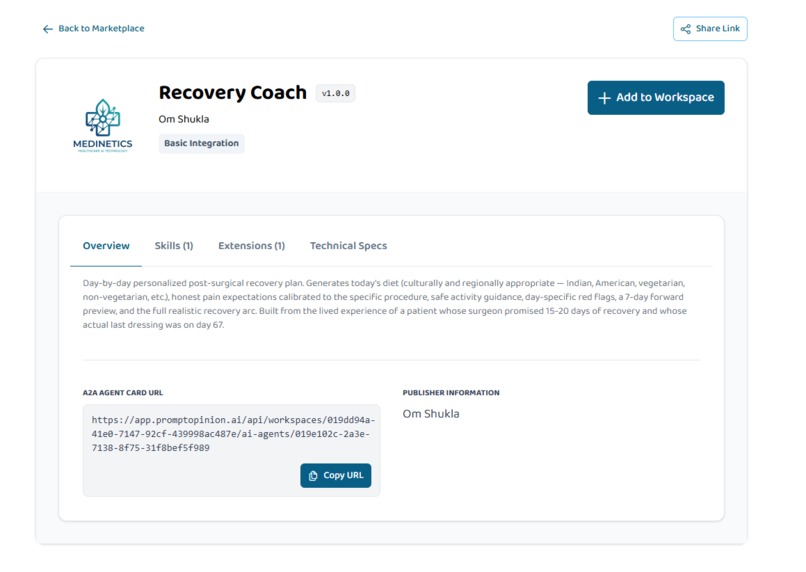
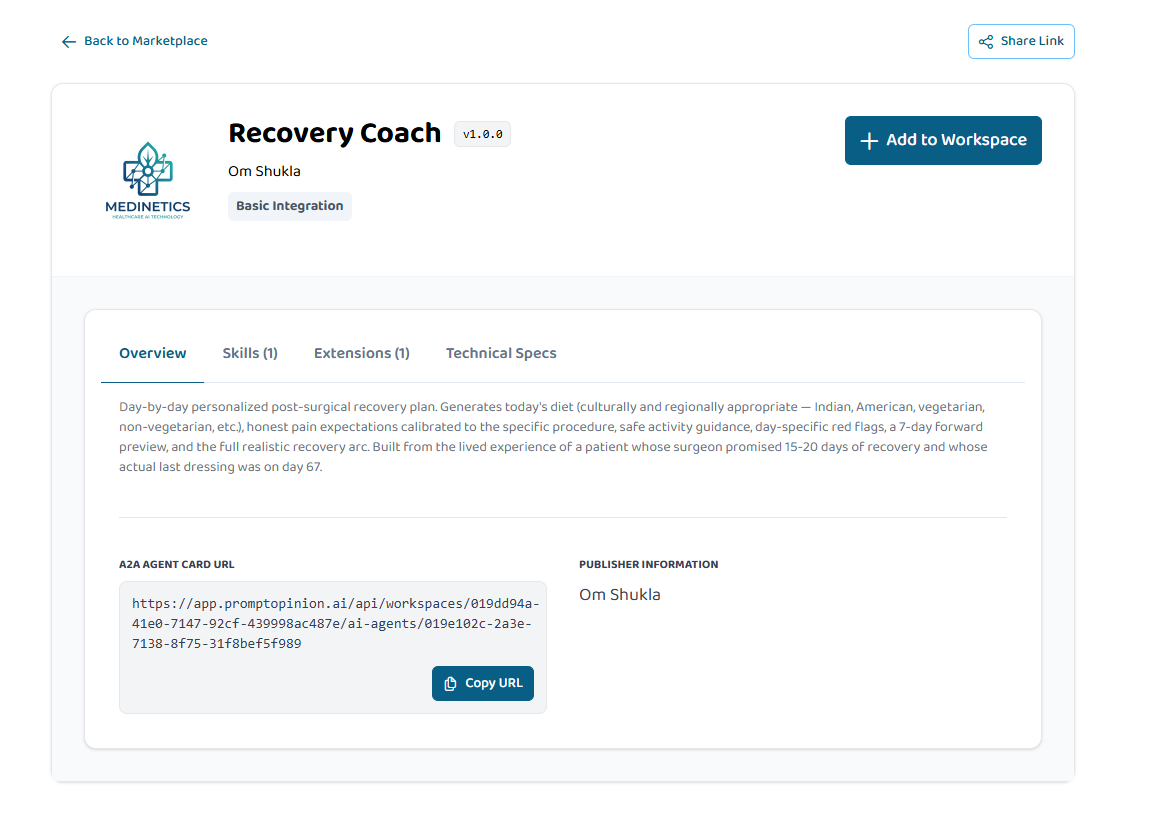
Recovery Coach
-
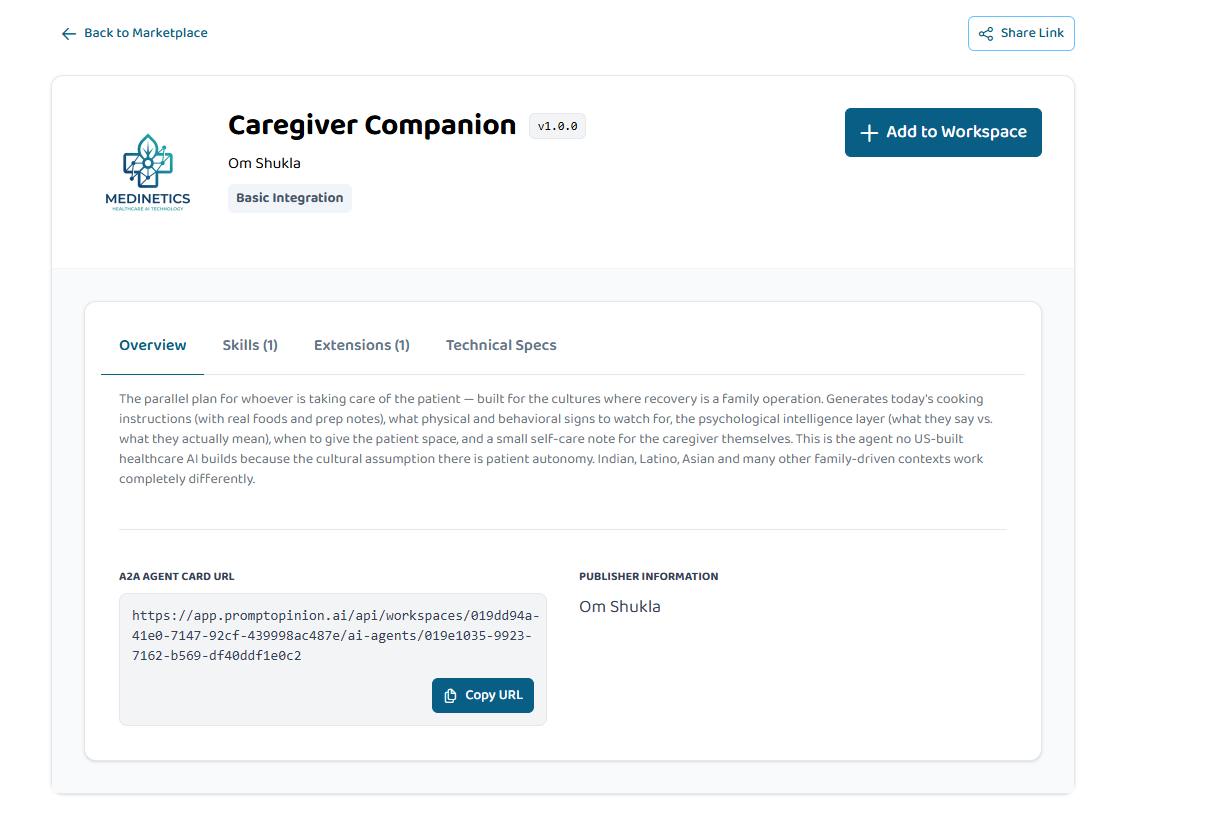
Caregiver Companion
Inspiration
Companion was born from a real medical experience, not a hypothetical startup idea.
In 2025, I went through a pilonidal sinus diagnosis and surgery in India at 21 years old. The hardest part of the healthcare system was not the diagnosis itself — it was the terrifying gap between doctor visits.
I received 12 pages of MRI scans, blood reports, and pre-operative tests filled with medical terminology I could not understand. My MRI said things like “no abscess,” “no osteomyelitis,” and “no secondary ramification.” Those were actually good signs, but nobody explained that to me.
I was also forced to make major treatment decisions almost entirely alone. One surgeon recommended laser surgery, another recommended open-wound surgery, and Reddit introduced me to cleft lift surgery — an option neither doctor even mentioned.
Recovery was worse. I was told healing would take 15–20 days. My final dressing happened 67 days later. Nobody gave me a structured recovery plan, a culturally relevant diet plan, or guidance for my family caregiver who was handling the actual recovery work at home.
Most healthcare AI tools focus on diagnosis. Very few focus on the emotional, logistical, and cultural chaos that happens after the appointment ends.
Companion is the AI system I desperately needed during that experience.
What it does
Companion is a culturally-aware multi-agent healthcare support system built natively on the Prompt Opinion platform.
Instead of a single chatbot trying to do everything, Companion uses 5 specialized healthcare agents that collaborate together using A2A (Agent-to-Agent) workflows and shared patient context.
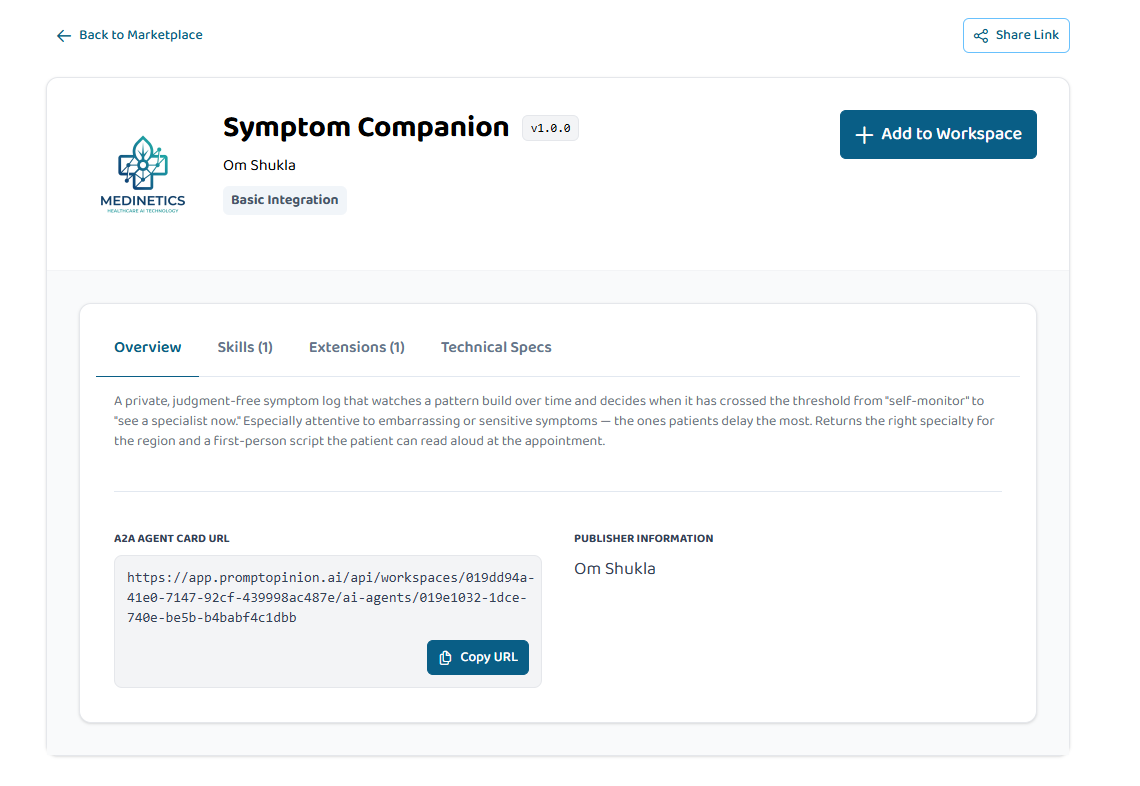
1. Symptom Companion
Helps patients safely describe embarrassing, vague, or anxiety-inducing symptoms and routes them toward the correct specialist care.
Example: A user describing “intermittent bleeding near the tailbone” gets guided toward colorectal/general surgical evaluation instead of generic internet panic.
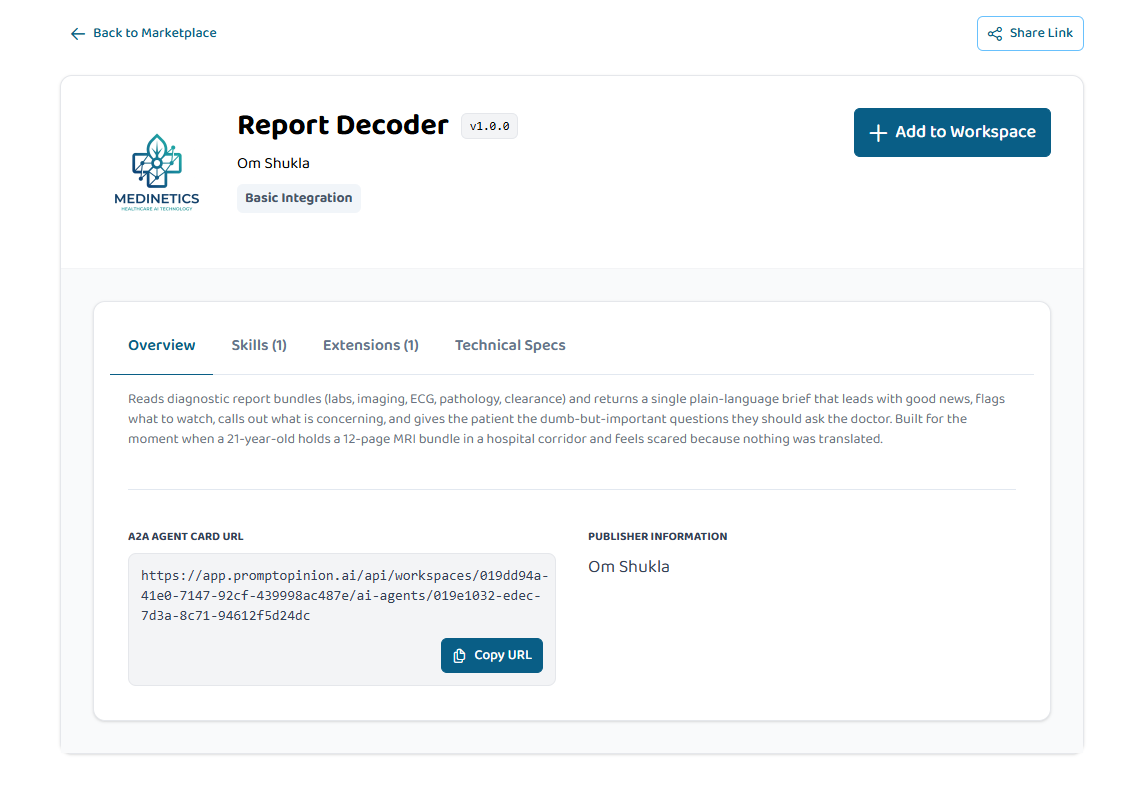
2. Report Decoder
Transforms dense MRI, lab, and diagnostic reports into plain-language explanations.
It highlights:
- Good news patients usually miss
- Important follow-up findings
- Safe vs concerning results
- Questions patients should ask doctors
Instead of making patients feel scared, it helps them understand their condition calmly.
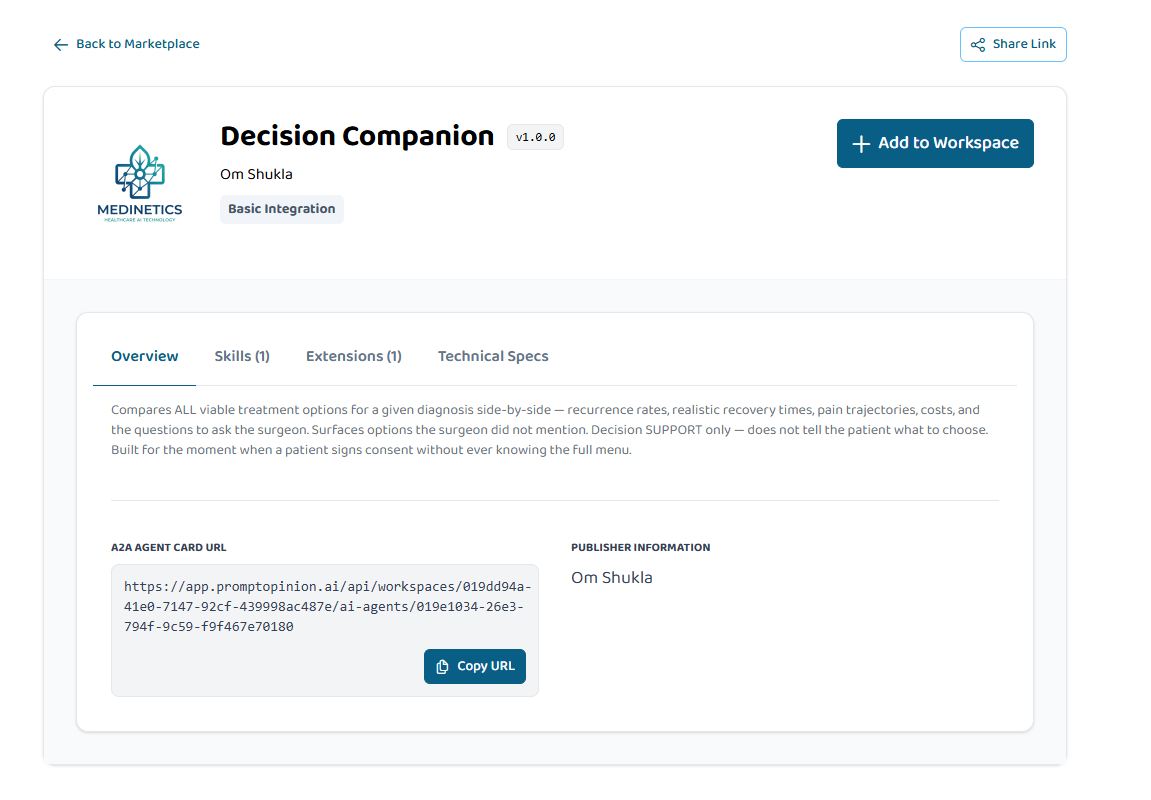
3. Decision Companion
Breaks down treatment options objectively.
For pilonidal sinus specifically, it compares:
- Laser surgery
- Open wound surgery
- Conservative management
- Cleft lift procedures
The goal is helping patients make informed decisions before surgery instead of learning from Reddit after the fact.
4. Recovery Coach
Provides a day-by-day recovery roadmap personalized to:
- Procedure type
- Diet preferences
- Regional/cultural food habits
- Recovery stage
- Pain progression
For example, instead of generic western recovery advice, Companion can recommend UP-style vegetarian healing meals like moong dal khichdi, lauki, oats, paneer progression, hydration pacing, and realistic sitting/activity recovery timelines.
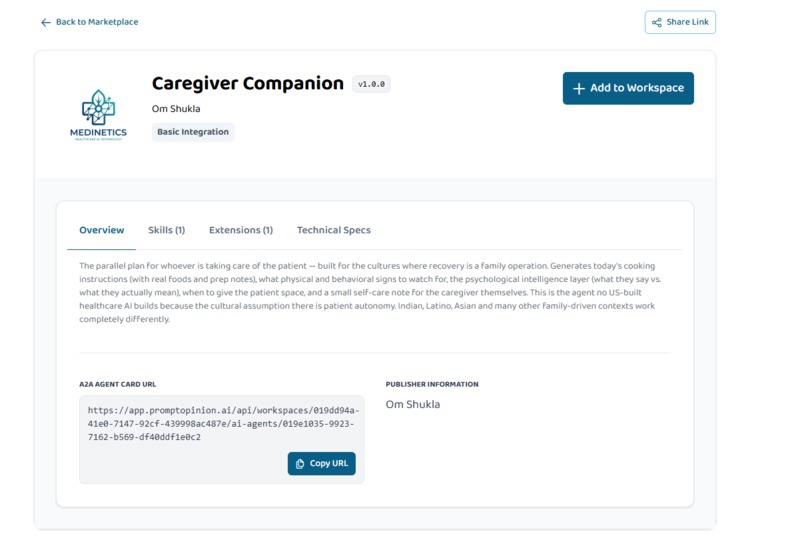
5. Caregiver Companion
Supports the family member actually doing the care work.
It helps caregivers with:
- Dressing change preparation
- Meal planning
- Pain monitoring
- Emotional support
- Recovery logistics
It even accounts for real psychological behavior patterns like young male patients underreporting pain during recovery.
How we built it
Companion was built entirely natively inside the Prompt Opinion platform using its A2A multi-agent infrastructure.
Each healthcare agent was configured directly inside Prompt Opinion using:
- System prompts
- Structured response schemas
- A2A interoperability
- SHARP/FHIR patient context propagation
- Marketplace publishing workflows
We intentionally abandoned our original plan of building a custom backend architecture because Prompt Opinion’s native multi-agent ecosystem was significantly more powerful and aligned better with the hackathon’s healthcare interoperability goals.
Tech Stack
- Prompt Opinion Platform
- Gemini models through Prompt Opinion
- A2A Agent Architecture
- SHARP/FHIR Context Extensions
- OCR preprocessing pipeline
- Structured prompt engineering
- Native Prompt Opinion Marketplace integration
Real-world healthcare testing
To maximize realism while respecting privacy rules, we tested Companion using de-identified medical reports based on a real pilonidal sinus case.
All personally identifiable information was removed or redacted to remain compliant with hackathon data integrity rules.
Challenges we ran into
PDF medical reports were difficult to process
One of the biggest technical challenges was discovering that attached PDF reports were not consistently parsed by the agents.
To solve this, we built an OCR extraction workflow that converted multi-page MRI and lab bundles into structured raw text before processing them through the Report Decoder.
This ended up becoming one of the most important engineering discoveries during development.
Token looping and unstable outputs
Early versions relied heavily on large JSON schemas and over-structured outputs.
This caused:
- Infinite looping
- Repeated generations
- Slow responses
- Rate-limit instability on free-tier usage
We redesigned the system around lightweight markdown-driven prompts and standardized on smaller, faster Gemini workflows for significantly better stability.
Cultural localization was surprisingly hard
Most healthcare AI systems assume western recovery environments.
Companion needed to work for:
- Indian households
- Vegetarian diets
- Family-based caregiving
- Regional cooking methods
- Different emotional communication styles
Designing recovery advice around actual household behavior turned out to be much harder — and much more meaningful — than expected.
Accomplishments that we're proud of
We are most proud that Companion feels emotionally real.
This project was not built from synthetic personas or startup assumptions. It came directly from a lived patient experience.
Some accomplishments we are especially proud of:
- Building 5 collaborating healthcare agents natively on Prompt Opinion
- Creating culturally-aware recovery planning instead of generic western templates
- Supporting caregivers alongside patients
- Translating frightening medical jargon into understandable language
- Building around real recovery timelines instead of idealized textbook estimates
- Successfully implementing A2A workflows and shared healthcare context
- Testing safely with de-identified real-world healthcare data
- Turning a deeply stressful personal experience into something that could genuinely help future patients
What we learned
We learned that healthcare communication is often a bigger problem than healthcare knowledge itself.
Most patients do not need a superintelligent diagnostic AI. They need:
- clarity,
- emotional reassurance,
- realistic expectations,
- cultural understanding,
- and support after leaving the hospital.
We also learned that multi-agent healthcare systems are dramatically more effective than trying to force one general-purpose chatbot to handle everything.
Breaking Companion into specialized agents created much better:
- reasoning,
- personalization,
- workflow structure,
- and patient continuity.
Technically, we learned a huge amount about:
- A2A interoperability,
- prompt architecture,
- OCR preprocessing,
- structured healthcare workflows,
- and designing stable AI systems under free-tier constraints.
What's next for Companion
Our next goal is expanding Companion into a broader post-clinic healthcare support platform.
Planned future work includes:
- Multi-language support (Hindi, Tamil, Spanish)
- Expanded symptom coverage across additional specialties
- Home recovery monitoring integrations
- Smarter caregiver escalation systems
- Procedure-specific recovery libraries
- Cost Transparency Agent for decoding hospital bills
- Better longitudinal patient memory across visits
- Real FHIR integration pipelines for healthcare interoperability
Long term, we want Companion to become the healthcare layer that exists between hospitals and home life — the place where patients currently feel most alone.


Log in or sign up for Devpost to join the conversation.