-
-
CommunityVoice: Participatory Budget Platform
-
CommunityVoice: Participatory Budget Platform
-
CommunityVoice: Participatory Budget Platform
-
CommunityVoice: Participatory Budget Platform
CommunityVoice: Participatory Budget Platform
Inspiration
The inspiration for CommunityVoice came from witnessing the disconnect between citizens and local government budget decisions. Too often, communities feel excluded from choices about how their tax dollars are spent, leading to projects that don't reflect actual community needs. We were particularly motivated by successful participatory budgeting initiatives in cities like Porto Alegre, Brazil, and New York City, but noticed these programs often lacked comprehensive digital platforms that could handle both voting and meaningful community discourse. We wanted to create a solution that not only democratizes budget decisions but also provides government officials with rich, analyzed community sentiment data to make truly informed choices.
What it does
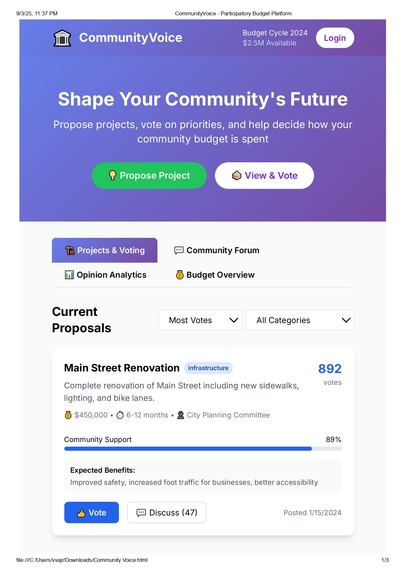
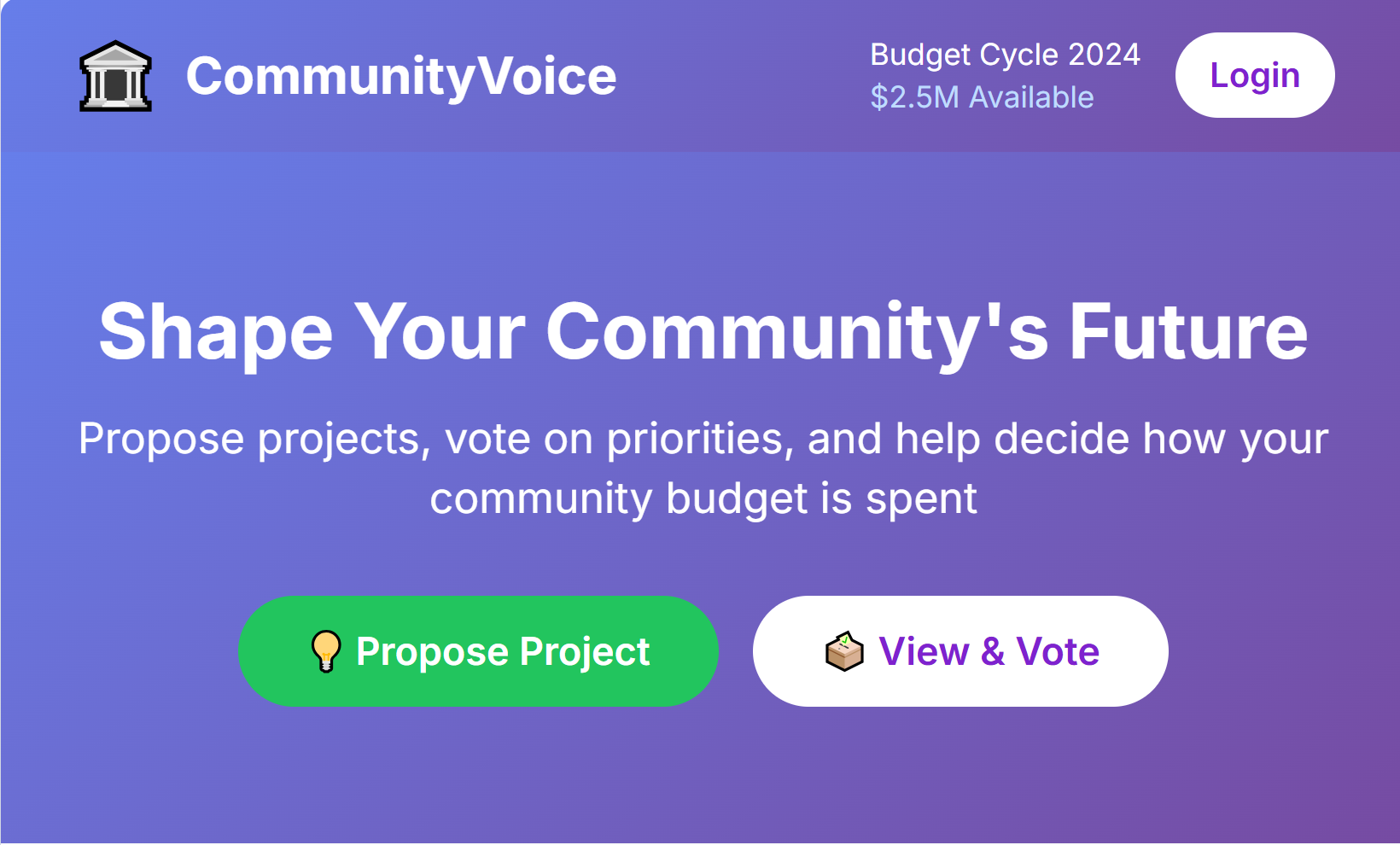
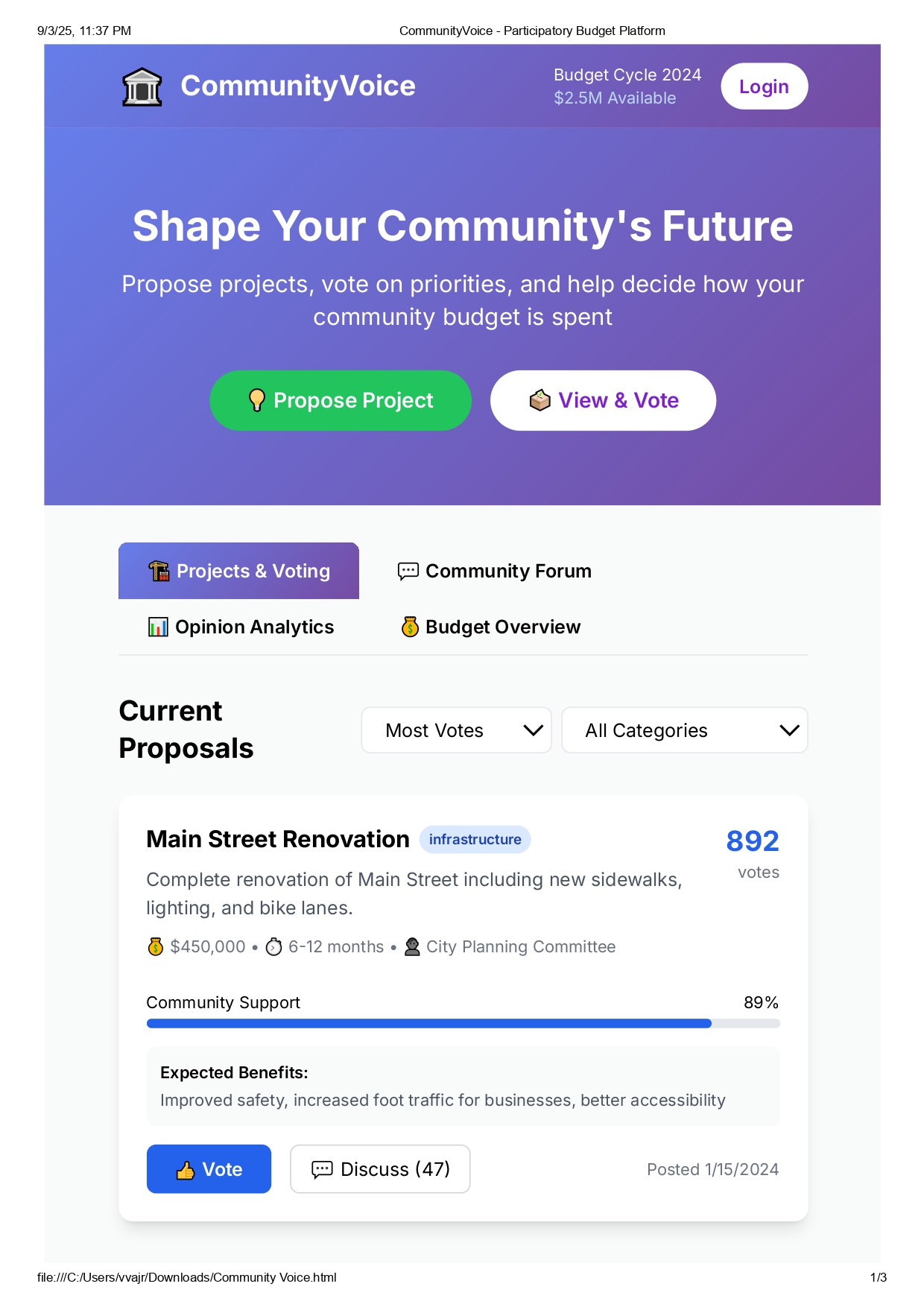
CommunityVoice is a comprehensive digital democracy platform that transforms local budget decision-making through four integrated modules:
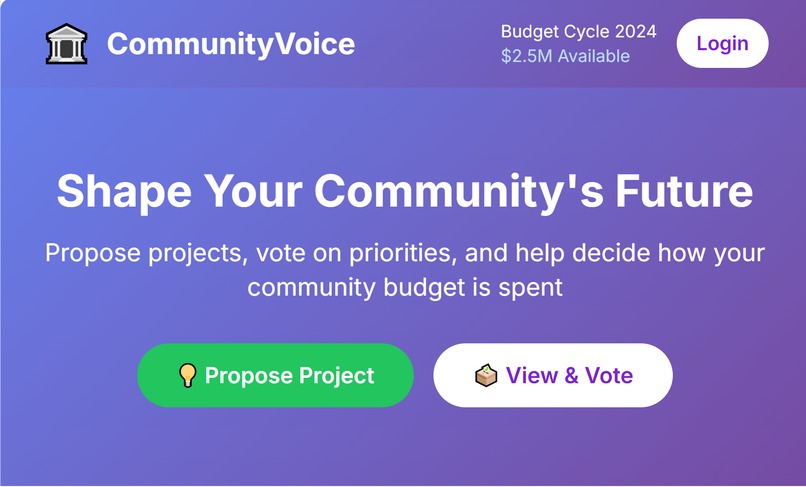
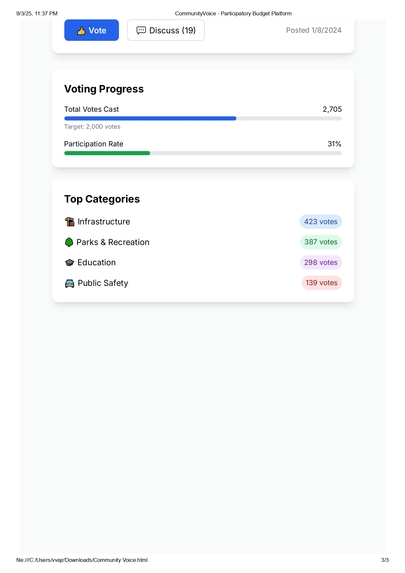
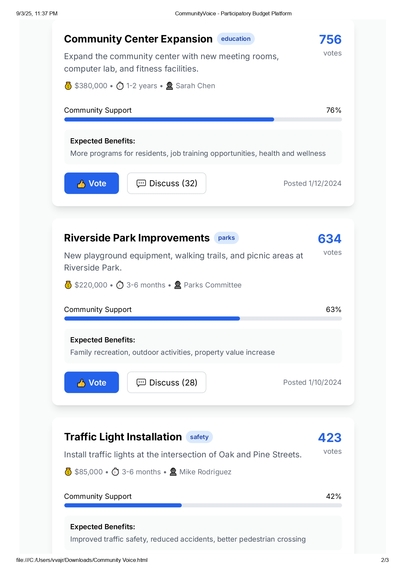
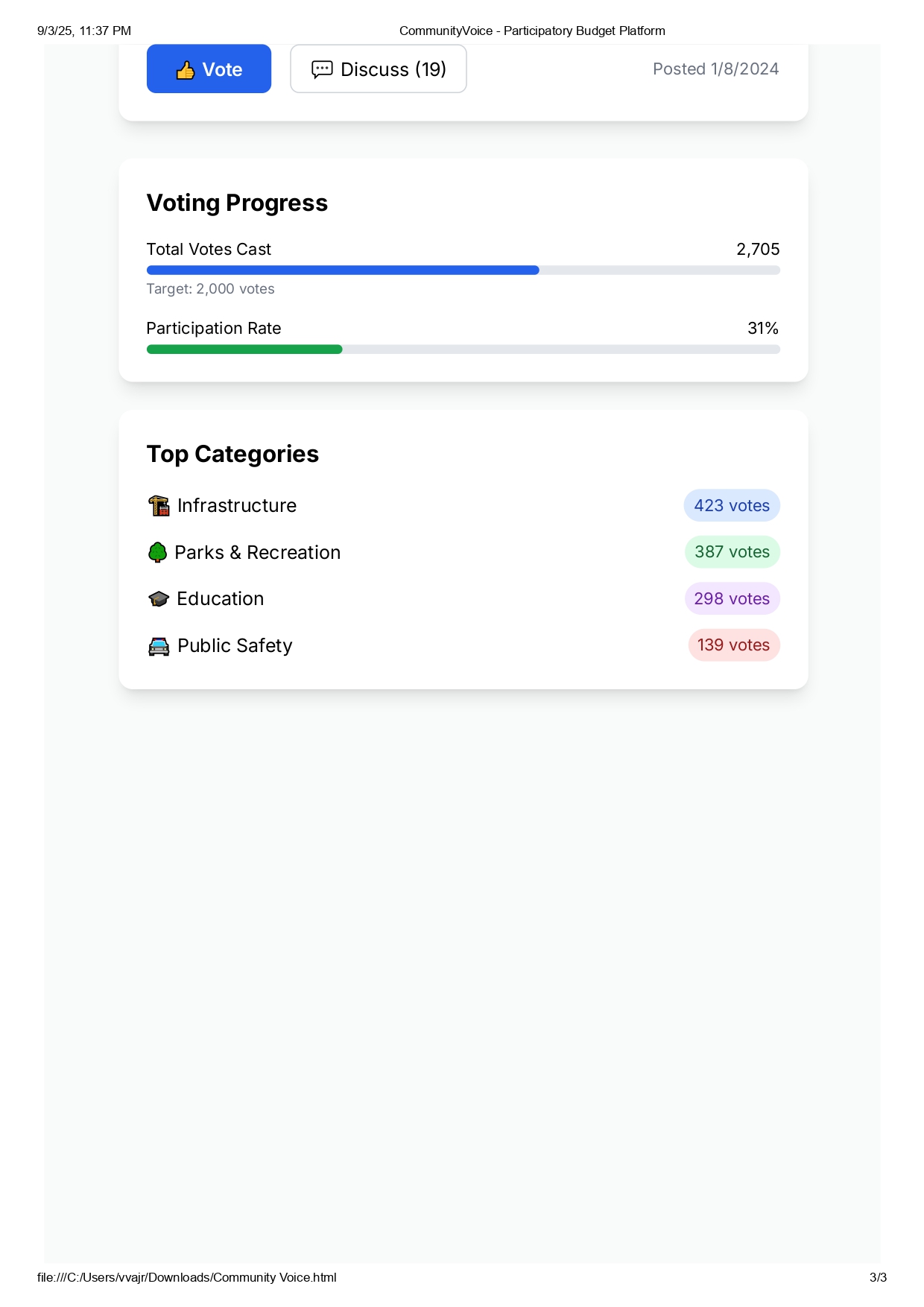
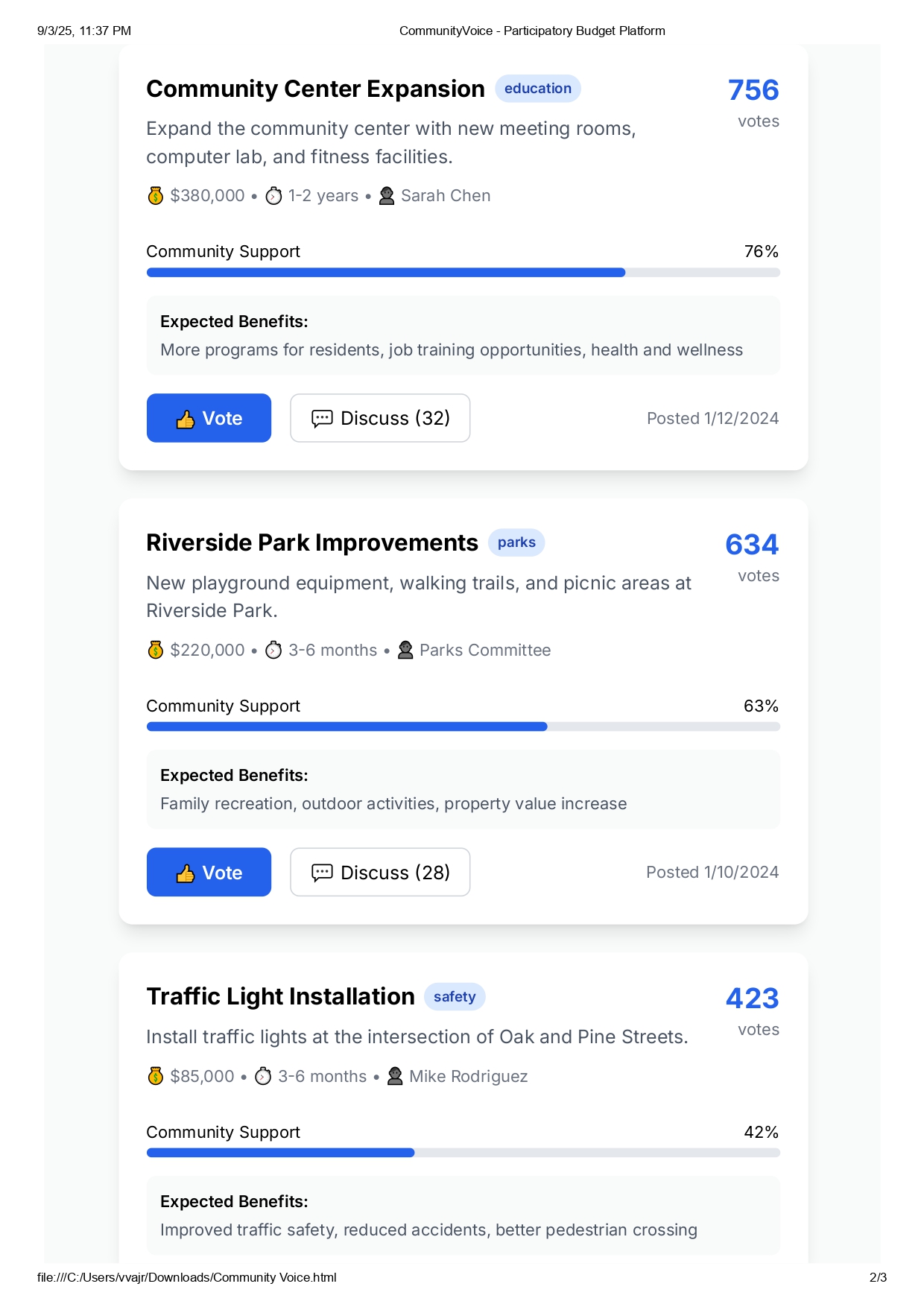
🗳️ Project Proposal & Voting System : Citizens can submit detailed project proposals with cost estimates, timelines, and expected benefits. The community then votes on these proposals, with real-time progress tracking and category-based organization (Infrastructure, Parks, Education, Safety).
💬 Community Forum : Dedicated discussion spaces for each project and general civic topics, fostering informed debate and allowing experts to contribute insights. The platform tracks active contributors and maintains organized, moderated discussions.
📊 Opinion Analytics Dashboard : Advanced sentiment analysis engine that processes community discussions to provide government officials with data-driven insights including sentiment trends, engagement metrics, demographic breakdowns, and key topic identification.
💰 Budget Management Interface : Transparent visualization of budget allocation, remaining funds, and project cost-benefit analysis, ensuring complete financial transparency throughout the decision-making process.
How we built it
We built CommunityVoice as a responsive web application using modern frontend technologies:
Frontend Architecture : HTML5, CSS3 with Tailwind CSS for rapid styling, and vanilla JavaScript for interactive functionality. We chose this approach for maximum compatibility and ease of deployment.
Data Visualization : Integrated Chart.js for creating dynamic, interactive charts that display voting progress, sentiment analysis, budget allocation, and demographic data in real-time.
User Experience Design : Implemented a tab-based navigation system with smooth transitions, hover effects, and responsive design principles to ensure accessibility across all devices.
Mock Data Systems : Created realistic sample datasets for projects, forum posts, and analytics to demonstrate full platform functionality, including sentiment analysis results and engagement metrics.
Interactive Features : Built comprehensive voting mechanisms, form submissions for project proposals, forum post creation, and real-time UI updates that simulate a fully functional civic engagement platform.
Challenges we ran into
Complex State Management : Managing the interconnected data between voting, forum discussions, and analytics proved challenging. We had to carefully design data structures that could support real-time updates across multiple platform sections.
Sentiment Analysis Simulation : Creating realistic sentiment analysis without backend AI services required careful consideration of how to present meaningful analytics data that would actually help government decision-makers.
User Experience Balance : Designing an interface that serves both everyday citizens and government officials required balancing simplicity with comprehensive functionality. We had to ensure the platform remained accessible while providing sophisticated analytics.
Data Visualization Complexity : Implementing multiple chart types that update dynamically while maintaining performance and readability across different screen sizes presented significant technical challenges.
Democratic Process Modeling : Accurately representing real-world participatory budgeting processes in a digital format required extensive research into existing civic engagement platforms and democratic theory.
Accomplishments that we're proud of
Comprehensive Integration : Successfully created a platform that seamlessly combines voting, discussion, and analytics - something many existing civic platforms fail to achieve in a unified experience.
Realistic User Experience : Built a fully functional prototype that demonstrates how digital democracy could work in practice, complete with realistic data flows and user interactions.
Accessibility Focus : Designed an interface that works equally well for tech-savvy users and those less comfortable with digital platforms, ensuring broad community participation.
Data-Driven Decision Support : Created analytics dashboards that provide actionable insights for government officials, moving beyond simple vote counting to meaningful community sentiment analysis.
Scalable Architecture : Developed a system that could realistically handle large community participation while maintaining performance and user experience quality.
What we learned
Democracy is Complex : Building a platform for democratic participation taught us about the nuanced challenges of representing diverse community voices and ensuring equitable participation across different demographics.
Data Visualization Impact : We learned how powerful clear data visualization can be in making complex civic information accessible and actionable for both citizens and officials.
Community Engagement Patterns : Through designing the forum and analytics systems, we gained insights into how online civic engagement differs from traditional town halls and how to foster productive digital discourse.
Technical Simplicity Value : We discovered that sometimes the most impactful civic technology solutions are those built with accessible, widely-supported technologies rather than cutting-edge frameworks.
User-Centered Civic Design : The importance of designing civic technology that serves real community needs rather than imposing technological solutions on democratic processes.
What's next for CommunityVoice
🤖 AI Integration : Implement real sentiment analysis using natural language processing APIs, automated topic extraction from discussions, and predictive modeling for project success rates.
🔐 Security & Authentication : Develop robust user authentication systems, voting integrity measures, and data privacy protections to ensure secure democratic participation.
📱 Mobile Application : Create dedicated iOS and Android apps with push notifications for new proposals, voting reminders, and community discussion updates.
🏛️ Government Integration : Build APIs and administrative dashboards for seamless integration with existing municipal systems and official budget planning processes.
🌍 Multi-Language Support : Expand platform accessibility with internationalization features to serve diverse communities and enable global adoption.
📊 Advanced Analytics : Develop machine learning models for predicting community needs, identifying underrepresented voices, and optimizing civic engagement strategies.
🤝 Partnership Development : Establish partnerships with local governments, civic organizations, and democracy advocacy groups to pilot real-world implementations.
📈 Scalability Enhancement : Architect backend infrastructure to support large-scale deployments serving entire cities or regions with thousands of active participants.

Log in or sign up for Devpost to join the conversation.