-
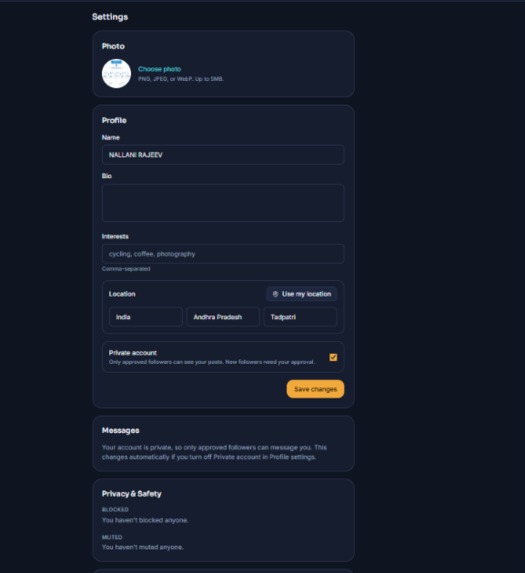
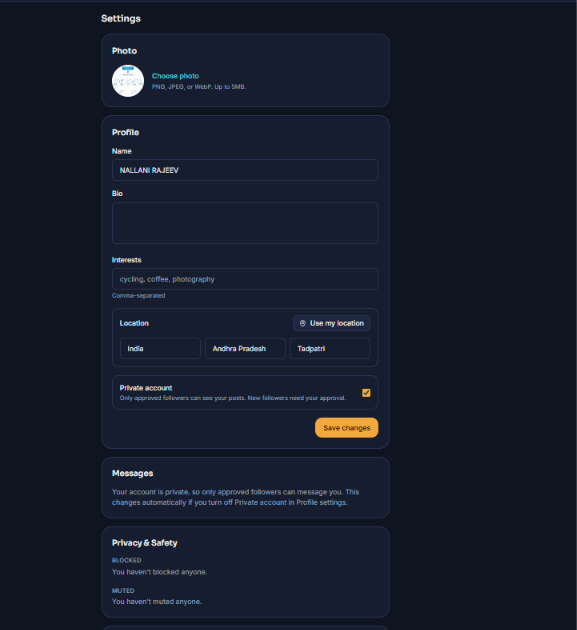
user can customize their profile
-
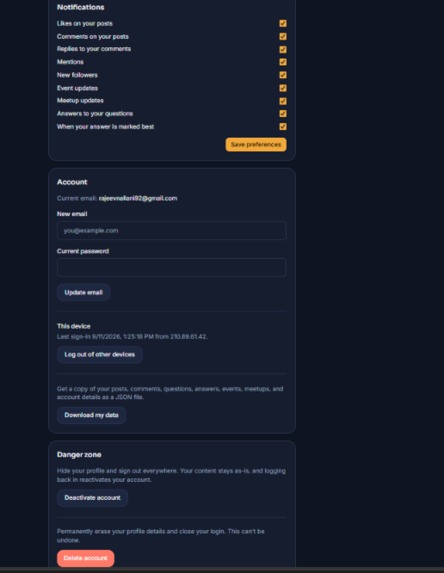
we can specify weather our profile should be public/private
-
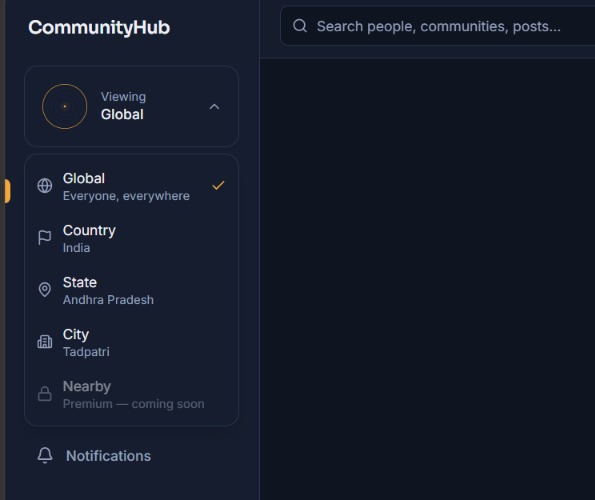
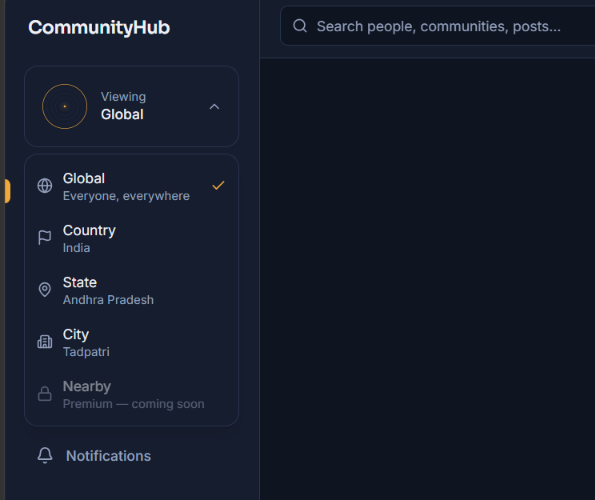
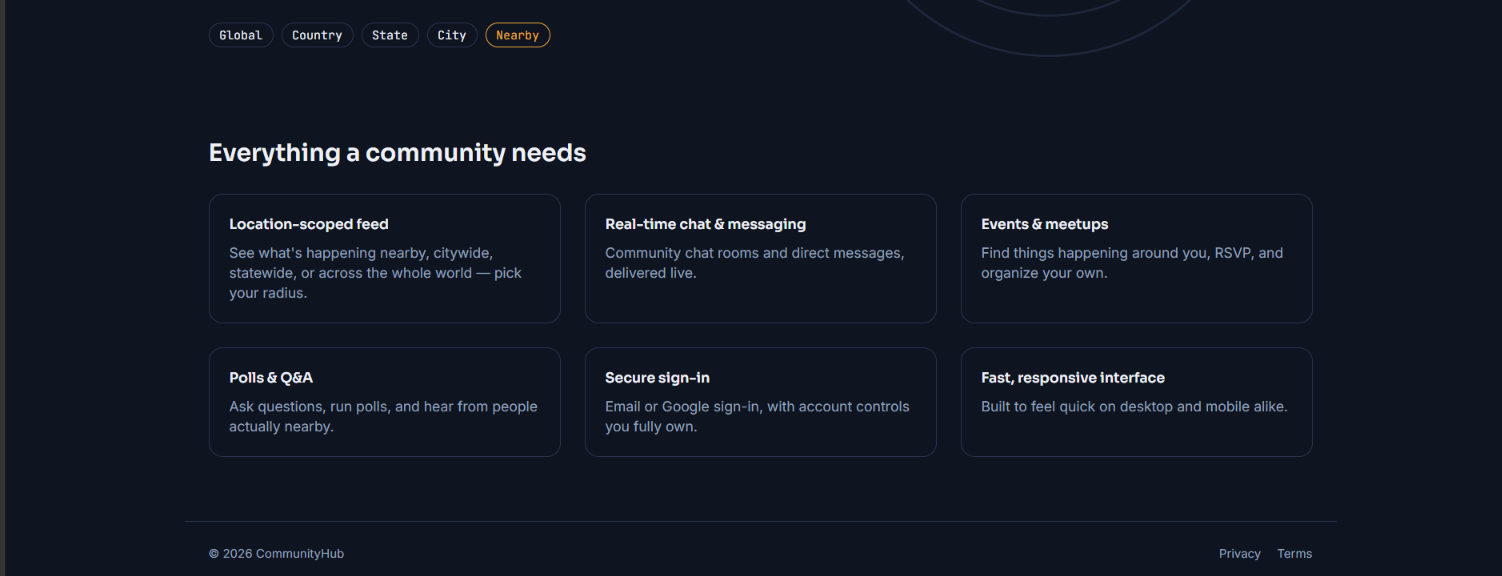
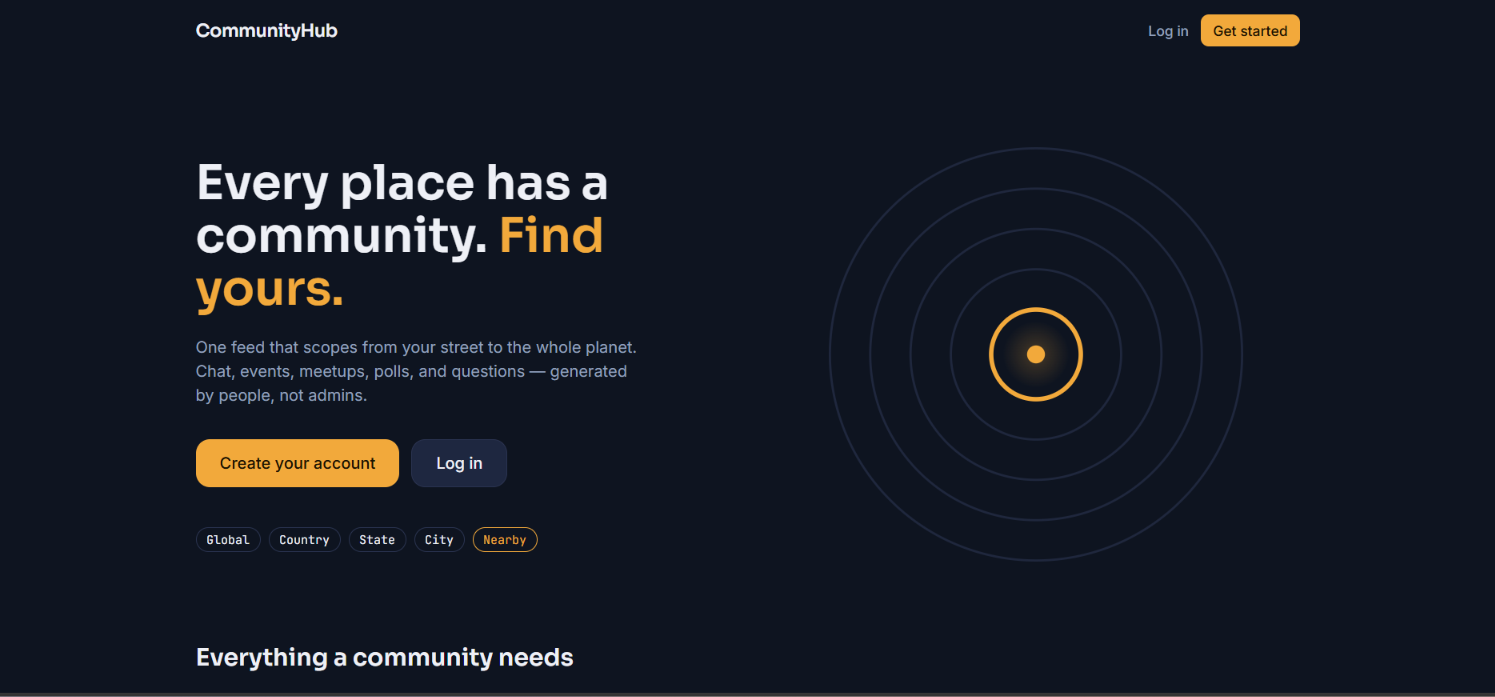
5 stages of visibility global level/country level/state level/state level/nearby
-
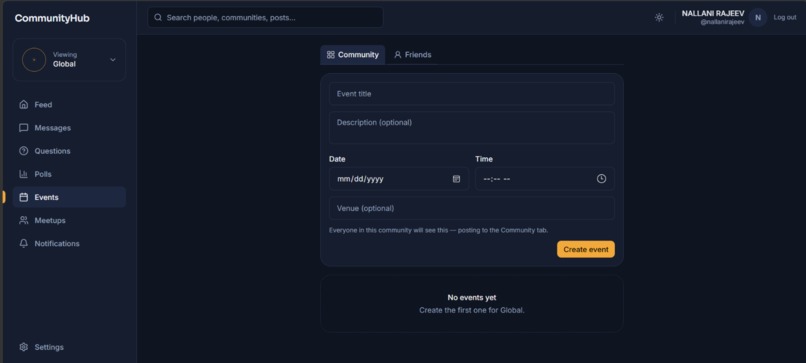
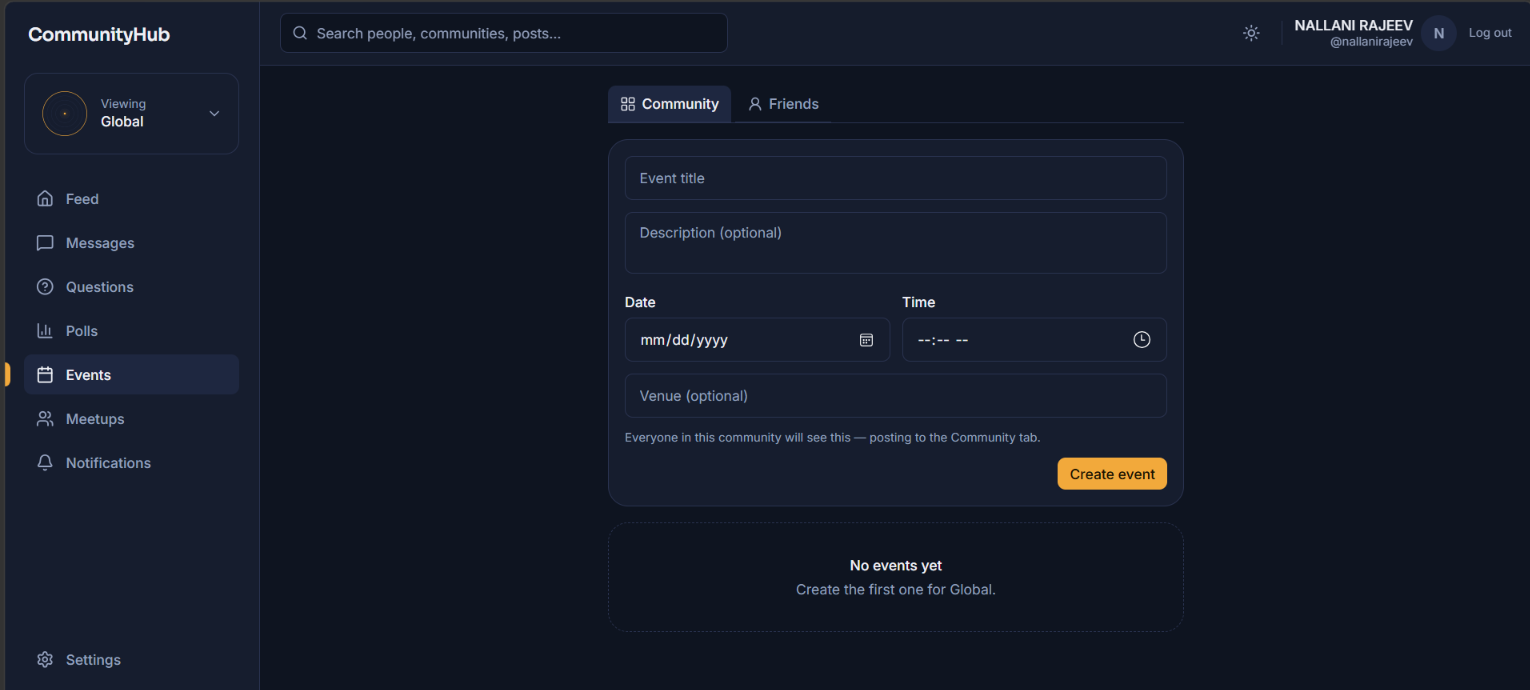
user can post the events
-
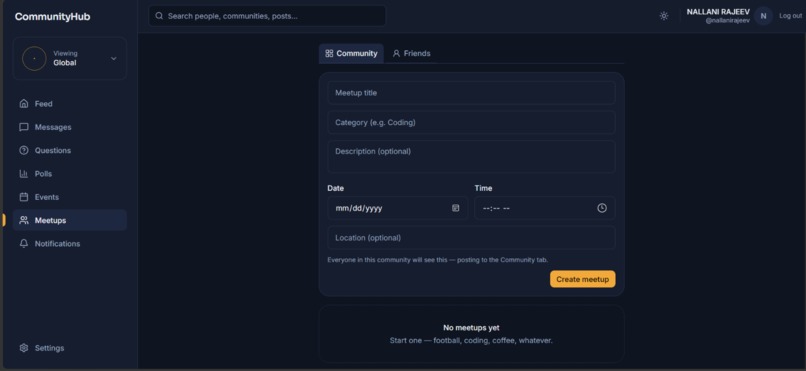
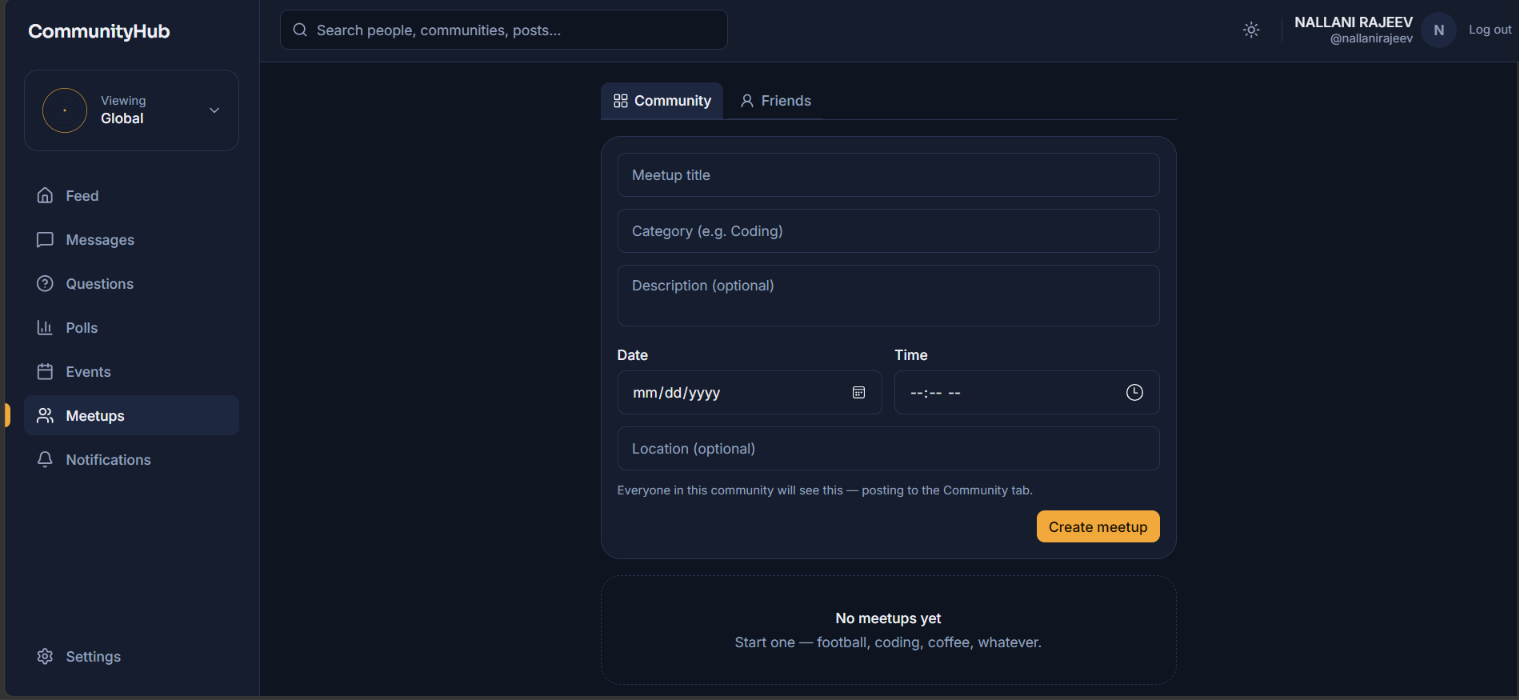
user can post the meetup
-
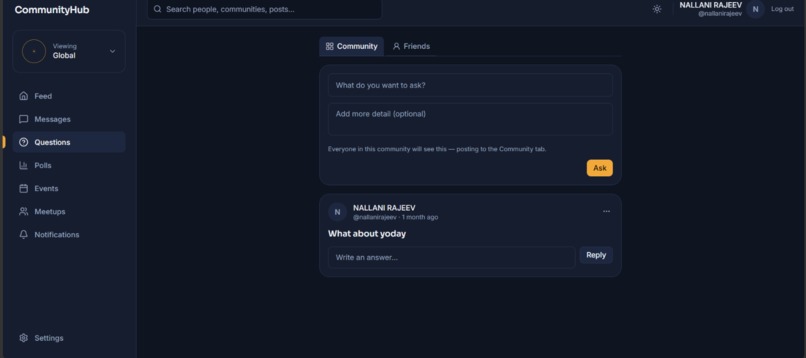
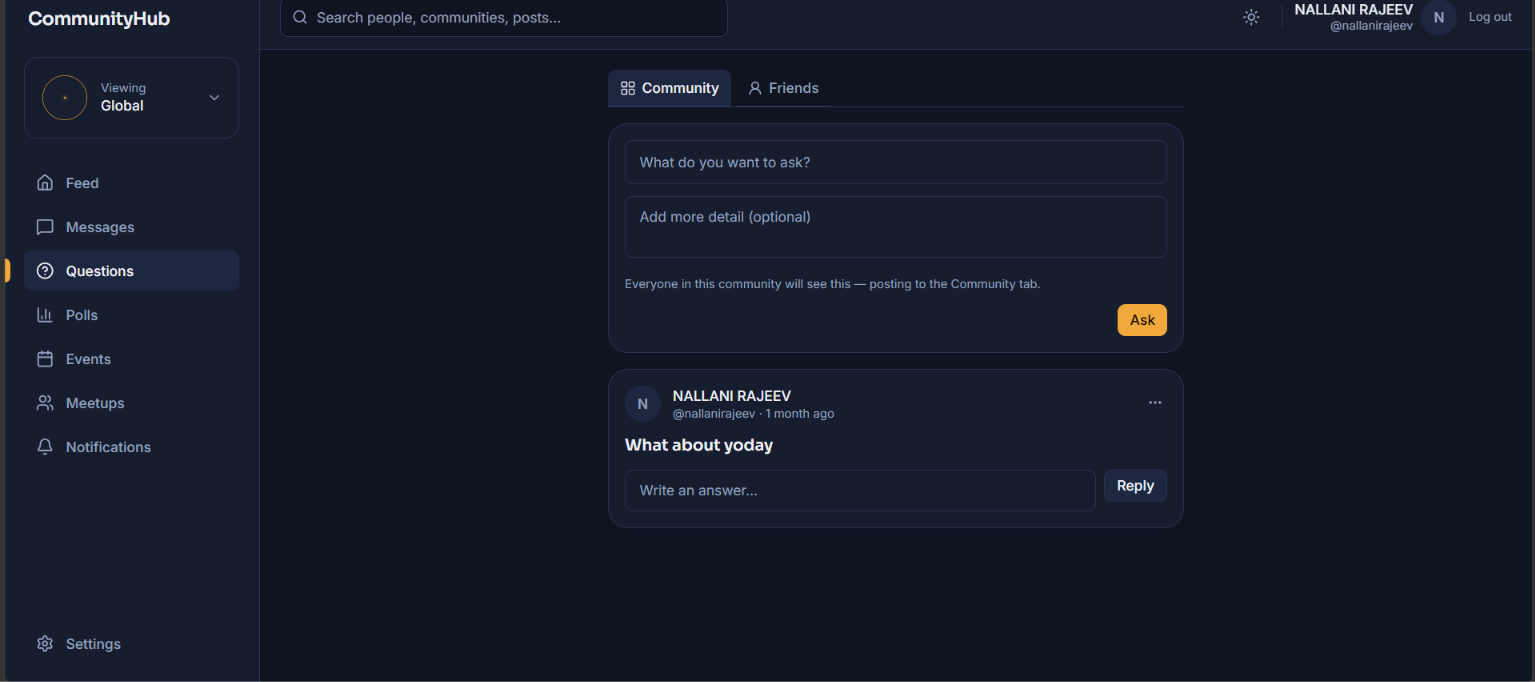
you can ask the questions either to strangers across the world,country,state,city,nearby and also within friends if required
-
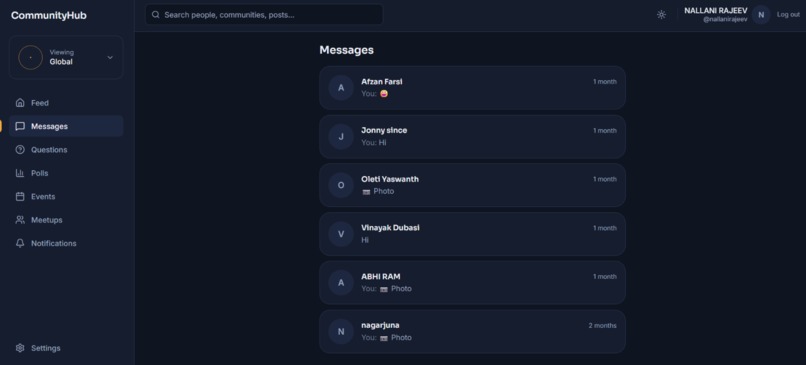
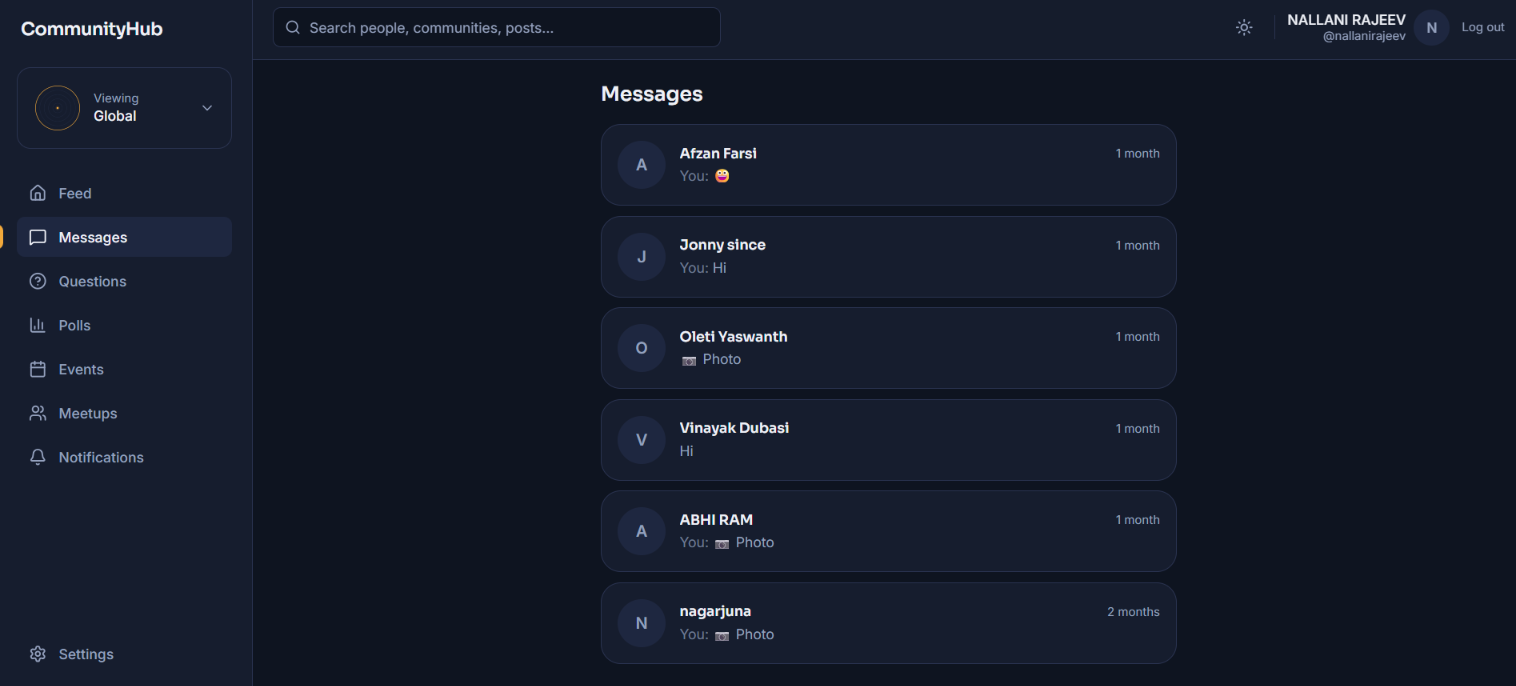
direct chatting 1:1 chat
-
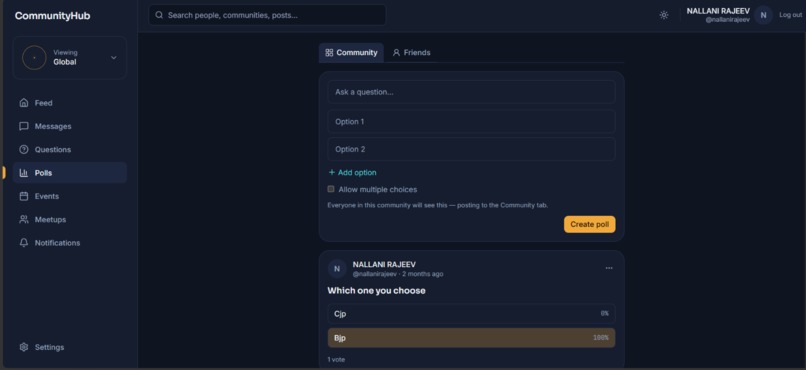
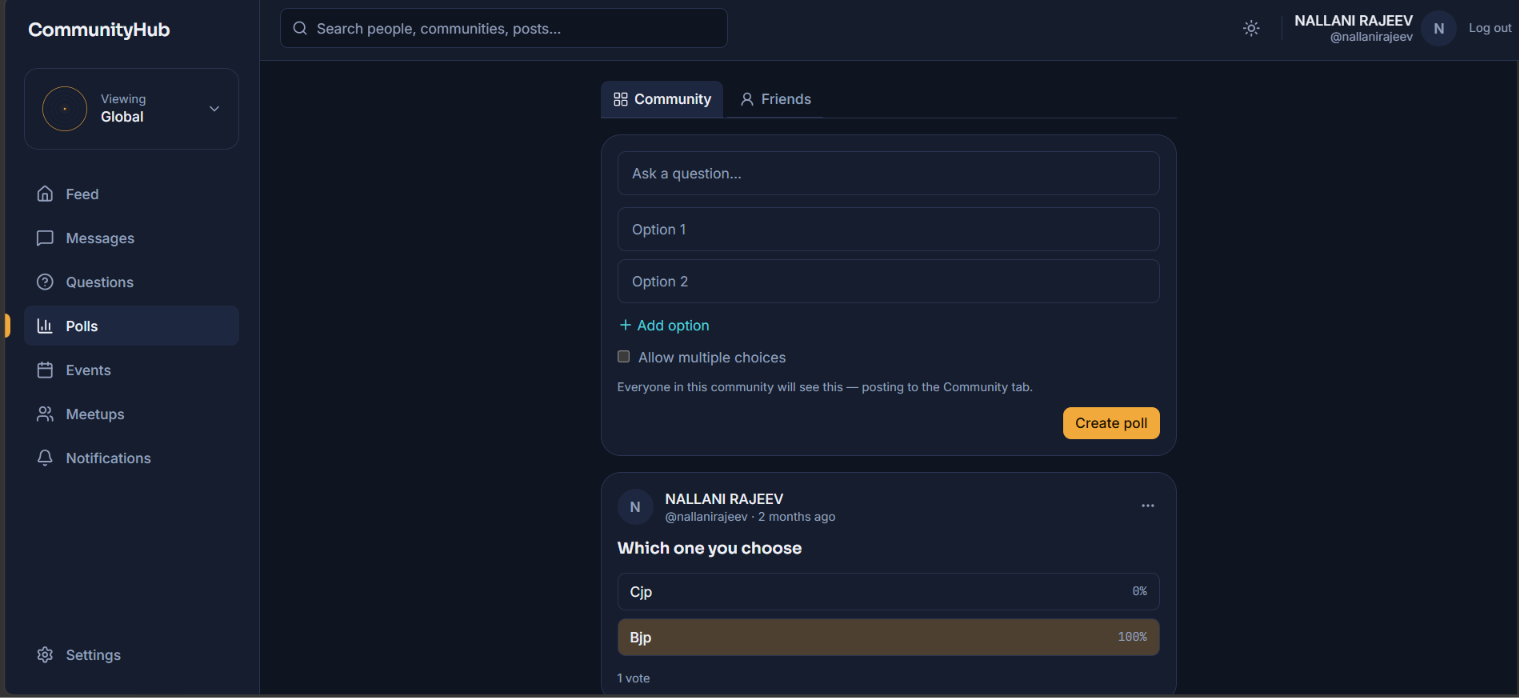
user can poll the question to get an idea about the public/friends thoughts
-
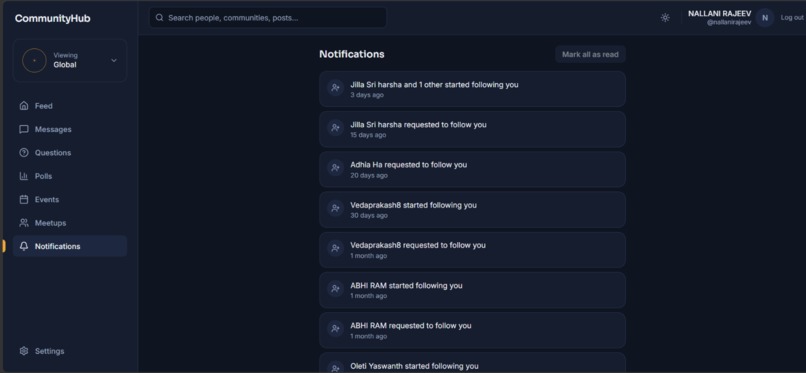
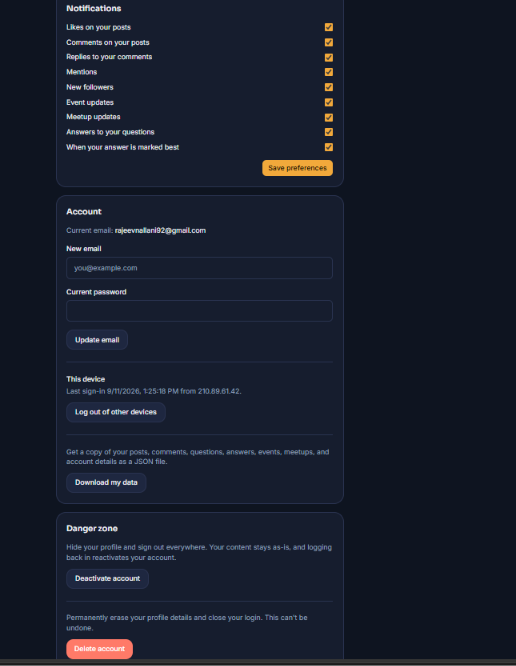
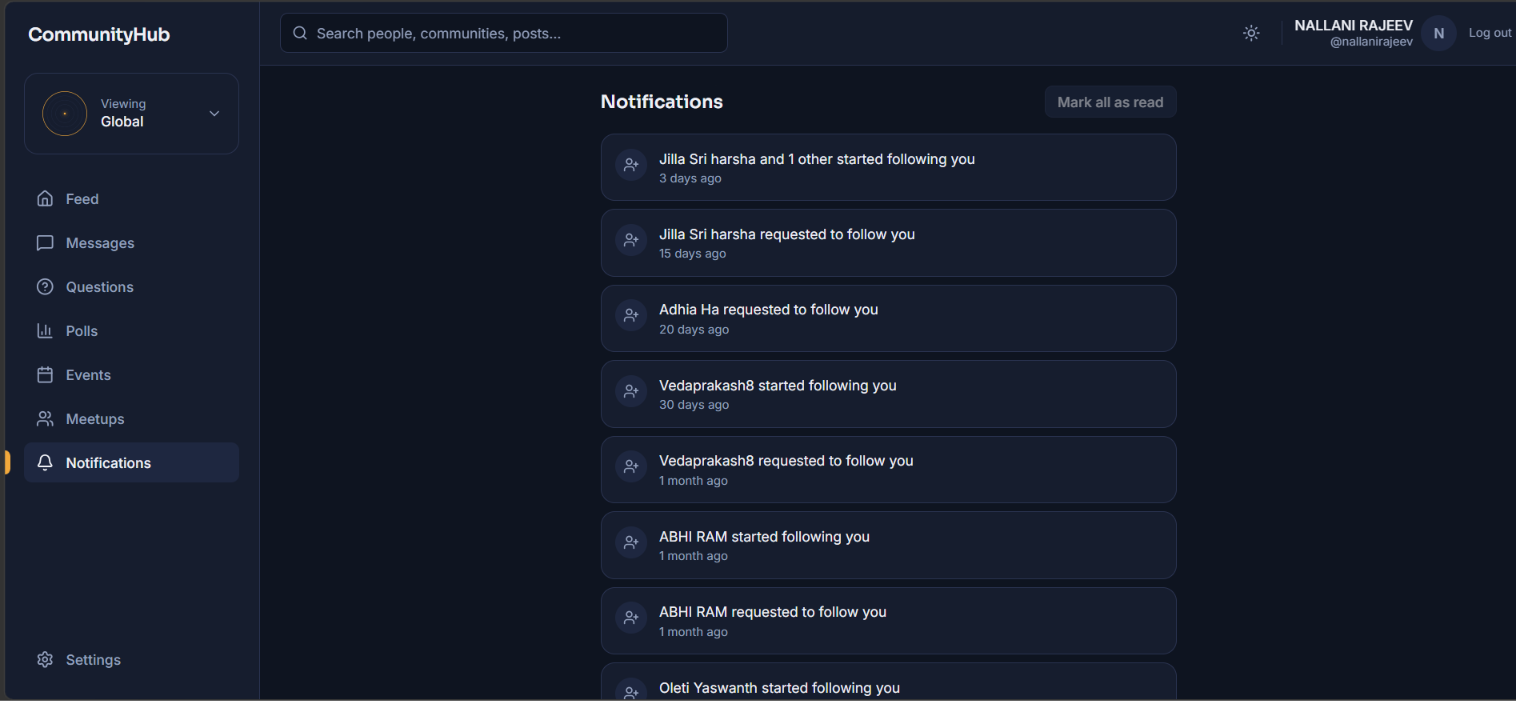
Notifications to see who have requested you to follow. the user can accept/reject their request
-
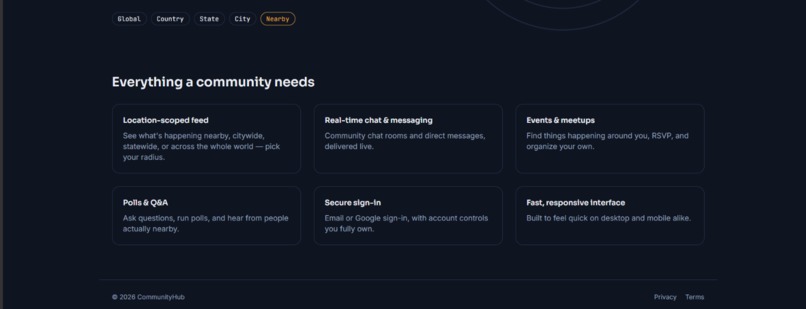
about our site
-
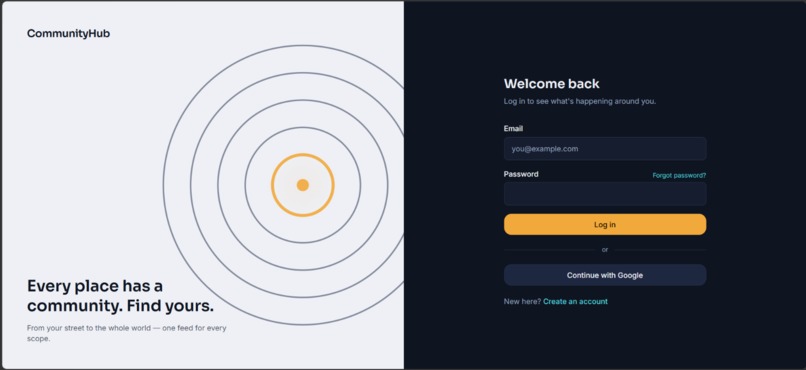
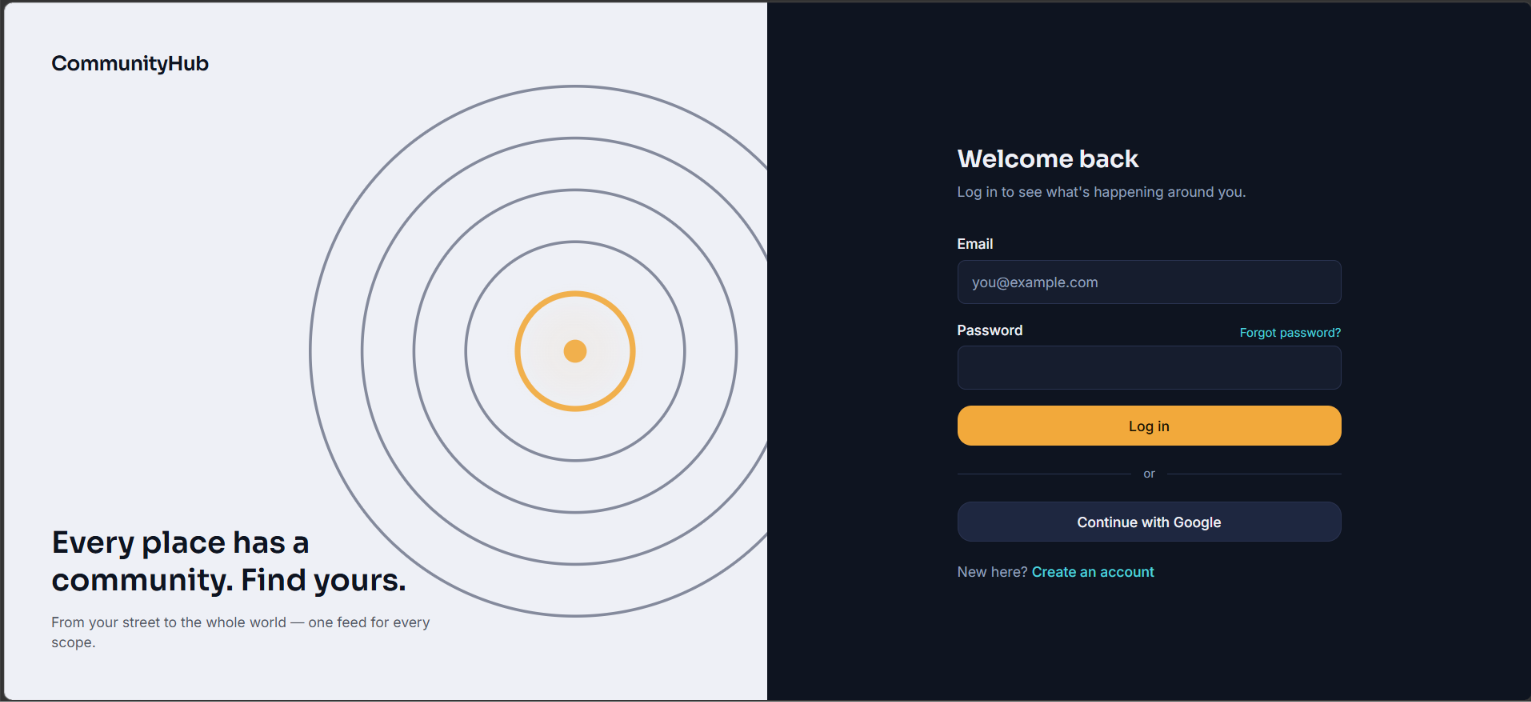
google/email signup available for easy logging in
-
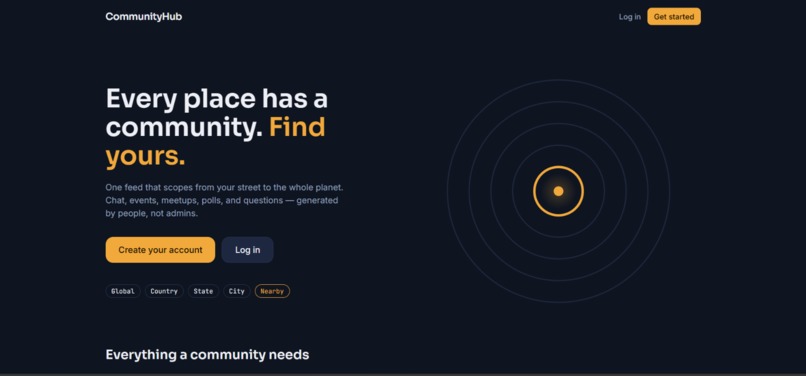
starting page of the site
-
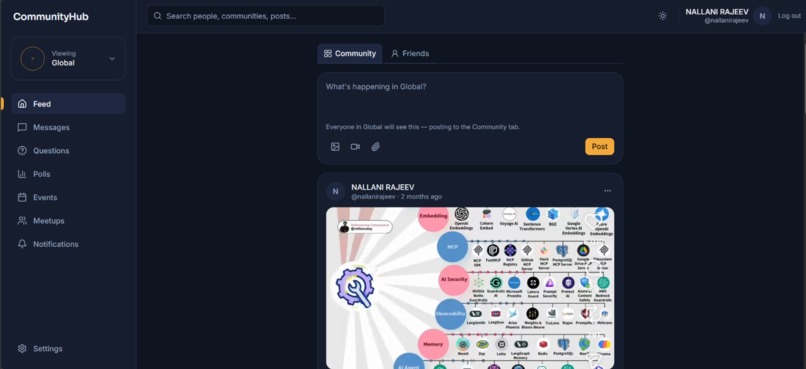
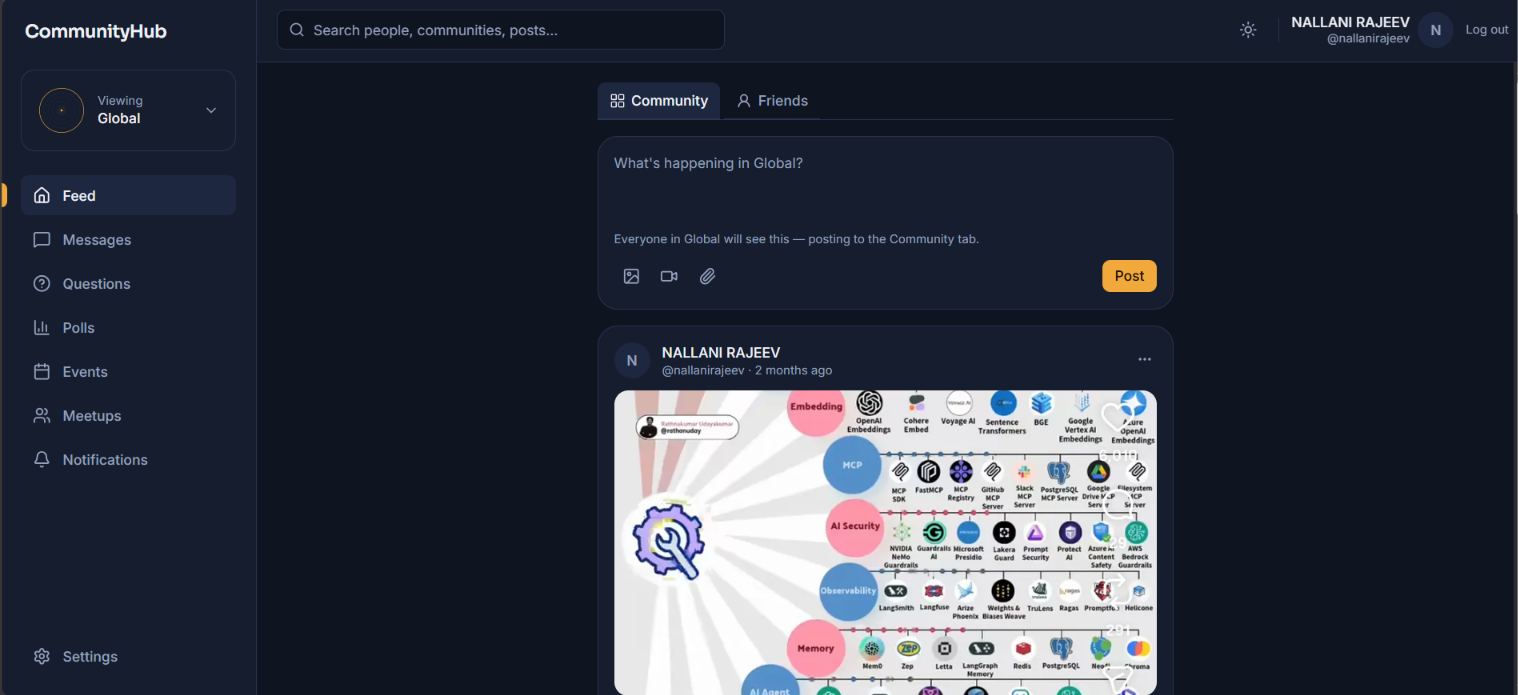
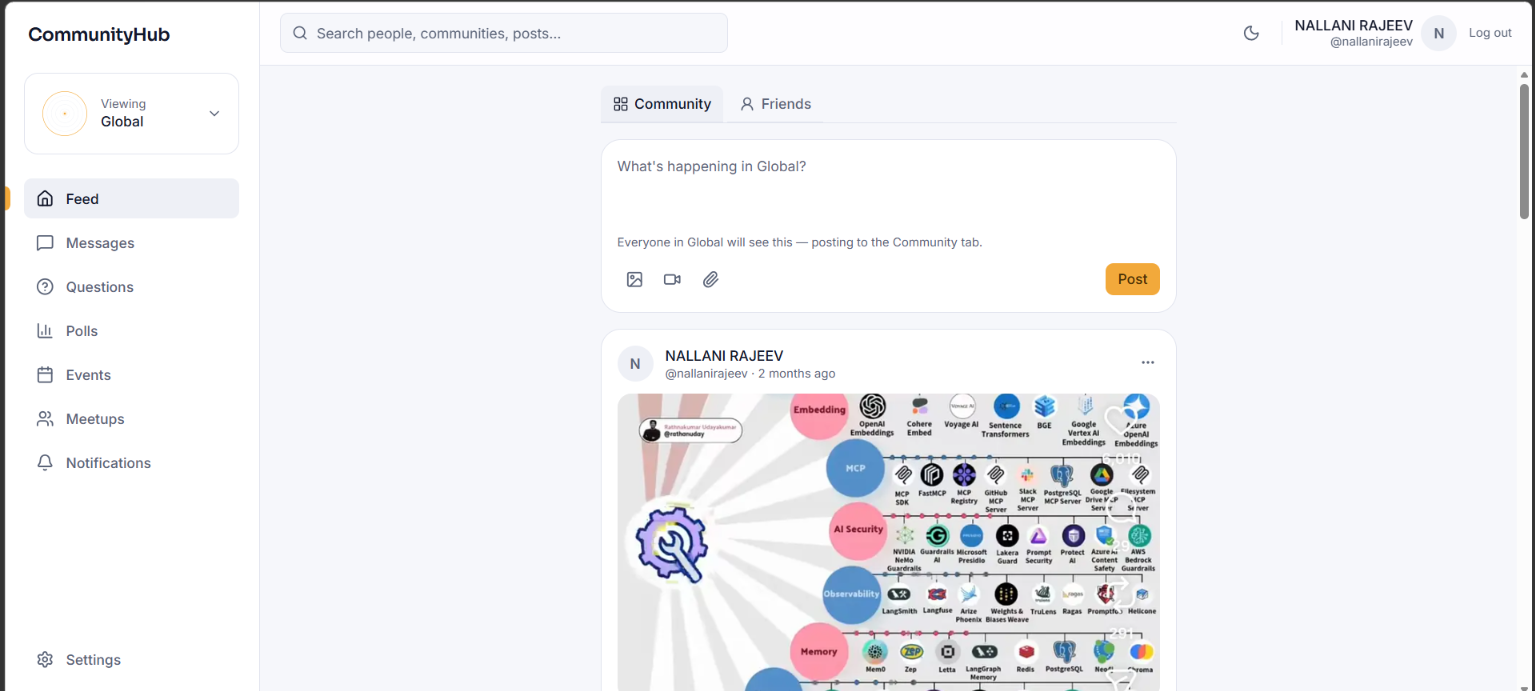
people can post their posts
-
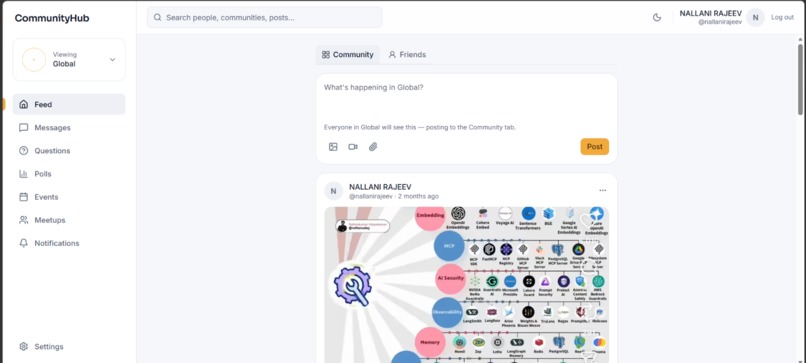
we can change the appearance of the application dark/light
CommunityChat
Inspiration
Most community platforms make you choose: a walled-garden forum with clunky moderation, or a chat app with no real structure for discussions, profiles, or content over time. I wanted one place that handles both — real discussions and real conversations — without forcing communities to stitch together five different tools. What sharpened the focus was watching mid-sized online communities struggle: moderation tools that don't scale past a few hundred members, DMs bolted onto public chat as an afterthought, and admins with zero visibility into what's actually happening. I wanted to build the platform I wished existing communities had.
What it does
CommunityChat is a full community platform built on Next.js 16 and Supabase, covering everything a real, growing community needs:
- Public and private communities with a follow system, including follow requests for private accounts
- An Instagram-style 1:1 Direct Messages system for private conversations alongside public discussion
- Live presence and real-time notifications, so members know who's online without a page reload
- A complete moderation stack — reports, block/mute, and an admin review queue — so bad actors get handled without admins reading every post
- An admin dashboard with ban/unban, role management, community management (privacy settings, soft-delete/restore), and a live stats overview
- Built-in analytics (DAU/MAU, growth, engagement) rendered with lightweight custom SVG sparklines — no charting library required
- Account deactivation/deletion and search, both built to hold up as the platform grows
How we built it
- Next.js 16 (App Router) + Supabase for auth, Postgres, and realtime
- Row Level Security (RLS) and SECURITY DEFINER RPCs to enforce permissions at the database layer instead of trusting the client
- Server Actions everywhere, backed by a shared, cached
getVerifiedAdminIdcheck so every admin-gated action and layout hits the database once instead of repeatedly - Cached
getClaims()-based auth (asymmetric JWT signing) in place of network round trips toauth.getUser(), cutting redundant checks on hot paths like presence pings and debounced search - PostgREST FK-embedding to collapse sequential query waterfalls — turning \( O(n) \) chained round trips into a single \( O(1) \) embedded query — plus per-route
loading.tsxskeletons for fast perceived navigation - Built in verified phases — notifications and presence, then moderation, then the admin dashboard, then analytics, then a systemic performance pass — checking each phase before starting the next
Challenges we ran into
- Mid-build, I made the call to replace community-wide chat with proper 1:1 Direct Messaging — which meant redesigning the schema (
dm_conversations,dm_messages) and permission model around security-definer functions instead of retrofitting one on top of the other - I uncovered a severe, pre-existing RLS bug: soft-delete via
UPDATEwas silently blocked bySELECTpolicies requiringdeleted_at IS NULL— even for a post's own author. It had quietly been breaking both post deletion and the admin removal queue the whole time. Tracking it down and fixing it with author/admin escape hatches on the affected policies was the trickiest debugging session of the build - The admin analytics page was firing 4 redundant auth + admin checks per page load before I caught and fixed it — a reminder that "it works" and "it scales" are different bars
Accomplishments that we're proud of
- Taking a real production-hardening pass instead of stopping at "it works in the demo" — genuine RLS security fixes, real performance profiling, real admin tooling
- Cutting worst-case redundant auth/admin checks from \( 4 \) per page load down to \( 1 \) per page load:
$$\frac{4-1}{4} = 75\%\text{ reduction}$$
The biggest wins landed on the highest-traffic paths: presence (fires every few minutes per active session) and search (fires on every debounced keystroke)
- Shipping a full moderation and admin system — reports, block/mute, review queue, ban/unban, roles, community management — that a real community could actually run on
- Building custom SVG analytics sparklines instead of pulling in a charting library, keeping the bundle lean
What we learned
- Security has to live in the database, not just the UI — RLS policies are unforgiving, and a policy written for one operation (
SELECT) can silently sabotage another (UPDATE) in ways that are easy to miss until deep in verification - Performance problems compound quietly — one redundant auth check feels harmless until it's multiplied across every layout, every action, and every high-frequency background call
- Verifying in phases, rather than racing feature after feature, is what surfaced a bug like the soft-delete issue before it spread further through the codebase
What's next for CommunityChat
- Finishing production polish: loading skeletons across the remaining
/admin/*routes - Expanding Direct Messages with media attachments and read receipts
- Deeper community-admin analytics: retention cohorts, moderation load over time
- Public launch to a first cohort of real communities
Built With
- googlesearchconsole
- next.js-(app-router)
- postgrest
- pwa
- row-level-security-(rls)
- supabase
- supabase-auth
- tailwind-css-v4
- typescript
- vercel


Log in or sign up for Devpost to join the conversation.