CommunityConnect — App for Community Development App link- https://community-connect-22c00bec.base44.app One-line summary: CommunityConnect is a mobile-first, offline-capable platform that empowers remote and underserved communities by enabling easy reporting & tracking of civic issues, delivering localized skill training and mentorship, supporting women-led micro-startups, providing job listings & training, and offering basic health alerts and AI-guided health assistance.
- Problem statement Residents in remote and underserved areas face: • Poorly tracked civic issues (slow or opaque resolution). • Limited access to relevant training & mentorship. • Few opportunities for women to start micro-enterprises. • Scarce, poorly-distributed job information and training. • Delayed community health alerts and uncertain access to basic guidance. Local authorities lack a consolidated view of issues and data to prioritize repairs; NGOs and trainers cannot easily reach learners; women entrepreneurs lack structured skill-up and market access; and jobs/trainings remain fragmented. Executive summary CommunityConnect is designed to make civic life in underserved communities smarter and more participatory. The app combines a civic complaint management system (reporting water leaks, broken streetlights, garbage, road damage) with a learning & mentorship hub (free/low-cost skill courses, local trainers, micro-internships), a women entrepreneurship support module, job & job-training information, and a simple health alert & AI-guidance system. Voice-first interactions, offline capability, local-language support, and lightweight UI ensure broad accessibility.
- Target users & personas Primary: • Residents , any community member who wants to report or track civic issues or access local services. • Community workers / Volunteers , help validate reports, triage and communicate with authorities. • Local government officials / Municipal staff , view, assign and close complaints. • Students & job seekers — access courses, mentorship, and micro-internships. • Women entrepreneurs — training and marketplace support. • Local trainers & micro-business owners — offer courses, internships, and hiring. Secondary: NGOs, health workers, pharmacies, and micro-finance providers.
- Goals & success metrics Goals • Increase civic complaint resolution speed and transparency. • Raise skill course enrolments among local youth by X% in 6 months. • Enable Y women to start micro businesses in the first year. • Reduce time-to-awareness for community health alerts. Metrics • Number of complaints filed, assigned, and resolved (and avg resolution time). • Course enrolments and completion rates (with certificates issued). • Number of women-trained and businesses started. • Active monthly users and retention rate. • Job placements / micro-internships completed. • User satisfaction (NPS) and app accessibility metrics.
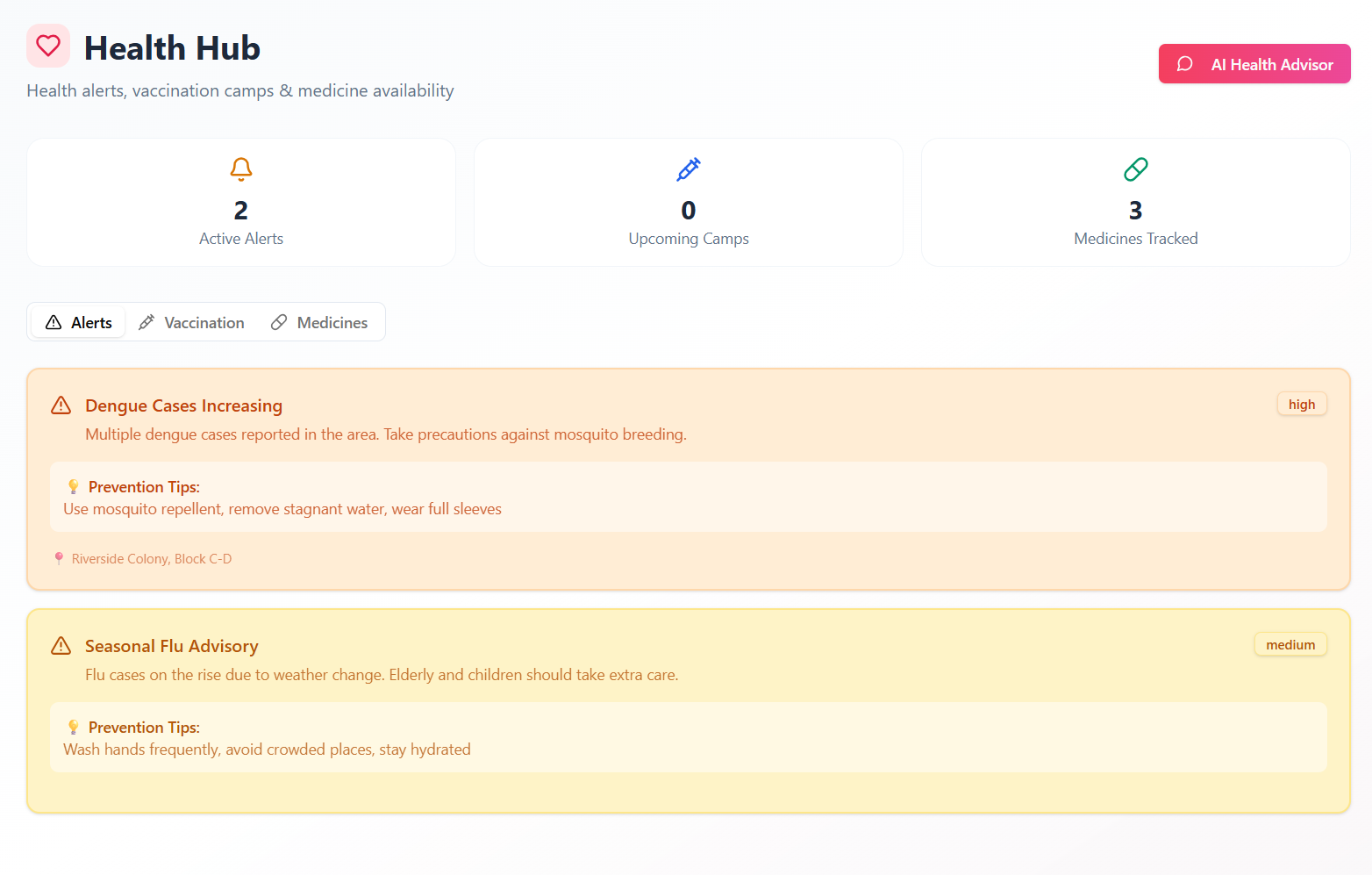
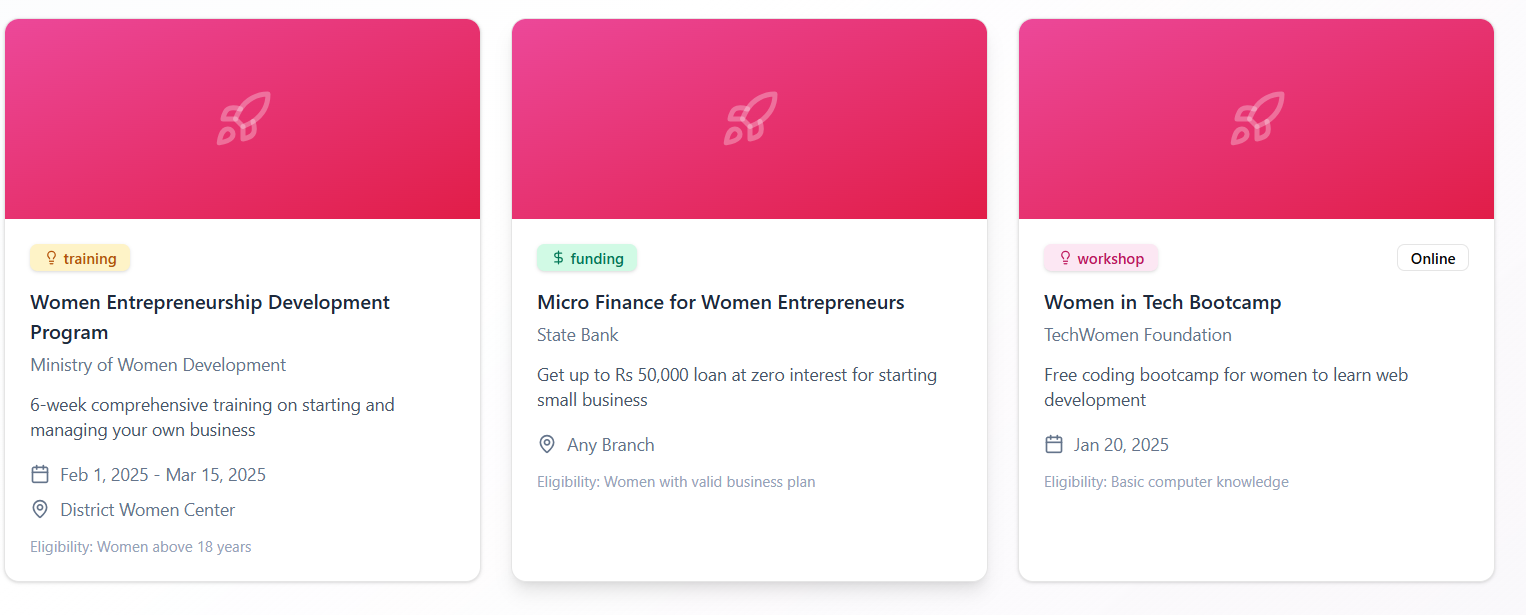
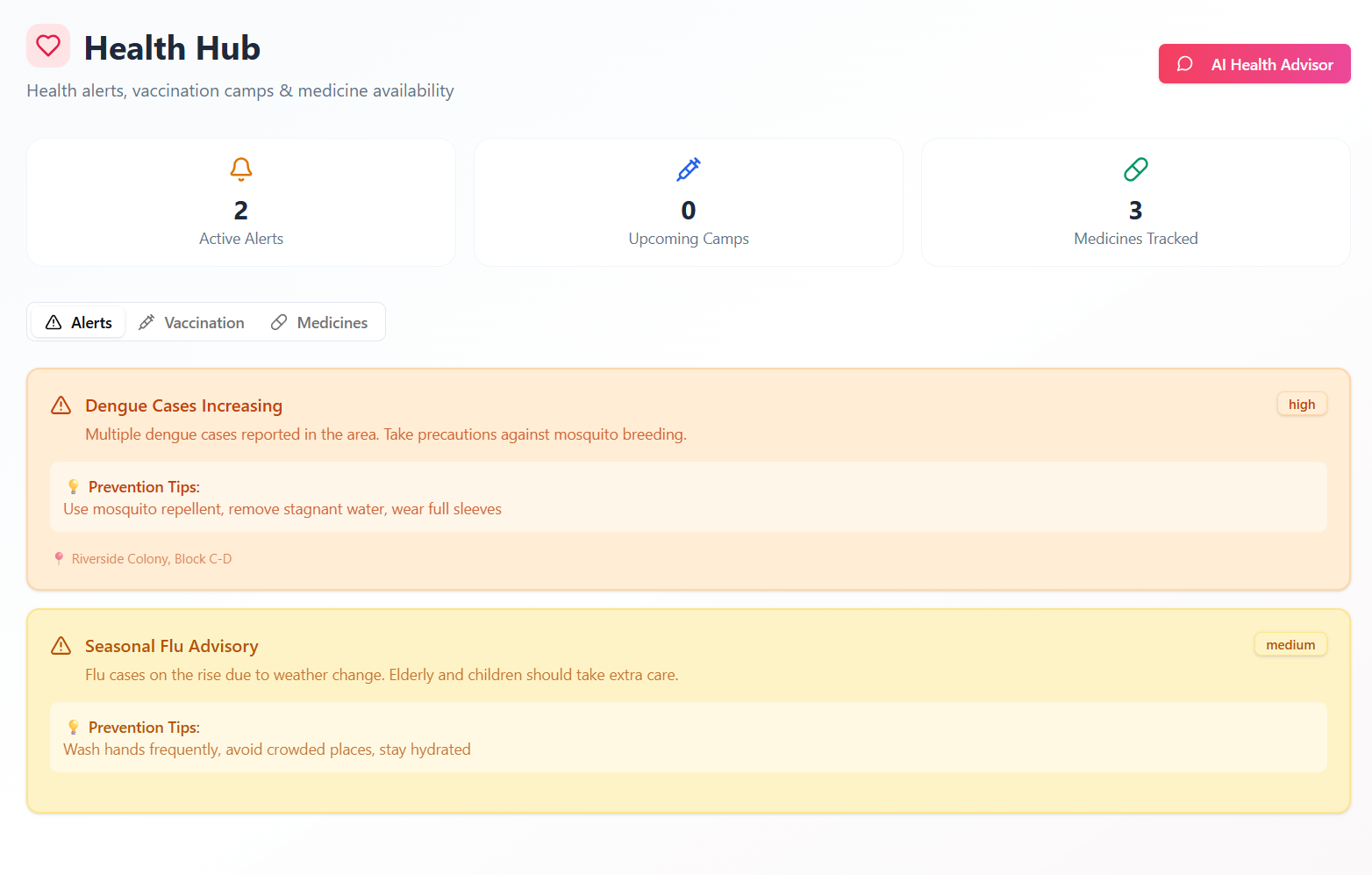
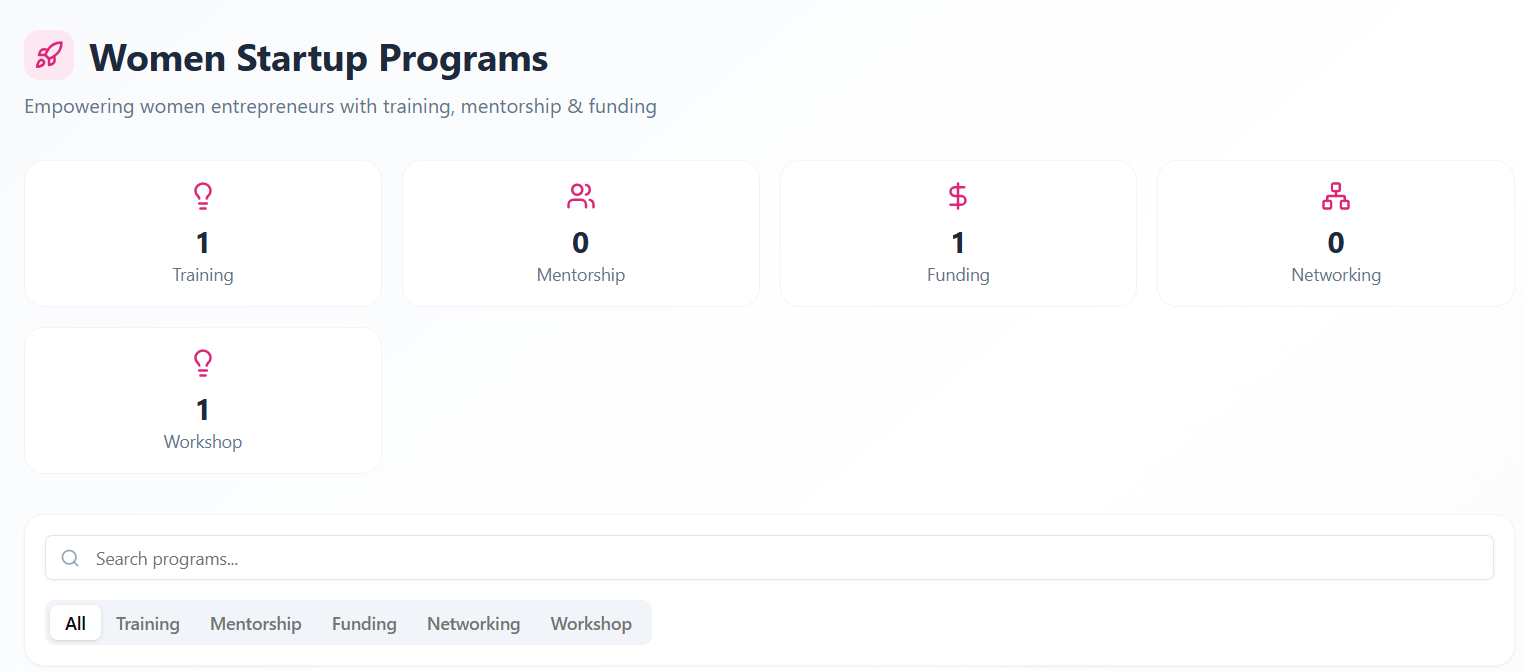
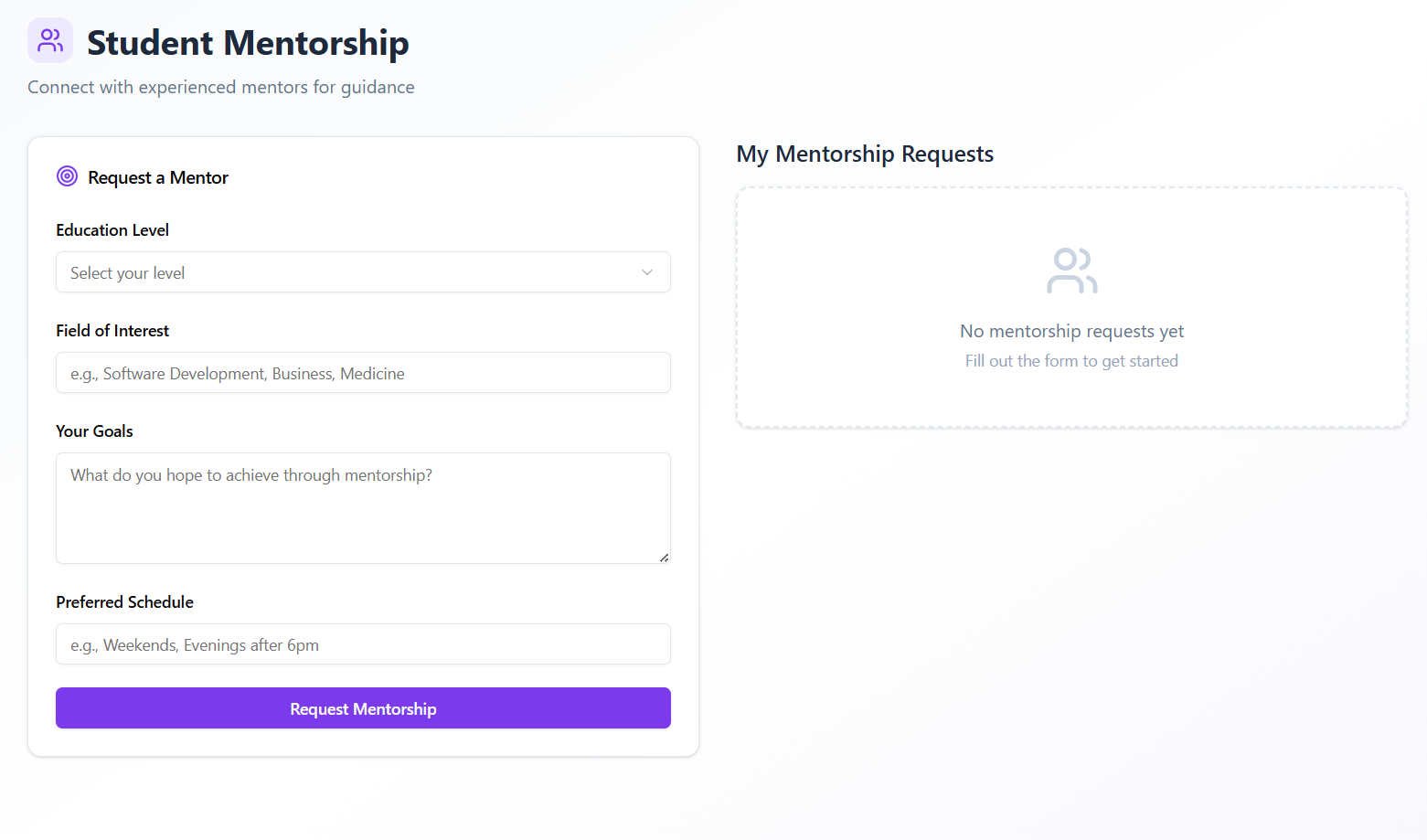
- Key features Each feature below includes a short description, important UI elements, and data points to record. A. Complaint reporting & tracking (Civic Issues) • Report types: Water leakage, Broken streetlights, Garbage issues, Road damage, Other. • Submission modes: Text form, photo upload, voice description (auto-transcribed), quick templates. • Geo-tagging: Automatic GPS (with manual pin-drop override). • Local authority routing: Map each complaint to responsible department/ward. • Status updates: Pending -> Assigned -> In progress -> Resolved -> Feedback requested. • Timeline & notifications: Push/SMS/local-language voice updates for status changes. • Commenting & evidence: Residents and officials can add comments, photos, timestamps. • Escalation: Auto-escalate complaints that exceed SLA thresholds. • Analytics: Dashboard with heatmap of complaints, avg resolution time, pending backlog. Data captured: reporter id (optional anonymous), geolocation, category, photos, audio, timestamp, assigned team, status history. B. Dashboard • Community dashboard: shows all reported issues with filters (by status, category, time-range, location). • Authority dashboard: prioritized ticket list, SLA indicators, assignment actions, map view. • Volunteer view: queue of unverified local issues to validate on the ground. • Public view: aggregated statistics and transparency portal (no personal data). C. Voice-first interface • Voice commands: e.g., "Report a water leak at Main Street"; "Show pending complaints near me"; "Find free tailoring course". • Language support: Local languages + simple phrases. • TTS for notifications: Voice notifications for users with low literacy. • Offline voice capture: Record audio that syncs when connection returns. Core tech: On-device speech-to-text with fallback server transcription; text-to-speech for messages. D. Learning & Mentorship Hub • Course discovery: Nearby & online free/low-cost skill courses (filters: category, cost, mode, schedule). • Local trainers: Profiles, ratings, contact methods, scheduled classes. • Micro-internships: Short assignments from local businesses (1–4 weeks) with clear deliverables. • Mentorship matching: Students apply, matched with volunteer mentors; mentor calendar & chat. • Progress tracking & certificates: Course progress, quiz scores, attendance, certificate generation (PDF & shareable). Data captured: course id, trainer id, enrollment, progress %, certificates issued, feedback. E. Women Entrepreneurship Support • Training modules: Business basics, tailoring, food processing, digital marketing, bookkeeping. • Micro-grants & loans links: Connect to local microfinance partners (application tracking in-app). • Marketplace integration: Option to list goods/services on a local marketplace. • Mentor & peer groups: Women-only cohorts, success stories, local demo days. F. Jobs & Job Training • Job board: Local & region-specific jobs with filters (remote, part-time, sector). • Skill-gap training: Quick courses mapped to job requirements. • Application tracking: Track job applications, interview invites. • Employer portal: Local businesses post openings and micro-internships. G. Health Alerts & AI Health Assistant • Broadcast alerts: Dengue, flu, vaccination camps — geo-targeted push & voice alerts. • Pharmacy stock tracker: Pharmacies can report stock status of essential medicines. • AI health chatbot: For basic triage, symptom checks, and guidance to nearest clinic (clearly labelled as non-diagnostic). • Campaigns: Vaccination drives, health camps, maternal health reminders. Safety note: The AI chatbot must display disclaimer and escalate red-flag symptoms to human health worker contact info. H. Community Engagement & Governance • Polls & surveys: Collect resident feedback on proposed projects. • Event calendar: Training sessions, demo days, health camps. • Volunteer coordination: Rosters for local cleanups and repair validation.
- User journeys & flows Journey 1 — Resident reports a water leak (voice):
- Resident opens app -> taps microphone -> says "Report water leak near bus stop".
- App transcribes, asks follow-ups (e.g., "Do you want to add a photo?").
- User adds photo, confirms location; submits.
- System geotags, creates ticket, assigns to municipal plumbing team.
- Resident gets voice & push confirmations: Ticket #, assigned team, expected SLA.
- Volunteer validates if necessary; municipal staff updates status. Resident receives TTS update when resolved. Journey 2 — Student finds a free tailoring course and micro-internship:
- Student searches "tailoring" or uses voice: "Find tailoring course nearby".
- Sees list with schedules, enrolls, completes training modules (offline videos downloaded).
- App suggests micro-internship with a local shop; student applies; after evaluation, gets a certificate and stipend. Journey 3 — Woman entrepreneur joins training & lists product:
- Joins a 4-week business basics cohort.
- Completes modules, gets mentor assignment.
- Receives marketplace onboarding and lists 10 products. First sale confirmed; micro-loan application initiated.
- Information architecture & data model (high-level) • Users: id, name, phone, language, role (resident, volunteer, official, trainer, employer), location. • Complaints: id, reporter_id, category, coordinates, photos[], audio[], description, status, assignee_id, timestamps[] • Courses: id, title, description, trainer_id, location, mode (offline/online), seats, schedule. • Enrollments: id, user_id, course_id, progress, certificate_id. • Jobs: id, employer_id, title, description, location, requirements. • HealthAlerts: id, type, region, message, start_date, end_date. • Transactions (optional): micro-loan requests, grants, marketplace orders.
- Technical architecture & recommended tech stack Mobile app (recommended): • Cross-platform: React Native or Flutter for wider device coverage and offline-capability. • Local DB: SQLite / Realm for offline storage & sync. • Voice & speech: On-device speech recognition (Android Speech Services, iOS Speech) with server fallback (e.g., Google Speech-to-Text) if permitted. • Backend: Node.js/Express or Python FastAPI. • Database: PostgreSQL for relational data; PostGIS extension for geospatial queries. • Media storage: Cloud object storage (AWS S3 / Google Cloud Storage) with CDN. • Notifications: FCM (Android) & APNs (iOS); SMS gateway fallback. • AI components: Lightweight on-device NLP for commands; cloud-hosted AI for chatbot (OpenAI or local LLM hosted) with strict privacy controls. • Map services: OpenStreetMap + Mapbox (cheaper) or Google Maps where licensing allowed. Admin UI / Dashboard: Web app (React + Tailwind) with role-based access. Integrations: • Municipal APIs (if available) for ticketing. • Local pharmacy inventory portals (or manual reporting forms). • Payment gateways for micro-payments (if marketplace used).
- Accessibility, localization & offline strategy • Localization: UI & voice commands available in local languages; date/time formats. • Low-literacy support: Use icons, voice prompts, TTS for status updates. • Offline-first: Allow complaint creation, course downloads, and voice recordings offline; sync when online. Conflict resolution rules for concurrent edits. • Lightweight UI: Prioritize small bundle size and image compression for low-bandwidth.
- Voice interaction & AI components • Command set: Predefined intents for complaint report, search courses, show nearby issues, get job alerts. • Intent recognition: On-device intent classification; send anonymized text to server for complex queries. • AI health assistant: Trained with region-specific public health guidance; must include disclaimers and referral flows. • Mentor matching: Simple rule-based matching (skills, availability) initially; ML-based ranking later.
- Privacy, security & compliance • Data minimization: Allow anonymous complaints; default to minimal personal data. • Consent: Clear consent dialogs for voice, location, and media uploads. • Encryption: HTTPS in transit; encryption at rest for sensitive data. • Access control: Role-based permissions, audit logs for official actions. • Data retention & deletion: Policies for complaint data, health interactions, and user accounts. • Regulatory: Follow local privacy laws (e.g., India's IT rules, any applicable data protection law).
- Admin dashboard & operations • Ticket management: Filtering, assignment, SLA alerts, CSV export. • Analytics & reports: Complaint trends, course uptake, women entrepreneurship dashboard. • Notifications & broadcasts: Compose geo-targeted alerts (health, events). • User management: Role approvals for trainers, employers, municipal staff.
- MVP scope & phased roadmap MVP (0–3 months) • Complaint reporting (text/photo), geotagging, basic tracking, admin dashboard, push/SMS notifications, voice-based report creation (simple intents), offline ticket creation. • Basic course listing and enrollment; simple trainer profiles. • Health alert broadcast system (manual entry). Phase 2 (3–9 months) • Mentorship matching, micro-internships, progress tracking & certificates. • Women entrepreneurship modules & marketplace integration. • Pharmacy stock tracker and AI health chatbot (basic). Phase 3 (9–18 months) • ML-based prioritization, sophisticated analytics, payment integrations, integrations with municipal APIs and micro-loan partners, local-language model improvements.
- UX/UI notes and sample screens • Home screen: Quick actions (Report Issue, Find Courses, Jobs, Health Alerts), recent tickets, local news/events. • Report screen: Simple flow: Category -> Location -> Photo/Voice -> Submit. • Dashboard: Map + list toggle, quick filters, SLA indicators. • Course page: Description, schedule, enroll button, mentor contact. • Women Hub: Cohorts, training calendar, loan status. Design principles: large tappable targets, icon-driven navigation, one-action-per-screen for simplicity.
- Testing, deployment & monitoring • Testing: Unit tests, integration tests, and end-to-end (Cypress or Detox). Accessibility audits. • Pilot: Deploy in 1–2 villages/wards for 3 months. Collect feedback, measure KPIs. • Monitoring: Error tracking (Sentry), performance (New Relic), and usage analytics (Mixpanel/Amplitude).
- Sustainability & community adoption strategy • Local champions: Train volunteers and community workers as super-users. • Partnerships: Municipalities, local NGOs, training centers, microfinance agencies, pharmacies. • Incentives: Badges for volunteers; stipends for trainers; recognition for officials with high-resolution rates. • Communication: Door-to-door onboarding, posters, community meetings, radio announcements.
- Cost estimate & funding ideas Rough cost bands (first year): • Development (MVP): $30k–$70k (depends on region and team) • Hosting & infra: $2k–$8k/year • Community outreach & training: $5k–$15k • Ongoing ops & support: $10k–$30k/year Funding sources: grants (Gov/UN/NGOs), CSR programs, impact investors, local municipal budget, crowdfunding.
- Appendix Sample API endpoints (high-level) • POST /api/complaints — create complaint • GET /api/complaints?lat=..&lng=..&status=pending — list • PATCH /api/complaints/{id} — update status • GET /api/courses — list courses • POST /api/enrollments — enroll user • GET /api/health-alerts — list current alerts Sample marketing blurb CommunityConnect helps your town speak up and skill up. Report public problems, find local training, get mentorship, support women entrepreneurs, and receive timely health alerts — all in your language, even offline.
Built With
- base44
- chatgpt

Log in or sign up for Devpost to join the conversation.