-
-
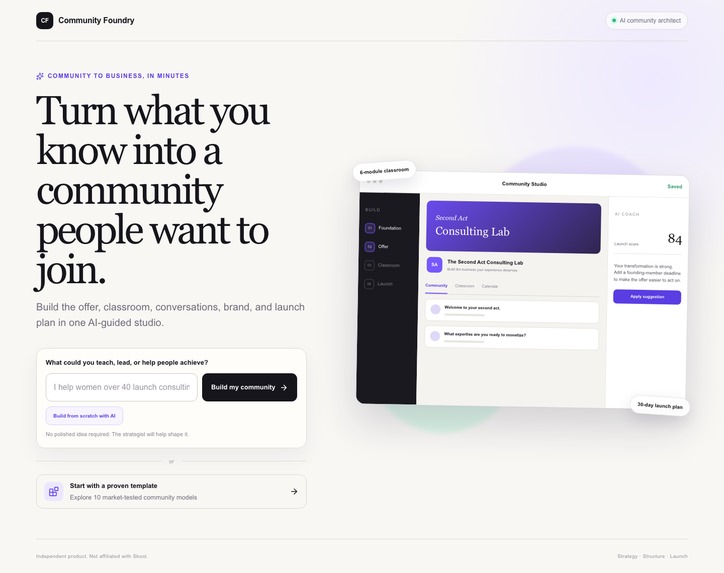
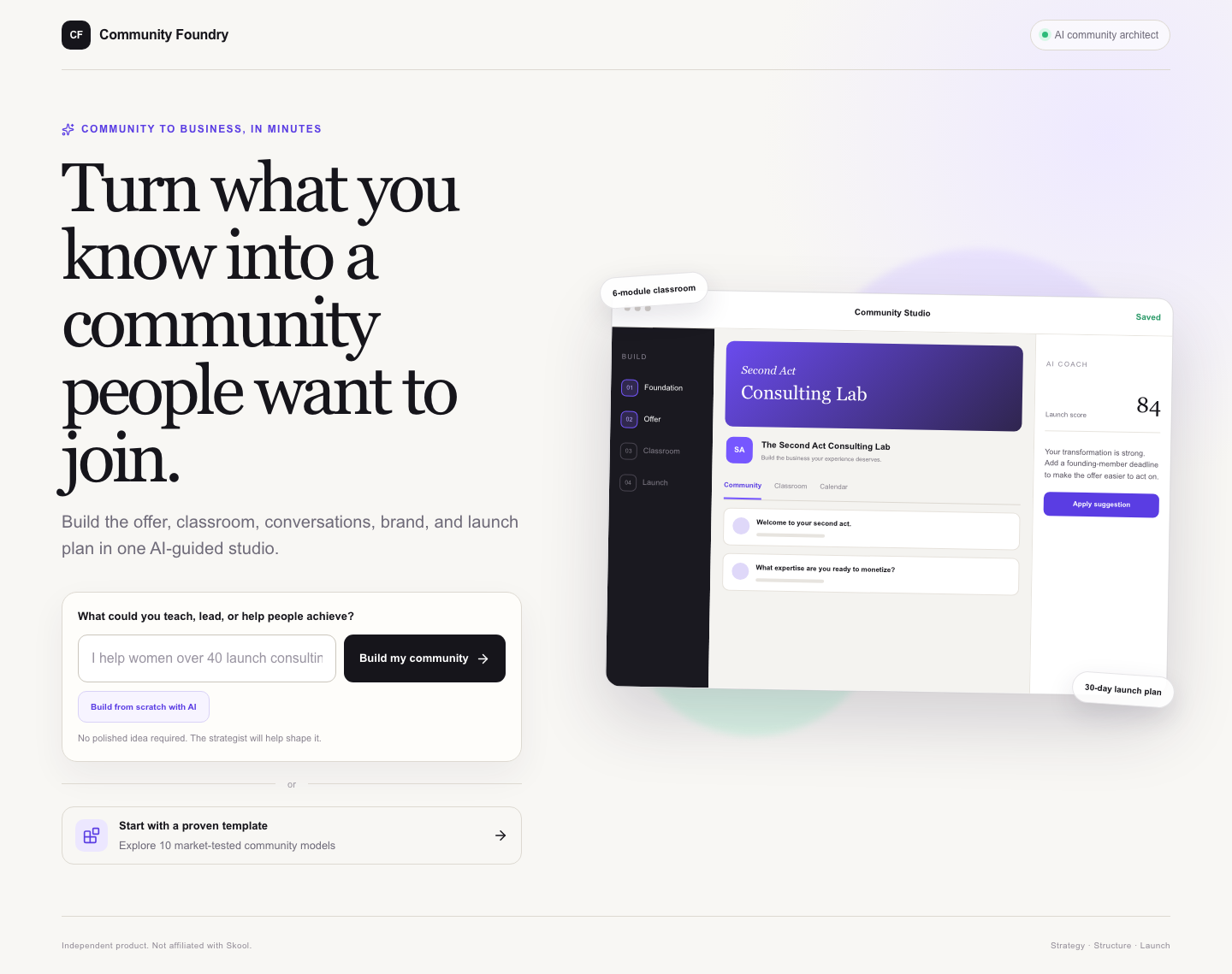
Landing Page
-
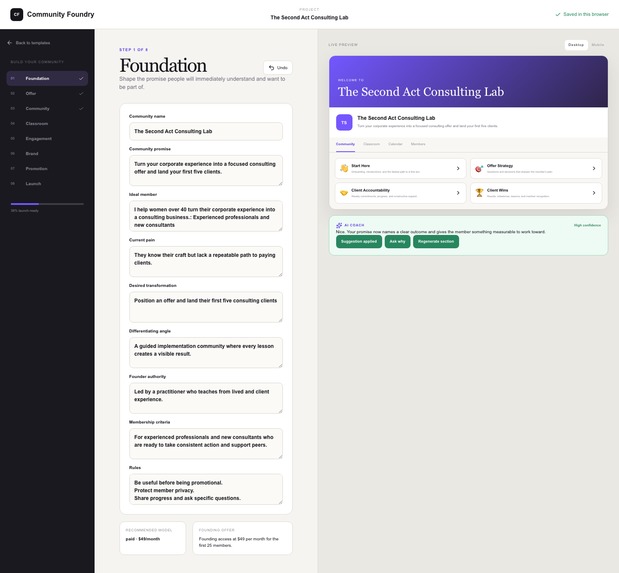
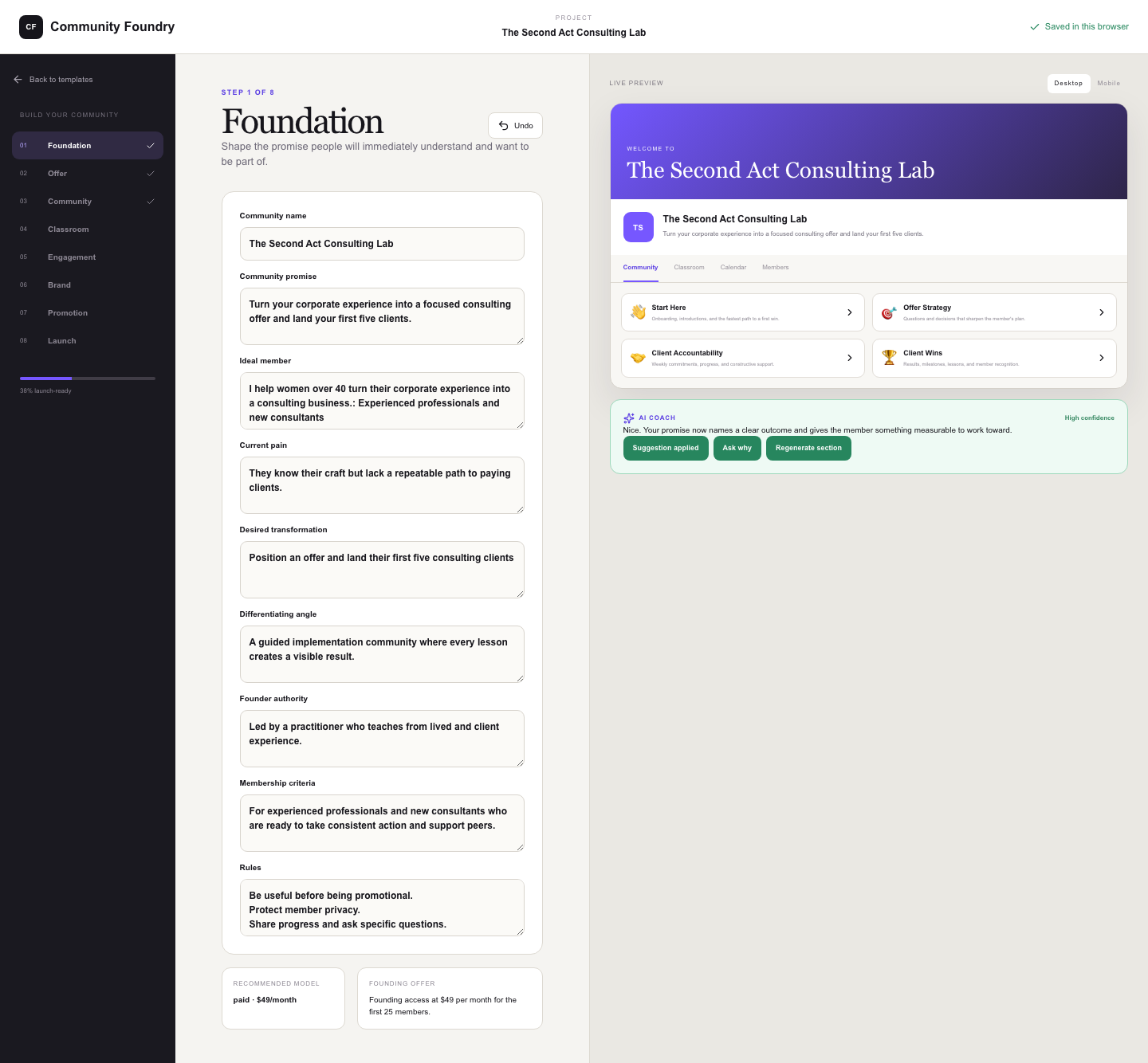
Studio
-
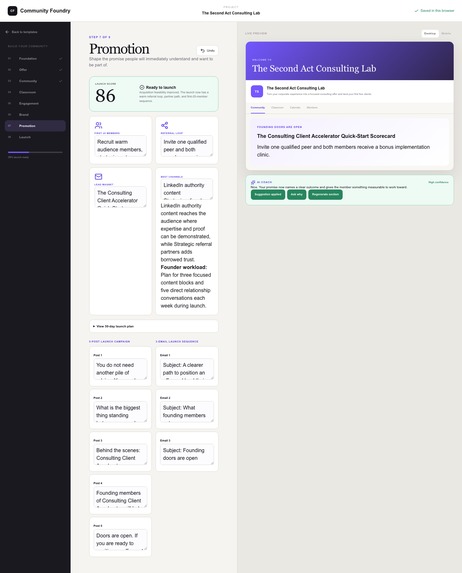
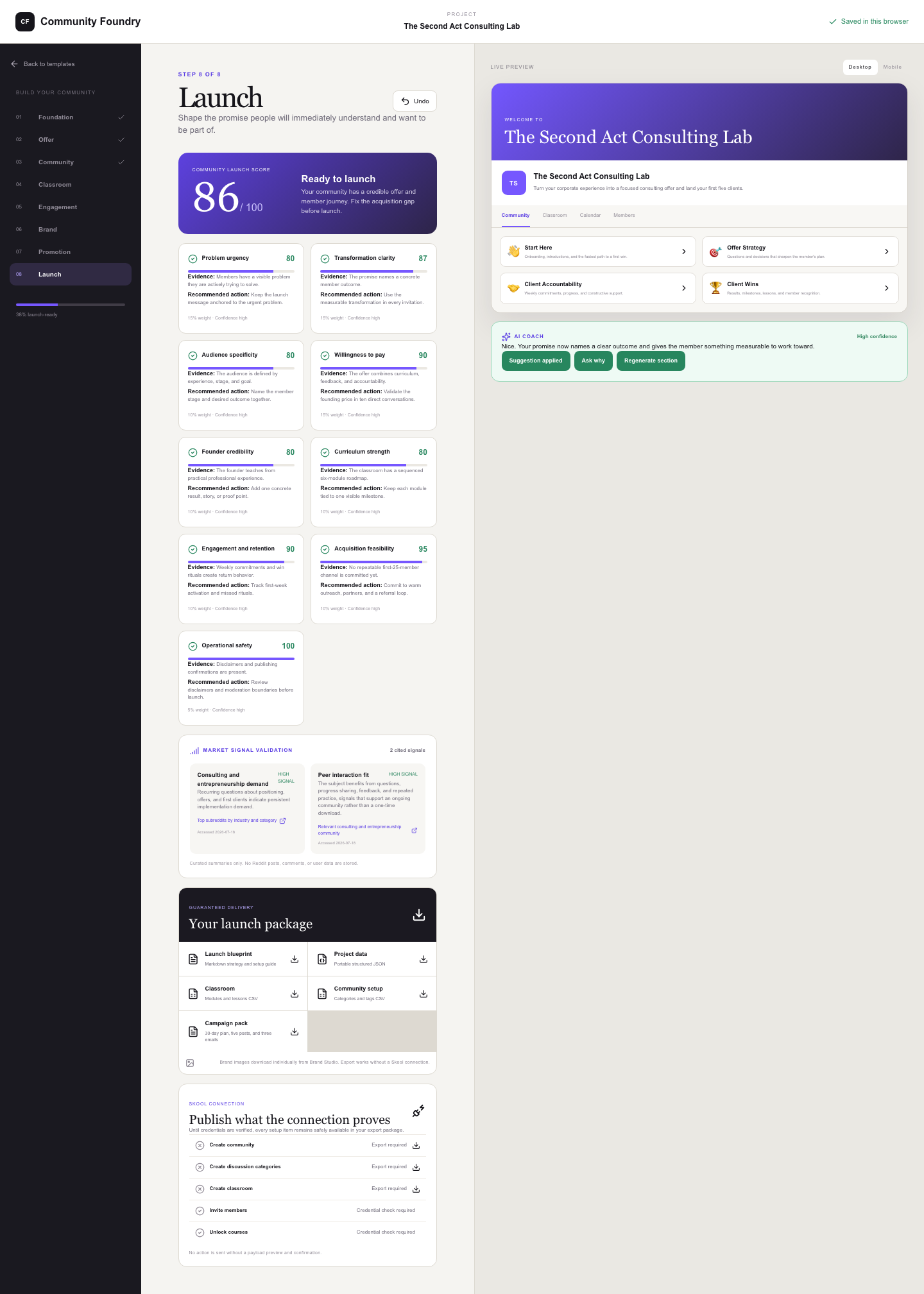
Foundry Score
-
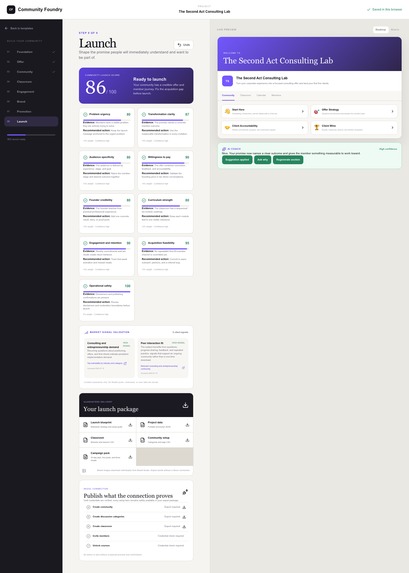
Launch
Inspiration
Community Foundry started with my own frustration. I was manually building my Skool communities one piece at a time: defining the offer, choosing the pricing model, organizing classroom content, creating discussion categories, planning engagement, writing launch posts, and figuring out how to promote everything. I kept thinking, “There has to be a faster, smarter way to do this.” Building the community inside Skool was not the hardest part. The real work happened before that. I had to turn an idea into a complete strategy that people would understand, join, engage with, and potentially pay for. That experience inspired Community Foundry, an AI-powered studio that turns someone’s expertise, idea, or audience into a launch-ready community in minutes.
What it does
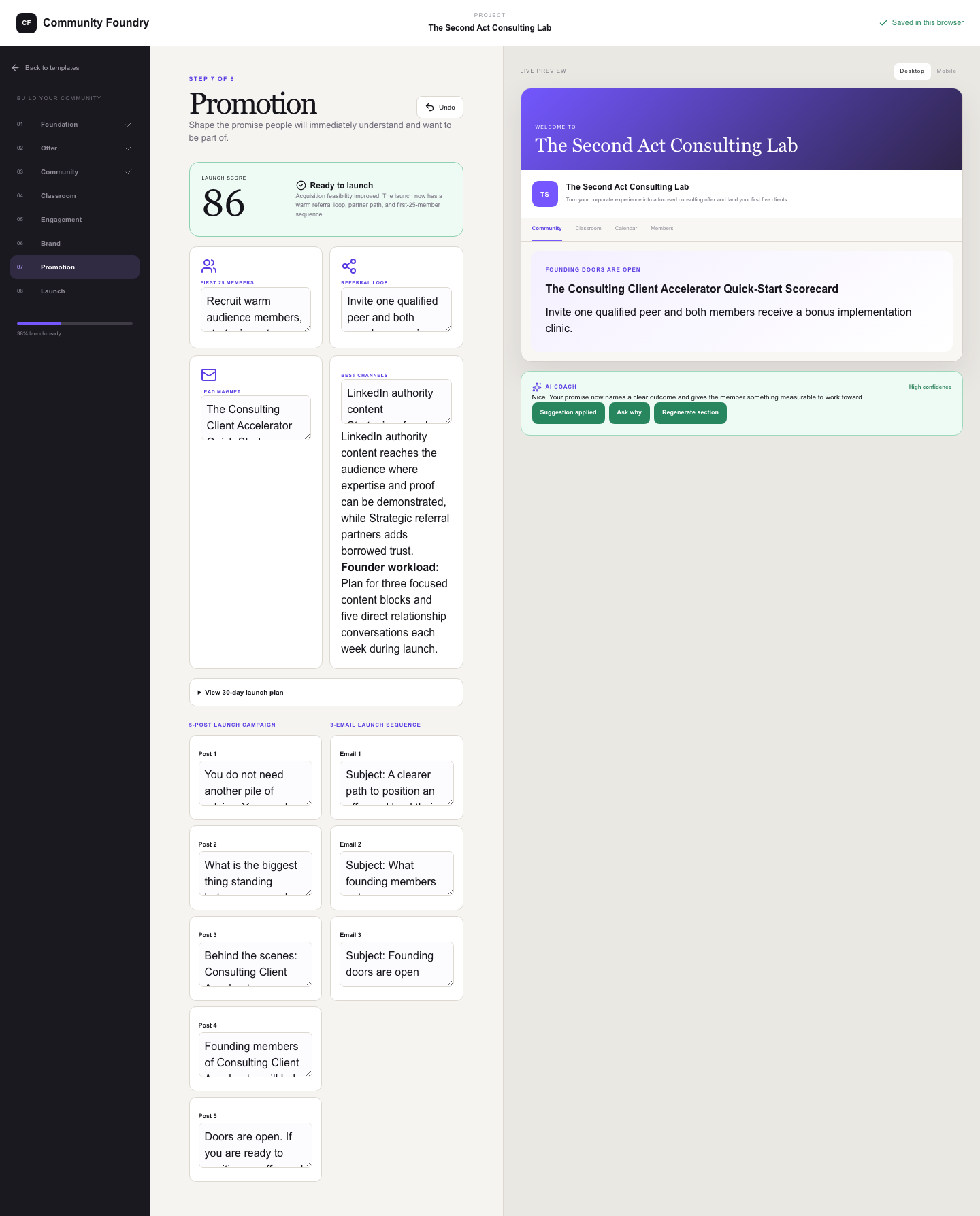
Users can start from scratch with AI guidance or choose from 10 templates based on popular online community verticals. Community Foundry helps create: A clear community concept and positioning Free, paid, freemium, or tiered membership offers A structured classroom curriculum Discussion categories and engagement prompts Community branding and visual direction A 30-day launch and promotion plan Launch posts and email campaigns A launch-readiness score with actionable recommendations The result is not just a long AI-generated document. It is an editable community-building studio where the offer, classroom, conversations, branding, and launch strategy all work together.
How I built it
I built Community Foundry as a full-stack Next.js application, using Codex and GPT-5.6 Sol as development partners. GPT-5.6 Sol powers the community strategy experience. It transforms incomplete ideas into structured plans, explains its recommendations, and helps users improve individual sections without replacing the work they want to keep. The application uses: Next.js and TypeScript GPT-5.6 Sol for strategy and content generation GPT Image for brand concepts Supabase for project storage Netlify for deployment Structured AI outputs and fallback handling Responsive desktop and mobile previews Automated unit, component, and browser testing I also built a safe export layer for platforms such as Skool. Users receive a complete launch package even when direct platform automation is unavailable.
Challenges I ran into
Turning AI output into a usable product The easiest approach would have been one prompt that produced one giant answer. That was not the experience I wanted. Community strategy includes several connected decisions. Changing the offer may affect the curriculum, engagement plan, pricing, and promotional messaging. I designed Community Foundry as an editable studio with distinct stages, targeted AI actions, field locking, regeneration controls, and explanations for each recommendation. Making the launch score meaningful A launch score can easily become a decorative number. I wanted the score to tell users exactly what was missing, why it mattered, and what they could do next. Each recommendation connects to an editable section of the project so users can improve the plan and immediately see the result. Preparing for service failures AI requests, image generation, databases, and third-party integrations can occasionally fail. I built fallback behavior so users can still experience a complete workflow if an external service is temporarily unavailable. The product remains usable, and the demo does not depend on every service responding perfectly. Working around Skool integration limitations My original vision included creating the finished community directly inside Skool through MCP. During development, I learned that the available Skool integration capabilities were too limited to make direct publishing a reliable core feature. Instead of pretending otherwise, I built an adapter that distinguishes supported actions from unsupported ones and generates structured exports that are ready to implement inside Skool
What I learned
I learned that AI is most useful when it helps people make connected decisions, not when it simply generates more text. The strongest results came from giving the model: Clear strategic context Structured outputs Focused actions Editable, user-controlled fields Explanations for its recommendations Guardrails that preserve completed work I also learned that a reliable export can be more valuable than a flashy integration that may not work when the user needs it. Most importantly, this project showed me how quickly a personal frustration can become a working product when Codex is treated as a true development partner.
What's next for Community Foundry
The next phase is expanding Community Foundry from a launch-planning studio into a complete community growth platform. Planned improvements include: Direct Skool publishing when supported access becomes available Collaborative editing for teams Audience and competitor research Post-launch engagement analytics AI-generated member onboarding Community health recommendations More industry-specific templates White-label versions for agencies and community consultants Community Foundry’s long-term goal is simple: help people turn what they know into communities that create connection, transformation, and recurring revenue.
Built With
- ai
- codex
- css3
- generative-ai
- gpt-5.6-sol
- gpt-image
- html5
- javascript
- netlify
- next.js
- openai
- openai-api
- playwright
- postgresql
- react
- responsive-web-design
- rest-api
- serverless-functions
- structured-outputs
- supabase
- tailwind-css
- typescript
- vitest
- zod

Log in or sign up for Devpost to join the conversation.