-
-
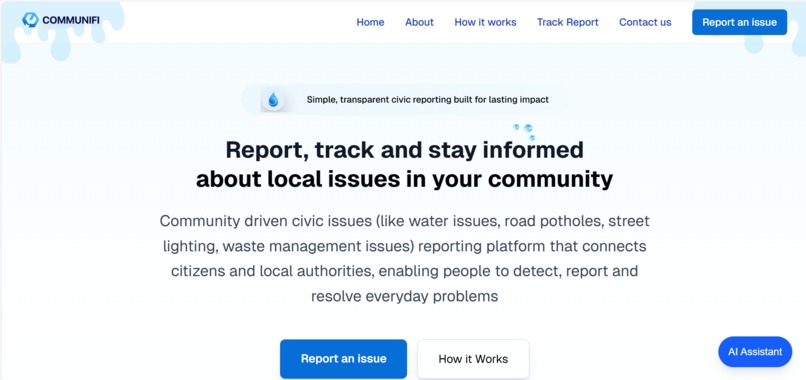
communifi hero section

Inspiration
Everyday issues like water leaks, broken streetlights, and potholes slow life down, but reporting them is often frustrating and opaque. We wanted a fast, accessible way for citizens to report problems and see clear progress with accountability for stewards and admins. The goal: a trusted feedback loop where people feel heard and local teams have the right context to act quickly.
What it does
- Enables citizens to report local issues (water, roads, lighting, waste) via a simple form or AI-guided chat.
- Generates a unique trackingNumber and sends a confirmation email to the reporter.
- Lets citizens track report status and view details using the tracking number. ## How we built it Frontend: Next.js App Router with client components and Tailwind utility classes for a clean, responsive UI. Backend: Node.js APIs with Mongoose/MongoDB; indexed fields for performance, robust validation, and normalization. Data Model: Report holds core fields (issue type, severity, location, contact, evidence, status) and notes; Steward and Admin manage assignment and permissions. Authentication: Admin routes guarded by session/cookie. Steward APIs use JWT in Authorization: Bearer .... Notifications: Nodemailer sends confirmation on report submission, assignment notices, and reporter updates on status changes. AI Assistant: Global floating chat widget available on all pages. Two modes: Q&A: concise answers about the platform; asks for clarification if the question is vague. Guided Fill: asks the user for required fields one-by-one and auto-submits when complete; validates inputs like severity. Server-side extraction with OpenAI, resilient fallbacks, plus heuristic parsing to prevent blocking. ## Challenges we ran into
- Input quality: free-form descriptions can be noisy; solved with guided prompts and validation.
- Robustness: external AI outages needed graceful fallbacks and local extraction to keep flows responsive.
- Data normalization: severity typos (“meduim”) caused validation errors; addressed with server-side normalization and assistant-side re-prompts.
- Balance: keeping the assistant helpful without overwhelming users — minimalism in UI and concise responses helped. ## Accomplishments that we're proud of Launched a frictionless report flow with tracking numbers and email updates Built a global AI assistant that guides users to fill and auto-submit reports Implemented robust API fallbacks and local heuristics to keep chat working offline Delivered steward and admin workflows for assignment, status updates, and evidence Added data normalization and validation to prevent common submission errors Indexed models and optimized queries for faster dashboards and tracking ## What we learned
- Guided, step-by-step conversations outperform free-form inputs for data quality
- Transparency (status, emails, tracking) improves trust even before resolution
- Consistent schemas and normalization are essential for reliable operations
- Minimalist UI with clear prompts keeps users engaged and reduces drop-offs
- Resilience matters: graceful fallbacks prevent outages from breaking core flows ## What's next for communifi
- Multilingual prompts and localized content.
- Heatmaps and trend dashboards for proactive maintenance.
- Richer evidence capture and standardized status templates.
- Role-based permissions with fine-grained audit trails.
