-
-

1
-
2
-
3
-
4
-
5
-
6

Inspiration
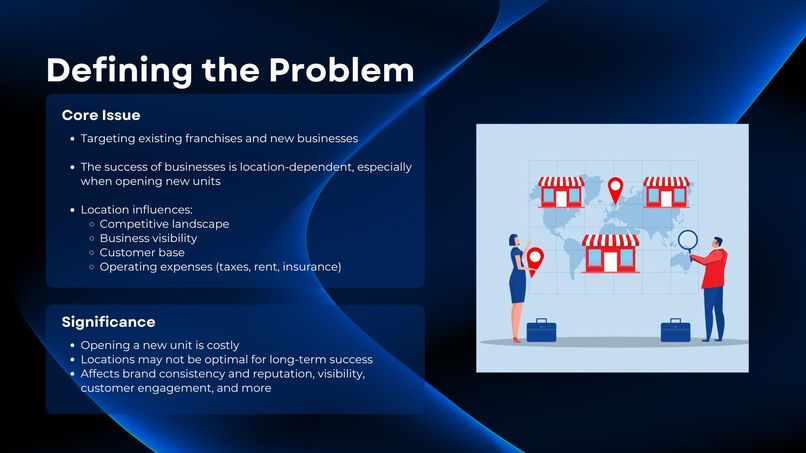
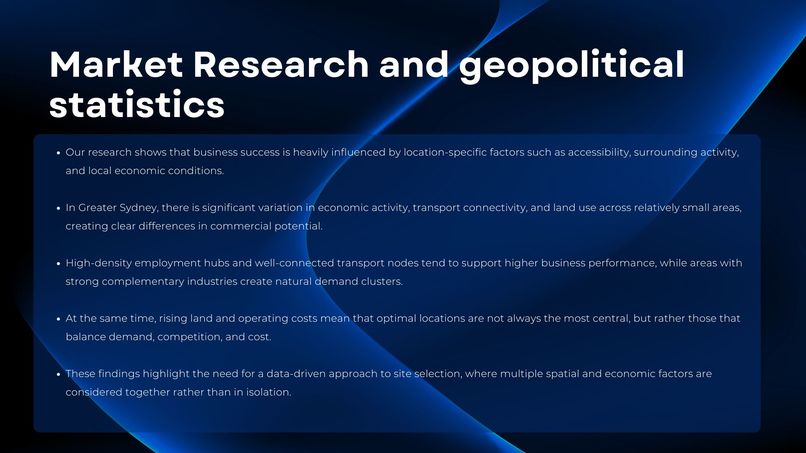
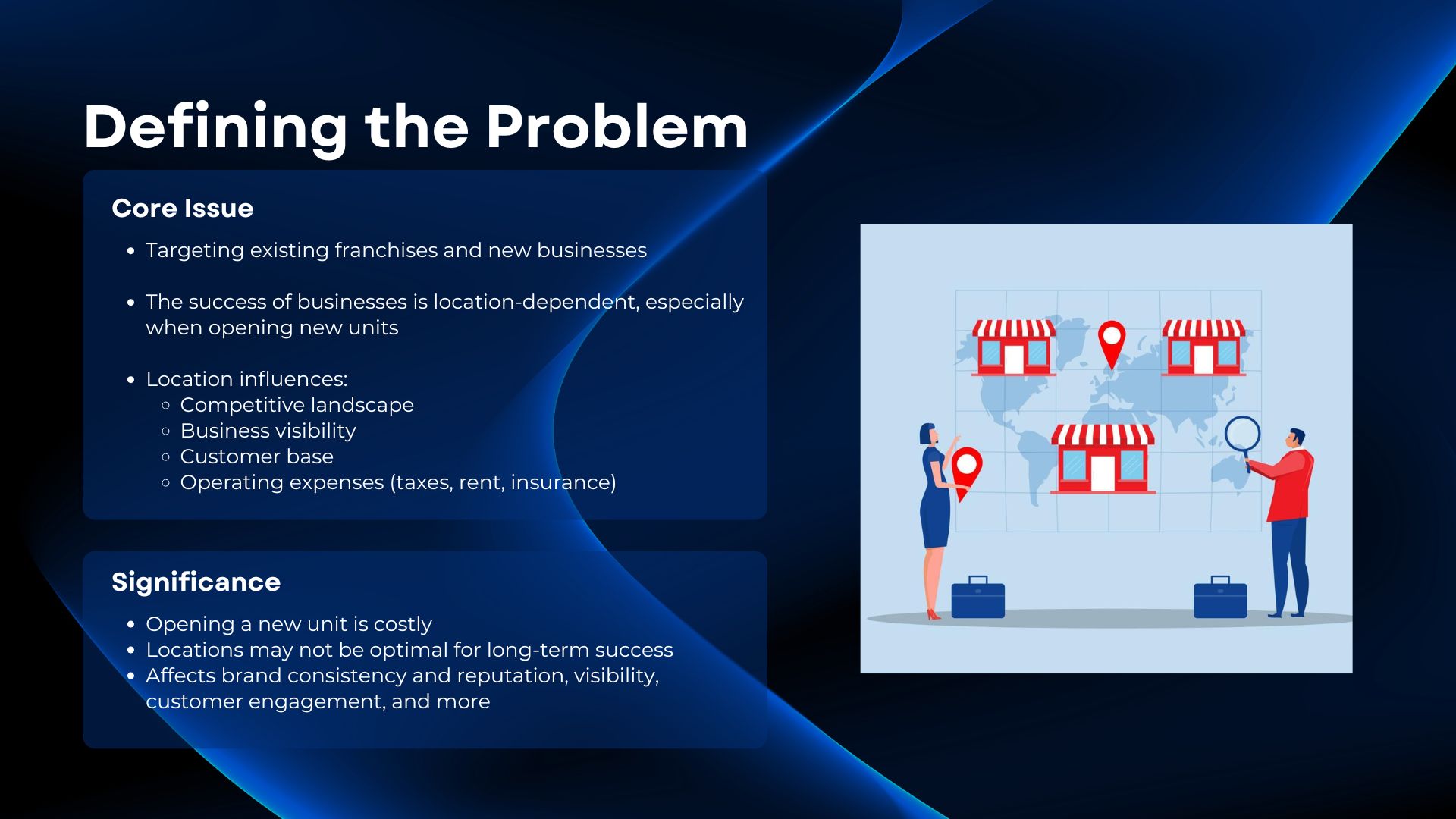
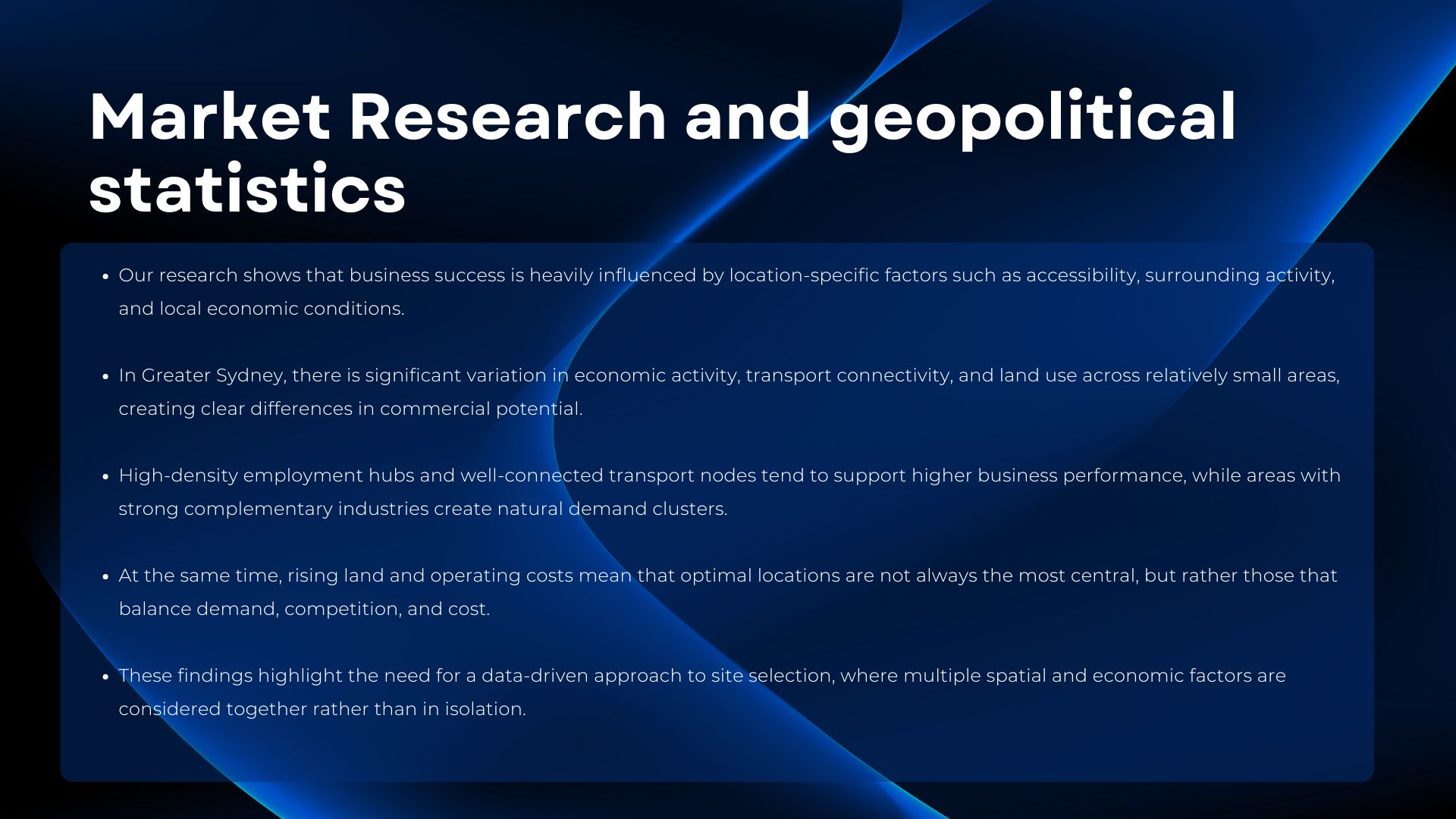
This project came from a simple frustration: business location decisions are often made too broadly. A suburb might look promising, but that does not mean a specific site inside it actually works. In a city like Sydney, where rent, land values, and operating costs are already high, getting that decision wrong can be expensive very quickly. We wanted to build something that could make site selection more practical, more defensible, and more grounded in real conditions.
What it does
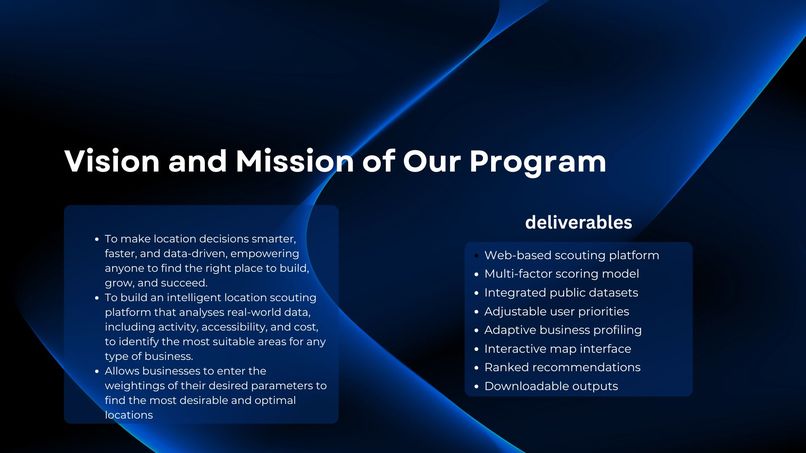
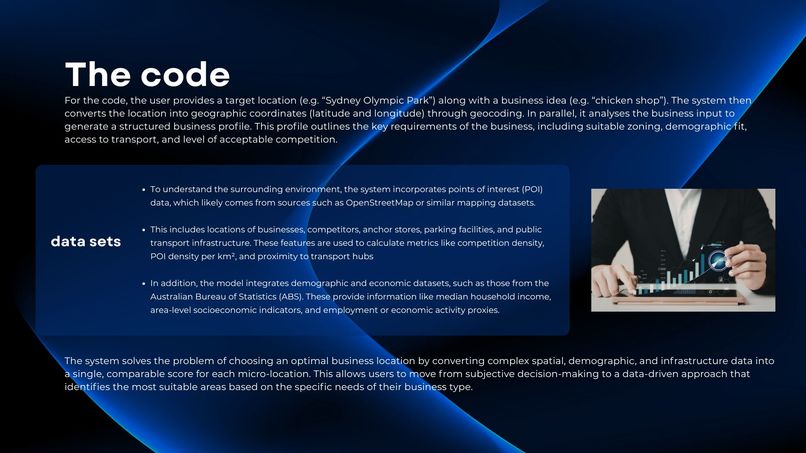
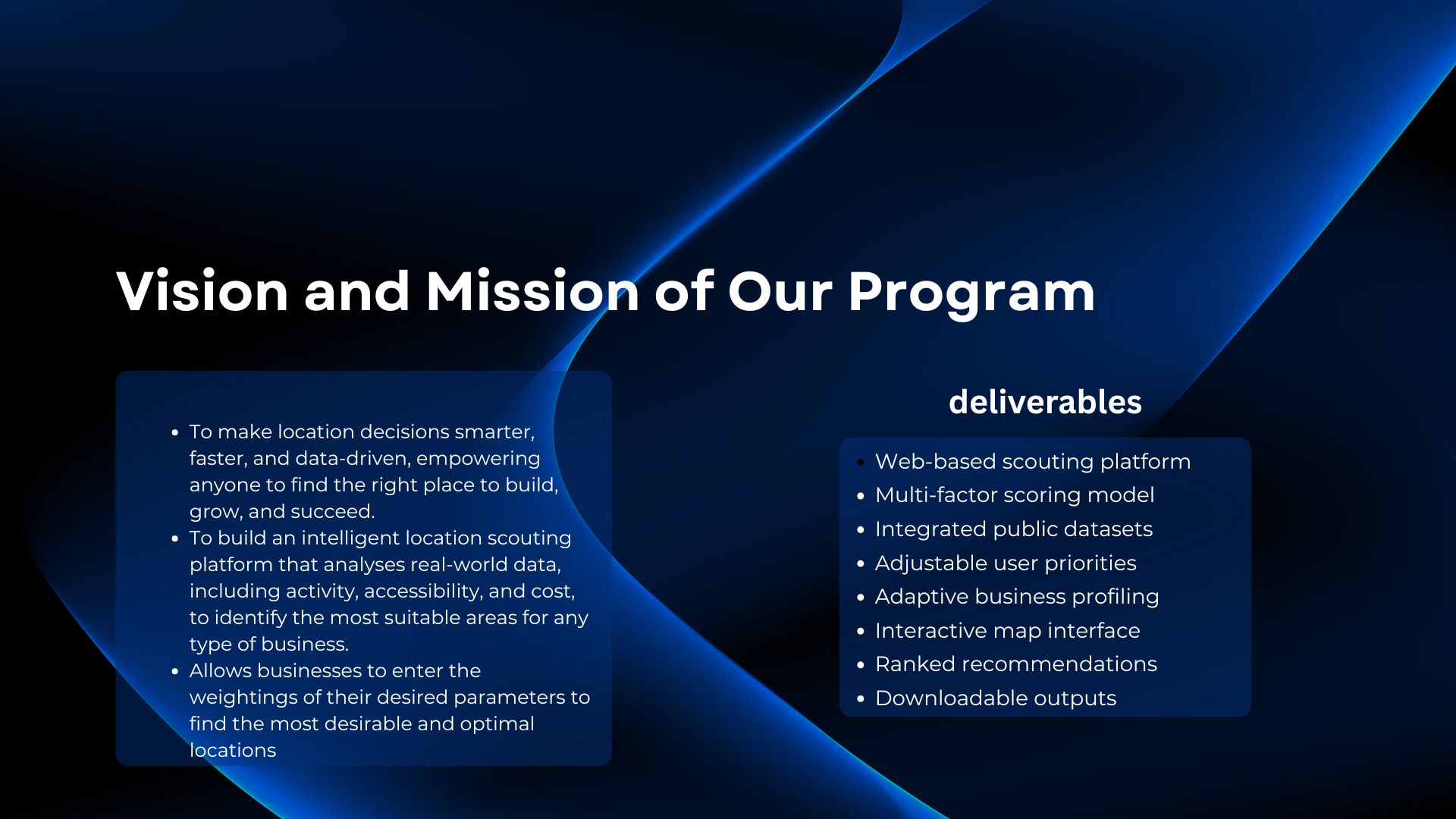
The app helps businesses compare locations based on the factors that actually matter to them. A user can enter a business type and adjust priorities such as cost, transport access, economic activity, competition, and zoning suitability. It then returns recommendations that are not just broadly attractive, but more appropriate for the business itself. It also checks hard requirements, such as whether a site genuinely suits industrial activity or needs waterfront access.
How we built it
We built the project as an interactive location analysis tool using weighted scoring, rule-based filtering, and spatial data. The scoring system lets users express what matters most to them, while the hard checks prevent obviously unsuitable sites from being ranked highly. The idea was to combine commercial thinking with technical analysis, rather than treating location choice as guesswork.
Challenges we ran into
The hardest part was balance. If the system was too loose, it returned unrealistic results. If it was too strict, it ruled too much out. We also had to deal with incomplete datasets, zoning labels that were inconsistent, map issues, and business matching that could become too broad if it was not carefully constrained.
Accomplishments that we're proud of
The strongest part of the project is that it does not just display data — it turns it into a decision-making tool. We were able to combine business priorities, geographic constraints, and infrastructure considerations into something that feels useful rather than theoretical.
What we learned
We learned that a good decision-support system depends less on having endless data and more on interpreting it properly. Clear logic, sensible trade-offs, and usable outputs matter more than complexity for its own sake.
What's next for Commstem Hackathon Submission
The next step is to improve the data pipeline, strengthen the map and competition layers, and make the recommendations even more reliable. Longer term, this could become a practical tool for businesses trying to survive and grow in a costly city like Sydney.
