-
-
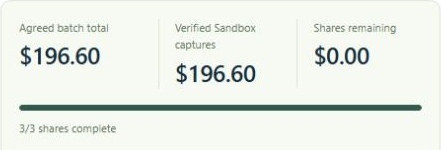
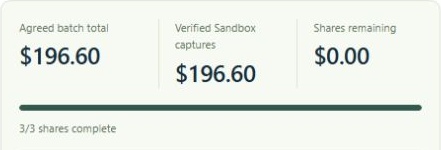
Hosted PayPal Sandbox: three captures verified, $196.60 paid, $0.00 remaining.
-
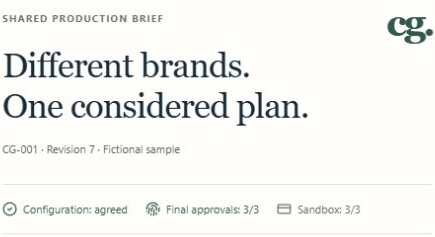
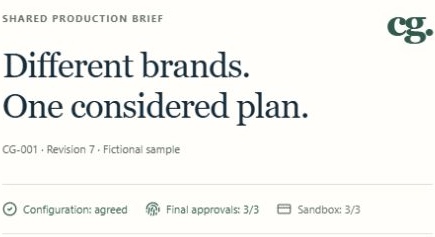
The supplier brief keeps configuration, final price approvals and all three Sandbox captures together.
-
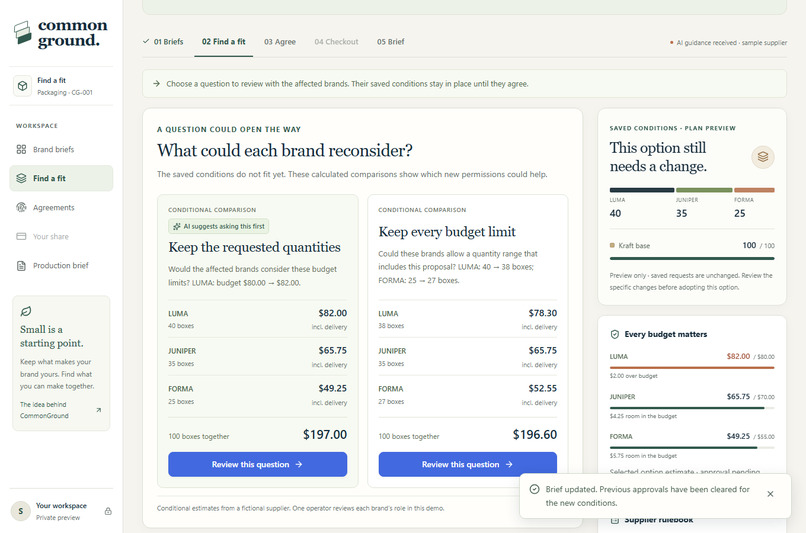
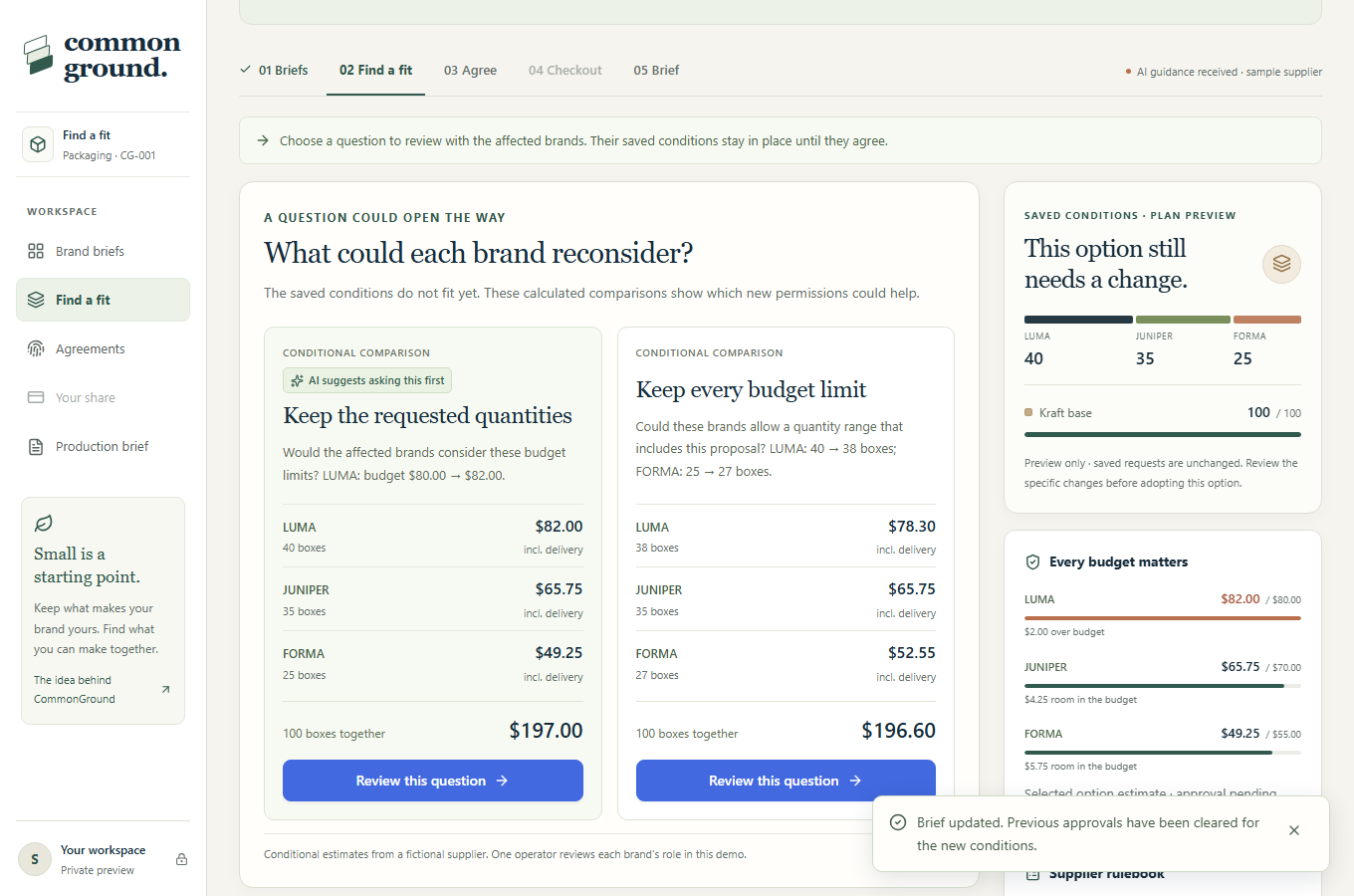
Two ways to reach 100 cartons: reconsider a budget or ask both affected buyers about quantity changes.
-
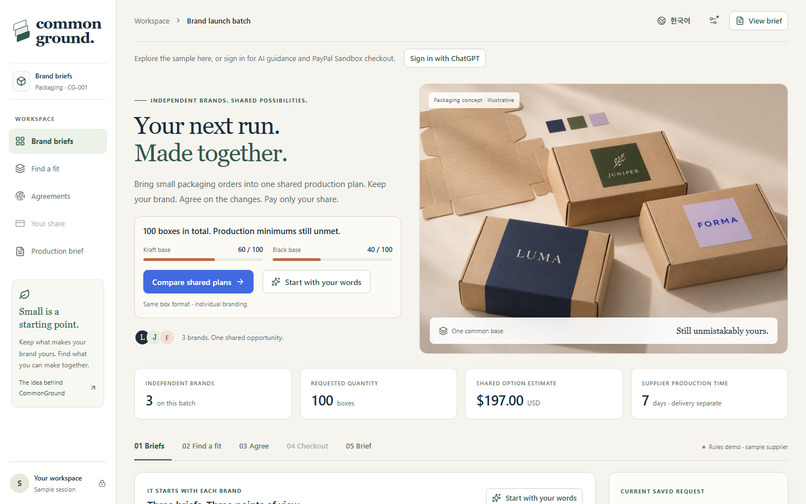
Start here: try the packaging challenge in sample mode without signing in.
Why can’t three brands buy 100 boxes together?
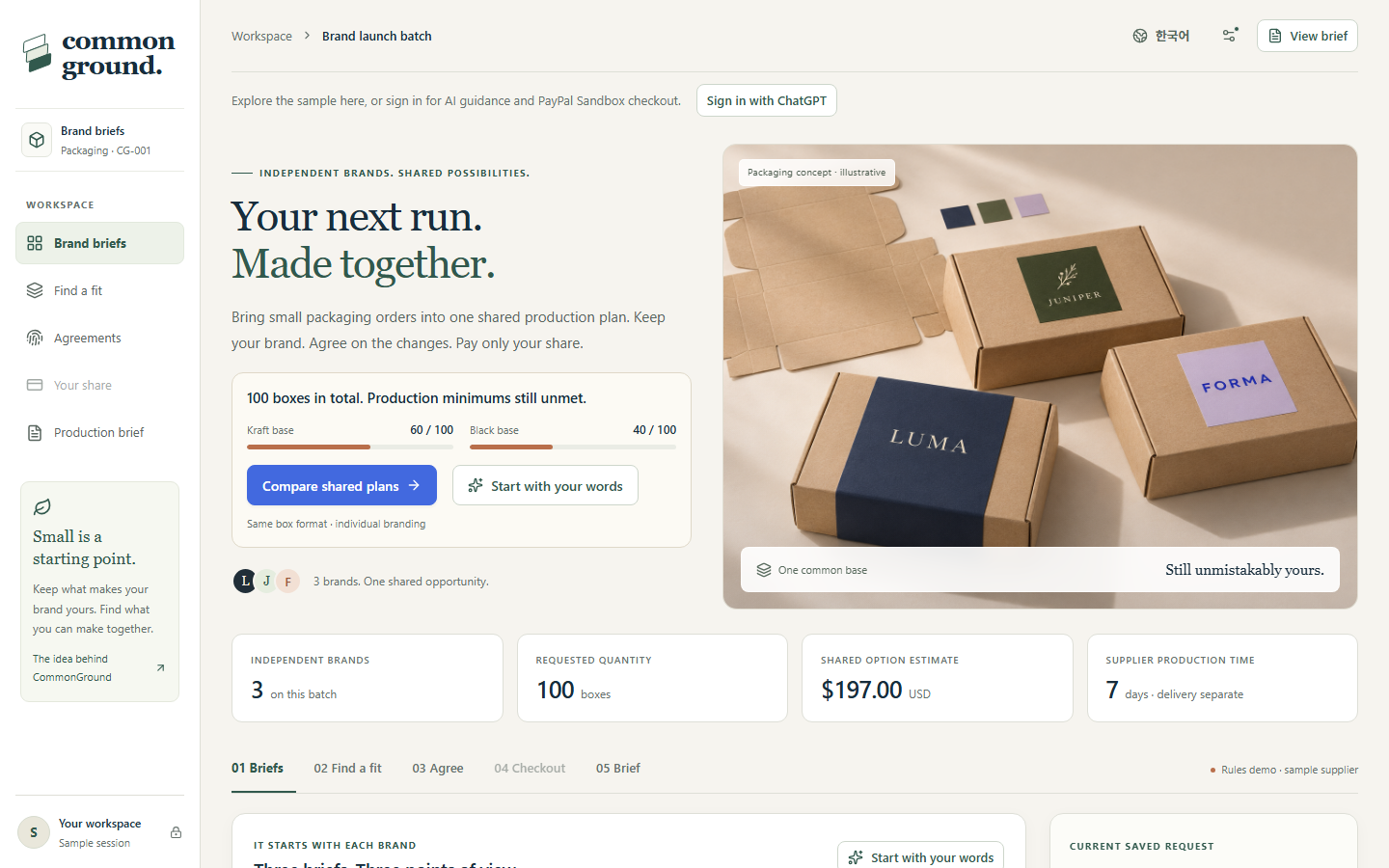
LUMA needs 40 black boxes. JUNIPER needs 35 kraft boxes, and FORMA needs 25. That is exactly 100 boxes, but the supplier’s minimum applies to each carton type: 40 black and 60 kraft both fall short. A shared kraft carton with a black sleeve could keep LUMA’s look. At the original quantity, though, its quote is $82 and its budget is $80.
What CommonGround does
Instead of changing the order, CommonGround asks a question: would LUMA accept $82, or would LUMA and FORMA consider adjusting their quantities? Agreeing to explore a range is not agreeing to buy. A change from 40 to 38 boxes is proposed only after both affected buyers give permission. Each then reviews the actual change, and all three approve their own final prices:
- LUMA: 38 cartons with a black sleeve · $78.30
- JUNIPER: 35 kraft cartons, unchanged · $65.75
- FORMA: 27 kraft cartons · $52.55
That makes 100 cartons for $196.60, including delivery. Each buyer pays its own approved share. In the hosted PayPal Sandbox run, capturing LUMA’s payment left $118.30 outstanding. Capturing the other two brought the balance to $0.00 and the production brief to Ready for supplier review. One demo operator plays the three fictional brands; the prototype does not place a factory order.
How it works
OpenAI’s Responses API extracts quantities, explicit ranges, budgets and deadlines from an English or Korean brief. The buyer sees the source phrase beside each value and reviews it before saving. The model can suggest a negotiation question supported by facts the server has checked. A TypeScript planner computes supplier minimums, timing and prices in integer cents; it never silently turns an exact quantity into a range to make a budget fit.
PayPal’s Orders API creates a separate Sandbox order for each approved share. After buyer approval, the server verifies the capture, currency, amount and connection to the approved quote before marking that share paid. Cloudflare D1 keeps the quote and payment attempts so an interrupted checkout can resume.
Challenges and lessons
The hard part was deciding whose permission matters. Moving two boxes from LUMA to FORMA changes both orders; a lower group total does not give one buyer permission to change another’s quantity. Payment has the same boundary: one successful capture cannot mark the entire group paid. These distinctions shaped the approval screens, payment records and supplier brief.
What we verified
We checked the free sample from the initial budget conflict through three sample payments on desktop and mobile. In the running app, OpenAI preserved an exact English request for 40 boxes and an explicit Korean range of 38–40. In a separate hosted run, we verified three distinct PayPal Sandbox captures against the same quote. The final brief retained each brand’s carton count, approved price and payment status.
Try it and what’s next
Open the free demo and choose $80 · quantities fixed. No account or payment details are needed for the sample. The judge walkthrough also explains the live AI and Sandbox path.
Next, we want a packaging buyer and a supplier to evaluate the same proposed substitution against actual specifications and quotes. That will tell us whether the shared carton works on the factory floor as well as it does in the planner.
Built With
- cloudflare-d1
- cloudflare-workers
- openai
- paypal
- react
- typescript
- vinext
